Running out of hot water mid-shower is one of those home frustrations that never gets old. For many homeowners and renters, traditional tank water heaters take up valuable space, waste energy keeping water hot all day, and still fall short when the whole household needs hot water at once. That is why interest in Tankless Water Heater continues to grow in 2026, especially among people planning bathroom upgrades, kitchen renovations, or whole-home efficiency improvements.
In this guide from Home DVP, We compared the listed tankless water heaters across electric and gas options, flow rates, efficiency features, installation needs, and real-world homeowner use cases. Our goal is simple: help you match capacity, fuel type, and features to your home without getting lost in marketing claims. Whether you want endless hot water for a busy family or a compact point-of-use unit under a sink, the right choice depends on groundwater temperature, electrical service or gas availability, and how many fixtures you run at the same time.
Home DVP decision summary
Quick Answer
For Best Tankless Water Heater, Home DVP compared 15 products from 8 brands. Size a tankless heater from required flow rate and local temperature rise. Fuel supply, venting, electrical service, installation access, and simultaneous fixtures determine whether a model will meet household demand.
| Comparison coverage | 15 products from 8 brands, including EcoSmartWaterHeaters, Titan, CreatingComfortableLiving. |
|---|---|
| Selection priority | Size a tankless heater from required flow rate and local temperature rise. Fuel supply, venting, electrical service, installation access, and simultaneous fixtures determine whether a model will meet household demand. |
| Evidence basis | Manufacturer specifications, compatibility details, retailer-provided product data, and common homeowner use cases. |
| Reference guidance | U.S. Department of Energy tankless water-heater guidance. |
This summary describes the article's comparison set, not every product on the market. Product details should be confirmed before purchase.
We also looked at how these units fit into broader home improvement plans. If you are already updating bathrooms, pairing a new heater with a durable bathroom sink or better ventilation can improve comfort and energy use together. Explore more options in our Plumbing Equipment category as you plan your project.
Top Tankless Water Heater Picks

Pros
- One model can serve natural gas or propane setups through Smart Sense control
- Indoor and outdoor install options expand placement choices for many homes
Cons
- Professional installation is recommended, so DIY-only homeowners may need a qualified technician
- Outdoor installs require the separate RX-OVC vent cap
Best For / Avoid If
Best for buyers prioritizing
- One model can serve natural gas or propane setups through Smart Sense control
- Indoor and outdoor install options expand placement choices for many homes
- High listed efficiency with a UEF of .98
Consider another option if
- Professional installation is recommended, so DIY-only homeowners may need a qualified technician
- Outdoor installs require the separate RX-OVC vent cap
- WiFi control depends on an optional Controlr module that is not included

Pros
- Provides whole-home continuous hot water potential when ground water temperature and flow needs align with the performance guide
- Saves space compared with conventional tank-style electric heaters
Cons
- Requires three 40 AMP double-pole breakers and is best suited to homes with adequate 200 AMP service and panel space
- Output GPM and temperature rise depend on regional ground water temperature, so colder climates may need lower simultaneous fixture use
Best For / Avoid If
Best for buyers prioritizing
- Provides whole-home continuous hot water potential when ground water temperature and flow needs align with the performance guide
- Saves space compared with conventional tank-style electric heaters
- Digital ON/OFF dial control makes temperature adjustments straightforward
Consider another option if
- Requires three 40 AMP double-pole breakers and is best suited to homes with adequate 200 AMP service and panel space
- Output GPM and temperature rise depend on regional ground water temperature, so colder climates may need lower simultaneous fixture use
- Electrical and plumbing setup may take extra planning for first-time DIY installers

Pros
- High 199,000 BTU output and 10.3 GPM capacity match whole-house demand for larger homes
- App-enabled remote monitoring and scheduling improve everyday convenience
Cons
- 3 by 5 inch direct vent kit must be purchased separately, adding an installation step and cost planning item
- Non-condensing design may not match the efficiency expectations of buyers specifically seeking condensing models
Best For / Avoid If
Best for buyers prioritizing
- High 199,000 BTU output and 10.3 GPM capacity match whole-house demand for larger homes
- App-enabled remote monitoring and scheduling improve everyday convenience
- Closed combustion design and CSA qualification support safer indoor installation
Consider another option if
- 3 by 5 inch direct vent kit must be purchased separately, adding an installation step and cost planning item
- Non-condensing design may not match the efficiency expectations of buyers specifically seeking condensing models
- Professional gas and venting setup may take extra time for first-time DIY homeowners unfamiliar with tankless systems
Pros
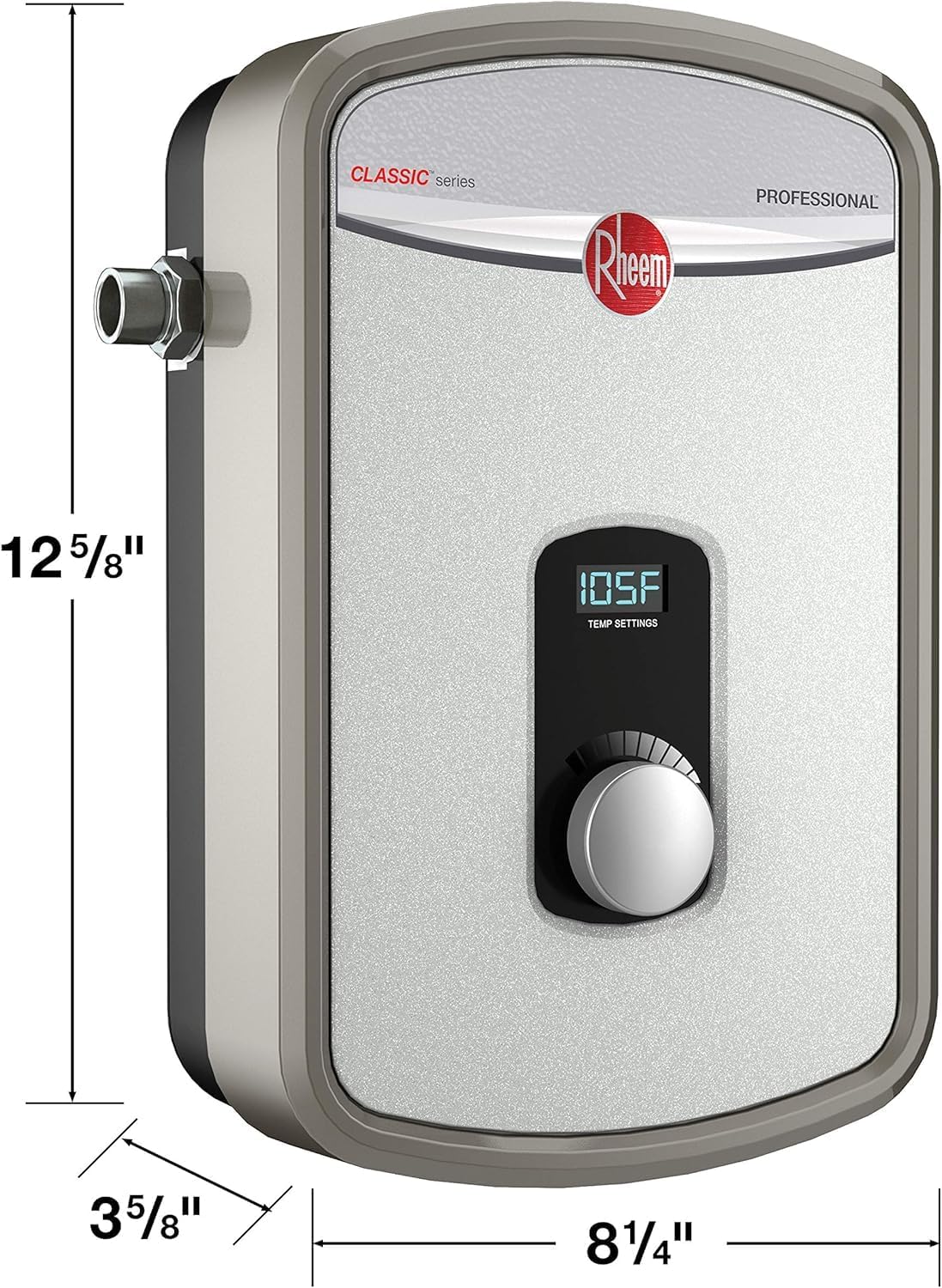
- Precise external LED thermostatic control for fine temperature setting
- Two field-serviceable copper immersion heating elements for serviceability
Cons
- 54 A at 240V electrical demand may require dedicated circuit planning or panel capacity upgrades in some homes
- Flow rate up to 3.17 GPM may feel limiting for larger households running several fixtures at once
Best For / Avoid If
Best for buyers prioritizing
- Precise external LED thermostatic control for fine temperature setting
- Two field-serviceable copper immersion heating elements for serviceability
- High listed energy efficiency of 99.8%
Consider another option if
- 54 A at 240V electrical demand may require dedicated circuit planning or panel capacity upgrades in some homes
- Flow rate up to 3.17 GPM may feel limiting for larger households running several fixtures at once
- First-time DIY installers may need extra time or professional help for electrical and plumbing connections

Pros
- Supports multi-point heating for up to four faucets at a maximum 5 GPM flow rate.
- Achieves 98 percent thermal efficiency and a UEF of 0.81 for improved energy performance.
Cons
- Requires separate purchase of a 150 psi pressure relief valve and 3-inch metal exhaust pipe for complete installation.
- Maximum 5 GPM capacity may be limited for larger homes with more than two simultaneous high-flow showers.
Best For / Avoid If
Best for buyers prioritizing
- Supports multi-point heating for up to four faucets at a maximum 5 GPM flow rate.
- Achieves 98 percent thermal efficiency and a UEF of 0.81 for improved energy performance.
- Activates frost protection at 41 degrees Fahrenheit with ceramic heating cores to help guard against pipe ice.
Consider another option if
- Requires separate purchase of a 150 psi pressure relief valve and 3-inch metal exhaust pipe for complete installation.
- Maximum 5 GPM capacity may be limited for larger homes with more than two simultaneous high-flow showers.
- Indoor natural gas configuration is not suited for outdoor mounting or propane fuel applications.
Pros
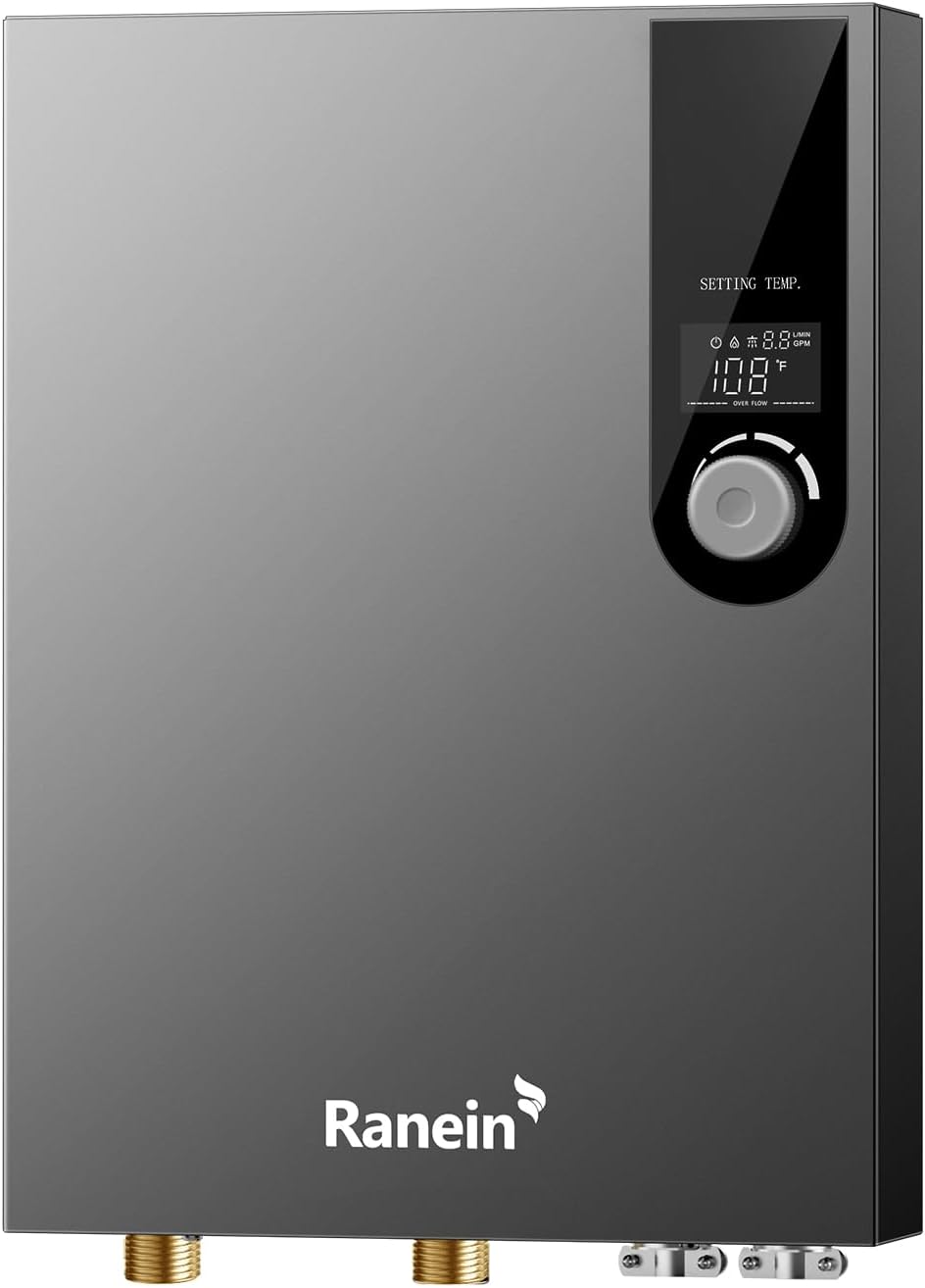
- High thermal efficiency rating suited to continuous on-demand use
- Temperature adjustments in fine 1°F increments for stable output
Cons
- Requires two dedicated 240V circuits with 40A breakers and 8 AWG wiring, which may need an electrical upgrade
- Installation is best handled by a qualified electrician and plumber rather than a first-time DIY homeowner
Best For / Avoid If
Best for buyers prioritizing
- High thermal efficiency rating suited to continuous on-demand use
- Temperature adjustments in fine 1°F increments for stable output
- Space-saving wall-mounted form with 3/4" NPT connections
Consider another option if
- Requires two dedicated 240V circuits with 40A breakers and 8 AWG wiring, which may need an electrical upgrade
- Installation is best handled by a qualified electrician and plumber rather than a first-time DIY homeowner
- Flow performance depends on incoming water temperature and simultaneous fixture demand

Pros
- Endless on-demand hot water without a storage tank
- Smart connectivity for remote and voice temperature control
Cons
- Professional installation is recommended because of 240V service and high amperage draw
- Electrical panel capacity may need upgrades to support the required breakers and wiring
Specifications
| Power Source | Hard Wiring Required |
|---|---|
| Special Features | 12 Months Warranty, Copper heating elements, ETL Certified, Self-Modulating, Works with Google Assistant, Alexa, and Wi-Fi |
| Wattage | 18 KW |
| Voltage | 240 Volts (AC) |
| Flow Rate | 4.2 Gallons Per Minute |
| Maximum Temperature | 140 Degrees Fahrenheit |
| Heat Output | 18000 Watts |
| Maximum Pressure | 120 Pound per Square Inch |
| Mount Type | Wall |
| Is Electric | Yes |
Verify the current product variation before purchase; specifications may change.
Best For / Avoid If
Best for buyers prioritizing
- Endless on-demand hot water without a storage tank
- Smart connectivity for remote and voice temperature control
- Precise self-modulating operation for consistent comfort
Consider another option if
- Professional installation is recommended because of 240V service and high amperage draw
- Electrical panel capacity may need upgrades to support the required breakers and wiring
- Maximum flow suits moderate multi-fixture use rather than very large simultaneous demand

Pros
- On-demand tankless design supports continuous hot water without tank recovery delays
- Indoor wall-mount form factor helps reclaim storage space in utility areas
Cons
- Non-condensing design may deliver less efficiency than condensing tankless models for buyers focused on maximum savings
- Indoor gas installation typically needs a qualified installer plus proper venting and clearances
Specifications
| Power Source | Natural Gas |
|---|---|
| Special Features | Integrated Digital Display, Hot-start Programming, High Energy Efficiency, Universal Venting Compatibility, 1/2 Gas Line Compatibility |
| Wattage | 132 watts |
| Voltage | 120 Volts |
| Flow Rate | 7 Gallons Per Minute |
| Maximum Temperature | 140 Degrees Fahrenheit |
| Heat Output | 160000 British Thermal Units |
| Mount Type | Wall |
| Is Electric | No |
| Smart Home Compatibility | Not Smart Home Compatible |
Verify the current product variation before purchase; specifications may change.
Best For / Avoid If
Best for buyers prioritizing
- On-demand tankless design supports continuous hot water without tank recovery delays
- Indoor wall-mount form factor helps reclaim storage space in utility areas
- Hot Start feature improves comfort for consecutive showers or appliance cycles
Consider another option if
- Non-condensing design may deliver less efficiency than condensing tankless models for buyers focused on maximum savings
- Indoor gas installation typically needs a qualified installer plus proper venting and clearances
- 7.0 GPM capacity and roughly 2.5-bathroom support may fall short for larger homes with heavy simultaneous demand
Tankless Water Heater Buying Guide
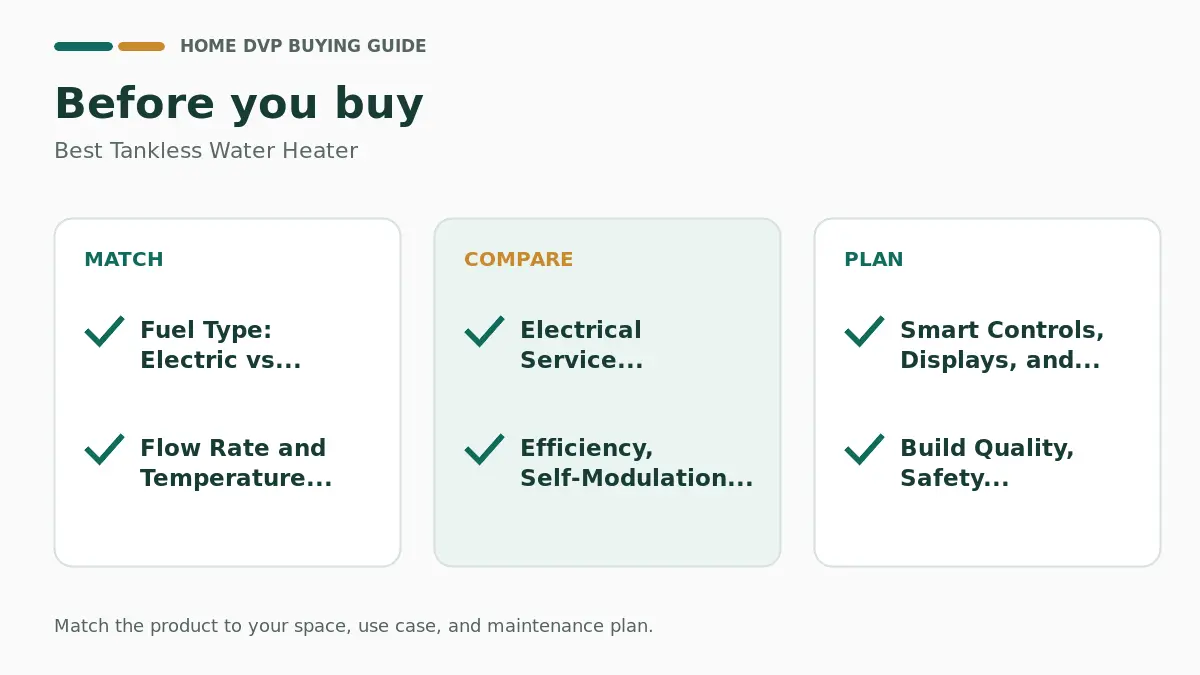
Choosing tankless water heaters is less about the flashiest display and more about matching output to your home. After carefully analyzing the available specifications, we recommend focusing on fuel type, flow rate, temperature rise, electrical or gas requirements, installation location, and maintenance. The sections below walk through the criteria that matter most for homeowners and DIYers in 2026.
Fuel Type: Electric vs Gas Tankless Water Heaters
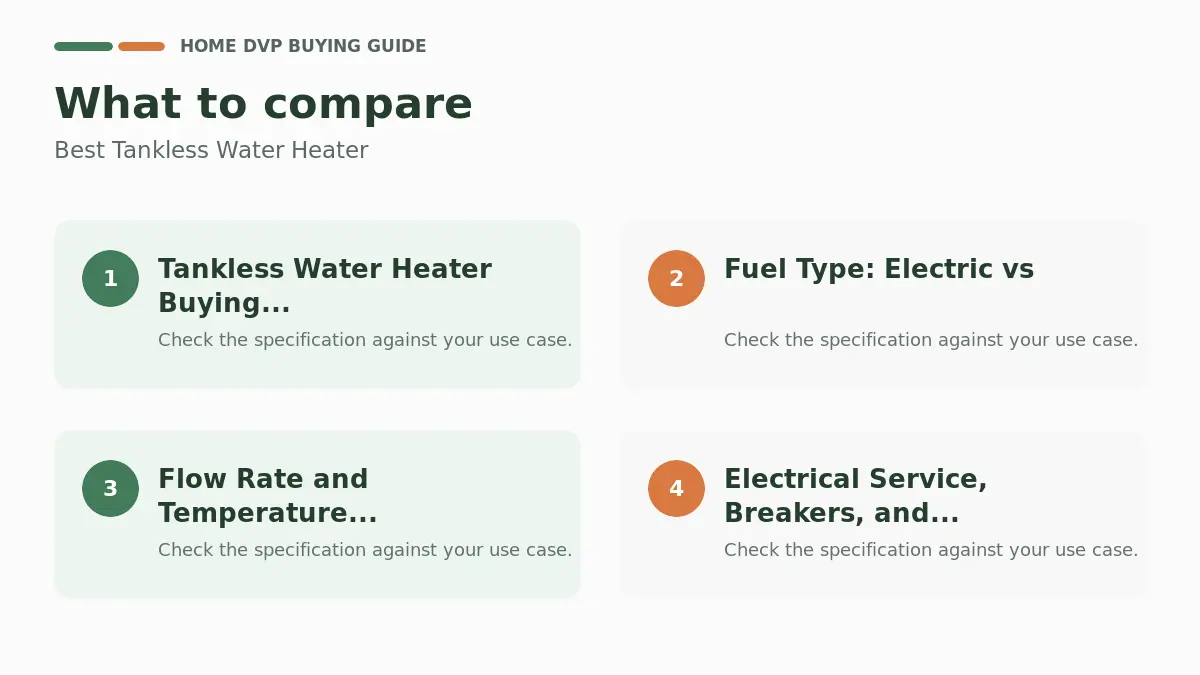
Electric tankless water heaters are popular because they do not need venting and can work well for point-of-use or moderate whole-house demand when your electrical panel can support them. Models such as the EcoSmart ECO 11, Rheem RTEX series, CAMPLUX 6kW unit, WINTEMP 27kW, Westinghouse 18kW, and Titan electric heaters heat water only when you open a tap, which can reduce standby energy waste compared with storage tanks.
Gas tankless units, including the Rinnai RX199iN, Rheem RTG-70DVLN-3, and MIZUDO 199,000 BTU models, usually deliver higher flow rates and better performance in colder climates where groundwater is low. They do require proper venting, gas line sizing, and professional installation in most cases. A common mistake is assuming any gas unit will work outdoors or with either fuel; always verify natural gas versus propane compatibility and indoor versus outdoor ratings before you buy.
If your home already has a strong 200-amp electrical service and you want simpler venting, electric may be the cleaner path. If you need high simultaneous fixture use or live in a cold region, gas often provides more practical capacity. For related comfort upgrades that pair well with water heating projects, many homeowners also research heating and cooling solutions at the same time.
Flow Rate and Temperature Rise
Flow rate, measured in gallons per minute (GPM), is the single most important performance number on a tankless water heater. Point-of-use units like the CAMPLUX 6kW are designed for a single sink or small fixture. Mid-size electric models such as EcoSmart ECO 11 and Rheem RTEX-13 often support bathroom or limited multi-fixture use depending on climate. Higher-output electric options like Rheem RTEX-24, Westinghouse 18kW, and WINTEMP 27kW aim at broader household demand, while high-BTU gas models such as Rinnai and MIZUDO can support multiple showers, laundry, and kitchen use at once.
Temperature rise is just as critical. A unit that delivers 5 GPM in a warm climate may only support a fraction of that flow when incoming water is near freezing. Our research indicates homeowners should map expected simultaneous fixtures, then compare GPM charts against local groundwater temperatures. Oversizing wastes money on installation and capacity you never use; undersizing creates lukewarm showers when two people bathe at once.
| Home scenario | Typical simultaneous demand | What to prioritize |
|---|---|---|
| Apartment or powder room | 1 fixture | Point-of-use electric, compact size |
| 1–2 bathroom home | 2–3 fixtures | Mid to high kW electric or moderate gas GPM |
| Large family home | 4–7 fixtures | High GPM gas or high-output electric with strong electrical service |
| Cold climate | Higher temperature rise needed | Higher BTU gas or carefully sized high-kW electric |
Electrical Service, Breakers, and Installation Reality
Electric tankless units can demand significant amperage. Specs for models in this category often call for 25A on small point-of-use heaters, around 54A on 13kW units, 75A on 18kW units, and 100A or more on 24kW and 27kW whole-house models. Several higher-output units recommend 200-amp household service and multiple double-pole breakers. Ignoring this is one of the most expensive mistakes homeowners make.
Before purchasing, have an electrician confirm panel capacity, available breaker spaces, wire gauge, and dedicated circuit requirements. Gas models still need electrical power for controls and fans, plus correctly sized gas supply and venting. Professional installation is commonly recommended for whole-house systems, and it is usually the safer path for warranty compliance and code requirements.
DIY-friendly installs are more realistic for compact under-sink electric heaters when wiring and plumbing access are straightforward. Even then, hardwiring and breaker work should meet local code. If your project also includes fixture replacement, plan sequencing carefully so shutoffs, connections, and finishes align with other bathroom fixture upgrades.
Efficiency, Self-Modulation, and Operating Cost
Tankless heaters score well on efficiency because they heat water on demand instead of storing it. Many electric models in this comparison advertise very high thermal efficiency and self-modulating power control that adjusts output to flow and setpoint. That helps hold temperature closer to your selected degree setting and reduces wasted energy when only one faucet is open.
On the gas side, condensing models such as the Rinnai RX199iN with a high UEF rating extract more heat from combustion gases and can lower fuel use over time. Non-condensing units may cost less up front but often need different venting materials and can be less efficient. Based on the feature set of the products reviewed, look for modulation stages, digital temperature control within about 1 degree, and clear energy factor data rather than vague “energy saving” claims alone.
Remember that real operating cost also depends on water use habits, electricity or gas rates, and scale management. A high-efficiency unit in hard-water areas still needs descaling or a scale inhibitor strategy to stay efficient. Homeowners who already manage indoor air and humidity carefully often appreciate how sealed combustion gas units draw outdoor air instead of depleting indoor air quality.
Smart Controls, Displays, and Daily Usability
Digital LED or touch displays make temperature adjustments easier and help diagnose flow or inlet conditions. Several models now add WiFi or app control so you can change setpoints, monitor status, or receive alerts remotely. Units such as the Westinghouse 18kW, WINTEMP 27kW, and MIZUDO gas heater highlight app or smart-home friendly control, while many Rheem and EcoSmart options emphasize precise digital thermostatic control at the unit.
Smart features are convenient, but they should not outrank capacity and installation fit. Voice control and remote scheduling are nice extras for tech-forward homes, yet a stable temperature and adequate GPM matter more every morning. If you value simple reliability, a clear digital display and durable controls may be enough without depending on an app.
Build Quality, Safety Features, and Maintenance
Materials matter for longevity. Copper heating elements or heat exchangers appear frequently in electric and gas designs because of thermal conductivity and serviceability. Stainless combustion chambers, sealed direct-vent systems, freeze protection, overheat protection, dry-fire protection, and leak safeguards all improve peace of mind. ETL or CSA approvals are useful signals that a unit has been evaluated against safety standards.
Maintenance is often overlooked. Tankless systems still need periodic flushing, especially in hard-water regions. Some gas models advertise quick-flush features, while electric units may include scale inhibitors or serviceable elements. Plan isolation valves and service access during installation so future descaling is not a plumbing nightmare. Warranties also vary widely, from shorter unit coverage on some models to longer heat-exchanger protection on premium gas units when registration requirements are met.
Space Planning and Point-of-Use vs Whole House
One of the biggest advantages of tankless designs is size. Compact wall-mounted electric units free floor space compared with traditional tanks and can sit near the fixture they serve. That is ideal for apartments, ADUs, office break rooms, or remote bathrooms where a long pipe run causes long wait times. Whole-house units still save space but need careful placement for electrical, gas, water, and venting connections.
If hot water delay is your main complaint at one sink, a small under-sink heater may solve the problem more affordably than replacing the entire home system. If laundry, kitchen, and multiple showers compete daily, a whole-house solution is usually better. During renovations, coordinate heater location with cabinetry, access panels, and other plumbing equipment so future service remains easy.
Budget and Total Installed Cost
Current options in this comparison cover several budget levels, from compact electric point-of-use units through premium high-capacity gas systems. Lower-priced models can deliver excellent value for limited demand, while mid-range electric whole-house heaters balance features and capacity. Premium gas units cost more up front but may justify the investment for large households, cold climates, or flexible indoor/outdoor installation needs.
Value is not only the sticker price. Factor in electrical upgrades, venting, permits, professional labor, and expected energy savings. A less expensive heater that requires major panel work can cost more overall than a better-matched unit. Based on our detailed comparison, prioritize correct sizing first, then choose the feature set that fits how your household actually uses hot water.
Choose by Capacity and Installation, Not GPM Alone
A tankless water heater must deliver enough hot water at your home’s actual temperature rise. Subtract the incoming-water temperature from the desired outlet temperature, then compare the manufacturer’s flow chart at that rise. A unit advertised at a high maximum GPM may deliver substantially less in a cold climate.
| Decision | What to verify before buying |
|---|---|
| Electric or gas | Available electrical service and breaker space, or gas-line size, venting, combustion air, and condensate requirements. |
| Required flow | Fixtures that may run together and the unit’s rated GPM at your calculated temperature rise. |
| Installation cost | Permits, panel or gas-line upgrades, venting, isolation valves, drain routing, and professional labor. |
| Long-term upkeep | Scale-control needs, flushing access, warranty conditions, and local service availability. |
Who this guide helps
Tankless systems make the most sense for homes that value continuous hot water, have suitable utilities, and can absorb a higher installation cost. A conventional tank can be the simpler choice when utility upgrades are extensive, peak demand is unusually high, or fast, inexpensive replacement matters most.
Research note and sources
Model specifications and availability can change. Confirm the current installation manual, warranty, flow-rate chart, fuel requirements, and local code requirements before ordering. For background, review the U.S. Department of Energy’s tankless water-heater guidance and verify certified performance in the AHRI Directory when a model is listed.
Tankless Water Heater Sizing Worksheet
Quick answer: add the flow rates of fixtures that may run together, then subtract winter inlet-water temperature from the desired outlet temperature. Select a heater that can supply the combined GPM at that temperature rise on the manufacturer’s performance chart.
- List only the fixtures likely to run at the same time.
- Add their flow rates to find peak simultaneous demand.
- Calculate temperature rise: target outlet temperature minus coldest expected inlet temperature.
- Check the model’s flow chart at that rise, then verify electrical, gas, venting, condensate, and service-access requirements.
Worked example: a 2.0 GPM shower and 1.0 GPM kitchen faucet need about 3.0 GPM together. If inlet water is 50°F and the target is 120°F, the heater must deliver at least 3.0 GPM at a 70°F rise. A headline “maximum GPM” measured at a smaller rise is not enough evidence.
| System type | Best fit | Infrastructure check | Main limitation |
|---|---|---|---|
| Point-of-use electric | One remote sink or light fixture demand | Dedicated circuit, wire size, and mounting clearance | Limited simultaneous flow |
| Whole-home electric | Moderate demand where venting is undesirable | Panel capacity, breaker spaces, amperage, and service size | Output drops as temperature rise increases |
| Gas non-condensing | Higher household flow with lower initial equipment cost | Gas line, combustion air, approved venting, and clearances | Lower efficiency and hotter exhaust than condensing designs |
| Gas condensing | High flow and efficiency for a whole home | Gas line, venting, condensate drain, freeze protection, and service access | Higher installed complexity and upfront cost |
The U.S. Department of Energy also recommends sizing demand-type heaters from required flow and temperature rise. ENERGY STAR certification can help compare qualifying gas models, but certification does not replace a model-specific sizing and installation review.
How We Evaluated Tankless Water Heaters
Home DVP evaluates tankless water heaters using a transparent, specification-first process designed for practical home buyers. We review manufacturer data for capacity, voltage or BTU rating, flow performance, efficiency claims, control features, safety protections, dimensions, and installation requirements. We then compare those specs against common homeowner scenarios such as single-bath rentals, growing families, renovation projects, and cold-climate temperature rise needs.
We also review available user-facing feedback patterns and category research to understand recurring strengths and limitations, including electrical demands, temperature stability, app convenience, and maintenance expectations. We do not invent lab results or claim hands-on installation testing when that is not part of the provided product data. Instead, we focus on what the listed specifications, certifications, and feature sets actually support.
Our ranking priorities include performance fit, features, build and safety indicators, ease of use, durability signals, reliability expectations, value, and suitability for DIY versus professional installation. We refresh category guidance during July 2026 so recommendations stay aligned with current product listings and homeowner needs. Brands represented across this roundup include EcoSmart, Rheem, Rinnai, CAMPLUX, WINTEMP, Westinghouse, MIZUDO, and Titan, along with other recognized names in the plumbing equipment space.
Final Thoughts
If you need a premium whole-home gas solution with high flow and flexible installation options, the NEW Rinnai RX199iN stands out as a strong Premium Pick based on its up to 11.1 GPM capacity, condensing efficiency, dual-fuel Smart Sense design, and indoor or outdoor versatility. For large-family gas demand with app monitoring, the MIZUDO 199,000 BTU indoor unit is a compelling high-capacity alternative with WiFi control and extensive safety protections.
For many electric-focused households, the Westinghouse 18kW whole-house model is a balanced Homeowner Pick thanks to copper heating, self-modulation, WiFi control, and multi-fixture support when electrical service allows. The Rheem RTEX-24 is another capable whole-house electric option for continuous demand, while the EcoSmart ECO 11 and Rheem RTEX-13 remain practical Value and point-of-use oriented choices for bathrooms or lower simultaneous loads. The CAMPLUX 6kW unit is an easy Small Space Pick for under-sink applications, and the Titan electric model remains a straightforward budget-minded option when specs match your circuit capacity.
Match the heater to your fixtures, climate, and utility infrastructure before you fall in love with any single feature. Correct sizing and professional installation planning will do more for comfort than any display screen. As you complete the project, consider complementary upgrades like a refreshed toilet or improved bathroom layout so the entire wet area works better together.
FAQ
What should I look for when choosing tankless water heaters?
Start with fuel type, GPM capacity, temperature rise for your climate, and whether your electrical panel or gas line can support the unit. Then compare efficiency features, safety protections, installation requirements, and warranty terms. Correct sizing for simultaneous fixtures is more important than brand hype alone.
Are higher-end tankless water heaters worth it?
They can be worth it when you need higher flow, condensing efficiency, flexible indoor or outdoor installation, longer warranty coverage, or advanced controls. For a single sink or light-duty bathroom, a compact mid-range electric unit often delivers better value. Pay for capacity and installation fit first, then add premium features if they solve a real need.
About This Home DVP Research
Home DVP is an independent home-improvement research and product-comparison publisher. Ryan Mitchell prepared this guide by comparing manufacturer specifications, compatibility details, retailer-provided product data, key limitations, and common homeowner use cases. We do not claim hands-on testing unless an article explicitly says so.
Review methodology Affiliate disclosure Last reviewed October 16, 2026