
A smart water shutoff valve can be one of the most practical plumbing upgrades for homeowners who want faster leak response, remote control, and better visibility into household water use. Whether you travel often, manage a rental property, or simply want extra protection around water heaters, washing machines, bathrooms, and supply lines, Best Smart Water Shutoff Valve can help reduce the risk of costly water damage when paired with good maintenance habits.
For this 2026 guide, we analyzed 14 listed products and focused only on models that clearly fit the Plumbing Equipment category and the smart water shutoff use case. After carefully analyzing the available specifications, we compared whole-home shutoff capability, leak detection approach, app or wireless control, pipe compatibility, installation requirements, alerts, automation features, durability notes, and homeowner value. If you are also comparing standalone sensors, our guide to water leak detector options is a useful companion resource.
Home DVP decision summary
Quick Answer
For Best Smart Water Shutoff Valve, Home DVP compared 14 products from 9 brands. Choose between point moisture sensors, whole-home flow monitoring, or a combined system before comparing apps. Pipe size, valve type, installation access, shutoff behavior, backup power, alert delivery, calibration, and periodic testing determine whether protection remains reliable.
| Comparison coverage | 14 products from 9 brands, including FRIZZLIFE, Moen, GE. |
|---|---|
| Selection priority | Choose between point moisture sensors, whole-home flow monitoring, or a combined system before comparing apps. Pipe size, valve type, installation access, shutoff behavior, backup power, alert delivery, calibration, and periodic testing determine whether protection remains reliable. |
| Evidence basis | Manufacturer specifications, compatibility details, retailer-provided product data, and common homeowner use cases. |
| Reference guidance | EPA WaterSense leak-detection and flow-monitoring guidance. |
This summary describes the article's comparison set, not every product on the market. Product details should be confirmed before purchase.
Because smart shutoff systems vary widely, the right choice depends on your plumbing layout and how much automation you need. Some options are designed for whole-house monitoring, some work with dedicated leak sensors, and others are better suited to hose bibs, irrigation lines, or controlled water delivery. The goal of this guide is to help homeowners and DIY-minded buyers understand those differences before choosing best smart water shutoff valve.
Best Smart Water Shutoff Valve Buying Guide
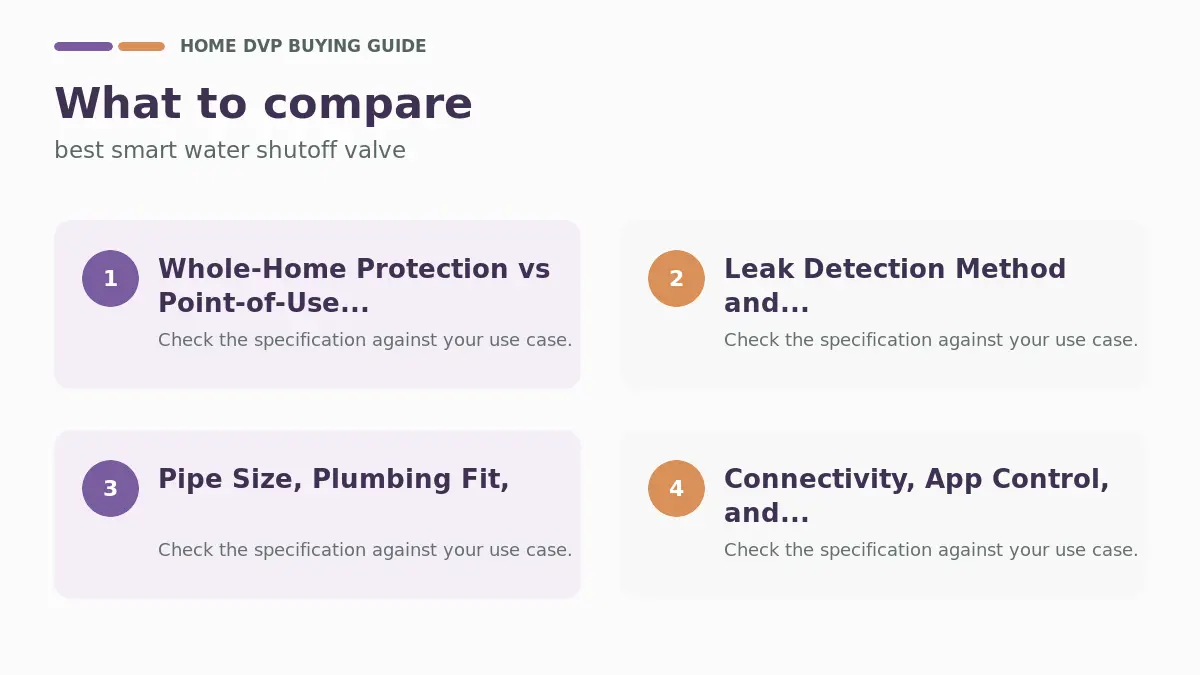
Whole-Home Protection vs Point-of-Use Control
The first decision is whether you need a whole-home automatic shutoff system or a simpler smart valve for a single line. Whole-home systems, such as the Frizzlife LP365 Smart Water Monitor and Automatic Shutoff, the Frizzlife LPG365 Smart Water Monitor and Automatic Shutoff Valve with 3 Leak Sensors, the Frizzlife LP365-P Smart Water Monitor and Automatic Shutoff, the YoLink DIY Automatic Water Leak Detection & Shut-Off Starter Kit, and the Moen 900-001 Flo by Moen 3/4-Inch Smart Water Shutoff with 920-005 Flo by Moen Smart Water Detector, are built around preventing major water damage by shutting down supply when abnormal flow or sensor-triggered leaks are detected.
Point-of-use smart valves, including the DN20 Smart Water Valve 3/4 Inch Smart Water Management System WiFi Remote Control Faucet Timer and the Smart WiFi Water Valve, Brass Motorized Ball Valve with Timer & App Remote Control models, can still be useful, but they serve a different purpose. These are better suited for controlled watering, hose bibs, pool filling, greenhouses, hydroponics, and other utility lines where remote on/off scheduling is the priority. They should not be treated as full substitutes for a whole-house leak protection system unless the product is specifically installed and configured for that role.
A common mistake is buying a low-cost smart valve and expecting it to provide the same protection as a purpose-built leak detection shutoff system. For main water lines, prioritize models that explicitly mention automatic shutoff, real-time leak alerts, whole-home protection, pipe size compatibility, and sensor or flow-monitoring logic.
| Use Case | What to Prioritize |
|---|---|
| Whole-home leak protection | Automatic shutoff, flow monitoring, alerts, main-line pipe compatibility |
| Water heater or appliance risk areas | Leak sensors, fast notifications, dependable valve closure |
| Irrigation or garden control | Timer functions, app control, weather-resistant placement, valve size |
| Rental or vacation homes | Remote control, reliable alerts, strong wireless range, easy monitoring |
Leak Detection Method and Shutoff Speed
Smart shutoff products typically detect problems through flow monitoring, external leak sensors, or a combination of both. Flow-based systems look for unusual water behavior, such as continuous running water or small flow changes. Sensor-based systems rely on placed detectors near appliances, under sinks, around toilets, or near water heaters. The strongest systems often combine both methods because water damage can start from a slow pinhole leak, an overflowing fixture, a failed supply hose, or a burst pipe.
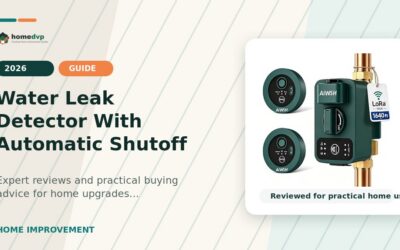
Based on available product information, the Frizzlife LP365 and LP365-P highlight ultrasonic micro leak detection, app-based control, real-time notifications, and automatic shutoff. The LPG365 version adds a bundled leak sensor approach, which can be valuable for homeowners who want monitored zones around high-risk areas. The Smart Water Auto Shut Off Valve & Leak Detector emphasizes real-time leak detection, automatic shutoff, long-range LoRa coverage, and operation without relying on Wi-Fi, which can appeal to homeowners with detached structures or unreliable wireless coverage.
Shutoff speed matters most when a pipe bursts or a supply line fails. However, buyers should also consider false alarm handling. A system that shuts off too aggressively can interrupt irrigation, laundry, guests, or normal household routines. Look for customizable settings, ignore modes for irrigation when supported, and alerts that explain why the valve closed.
Pipe Size, Plumbing Fit, and Installation Requirements
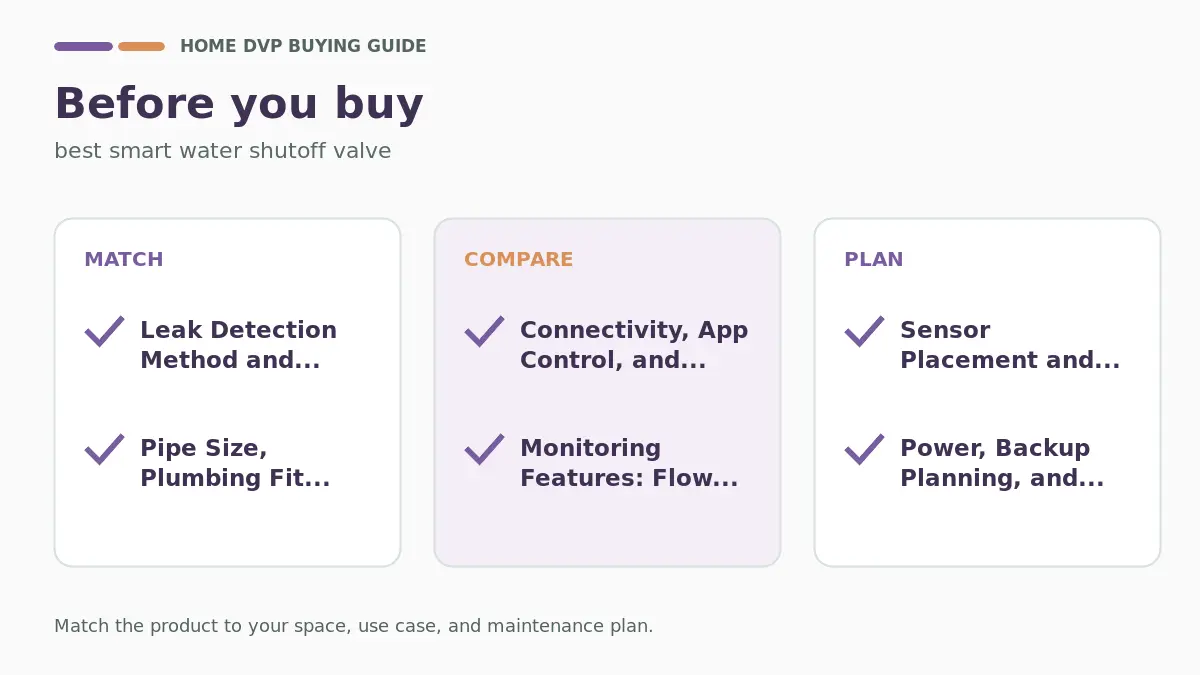
Before choosing best smart water shutoff valve, confirm your pipe size, connection type, and available installation space. Many whole-home systems are intended for common residential main-line sizes, but adapters, thread type, clearance, and valve orientation can still matter. A device that fits on paper may still require cutting pipe, adding unions, reworking nearby fittings, or creating access to an outlet.
The Frizzlife LP365, Frizzlife LPG365, Frizzlife LP365-P, Smart Water Auto Shut Off Valve & Leak Detector, and Moen 900-001 Flo by Moen 3/4-Inch Smart Water Shutoff are the most clearly aligned with main-line or whole-home shutoff use. The GE Water Softener Remote Water Shutoff Valve is more specialized because it is listed as compatible only with specific GE water softeners, so it should be considered only by shoppers who already own or plan to use those compatible systems. The DN20 Smart Water Valve and Smart WiFi Water Valve models are better evaluated around hose, sprinkler, greenhouse, pool, and utility-line installation needs.
For main-line plumbing, professional installation is often the safer route, especially if you need pipe cutting, threaded adapters, pressure-rated fittings, or code-compliant placement. DIYers who are comfortable with basic plumbing should still plan for a main shutoff, pressure relief, leak checks, and access for maintenance. If you are already working on water supply upgrades, our Plumbing Equipment category can help you compare related repair and maintenance tools.
Connectivity, App Control, and Smart Home Integration
Connectivity is a major difference between models. Wi-Fi-based systems are convenient because many homeowners already have a router and smartphone app setup. However, Wi-Fi can be inconsistent in basements, utility rooms, garages, crawl spaces, and meter rooms. If your main water line is located far from your router, pay close attention to signal strength before relying on app alerts as your only protection layer.
The Frizzlife LP365 family emphasizes app-based control through a smartphone app, with real-time water usage insights and notifications. The Smart Water Auto Shut Off Valve & Leak Detector uses LoRa coverage and is described as requiring no Wi-Fi, which can be useful where long-range communication is more important than typical router-based control. The YoLink DIY Automatic Water Leak Detection & Shut-Off Starter Kit includes a hub, wireless valve controller, EVO valve operator, and leak sensors, making it a strong fit for buyers who want a modular smart-home-style setup.
For smart home buyers, check whether the system supports remote shutoff, push notifications, sensor naming, routines, and alerts for multiple users. If you want voice assistant control for irrigation or utility uses, the Smart WiFi Water Valve models list Alexa and Google Home compatibility, but that feature should not be confused with whole-home leak intelligence.
Monitoring Features: Flow, Pressure, Temperature, and Reports
Monitoring features can make a smart water shutoff valve more than a simple emergency device. Flow monitoring can reveal running toilets, dripping fixtures, forgotten hoses, or unexpected usage while you are away. Pressure monitoring can help identify unusual plumbing behavior, while temperature alerts may help homeowners watch for freeze risks in exposed or unconditioned spaces.
Based on the product data provided, the Frizzlife LP365 supports temperature and flow rate viewing, while the Frizzlife LP365-P supports pressure and flow monitoring. The Frizzlife LPG365 adds leak sensors along with ultrasonic micro leak detection, app control, temperature and flow alarms, and water usage reports. These features are especially useful for homeowners who want ongoing insight rather than a device that only reacts after a sensor gets wet.
Still, more data is only helpful if the app makes it understandable. Look for clear daily or monthly reports, adjustable thresholds, and straightforward alerts. A system that overwhelms you with confusing notifications may be ignored, while a well-tuned system can become part of normal home maintenance alongside checking valves, inspecting supply hoses, and replacing aging fixtures.
Sensor Placement and High-Risk Areas
If your chosen system includes leak sensors, placement matters as much as the valve itself. Common high-risk areas include water heaters, washing machines, dishwashers, bathroom vanities, toilets, sump pump areas, refrigerator water lines, and basement utility rooms. A sensor behind a washer or beside a water heater can catch leaks that flow monitoring alone may not immediately identify.
The YoLink DIY Automatic Water Leak Detection & Shut-Off Starter Kit and the Frizzlife LPG365 Smart Water Monitor and Automatic Shutoff Valve with 3 Leak Sensors are especially relevant for homeowners who want sensor-based coverage in multiple rooms. The Moen 900-001 Flo by Moen 3/4-Inch Smart Water Shutoff with 920-005 Flo by Moen Smart Water Detector, 3-Pack also combines a shutoff product with multiple detectors, which can help cover priority zones.
Do not place sensors where normal splashes will constantly trigger alerts, such as directly under a frequently wet utility sink without considering drainage. Instead, place them where unwanted water would first collect. If you are trying to solve a persistent clog or backup issue rather than supply-line leak risk, see our drain snake buying guide for a different category of plumbing maintenance tools.
Power, Backup Planning, and Reliability
A smart valve is only useful if it can communicate and close when needed. Review the power source, cable length, battery life claims if listed, hub requirements, and what happens during power or internet outages. For vacation homes and basements, this is especially important because leaks often become expensive when no one is nearby to respond.
Some systems depend heavily on Wi-Fi and app notifications, while others use hubs or long-range wireless communication. The Smart Water Auto Shut Off Valve & Leak Detector stands out in the listed data because it emphasizes LoRa coverage and no Wi-Fi requirement. The YoLink kit also uses a hub-based approach, which may be appealing if you want a broader sensor network rather than a single valve device.
Reliability also includes mechanical durability. Motorized ball valves should be installed where they are protected from physical impact, excessive moisture unless rated for it, and freezing temperatures. Periodically confirm the valve can open and close, and make sure household members know how to operate the manual main shutoff in an emergency.
Budget, Value, and When to Spend More
The listed products fall within $35.99–$699, but price alone does not tell the full story. A lower-cost smart valve may be a good value for an irrigation line or garden system, while a higher-end whole-home shutoff can justify its cost if it adds better leak intelligence, pipe compatibility, multiple sensors, and reliable remote access. Think in terms of risk reduction, not just device cost.
For homeowners with finished basements, second-floor laundry rooms, vacation properties, rental units, or older plumbing, spending more on automatic shutoff and broader monitoring may make sense. For a simple greenhouse, hose bib, or controlled water delivery project, the Smart WiFi Water Valve or DN20 Smart Water Valve may be enough if you only need scheduled control and remote operation.
Also factor in installation. A device that requires professional plumbing work may have a higher total project cost than the product listing suggests. If your home has an aging water heater or you are planning water system upgrades, you may also want to compare our water heater guide or tankless water heater guide while planning your project.
Our Research Methodology & Why You Can Trust Us
We evaluated the products based on available product information, listed specifications, category fit, homeowner use cases, and user-facing features. We did not claim hands-on testing or physical installation because the provided product data does not support that. Instead, our research focused on whether each item clearly functioned as a smart water shutoff valve, leak detection shutoff system, compatible shutoff accessory, or smart water control valve within the Plumbing Equipment category.
Based on our detailed comparison, the most important ranking criteria were performance potential, leak detection method, automatic shutoff capability, build and valve design, ease of setup, connectivity, app or hub control, pipe compatibility, safety value, durability signals, and overall fit for homeowner or DIY maintenance needs. Products that were mainly useful for irrigation or utility-line control were treated differently from whole-home leak prevention systems.
Our research indicates that buyers should be especially careful about compatibility and installation requirements. A smart shutoff valve installed on a main line has different expectations than a smart hose valve used for watering plants. We also considered how each product might fit common home scenarios, including finished basements, laundry areas, water heater closets, vacation homes, rental properties, gardens, and smart home automation setups.
This guide is structured for regular updates during August so readers can compare current product data, practical features, and category relevance without relying on hype. As with any plumbing safety product, homeowners should verify current specifications, local plumbing code requirements, and installer recommendations before purchase.
Final Thoughts
For a strong overall whole-home option, the Frizzlife LP365 Smart Water Monitor and Automatic Shutoff stands out because it combines automatic shutoff, ultrasonic micro leak detection, app-based remote control, real-time notifications, and water usage monitoring. Homeowners who want pressure monitoring should look closely at the Frizzlife LP365-P Smart Water Monitor and Automatic Shutoff, while those who want included leak sensors should consider the Frizzlife LPG365 Smart Water Monitor and Automatic Shutoff Valve with 3 Leak Sensors.
For smart-home-style sensor coverage, the YoLink DIY Automatic Water Leak Detection & Shut-Off Starter Kit is a practical pick because it includes a valve operator, wireless valve controller, hub, and multiple leak sensors. The Moen 900-001 Flo by Moen 3/4-Inch Smart Water Shutoff with 920-005 Flo by Moen Smart Water Detector, 3-Pack is a premium-style option for buyers who want a paired shutoff and detector bundle. The Smart Water Auto Shut Off Valve & Leak Detector is especially interesting for homes where long-range coverage and no Wi-Fi requirement are priorities.
For outdoor or utility-line control, the DN20 Smart Water Valve and the Smart WiFi Water Valve models can make sense for watering, pools, greenhouse projects, hydroponics, or scheduled water control, but they are not the same as full whole-house leak protection systems. For broader plumbing maintenance planning, you can also review our toilet repair kit guide for common fixture repair needs.
FAQ
What should I look for when choosing best smart water shutoff valve?
Start with the application: whole-home leak protection, appliance-area monitoring, or outdoor water control. Then confirm pipe size, automatic shutoff capability, app or hub requirements, alert options, sensor support, and installation needs. For a main-line system, compatibility and reliable shutoff matter more than basic timer functions.
Are higher-end best smart water shutoff valve worth it?
Higher-end options can be worth it when they add whole-home monitoring, flow analysis, pressure or temperature data, multiple leak sensors, and dependable remote shutoff. They are especially useful for finished basements, vacation homes, rental properties, and homes with expensive flooring or cabinetry. For a simple hose or irrigation line, a lower-cost smart valve may be enough.
How should beginners choose best smart water shutoff valve?
Beginners should choose a system with clear compatibility information, straightforward app setup, accessible support, and installation requirements they understand. If the valve must be installed on the main water line, hiring a qualified plumber is often the safest choice. DIY-friendly kits with leak sensors can still require careful placement and setup.
Do smart water shutoff valves work without Wi-Fi?
Some systems rely on Wi-Fi, while others use a hub or long-range wireless technology. If your shutoff location is far from your router, consider models that emphasize hub-based communication or long-range coverage. Always check what features remain active during an internet outage or power interruption.
Where should leak sensors be placed?
Place leak sensors near high-risk areas such as water heaters, washing machines, dishwashers, toilets, refrigerator water lines, and under-sink plumbing. Sensors should sit where water would collect early in a leak, not where normal splashes cause nuisance alerts. For standalone sensor comparisons, see our water leak detector guide.
Are best smart water shutoff valve suitable for DIY projects, home repairs, or regular maintenance?
Yes, but the DIY level depends on the product. Sensor placement, app setup, and smart home configuration are often beginner-friendly, while main-line valve installation may require plumbing tools, fittings, and code-aware work. If you are not comfortable cutting or modifying water supply lines, use a professional installer.
About This Home DVP Research
Home DVP is an independent home-improvement research and product-comparison publisher. Ryan Mitchell prepared this guide by comparing manufacturer specifications, compatibility details, retailer-provided product data, key limitations, and common homeowner use cases. We do not claim hands-on testing unless an article explicitly says so.
Review methodology Affiliate disclosure Last reviewed September 10, 2026