Homeowners, renters, and DIYers looking for clearer, more natural indoor light often turn to daylight LEDs because they deliver a crisp 5000K glow that supports reading, cooking, cleaning, and detailed work. If you are upgrading aging fixtures, planning a bathroom refresh, or simply tired of yellowy bulbs that make rooms feel dim, an updated look at the best Daylight Bulbs for 2026 is essential. Technology, pack sizes, and efficiency claims continue to evolve, and the right choice depends on more than price alone.
We compared the listed widely available options spanning value multipacks and brighter 100-watt equivalents. Our comparison focuses on color temperature accuracy, lumen output, energy draw, base compatibility, flicker claims, lifespan ratings, and real homeowner use cases. You will also find practical guidance that pairs well with other upgrades such as a best LED bathroom mirror when you want consistent, flattering light in high-use rooms.
Home DVP decision summary
Quick Answer
For Best Daylight Bulbs, Home DVP compared 15 products from 11 brands. Prioritize lumens and color temperature first, then confirm base size, dimmer compatibility, and pack quantity for the rooms you are lighting.
| Comparison coverage | 15 products from 11 brands, including AmazonBasics, SANSI, Evelor. |
|---|---|
| Selection priority | Prioritize lumens and color temperature first, then confirm base size, dimmer compatibility, and pack quantity for the rooms you are lighting. |
| Evidence basis | Manufacturer specifications, compatibility details, retailer-provided product data, and common homeowner use cases. |
| Reference guidance | U.S. Department of Energy lighting guidance. |
This summary describes the article's comparison set, not every product on the market. Product details should be confirmed before purchase.
Whether you need a full-house restock or a few bright bulbs for kitchens, garages, and workspaces, this guide from Home DVP walks through what matters most, who each style of bulb serves, and how to avoid common buying mistakes. Browse the ranked list below, then use the buying guide to match brightness, dimming needs, and pack size to your home.

Pros
- Energy-saving 9W performance that replaces 60W incandescent bulbs
- 800-lumen output with CRI 80+ for natural color appearance
Cons
- Non-dimmable design may not suit spaces where adjustable brightness is needed
- 5000K daylight tone can feel cooler than warmer soft-white bulbs some prefer for bedrooms
Best For / Avoid If
Best for buyers prioritizing
- Energy-saving 9W performance that replaces 60W incandescent bulbs
- 800-lumen output with CRI 80+ for natural color appearance
- Rated lifespan of 15000 hours for fewer replacements
Consider another option if
- Non-dimmable design may not suit spaces where adjustable brightness is needed
- 5000K daylight tone can feel cooler than warmer soft-white bulbs some prefer for bedrooms
- Buyers should verify A19 shape and E26 base match their fixtures before ordering

Pros
- Strong energy savings with 9W draw for 60W-equivalent output
- Bright 800-lumen 5000K daylight white light
Cons
- Non-dimmable design may not suit rooms that need adjustable light levels
- 5000K daylight tone can feel cooler than soft white for evening relaxation spaces

Pros
- Strong 1500-lumen output from only 13 watts supports bright rooms without high energy draw
- Standard A19 shape and E26 base fit common household sockets for simple swaps
Cons
- Non-dimmable design will not work on dimmer switches or circuits that require adjustable light levels
- 5000K daylight tone can feel cooler than warm white in living rooms or bedrooms where softer ambiance is preferred
Best For / Avoid If
Best for buyers prioritizing
- Strong 1500-lumen output from only 13 watts supports bright rooms without high energy draw
- Standard A19 shape and E26 base fit common household sockets for simple swaps
- Rated lifespan over 25,000 hours helps cut replacement frequency for busy households
Consider another option if
- Non-dimmable design will not work on dimmer switches or circuits that require adjustable light levels
- 5000K daylight tone can feel cooler than warm white in living rooms or bedrooms where softer ambiance is preferred
- A 4-pack may be more bulbs than needed for a single-fixture replacement

Pros
- Strong energy efficiency with listed savings of up to 90 percent versus traditional 100-watt bulbs
- Bright 1500-lumen output paired with CRI of 80+ for more natural-looking colors
Cons
- Non-dimmable design will not work with dimmer switches or adjustable lighting scenes
- 5000K daylight tone may feel cooler than warmer bulbs preferred for cozy living areas
Best For / Avoid If
Best for buyers prioritizing
- Strong energy efficiency with listed savings of up to 90 percent versus traditional 100-watt bulbs
- Bright 1500-lumen output paired with CRI of 80+ for more natural-looking colors
- Long service life rating that can lower maintenance and replacement frequency
Consider another option if
- Non-dimmable design will not work with dimmer switches or adjustable lighting scenes
- 5000K daylight tone may feel cooler than warmer bulbs preferred for cozy living areas
- Limited appeal for users who specifically need smart or app-controlled lighting features

Pros
- Strong energy efficiency relative to traditional 60W incandescent bulbs
- Long rated life helps reduce maintenance across busy households
Cons
- Non-dimmable design may not suit fixtures that need adjustable light levels
- Cool daylight color may feel less cozy than warmer soft-white options in living spaces
Best For / Avoid If
Best for buyers prioritizing
- Strong energy efficiency relative to traditional 60W incandescent bulbs
- Long rated life helps reduce maintenance across busy households
- Bright daylight tone suits kitchens, offices, and task lighting areas
Consider another option if
- Non-dimmable design may not suit fixtures that need adjustable light levels
- Cool daylight color may feel less cozy than warmer soft-white options in living spaces
- Users seeking longer-rated lifespans beyond 10,000 hours may prefer other LED models

Pros
- Strong energy savings versus traditional high-wattage bulbs
- Long listed lifespan that lowers maintenance frequency
Cons
- Non-dimmable design will not work with dimmer switches or adjustable fixtures
- Cool 5000K daylight tone may feel too crisp for rooms where warmer ambient light is preferred
Best For / Avoid If
Best for buyers prioritizing
- Strong energy savings versus traditional high-wattage bulbs
- Long listed lifespan that lowers maintenance frequency
- High lumen output with solid color rendering for clearer spaces
Consider another option if
- Non-dimmable design will not work with dimmer switches or adjustable fixtures
- Cool 5000K daylight tone may feel too crisp for rooms where warmer ambient light is preferred
- Twelve-bulb pack may be more than needed for small single-fixture replacements

Pros
- High energy savings potential versus traditional 60W bulbs based on the 8W draw
- Daylight color temperature and 80 CRI support accurate color contrast for chores and task lighting
Cons
- Non-dimmable design may not suit rooms where adjustable mood lighting is preferred
- 5000K daylight tone can feel cooler than warm white options some living areas need
Best For / Avoid If
Best for buyers prioritizing
- High energy savings potential versus traditional 60W bulbs based on the 8W draw
- Daylight color temperature and 80 CRI support accurate color contrast for chores and task lighting
- Bulk 24-pack quantity reduces the need for frequent reorders on multi-fixture upgrades
Consider another option if
- Non-dimmable design may not suit rooms where adjustable mood lighting is preferred
- 5000K daylight tone can feel cooler than warm white options some living areas need
- Product information notes the pack is not eligible for shipments to California

Pros
- Very high lumen output for a 35W LED, useful for brightening dim workshops and large living spaces
- Daylight 5000K color temperature aids visibility during repairs, hobbies, and task lighting
Cons
- Non-dimmable design may not suit rooms where adjustable light levels are preferred
- Super-bright 5000-lumen output can feel intense in small bedrooms or low-ceiling fixtures without proper shading
Best For / Avoid If
Best for buyers prioritizing
- Very high lumen output for a 35W LED, useful for brightening dim workshops and large living spaces
- Daylight 5000K color temperature aids visibility during repairs, hobbies, and task lighting
- Ceramic heat-sink construction supports efficiency and reliability compared with traditional aluminum substrates
Consider another option if
- Non-dimmable design may not suit rooms where adjustable light levels are preferred
- Super-bright 5000-lumen output can feel intense in small bedrooms or low-ceiling fixtures without proper shading
- A19 size and high output may not match every enclosed or decorative fixture style

Pros
- High lumen output matches 400W-equivalent brightness at a much lower wattage draw
- Flicker-free and quiet operation suits extended DIY or repair work
Cons
- Non-dimmable design is incompatible with dimmer switches or dimmable fixtures
- Not suited for high-humidity areas, outdoor use, or fully sealed waterproof fixtures
Best For / Avoid If
Best for buyers prioritizing
- High lumen output matches 400W-equivalent brightness at a much lower wattage draw
- Flicker-free and quiet operation suits extended DIY or repair work
- Ceramic construction supports efficient heat management and safer handling
Consider another option if
- Non-dimmable design is incompatible with dimmer switches or dimmable fixtures
- Not suited for high-humidity areas, outdoor use, or fully sealed waterproof fixtures
- Very high brightness may feel excessive in small rooms that need softer ambient light

Pros
- Delivers 60W-equivalent brightness at only 9W for meaningful energy savings.
- Offers cool 5000K daylight tone that supports concentration and clear visibility.
Cons
- Non-dimmable construction will not work with dimmer switches or adjustable lighting scenes.
- 5000K color temperature may feel cooler than desired in spaces that favor warm ambient light.
Best For / Avoid If
Best for buyers prioritizing
- Delivers 60W-equivalent brightness at only 9W for meaningful energy savings.
- Offers cool 5000K daylight tone that supports concentration and clear visibility.
- Includes a six-pack for multi-room or multi-fixture upgrades in one purchase.
Consider another option if
- Non-dimmable construction will not work with dimmer switches or adjustable lighting scenes.
- 5000K color temperature may feel cooler than desired in spaces that favor warm ambient light.
- Users seeking smart controls or specialty form factors may prefer more advanced bulb options.

Pros
- Strong 100W-equivalent brightness from an efficient 13W LED design
- Long rated service life that can lower replacement frequency
Cons
- Non-dimmable design may not work well with fixtures where adjustable brightness is preferred
- 5000K daylight tone can feel cooler than warmer bulbs some people want in bedrooms or living rooms
Best For / Avoid If
Best for buyers prioritizing
- Strong 100W-equivalent brightness from an efficient 13W LED design
- Long rated service life that can lower replacement frequency
- Mercury-free, lead-free construction with no listed UV or IR radiation
Consider another option if
- Non-dimmable design may not work well with fixtures where adjustable brightness is preferred
- 5000K daylight tone can feel cooler than warmer bulbs some people want in bedrooms or living rooms
- A 12-pack may be more inventory than needed for single-fixture or small-space replacements

Pros
- Strong 100-125W equivalent brightness from a low 13W LED design
- Long rated service life that reduces replacement hassle
Cons
- Non-dimmable construction cannot be used with dimmer switches
- Cool 5000K daylight tone may feel too bright or clinical for cozy living rooms
Best For / Avoid If
Best for buyers prioritizing
- Strong 100-125W equivalent brightness from a low 13W LED design
- Long rated service life that reduces replacement hassle
- Wide beam coverage for more uniform room illumination
Consider another option if
- Non-dimmable construction cannot be used with dimmer switches
- Cool 5000K daylight tone may feel too bright or clinical for cozy living rooms
- Four-pack format may require extra packs for whole-home upgrades

Pros
- High lumen output from a low 14W draw based on listed specs
- Wide beam angle helps reduce dark corners compared with narrower LEDs
Cons
- Non-dimmable design will not work with dimmer-controlled fixtures
- 5000K daylight tone may feel too cool for spaces that prefer softer warm light

Pros
- Delivers 60W-equivalent brightness while drawing only 9W
- Offers a 10,000-hour rated lifespan for fewer change-outs
Cons
- 5000K daylight tone may feel too cool for bedrooms or spaces where warmer light is preferred
- Six-pack quantity may be more than needed for very small households

Pros
- Twelve-bulb pack supports multi-room or whole-home replacements in one purchase
- Estimated multi-year service life at typical daily use reduces ongoing maintenance
Cons
- Non-dimmable design will not suit fixtures or circuits that require brightness control
- Cool 5000K daylight color may feel less cozy than warmer tones in some living spaces
Best For / Avoid If
Best for buyers prioritizing
- Twelve-bulb pack supports multi-room or whole-home replacements in one purchase
- Estimated multi-year service life at typical daily use reduces ongoing maintenance
- Steady bright white light comes on immediately without warm-up delay
Consider another option if
- Non-dimmable design will not suit fixtures or circuits that require brightness control
- Cool 5000K daylight color may feel less cozy than warmer tones in some living spaces
- Limited to standard E26 medium bases rather than specialty sockets
Best Daylight Bulbs Buying Guide
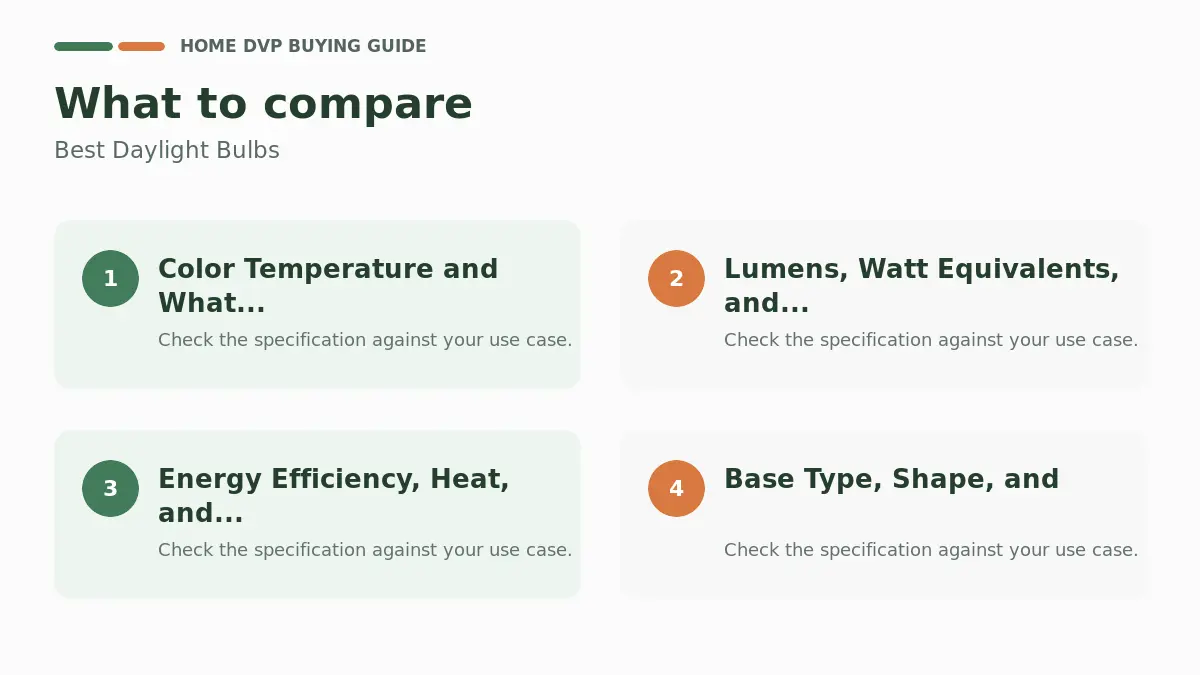
Choosing the best daylight bulbs is simpler when you focus on a few measurable specs rather than marketing language. After carefully analyzing the available specifications across A19 daylight LEDs, we found that color temperature, lumens, wattage equivalent, base type, dimming support, CRI, and certified safety listings separate reliable daily drivers from disappointing purchases. The sections below explain how each factor plays out in kitchens, bathrooms, offices, hallways, and work areas.
Color Temperature and What 5000K Daylight Really Means
Daylight bulbs typically sit around 5000K on the Kelvin scale. That temperature mimics midday outdoor light more closely than warm white (2700K to 3000K) or soft white options. The result is a cooler, cleaner appearance that makes whites look whiter and can improve contrast for tasks like food prep, homework, crafting, or inspecting paint and finishes.
Homeowners often make the mistake of installing pure daylight everywhere. A bright 5000K bulb is excellent over a kitchen island, laundry room, garage, or bathroom vanity, but it can feel clinical in a living room where you want a softer evening mood. Many people mix color temperatures by room rather than buying one type for the entire house. If you are also updating bathroom fixtures, pairing daylight bulbs with a quality LED bathroom mirror keeps grooming light consistent from fixture to fixture.
Based on product data, the models in this guide advertise 5000K daylight white. That consistency makes it easier to stock multiple packs without ending up with mismatched tones between rooms. Always confirm the Kelvin rating on the package before checkout, especially when shopping multipacks or mixed listings.
Lumens, Watt Equivalents, and How Bright You Actually Need
Watts measure energy use, not brightness. Lumens measure light output. Most modern daylight LEDs labeled as 60-watt equivalents deliver roughly 760 to 800 lumens at about 8W to 9W. 100-watt equivalent options commonly push around 1500 lumens at roughly 13W to 15W. That difference is huge in real rooms.
Use 60W-equivalent daylight LEDs for bedrooms, hallways, closets, and general ambient lighting. Choose 100W-equivalent daylight bulbs for kitchens, basements, workshops, garages, and any space where you need strong task light without adding more fixtures. A common homeowner mistake is replacing every old 60W bulb with a 100W-equivalent LED and then complaining the house feels harsh. Match lumen level to the job.
| Equivalent Rating | Typical LED Watts | Approx. Lumens | Best Room Uses |
|---|---|---|---|
| 60W equivalent | 8W to 9W | 760 to 800 lm | Bedrooms, halls, living spaces, closets |
| 100W equivalent | 13W to 15W | About 1500 lm | Kitchens, garages, basements, offices, task areas |
Our research indicates that multipacks in both brightness classes are popular because they make whole-home upgrades affordable. If you are still finishing a remodel, keep a mix of both on hand so you can fine-tune brightness after furniture and paint colors are in place.
Energy Efficiency, Heat, and Long-Term Cost
One of the strongest reasons to switch to best daylight bulbs is energy savings. LED A19 bulbs that replace 60W or 100W incandescents typically cut power use by about 85% to 90%. That matters if you leave lights on for several hours daily in kitchens, bathrooms, or hallways. Cooler operation is another practical benefit: lower heat output is safer near lampshades and can slightly reduce cooling load in warmer months.
Lifespan ratings on the products we reviewed commonly fall between 10,000 and 25,000 hours. At three hours per day, that can translate to roughly 9 to 20-plus years before replacement. Real-world life varies with heat buildup in enclosed fixtures, on-off cycling, and electrical quality, but LEDs still outlast traditional bulbs by a wide margin. Fewer ladder trips to change hallway or stairwell fixtures is a genuine convenience for homeowners and renters alike.
When comparing value, look beyond the sticker price of a pack. Divide the pack cost by the number of bulbs, then consider annual energy use and expected years of service. Bulk 24-packs often win for full-home conversions, while 4-pack and 6-pack options are better when you only need to upgrade a few bright task fixtures.
Base Type, Shape, and Fixture Compatibility
Nearly every product in this category uses a standard A19 shape with an E26 medium screw base. That is the everyday base found in most U.S. table lamps, floor lamps, ceiling fixtures, and many vanity lights. Easy screw-in installation means almost anyone can upgrade without tools. Still, double-check enclosed-fixture ratings, shade clearance, and any smart-switch or dimmer requirements before bulk buying.
A frequent mistake is assuming every LED works in every fixture. Some non-dimmable LEDs will flicker or buzz on older dimmers. Some bulbs are not recommended for fully enclosed globes because heat shortens life. Read the product notes carefully if you plan to use bulbs outdoors under a covered porch, in a damp bathroom, or inside glass fixtures. For bathroom remodels that also involve ventilation and moisture control, it can help to review related home systems such as a bathroom exhaust fan so lighting and humidity management work together.
If your home uses specialty bases such as GU10, GU24, or candelabra, standard A19 daylight multipacks will not fit. Stick with E26 A19 listings when you want drop-in replacements for common household sockets.
Dimmable vs Non-Dimmable Daylight Bulbs
Most of the highly rated daylight multipacks we compared are non-dimmable. That is fine for overhead kitchen lights, laundry rooms, garages, closets, and any circuit controlled only by a simple on/off switch. Non-dimmable LEDs usually cost less per bulb and avoid compatibility issues with outdated dimmers.
Choose dimmable daylight bulbs when you need flexible light levels in dining rooms, bedrooms, or living areas that share the same 5000K preference. Confirm that your wall dimmer is LED-compatible. Pairing a non-dimmable LED with a dimmer is one of the most common causes of flicker, buzzing, and early failure complaints. Amazon Basics, for example, offers both non-dimmable 24-packs and dimmable 6-packs in the same 5000K daylight family, which makes it easy to standardize color while matching control needs room by room.
If you are unsure, start with non-dimmable multipacks for utility spaces and reserve dimmable packs for rooms where mood control matters. That hybrid approach keeps costs down without forcing one control style on every fixture.
CRI, Flicker, and Eye Comfort
Color Rendering Index (CRI) describes how accurately a light source reveals colors compared with natural light. Many daylight LEDs in this group list CRI around 80 or 85+. That is solid for everyday home use and better than older fluorescent tubes that can wash out skin tones and finishes. Higher CRI helps when matching paint samples, preparing food, or applying makeup.
Flicker is equally important for comfort. Product descriptions frequently emphasize no-flicker or low-strobe designs intended to reduce eye strain during long periods of use. While we do not claim hands-on lab testing, the consistent presence of flicker-free marketing and safety certifications such as UL or ETL is a useful signal when shortlisting options. Sensitive users, students, and people who work under artificial light for hours should prioritize those claims.
Also note that mercury-free LED construction and low UV or IR output are standard advantages over older bulb technologies. Families with children or pets often prefer LEDs for that reason alone, especially in frequently touched table lamps and floor lamps.
Pack Size, Brand Value, and Who Should Buy What
Pack size should match your project. A 24-pack of 60W-equivalent daylight LEDs is ideal for converting an entire apartment or single-family home. A 4-pack or 6-pack of 100W-equivalent bulbs is better when you only need high output in a few critical rooms. Brands represented across this guide include AmazonBasics, EENERGETICLIGHTING, MAXvolador, WelcometoGoBright, Brightever, SANSI, giving shoppers a mix of budget multipacks and feature-focused options.
Based on our detailed comparison of listed specs, high-volume packs from Energetic, dalattin, and Amazon Basics suit full-home restocks. Brighter packs from MAXvolador, Evelor, CHARKEE, and TJOY make sense for task-heavy spaces. Dimmable Amazon Basics packs fill a niche for rooms where you still want 5000K light with adjustable intensity.
Avoid choosing only by the lowest total price. A cheap 4-pack of 1500-lumen bulbs can still be a better buy for a garage than an inexpensive 24-pack of lower-output bulbs if brightness is your real need. For broader lighting and fixture planning across wet rooms, you may also want to explore the bathroom fixtures category once your bulb strategy is set.
Installation Tips and Common Mistakes to Avoid
Installation is straightforward: turn off power if you prefer extra caution, allow old bulbs to cool, then screw in the new A19 LED until snug. Do not overtighten. Instant-on performance is a major quality-of-life upgrade over older CFLs that needed warm-up time. Most daylight LEDs reach full brightness immediately.
- Do not put non-dimmable LEDs on dimmer circuits.
- Do not mix vastly different Kelvin ratings in open sight lines if color consistency matters.
- Do not force a bulb into a fixture with insufficient clearance.
- Do not ignore enclosed-fixture warnings if the product lists them.
- Do not assume outdoor exposure is fine unless the listing supports the location.
Renters should photograph fixture labels and keep spare bulbs that match the original base type. Homeowners planning multi-room upgrades can stage installation room by room, starting with kitchens and bathrooms where daylight clarity pays off most. Keeping one open multipack as spares reduces emergency late-night store runs later.
Our Research Methodology & Why You Can Trust Us
Home DVP evaluates best daylight bulbs through specification-based research rather than unverified hands-on claims. We compare manufacturer-listed wattage, lumen output, color temperature, CRI, lifespan estimates, base type, pack quantity, dimming support, certifications, and stated use cases. We also review how product positioning aligns with everyday homeowner needs such as kitchen task lighting, bathroom clarity, garage visibility, and whole-home efficiency upgrades.
Ranking considerations include performance potential from published lumens and Kelvin ratings, feature usefulness, build and safety indicators such as UL or ETL mentions, ease of installation, expected durability from hour ratings, and overall value across pack sizes. User-facing feedback volume and star ratings help us understand real-world reception, but we treat those as supporting context rather than the only signal. Category fit is validated against the Light Bulbs category so recommendations stay relevant.
We update buying guidance during July and throughout 2026 as product lineups and feature sets shift. Transparent methodology matters because lighting purchases are easy to get wrong when marketing language outruns the specs. Our goal is practical, homeowner-first advice that helps you choose confidently without inventing lab results or renovation stories that the product data does not support.
Final Thoughts
If you want a practical shortlist from the valid options we reviewed, start with the Energetic 24-Pack A19 LED Light Bulb as a strong overall pick for whole-home 60W-equivalent daylight conversions. Its combination of 5000K output, multipack convenience, ETL listing, and high review volume makes it a dependable restock choice for standard fixtures. For brighter task areas, the MAXvolador A19 LED Light Bulbs 100 Watt Equivalent 4-Pack stands out as a value-focused high-lumen option with about 1500 lumens and a long rated life.
Homeowners who prefer a widely recognized brand may like the Amazon Basics A19 LED Light Bulbs 24-Pack for straightforward non-dimmable daylight coverage, or the Amazon Basics dimmable 6-pack when adjustable light levels matter. The evelor and TJOY multipacks are solid mid-pack choices when you need either 60W-equivalent or 100W-equivalent brightness without overbuying. CHARKEE and dalattin packs similarly serve shoppers who want bulk energy-saving daylight LEDs for kitchens, offices, and living spaces.
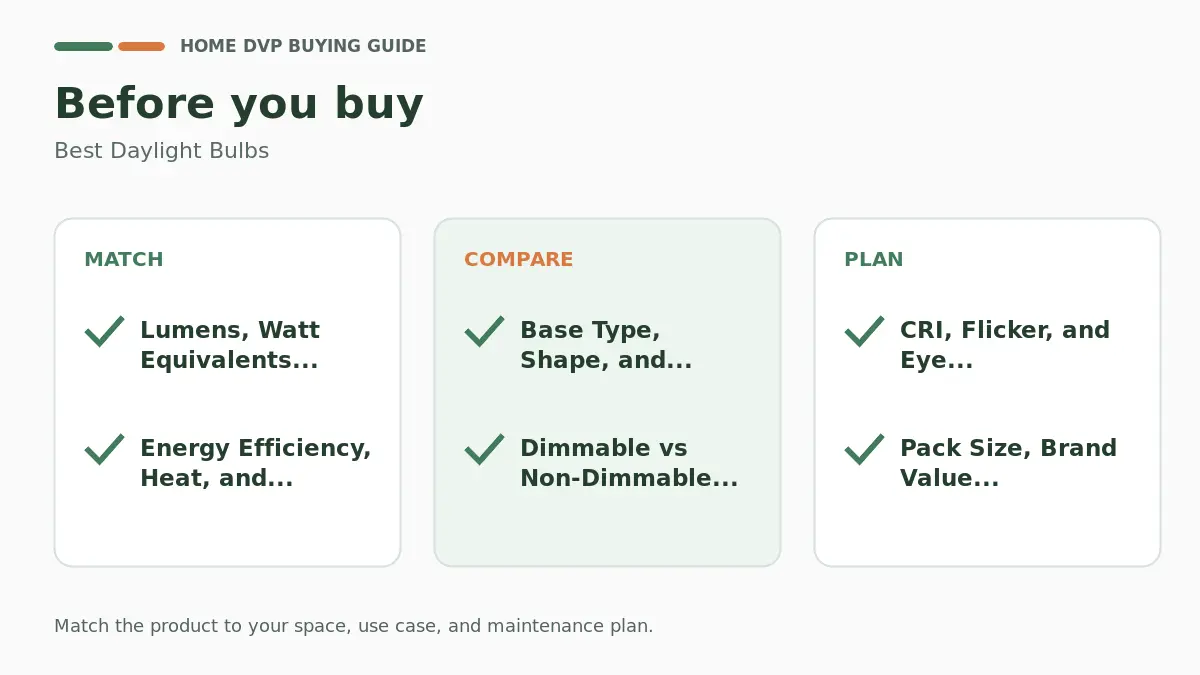
Match brightness to the room, confirm E26 compatibility, and decide early whether you need dimming. Used that way, best daylight bulbs can make daily routines clearer and more efficient while cutting energy waste. For more lighting and fixture planning ideas across the home, browse our Light Bulbs category and related home improvement guides as you map out upgrades for 2026.
FAQ
What should I look for when choosing the best daylight bulbs?
Prioritize 5000K color temperature, the lumen level that fits each room, E26 base compatibility, and whether you need dimming. Also check CRI around 80 or higher, lifespan ratings, and safety listings such as UL or ETL. Matching brightness to the task is more important than chasing the highest watt-equivalent number for every socket.
Are higher-end daylight bulbs worth it?
They can be when you need longer rated life, stronger lumen output, better dimming support, or more reliable certifications. For basic hallway and closet lighting, a solid multipack midrange LED is often enough. Spend more intentionally on kitchens, bathrooms, and workspaces where clarity and consistency matter every day.
About This Home DVP Research
Home DVP is an independent home-improvement research and product-comparison publisher. Ryan Mitchell prepared this guide by comparing manufacturer specifications, compatibility details, retailer-provided product data, key limitations, and common homeowner use cases. We do not claim hands-on testing unless an article explicitly says so.
Review methodology Affiliate disclosure Last reviewed October 16, 2026