
Wi-Fi smart bulbs are convenient for a small installation, Zigbee bulbs suit a larger hub-based lighting system, and Matter improves interoperability across certified ecosystems. Matter is an application standard rather than a replacement name for every radio: a Matter light may communicate over Wi-Fi or Thread, while setup commonly uses Bluetooth Low Energy.
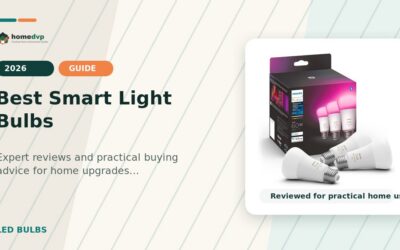
The right path depends on how many lights you plan to add, what controllers you already own, whether local control matters, and which features must work across apps. After choosing the architecture, compare current models in our smart light bulb guide.
Protocol Comparison
| Option | Required hardware | Strength | Watch for |
|---|---|---|---|
| Direct Wi-Fi | Compatible router and vendor app; platform speaker or display may be optional | Simple start for a few bulbs | Wi-Fi band, cloud account, router load, and internet-dependent features |
| Zigbee | Compatible Zigbee hub or coordinator | Established mesh lighting with switches and sensors | Hub compatibility and ecosystem boundaries |
| Matter over Wi-Fi | Matter controller and Wi-Fi network | Cross-platform basic control over existing IP networking | Controller requirements and feature differences between apps |
| Matter over Thread | Matter controller plus compatible Thread border router | Local IP mesh built for connected devices | Confirm that the specific light uses Thread and that border-router support is present |
Wi-Fi Smart Bulbs
A direct Wi-Fi bulb typically joins the home network through its manufacturer app. This keeps the first purchase simple because a separate lighting bridge may not be required. It works well for a bedroom, apartment, or a few lamps where the router has good coverage.
Check whether setup requires 2.4 GHz Wi-Fi, a vendor account, and cloud service. Also review what happens when internet service is unavailable. Local wall control still depends on leaving power supplied to the bulb, and app automations may behave differently from platform-level routines.
Zigbee Smart Bulbs
Zigbee lighting uses a compatible coordinator or hub. Mains-powered devices can participate in a mesh, which can make a planned whole-home lighting network more practical than connecting every bulb directly to Wi-Fi. Mature ecosystems may offer coordinated remotes, motion sensors, and scenes.
“Zigbee” alone does not promise that every bulb exposes every function through every hub. Confirm the exact model, hub, firmware, color controls, transition behavior, and accessory support. Consider how devices will be migrated if the original hub is replaced.
What Matter Changes
The Connectivity Standards Alliance describes Matter as an IP-based smart-home standard using technologies including Wi-Fi, Thread, Ethernet, and Bluetooth Low Energy for setup. Certified devices can be commissioned into supported ecosystems, and Multi-Admin can allow the same device to be controlled by more than one Matter-certified app.
Matter focuses on interoperable device functions. A bulb’s manufacturer app may still provide effects, firmware tools, or scenes that the Matter lighting model does not expose in the same way. Confirm both core controls and any vendor-specific feature you consider essential.
How to Choose
- Inventory existing hubs, speakers, displays, and border routers.
- Decide whether one app or several ecosystems will control the lights.
- Estimate the final number of bulbs, switches, sensors, and rooms.
- Check local behavior during internet loss and after a router change.
- Verify model-level certification, base, brightness, color range, and fixture suitability.
- Test one bulb before converting an entire home.
Plan for Scale and Future Changes
A setup that works with two lamps may become awkward at forty devices. Document device names, rooms, hubs, automations, and the account that owns the home. Before changing a router or platform, check whether credentials can be migrated or whether bulbs must be reset one by one. Keep setup codes and purchase records secure, and remove devices from old accounts before resale.
Network reliability is also physical. A distant garage bulb may need better Wi-Fi coverage, while a mesh protocol depends on compatible powered devices and a healthy coordinator or border router. Do not assume that adding more bulbs repairs every coverage problem; placement, interference, firmware, and the controller all affect results.
FAQ
Does every Matter bulb use Thread?
No. Matter lights can use supported IP transports such as Wi-Fi or Thread. Read the product specification to identify the network and required controller or border router.
Does Matter eliminate the manufacturer app?
Not always. Basic control can be available through a Matter ecosystem while firmware updates, special effects, or troubleshooting still use the manufacturer’s app.
Is Zigbee the same as Matter over Thread?
No. They are different technologies and require compatible network roles. A device labeled Zigbee should not be assumed to join a Thread network, and a Thread border router is not automatically a Zigbee coordinator.
Sources
About This Home DVP Research
Home DVP is an independent home-improvement research and product-comparison publisher. Ryan Mitchell prepared this guide by comparing manufacturer specifications, compatibility details, retailer-provided product data, key limitations, and common homeowner use cases. We do not claim hands-on testing unless an article explicitly says so.
Review methodology Affiliate disclosure Last reviewed October 10, 2026