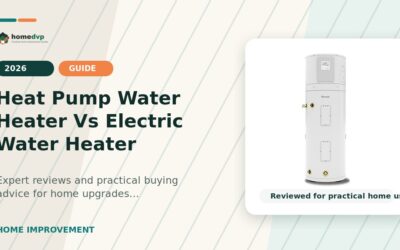

Choosing the best Heat Pump Water Heater is more complicated than picking a standard electric tank. Homeowners need to think about efficiency ratings, tank capacity, installation space, electrical requirements, recovery performance, condensate drainage, and whether the unit fits the way their household actually uses hot water.
After carefully analyzing the available specifications for 15 products, we filtered the list for true residential heat pump water heaters that fit the Plumbing Equipment category. Several listed items were tankless water heaters or pool heat pumps, so we did not treat them as recommendations for this guide. If you are comparing other hot water options, our water heater buying guide is a helpful companion resource.
Based on our detailed comparison, the most relevant models in the available product data are the Rinnai REHP50 Electric Heat Pump Water Heater and the Rinnai REHP65 Electric Heat Pump Water Heater. Both are residential, Energy Star certified electric heat pump water heaters with listed UEF ratings, first hour delivery data, and standard high-voltage installation requirements.
Best Heat Pump Water Heater Buying Guide
A heat pump water heater is a major plumbing and electrical purchase. Unlike a conventional resistance-only electric model, it moves heat from the surrounding air into the water, which can reduce operating costs when installed in the right location. The tradeoff is that these units require more planning around clearance, airflow, condensate removal, and household demand.
Confirm That the Product Is a True Heat Pump Water Heater
The first step is category validation. A true residential heat pump water heater is designed to heat domestic hot water for sinks, showers, laundry, and household plumbing fixtures. In the available data, the Rinnai REHP50 Electric Heat Pump Water Heater and Rinnai REHP65 Electric Heat Pump Water Heater clearly match that use case.
Do not confuse this category with tankless electric water heaters, gas tankless water heaters, or swimming pool heat pumps. Those products can be useful in the right setting, but they solve different problems and should not be compared directly when shopping for the best heat pump water heater for a home plumbing system.
A common buying mistake is choosing a product because it contains the words heat pump without checking whether it is built for domestic hot water. Always verify tank capacity, first hour delivery, voltage, amperage, Energy Star status, and installation requirements before comparing features.
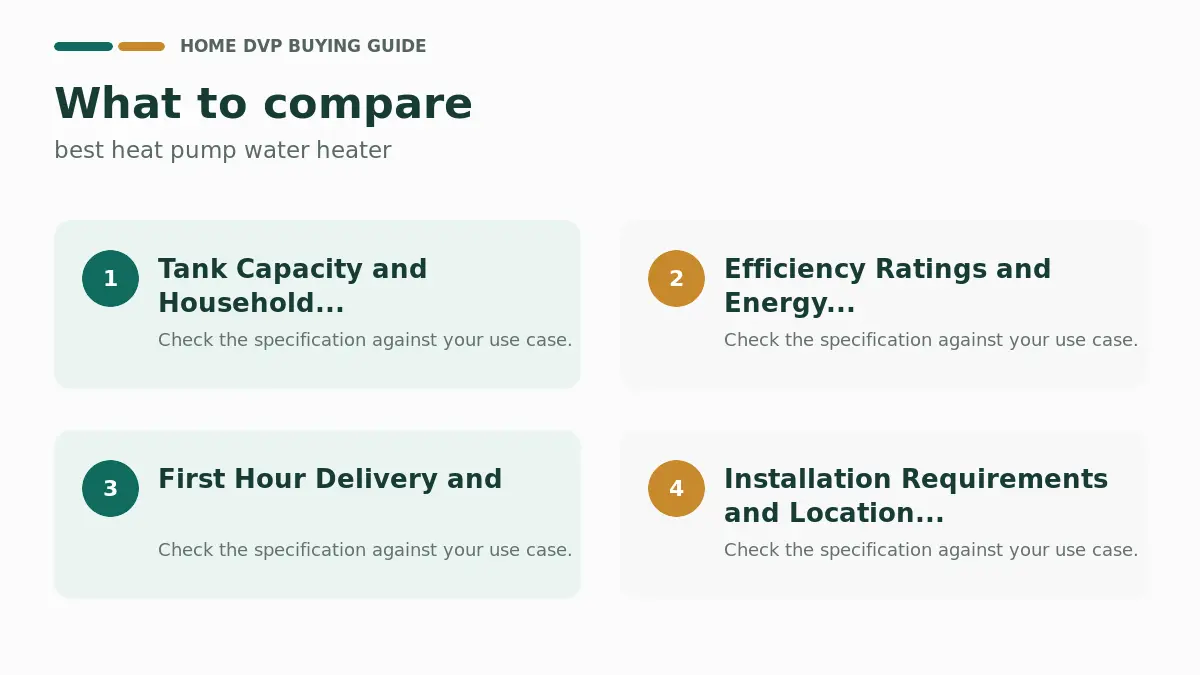
Tank Capacity and Household Demand
Tank capacity determines how much stored hot water is available before the unit needs to recover. The Rinnai REHP50 Electric Heat Pump Water Heater is the more compact match in the provided data, while the Rinnai REHP65 Electric Heat Pump Water Heater offers a larger tank for households with heavier daily demand.
For a small household, guest bath, or lower-demand home, a smaller-capacity heat pump water heater may be easier to fit and more cost-conscious. For larger families, frequent laundry, back-to-back showers, or homes with soaking tubs, the larger model may provide a better buffer against running short during peak use.
| Buying Factor | Why It Matters | Practical Guidance |
|---|---|---|
| Tank capacity | Determines stored hot water volume | Match capacity to household size and peak demand |
| First hour delivery | Shows how much hot water the unit can supply during heavy use | Prioritize higher delivery for back-to-back showers |
| Installation space | Heat pump units need airflow and clearance | Confirm closet, garage, basement, or utility room fit |
| Electrical requirements | Most residential heat pump water heaters need dedicated power | Have a qualified electrician verify panel capacity |
Efficiency Ratings and Energy Star Certification
Efficiency is one of the main reasons homeowners consider the best heat pump water heater. The relevant Rinnai models in the available data are Energy Star certified and list strong UEF ratings, which indicates they are designed to use electricity more efficiently than many conventional electric resistance water heaters.
UEF, or Uniform Energy Factor, helps compare water heater efficiency under standardized conditions. A higher UEF generally indicates better efficiency, but real-world performance still depends on installation location, incoming water temperature, ventilation, usage patterns, and maintenance.
If your current water heater is aging, it can also be worth reviewing broader plumbing upgrade options in the Plumbing Equipment category. Heat pump water heaters are often part of a larger home efficiency project that may also include leak detection, fixture updates, and pipe maintenance.
First Hour Delivery and Recovery Performance
First hour delivery is especially important for families that use a lot of hot water in a short window. It estimates how much hot water the unit can deliver during the first hour of use, combining stored hot water with recovery capability.
The Rinnai REHP50 Electric Heat Pump Water Heater lists a solid first hour delivery figure for typical residential use, while the Rinnai REHP65 Electric Heat Pump Water Heater lists a higher figure that may suit larger households. Based on the product data provided, the larger model is the stronger candidate when peak hot water demand is the deciding factor.
Do not size a water heater only around average daily use. Think about the busiest hour in your home: morning showers, dishwasher cycles, laundry loads, and guests staying overnight. That peak period is where under-sizing becomes noticeable.
Installation Requirements and Location Planning
Heat pump water heaters require more installation planning than basic electric tanks. The listed Rinnai models use high-voltage residential power and should be installed according to local code, manufacturer instructions, and any applicable permit requirements.
Because these units pull heat from the surrounding air, they typically need adequate clearance and airflow. Garages, basements, and utility rooms are often better candidates than tight closets, especially if the space lacks ventilation. Homeowners should also plan for condensate drainage because heat pump operation removes moisture from the air.
If your project also involves comparing tankless options, review our tankless water heater guide. Tankless systems and heat pump tank systems serve different needs, and the right choice depends on utility setup, space, demand, efficiency goals, and installation budget.
Electrical Service, Codes, and Safety
Electrical requirements are not a detail to overlook. The relevant Rinnai heat pump water heaters in the available data specify residential high-voltage operation and a dedicated amperage requirement. That means buyers should verify breaker capacity, wiring, panel space, and local code requirements before ordering.
For DIY-minded homeowners, it may be tempting to treat a water heater swap as a simple appliance replacement. In practice, safe installation often involves plumbing connections, temperature and pressure relief provisions, condensate routing, electrical work, and sometimes seismic strapping or expansion tank considerations depending on the jurisdiction.
Safety also includes leak awareness. A water heater failure can damage flooring, drywall, framing, and stored belongings. If the unit will be installed near finished space, consider pairing the project with a device from our water leak detector guide.
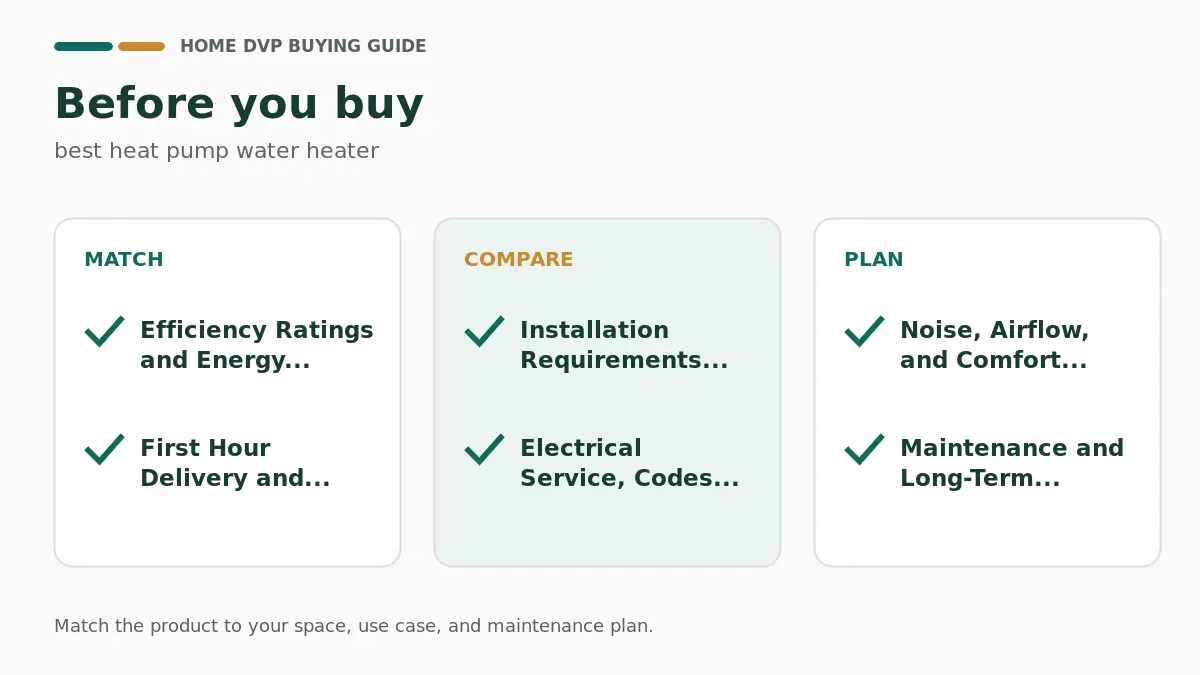
Noise, Airflow, and Comfort Considerations
Heat pump water heaters use a compressor and fan, so they can produce operating noise and cool the surrounding air. This is normal for the category, but it matters when choosing an installation location. A garage or utility room is usually more forgiving than a closet next to a bedroom.
Airflow is also part of performance. If the unit is boxed into a cramped space, efficiency can drop and the heat pump may rely more heavily on backup electric elements. That can reduce the benefit of choosing the best heat pump water heater in the first place.
Before buying, measure the available space, confirm door clearances, check ceiling height, and leave room for service access. A water heater that fits physically but cannot breathe properly is not a good long-term installation.
Maintenance and Long-Term Reliability
Like any water heater, a heat pump model benefits from routine maintenance. Homeowners should follow manufacturer guidance for filter cleaning, condensate line inspection, temperature settings, anode rod care where applicable, and periodic flushing based on water quality.
Hard water can shorten appliance life and reduce performance. If your home has mineral-heavy water, maintenance becomes more important. Sediment buildup can affect heating efficiency, reduce available hot water, and contribute to premature component wear.
For clogged drains, slow utility sink drainage, or maintenance around the water heater area, our drain snake guide may help with related plumbing upkeep. Keeping nearby drains clear is especially useful when routing condensate to an approved drain location.
Product Notes From the Valid Heat Pump Water Heater Data
After comparing the listed specifications, only the following products clearly match best heat pump water heater for residential plumbing use. We are not including tankless water heaters or swimming pool heat pumps in these notes because they do not match the exact buyer intent of this guide.
| Product | Best Fit | Key Specification Notes |
|---|---|---|
| Rinnai REHP50 Electric Heat Pump Water Heater | Overall Pick for many homes | Residential electric heat pump water heater, Energy Star certified, strong UEF rating, suitable first hour delivery for typical household use |
| Rinnai REHP65 Electric Heat Pump Water Heater | Premium Pick for higher demand | Larger residential electric heat pump water heater, Energy Star certified, higher listed UEF, stronger first hour delivery for heavier hot water use |
Our Research Methodology and Why You Can Trust Us
We evaluated the products based on category fit, available specifications, residential plumbing relevance, energy-efficiency indicators, capacity, first hour delivery, electrical requirements, and suitability for common homeowner use cases. Because the available product set included several items outside the domestic heat pump water heater category, we filtered those out of our recommendations rather than forcing unrelated products into the guide.
Our research indicates that the most useful comparison points for the best heat pump water heater are performance, features, build quality, ease of installation planning, durability expectations, safety considerations, value, reliability, and fit for household demand. We also considered whether the available product information was specific enough to support a recommendation.
Based on available product information, the Rinnai REHP50 Electric Heat Pump Water Heater and Rinnai REHP65 Electric Heat Pump Water Heater are the only clearly matching residential heat pump water heaters in the provided data. We did not claim hands-on testing, installation experience, or long-term field testing because the data provided does not support those claims.
This guide is reviewed for relevance during July so homeowners receive current, practical buying advice. When product data is incomplete or outside the category, we prioritize transparency over filling space with weak recommendations.
Final Thoughts
For most homeowners comparing best heat pump water heater, the Rinnai REHP50 Electric Heat Pump Water Heater stands out as the Overall Pick from the valid data. It is a residential electric heat pump water heater with Energy Star certification, a listed UEF rating, and first hour delivery data that make it easier to evaluate against real household needs.
The Rinnai REHP65 Electric Heat Pump Water Heater is the better Premium Pick for households that want more stored hot water and stronger peak-hour support. Its larger capacity and higher listed first hour delivery make it a better fit for families, frequent laundry, multiple bathrooms, or renovation planners replacing an undersized older tank.
If you are not sure whether a heat pump model, standard tank, or tankless system makes more sense, compare this guide with our general water heater recommendations. The right choice depends on space, utility setup, water use, installation cost, and how long you plan to stay in the home.
FAQ
What should I look for when choosing the best heat pump water heater?
Start with tank capacity, first hour delivery, UEF rating, Energy Star certification, and installation requirements. Also confirm that the product is a true domestic heat pump water heater, not a pool heater or a tankless model from another category.
Are higher-end heat pump water heater worth it?
Higher-end models can be worth it when they provide the capacity, efficiency, and first hour delivery your household needs. The value depends on installation cost, energy rates, available space, and how much hot water your home uses during peak periods.
What makes heat pump water heaters different from tankless water heaters?
A heat pump water heater stores hot water in a tank and uses heat from surrounding air to improve efficiency. A tankless system heats water on demand, so it has different sizing, utility, and flow-rate considerations; our tankless water heater guide explains those differences in more detail.