
A smart thermostat is one of the few home upgrades that pays you back. Leave it alone for a week and it quietly learns when you’re around, trims your heating schedule while you sleep, and hands you a savings report at the end of the month — the closest thing to a gadget that does your math homework. But that payoff only shows up if the thermostat actually fits your HVAC setup, your wiring, and the way your family actually lives in the house.
That’s the gap this guide closes. If your HVAC is older or the panel wiring looks like a magic trick, the compatibility notes below matter more than any glossy marketing shot. More climate coverage lives in our Air Quality & Climate section.
Home DVP decision summary
Quick Answer
For Best Smart Thermostat, Home DVP compared 15 products from 3 brands. Verify HVAC compatibility and wiring before comparing app features. Check heat-pump support, stage count, C-wire requirements, local control during an internet outage, sensor options, and the vendor software-support policy.
| Comparison coverage | 15 products from 3 brands, including Sensi, HoneywellHome, Amazon. |
|---|---|
| Selection priority | Verify HVAC compatibility and wiring before comparing app features. Check heat-pump support, stage count, C-wire requirements, local control during an internet outage, sensor options, and the vendor software-support policy. |
| Evidence basis | Manufacturer specifications, compatibility details, retailer-provided product data, and common homeowner use cases. |
| Reference guidance | ENERGY STAR smart thermostat guidance. |
This summary describes the article's comparison set, not every product on the market. Product details should be confirmed before purchase.

Pros
- Built-in air quality monitoring supports healthier indoor conditions with practical guidance
- SmartSensor improves comfort consistency without manual adjustments in key rooms
Cons
- High-voltage and certain specialized systems remain incompatible
- Advanced security alerts require an optional subscription plan
Specifications
| Controller Type | Amazon Alexa, Android, Apple HomeKit, Google Assistant, iOS |
|---|---|
| Additional Features | Amazon Alexa, Siri, Wired Smart Thermostat |
| Specific Uses For Product | Furnace |
| Temperature Control Type | Heating, Cooling |
| Connectivity Technology | Bluetooth |
| Power Source | Battery Powered |
| Voltage | 24 Volts |
| Display Type | LCD |
| Control Type | Button Control |
| Control Method | App |
Verify the current product variation before purchase; specifications may change.
Best For / Avoid If
Best for buyers prioritizing
- Built-in air quality monitoring supports healthier indoor conditions with practical guidance
- SmartSensor improves comfort consistency without manual adjustments in key rooms
- Wide HVAC compatibility and included installation accessories simplify setup for many homes
Consider another option if
- High-voltage and certain specialized systems remain incompatible
- Advanced security alerts require an optional subscription plan
- Full Siri features depend on a separate Apple home hub device

Pros
- Covers compatibility with up to 85 percent of 24VAC HVAC systems via the online checker tool.
- Delivers free software upgrades to sustain long-term performance and features.
Cons
- Power Extender Kit must be purchased separately for installations without a C-wire.
- Trim kit for improved wall appearance is also sold separately.
Specifications
| Controller Type | Amazon Alexa, Android, Apple HomeKit, Google Assistant, iOS |
|---|---|
| Additional Features | Auto-Away Mode, Auto-Scheduling, Fan Control, Programmable, Temperature Display |
| Specific Uses For Product | Air Conditioner, Electric Baseboard Heater, Furnace |
| Temperature Control Type | Cooling |
| Connectivity Technology | Wi-Fi |
| Power Source | Battery Powered |
| Display Type | LCD |
| Screen Size | 3.74 Inches |
| Control Type | Touchpad Control |
| Control Method | Touch |
Verify the current product variation before purchase; specifications may change.
Best For / Avoid If
Best for buyers prioritizing
- Covers compatibility with up to 85 percent of 24VAC HVAC systems via the online checker tool.
- Delivers free software upgrades to sustain long-term performance and features.
- Offers 3-year backing along with expert support available seven days a week by phone email or chat.
Consider another option if
- Power Extender Kit must be purchased separately for installations without a C-wire.
- Trim kit for improved wall appearance is also sold separately.
- Requires pre-purchase compatibility verification since support does not extend to line voltage millivolt or 0-10VDC systems.
Pros
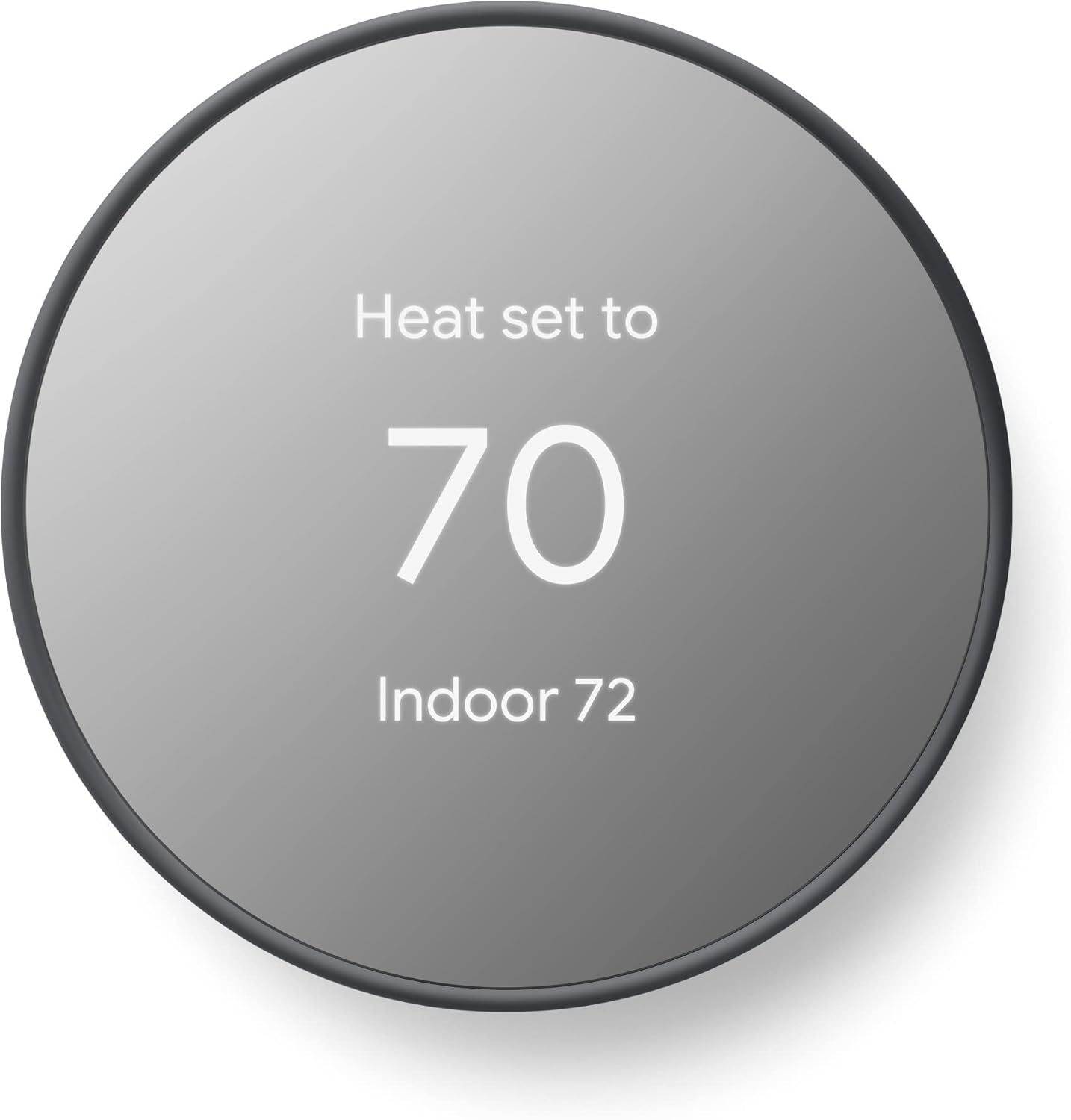
- ENERGY STAR certified design that promotes energy savings while maintaining comfort
- Operates without a C wire in the majority of homes according to listed compatibility details
Cons
- Some systems including heat pumps and zone controlled setups may require a C wire or power accessory
- Remote control and notifications depend on stable internet and Wi Fi connections
Specifications
| Controller Type | Amazon Alexa, Android, Google Assistant, iOS, nest |
|---|---|
| Additional Features | Programmable |
| Specific Uses For Product | Heat Pump |
| Temperature Control Type | Heating, Cooling |
| Connectivity Technology | Bluetooth, Wi-Fi |
| Power Source | Battery Powered |
| Voltage | 24 Volts |
| Display Type | LCD |
| Screen Size | 2 Inches |
| Control Type | Remote Control, Voice Control |
Verify the current product variation before purchase; specifications may change.
Best For / Avoid If
Best for buyers prioritizing
- ENERGY STAR certified design that promotes energy savings while maintaining comfort
- Operates without a C wire in the majority of homes according to listed compatibility details
- Integrates with Google Assistant and Matter certified voice assistants for hands free commands
Consider another option if
- Some systems including heat pumps and zone controlled setups may require a C wire or power accessory
- Remote control and notifications depend on stable internet and Wi Fi connections
- Lacks a lock feature for restricting manual changes

Pros
- Supports energy efficiency via scheduling and reports as an ENERGY STAR certified device.
- Allows installation in many homes without a C-wire using battery power as backup.
Cons
- May still need a C-wire in some HVAC configurations for reliable operation.
- Does not include a color touchscreen display.
Specifications
| Controller Type | Amazon Alexa, Apple HomeKit, Google Assistant, SmartThings, Vera |
|---|---|
| Additional Features | Data Privacy, Easy DIY Install, Energy Savings, Filter Indicator, Programmable |
| Specific Uses For Product | Air Conditioner, Boiler, Furnace, Heat Pump |
| Temperature Control Type | Programmable, Smart/Remote |
| Connectivity Technology | Wi-Fi |
| Power Source | Corded Electric |
| Voltage | 24 Volts (AC) |
| Display Type | LED |
| Screen Size | 5 Inches |
| Control Type | Button Control |
Verify the current product variation before purchase; specifications may change.
Best For / Avoid If
Best for buyers prioritizing
- Supports energy efficiency via scheduling and reports as an ENERGY STAR certified device.
- Allows installation in many homes without a C-wire using battery power as backup.
- Includes privacy protections for connected thermostat data.
Consider another option if
- May still need a C-wire in some HVAC configurations for reliable operation.
- Does not include a color touchscreen display.
- Battery operation requires occasional replacements depending on system demands.

Pros
- ENERGY STAR certified design promotes household energy savings
- Operates without a C wire in most homes for simpler setup
Cons
- Some heating only cooling only zone or heat pump systems require a C wire or accessory
- Compatibility verification is recommended before purchase
Specifications
| Brand | |
|---|---|
| Model Name | Google Nest Thermostat |
| Product Dimensions | 1.07"D x 3.31"W x 3.31"H |
| Controller Type | Amazon Alexa, Android, Google Assistant, iOS, nest |
| Special Feature | Programmable |
Verify the current product variation before purchase; specifications may change.
Best For / Avoid If
Best for buyers prioritizing
- ENERGY STAR certified design promotes household energy savings
- Operates without a C wire in most homes for simpler setup
- Offers app based remote access and voice control options
Consider another option if
- Some heating only cooling only zone or heat pump systems require a C wire or accessory
- Compatibility verification is recommended before purchase
- Does not include a lock feature to restrict changes

Pros
- Automatic energy optimization based on real-time occupancy detection
- Broad smart home platform support for flexible control options
Cons
- Requires a compatibility check before purchase to confirm fit with existing HVAC equipment
- Full multi-room sensing may need separate SmartSensors for best results
Specifications
| Controller Type | Amazon Alexa, Android, Apple HomeKit, Google Assistant, iOS |
|---|---|
| Additional Features | Wired Smart Thermostat |
| Specific Uses For Product | Furnace |
| Temperature Control Type | Heating |
| Connectivity Technology | Wi-Fi |
| Power Source | Corded Electric |
| Voltage | 24 Volts |
| Display Type | LCD |
| Screen Size | 4 Inches |
| Control Type | App Control |
Verify the current product variation before purchase; specifications may change.
Best For / Avoid If
Best for buyers prioritizing
- Automatic energy optimization based on real-time occupancy detection
- Broad smart home platform support for flexible control options
- Hardwired reliability removes concerns over power interruptions
Consider another option if
- Requires a compatibility check before purchase to confirm fit with existing HVAC equipment
- Full multi-room sensing may need separate SmartSensors for best results
- Not compatible with line voltage, millivolt, or 0-10VDC systems
Pros
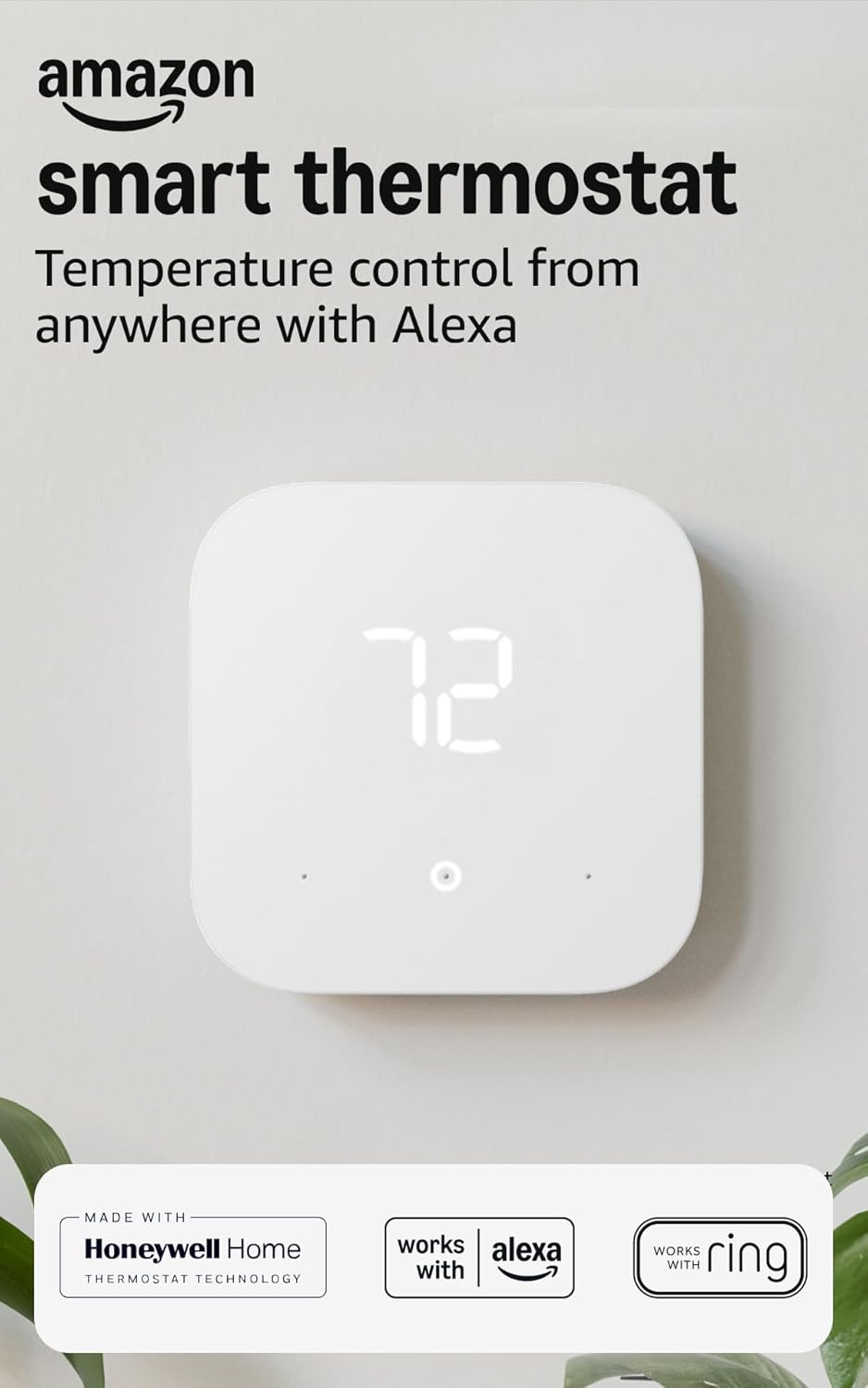
- Alexa connectivity allows hands-free control and multi-device routines
- App-guided setup simplifies installation for many DIY homeowners
Cons
- Requires a C-wire which may necessitate additional wiring work in older homes
- Full comfort zone functionality depends on owning compatible Alexa devices
Specifications
| Size | 3.56 x 3.56 x 0.84 in (90.4 x 90.4 x 21.4 mm) |
|---|---|
| Weight | 3.86 oz (109.5 g) Actual size and weight may vary by manufacturing process. |
| Model number | S6ED3R |
| Certifications | ENERGY STAR – For EPA's ENERGY STAR requirements, see energystar.gov. ECOLOGO Gold – Select replacement parts are available for 3 years after the end of production of your Amazon Smart Thermostat. Learn more here. |
| In the box | Amazon Smart Thermostat, installation tool, wall plate, cosmetic plate, and quick start guide. |
| Network connectivity | 2.4 GHz only, 802.11 b/g/n. Does not support 5GHz networks or connecting to ad-hoc (or peer-to-peer) Wi-Fi networks. |
| Audio | No far-field microphone; Alexa-enabled device required for voice control. |
| On-device control | 3 touch buttons on device (Temperature Up, Temperature Down, Select/Mode). |
| On-the-go-control | Alexa app, voice control, on-device, and Echo device compatible. |
| Installation method | Guided installation in the Alexa app. (You may need a power drill, 3/16” drill bit, and a level.) |
Verify the current product variation before purchase; specifications may change.
Best For / Avoid If
Best for buyers prioritizing
- Alexa connectivity allows hands-free control and multi-device routines
- App-guided setup simplifies installation for many DIY homeowners
- Programmable options and presence features support tailored comfort and efficiency
Consider another option if
- Requires a C-wire which may necessitate additional wiring work in older homes
- Full comfort zone functionality depends on owning compatible Alexa devices
- Advanced voice features tie users to the Alexa ecosystem

Pros
- Offers choice between fixed 7-day programming and automatic geofencing for flexible temperature management
- Provides ENERGY STAR certified efficiency tools including usage reports and alerts
Cons
- Requires verification of low-voltage system compatibility and C-wire presence before installation
- Will not operate with heating-only oil furnace systems unless a C-wire is available
Specifications
| Controller Type | Amazon Alexa, Android, Apple HomeKit, Google Assistant, iOS |
|---|---|
| Additional Features | Auto Changeover, Auto-Away Mode, Daylight Savings Time Ready, ENERGY STAR certified, Fan Control, Geofence Technology, Low Voltage, Programmable, Temperature Display, Vacation Mode |
| Specific Uses For Product | Air Conditioner, Furnace, Heat Pump |
| Temperature Control Type | Heating and Cooling |
| Connectivity Technology | Wi-Fi |
| Power Source | Corded Electric |
| Voltage | 24 Volts |
| Display Type | LCD |
| Screen Size | 4.95 Inches |
| Control Type | Touchpad Control |
Verify the current product variation before purchase; specifications may change.
Best For / Avoid If
Best for buyers prioritizing
- Offers choice between fixed 7-day programming and automatic geofencing for flexible temperature management
- Provides ENERGY STAR certified efficiency tools including usage reports and alerts
- Integrates with multiple voice assistants and supports remote access for everyday control
Consider another option if
- Requires verification of low-voltage system compatibility and C-wire presence before installation
- Will not operate with heating-only oil furnace systems unless a C-wire is available
- Initial setup may require extra steps for users confirming wire labels and voltage type

Pros
- Automatic learning reduces the need for constant manual schedule changes.
- Bundled sensor enables more balanced temperatures without additional purchases.
Cons
- System compatibility should be verified in advance using the provided checker.
- Full features require a stable internet connection for app and voice functions.
Specifications
| Controller Type | Amazon Alexa, Android, Apple HomeKit, Google Assistant, iOS |
|---|---|
| Additional Features | Auto Away Mode, Auto Scheduling, Temperature Display |
| Specific Uses For Product | Air Conditioner |
| Temperature Control Type | Heating,Cooling |
| Connectivity Technology | Wi-Fi |
| Power Source | Battery Powered |
| Voltage | 24 Volts |
| Display Type | Touchscreen |
| Control Type | Button Control |
| Control Method | App |
Verify the current product variation before purchase; specifications may change.
Best For / Avoid If
Best for buyers prioritizing
- Automatic learning reduces the need for constant manual schedule changes.
- Bundled sensor enables more balanced temperatures without additional purchases.
- Broad smart home compatibility supports integration with existing voice devices.
Consider another option if
- System compatibility should be verified in advance using the provided checker.
- Full features require a stable internet connection for app and voice functions.
- Complex HVAC setups may still benefit from professional installation support.

Pros
- Self-install design simplifies the upgrade process for compatible systems
- Manual control remains available even without an internet connection
Cons
- Remote features and notifications depend on a working Wi-Fi connection
- Certain HVAC configurations like heat pumps may require additional wiring accessories
Specifications
| Controller Type | Android, Google Assistant, Vera, iOS, nest |
|---|---|
| Additional Features | Programmable |
| Specific Uses For Product | Heat Pump |
| Temperature Control Type | Heating, Cooling |
| Connectivity Technology | Wi-Fi |
| Power Source | Corded Electric |
| Voltage | 24 Volts |
| Display Type | LED or LCD |
| Screen Size | 6.79 Inches |
| Control Type | Button Control |
Verify the current product variation before purchase; specifications may change.
Best For / Avoid If
Best for buyers prioritizing
- Self-install design simplifies the upgrade process for compatible systems
- Manual control remains available even without an internet connection
- App-based Quick Schedule makes programming adjustments straightforward over time
Consider another option if
- Remote features and notifications depend on a working Wi-Fi connection
- Certain HVAC configurations like heat pumps may require additional wiring accessories
- Availability of Nest Renew is limited to specific utility areas and rate plans

Pros
- Simple app-based scheduling and adjustments for daily convenience
- Automatic energy conservation when away from home
Cons
- Requires Wi-Fi connectivity for full remote and notification features
- Not suitable for all HVAC systems without additional wiring or accessories
Specifications
| Controller Type | Amazon Alexa, Android, Google Assistant, iOS, nest |
|---|---|
| Additional Features | Programmable |
| Specific Uses For Product | Heat Pump |
| Temperature Control Type | Heating, Cooling |
| Connectivity Technology | Wi-Fi |
| Power Source | Corded Electric |
| Voltage | 24 Volts |
| Display Type | LCD |
| Control Type | Touch |
| Control Method | Voice |
Verify the current product variation before purchase; specifications may change.
Best For / Avoid If
Best for buyers prioritizing
- Simple app-based scheduling and adjustments for daily convenience
- Automatic energy conservation when away from home
- Early notifications for HVAC concerns
Consider another option if
- Requires Wi-Fi connectivity for full remote and notification features
- Not suitable for all HVAC systems without additional wiring or accessories
- Demands verification of compatibility prior to purchase
Pros
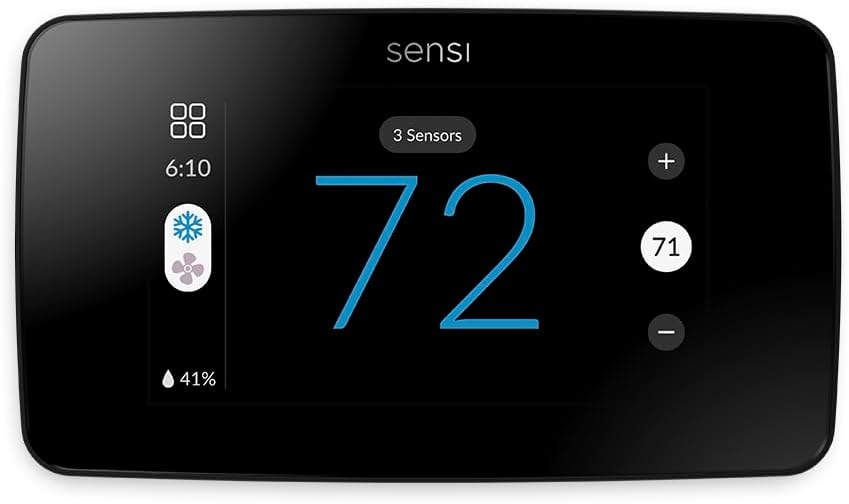
- Works with Sensi room sensors to balance temperatures across multiple rooms
- ENERGY STAR certification supports reduced energy consumption through scheduling tools
Cons
- Requires a common wire for installation which may not exist in every home
- Room sensors must be purchased separately to enable multi-room balancing
Best For / Avoid If
Best for buyers prioritizing
- Works with Sensi room sensors to balance temperatures across multiple rooms
- ENERGY STAR certification supports reduced energy consumption through scheduling tools
- Top-rated app provides step-by-step instructions for straightforward DIY setup
Consider another option if
- Requires a common wire for installation which may not exist in every home
- Room sensors must be purchased separately to enable multi-room balancing
- Advanced features depend on compatible HVAC equipment found in most but not all residences
Pros
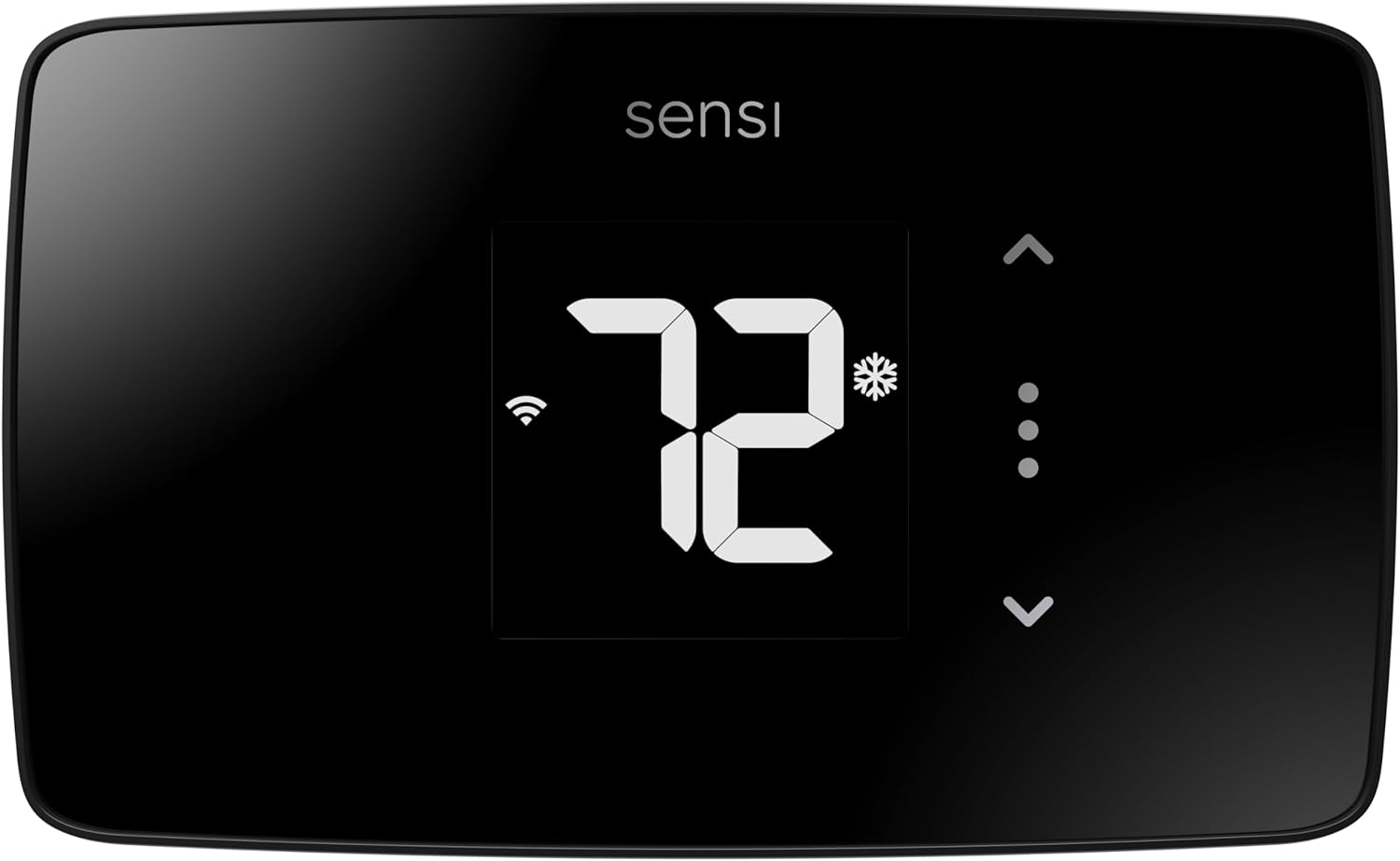
- Straightforward setup suitable for many existing residential systems
- Mobile app allows convenient adjustments from any location
Cons
- Common wire requirement applies to heat pump and heat-only or cool-only systems
- Limited to 2.4 GHz WiFi networks for connectivity
Specifications
| Controller Type | Amazon Alexa, Google Assistant, Hand Control, SmartThings |
|---|---|
| Additional Features | Data Privacy, Easy DIY Install, Energy Savings, Programmable |
| Specific Uses For Product | Air Conditioner, Boiler, Furnace, Heat Pump |
| Temperature Control Type | Automatic or Programmable |
| Connectivity Technology | Wi-Fi |
| Power Source | Battery or C-wire |
| Voltage | 24 Volts |
| Display Type | LCD |
| Control Type | App Control |
| Control Method | App, Touch, Voice |
Verify the current product variation before purchase; specifications may change.
Best For / Avoid If
Best for buyers prioritizing
- Straightforward setup suitable for many existing residential systems
- Mobile app allows convenient adjustments from any location
- Energy-saving tools combined with privacy protections
Consider another option if
- Common wire requirement applies to heat pump and heat-only or cool-only systems
- Limited to 2.4 GHz WiFi networks for connectivity
- New users may need additional time to configure initial schedules
Best Smart Thermostat Buying Guide
Setup Process and Installation Requirements
Choosing the best smart thermostat starts with understanding installation needs. Many models support DIY setups using built-in levels and app guidance, though some require a C-wire for consistent power. Homeowners should verify compatibility with their HVAC system before purchase to avoid professional service calls.
Common mistakes include overlooking wire labels or skipping the compatibility checker. Real-world examples show that models with included power extender kits simplify retrofits in older homes. Always review the system type, such as forced air or heat pumps, to ensure a smooth process.
App Control and Smart Home Integration
App control allows remote temperature adjustments from smartphones or tablets. Integration with platforms like Alexa, Google Assistant, or Siri adds voice commands and automation routines. This feature proves useful for busy households managing schedules on the go.
Consider how well the app handles multiple users or geofencing. Some options provide detailed usage reports that highlight energy patterns. Linking to related resources like the Best Smart Thermostat 2026: Expert Reviews & Buying Guide can expand your smart home knowledge.
Connectivity and Compatibility
Reliable Wi-Fi connectivity ensures consistent performance across most 24V HVAC systems. Check for support of gas, electric, or dual-fuel setups, along with Matter compatibility for future-proofing. Models that work without a C-wire in many homes offer broader appeal.
Practical advice includes testing signal strength near the thermostat location. Poor connectivity can limit remote features, so homeowners in larger properties may need range extenders. Compare options from Sensi, HoneywellHome, Amazon to match your specific equipment.
Energy Savings and Efficiency Features
ENERGY STAR certification appears on many best smart thermostat choices, with potential savings of 20% or more on annual HVAC costs through smart scheduling. Features like occupancy sensing and adaptive learning adjust temperatures automatically when rooms are empty.
Review usage reports for personalized tips on reducing consumption. Avoid over-relying on default settings; instead, customize based on your household routine. This category ties closely with other Best Smart Thermostat 2026: Expert Reviews & Buying Guide topics for whole-home efficiency.
Security and Privacy Considerations
Data privacy matters when selecting connected devices. Look for brands that avoid selling personal information and offer clear encryption standards. Some models include local control options as a backup during internet outages.
Common concerns involve app permissions and firmware updates. Homeowners should enable two-factor authentication where available. Transparent policies from manufacturers in Sensi, HoneywellHome, Amazon build greater trust over time.
Automation and Scheduling Options
Flexible 7-day scheduling or geofencing adapts to changing lifestyles. Advanced models learn preferences and suggest optimizations, while simpler ones allow manual programming. This flexibility supports both consistent routines and variable work-from-home days.
Test geofencing accuracy with your smartphone location services. Overly aggressive automation can cause discomfort, so gradual adjustments work best. Pairing with sensors extends coverage to multiple rooms effectively.
Daily Convenience and User Experience
Touchscreen displays or simple button interfaces affect everyday use. Larger screens with farsight features show information from across the room, while customizable colors blend with home decor. Voice control reduces the need for physical interaction.
Evaluate display brightness and readability in different lighting. Models with built-in speakers for music or alerts add extra utility. Homeowners often appreciate intuitive designs that minimize learning curves.
Maintenance and Long-Term Reliability
Regular filter reminders and system performance alerts help maintain HVAC health. Durable builds from established manufacturers tend to last longer with proper care. Warranty details and update support indicate ongoing reliability.
Track energy reports for early signs of issues. Avoid products lacking clear maintenance guidance. Resources such as the Best Smart Thermostat 2026: Expert Reviews & Buying Guide offer complementary advice for indoor air management.
Our Research Methodology & Why You Can Trust Us
Ranking these thermostats meant living in the setup manuals for a while. We built the comparison around compatibility with common residential systems (forced air, heat pumps, and older two-wire setups), real wiring requirements, app stability, sensor hardware, and whether the promised energy features actually work without third-party subscriptions. Aggregated owner feedback steered us toward units that excel in daily use and away from those that look brilliant on paper but sluggish in practice.
This guide gets refreshed as firmware rolls out and new models land, so check back before you buy.
Final Thoughts
Start with your wiring, not the shiny one. For the vast majority of homes, the Sensi Smart Thermostat is the answer: genuinely simple install, no subscription, solid app, and the kind of ‘set it and stop thinking about it’ reliability that makes a thermostat boring in exactly the right way. It’s our value pick for good reason.
If your home is larger or split across zones, the ecobee Smart Thermostat Premium and Google Nest Learning Thermostat (4th gen) earn their premium price with room sensors, learning schedules, and smarter multi-room presets. The Honeywell Home T5 is the geofencing favorite from Sensi, HoneywellHome, Amazon if you want the thermostat to know when you left without thinking about it. Whichever you land on, pair it with air-circulation advice from our Best Smart Thermostat guide for the full picture.
FAQ
What should I look for when choosing the best smart thermostat?
Focus on compatibility with your HVAC system, C-wire requirements, and supported smart platforms. Energy-saving certifications and easy app controls also matter for long-term satisfaction.
Are higher-end smart thermostats worth it?
Premium models often include advanced sensors and better automation, which can justify the cost in larger homes. Budget options from Sensi, HoneywellHome, Amazon deliver solid basics for simpler needs.
About This Home DVP Research
Home DVP is an independent home-improvement research and product-comparison publisher. Ryan Mitchell prepared this guide by comparing manufacturer specifications, compatibility details, retailer-provided product data, key limitations, and common homeowner use cases. We do not claim hands-on testing unless an article explicitly says so.
Review methodology Affiliate disclosure Last reviewed October 16, 2026