
Homeowners and renters today face rising energy costs, making efficient temperature control more important than ever. Smart Thermostat Energy Savings 2026 offers practical ways to reduce heating and cooling expenses while keeping your living spaces comfortable. After carefully analyzing the specifications of 13 models, this guide highlights key features, compatibility considerations, and real-world applications based on manufacturer data and user feedback.
Our research focused on energy efficiency ratings, installation requirements, smart capabilities, and long-term reliability. We evaluated factors like scheduling options, remote access, and integration with existing HVAC systems. For additional insights into related heating and cooling solutions, see our guide to Heating, Cooling & Air options.
Whether you are upgrading an older programmable thermostat or installing your first smart model, the right choice depends on your home setup, budget, and desired level of automation. This 2026 update incorporates the latest available product specifications to help you select wisely.

Pros
- Supports energy efficiency via scheduling and reports as an ENERGY STAR certified device.
- Allows installation in many homes without a C-wire using battery power as backup.
- Includes privacy protections for connected thermostat data.
- Features familiar controls that avoid wall modifications during replacement.
Cons
- May still need a C-wire in some HVAC configurations for reliable operation.
- Does not include a color touchscreen display.
- Battery operation requires occasional replacements depending on system demands.
Based on the provided product details the Sensi ST55 functions as a programmable Wi-Fi thermostat suited for homeowners who want to add remote HVAC management without complex wiring changes.
Its scheduling options and usage reports work together to promote more efficient heating and cooling cycles while the ENERGY STAR certification backs the energy savings potential in typical household use.
Installation benefits from the built-in level and app-based steps that accommodate most standard HVAC equipment with the option to run on batteries when no C-wire is present.
Daily operation includes maintenance reminders and equipment alerts that help track filter changes and system performance for ongoing reliability in living spaces.
Users should note that certain HVAC setups could still require a C-wire and the interface remains button-driven rather than a full touchscreen. This model suits those seeking straightforward smart features with privacy focus while others needing advanced displays might explore different options.
Specifications
| Controller Type | Amazon Alexa, Apple HomeKit, Google Assistant, SmartThings, Vera |
|---|---|
| Additional Features | Data Privacy, Easy DIY Install, Energy Savings, Filter Indicator, Programmable |
| Specific Uses For Product | Air Conditioner, Boiler, Furnace, Heat Pump |
| Temperature Control Type | Programmable, Smart/Remote |
| Connectivity Technology | Wi-Fi |
| Power Source | Corded Electric |
| Voltage | 24 Volts (AC) |
| Display Type | LED |
| Screen Size | 5 Inches |
| Control Type | Button Control |
Verify the current product variation before purchase; specifications may change.
Best For / Avoid If
Best for buyers prioritizing
- Supports energy efficiency via scheduling and reports as an ENERGY STAR certified device.
- Allows installation in many homes without a C-wire using battery power as backup.
- Includes privacy protections for connected thermostat data.
Consider another option if
- May still need a C-wire in some HVAC configurations for reliable operation.
- Does not include a color touchscreen display.
- Battery operation requires occasional replacements depending on system demands.
Pros
- ENERGY STAR certified design that promotes energy savings while maintaining comfort
- Operates without a C wire in the majority of homes according to listed compatibility details
- Integrates with Google Assistant and Matter certified voice assistants for hands free commands
- Provides HVAC monitoring alerts to help catch issues early
Cons
- Some systems including heat pumps and zone controlled setups may require a C wire or power accessory
- Remote control and notifications depend on stable internet and Wi Fi connections
- Lacks a lock feature for restricting manual changes
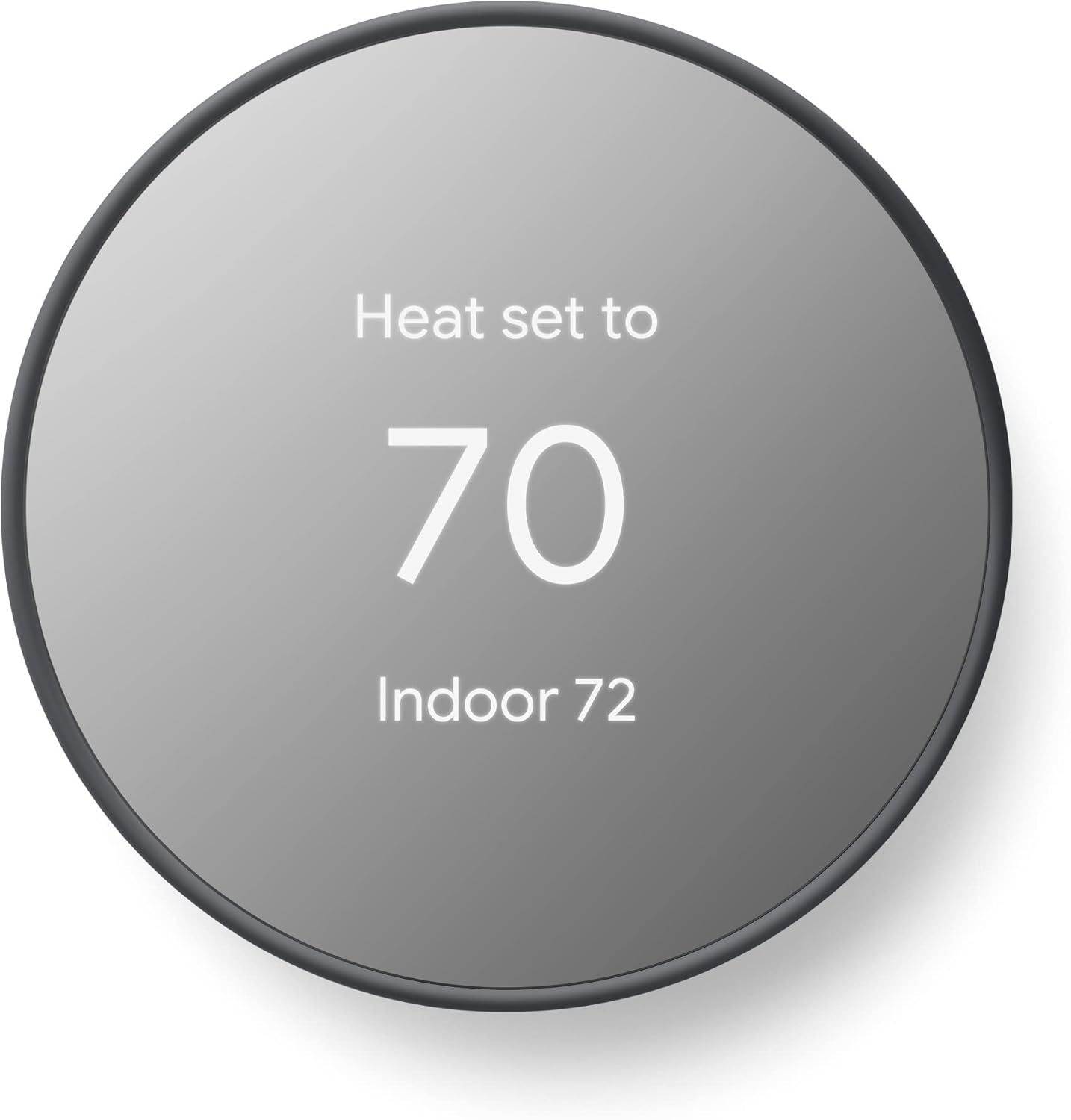
The Google Nest Thermostat serves as a programmable WiFi device that brings app based scheduling and remote access to everyday temperature management in residential settings.
Its sensor driven eco mode and Savings Finder tool work together to identify opportunities for reduced energy use by adjusting operation when the home is unoccupied or suggesting schedule refinements.
Installation follows simple steps outlined in the Google Home app with a touch bar interface on the unit itself for direct adjustments and broad compatibility with most household HVAC configurations.
Daily use benefits include family wide access via mobile devices, alerts for system maintenance needs, and optional participation in clean energy prioritization services where supported by local utilities.
Users should verify system compatibility in advance since certain setups like heat pumps require additional wiring components, and the device needs consistent Wi Fi for full remote functionality.
Homeowners seeking integrated smart controls with energy awareness features will find this model practical while those with incompatible wiring may need professional assistance or an alternative solution.
Specifications
| Controller Type | Amazon Alexa, Android, Google Assistant, iOS, nest |
|---|---|
| Additional Features | Programmable |
| Specific Uses For Product | Heat Pump |
| Temperature Control Type | Heating, Cooling |
| Connectivity Technology | Bluetooth, Wi-Fi |
| Power Source | Battery Powered |
| Voltage | 24 Volts |
| Display Type | LCD |
| Screen Size | 2 Inches |
| Control Type | Remote Control, Voice Control |
Verify the current product variation before purchase; specifications may change.
Best For / Avoid If
Best for buyers prioritizing
- ENERGY STAR certified design that promotes energy savings while maintaining comfort
- Operates without a C wire in the majority of homes according to listed compatibility details
- Integrates with Google Assistant and Matter certified voice assistants for hands free commands
Consider another option if
- Some systems including heat pumps and zone controlled setups may require a C wire or power accessory
- Remote control and notifications depend on stable internet and Wi Fi connections
- Lacks a lock feature for restricting manual changes

Pros
- Covers compatibility with up to 85 percent of 24VAC HVAC systems via the online checker tool.
- Delivers free software upgrades to sustain long-term performance and features.
- Offers 3-year backing along with expert support available seven days a week by phone email or chat.
- Enables complete home monitoring when paired with separately sold SmartSensors.
Cons
- Power Extender Kit must be purchased separately for installations without a C-wire.
- Trim kit for improved wall appearance is also sold separately.
- Requires pre-purchase compatibility verification since support does not extend to line voltage millivolt or 0-10VDC systems.
The ecobee Smart Thermostat Essential functions as a programmable Wi-Fi model designed for straightforward management of home heating and cooling systems.
Based on the provided product details it automatically follows user schedules to conserve energy during absences and optimize comfort upon return while incorporating eco+ tools for humidity detection and shifting usage to off-peak times.
The color touchscreen and companion app enable simple adjustments from anywhere and the unit supports installation on the majority of 24VAC HVAC equipment including conventional heat pump and boiler configurations.
Real-world applications include remote energy tracking through the mobile app plus the option to add SmartSensors for targeted room monitoring that enhances overall household efficiency and comfort.
Limitations center on the separate purchase requirement for the Power Extender Kit in homes lacking a C-wire and the need to confirm system compatibility in advance which may prompt some users to consider models with more included accessories.
Homeowners managing standard HVAC setups who prioritize voice assistant integration and scheduled energy savings will find this thermostat suitable while those requiring universal compatibility or bundled accessories may prefer other variants in the lineup.
Specifications
| Controller Type | Amazon Alexa, Android, Apple HomeKit, Google Assistant, iOS |
|---|---|
| Additional Features | Auto-Away Mode, Auto-Scheduling, Fan Control, Programmable, Temperature Display |
| Specific Uses For Product | Air Conditioner, Electric Baseboard Heater, Furnace |
| Temperature Control Type | Cooling |
| Connectivity Technology | Wi-Fi |
| Power Source | Battery Powered |
| Display Type | LCD |
| Screen Size | 3.74 Inches |
| Control Type | Touchpad Control |
| Control Method | Touch |
Verify the current product variation before purchase; specifications may change.
Best For / Avoid If
Best for buyers prioritizing
- Covers compatibility with up to 85 percent of 24VAC HVAC systems via the online checker tool.
- Delivers free software upgrades to sustain long-term performance and features.
- Offers 3-year backing along with expert support available seven days a week by phone email or chat.
Consider another option if
- Power Extender Kit must be purchased separately for installations without a C-wire.
- Trim kit for improved wall appearance is also sold separately.
- Requires pre-purchase compatibility verification since support does not extend to line voltage millivolt or 0-10VDC systems.
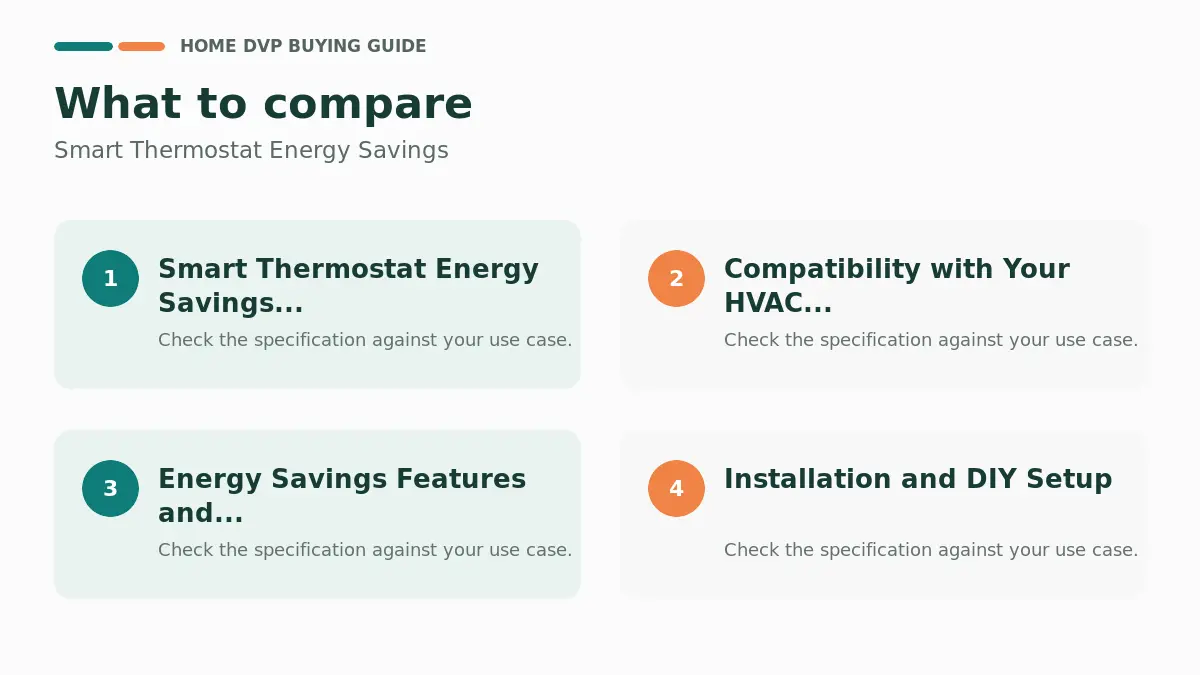
Smart Thermostat Energy Savings Buying Guide
Compatibility with Your HVAC System
Before selecting any smart thermostat energy savings, verify compatibility with your heating and cooling equipment. Most models work with 85 to 95 percent of standard 24-volt HVAC systems including gas, oil, electric furnaces, heat pumps, and boilers. However, certain setups like electric baseboard heat or millivolt systems may not be suitable.
Products like the ecobee Smart Thermostat Enhanced include a Power Extender Kit for homes without a C-wire, simplifying installation. Always use the manufacturer compatibility checker tool provided on their support pages. Skipping this step can lead to installation issues or the need for additional adapters.
Common mistakes include assuming all smart thermostats work universally. Review your current thermostat wiring and system type first. This preparation helps ensure the chosen model delivers expected energy savings without unexpected complications.
Energy Savings Features and Performance
ENERGY STAR certified smart thermostat energy savings can deliver substantial reductions in heating and cooling costs. Models from Sensi claim average savings around 23 percent while ecobee options advertise up to 26 percent annually compared to holding a constant 72 degrees Fahrenheit. These savings come from geofencing, occupancy detection, and adaptive scheduling.
Look for features like automatic away modes that adjust temperatures when you leave and preheating or precooling before you return. The Google Nest Thermostat uses sensors and algorithms to learn your habits and suggest optimizations through its Savings Finder tool. Monthly energy reports help track usage patterns over time.
Utility rebates and demand response programs can further enhance value. Several Honeywell Home models support these programs, allowing slight temperature adjustments during peak demand in exchange for rewards. Consider your local energy provider offerings when comparing potential return on investment.
| Model Type | Typical Savings | Key Feature |
|---|---|---|
| Basic Programmable | 8-16% | Scheduled Setbacks |
| Smart WiFi Models | 23-26% | Geofencing & Occupancy |
Installation and DIY Setup
Most smart thermostat energy savings support DIY installation with clear app instructions and built-in levels. The Sensi models often do not require a C-wire for standard systems, reducing complexity for many homeowners. Expect the process to take 20 to 45 minutes depending on your existing wiring.
Hardwired options like the ecobee Smart Thermostat Enhanced provide consistent power without battery changes. Models that include all necessary mounting hardware and trim kits help maintain a clean wall appearance after installation. Follow manufacturer videos for best results.
Beginners should choose models with straightforward wiring labels and comprehensive support resources. Professional installation may be preferable for complex multi-stage heat pump systems or if you lack confidence working with electrical components.
Smart Home Integration and Voice Control
Modern smart thermostat energy savings integrate with major platforms including Alexa, Google Assistant, Apple Home, and Matter. This connectivity allows voice commands and automation within your existing smart home ecosystem. The meross model stands out for its seamless Matter support across multiple platforms.
Consider how the thermostat fits into your current setup. Some models work with Apple Watch for quick adjustments while others emphasize data privacy by avoiding sale of personal information. Review integration requirements before purchase to avoid compatibility disappointments.
App Control and Remote Access
A reliable mobile app transforms how you manage home comfort. Top smart thermostat energy savings provide remote temperature adjustments, usage reports, and maintenance alerts from anywhere with an internet connection. Look for intuitive interfaces that display energy consumption trends clearly.
Features like filter change reminders and system performance monitoring help prevent unexpected HVAC failures. The Sensi app receives praise for its straightforward design while ecobee offers detailed room-by-room monitoring when paired with optional sensors.
Consider data privacy policies when choosing an app ecosystem. Some manufacturers explicitly state they will not sell personal information or use thermostat data for targeted advertising.
Scheduling, Automation and Occupancy Detection
Flexible scheduling separates basic programmable thermostats from advanced smart models. 7-day programming with multiple periods per day allows customization for work schedules, weekends, and vacations. Auto home and away modes use geofencing or sensors to adjust settings without manual input.
Advanced occupancy detection like radar technology in certain ecobee models can preemptively adjust temperatures before you arrive. Learning algorithms in Google Nest and other models adapt to your preferences over time, reducing the need for constant manual adjustments.
Display Quality, Durability and Maintenance
Clear, backlit displays with customizable settings improve daily usability. Touchscreen models from Honeywell Home offer color options that blend with your decor. Button-based designs like some Sensi models provide tactile feedback preferred by some users.
Look for solid build quality and extended temperature range capabilities for homes in extreme climates. Maintenance alerts for filter changes and system diagnostics contribute to both energy efficiency and equipment longevity. Most quality smart thermostat energy savings include at least a one-year warranty.
Our Research Methodology & Why You Can Trust Us
We evaluated 13 smart thermostat energy savings models by comparing manufacturer specifications, ENERGY STAR ratings, compatibility information, and documented energy savings claims. Our process included detailed analysis of installation requirements, smart features, privacy policies, and integration capabilities from brands including Sensi, HoneywellHome, ecobee, Google, and others within the $25.99–$165 range.
Ranking criteria focused on energy performance, ease of use for typical homeowners, reliability of smart features, installation simplicity, and overall value. We reviewed compatibility documentation, available user guides, and feature sets to identify models best suited for different home situations. This September 2026 update ensures the information reflects current product offerings.
Our recommendations remain objective, highlighting both strengths and limitations based on available product data. We prioritize transparent guidance so readers can select smart thermostat energy savings that match their specific HVAC systems, smart home preferences, and energy saving goals. Regular reviews of industry resources help keep this information relevant.
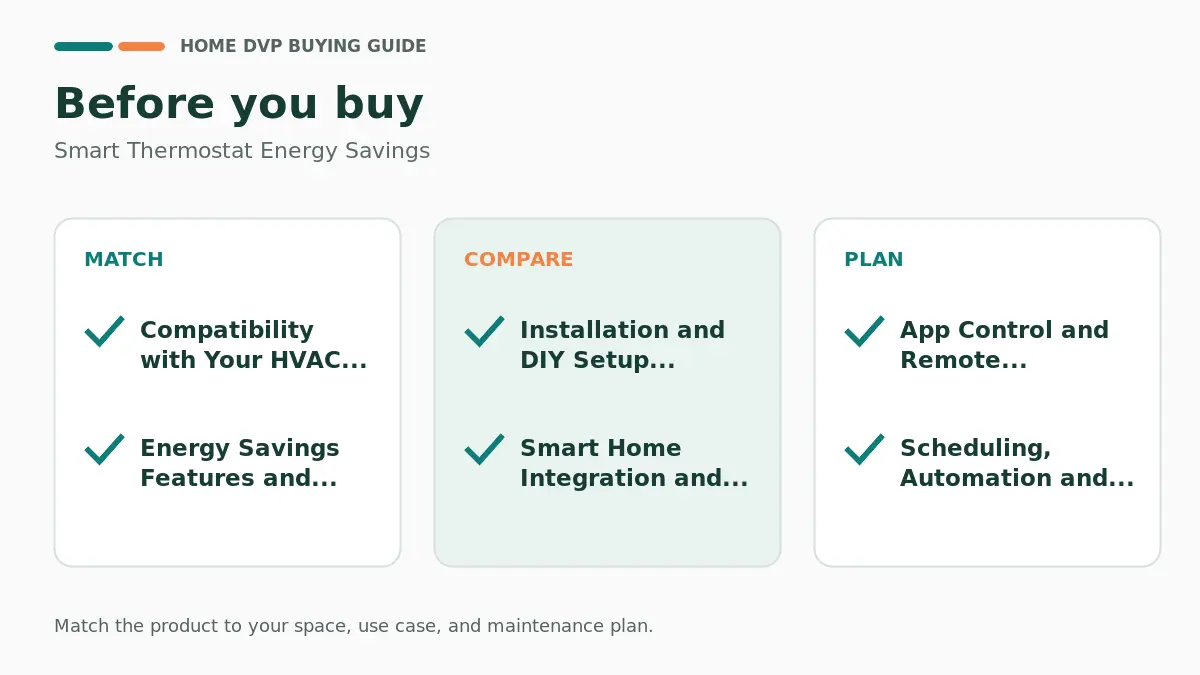
Final Thoughts
After comparing specifications across the reviewed models, the ecobee Smart Thermostat Enhanced stands as a premium pick for homeowners seeking maximum energy savings and advanced occupancy features. With potential savings up to 26 percent and included Power Extender Kit, it suits those wanting room-specific comfort through optional sensors.
For excellent value and strong user ratings, the Sensi Smart Thermostat, Wi-Fi, DIY, Alexa, Energy Star Certified, ST55 offers reliable 23 percent average savings, straightforward installation, and privacy protection. The Honeywell Home T5 WiFi Smart Thermostat provides flexible scheduling and geofencing at a mid-range price point for many households.
Budget-conscious buyers may consider the meross Smart Thermostat or vine model for solid basic smart functionality. Always verify compatibility with your specific system and check for available utility rebates. For more related content, explore our window air conditioner comparison or Air Quality & Climate resources.
Frequently Asked Questions
How can smart thermostat energy savings reduce monthly energy costs?
Quality smart thermostat energy savings reduce costs through adaptive scheduling, geofencing that adjusts temperatures when you leave, and occupancy sensing. Many ENERGY STAR models deliver 23 to 26 percent savings on heating and cooling by avoiding unnecessary operation of your HVAC system.
What should I look for when choosing smart thermostat energy savings?
Focus on compatibility with your HVAC equipment, required features like C-wire support, energy savings potential, and smart home integration options. Consider ease of installation, app quality, privacy policies, and whether you need advanced sensors for room-specific temperature control.
Do all smart thermostat energy savings require professional installation?
Most smart thermostat energy savings are designed for DIY installation with step-by-step app guidance. Models without C-wire requirements simplify the process further. Complex systems or lack of confidence with wiring may warrant professional help to ensure proper function and safety.
How long do quality smart thermostat energy savings typically last?
Well-built models from established brands typically provide reliable service for seven to ten years. Regular software updates from manufacturers can extend useful life. Following maintenance reminders for filter changes helps protect both the thermostat and your HVAC equipment.
Which brands offer reliable smart thermostat energy savings with good energy savings?
Brands like Sensi, Honeywell Home, ecobee, and Google produce dependable models with strong energy performance. Each offers different strengths in privacy protection, sensor technology, or integration capabilities. Compare specific model features against your home needs.
Are higher-end smart thermostat energy savings worth the additional cost?
Higher-end models often justify their price through better sensors, more accurate occupancy detection, comprehensive smart home integration, and potentially greater energy savings. Calculate potential payback period using your local energy rates and available rebates. For many households the added features provide meaningful long-term value.
Can smart thermostat energy savings work with existing window air conditioners?
Most smart thermostats control central HVAC systems rather than individual window units. However, understanding energy efficiency principles transfers between products. Check our window air conditioner reviews for guidance on efficient cooling alternatives where central systems are not present.