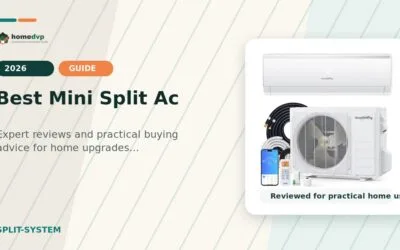

Ductless mini splits have come a long way in a short time. Inverter heat pumps with SEER2 ratings near 20, Wi-Fi or Alexa control, and AHRI or ETL certification now sell in the $309.99 – $699.99 range, a fraction of what comparable systems cost just a few years ago. For this guide, we compared 9 ductless heating and cooling systems from Senville, COSTWAY, ROVSUN and more, looking past marketing copy to the specifications that actually determine comfort, efficiency, and long-term cost of ownership.
Every system in this roundup pairs one wall-mounted air handler with one outdoor condenser, and every one of them heats as well as cools. That makes each unit a candidate to replace a window air conditioner, a space heater, or a stand-alone dehumidifier in a single room or open area. If you are still deciding whether ductless is the right architecture for your space, our comparison of mini split AC vs window AC covers the tradeoffs in noise, efficiency, and permanence.
One caution applies to every pick below: the price on the box is not the price of comfort. All of these systems require a wall penetration, refrigerant line routing, and, in most cases, a licensed HVAC installer, and the 18,000 BTU models also need a 230V circuit. The buying guide that follows explains exactly what to verify before you order, so that a budget unit does not turn into a budget-draining project.

Pros
- Delivers both heating and cooling in a single permanently installed system rated for rooms up to 550 sq.ft.
- Operates as low as 29 dB, making it suitable for sleeping and focused work
Cons
- Requires hardwired 115V power and vacuum-pumping before startup, so installation by a licensed HVAC technician is strongly recommended for most buyers
- Ships in two separate packages and does not include a power cord, which can complicate delivery timing and installation planning
Best For / Avoid If
Best for buyers prioritizing
- Delivers both heating and cooling in a single permanently installed system rated for rooms up to 550 sq.ft.
- Operates as low as 29 dB, making it suitable for sleeping and focused work
- Heats in sub-zero conditions with auto-defrost, removing the need for a separate space heater in cold months
Consider another option if
- Requires hardwired 115V power and vacuum-pumping before startup, so installation by a licensed HVAC technician is strongly recommended for most buyers
- Ships in two separate packages and does not include a power cord, which can complicate delivery timing and installation planning
- Coverage of about 550 sq.ft. may leave larger open floor plans or multiple rooms underserved

Pros
- Inverter heat pump design pairs efficiency with reliable multi-mode climate control
- Quiet performance below 29 dB supports peaceful bedrooms, offices, or living areas
Cons
- Licensed or experienced installation is suggested for users uncertain about wiring and setup steps
- Power cord is not included and must be sourced separately for the specific installation
Best For / Avoid If
Best for buyers prioritizing
- Inverter heat pump design pairs efficiency with reliable multi-mode climate control
- Quiet performance below 29 dB supports peaceful bedrooms, offices, or living areas
- Built-in WiFi enables mobile app management without extra hardware
Consider another option if
- Licensed or experienced installation is suggested for users uncertain about wiring and setup steps
- Power cord is not included and must be sourced separately for the specific installation
- Extended line set distances may require additional refrigerant beyond the pre-charged outdoor unit
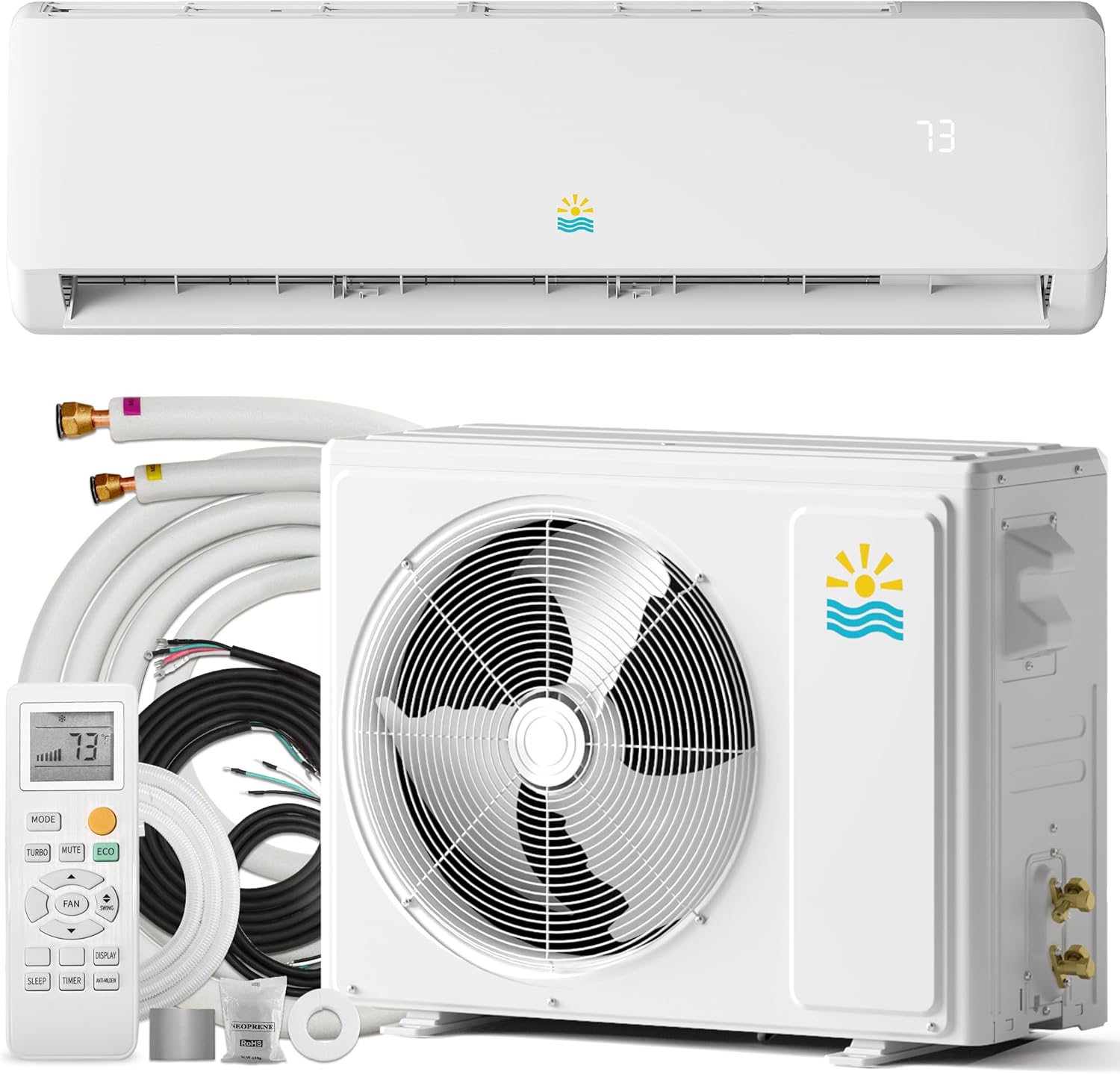
Pros
- Dual heating and cooling capacity suited to multi-season use
- Energy-conscious design with strong SEER2 and ECO support
Cons
- Requires professional HVAC installation rather than simple DIY setup
- Best matched to spaces up to 750 square feet rather than larger open areas
Best For / Avoid If
Best for buyers prioritizing
- Dual heating and cooling capacity suited to multi-season use
- Energy-conscious design with strong SEER2 and ECO support
- Quiet operation and sleep-friendly controls for bedrooms
Consider another option if
- Requires professional HVAC installation rather than simple DIY setup
- Best matched to spaces up to 750 square feet rather than larger open areas
- Operates on 115V/110V power that may involve electrical planning

Pros
- Multiple working modes accommodate varying seasonal and daily needs
- Low-noise operation paired with timer supports restful environments
Cons
- Professional installation by a licensed HVAC technician is required
- Coverage is intended for spaces no larger than 750 square feet
Specifications
| Cooling Power | 12000 British Thermal Units |
|---|---|
| Additional Features | 4 Way Swing, Auto Clean, Dehumidifier, Dust Filter, Eco Mode, Energy Efficient, Fast Cooling, Heating & Cooling Function, Inverter Compressor, Turbo function, iFEEL |
| Color | White |
| Noise | 23 Decibels |
| Refrigerant | R-32 |
| Filter Type | washable |
| Inverter Type | Has Inverter |
| Installation Type | Split System |
| Compressor Type | Scroll |
| Is Outdoor Unit Required | Yes |
Verify the current product variation before purchase; specifications may change.
Best For / Avoid If
Best for buyers prioritizing
- Multiple working modes accommodate varying seasonal and daily needs
- Low-noise operation paired with timer supports restful environments
- Washable filter and high-temperature cleaning reduce manual maintenance efforts
Consider another option if
- Professional installation by a licensed HVAC technician is required
- Coverage is intended for spaces no larger than 750 square feet
Pros
- Wide coverage area suitable for open living spaces and large rooms
- Inverter technology supports consistent temperature regulation year round
Cons
- Professional HVAC installation required due to refrigerant line handling
- Limited to 208/230V power supply
Best For / Avoid If
Best for buyers prioritizing
- Wide coverage area suitable for open living spaces and large rooms
- Inverter technology supports consistent temperature regulation year round
- WiFi app control adds convenient remote access to settings
Consider another option if
- Professional HVAC installation required due to refrigerant line handling
- Limited to 208/230V power supply
- Outdoor unit performance specified only within 19 to 122 degrees Fahrenheit range

Pros
- Combines air conditioning, heat pump heating, dehumidifying, and fan functions in one system
- Offers remote, mobile app, and voice control options for flexible management
Cons
- Professional installation is required, which can add planning and labor for DIY buyers
- Coverage is best matched to 300-550 square foot areas rather than larger open floor plans
Best For / Avoid If
Best for buyers prioritizing
- Combines air conditioning, heat pump heating, dehumidifying, and fan functions in one system
- Offers remote, mobile app, and voice control options for flexible management
- Listed operating range covers outdoor temperatures from 5°F to 122°F
Consider another option if
- Professional installation is required, which can add planning and labor for DIY buyers
- Coverage is best matched to 300-550 square foot areas rather than larger open floor plans
- First-time mini split users may need extra time for electrical, mounting, and line-set routing
Pros
- Inverter technology with 19 SEER2 and HSPF2 8.5 for efficient temperature control
- Four core modes plus ECO and sleep functions for versatile seasonal use
Cons
- Professional HVAC installation is recommended for proper refrigerant handling and mounting
- Lacks WiFi app control available on other models in the line
Best For / Avoid If
Best for buyers prioritizing
- Inverter technology with 19 SEER2 and HSPF2 8.5 for efficient temperature control
- Four core modes plus ECO and sleep functions for versatile seasonal use
- Quiet 42dB operation suited to bedrooms and living areas
Consider another option if
- Professional HVAC installation is recommended for proper refrigerant handling and mounting
- Lacks WiFi app control available on other models in the line
- Heating function may not operate effectively if outdoor temperatures fall below 19°F

Pros
- High 21 SEER2 efficiency rating, with inverter performance the manufacturer says can use up to 50% less energy than 14 SEER2 models.
- Two-in-one heat pump design handles heating and cooling across a wide 5°F to 118°F outdoor operating range.
Cons
- Professional installation by a licensed HVAC technician is required, which adds cost and scheduling beyond the unit itself.
- Shut-off valves and the side protection grille are not included in the installation kit, so those parts must be sourced separately.
Best For / Avoid If
Best for buyers prioritizing
- High 21 SEER2 efficiency rating, with inverter performance the manufacturer says can use up to 50% less energy than 14 SEER2 models.
- Two-in-one heat pump design handles heating and cooling across a wide 5°F to 118°F outdoor operating range.
- Ships pre-charged with an included installation kit, which can streamline professional setup.
Consider another option if
- Professional installation by a licensed HVAC technician is required, which adds cost and scheduling beyond the unit itself.
- Shut-off valves and the side protection grille are not included in the installation kit, so those parts must be sourced separately.
- The refrigerant system is factory sealed and non-user serviceable, meaning any repair work requires a qualified technician.

Pros
- Integrates with smart home ecosystems through Alexa for convenient control
- Provides reliable heating in colder temperatures down to 5F
Cons
- Professional installation is required, increasing overall project costs
- Coverage is best suited for rooms around 400 square feet
Specifications
| Cooling Power | 9000 British Thermal Units |
|---|---|
| Additional Features | Alexa Enabled |
| Color | White |
| Noise | 25 Decibels |
| Refrigerant | R-454B |
| Inverter Type | Has Inverter |
| Installation Type | Split System |
| Compressor Type | rotary_scroll |
| Is Outdoor Unit Required | Yes |
| Air Conditioner Application | Residential |
Verify the current product variation before purchase; specifications may change.
Best For / Avoid If
Best for buyers prioritizing
- Integrates with smart home ecosystems through Alexa for convenient control
- Provides reliable heating in colder temperatures down to 5F
- Comes with necessary components for complete system setup
Consider another option if
- Professional installation is required, increasing overall project costs
- Coverage is best suited for rooms around 400 square feet
- Line set length is fixed at 16 feet, potentially needing extensions
Best Mini Split Under $1500 at a Glance
The table below summarizes the full field in the same order as the product list. Coverage figures and efficiency ratings are manufacturer claims, so treat them as a starting point for sizing conversations with your installer rather than guaranteed results.
| Model | Capacity | Listed Coverage | Efficiency | Power | Standout Feature |
|---|---|---|---|---|---|
| Rellytech 11,500 BTU | 11,500 BTU heat pump | 550 sq ft | 17 SEER2 | 115V hardwired | Heats to -4°F, R32 refrigerant |
| Albott 12,000 BTU | 12,000 BTU heat pump | 750 sq ft | 18 SEER2 | 115V | 5-year compressor, 7-year parts warranty |
| Rellytech 12,000 BTU | 12,000 cooling / 12,500 heating BTU | 750 sq ft | 19 SEER2 | 115V | 8-year warranty platform |
| COSTWAY 12,000 BTU | 12,000 BTU heat pump | 750 sq ft | 20 SEER2 | 115V | 8-year compressor coverage, iFEEL |
| Rellytech 18,000 BTU | 18,000 cooling / 18,400 heating BTU | 1,250 sq ft | 19 SEER2 (title cites 21) | 208/230V | Wi-Fi control, 8-year warranty |
| ROVSUN 11,500 BTU | 11,500 BTU heat pump | Not listed | 17 SEER2 | 115V | Wi-Fi plus Alexa and Google voice control |
| Rellytech 9,000 BTU | 9,000 cooling / 9,000 heating BTU | 550 sq ft | 19 SEER2, HSPF2 8.5 | 115V | Lowest price tier, 8-year warranty |
| YITAHOME 18,000 BTU | 18,000 BTU heat pump | 1,250 sq ft | 21 SEER2 | 208/230V | Air-quality modes, 135°F self-clean |
| Senville LETO 9,000 BTU | 9,000 BTU heat pump | Not listed | 21.5 SEER2 | 110/120V | Built-in Alexa, UL listed |
One data flag worth knowing: the Rellytech 18,000 BTU listing headline cites a 21 SEER2 rating while its specification copy cites 19 SEER2. Where a listing publishes conflicting numbers, ask the seller to confirm the certified rating, and cross-check the model in the AHRI directory when certification matters to you.
Best Mini Split Under $1500 Buying Guide
For shoppers comparing best mini split under $1500, four decisions matter more than everything else: capacity, efficiency, voltage, and installation cost. The eight sections below walk through each one, along with the mistakes we see most often.
Start With Room Size, Then Adjust for the Room Itself
Manufacturer coverage claims in this comparison cluster into three tiers. The 9,000 BTU units, the Rellytech 9,000 BTU model and the Senville LETO, are sized for up to about 550 square feet. The 11,500 and 12,000 BTU group, which includes the COSTWAY, Albott, ROVSUN, and two Rellytech models, targets rooms up to about 750 square feet. The two 18,000 BTU systems cover open areas up to roughly 1,250 square feet. A common rule of thumb is around 20 BTU per square foot for cooling, which is roughly what these claims assume.
Adjust for reality before you commit. A sunny room with tall windows, an uninsulated garage, or a basement workshop needs more capacity than the square footage suggests, while a tight, well-insulated bedroom needs less. Undersized units run flat out on the hottest afternoons, and even inverter models can short cycle when badly oversized, which hurts humidity control. Remember that one air handler conditions the open space it faces; it will not push comfort through two closed bedrooms and a hallway.
Zoning is the other big-picture question. A single-head system like every model here is ideal for one problem room, an addition, or a converted garage. If the goal is to condition an entire house, compare multi-zone systems or central equipment instead; our mini split AC vs central air breakdown walks through that decision. And for renters or anyone who cannot drill through a wall, a ductless unit is the wrong tool, so our portable air conditioner vs window AC comparison covers the reversible alternatives.
Efficiency: What SEER2 and HSPF2 Actually Do to Your Bill
SEER2 measures seasonal cooling efficiency and HSPF2 measures heating efficiency, and both numbers in this comparison come from the inverter compressors these systems share. Inverters modulate compressor speed instead of switching fully on and off, which is why listings claim savings of roughly 25 percent versus older 14 SEER2 class equipment, and in some cases up to 50 percent. Treat those figures as directional rather than promised, because your actual savings depend on runtime, insulation, and electricity rates.
The spread in this group runs from 17 SEER2 on the Rellytech 11,500 BTU and ROVSUN units to 20 SEER2 on the COSTWAY and 21.5 SEER2 on the Senville LETO. If the unit will condition a living space most of the year in a hot climate, the higher ratings pay for themselves over time and also hold temperature more steadily. For a garage or workshop that runs only on weekends, a mid-efficiency model is usually the smarter spend. ECO modes, sleep modes, and programmable timers across the lineup trim consumption further.
Voltage and Electrical Planning Before You Click Buy
Most of these systems run on standard 115V household power, which keeps electrical work simple in most homes. The exceptions are the two 18,000 BTU units, the Rellytech and the YITAHOME, which require 208/230V circuits similar to an electric dryer. Buying an 18,000 BTU system for a garage with only standard outlets means paying an electrician to run a new circuit, and that cost belongs in your comparison from the start.
Wiring detail matters too. The Rellytech 11,500 BTU model requires hardwiring rather than a plug-in cord, and no power cord is included, so flag that for your installer. Line-set length is the second constraint: the Senville ships pre-loaded with refrigerant for runs up to 25 feet, the Rellytech 11,500 BTU includes a 16.42 foot copper line set, and longer runs may require additional refrigerant that a technician must add. Have the installer confirm breaker size, disconnect, and total line length before the unit ships.
The Installation Reality Check
None of these are true plug-and-play units. Every brand in this comparison either requires a licensed HVAC installer or strongly recommends one, the COSTWAY and YITAHOME listings state that a licensed installer is required, and Senville says outright that the LETO is not a DIY mini split. The work involves mounting the indoor bracket, drilling a penetration for lines and condensate, pulling a vacuum on the refrigerant circuit, and making the electrical connection, which is why both Rellytech and Albott specifically note that a vacuum must be pulled before startup.
Logistics trip people up as often as labor does. Several of these systems ship in two boxes, the indoor and outdoor units, and both Rellytech and YITAHOME warn the packages may arrive on different days, so do not book the installer until everything is on site. ROVSUN advises letting the unit stand upright for 24 hours before installation. Get a written quote that includes materials, wall work, and permits, because local labor can rival the cost of the equipment and can flip which system is genuinely the value pick.
Heating Performance and Cold Climates
Every system here is a heat pump, but heat pump output falls as outdoor temperatures drop, so the published operating floor is the number to check. Most units list a low-temperature limit around 5°F, including the Senville LETO, Albott, ROVSUN, and YITAHOME. The standout is the Rellytech 11,500 BTU model, which is rated to heat down to -4°F with automatic defrost, making it the only pick in this group aimed at genuinely cold winters.
In regions with sustained subzero weather, treat any of these as a supplemental or shoulder-season heat source unless the manufacturer confirms strong low-temperature heating capacity in writing. On the cooling side, several listings publish upper limits around 118°F to 122°F, which matters for attic conversions and garage studios in hot regions. If your space cannot accommodate an outdoor condenser at all, our ceramic vs infrared heater guide covers plug-in supplemental heat as a simpler fallback.
Noise Levels for Bedrooms and Home Offices
Published sound figures vary more than you might expect for similar capacities. The Rellytech 11,500 BTU, ROVSUN, and Albott units claim 29 dB or below at low speed, roughly the level of a quiet library, while the Rellytech 9,000, 12,000, and 18,000 BTU platforms list 42 dB and the YITAHOME lists under 49 dB. Lower is better for sleeping, and the minimum figure on the box is usually measured at the lowest fan speed, so ask how a rating was measured if bedroom use is the goal.
Small features compound here. Screen-off or LED-off functions on the Rellytech, ROVSUN, and YITAHOME units kill the display light at night, sleep modes ramp temperature gradually, and 24-hour timers let the system quiet down before bedtime. Keep in mind that turbo mode on any of these is louder by design, so a unit marketed as whisper quiet will still make itself heard when you demand maximum airflow.
Smart Controls: Wi-Fi, Alexa, and iFEEL
Connectivity splits the field into two camps. The Senville LETO is Alexa-enabled out of the box with app control and geofencing, the ROVSUN adds a mobile app plus Alexa and Google Assistant voice control, the YITAHOME offers Wi-Fi and Alexa alongside the remote, and the Rellytech 18,000 BTU and Albott units add app control to the standard remote. The remaining models, including the COSTWAY and the 9,000, 12,000, and 11,500 BTU Rellytech units, are remote-control only, though each remote includes a 24-hour timer.
Two smart features deserve attention beyond branding. iFEEL, found on the Rellytech 11,500 BTU, COSTWAY, and YITAHOME, turns the remote into a temperature sensor so the system reads conditions where you sit rather than at the air handler, which helps in rooms where the couch sits far from the unit. App scheduling and geofencing on the Senville and ROVSUN let you pre-cool a room before you arrive home instead of running the system all day, which is where connected control actually saves money.
Warranty Terms and Long-Term Ownership
Warranty structure in this group is unusually varied, and the compressor clause matters most because the compressor is the costliest component to replace. The Rellytech 9,000, 12,000, and 18,000 BTU platforms carry 8-year warranties, the COSTWAY provides 5 years of parts coverage plus 8 years on the compressor, the Albott splits coverage into 5 years on the compressor and 7 years on parts, and the Senville LETO and the Rellytech 11,500 BTU offer 5-year terms, with Senville explicitly excluding labor.
Read the fine print about what voids coverage, because unlicensed installation is the usual culprit across this category. Ownership tasks are simple but real: rinse the washable filters regularly, use the self-cleaning cycles where equipped, which include a one-touch coil dry on the Rellytech 11,500 BTU, a 134.6°F hot clean on the COSTWAY, and a 135°F self-diagnosis cycle on the YITAHOME, and keep the outdoor condenser clear of debris and snow. These are sealed, pre-charged refrigerant systems, so any refrigerant service belongs to a certified technician, and registering the product while saving the invoice will make any future claim painless.
Our Research Methodology and Why You Can Trust Us
This comparison is built on specification analysis, not showroom impressions. We reviewed the published documentation for 9 ductless heat pumps currently sold in the $309.99 – $699.99 band, normalized the numbers into the capacity and efficiency tiers shown above, and checked certification claims, including the AHRI, ETL, and UL listings several manufacturers cite. We also placed warranty structures side by side, because service terms reveal how manufacturers expect these systems to hold up. This guide is reviewed and refreshed regularly, most recently in November 2026, and you can find more coverage in our Heating, Cooling & Air category.
We weighted six criteria: performance claims against listed coverage, efficiency ratings, feature depth, build quality signals such as refrigerant type and certifications, installation transparency, and long-term value including warranty strength. Safety and reliability indicators, like auto-defrost, self-diagnosis, and low-temperature limits, were scored within performance, while ease of use covered remote quality, smart control, and maintenance features. No single spec decided a ranking; a strong warranty could offset a mid-tier SEER2 number, and vice versa.
Our limitations are worth stating plainly. We did not purchase, install, or run these units, so we make no hands-on performance claims, and we deliberately excluded star ratings because the listings show too few verified reviews to be a fair signal. Prices and promotions change frequently, so confirm current pricing before you buy. Where documentation conflicted, as with the Rellytech 18,000 BTU SEER2 figures, we flagged it rather than guessing.
Final Thoughts
For most bedrooms and living areas up to 750 square feet, the COSTWAY 12000BTU Mini Split Air Conditioner is our overall pick. It pairs 20 SEER2 inverter efficiency with five operating modes, automatic defrost, a 134.6°F self-cleaning cycle, and the strongest warranty combination in the field at 5 years parts and 8 years on the compressor. If budget leads your decision, the Rellytech Mini Split AC/Heating System delivers a 19 SEER2 inverter platform with HSPF2 8.5 heating and an 8-year warranty at the lowest price tier in this comparison, and its 12,000 BTU sibling, the Rellytech Mini Split AC/Heating System, extends coverage to 750 square feet for a modest step up in cost.
Cold-climate buyers should shortlist the Rellytech 11500 BTU Mini Split AC/Heating System, the only unit here rated to heat down to -4°F, with 29 dB low-speed operation, iFEEL room sensing, and R32 refrigerant. Smart home households will get the most from the Senville LETO Series Mini Split Air Conditioner, which combines the top efficiency rating in the group at 21.5 SEER2 with built-in Alexa, app control, and geofencing, keeping in mind that Senville mandates professional installation and excludes labor from its warranty. If quiet operation tops your list, the ROVSUN 11500 BTU Wifi Enabled Mini Split Air claims 29 dBa at low speed with Wi-Fi and voice control, while the Albott Mini Split Air Conditioner and Heater matches that quiet figure and adds app control with a 5-year compressor and 7-year parts warranty.
Open floor plans up to 1,250 square feet belong to the 18,000 BTU tier. The YITAHOME 21 SEER2 18000 BTU Mini Split AC/Heating adds Wi-Fi, Alexa, and air-quality modes, while the Rellytech Mini Split AC Heating System covers the same footprint with Wi-Fi control and an 8-year warranty; both require a 208/230V circuit, so price that electrical work before ordering. Whatever you choose, collect an installation quote first, because labor, a new circuit, or a longer line set can change which system is truly cheapest to own. If those quotes push the project past your ceiling, stepping down to the Rellytech or Albott 12,000 BTU models preserves most of the comfort at a meaningfully lower total cost.
Frequently Asked Questions
What size mini split do I need for a 500 square foot room?
A 9,000 BTU unit is the usual fit for a room that size in a moderately insulated home, and this comparison includes options like the Rellytech 9,000 BTU model and the Senville LETO. Step up to an 11,500 or 12,000 BTU system if the room gets heavy sun, has high ceilings, or sits above a garage. Between two sizes, the larger unit is usually the safer choice, since a slightly oversized inverter handles part-load conditions gracefully while an undersized one struggles on the hottest days.
Do any of these mini splits qualify as DIY projects?
Not really. Every brand in this guide requires a licensed HVAC installer or strongly recommends one, and several tie warranty coverage to professional installation. The job involves opening a sealed refrigerant circuit, pulling a vacuum, routing a condensate line, and in some cases hardwiring the unit. Experienced owners do complete these installations, but doing so can put parts and compressor coverage at risk, so read the warranty terms before deciding.
Can a mini split in this price class heat a room through winter?
Every system here is a heat pump, but their cold-weather limits differ. Most list reliable operation down to about 5°F, while the Rellytech 11,500 BTU model is rated to heat down to -4°F with automatic defrost. In climates with sustained subzero nights, confirm low-temperature heating capacity with the manufacturer in writing and plan on supplemental heat for the coldest stretches.
How long should a ductless mini split last?
With regular filter cleaning and periodic professional service, a quality ductless heat pump commonly delivers 10 to 15 years of service, and the compressor usually determines the end of that span. Warranty terms here run from 5-year limited coverage up to 8-year compressor protection, which is a reasonable proxy for manufacturer confidence. Keep your invoice and register the product to protect those terms.
What maintenance does a ductless system need after installation?
Homeowner tasks are light: rinse the washable filters on a regular schedule, run the self-clean cycle where equipped, and keep the outdoor unit free of leaves, grass, and snow. Many of these systems also include a dry mode that strips humidity from the air, though a dedicated appliance may serve persistently damp basements better; our dehumidifier vs air purifier guide explains when each tool makes sense. Beyond that, an annual professional checkup keeps refrigerant charge and electrical connections healthy.
Are higher SEER2 ratings worth paying extra for?
Usually yes for a unit that conditions a living space most of the year, because the efficiency gap between a 17 SEER2 model and a 21 SEER2 inverter compounds across a long cooling season. For a workshop or garage that runs only occasionally, the payback period stretches out and a mid-efficiency unit is often the smarter buy. Base the decision on your electricity rate and honest runtime estimates rather than the number alone.
How much should I expect to pay for installation?
None of these listings include labor, and quotes vary widely with wall construction, line-set length, routing challenges, and whether a new circuit is required. Ask for a written total that covers the bracket, the wall penetration, condensate management, the vacuum pull, electrical hookup, and permit fees. Getting that figure before you order is the single best way to avoid a budget surprise.