
Choosing between a continuous electronic radon monitor and a mail-in radon test kit can be confusing, especially because both are designed to answer the same basic question: is radon building up inside your home? This Radon Detector Vs Radon Test Kit guide is designed for homeowners, renters, buyers, sellers, and DIY-minded families who want a clearer way to compare convenience, accuracy, long-term monitoring value, lab reporting, and overall ease of use.
After carefully analyzing the available specifications, product positioning, use cases, and user-facing details for 15 products, we focused on options that clearly fit the Air Quality & Climate category. Radon is not something most people can see, smell, or feel, so an updated comparison matters for basements, finished lower levels, home offices, rental units, and real-estate transactions. If you are also improving general indoor air quality, our Air Quality & Climate category includes related guides for broader home comfort and safety planning.
Home DVP decision summary
Quick Answer
For Radon Detector Vs Radon Test Kit, Home DVP compared 15 products from 10 brands. Choose a short-term kit for an initial screening and a continuous monitor for trends and repeated checks. Follow device placement and test-duration instructions, confirm elevated results, and use qualified testing or mitigation help when results approach or exceed EPA guidance.
| Comparison coverage | 15 products from 10 brands, including PRO-LAB, Airthings, AEGTEST. |
|---|---|
| Selection priority | Choose a short-term kit for an initial screening and a continuous monitor for trends and repeated checks. Follow device placement and test-duration instructions, confirm elevated results, and use qualified testing or mitigation help when results approach or exceed EPA guidance. |
| Evidence basis | Manufacturer specifications, compatibility details, retailer-provided product data, and common homeowner use cases. |
| Reference guidance | EPA residential radon guidance. |
This summary describes the article's comparison set, not every product on the market. Product details should be confirmed before purchase.
Based on our detailed comparison, the biggest decision is whether you need quick placement and a lab report from a test kit, or ongoing readings from a digital detector. We evaluated the products based on monitoring type, ease of setup, reporting method, suitability for short-term or long-term use, safety alerts, battery operation, smart features where available, homeowner practicality, and value within $12.99–$142.
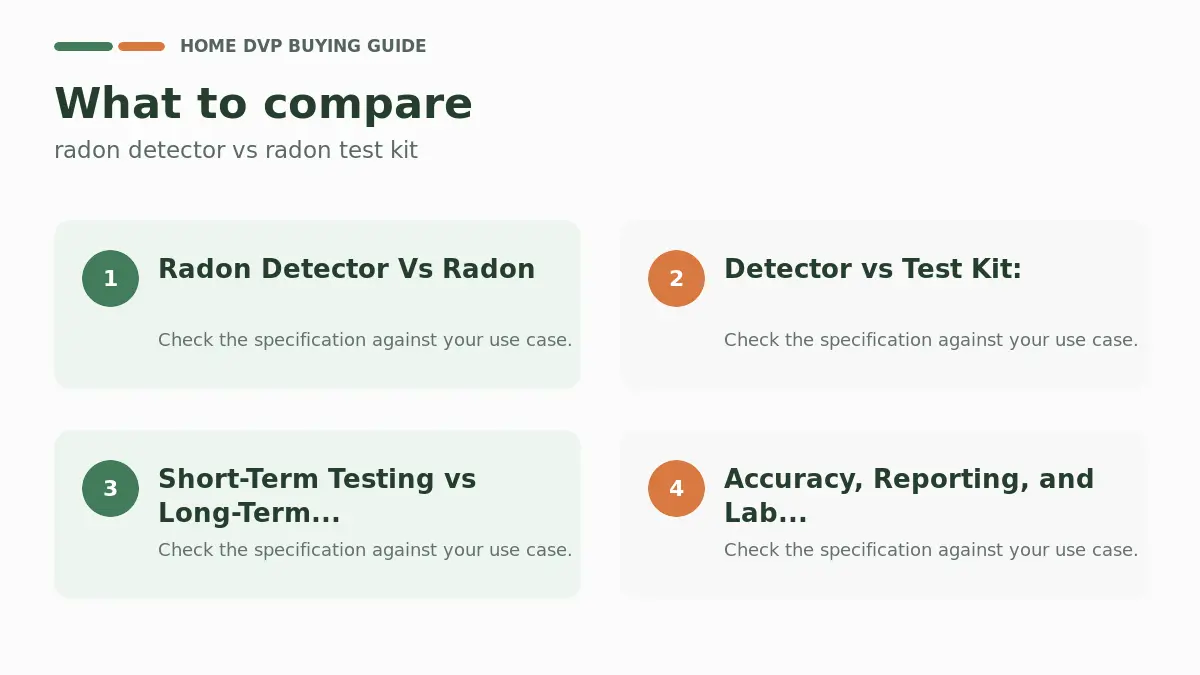
Radon Detector Vs Radon Test Kit Buying Guide
Radon detectors and radon test kits serve related but different jobs. A detector is usually an electronic device that sits in the home and displays readings over time. A test kit is typically placed for a defined period and then sent to a lab or processed according to the kit instructions. Both can be useful, but the right choice depends on whether you need ongoing awareness, documentation, a one-time screening, or a follow-up after mitigation work.
Detector vs Test Kit: Start With Your Goal
The first step is deciding what question you need answered. If you want to know whether a basement, bedroom, or lower-level living area has changing radon levels over time, a continuous radon detector such as the Airthings Corentium Home Radon Detector 223, HOUND-1011S Portable Radon Detector, Radon Detector by Forensics, or Airthings 2950 Wave Radon is generally the more practical style. These devices are designed for repeated readings and ongoing visibility rather than a single lab result.
If your goal is a one-time screening, a real-estate check, or an inexpensive starting point, a radon test kit may make more sense. Options such as the First Alert Radon Gas Test Kit, RD1, EPA-Approved Radon Test Kit for Home with Lab Analysis Included, PRO-LAB Radon Test Kit for Home, PRO-LAB Radon Gas Short-Term Test Kit, Radtrak³ Radon Detector for Home, and RadonAway Complete Radon Test Kit focus on placement, timing, and lab-related reporting rather than continuous electronic display.
| Need | Better Fit | Why It Matters |
|---|---|---|
| Ongoing basement monitoring | Electronic radon detector | Lets homeowners watch trends and changes over time. |
| Basic first screening | Short-term radon test kit | Lower entry cost and simple placement instructions. |
| Real-estate documentation | Lab-based test kit | Some buyers and sellers prefer a lab report for records. |
| Post-mitigation follow-up | Detector or lab kit | A detector helps track trends, while a kit may provide a report. |
Short-Term Testing vs Long-Term Monitoring
Short-term radon testing can be helpful when you need a snapshot. Many homeowners use a short-term kit before finishing a basement, moving a child into a lower-level bedroom, or deciding whether to call a radon mitigation professional. The mistake is treating one short test as the entire story. Radon can vary with weather, ventilation, season, foundation conditions, HVAC patterns, and how often windows or doors are opened.
Long-term monitoring is better for homeowners who want to understand trends. The Airthings Corentium Home Radon Detector 223 is positioned as a portable, battery-operated monitor, while the Airthings 2950 Wave Radon adds smart features through an app along with humidity and temperature sensing. A long-term test kit such as the Radtrak³ Radon Detector for Home is also intended for extended measurement, but it follows a kit-style process rather than a digital display model.
For practical home maintenance, think of short-term testing as a checkup and long-term monitoring as an ongoing watch. If you are already upgrading indoor comfort systems, you may also want to compare ventilation and filtration choices in our HVAC filter guide, since airflow patterns can affect how homeowners manage overall indoor air quality.
Accuracy, Reporting, and Lab Fees
Accuracy is not only about the device or kit. It is also about correct placement, correct timing, closed-house conditions when required, and following the manufacturer instructions. With radon test kits, homeowners should pay close attention to whether lab analysis, mailing, or return shipping is included. Some kits in this comparison highlight lab analysis included, lab fees included, or return mailer included, which can make the process simpler for first-time users.
Electronic detectors reduce the wait for mail-in results because readings appear on the device or in an app, depending on the model. However, they may not replace a formal lab report if you need documentation for a home sale, lease issue, or contractor record. The HOUND-1011S Portable Radon Detector includes audible and visual alarms according to the product data, which may appeal to homeowners who want alerts rather than passive results.
- Check whether a test kit includes lab analysis before buying.
- Confirm whether return mailing or discounted shipping is part of the kit process.
- For detectors, look for clear display units such as pCi/L or Bq/m³ if listed.
- For real-estate use, ask what type of report or documentation is acceptable before choosing.
Ease of Setup for Homeowners and Renters
Radon testing should be simple enough that homeowners actually complete it correctly. Test kits usually require opening the detector, placing it in the right area, leaving it undisturbed for the required period, then mailing or submitting it according to the instructions. A common mistake is placing the kit too close to windows, vents, damp areas, or high-traffic spots where it can be disturbed.
Electronic detectors can be easier for repeat use because you place the unit, power it, and monitor results over time. Battery-operated models are useful in basements, utility rooms, and unfinished areas where outlets are inconvenient. The Airthings Corentium Home Radon Detector 223 uses AAA battery operation according to the listed product information, making it a practical option for portable placement around the home.
Renters should consider portability and documentation. A digital monitor can move with you, while a kit may be better when you want a single report to share with a property manager. In either case, take notes about placement location, start and end time, and any unusual ventilation changes during the test period.
Smart Features, Alarms, and Daily Convenience
Smart features are not required for radon safety, but they can improve daily convenience. The Airthings 2950 Wave Radon is listed as a smart radon detector with humidity and temperature sensing, battery operation, and app support. That combination may be useful for homeowners who already manage indoor comfort through connected devices or who want to check trends without reading a standalone screen every time.
Alarms can also matter. A detector with audible and visual alerts may be easier for busy households because it calls attention to changing conditions. For people who do not want apps, accounts, or notifications, a simple display-based detector or a traditional lab kit may be a better fit. If smart home comfort is part of your broader upgrade plan, our smart thermostat guide covers related decision points around monitoring, scheduling, and connected controls.
Basement, Crawl Space, and Living Area Placement
Radon typically enters through soil contact points, foundation cracks, sump openings, crawl spaces, slab gaps, and utility penetrations. That is why basements and lower-level rooms often become the first testing locations. Homeowners should test the lowest livable level, not necessarily the darkest corner of an unfinished storage area, unless the manufacturer instructions say otherwise.
For finished basements, place the detector or test kit in a normal breathing zone away from exterior doors, windows, vents, fireplaces, and high humidity sources. For crawl-space concerns, a mitigation professional may be needed to interpret what should be tested and where. If you are also improving basement comfort, a broader heating, cooling, and ventilation review can help, and the Heating, Cooling & Air category is a helpful next stop.
Value: Upfront Cost vs Long-Term Use
The right value depends on how often you plan to test. A lower-cost kit can be an excellent choice for a one-time screening, but it may become less convenient if you want to check multiple rooms, repeat tests after weather changes, or monitor the home after mitigation. A higher-end electronic detector costs more upfront, but it can be reused and may provide more day-to-day confidence.
Within $12.99–$142, buyers can find both basic test kits and electronic monitors. Compare what is included rather than looking only at the checkout price. Lab analysis, mailing support, app access, alarm features, battery operation, and sensor life can all affect real value. The Radon Detector by Forensics notes an upgraded long sensor life in the product name, which may appeal to homeowners thinking beyond a single test cycle.
When to Use More Than One Option
For many homes, the best approach is not detector or kit forever, but detector and kit at different times. A homeowner might start with the First Alert Radon Gas Test Kit, RD1 or RadonAway Complete Radon Test Kit for a basic screening, then add a continuous monitor if results are elevated or if the basement is used daily. A buyer or seller might choose the PRO-LAB Radon Gas Short-Term Test Kit with two detectors when comparing multiple placements for a transaction-style scenario.
If radon levels are high, do not rely on repeated consumer testing alone. Contact a qualified radon mitigation professional and follow local guidance. After mitigation, a digital detector can help you keep an eye on trends, while a lab-based kit can provide a periodic documented check. For whole-home comfort planning, our whole house humidifier guide is another useful indoor climate resource.
Our Research Methodology & Why You Can Trust Us
Based on the product data provided, we first validated category fit. We included only products that clearly relate to radon detection, radon testing, lab-based radon analysis, or continuous radon monitoring for home use. The valid products include electronic detectors, smart radon monitors, short-term kits, long-term kits, and lab-analysis kits intended for basements, living spaces, real-estate checks, or general home air safety.
We evaluated the products based on performance indicators, monitoring method, features, build and power information where available, ease of use, durability signals, safety features, value, reliability, and homeowner use case fit. Because the available information does not prove physical hands-on testing, we do not claim that we installed, tested, or used these products in a home. Instead, our recommendations are based on available product information, user-facing specifications, and practical home improvement considerations.
Our research also considered how homeowners actually use radon products. A DIY beginner may prioritize a clear lab kit with included analysis, while a homeowner with a finished basement may prefer continuous electronic monitoring. During August, this guide should be reviewed for product availability, updated specifications, feature changes, and current category relevance so recommendations remain useful for 2026 shoppers.
Final Thoughts
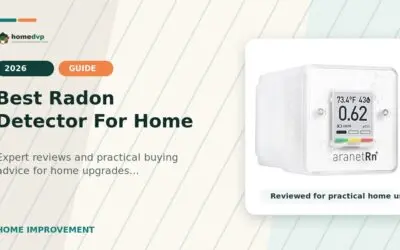
For an overall electronic monitoring pick, the Airthings Corentium Home Radon Detector 223 stands out because it is portable, lightweight, battery operated, and designed for home radon readings in pCi/L. It is a strong fit for homeowners who want a reusable detector rather than a one-time kit, especially in basements or lower-level living areas.
For smart-home convenience, the Airthings 2950 Wave Radon is the more connected option because it adds app support along with humidity and temperature sensing. For a value-focused lab-kit approach, the First Alert Radon Gas Test Kit, RD1 is a practical starting point, while the PRO-LAB Radon Gas Short-Term Test Kit may fit real-estate situations where two detectors are useful. For long-term kit-based measurement, the Radtrak³ Radon Detector for Home is worth considering because it is positioned for extended testing rather than a quick snapshot.
The safest choice depends on your goal. Choose an electronic detector if you want ongoing awareness, choose a lab-based kit if you need a report, and consider using both if your home has a finished basement, prior mitigation, or changing occupancy. For broader indoor comfort upgrades, you can continue comparing related products in our air circulator fan guide.
Related guide: See our best radon detectors for home for the broader comparison and selection criteria.
FAQ
What should I look for when choosing radon detector vs radon test kit?
Start by deciding whether you need a one-time result or ongoing readings. Then compare lab analysis, reporting method, battery operation, display units, alarm features, app support, placement instructions, and whether the product is intended for short-term or long-term use.
Are higher-end radon detector vs radon test kit worth it?
Higher-end electronic radon detectors can be worth it if you want continuous monitoring, reusable placement, and faster access to readings. A lower-cost kit may be the better value if you only need a basic screening or lab-style report.
How should beginners choose radon detector vs radon test kit?
Beginners should choose the option with the clearest instructions and the least complicated reporting process. A lab-included kit can be simple for a first screening, while a portable digital detector is easier for repeated checks in different rooms.
Is a radon detector better than a radon test kit?
A detector is usually better for ongoing awareness, trend tracking, and repeated use. A test kit is often better for one-time screening, a lab report, or a lower initial cost. Many homeowners use both at different stages.
Where should homeowners place radon testing products?
Most homeowners should test the lowest livable level of the home, such as a basement family room, lower-level bedroom, or finished recreation area. Avoid placing the detector or kit directly next to windows, exterior doors, vents, damp areas, or spots where it may be disturbed.
How often should homeowners revisit radon detector vs radon test kit decisions?
Retest or monitor again after major renovations, foundation work, HVAC changes, mitigation system installation, or changes in how the basement is used. You can also review broader indoor air upgrades through the essential oil diffuser guide, though fragrance products do not replace radon testing.
How much should homeowners expect from radon detector vs radon test kit in 2026?
Homeowners should expect options across $12.99–$142, from basic test kits to more advanced electronic monitors. The main value difference is whether you are paying for a single lab-based result, reusable continuous readings, smart features, alarms, or long-term monitoring convenience.
About This Home DVP Research
Home DVP is an independent home-improvement research and product-comparison publisher. Ryan Mitchell prepared this guide by comparing manufacturer specifications, compatibility details, retailer-provided product data, key limitations, and common homeowner use cases. We do not claim hands-on testing unless an article explicitly says so.
Review methodology Affiliate disclosure Last reviewed September 10, 2026