There are two kinds of homeowners: those who have dealt with a flooded basement, and those who think about that nightmare while watching a storm roll in. A sump pump is the difference between sleeping through a downpour and spending $5,000 on restoration, new carpet, and a dehumidifier hire. But a pump is only as good as its match to your pit — the wrong horsepower or a finicky float switch can mean a pump that runs fine right up until the one night you needed it.
Our comparison focuses on horsepower, gallons-per-hour ratings, housing materials, float switch design, solids handling, installation requirements, and long-term reliability signals from product specifications and user feedback. If you are also upgrading related home systems, you may find it useful to browse our broader Plumbing Equipment resources while you plan protection for wet basements and utility spaces.
Home DVP decision summary
Quick Answer
For Best Sump Pump, Home DVP compared 15 products from 8 brands. Size the pump for lift height, discharge run, and expected inflow rather than horsepower alone. Compare switch reliability, solids handling, alarm options, check-valve needs, and a battery-backed secondary pump for power failures.
| Comparison coverage | 15 products from 8 brands, including WaynePumps, Zoeller, AQUASTRONG——POWERYOURWATER. |
|---|---|
| Selection priority | Size the pump for lift height, discharge run, and expected inflow rather than horsepower alone. Compare switch reliability, solids handling, alarm options, check-valve needs, and a battery-backed secondary pump for power failures. |
| Evidence basis | Manufacturer specifications, compatibility details, retailer-provided product data, and common homeowner use cases. |
| Reference guidance | EPA basement moisture-control guidance. |
This summary describes the article's comparison set, not every product on the market. Product details should be confirmed before purchase.
Whether you need a primary submersible unit for a standard sump pit, a high-capacity cast iron model for frequent storms, a portable utility pump for window wells, or a sewage-capable option for solids, this guide breaks down the factors that matter most to homeowners, renters, and DIYers shopping for the best sump pump in July 2026.

Pros
- Strong flow rate suited to typical basement water influx
- Durable cast iron and corrosion-resistant materials for tough sump conditions
Cons
- Intended for indoor use only and not outdoor applications
- Requires an 11-inch or larger sump basin and may not fit smaller pits
Specifications
| Power Source | Corded Electric |
|---|---|
| Flow Rate | 63 Gallons Per Minute |
| Voltage | 120 Volts |
| Horsepower | 0.3 Horsepower |
| Color | Black |
| Product Style | 1/3 HP Coated Steel Sump Pump |
| Item Dimensions L x W x H | 10.5"L x 9"W x 11"H |
| Item Weight | 16.4 Pounds |
| Material Type | Cast Iron |
| Brand Name | Wayne |
Verify the current product variation before purchase; specifications may change.
Best For / Avoid If
Best for buyers prioritizing
- Strong flow rate suited to typical basement water influx
- Durable cast iron and corrosion-resistant materials for tough sump conditions
- Compact design works in common 11-inch-plus pits
Consider another option if
- Intended for indoor use only and not outdoor applications
- Requires an 11-inch or larger sump basin and may not fit smaller pits
- 1/3 HP primary unit without built-in battery backup may not suit extreme flooding needs

Pros
- Strong vertical lift capability up to 30 ft based on specifications
- Ability to pass solids up to 1/5 inch reduces clog risk with light debris
Cons
- No float switch means the unit requires manual control rather than automatic operation
- Intended for clean water only, so heavily dirty water may need pre-filtering
Best For / Avoid If
Best for buyers prioritizing
- Strong vertical lift capability up to 30 ft based on specifications
- Ability to pass solids up to 1/5 inch reduces clog risk with light debris
- Compact dimensions and lighter weight support portable use around the property
Consider another option if
- No float switch means the unit requires manual control rather than automatic operation
- Intended for clean water only, so heavily dirty water may need pre-filtering
- Users seeking permanent sump pit automation may prefer models with float switches
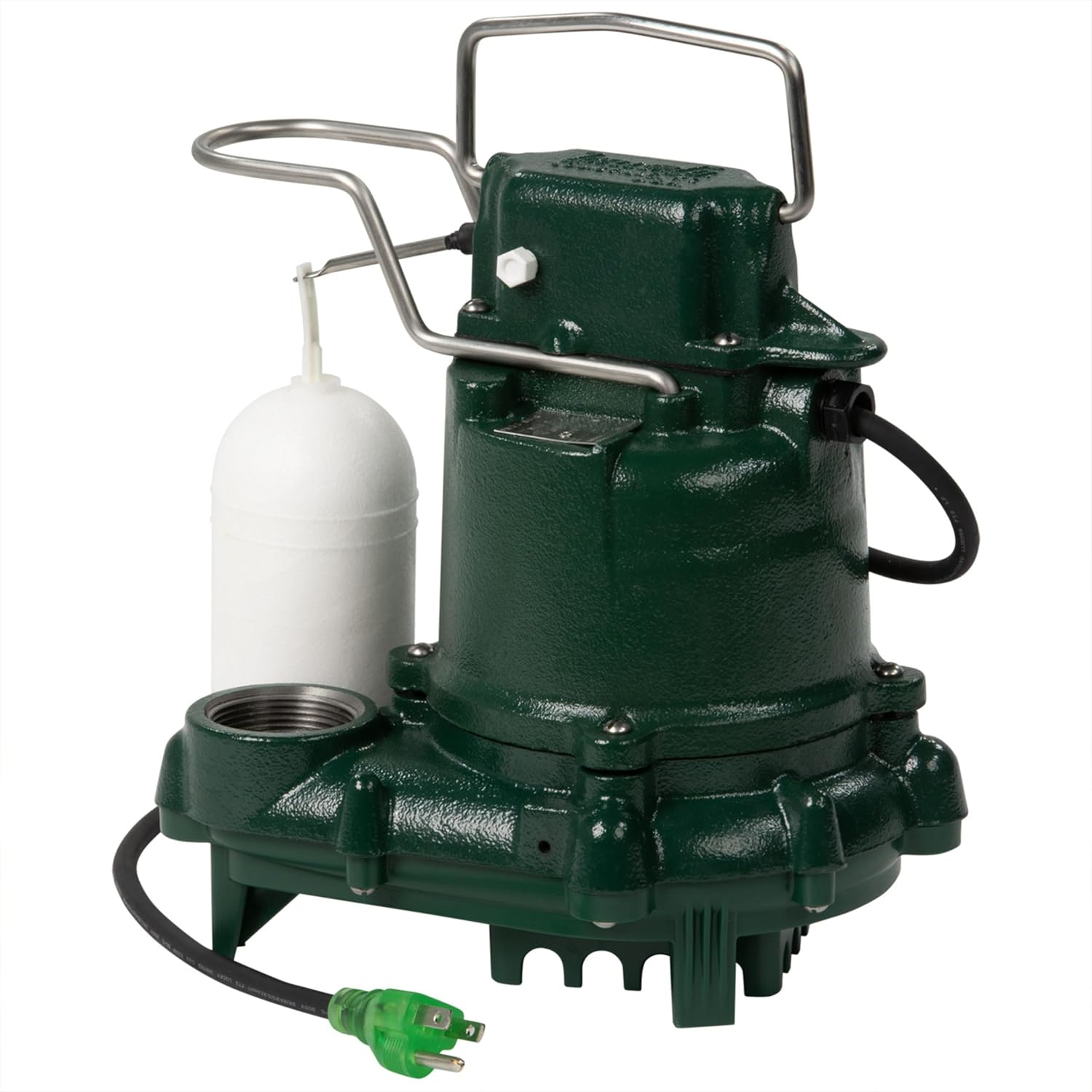
Pros
- Hands-free automatic operation via built-in float switch
- Vortex impeller design that helps minimize clogging
Cons
- Plastic base may feel less substantial than full cast iron construction for some users
- 1/3 HP output may be limited for properties needing higher contractor-level capacity
Best For / Avoid If
Best for buyers prioritizing
- Hands-free automatic operation via built-in float switch
- Vortex impeller design that helps minimize clogging
- Heavy-duty cast iron switch case, motor, and pump housing
Consider another option if
- Plastic base may feel less substantial than full cast iron construction for some users
- 1/3 HP output may be limited for properties needing higher contractor-level capacity
- First-time DIY installers may need extra time to complete discharge piping connections

Pros
- Cast iron housing and oil-filled motor support durable cooling and longevity
- Automatic float switch simplifies installation and consistent on-off cycling
Cons
- Heavier cast iron construction may feel less convenient during solo DIY placement
- Best matched to standard basement sump applications rather than highly specialized systems
Best For / Avoid If
Best for buyers prioritizing
- Cast iron housing and oil-filled motor support durable cooling and longevity
- Automatic float switch simplifies installation and consistent on-off cycling
- LED plug provides clear visual confirmation of available power
Consider another option if
- Heavier cast iron construction may feel less convenient during solo DIY placement
- Best matched to standard basement sump applications rather than highly specialized systems
- Users seeking smart app controls or variable-speed features may need another option

Pros
- High 1 HP capacity for heavy water flow situations
- Corrosion-resistant stainless steel and cast-iron construction
Cons
- Indoor use only, so outdoor installations are not supported
- Needs an 11-inch or larger sump basin and may not fit compact pits
Best For / Avoid If
Best for buyers prioritizing
- High 1 HP capacity for heavy water flow situations
- Corrosion-resistant stainless steel and cast-iron construction
- Million-cycle tested switch for long-term reliability
Consider another option if
- Indoor use only, so outdoor installations are not supported
- Needs an 11-inch or larger sump basin and may not fit compact pits
- Basic plumbing knowledge helps when connecting the NPT discharge

Pros
- Strong residential flow rate supports efficient clearing of flooded areas
- Dual discharge flexibility with 1-1/4 inch NPT and garden hose adapter
Cons
- 1/4 HP output may not meet continuous heavy commercial pumping demands
- 10-foot cord can require an extension for larger properties or distant outlets
Best For / Avoid If
Best for buyers prioritizing
- Strong residential flow rate supports efficient clearing of flooded areas
- Dual discharge flexibility with 1-1/4 inch NPT and garden hose adapter
- Handles small solids and debris for less clogging during utility jobs
Consider another option if
- 1/4 HP output may not meet continuous heavy commercial pumping demands
- 10-foot cord can require an extension for larger properties or distant outlets
- Thermoplastic housing may feel less rugged than metal options for extreme abuse

Pros
- Strong 1.5HP PSC motor paired with high maximum flow for demanding residential transfer jobs
- Cast iron body and reinforced impeller design support clog-resistant sewage and effluent use
Cons
- Cast iron construction can make positioning heavier than lighter thermoplastic pump options
- First-time DIY installers may need extra care setting float length and confirming full submersion
Best For / Avoid If
Best for buyers prioritizing
- Strong 1.5HP PSC motor paired with high maximum flow for demanding residential transfer jobs
- Cast iron body and reinforced impeller design support clog-resistant sewage and effluent use
- Automatic float control with cable lock adjustment for tailored start and stop levels
Consider another option if
- Cast iron construction can make positioning heavier than lighter thermoplastic pump options
- First-time DIY installers may need extra care setting float length and confirming full submersion
- High-capacity design may be more pump than needed for light clear-water only applications

Pros
- Grinder function targets common soft debris that can clog ordinary sewage pumps
- High listed flow rate and solid head height suit typical home basement applications
Cons
- Product guidance advises against rubber items, thick towels, and use in gasoline, alcohol, or biogas tanks
- Must be fully immersed before startup and float cable may need winter adjustment to avoid freezing issues
Best For / Avoid If
Best for buyers prioritizing
- Grinder function targets common soft debris that can clog ordinary sewage pumps
- High listed flow rate and solid head height suit typical home basement applications
- Auto float switch simplifies hands-off operation once properly set
Consider another option if
- Product guidance advises against rubber items, thick towels, and use in gasoline, alcohol, or biogas tanks
- Must be fully immersed before startup and float cable may need winter adjustment to avoid freezing issues
- 37.6 lb weight may feel less convenient during install or service compared with lighter plastic pumps

Pros
- Strong listed drainage speed for typical residential pool cover clearing
- All-around mesh intake supports better water entry from multiple directions
Cons
- May not suit users who need contractor-grade continuous-duty pumping capacity
- 3.2 m maximum head may limit deeper lift or more demanding elevation jobs
Best For / Avoid If
Best for buyers prioritizing
- Strong listed drainage speed for typical residential pool cover clearing
- All-around mesh intake supports better water entry from multiple directions
- Multiple nozzle options improve hose compatibility for flexible discharge
Consider another option if
- May not suit users who need contractor-grade continuous-duty pumping capacity
- 3.2 m maximum head may limit deeper lift or more demanding elevation jobs
- First-time users may need extra setup time choosing the correct adapter and hose path
Pros
- Cast iron construction paired with oil-filled motor supports durable heat management
- Automatic float switch simplifies installation and daily hands-free use
Cons
- The 31-pound cast iron build may feel heavy during initial installation for some DIYers
- May exceed the needs of very small sump applications that require a lower-capacity unit
Best For / Avoid If
Best for buyers prioritizing
- Cast iron construction paired with oil-filled motor supports durable heat management
- Automatic float switch simplifies installation and daily hands-free use
- Vortex impeller design helps minimize clogs from debris
Consider another option if
- The 31-pound cast iron build may feel heavy during initial installation for some DIYers
- May exceed the needs of very small sump applications that require a lower-capacity unit
- First-time users might need extra care aligning the float switch in tight pits

Pros
- Level-controlled automatic operation via integrated vertical float switch
- Corrosion-resistant cast iron and stainless steel construction
Cons
- 1/2 HP output may not meet needs of users requiring higher commercial-scale capacity
- Float switch and cord must be handled carefully to avoid permanent damage
Best For / Avoid If
Best for buyers prioritizing
- Level-controlled automatic operation via integrated vertical float switch
- Corrosion-resistant cast iron and stainless steel construction
- Strong 5200 GPH capacity with useful vertical lift for basements
Consider another option if
- 1/2 HP output may not meet needs of users requiring higher commercial-scale capacity
- Float switch and cord must be handled carefully to avoid permanent damage
- Proper basin sizing is important so the vertical float can cycle correctly
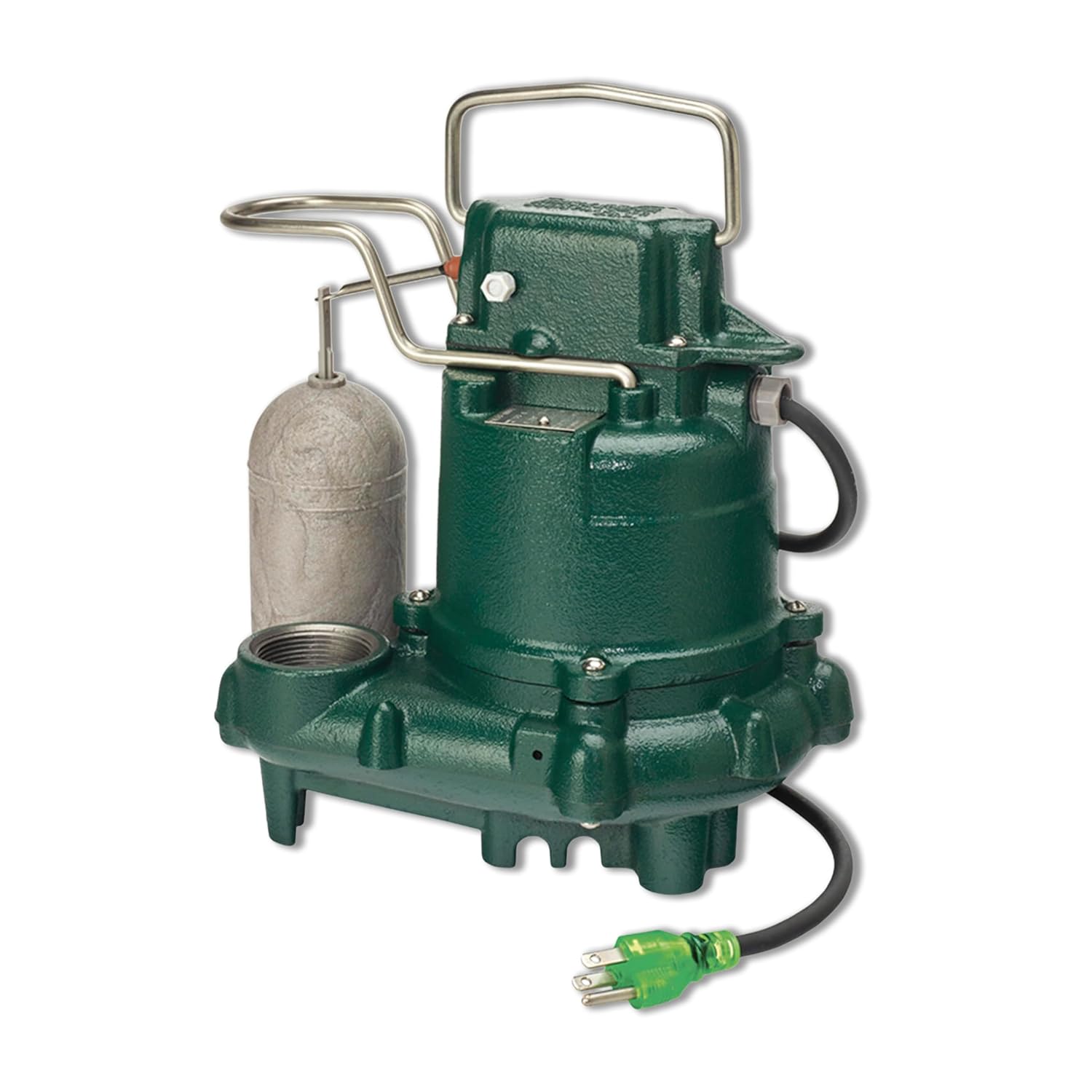
Pros
- Cast iron housing and oil-filled motor support durable cooling under extended use
- Automatic float switch enables consistent operation without manual intervention
Cons
- Requires a compatible sump basin and discharge piping that are not included with the unit
- 3/10 HP rating may be less suitable for extremely high-volume or commercial flood scenarios
Best For / Avoid If
Best for buyers prioritizing
- Cast iron housing and oil-filled motor support durable cooling under extended use
- Automatic float switch enables consistent operation without manual intervention
- LED plug indicator simplifies quick visual power checks
Consider another option if
- Requires a compatible sump basin and discharge piping that are not included with the unit
- 3/10 HP rating may be less suitable for extremely high-volume or commercial flood scenarios
- Cast iron construction adds weight that can make positioning more demanding during installation

Pros
- Combination primary and battery-backup system in one preassembled unit
- Integrated vertical float switch for automatic operation
Cons
- Battery is not included and a 40 AH or 75 AH deep cycle battery is required for backup use
- Indoor use only, so it is not intended for outdoor installations
Best For / Avoid If
Best for buyers prioritizing
- Combination primary and battery-backup system in one preassembled unit
- Integrated vertical float switch for automatic operation
- Tested to 1 million cycles for durability-focused design claims
Consider another option if
- Battery is not included and a 40 AH or 75 AH deep cycle battery is required for backup use
- Indoor use only, so it is not intended for outdoor installations
- Needs a sump basin at least 16 inches in diameter, which may not fit smaller pits

Pros
- Most plumbing arrives already measured and connected for simpler setup
- Controller detects issues and indicates corrective steps on the front panel
Cons
- WiFi remote alerts require a separately purchased CONNECT module
- Battery is not included and must be obtained for backup function
Specifications
| Power Source | AC & Battery |
|---|---|
| Flow Rate | 73.3 Gallons Per Minute |
| Maximum Lifting Height | 25 Feet |
| Voltage | 12 Volts (DC) |
| Horsepower | 0.5 Horsepower |
| Color | Black |
| Product Style | Sump Pump |
| Item Dimensions L x W x H | 8.75"L x 11.75"W x 18"H |
| Item Weight | 27 Pounds |
| Material Type | Cast Iron (Primary); Plastic (Backup) |
Verify the current product variation before purchase; specifications may change.
Best For / Avoid If
Best for buyers prioritizing
- Most plumbing arrives already measured and connected for simpler setup
- Controller detects issues and indicates corrective steps on the front panel
- Works with maintenance-free AGM or wet-cell batteries for flexible backup power
Consider another option if
- WiFi remote alerts require a separately purchased CONNECT module
- Battery is not included and must be obtained for backup function
- Dual-pump assembly may need careful fitment in smaller sump pits
Best Sump Pump Buying Guide
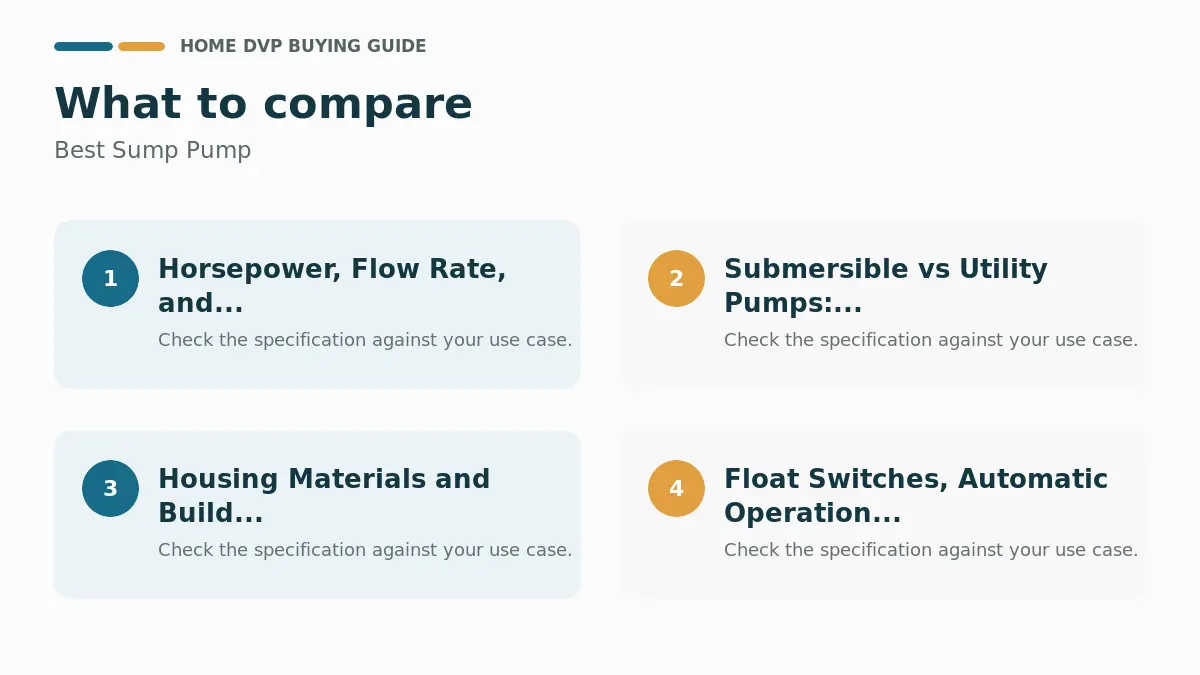
Buying the right sump pump is less about chasing the highest horsepower number and more about matching capacity, construction, and switch design to your pit size, water table, and flood risk. After carefully analyzing the available specifications, we organized this buying guide around the decisions that most often determine whether a pump protects a home during the next storm or fails when you need it most.
Horsepower, Flow Rate, and Real Home Capacity Needs
Horsepower alone does not tell the whole story. A 1/3 HP pump can be excellent for moderate groundwater, while 1/2 HP and 1 HP models make more sense for homes with larger basins, taller vertical lifts, or frequent heavy inflow. Look carefully at gallons per hour at a realistic head height rather than only at the maximum GPH rating measured at zero lift.
For example, models such as the WAYNE CDU790 are rated up to about 4,600 GPH, while higher-output options like the Wayne 1 HP CDU1000ET advertise removal around 6,100 GPH. Sewage-capable units such as the FOTING 1.5 HP model claim even higher flow, which can help when solids handling and aggressive drainage are both required. The practical takeaway is simple: size the pump to your worst-case storm conditions, not average dry-week seepage.
A common homeowner mistake is buying a pump that is too small for the vertical rise from pit to discharge point. Every additional foot of lift reduces effective flow. Measure the vertical distance and account for long horizontal runs and check valves before you decide between 1/4 HP utility units and heavier cast iron basement pumps.
Submersible vs Utility Pumps: Choose by Job Type
Primary basement protection almost always calls for a dedicated submersible sump pump installed in a basin with an automatic float switch. These units sit in the pit, activate when water rises, and discharge continuously until the level drops. Cast iron options from Zoeller and Wayne are designed for this long-term duty cycle.
Portable utility pumps fill a different role. The Superior Pump 91250, Aquastrong 1 HP utility-style pump, and WAYNE WaterBUG are better suited to temporary water removal from window wells, flat surfaces, laundry rooms, ponds, or emergency flooding. They are valuable tools, but they are not a full replacement for a properly installed automatic sump system if your basement regularly collects groundwater.
If your home already has a sump pit, prioritize automatic submersible models with reliable float switches. If you mainly need a transfer pump for seasonal cleanups or rare emergencies, a compact thermoplastic utility pump can be the more practical and affordable choice.
Housing Materials and Build Quality
Build materials strongly influence lifespan. Cast iron housings, found on models like the Zoeller M53 Mighty-Mate, Zoeller M98 Flow-Mate, and several Wayne cast iron designs, help dissipate heat and resist long-term wear. Oil-filled motors further improve cooling and durability in continuous or frequent cycling applications.
Thermoplastic pumps are lighter, often less expensive, and easier to handle. That makes them appealing for renters, occasional use, and portable water removal. However, if your pump will live year-round in a wet pit and cycle often during spring storms, cast iron or cast iron and stainless combinations usually offer better long-term value based on the feature set and construction details provided.
Also pay attention to fasteners, seals, and impeller design. Stainless steel hardware, mechanical seals, and non-clogging vortex impellers reduce corrosion and debris-related failures. These details matter as much as the outer shell when you are protecting finished living space below grade.
Float Switches, Automatic Operation, and Basin Fit
The float switch is the brain of a sump system. Vertical float switches are often preferred in narrower basins because they need less side-to-side room. Tethered floats can work well in larger pits and are adjustable, but they can hang up on basin walls if the tether length is wrong. Piggyback plugs make switch replacement easier later.
Based on available product information, many homeowner-friendly Wayne models use integrated vertical float switches designed for basins around 11 inches in diameter or larger. Zoeller automatic models use float-activated switching intended for reliable hands-off operation. Match the switch style to your pit geometry, then confirm on and off water levels so the pump does not short-cycle or leave too much water in the basin.
Installation mistakes are common here. Homeowners sometimes force a large tethered float into a tight pit, which can cause the pump to stick on or never turn on. Before purchase, measure basin diameter, depth, and available free space around the pump body.
Solids Handling, Clog Resistance, and Sewage Capability
Not every pump should handle dirty water the same way. Standard sump pumps often manage clear groundwater and small debris, while utility pumps may handle only very fine solids. Sewage or effluent pumps are built for larger solids and more aggressive waste streams. The FOTING cast iron sewage/effluent model, for example, is designed around a 2 inch discharge and larger solids handling capacity.
If your application is a clean residential sump pit, a non-clogging vortex impeller on a Zoeller or similar cast iron unit is usually more than enough. If you are dealing with septic effluent, laundry waste, or debris-heavy water, choose a pump specifically rated for that duty. Using a light utility pump for sewage service is a recipe for clogs and motor strain.
Top-suction designs can also help reduce clogging and air lock by drawing water from higher in the pit rather than scraping the very bottom. That design is especially useful in older basins that collect silt and gravel over time.
Backup Power, Storm Readiness, and Safety Features
Many basement floods happen during power outages. That is why battery backup capability is a major differentiator for high-risk homes. Systems that support 12-volt backup can keep moving water when the main electrical service fails. If your neighborhood loses power during thunderstorms, a primary AC pump alone may not be enough.
Look for thermal overload protection, sealed motors, and durable cords with adequate length for safe outlet access. LED power plugs, such as those featured on certain Zoeller models, make it easier to verify that the outlet is live. These small safety and monitoring features reduce the chance that a silent power problem goes unnoticed until the next heavy rain.
Also plan the discharge path carefully. Use a check valve, support the discharge pipe, and route water far enough from the foundation so it does not re-enter the basement. A strong pump cannot fix poor exterior drainage by itself. Pair your sump system with good gutters, grading, and, when needed, broader home maintenance upgrades such as those covered in our Heating, Cooling & Air and climate-related guides if humidity and moisture control are ongoing concerns.
Installation Difficulty and DIY Suitability
Many modern submersible pumps are designed for straightforward DIY replacement when an existing basin and discharge line are already in place. Plug-and-play installation, preassembled float switches, and adapters for common discharge sizes all reduce setup friction. Portable utility pumps are even simpler: lower them into standing water, attach a hose, and plug them in.
That said, first-time installations involving a new pit, sealed cover, GFCI protection, or exterior discharge routing can quickly move beyond a basic weekend project. Local codes may require a specific discharge diameter, check valve placement, or sealed lid. If you are unsure, compare your skill level honestly and call a licensed plumber for pit work while still selecting the pump yourself based on specifications.
For renovations that also touch bathrooms or laundry areas, it can help to coordinate pump selection with other fixture upgrades. Homeowners planning multi-room work often review resources like our Best Toilet and Bathroom Fixtures guides alongside sump planning so moisture control, drainage, and fixture performance all support a healthier lower level.
Budget, Value, and When to Spend More
Lower-cost thermoplastic utility pumps can be excellent for occasional water removal, while mid-range cast iron sump pumps often deliver the best balance of durability and capacity for typical basements. Premium systems with higher horsepower, sewage capability, or battery backup readiness cost more because they protect against more severe failure modes.
Spend more when you have a finished basement, a high water table, frequent storms, or no tolerance for downtime. Save money when you need a secondary transfer pump, temporary cleanup tool, or light-duty backup for a rarely wet space. Based on our detailed comparison, value is highest when materials, switch quality, and flow rate all match the actual risk level of the home.
| Home Situation | Recommended Pump Type | Why It Fits |
|---|---|---|
| Standard residential sump pit | 1/3 to 1/2 HP cast iron submersible | Balanced capacity, durability, automatic operation |
| High water table or large inflow | 1 HP heavy-duty submersible | Higher GPH and stronger continuous performance |
| Window wells or temporary flooding | Portable utility or WaterBUG-style pump | Easy deployment and low-level water removal |
| Solids or effluent applications | Sewage/effluent cast iron pump | Larger solids handling and robust impeller design |
| Storm power-loss risk | Primary pump with battery backup support | Keeps water moving during outages |
Our Research Methodology & Why You Can Trust Us
At Home DVP, we build product guides using transparent specification analysis rather than hype. For this Best Sump Pump roundup, we compared motor size, claimed flow rates, housing materials, switch designs, discharge sizes, solids handling, cord length, safety features, warranty signals, and category fit for residential plumbing equipment. We also reviewed user-facing product details and feedback patterns to identify which designs are commonly chosen for basements, utility rooms, and emergency water removal.
We evaluated the products based on performance potential, feature completeness, build quality, ease of use, durability indicators, safety protections, reliability signals, and homeowner or DIY suitability. Our research indicates that cast iron construction, dependable float switches, realistic GPH ratings, and proper basin compatibility are stronger predictors of satisfaction than brand slogans alone. We regularly refresh category guidance during July so shoppers comparing options in 2026 can work from current product positioning and practical buying criteria.
We do not invent hands-on claims. When product data highlights factory testing, cycle life, or materials, we report those details as manufacturer-stated characteristics and weigh them against competing options. That approach keeps recommendations grounded, comparable, and useful for real home improvement decisions across our Plumbing Equipment category.
Final Thoughts
If you need a proven all-around residential choice, the Zoeller M53 Mighty-Mate stands out as a strong Overall Pick based on its cast iron construction, automatic float operation, non-clogging vortex impeller, and long-standing reputation for basement sump service. For shoppers who want excellent capacity at a more approachable price point, the WAYNE CDU790 is a compelling Value Pick with top-suction design, durable materials, and high GPH performance for standard pits.
Homeowners facing heavier water volume should look closely at the Wayne 1 HP heavy-duty model as a Heavy-Duty Pick, while the Zoeller M98 Flow-Mate is a solid Premium Pick when oil-filled motor cooling, LED power indication, and robust cast iron construction are priorities. For portable cleanup, the Superior Pump 91250 and WAYNE WaterBUG remain practical Easy Setup and Small Space options, and the FOTING 1.5 HP sewage/effluent pump is better reserved for applications that truly need larger solids handling.
Choose based on your pit size, inflow risk, solids exposure, and power-outage vulnerability rather than the biggest number on the box. Pair the right best sump pump with correct discharge routing and routine maintenance, and you will dramatically reduce the chance that the next storm becomes a restoration project. For related home upgrades, explore our Best Bathroom Vanity and Air Quality & Climate guides if basement finishing, humidity control, or full lower-level remodeling is part of your longer plan.
FAQ
What should I look for when choosing the best sump pump?
Focus on horsepower, gallons-per-hour at your actual lift height, housing material, float switch style, basin diameter compatibility, and solids handling. Cast iron automatic submersible pumps are usually best for permanent basement pits, while thermoplastic utility pumps suit temporary water removal. Match the pump to your worst-case water inflow, not average conditions.
Are higher-end sump pumps worth it?
They can be worth it if you have a finished basement, frequent storms, high groundwater, or power-outage risk. Higher-end models often add better materials, stronger flow, longer warranties, and backup readiness. For light or occasional use, a mid-range or utility pump may deliver enough protection without overspending.
About This Home DVP Research
Home DVP is an independent home-improvement research and product-comparison publisher. Ryan Mitchell prepared this guide by comparing manufacturer specifications, compatibility details, retailer-provided product data, key limitations, and common homeowner use cases. We do not claim hands-on testing unless an article explicitly says so.
Review methodology Affiliate disclosure Last reviewed October 16, 2026