A cold shower at 6:40 am on a workday is a particularly personal form of betrayal, and it’s usually the first sign that your water heater is thinking about retiring. The good news: today’s water heaters are better than the last generation at almost everything — condensing tankless units, compact point-of-use mini-tanks, and recirculation systems that put hot water in your tap in seconds instead of minutes. The hard part is that picking correctly means matching capacity, fuel type, and space to your household, which is exactly what this guide exists to simplify.
This guide reviews 15 popular options spanning whole-house tankless units, mini-tank electric models, instant hot dispensers, and supporting recirculation systems. We compared specifications, flow rates, energy efficiency ratings, installation needs, safety features, and real-world homeowner use cases. Our goal is to help you match capacity, fuel type, and layout to your household without overspending or under-sizing. You will also find connections to related bathroom upgrades such as a well-chosen bathroom sink that pairs with improved hot water delivery.
Whether you need continuous hot water for a busy family, a compact solution for a kitchen or powder room, or a way to stop wasting water while waiting for heat to arrive, the recommendations below focus on practical performance and long-term value. Browse the ranked products first, then use the buying guide to confirm sizing, electrical or gas requirements, and maintenance expectations before you buy.

Pros
- Four precise keep warm temperatures support a wide range of teas and coffee preparation
- LCD display continuously shows the actual water temperature for easy monitoring
Cons
- The 4L capacity may occupy more counter space than compact electric kettles
- Users new to multi-mode water boilers may need time to become familiar with all settings
Specifications
| Brand Name | Zojirushi |
|---|---|
| Included Components | water^boiler |
| Recommended Uses For Product | Boiling Water |
| Model Name | Micom Water Boiler & Warmer |
| Model Number | CD-WCC40 |
| UPC | 063100173418 |
| Manufacturer | Zojirushi |
| Global Trade Identification Number | 00063100173418, 04974305711571 |
| Part Number | CD-WCC40 |
| Item Type Name | Micom Water Boiler & Warmer |
Verify the current product variation before purchase; specifications may change.
Best For / Avoid If
Best for buyers prioritizing
- Four precise keep warm temperatures support a wide range of teas and coffee preparation
- LCD display continuously shows the actual water temperature for easy monitoring
- Sound indicator alerts users when boiling completes or water level is low
Consider another option if
- The 4L capacity may occupy more counter space than compact electric kettles
- Users new to multi-mode water boilers may need time to become familiar with all settings
- Quick temp mode is intended for bottled or purified water and does not perform dechlorination
Pros
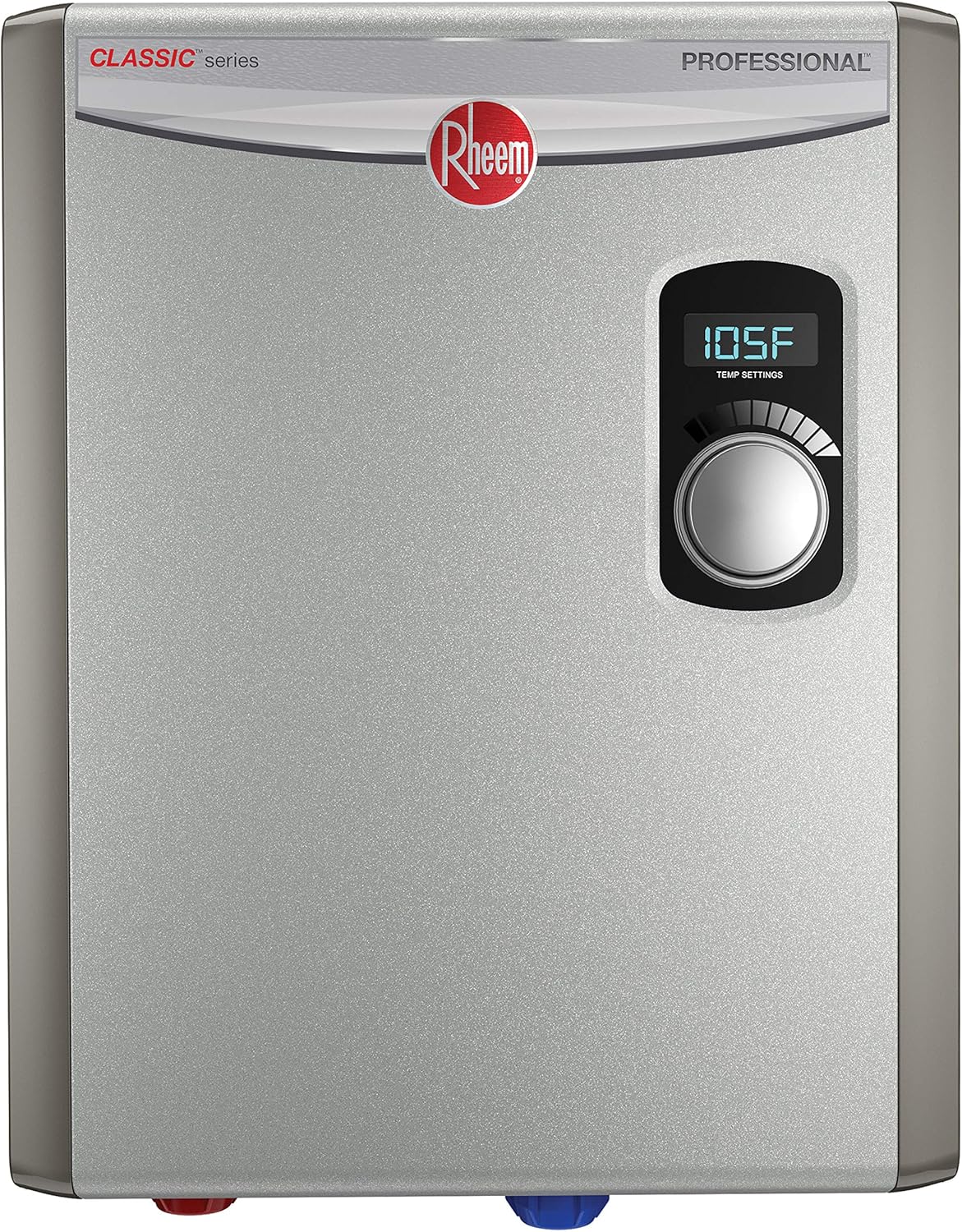
- On-demand heating eliminates standby energy loss common with tank-style water heaters
- Digital front controls make temperature adjustment straightforward for everyday homeowners
Cons
- Needs dedicated high-amperage 240V circuits, so electrical upgrades may be required in older homes
- Hot water output depends on incoming groundwater temperature and may feel limited in very cold climates under simultaneous demand

Pros
- No plastic interior contact supports pure water taste for daily drinking
- Wide mouth and dual-angle lid simplify cleaning and descaling routines
Cons
- Minor water condensation may drip from the bottom drain port during use, which is normal by design
- Hard water can leave spots or marks on the stainless steel bottom after first use
Best For / Avoid If
Best for buyers prioritizing
- No plastic interior contact supports pure water taste for daily drinking
- Wide mouth and dual-angle lid simplify cleaning and descaling routines
- Mechanical steam-powered auto shut-off and boil-dry safety add everyday protection
Consider another option if
- Minor water condensation may drip from the bottom drain port during use, which is normal by design
- Hard water can leave spots or marks on the stainless steel bottom after first use
- Users must avoid overfilling or tilting the kettle backward to protect the steam shut-off mechanism

Pros
- One model can serve natural gas or propane setups through Smart Sense control
- Indoor and outdoor install options expand placement choices for many homes
Cons
- Professional installation is recommended, so DIY-only homeowners may need a qualified technician
- Outdoor installs require the separate RX-OVC vent cap
Best For / Avoid If
Best for buyers prioritizing
- One model can serve natural gas or propane setups through Smart Sense control
- Indoor and outdoor install options expand placement choices for many homes
- High listed efficiency with a UEF of .98
Consider another option if
- Professional installation is recommended, so DIY-only homeowners may need a qualified technician
- Outdoor installs require the separate RX-OVC vent cap
- WiFi control depends on an optional Controlr module that is not included
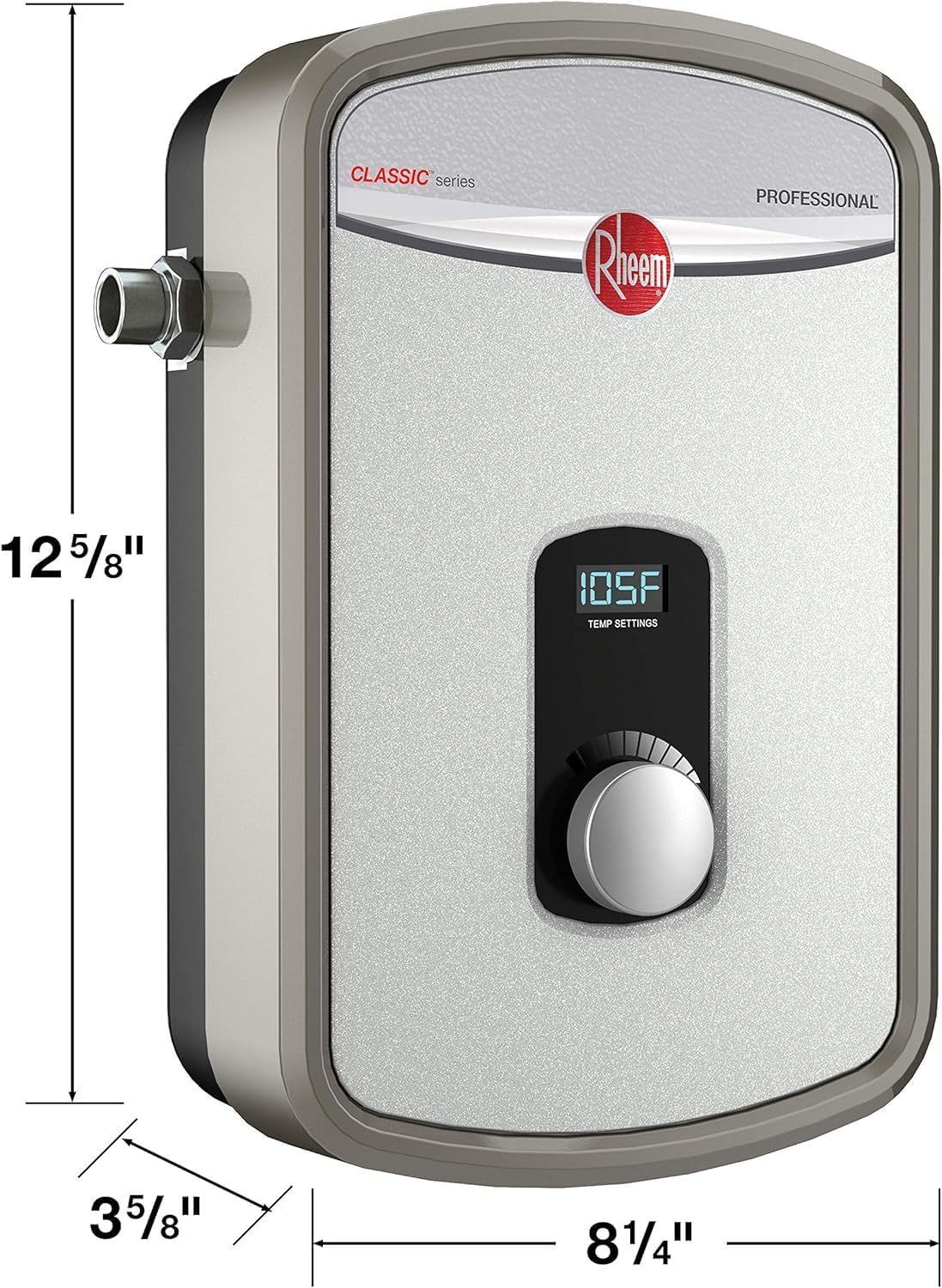
Pros
- Precise external LED thermostatic control for fine temperature setting
- Two field-serviceable copper immersion heating elements for serviceability
Cons
- 54 A at 240V electrical demand may require dedicated circuit planning or panel capacity upgrades in some homes
- Flow rate up to 3.17 GPM may feel limiting for larger households running several fixtures at once
Best For / Avoid If
Best for buyers prioritizing
- Precise external LED thermostatic control for fine temperature setting
- Two field-serviceable copper immersion heating elements for serviceability
- High listed energy efficiency of 99.8%
Consider another option if
- 54 A at 240V electrical demand may require dedicated circuit planning or panel capacity upgrades in some homes
- Flow rate up to 3.17 GPM may feel limiting for larger households running several fixtures at once
- First-time DIY installers may need extra time or professional help for electrical and plumbing connections

Pros
- Reaches up to 145°F with continuous 24-hour hot water readiness based on listed specs
- Safety valve plus enamel coating and magnesium rod support safer, more durable operation
Cons
- Must be secured with matching expansion bolts and cannot be left unfixed on the water valve alone
- 4-gallon capacity may fall short for high simultaneous demand or whole-house needs
Specifications
| Power Source | Corded Electric |
|---|---|
| Special Features | Temperature Pressure Safety Valve, LED Display, Easy-to-Use Knob Temperature Adjustment |
| Wattage | 1440 watts |
| Maximum Temperature | 145 Degrees Fahrenheit |
| Heat Output | 1440 Watts |
| Mount Type | Wall |
| Is Electric | Yes |
| Smart Home Compatibility | Not Smart Home Compatible |
| Maximum Pressure | 162.5 Pound per Square Inch |
| Capacity | 4 gallons |
Verify the current product variation before purchase; specifications may change.
Best For / Avoid If
Best for buyers prioritizing
- Reaches up to 145°F with continuous 24-hour hot water readiness based on listed specs
- Safety valve plus enamel coating and magnesium rod support safer, more durable operation
- Small footprint works for under-sink placement on a shelf or wall
Consider another option if
- Must be secured with matching expansion bolts and cannot be left unfixed on the water valve alone
- 4-gallon capacity may fall short for high simultaneous demand or whole-house needs
- First-time plumbing installers may need extra time to follow cold and hot connection steps carefully

Pros
- Straightforward plug-in setup after the tank is filled
- Compact footprint that frees space compared with larger water heaters
Cons
- 2.5-gallon capacity may not meet needs for simultaneous multi-fixture or high-volume use
- After the tank is drawn down, users must wait for the listed recovery cycle before full temperature returns
Best For / Avoid If
Best for buyers prioritizing
- Straightforward plug-in setup after the tank is filled
- Compact footprint that frees space compared with larger water heaters
- Can operate as a stand-alone heater or as a buffer tank with a remote supply
Consider another option if
- 2.5-gallon capacity may not meet needs for simultaneous multi-fixture or high-volume use
- After the tank is drawn down, users must wait for the listed recovery cycle before full temperature returns
- Primarily a point-of-use solution, so whole-home heating still requires a larger primary system

Pros
- Integrates reverse osmosis purification and instant heating in one under-sink unit
- Fast tankless output with efficient 2:1 pure-to-drain performance
Cons
- Cannot be connected to a refrigerator or ice maker according to product details
- MNR remineralization filter, if used, can only connect to the cold water pipe
Specifications
| Brand | Waterdrop |
|---|---|
| Product Dimensions | 17.5"L x 6.7"W x 16.6"H |
| Material | Reverse Osmosis Membrane & Carbon Block & PP Cotton |
| Capacity | 1600 gallons |
| Included Components | KJ600 RO System, Replacement Filters, Smart Faucet, User Manual |
| Package Information | Dispenser |
| Installation Type | Under Sink |
| Purification Method | Reverse Osmosis |
| Power Source | Corded Electric |
Verify the current product variation before purchase; specifications may change.
Best For / Avoid If
Best for buyers prioritizing
- Integrates reverse osmosis purification and instant heating in one under-sink unit
- Fast tankless output with efficient 2:1 pure-to-drain performance
- Smart faucet provides clear TDS, filter status, child lock, and temperature feedback
Consider another option if
- Cannot be connected to a refrigerator or ice maker according to product details
- MNR remineralization filter, if used, can only connect to the cold water pipe
- Final hot water temperature may vary with weather and the temperature of the cup

Pros
- Fast 1500W boiling suited to everyday hot beverages
- Built-in auto shutoff and boil-dry safety features
Cons
- Glass body may need more careful handling than fully metal kettles
- 1.8L capacity may feel oversized for single-serve users
Best For / Avoid If
Best for buyers prioritizing
- Fast 1500W boiling suited to everyday hot beverages
- Built-in auto shutoff and boil-dry safety features
- Cordless serving with a 360-degree swivel base
Consider another option if
- Glass body may need more careful handling than fully metal kettles
- 1.8L capacity may feel oversized for single-serve users
- Listed features do not include variable temperature presets for specialized brewing

Pros
- Complete system includes both faucet and tank rather than requiring separate purchases
- Temperature range supports multiple kitchen and beverage uses
Cons
- Requires an unswitched AC outlet plus a dedicated control valve and T-fitting for installation
- Needs a standard 1-1/4-inch to 1-1/2-inch sink or counter hole and works only with counters up to 2 inches thick
Best For / Avoid If
Best for buyers prioritizing
- Complete system includes both faucet and tank rather than requiring separate purchases
- Temperature range supports multiple kitchen and beverage uses
- Tool-free tank connections simplify under-sink setup for capable DIY users
Consider another option if
- Requires an unswitched AC outlet plus a dedicated control valve and T-fitting for installation
- Needs a standard 1-1/4-inch to 1-1/2-inch sink or counter hole and works only with counters up to 2 inches thick
- Hot-only design may not suit buyers seeking a combined hot and cold dispenser in one unit
Best Water Heater Buying Guide
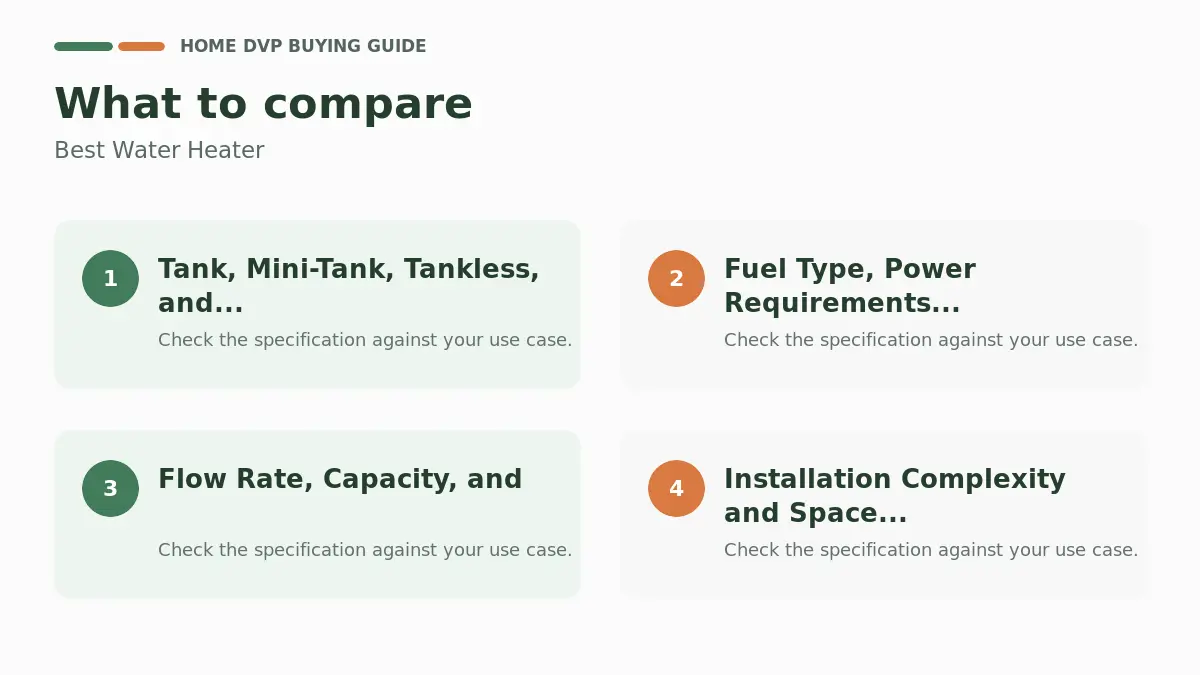
Selecting among best water heater options requires more than comparing sticker prices. Household size, simultaneous fixture demand, available fuel sources, venting constraints, and local climate all influence the best fit. The sections below walk through the criteria we used when evaluating the product set, with clear guidance for homeowners, renters, and DIYers planning a replacement or renovation.
Tank, Mini-Tank, Tankless, and Point-of-Use Designs
Traditional storage tanks keep a ready volume of heated water, but they take floor space and continuously lose heat. Mini-tank electric models such as the Stiebel Eltron SHC 2.5 store a few gallons near the point of use, making them ideal under sinks or in RVs and cabins where a full tank is unnecessary. Tankless units heat water on demand and never run out as long as the flow rate matches demand. Instant hot water dispensers deliver near-boiling water for cooking and beverages without waiting for a full system to recover.
A common mistake is assuming one design fits every home. Large families that run multiple showers, laundry, and dishwashers at once usually need high-GPM tankless or a well-sized storage tank. Apartments, powder rooms, and remote sinks often do better with a mini-tank or under-sink dispenser. After carefully analyzing the available specifications, we found that matching design type to actual simultaneous demand prevents both cold-water complaints and wasted capacity.
Fuel Type, Power Requirements, and Efficiency
Electric tankless models such as the EcoSmart ECO 11 and Rheem RTEX-13 require substantial amperage and dedicated circuits, often 240 V with high amp draws. Gas condensing units like the Rinnai RX199iN deliver higher flow rates and can run on natural gas or propane, but they need proper venting and professional installation. Mini-tank units that plug into a standard 120 V outlet simplify placement for renters or limited electrical panels.
Energy efficiency matters for long-term operating cost. Look for high Uniform Energy Factor (UEF) numbers on tankless models and thermal efficiency claims near 99 percent on well-designed electric units. Condensing gas models recover extra heat from exhaust and can reach UEF ratings around 0.98. Homeowners upgrading older storage tanks frequently recover the higher purchase price through lower monthly utility bills, especially when the old unit was poorly insulated or oversized.
Flow Rate, Capacity, and Climate Considerations
Gallons per minute (GPM) is the key performance metric for tankless systems. A unit rated at 11.1 GPM can support several fixtures at once in milder groundwater temperatures, while a 3 GPM electric model may only serve one shower or a couple of sinks in colder climates. Inlet water temperature has a major effect: northern homes need more heating capacity to reach the same outlet temperature as southern homes.
Mini-tank capacity is measured in gallons. A 2.5-gallon unit recovers quickly for handwashing and dishwashing but will not support a long shower. Instant dispensers typically store less than one gallon of near-boiling water and excel at beverage and cooking tasks. Always check manufacturer sizing charts against your ground-water temperature map and fixture count before ordering. Undersizing is the most frequent cause of buyer dissatisfaction with tankless systems.
Installation Complexity and Space Requirements
Whole-house tankless gas heaters generally require professional installation for gas lines, venting, and condensate drainage. Electric tankless units need correct wire gauge and breaker sizing to avoid tripping or overheating. Mini-tank models that plug into a standard outlet and mount on a wall bracket are far more DIY-friendly, as are many recirculation pumps designed for existing tank systems.
Measure the installation location carefully. Tankless units free up floor space and can hang on a wall or even outdoors with the proper vent kit. Under-sink dispensers and mini-tanks need clearance for service valves and electrical connections. If you are renovating a bathroom, coordinate water-heater placement with fixture choices such as a new bathroom vanity or toilet replacement so plumbing runs stay efficient. Renters should confirm landlord approval and electrical capacity before adding hardwired equipment.
Safety Features, Temperature Control, and Codes
Modern units include multiple safety layers. Look for temperature-and-pressure (T&P) relief valves on tanks, boil-dry protection on electric elements, and precise digital thermostats that hold set points within one degree. Instant dispensers often include child-lock features and scald-prevention limits. Gas models must meet local venting and combustion-air codes; never skip required clearances or outdoor vent caps.
Homeowners sometimes set temperatures too high for comfort and safety. Most households function well with storage tanks around 120 °F and tankless units set similarly, with point-of-use boosters for dishwashing if needed. Recirculation systems that return cooled water to the heater reduce wait times without raising the set-point temperature. Always follow local plumbing and electrical codes and obtain permits when required.
Maintenance, Longevity, and Warranty Coverage
Hard water shortens the life of heating elements and heat exchangers. Tankless units benefit from periodic descaling or flushing, and many manufacturers provide quick-flush features or recommend annual service. Mini-tank and storage units should be drained periodically to remove sediment. Instant dispensers and electric kettles need regular descaling with vinegar or manufacturer-approved solutions.
Warranty length is a strong indicator of expected durability. Premium condensing tankless models may offer 15-year limited heat-exchanger coverage when registered, while many electric tankless and mini-tank units carry multi-year tank or element warranties. Factor in the cost of professional service visits and the availability of replacement parts. Units with field-serviceable elements or modular designs reduce long-term ownership cost.
Recirculation Systems and Instant Delivery Upgrades
Even a well-sized water heater leaves cold water sitting in long pipe runs. A recirculation system such as the Watts Heat H2O uses a pump and thermostatic sensor valve to keep hot water near fixtures without a dedicated return line. These systems can save thousands of gallons of water per year and eliminate the long wait at distant bathrooms. Note that many recirculation pumps are designed for traditional tank systems and are not compatible with pure tankless setups.
Under-sink instant hot dispensers complement whole-house systems by delivering near-boiling water for tea, coffee, and cooking without running the main heater for small volumes. When planning a kitchen remodel, consider pairing a high-quality dispenser with other plumbing equipment upgrades for a more efficient layout. Always verify that the chosen recirculation or dispenser model matches your existing heater type.
Budget, Value, and Total Cost of Ownership
Entry-level electric kettles and simple mini-tanks sit at the low end, while high-capacity condensing gas tankless units occupy the premium end. The lowest purchase price is rarely the cheapest long-term solution. Factor in installation labor, electrical upgrades, venting materials, and expected energy savings.
Value buyers often do well with mid-range electric tankless models that serve one or two fixtures efficiently, while large households gain more from a high-GPM gas condensing unit. Point-of-use mini-tanks and dispensers deliver excellent return when they eliminate the need to run a distant whole-house heater for small tasks. Compare warranty length, efficiency ratings, and spare-part availability rather than focusing solely on the initial sticker price.
| Type | Best For | Key Spec Focus | Installation Notes |
|---|---|---|---|
| Whole-house tankless gas | Large families, high simultaneous demand | GPM, UEF, BTU rating | Professional gas and vent work recommended |
| Electric tankless | Point-of-use or mild climates | kW rating, amp draw, flow rate | Dedicated 240 V circuit usually required |
| Mini-tank electric | Sinks, RVs, powder rooms | Gallon capacity, recovery time | Often plugs into standard 120 V outlet |
| Instant hot dispenser | Kitchen beverage and cooking use | Tank size, temperature range | Single-hole faucet and under-sink power |
| Recirculation system | Homes with long pipe runs | Timer, sensor valve, tank compatibility | Works with traditional tanks; not all tankless |
Our Research Methodology & Why You Can Trust Us
At Home DVP we approach every buying guide with transparent, specification-driven analysis rather than marketing claims. For this Best Water Heater roundup we examined manufacturer data sheets, listed flow rates, energy factors, electrical or gas requirements, warranty terms, and installation constraints across 15 models. We cross-checked user-facing specifications against typical homeowner scenarios such as single-bath apartments, multi-bath family homes, and kitchen-focused point-of-use needs.
We also evaluated category relevance so only products that function as residential water heaters, mini-tanks, tankless systems, instant dispensers, or supporting recirculation equipment are discussed.
We do not claim laboratory or in-home physical testing unless product data explicitly supports it. Instead we rely on published specifications, industry sizing practices, and aggregated user feedback patterns. Content is reviewed and refreshed during July to reflect current model availability, pricing ranges, and efficiency standards. Our recommendations remain independent of any single brand and focus on practical homeowner outcomes. Readers can explore related climate and comfort topics in our heating, cooling, and air category for broader home-system planning.
Final Thoughts
Bottom line: there is no single ‘best’ water heater, but there is a right one for your house — and if you know your typical simultaneous hot-water load, the choice narrows fast. For whole-house continuous hot water and high simultaneous demand, the Rinnai RX199iN Condensing Smart Sense tankless unit stands out as our Premium Pick. Its up to 11.1 GPM capacity, indoor or outdoor flexibility, natural-gas or propane Smart Sense control, and strong UEF rating make it suitable for larger families, provided professional installation is used.
Homeowners seeking strong electric performance at a more accessible price point should consider the EcoSmart ECO 11 or Rheem RTEX-13. Both offer self-modulating technology, compact wall-mount footprints, and solid energy efficiency for point-of-use or low-to-moderate flow applications. The Stiebel Eltron SHC 2.5 mini-tank earns our Small-Space and Easy-Setup recommendation thanks to its plug-in 120 V design, included mounting bracket, and glass-lined tank with multi-year warranty. For kitchens that need near-boiling water on demand, the InSinkErator HOT150 Instant Hot Water Dispenser System provides a compact tank and stylish faucet without requiring a full system upgrade.
If long pipe runs waste water and time, the Watts Heat H2O recirculation system is an effective companion for traditional tank heaters and can deliver hot water in seconds while supporting water-conservation goals. Pair any of these choices with thoughtful bathroom planning, such as selecting a durable toilet or coordinating with exhaust and mirror upgrades, to create a more efficient overall plumbing layout. Match capacity to your real fixture load, confirm electrical or gas infrastructure, and prioritize warranty and serviceability for the best long-term result.
Frequently Asked Questions
What should I look for when choosing the best water heater?
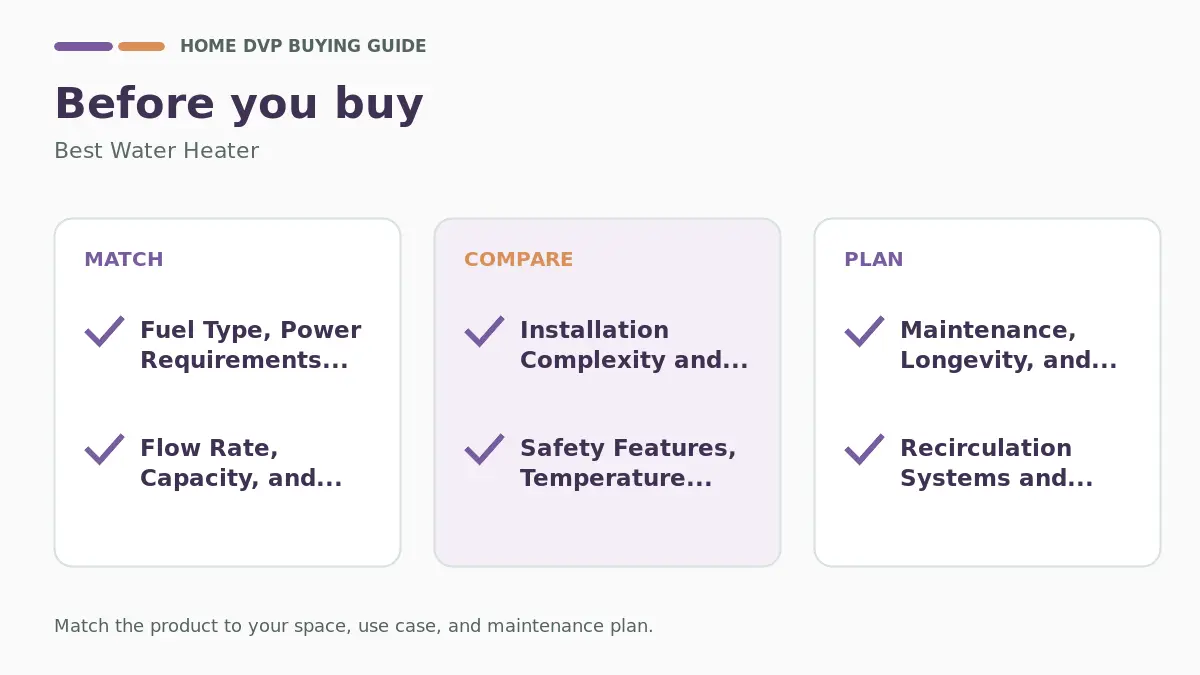
Focus first on household demand, fuel availability, and installation constraints. Check flow rate or tank capacity against simultaneous fixture use, verify electrical panel or gas-line capacity, and compare energy-factor ratings. Safety valves, precise temperature control, and warranty length also matter for long-term reliability.
Are higher-end water heaters worth it?
Premium condensing tankless models often justify their cost through higher efficiency, longer warranties, and the ability to serve multiple fixtures without running out of hot water. For smaller homes or single-point applications, a mid-range electric tankless or mini-tank can deliver excellent value without the higher purchase and installation expense.
Considering an on-demand system instead? Compare fuel requirements, flow rates, and installation tradeoffs in our tankless water heater buying guide.