
Power outages, storm preparedness, camping trips, late-night home repairs, and everyday carry needs all demand reliable lighting that charges quickly and lasts. In 2026, a quality usb c rechargeable flashlight has become a must-have for homeowners, renters, and DIYers who want modern convenience without relying on disposable batteries. USB-C charging means you can power up from power banks, car chargers, laptops, or wall adapters already in most homes, making these lights practical for emergency kits and daily use alike.
We carefully reviewed 15 popular models across a wide $7.19–$130 from brands including ThruNite, Blukar, Esgreen, TrixHub, Coast, Fenix to create this updated guide. Our comparison focused on brightness, runtime, durability, charging speed, beam patterns, special modes, build materials, and real-world suitability for home emergencies, outdoor activities, and DIY tasks. Whether you need something compact for everyday carry or a high-output tactical option for search and rescue style situations, this guide helps you match features to your needs. For more preparedness ideas, explore our collection of emergency supplies.
Home DVP decision summary
Quick Answer
For Best USB C Rechargeable Flashlight, Home DVP compared 15 products from 13 brands. Compare usable runtime at a stated brightness level, beam pattern, battery replaceability, charging input, low-battery indication, impact resistance, and the exact water-resistance test. Maximum lumens alone do not describe sustained output or emergency reliability.
| Comparison coverage | 15 products from 13 brands, including OLIGHT, TrixHub, Blukar. |
|---|---|
| Selection priority | Compare usable runtime at a stated brightness level, beam pattern, battery replaceability, charging input, low-battery indication, impact resistance, and the exact water-resistance test. Maximum lumens alone do not describe sustained output or emergency reliability. |
| Evidence basis | Manufacturer specifications, compatibility details, retailer-provided product data, and common homeowner use cases. |
| Reference guidance | FEMA Ready.gov emergency-kit guidance. |
This summary describes the article's comparison set, not every product on the market. Product details should be confirmed before purchase.
This guide walks through key buying factors, highlights strong performers based on listed specifications, and offers clear recommendations so you can choose confidently without overspending or ending up with a light that fails when it matters most.
Best Usb C Rechargeable Flashlight Buying Guide
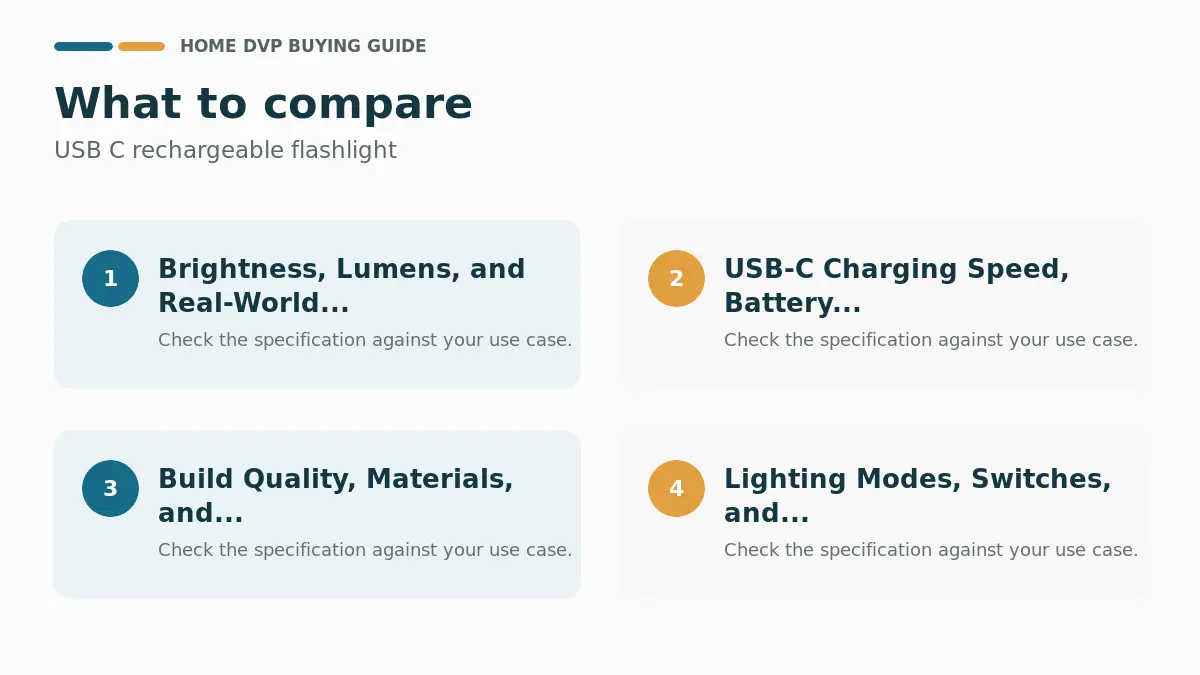
Choosing the right best usb c rechargeable flashlight requires more than just looking at the highest lumen claim. Homeowners and DIYers should balance brightness, runtime, size, durability, and charging convenience against how and where the light will actually be used. Below we break down the most important factors based on product specifications and practical home use cases.
Brightness, Lumens, and Real-World Output
Lumen ratings indicate maximum light output, but real performance depends on beam quality, heat management, and how long the light sustains high output. Models claiming extremely high figures often step down quickly to protect the LED and battery. For home emergency kits, 500 to 2000 lumens covers most indoor power outages and outdoor property checks. Higher outputs excel for long-distance spotting or large yards but drain batteries faster.
Look for flashlights that clearly list multiple brightness levels rather than a single peak number. Pure flood beams work well for close work and room lighting, while spotlight or throw beams help when checking fences or searching farther away. Some advanced units combine both flood and spotlight emitters plus UV or green lasers for multi-purpose use around the house and garage.
A common mistake is buying the highest advertised lumen light without checking sustained runtime. For practical DIY and emergency use, balanced output with usable lower modes often proves more valuable than short bursts of extreme brightness.
USB-C Charging Speed, Battery Capacity, and Runtime
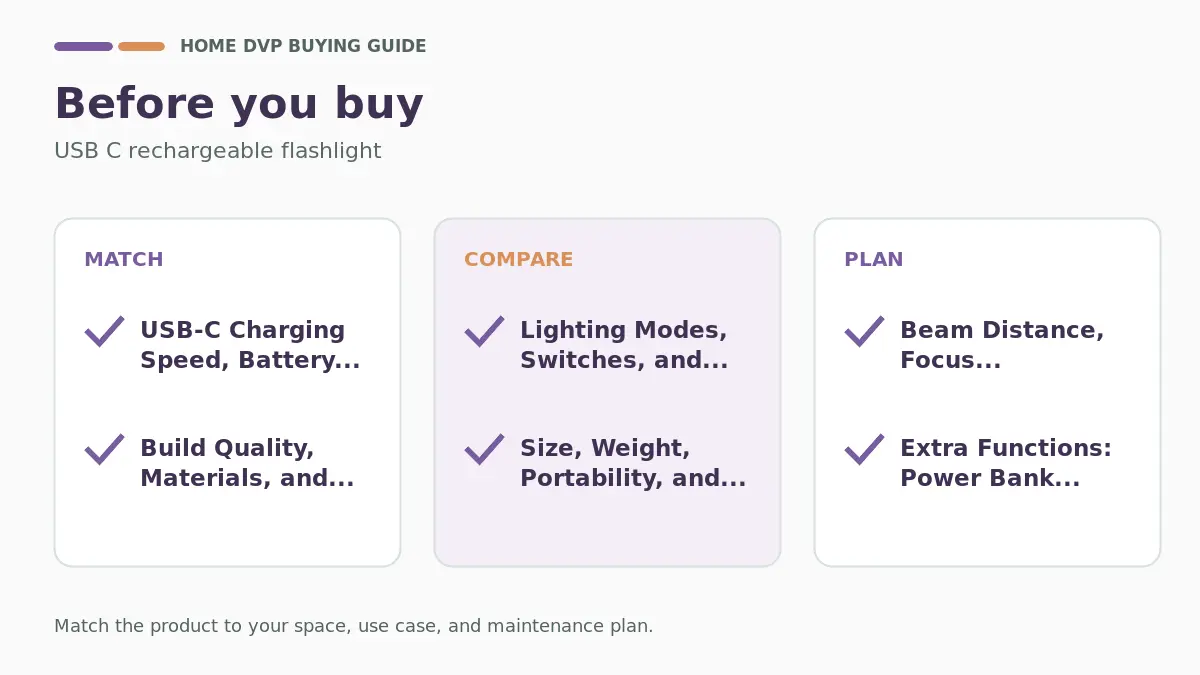
USB-C is the modern standard for a reason. It allows reverse charging on some models so the flashlight can act as a power bank for phones during outages, dual charging options (magnetic plus USB-C), and faster top-ups from any USB-C cable already in the house. Check whether the battery is built-in or replaceable and whether the light includes a cable.
Runtime varies dramatically by mode. Many quality options deliver days or even weeks on moonlight or eco settings while offering 1 to 12 hours on high. Models with LCD or multi-color battery indicators remove the guesswork so you know when to recharge. Overcharge and over-discharge protection chips add safety for long-term storage in emergency kits.
Homeowners should prioritize lights that charge fully in 2 to 6 hours and support common USB power sources. Dual-power designs that also accept AA cells provide a useful backup if the rechargeable pack runs down during a multi-day outage. Store the light partially charged and top it up monthly as part of routine home maintenance.
Build Quality, Materials, and Durability
Most reliable usb c rechargeable flashlight use aircraft-grade aluminum alloy for the body. This material resists dents, scratches, and corrosion better than plastic while remaining lightweight. Look for impact resistance ratings (often 1 to 2 meters) and waterproof or water-resistant seals. IP67 or IP68 ratings mean the light can handle rain, snow, or accidental drops into puddles without failing.
Knurling or textured surfaces improve grip with wet or gloved hands. Magnetic tails or bases turn the light into a hands-free work light that sticks to metal toolboxes, car hoods, or appliances. Dual-way pocket clips allow secure attachment to belts, bags, or hats. Flat or slim EDC designs disappear in pockets yet still deliver strong performance.
Avoid lights that feel flimsy or lack any water sealing if you plan outdoor or garage use. For home emergency kits stored in basements or vehicles, robust construction and sealed electronics prevent corrosion and extend service life. Pairing a durable flashlight with other sturdy items from the hardware category creates a more complete preparedness setup.
Lighting Modes, Switches, and Special Features
Useful mode sets typically include high, medium, low, strobe, and SOS. Some lights add turbo bursts, moonlight, or eco modes for extreme runtime. Memory functions that return to the last used mode save time. Tactical tail switches allow momentary-on for quick checks, while side switches make mode changes easy with one hand.
Advanced features such as UV light for detecting stains or leaks, green beam for pointing or marking, zoomable heads that switch between flood and spot, and lockout modes prevent accidental activation in a bag or pocket. LCD power displays or dual-color indicators show remaining battery at a glance. Safety lockouts that require a double-press keep the light from turning on during storage or transport.
For homeowners, strobe and SOS modes provide signaling capability during emergencies. Zoomable designs adapt quickly from close work under a sink to scanning a dark yard. Choose intuitive controls you can operate in the dark without looking at the light.
Size, Weight, Portability, and Everyday Carry
Compact pocket lights under 5 inches and a few ounces excel for everyday carry, glove boxes, and bedside tables. Larger tactical models with higher output suit dedicated emergency kits, camping gear, or vehicle storage. Flat rectangular designs offer modern style and better pocket comfort compared with traditional cylindrical tubes.
Weight matters when you plan to carry the light for hours or clip it to a belt. Magnetic bases and strong clips expand usefulness for hands-free repairs under the sink, under the hood, or around the house. Holsters and lanyards add convenience for longer outdoor sessions.
Consider where the light will live most of the time. A slim EDC model works well for daily pocket carry and quick home checks, while a slightly larger high-output unit belongs in the emergency bag or garage. Many households benefit from owning both a compact and a heavier-duty option.
Beam Distance, Focus Adjustability, and Throw
Throw distance indicates how far a usable beam reaches. Lights advertising hundreds of meters or thousands of feet use focused optics for long-range visibility, useful for property checks, trail walking, or search tasks. Flood beams light a wider area at shorter distances, better for indoor work, campsites, or illuminating a whole room during an outage.
Zoomable or adjustable-focus heads let you switch between flood and spot by sliding the bezel. Fixed dual-emitter designs with separate flood and spotlight LEDs offer similar versatility without moving parts. Pure flood emitters create soft, even light with less glare, ideal for close tasks and night walks.
Match the beam to your primary use. Home emergency and indoor repair favor flood or hybrid beams. Outdoor property security and long-range needs favor strong throw. Many modern best usb c rechargeable flashlight balance both effectively.
Extra Functions: Power Bank, Magnetic Mount, and Multi-Tool Capability
USB-C input plus output turns selected models into emergency power banks that can charge a phone or small device. Magnetic tails allow mounting to any ferrous metal surface for hands-free lighting during repairs. Some include UV emitters for pet stain detection, currency checks, or leak finding around the home. Green beams assist with presentations or marking locations outdoors.
Included accessories such as holsters, spare cables, lanyards, or even mini companion UV lights add value. Dual-power systems that accept both the internal rechargeable pack and AA batteries provide redundancy during extended outages when recharging may be difficult.
These extras elevate a simple flashlight into a more complete emergency tool. When evaluating options within $7.19–$130, weigh how often you would use power-bank capability or magnetic mounting versus pure brightness.
Value, Brands, and Who Each Style Suits Best
Budget options deliver solid everyday performance and are perfect for backup lights in every room or vehicle. Mid-range models add better materials, dual charging, and refined interfaces. Premium units bring multi-emitter systems, advanced materials, longer warranties, and refined ergonomics for frequent or professional-style use.
Brands represented across the 15 models include well-known names alongside value-focused makers. Higher ratings and larger review volumes often signal consistent real-world reliability. Choose based on primary use: compact EDC for daily carry, high-output tactical for security or outdoor search, multi-function with UV or power bank for versatile home kits, and simple zoomable designs for beginners or kids.
Consider your local climate, how often power outages occur, and whether the light will see garage, camping, or pure indoor emergency duty. Matching the feature set to actual needs prevents both under-buying and overspending.
Our Research Methodology & Why You Can Trust Us
We evaluated every model using transparent, specification-driven criteria rather than subjective claims. Our process begins with category validation to confirm each product is a true USB-C rechargeable flashlight suitable for emergency supplies, home use, and outdoor needs. We then compare brightness levels, stated runtimes across modes, battery capacity and charging methods, waterproof and impact ratings, materials, switch types, special features, size and weight, and included accessories.
User feedback patterns from available product information help identify common praise and concerns around durability, actual runtime versus claims, and ease of use. Industry standards for IP ratings, LED efficiency, and aluminum alloys inform our assessment of build quality. We rank models on performance balance, feature usefulness for homeowners, ease of charging and operation, long-term durability, safety features such as lockouts and overcharge protection, overall value within $7.19–$130, and fit for DIY, emergency, or everyday carry scenarios.
This guide is updated regularly, including during August, to reflect current product data and market availability. We avoid unverified hands-on claims and stick to published specifications and clear comparisons so readers can make informed decisions. Our goal is practical, trustworthy advice that helps you prepare your home effectively.
Final Thoughts
After carefully analyzing the available specifications for these 15 options, several stand out for different homeowner needs. The OLIGHT ArkPro Ultra EDC Flat Flashlight serves as a strong overall and premium pick thanks to its multi-light system combining pure flood, spotlight, UV, and green beam, dual magnetic and USB-C charging, durable O-aluminum construction, and long moonlight runtime. It suits everyday carry, home repairs, and emergency kits for users who want versatility and refined design.
For value-focused buyers, the Blukar Rechargeable Flashlight offers solid brightness, four modes, zoomable focus, aluminum construction, and simple USB-C charging at an accessible price point, making it ideal as a multi-room backup or starter emergency light. The Fenix TK17 delivers high output and long throw with dual tail switches, IP68 rating, and extended low-mode runtime for those needing a heavy-duty tactical option. Compact choices such as the OLIGHT Baton4 Pro and Hoxida flat EDC models excel for pocket carry and magnetic hands-free work, while multi-packs and zoomable units from TrixHub, Esgreen, and Gosdas provide practical homeowner and beginner-friendly performance with LCD displays and power-bank capability.
Match the light to your primary scenario, keep it charged, and store it with other essentials from the emergency supplies section. A well-chosen best usb c rechargeable flashlight improves safety and convenience during power failures, outdoor projects, and daily tasks throughout 2026 and beyond. For complementary tools that support home repairs, browse the hardware category as well.
Related guide: See our best rechargeable flashlight guide for the broader comparison and selection criteria.
Frequently Asked Questions
What should I look for when choosing the best usb c rechargeable flashlight?
Focus on a balance of usable lumens across multiple modes, genuine USB-C charging with reasonable full-charge times, solid aluminum construction with water resistance, clear battery indicators, and size that matches your carry or storage needs. Runtime on lower modes matters more for emergencies than peak turbo output. Features such as magnetic bases, lockouts, and zoomable beams add practical value for home and DIY use.
Are higher-end usb c rechargeable flashlight worth it?
Higher-end models often justify the cost through better sustained brightness, dual charging systems, multi-emitter versatility, superior materials, longer low-mode runtimes, and refined ergonomics. If you will use the light frequently for EDC, repairs, or serious outdoor activities, the improved reliability and features pay off. Budget options work well as secondary or backup lights throughout the house.
How should beginners choose the best usb c rechargeable flashlight?
Start with a simple zoomable aluminum light that has high, low, strobe, and SOS modes, clear USB-C charging, and a pocket-friendly size. Look for models with LCD or indicator lights so battery status is obvious. Avoid the most complex multi-function units until you understand which features you actually use. Many mid-range options offer excellent starter performance within $7.19–$130.
How long should quality usb c rechargeable flashlight last?
With proper care, a well-built aluminum model can deliver years of reliable service. Rechargeable lithium batteries typically support hundreds of cycles before capacity drops noticeably. Store the light in a cool dry place, keep it partially charged, and avoid extreme heat. Sealed designs with good IP ratings resist corrosion and moisture damage that shorten lifespan.
What brands make reliable usb c rechargeable flashlight?
Established makers such as OLIGHT, Fenix, and Streamlight appear frequently among higher-spec models with strong materials and thoughtful features. Value-oriented brands like Blukar, Esgreen, TrixHub, and others deliver capable performance for everyday and emergency use. Review the specific feature set, construction details, and user feedback patterns rather than brand name alone when selecting from ThruNite, Blukar, Esgreen, TrixHub, Coast, Fenix and similar options.
How much should homeowners expect to spend on the best usb c rechargeable flashlight in 2026?
Solid performing options span a broad $7.19–$130. Entry-level lights handle basic emergency and household needs effectively. Spending more typically buys higher sustained output, dual charging, advanced emitters, better waterproofing, and longer runtimes. Most households do well with one premium or mid-range primary light plus a couple of affordable backups for different rooms or vehicles.
Are the best usb c rechargeable flashlight suitable for DIY projects, home repairs, or regular maintenance?
Yes. Compact magnetic models excel for under-sink, under-hood, and attic work by providing hands-free light. Zoomable and multi-mode lights adapt to both close inspection and broader area illumination. USB-C charging keeps them ready without hunting for special batteries. Pair a good flashlight with other essentials from the emergency supplies and hardware sections for a complete home toolkit. Proper lighting improves safety and accuracy during any repair or maintenance task.
About This Home DVP Research
Home DVP is an independent home-improvement research and product-comparison publisher. Ryan Mitchell prepared this guide by comparing manufacturer specifications, compatibility details, retailer-provided product data, key limitations, and common homeowner use cases. We do not claim hands-on testing unless an article explicitly says so.
Review methodology Affiliate disclosure Last reviewed September 10, 2026