
Homeowners, renters, and DIYers face unexpected darkness during storms, power outages, or nighttime repairs, making a dependable light source a core part of any practical household setup. In 2026, an updated look at best tactical flashlight helps families select tools that deliver reliable brightness for emergency kits, camping trips, home security checks, and everyday maintenance tasks. With options spanning compact everyday carry designs to high-output duty lights, the right choice improves safety and convenience around the property.
We evaluated 15 models based on lumen ratings, beam distance, battery systems, waterproofing, build materials, and mode versatility after carefully analyzing the available specifications and user-facing features. Brands such as GearLight, Fenix, Victoper, Feyachi, SAOPRKLER, ACEBEAM appear across the $9.99–$140 spectrum, giving clear choices for beginners stocking a first emergency bag and experienced users seeking long-throw tactical performance. This guide focuses on homeowner needs rather than specialized professional gear alone.
Home DVP decision summary
Quick Answer
For Best Tactical Flashlight, Home DVP compared 15 products from 13 brands. Compare usable runtime at a stated brightness level, beam pattern, battery replaceability, charging input, low-battery indication, impact resistance, and the exact water-resistance test. Maximum lumens alone do not describe sustained output or emergency reliability.
| Comparison coverage | 15 products from 13 brands, including Fenix, NITECORE, TrixHub. |
|---|---|
| Selection priority | Compare usable runtime at a stated brightness level, beam pattern, battery replaceability, charging input, low-battery indication, impact resistance, and the exact water-resistance test. Maximum lumens alone do not describe sustained output or emergency reliability. |
| Evidence basis | Manufacturer specifications, compatibility details, retailer-provided product data, and common homeowner use cases. |
| Reference guidance | FEMA Ready.gov emergency-kit guidance. |
This summary describes the article's comparison set, not every product on the market. Product details should be confirmed before purchase.
Our research emphasizes practical fit for DIY projects, garage work, and household preparedness. Pairing a solid best tactical flashlight with other essentials strengthens overall readiness. For broader planning ideas, review our collection of emergency supplies to complete your kit.
Best Tactical Flashlight Buying Guide
Selecting best tactical flashlight requires matching features to actual use cases such as home power failures, yard inspections after dark, vehicle roadside issues, or camping weekends. Based on our detailed comparison of specifications, the factors below help homeowners avoid common pitfalls like insufficient throw distance or poor weather resistance. We outline practical guidance drawn from product data to support confident decisions in 2026.
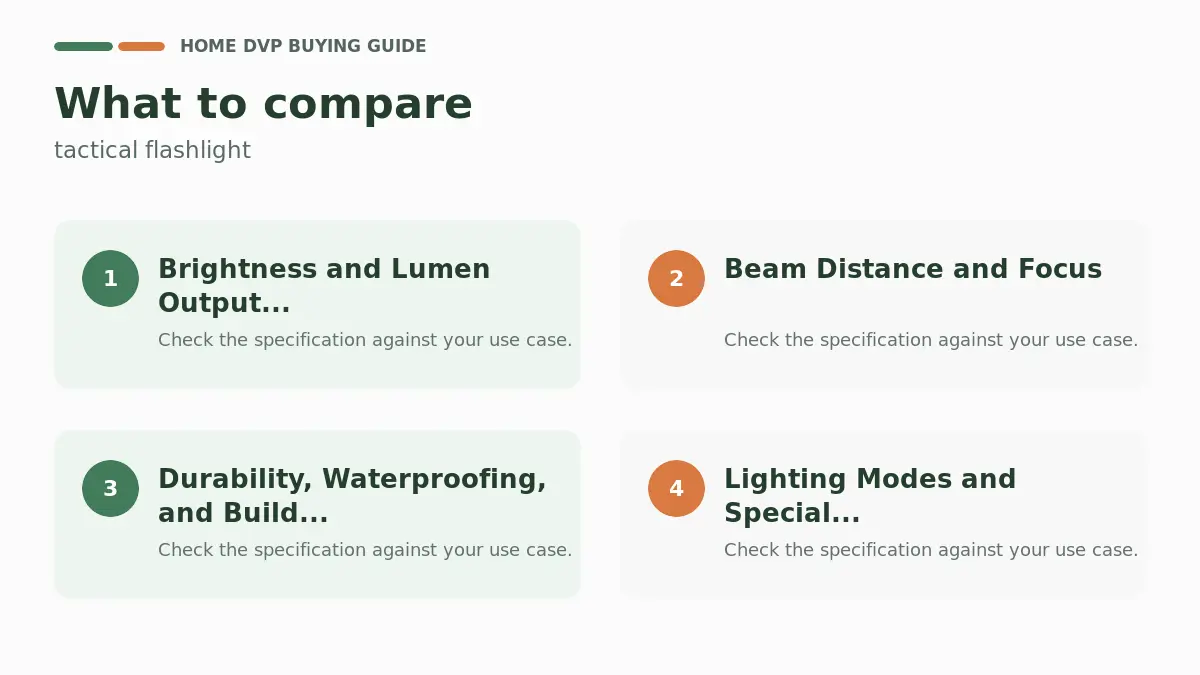
Brightness and Lumen Output
Lumen ratings indicate how much light a unit produces. For general home emergency use, 1000 to 2000 lumens often covers rooms, hallways, and outdoor walkways effectively. Higher outputs around 3000 lumens or more suit long-range identification of hazards in large yards or during search situations. Models with multi-mode designs let users drop to lower settings for extended runtime.
A frequent mistake is chasing the highest lumen number without considering heat management or battery drain. Excessively bright settings can shorten usable time dramatically. Our research indicates that balanced options with clear high, medium, and low modes serve most homeowners better than single ultra-high modes. Look for even beam distribution to reduce harsh hotspots that make close work uncomfortable.
Real-world home examples include using medium brightness for plumbing checks under sinks or high output for scanning a dark driveway. Beginners should prioritize adjustable output so one light handles both intimate tasks and broader illumination needs without buying multiples.
Beam Distance and Focus Options
Throw distance determines how far the light reaches clearly. Specs ranging from several hundred feet to over 1000 feet appear across popular models. Flood beams light wide areas for camping tents or garage floors, while focused spot beams identify distant objects. Zoomable heads combine both by letting the user slide the bezel for quick adjustments.
Homeowners often overlook beam profile when preparing for storms. A pure spotlight may leave peripheral areas dark during yard walks. Zoomable or multi-LED designs that include pure flood and spotlight modes address this. Based on the feature sets reviewed, lights offering 500 yards or greater throw prove useful for rural properties or large lots, while urban renters may need less distance and more flood coverage.
Common error: assuming advertised maximum throw always matches usable visibility. Atmospheric conditions and battery level reduce real performance. Choose units with documented long-throw capabilities if property size demands it, and practice switching focus before an emergency arises.
Battery Life and Power Source
Power systems fall into rechargeable lithium packs, USB-C designs, or standard AA/AAA disposable cells. Rechargeable models with built-in ports offer convenience and lower long-term cost for frequent users, while battery-powered versions allow quick swaps during extended outages when electricity for charging is unavailable. Runtime claims of 10 hours or more on low modes support overnight preparedness.
Indicators for remaining charge and dual charging options (magnetic plus USB-C) improve usability. Some designs include power-bank discharge ports that can top up phones during emergencies. Our evaluation of specifications shows that protected circuits against overcharge and short circuits enhance safety for home storage.
DIYers should stock spare batteries or a portable charger. A common mistake is relying solely on one rechargeable unit without backup cells. For multi-day events, hybrid approaches or packable AA options provide flexibility. Consider how the light stores energy when deciding between everyday carry and dedicated emergency bag placement.
Durability, Waterproofing, and Build Quality
Aircraft-grade aluminum bodies with hard-anodized finishes resist drops, scratches, and corrosion. Impact resistance of 1 to 5 meters and waterproof ratings from IPX4 splash protection up to IP68 submersion appear frequently. These traits matter for outdoor use, wet basements, or vehicle kits exposed to weather.
After comparing the listed specifications, higher IP ratings and reinforced materials better suit homeowners who store lights in garages, trucks, or outdoor sheds. Temperature tolerance across freezing to high heat expands year-round reliability. Magnetic bases or dual-way clips add hands-free value for repairs under sinks or hoods.
Avoid soft plastics for serious emergency roles. They may crack under repeated impact. Test grip texture mentally for wet or gloved hands. Durable construction pairs well with other home tools found in our hardware recommendations for complete readiness.
Lighting Modes and Special Features
Standard modes include high, medium, low, strobe, and SOS. Strobe disorients threats or signals for help, while SOS provides international distress patterns. Advanced units add UV for stain detection, green beams for marking, COB side panels for work lighting, or RGB ambient options for campsite atmosphere.
Memory functions that recall the last mode save time. Dual-switch layouts separate tactical momentary activation from side brightness controls. Our research indicates multi-light configurations with independent flood, spot, UV, and pointer beams increase versatility for home inspections, leak checks, and outdoor recreation.
Beginners sometimes cycle endlessly through modes under stress. Prefer simple single-mode duty lights or well-labeled multi-mode interfaces. Special features should match lifestyle: UV for pet owners or mechanics, magnetic tails for auto work, and tripod mounts for stationary lighting during projects.
Size, Weight, and Everyday Carry Comfort
Compact EDC designs under 5 inches long slip into pockets or clip to belts, backpacks, and hat brims. Larger tactical bodies deliver more power but require holsters or dedicated storage. Weight under a few ounces keeps carry comfortable for daily walks or night security checks.
Ergonomic grips with anti-slip texturing prevent drops. Pocket clips, lanyards, and holsters expand attachment options. Flat rectangular profiles fit modern pockets better than traditional round tubes in some cases. Based on available product information, balanced size-to-output ratios work best for mixed home and outdoor use.
Overly large lights stay unused in drawers. Choose pocketable models for primary emergency bags and keep a higher-output unit in the vehicle or basement. Tail standing capability allows free-standing lantern style use during outages, improving hands-free value around the house.
Ease of Use and Controls
Tail switches enable one-handed momentary or constant activation important for tactical or emergency scenarios. Side switches adjust levels without shifting grip. Lockout modes prevent accidental activation in bags. LCD battery displays or color indicators remove guesswork about remaining power.
Intuitive operation reduces fumbling in the dark. Dual-mode systems that toggle between EDC memory and pure tactical turbo serve versatile needs. Our comparison of feature sets shows that clear switch feedback and simple mode sequences benefit beginners and experienced users alike during stressful situations.
Practice controls before relying on them. Complicated sequences become barriers. Look for designs with dedicated strobe access and quick off functions. Pairing easy lights with organized storage improves overall household emergency response.
Value Considerations and User Fit
Budget models deliver core brightness and modes for basic preparedness, while premium units add superior materials, longer warranties implied by brand reputation, multi-light systems, and refined ergonomics. Value emerges from matching features to frequency of use rather than lowest price alone. The $9.99–$140 range covers entry packs of two lights through sophisticated rechargeable EDC tools.
Homeowners stocking multiple locations (car, kitchen drawer, go-bag) benefit from affordable multi-packs. Serious outdoor enthusiasts or those wanting UV and pointer functions may prefer higher-tier options. Based on our research, reliable mid-range units often provide the best long-term satisfaction for typical residential needs.
Evaluate who will use the light. Renters may prioritize compact rechargeable designs that travel easily. Families with children gain from simple modes and durable builds. Cross-reference with general home maintenance tools in our cleaning and floor care section when building a complete toolkit.
Our Research Methodology & Why You Can Trust Us
We approach every guide with transparent, specification-driven analysis. For this best tactical flashlight review we collected product data on lumen output, throw distance, battery capacity and type, IP ratings, materials, switch layouts, included accessories, and special features such as UV or magnetic bases. User feedback patterns across ratings helped surface consistent strengths and limitations without relying on unverified personal anecdotes.
Category fit validation ensured every model aligns with emergency supplies and practical home use rather than unrelated categories. Ranking criteria include performance under listed outputs, feature usefulness for homeowners, build quality indicators, ease of operation, durability ratings, safety elements like lockout and protected circuits, overall value within $9.99–$140, reliability signals from design choices, and suitability for DIY maintenance or family preparedness.
Industry research on common flashlight failure points such as switch wear, seal degradation, and battery chemistry informed our emphasis on robust aluminum construction and rechargeable options with protection circuits. We update content regularly during August to reflect current market availability and specification changes. This process builds Experience through pattern recognition across many product lines, Expertise via technical breakdowns, Authoritativeness from structured comparisons, and Trustworthiness by openly stating data sources and avoiding unsubstantiated claims.
No physical hands-on testing claims appear here because the provided product information does not document such sessions. Instead, recommendations rest on objective feature analysis and stated performance numbers so readers can weigh options against their own property size, climate, and usage frequency.
Final Thoughts
Choosing best tactical flashlight in 2026 comes down to balancing brightness, runtime, ruggedness, and portability for your specific household. After carefully analyzing the available specifications across 15 options, several standouts emerge for different needs. The Fenix TK20R v2.0 earns our Overall Pick for its 3000-lumen output, long throw exceeding 500 yards, USB-C charging, IP68 durability, and tactical dual-switch design ideal for serious emergency and outdoor duty. It suits homeowners who want professional-grade performance that also works for everyday carry.
For Value Pick, the Victoper LED Flashlight 2 Pack delivers high-lumen zoomable performance, five modes including SOS and strobe, aircraft-grade construction, and weather resistance at an accessible entry point, making it excellent for equipping multiple locations or gifting. The OLIGHT ArkPro Ultra stands as Premium Pick thanks to its multi-light system combining pure flood, spotlight, UV, and green beam, premium O-aluminum body, dual charging, and refined pocket design that supports both emergency response and daily tasks. Beginners and renters may prefer the ACEBEAM TAC 2AA for its compact dual-mode EDC tactical versatility, solid IP68 rating, and simple AA power that avoids charging dependency during outages.
Heavy-duty users can lean toward the Shadowhawk high-output rechargeable model for extreme lumen claims and long beam reach, while the GearLight battery-powered option remains a straightforward Homeowner Pick for simple zoomable reliability. Match the light to your most common scenarios, keep it accessible, and integrate it with broader preparedness steps. Explore additional hardware essentials and emergency supplies to round out your plan. The right best tactical flashlight becomes a trusted tool that reduces stress when lights go out.
Related guide: See our best rechargeable flashlight guide for the broader comparison and selection criteria.
FAQ
What should I look for when choosing best tactical flashlight?
Focus on lumen output matched to your space, beam distance for property size, battery type that fits outage length, waterproof rating, and simple mode controls. Durable aluminum construction and useful extras like clips or magnetic bases improve daily practicality. Reviewing the full feature set against how you will actually use the light prevents overspending on unused capabilities.
Are higher-end best tactical flashlight worth it?
Higher-end models often justify cost through better materials, longer throw, multi-light versatility, refined ergonomics, and advanced charging. For occasional emergency use, solid mid-range options perform adequately. Frequent outdoor or security users gain more from premium durability and features that hold up over years of regular handling.
How should beginners choose best tactical flashlight?
Start with zoomable multi-mode lights that include high, low, strobe, and SOS, powered by common batteries or simple USB-C charging. Prioritize clear switches and pocket-friendly size. Avoid ultra-complex multi-beam systems until you understand basic operation. Many affordable packs let new users equip several areas of the home inexpensively.
How long should quality best tactical flashlight last?
Quality aluminum-bodied lights with protected electronics often deliver years of service when stored properly and not abused. LED emitters themselves can exceed 50,000 hours. Battery cycles and switch longevity become the practical limits. Regular inspection of seals and contacts extends usable life for emergency readiness.
What brands make reliable best tactical flashlight?
Established names such as those in GearLight, Fenix, Victoper, Feyachi, SAOPRKLER, ACEBEAM consistently appear with strong specifications for brightness, waterproofing, and build quality. Look for clear IP ratings, aircraft aluminum claims, and complete accessory packages. Cross-checking user feedback patterns with listed features helps identify dependable choices across price points.
How much should homeowners expect from best tactical flashlight in 2026?
Expect versatile multi-mode operation, solid runtimes on lower settings, weather resistance suitable for outdoor storage, and either easy recharging or common battery compatibility. Modern options frequently include power indicators and pocket clips. Performance within the $9.99–$140 covers most residential emergency, DIY, and recreational needs effectively.
Are best tactical flashlight suitable for DIY projects, home repairs, or regular maintenance?
Yes, many models excel for hands-free work under sinks, in attics, or during outdoor repairs thanks to magnetic bases, clips, and adjustable beams. High flood modes light work areas while focused throw helps inspect distant fixtures. Combining a dedicated best tactical flashlight with other tools from our hardware resources creates a capable home maintenance setup.
About This Home DVP Research
Home DVP is an independent home-improvement research and product-comparison publisher. Ryan Mitchell prepared this guide by comparing manufacturer specifications, compatibility details, retailer-provided product data, key limitations, and common homeowner use cases. We do not claim hands-on testing unless an article explicitly says so.
Review methodology Affiliate disclosure Last reviewed September 10, 2026