
Upgrading your home fire safety system is one of the most important steps any homeowner, renter, or DIYer can take in 2026. Standalone detectors leave gaps in coverage, especially in multi-story homes, basements, or larger layouts where a fire starting in one area may not alert people elsewhere in time. That is why best interconnected smoke detectors have become the preferred choice for practical whole-home protection. When one unit senses danger, every connected unit sounds the alarm simultaneously, giving everyone more time to respond.
After carefully analyzing the available specifications of 15 popular models ranging from $41.53–$240 across brands such as FirstAlert, X-Sense, Siterlink, we built this practical buying guide focused on real homeowner needs. Our comparison process reviewed interconnect type, power source, sensor technology, certifications, ease of installation, nuisance-alarm reduction, and overall value for everyday residential use. Whether you are renovating, replacing old units, or outfitting a new space, this guide helps you select the right system without guesswork.
Home DVP decision summary
Quick Answer
For Best Interconnected Smoke Detectors, Home DVP compared 15 products from 3 brands. Plan alarm placement and interconnection for the whole home before choosing smart features. Compare sensor type, local alarm volume, hardwired or wireless compatibility, battery backup, hush behavior, end-of-life warning, and whether alerts still work without internet access.
| Comparison coverage | 15 products from 3 brands, including X-Sense, FirstAlert, Siterlink. |
|---|---|
| Selection priority | Plan alarm placement and interconnection for the whole home before choosing smart features. Compare sensor type, local alarm volume, hardwired or wireless compatibility, battery backup, hush behavior, end-of-life warning, and whether alerts still work without internet access. |
| Evidence basis | Manufacturer specifications, compatibility details, retailer-provided product data, and common homeowner use cases. |
| Reference guidance | U.S. CPSC residential fire-safety guidance. |
This summary describes the article's comparison set, not every product on the market. Product details should be confirmed before purchase.
If you are also reviewing other essential safety gear, check our full emergency supplies category for complementary options that pair well with modern detection systems. Proper planning around air quality and heating systems also supports better overall home safety, so you may find useful context in our air quality and climate resources.

Pros
- Wireless RF interconnection links all units so one alarm activates the rest across the home
- 10-year sealed battery design limits ongoing maintenance for long-term use
Cons
- Lacks Wi-Fi support so remote smartphone monitoring is unavailable
- No LCD display means status relies on LEDs instead of detailed numerical readouts
Best For / Avoid If
Best for buyers prioritizing
- Wireless RF interconnection links all units so one alarm activates the rest across the home
- 10-year sealed battery design limits ongoing maintenance for long-term use
- Straightforward mounting process works for renters and owners without hardwiring needs
Consider another option if
- Lacks Wi-Fi support so remote smartphone monitoring is unavailable
- No LCD display means status relies on LEDs instead of detailed numerical readouts
- Sealed battery requires full unit replacement once the 10-year life ends

Pros
- Maintenance-free operation from the 10-year sealed battery
- Simultaneous sounding of all linked units for faster whole-home response
Cons
- Supports wireless RF interconnection only and does not include Wi-Fi for remote app monitoring
- The 6-pack size may exceed requirements for smaller single-story homes
Best For / Avoid If
Best for buyers prioritizing
- Maintenance-free operation from the 10-year sealed battery
- Simultaneous sounding of all linked units for faster whole-home response
- Dual photoelectric smoke and electrochemical CO detection capabilities
Consider another option if
- Supports wireless RF interconnection only and does not include Wi-Fi for remote app monitoring
- The 6-pack size may exceed requirements for smaller single-story homes
- First-time users may need extra care placing units to maintain reliable interconnection range

Pros
- Dual smoke and carbon monoxide sensing in certified combination units.
- Long-life sealed battery minimizes ongoing maintenance for a decade.
Cons
- Sealed battery requires full unit replacement after the 10-year period rather than a simple swap.
- Wireless interconnection effectiveness depends on proper unit placement and signal range in larger homes.
Best For / Avoid If
Best for buyers prioritizing
- Dual smoke and carbon monoxide sensing in certified combination units.
- Long-life sealed battery minimizes ongoing maintenance for a decade.
- RF wireless linking creates system-wide warnings without extra cables.
Consider another option if
- Sealed battery requires full unit replacement after the 10-year period rather than a simple swap.
- Wireless interconnection effectiveness depends on proper unit placement and signal range in larger homes.
- Users preferring hardwired power or advanced smart features may need different models.
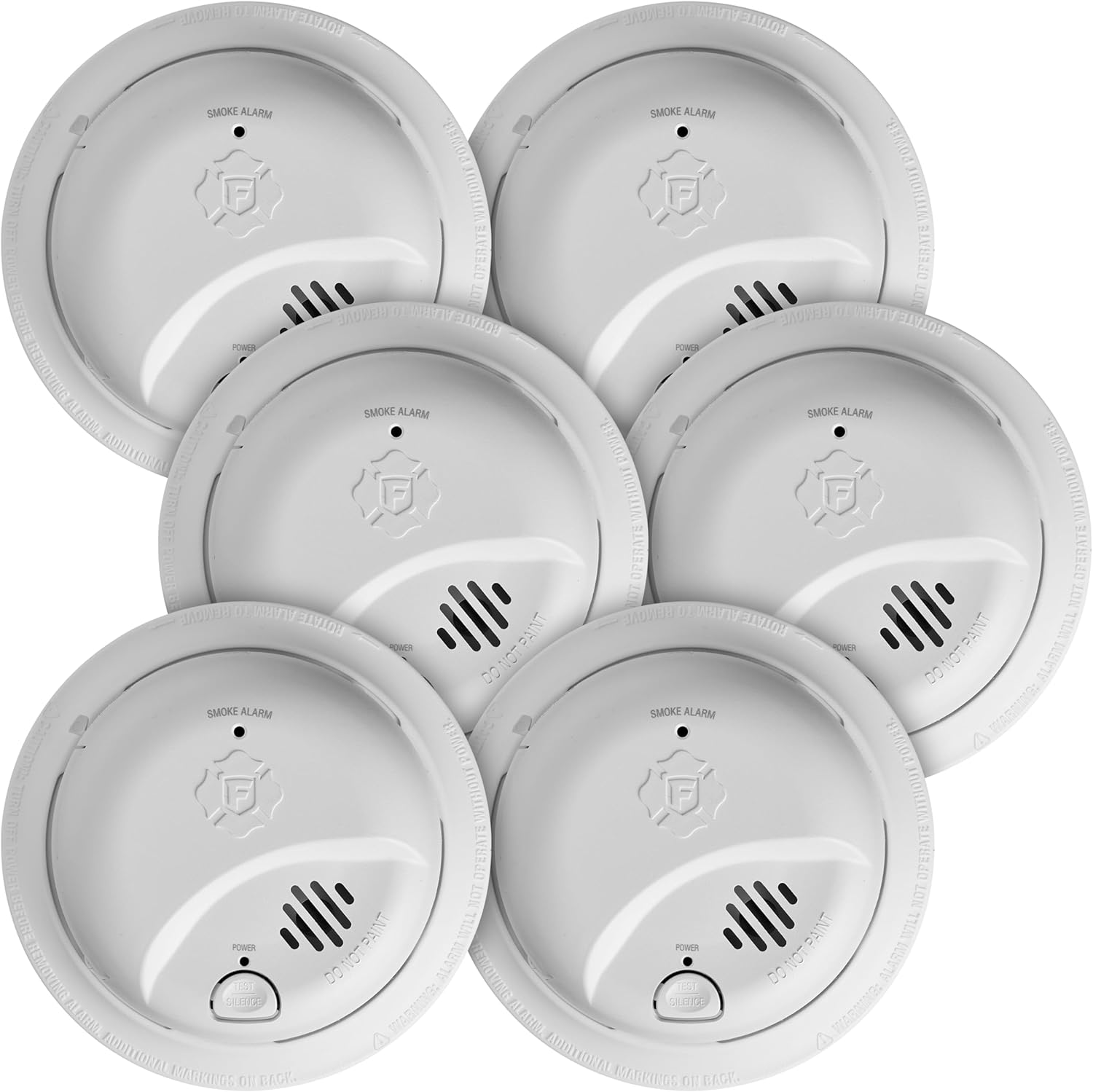
Pros
- Advanced sensing minimizes false cooking alarms per new standards
- Linked interconnect provides broader early warning across compatible units
Cons
- Hardwire setup may require basic electrical familiarity for some DIYers
- Full interconnect benefit depends on using compatible companion alarms
Specifications
| Power Source | Corded Electric |
|---|---|
| Alarm | Audible |
| Product Style | Precision Detection |
| Color | White |
| Item Dimensions D x W x H | 21.63"D x 3.81"W x 15"H |
| Item Weight | 16 ounces |
| Brand | First Alert |
| Model Number | SMI100-AC |
| Global Trade Identification Number | 30194160015538 |
| Number of Items | 1 |
Verify the current product variation before purchase; specifications may change.
Best For / Avoid If
Best for buyers prioritizing
- Advanced sensing minimizes false cooking alarms per new standards
- Linked interconnect provides broader early warning across compatible units
- Battery backup ensures protection continues without household power
Consider another option if
- Hardwire setup may require basic electrical familiarity for some DIYers
- Full interconnect benefit depends on using compatible companion alarms
- Six units may exceed needs in smaller homes or apartments

Pros
- Advanced sensing reduces false cooking alarms while preserving early emergency detection
- Interconnect system links compatible alarms for synchronized whole-home warnings
Cons
- Hardwired design may require basic electrical familiarity that some renters or beginners lack
- Full interconnect benefits depend on pairing with other compatible alarms
Best For / Avoid If
Best for buyers prioritizing
- Advanced sensing reduces false cooking alarms while preserving early emergency detection
- Interconnect system links compatible alarms for synchronized whole-home warnings
- Battery backup ensures continuous operation when household power fails
Consider another option if
- Hardwired design may require basic electrical familiarity that some renters or beginners lack
- Full interconnect benefits depend on pairing with other compatible alarms
- Three-unit pack may exceed coverage needs in compact apartments or small homes

Pros
- Sealed 10-year battery removes ongoing maintenance needs
- RF wireless interconnection works across multiple floors without Wi-Fi
Cons
- Supports wireless interconnection only and lacks Wi-Fi for app-based remote alerts
- Works solely within the X-Sense RF network rather than mixed-brand systems
Best For / Avoid If
Best for buyers prioritizing
- Sealed 10-year battery removes ongoing maintenance needs
- RF wireless interconnection works across multiple floors without Wi-Fi
- Dual photoelectric smoke and electrochemical CO sensors improve response accuracy
Consider another option if
- Supports wireless interconnection only and lacks Wi-Fi for app-based remote alerts
- Works solely within the X-Sense RF network rather than mixed-brand systems
- Larger homes may need additional units beyond the included 3-pack for full coverage

Pros
- Combines smoke and CO detection in interconnected units for dual threat coverage
- Long-lasting sealed battery reduces maintenance over a decade
Cons
- Lacks Wi-Fi for remote smartphone notifications or monitoring
- Battery-powered design may not appeal to those preferring hardwired systems
Best For / Avoid If
Best for buyers prioritizing
- Combines smoke and CO detection in interconnected units for dual threat coverage
- Long-lasting sealed battery reduces maintenance over a decade
- Simple mounting process requires no electrical wiring
Consider another option if
- Lacks Wi-Fi for remote smartphone notifications or monitoring
- Battery-powered design may not appeal to those preferring hardwired systems
- Advanced smart home integration is not supported beyond basic RF linking
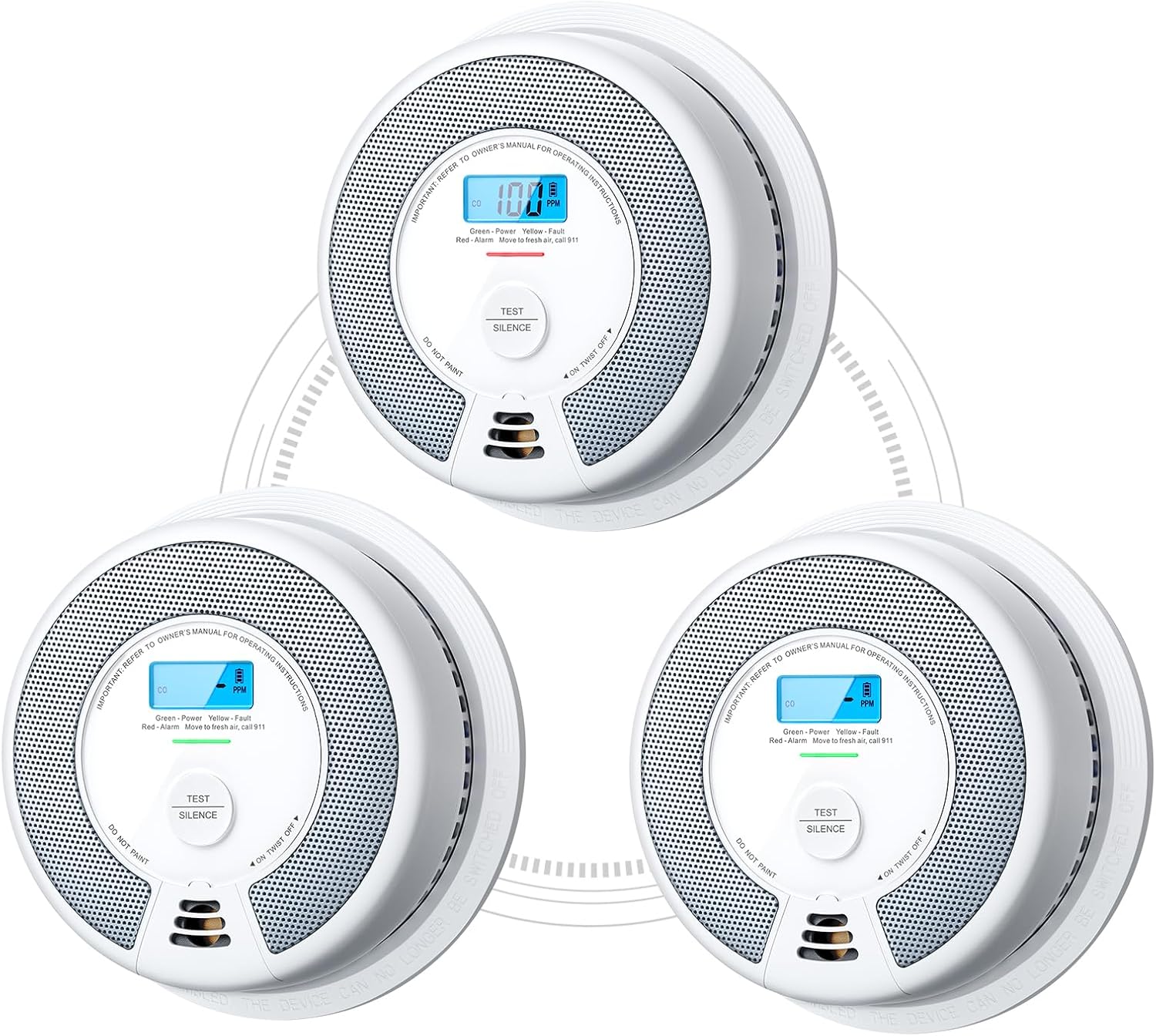
Pros
- RF wireless linking activates all units together for faster awareness
- Built-in sealed battery designed to last a full decade
Cons
- Lacks Wi-Fi so no smartphone app monitoring is available
- Separate remote for convenient control must be purchased additionally
Specifications
| Power Source | 10-Year Sealed Battery |
|---|---|
| Alarm | Audible |
| Sensor Type | Electrochemical, Photoelectric |
| Battery Type | Lithium metal |
| Product Style | RF Interconnected Model |
| Enclosure Material | Heat-Resistant PC Material |
| Brand | X-Sense |
| Model Number | XP0H-WN |
| Manufacturer Warranty Description | 60-day money-back guarantee, 5-year quality warranty, and lifetime technical support |
| Unit Count | 3.0 Count |
Verify the current product variation before purchase; specifications may change.
Best For / Avoid If
Best for buyers prioritizing
- RF wireless linking activates all units together for faster awareness
- Built-in sealed battery designed to last a full decade
- LCD display provides clear status information on each unit
Consider another option if
- Lacks Wi-Fi so no smartphone app monitoring is available
- Separate remote for convenient control must be purchased additionally
- Sealed battery means full unit replacement after the service life ends

Pros
- Interconnect capability coordinates alerts across multiple rooms for faster household response
- Battery backup keeps each unit operational when electrical power is interrupted
Cons
- Requires existing or new hardwired electrical connections which may involve professional installation
- Interconnection is capped at 18 total units so very large properties may need additional separate systems
Specifications
| Power Source | Battery Powered |
|---|---|
| Alarm | Audible |
| Compatible Devices | smoke alarms |
| Sensor Type | Ionization |
| Operating Humidity | 10-95% RH |
| Product Style | Hardwired |
| Color | White |
| Item Dimensions D x W x H | 2.2"D x 5.6"W x 5.6"H |
| Item Weight | 0.6 Pounds |
| Brand | First Alert |
Verify the current product variation before purchase; specifications may change.
Best For / Avoid If
Best for buyers prioritizing
- Interconnect capability coordinates alerts across multiple rooms for faster household response
- Battery backup keeps each unit operational when electrical power is interrupted
- Mounting system and side battery access streamline both initial setup and ongoing maintenance
Consider another option if
- Requires existing or new hardwired electrical connections which may involve professional installation
- Interconnection is capped at 18 total units so very large properties may need additional separate systems

Pros
- Advanced sensing technology cuts down common cooking false alarms
- Works with most First Alert and BRK models for linked early warnings
Cons
- Hardwire installation may require electrical familiarity or professional help for some first-time users
- 6-pack size may be more coverage than needed for compact living spaces
Specifications
| Power Source | Corded Electric |
|---|---|
| Alarm | Smoke, CO |
| Sensor Type | Ionization |
| Operating Humidity | 10-95% RH |
| Product Style | Precision Detection |
| Color | White |
| Item Dimensions D x W x H | 5.6"D x 5.6"W x 1.9"H |
| Item Weight | 3.33 Pounds |
| Brand | First Alert |
| Model Number | SMICO100-AC |
Verify the current product variation before purchase; specifications may change.
Best For / Avoid If
Best for buyers prioritizing
- Advanced sensing technology cuts down common cooking false alarms
- Works with most First Alert and BRK models for linked early warnings
- Battery backup maintains function when power fails
Consider another option if
- Hardwire installation may require electrical familiarity or professional help for some first-time users
- 6-pack size may be more coverage than needed for compact living spaces
- Full interconnect benefits depend mainly on First Alert and BRK compatibility

Pros
- RF interconnection coordinates alerts across all linked units
- Decade-long sealed battery power eliminates frequent changes
Cons
- Does not include Wi-Fi for remote app notifications or monitoring
- Lacks an LCD display for showing carbon monoxide levels or detailed status
Best For / Avoid If
Best for buyers prioritizing
- RF interconnection coordinates alerts across all linked units
- Decade-long sealed battery power eliminates frequent changes
- Straightforward mounting hardware supports quick DIY placement
Consider another option if
- Does not include Wi-Fi for remote app notifications or monitoring
- Lacks an LCD display for showing carbon monoxide levels or detailed status
- Three-unit pack may leave larger homes needing extra detectors purchased separately

Pros
- Reliable dual power from hardwired AC and replaceable 9V backup
- Interconnects with up to 12 compatible units for broader coverage
Cons
- Hardwired installation may require electrical knowledge or professional assistance for first-time users
- Sold as a 1-pack so multiple units must be purchased separately for full interconnect setups
Best For / Avoid If
Best for buyers prioritizing
- Reliable dual power from hardwired AC and replaceable 9V backup
- Interconnects with up to 12 compatible units for broader coverage
- Silence mode lasting up to 10 hours improves daily convenience
Consider another option if
- Hardwired installation may require electrical knowledge or professional assistance for first-time users
- Sold as a 1-pack so multiple units must be purchased separately for full interconnect setups
- Uses a replaceable 9V battery rather than a sealed long-life option

Pros
- Faster smoke detection improves alert timing based on listed performance
- Voice alerts and dual signaling create unmistakable hazard communication
Cons
- Full interconnect benefits require additional compatible Kidde battery-powered units
- Periodic battery replacement is needed to maintain continuous operation
Best For / Avoid If
Best for buyers prioritizing
- Faster smoke detection improves alert timing based on listed performance
- Voice alerts and dual signaling create unmistakable hazard communication
- Battery power removes the need for hardwiring and works through outages
Consider another option if
- Full interconnect benefits require additional compatible Kidde battery-powered units
- Periodic battery replacement is needed to maintain continuous operation
- Users with extensive hardwired systems may need supplementary options for mixed setups

Pros
- RF interconnection activates every alarm together for quicker household awareness.
- UL 217 and UL 2034 certification backs dual-sensor reliability in each unit.
Cons
- Interconnection may need initial pairing steps that take more time than pure standalone units.
- The 5.7-inch plate requires checking existing hole patterns for full coverage fit.
Specifications
| Power Source | 10-Year Battery Powered, Not Hardwired |
|---|---|
| Alarm | 85 dB |
| Sensor Type | photoelectric, electrochemical |
| Battery Average Life | 10 years |
| Battery Type | Lithium metal |
| Product Style | RF Interonnected Model |
| Color | White |
| Item Dimensions D x W x H | 5.7"D x 5.7"W x 2"H |
| Enclosure Material | Heat-Resistant PC Material |
| Brand | X-Sense |
Verify the current product variation before purchase; specifications may change.
Best For / Avoid If
Best for buyers prioritizing
- RF interconnection activates every alarm together for quicker household awareness.
- UL 217 and UL 2034 certification backs dual-sensor reliability in each unit.
- Sealed 10-year battery eliminates replacement chores over long service life.
Consider another option if
- Interconnection may need initial pairing steps that take more time than pure standalone units.
- The 5.7-inch plate requires checking existing hole patterns for full coverage fit.
- Status display stays off outside alerts or tests so routine checks need manual activation.
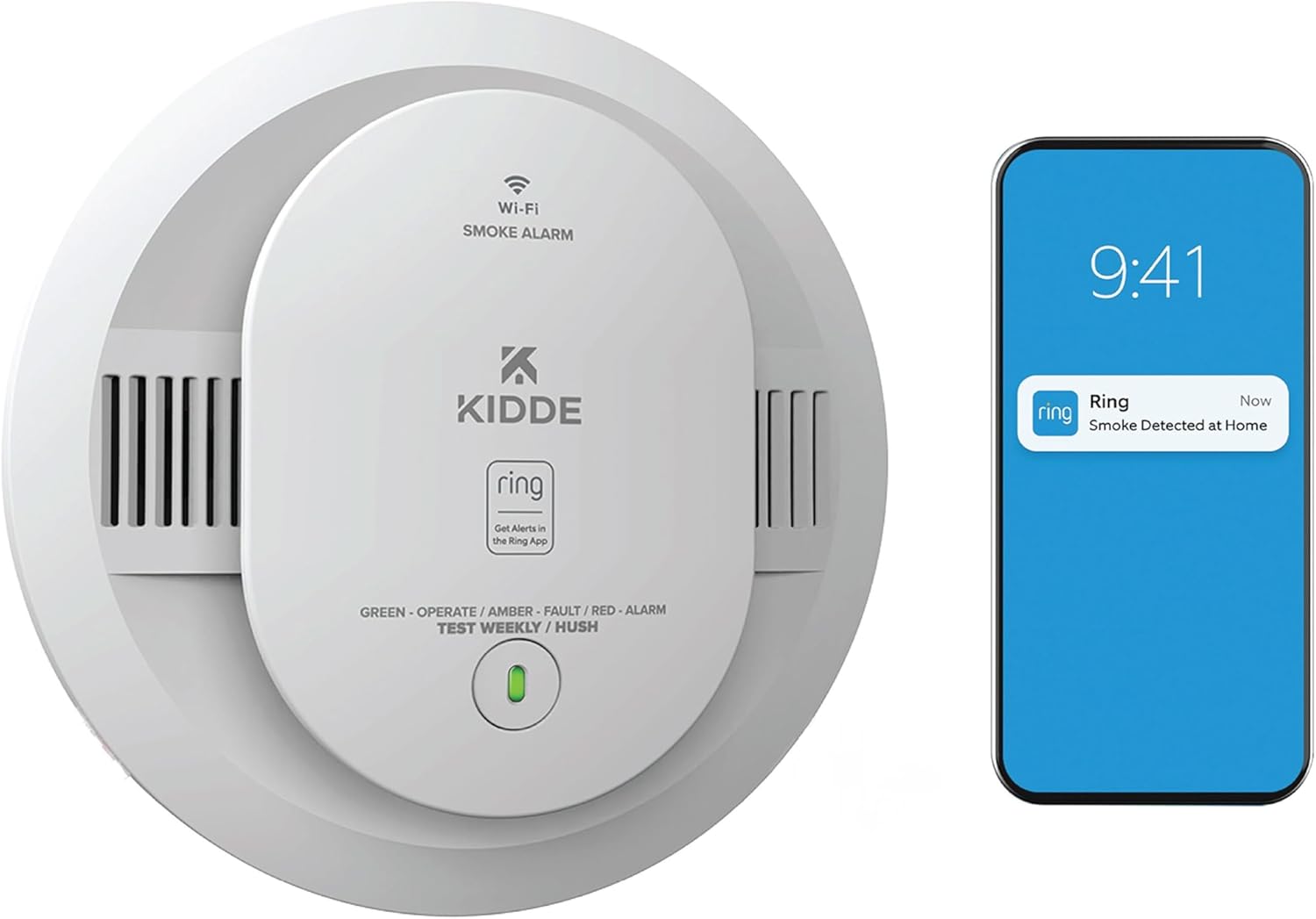
Pros
- Battery power removes any need for electrical connections during placement
- Wireless interconnectivity creates unified alerts without running new wires
Cons
- Advanced 24/7 monitoring requires a separate monthly subscription
- Periodic AA battery changes remain necessary for continued operation
Specifications
| Brand | Kidde |
|---|---|
| Style | Smoke Detector |
| Power Source | Battery Powered |
| Color | White |
| Product Dimensions | 2"D x 5"W x 5"H |
| Alarm | Audible |
| Operating Humidity | Up to 95% relative humidity (RH), non-condensing |
| Upper Temperature Rating | 100 Degrees Fahrenheit |
| Sensor Type | Photoelectric |
| Material | Plastic |
Verify the current product variation before purchase; specifications may change.
Best For / Avoid If
Best for buyers prioritizing
- Battery power removes any need for electrical connections during placement
- Wireless interconnectivity creates unified alerts without running new wires
- Basic app notifications function independently of any paid service
Consider another option if
- Advanced 24/7 monitoring requires a separate monthly subscription
- Periodic AA battery changes remain necessary for continued operation
- Full smart features need a stable internet connection and compatible app
Best Interconnected Smoke Detectors Buying Guide
Choosing the right best interconnected smoke detectors requires more than picking the loudest alarm. Homeowners need systems that match their home layout, wiring situation, power preferences, and long-term maintenance tolerance. Below we break down the key factors based on product specifications so you can make an informed decision that fits your specific living space and skill level.
Hardwired vs Wireless Interconnect Technology
Interconnect method is the core feature that separates modern systems from basic detectors. Hardwired interconnect models link through existing electrical wiring and typically allow connection of up to 18 units. These work well when you already have wiring in place or are performing a full renovation. Models such as the First Alert SMI100-AC series use quick-connect plugs so replacement of older hardwired units requires no rewiring, which saves time for DIYers.
Wireless or wire-free interconnect options use radio signals to communicate and are ideal for homes without existing alarm wiring, rentals, basements, lofts, or renovations where running new cable is impractical. Kidde wire-free models and X-Sense Link+ systems can connect up to 12 or 18 units respectively over distances of several hundred feet. A common mistake is mixing brands or incompatible series, so always verify that every unit you buy supports the same interconnect protocol. For most multi-level homes, a single-network wireless system simplifies whole-home coverage without an electrician.
Power Source, Battery Backup, and Maintenance Needs
Power reliability determines whether your system works during outages. Hardwired units with battery backup (usually 9-volt) continue protecting when the main power fails. First Alert hardwired packs include this feature as standard and make battery replacement straightforward with side-load compartments. Battery-only or sealed-battery models eliminate wiring entirely. Many X-Sense combination units use 10-year sealed lithium batteries that require zero replacements until the end of the unit life, removing the nuisance of late-night chirps and ladder climbing.
Kidde AA-battery models offer flexibility for temporary or hard-to-wire locations and still support wire-free interconnect. Homeowners often underestimate maintenance: sealed 10-year units cost more up front but deliver lower long-term hassle. Replaceable-battery units keep costs lower initially but demand regular checks. For busy households or second homes, sealed-battery wireless systems reduce upkeep significantly while still providing continuous protection.
Sensor Technology and Smoke Detection Speed
Photoelectric sensors respond faster to slow-smoldering fires common in living areas and reduce cooking-related false alarms compared with older ionization designs. Most modern interconnected units, including the X-Sense SC07-W and SC01-W series as well as Kidde models, use photoelectric technology and meet current UL 217 standards. Some claim over 25 percent faster smoke detection based on internal comparisons, which can matter when every second counts.
Look for advanced sensing that specifically targets nuisance reduction near kitchens. First Alert Precision Detection technology is designed to meet newer industry standards for fewer false alarms while still providing early warning. A frequent homeowner error is placing detectors too close to cooking appliances or bathrooms; even advanced sensors perform best when installed according to manufacturer spacing guidelines. Pairing good sensors with proper placement maximizes real-world reliability.
Combination Smoke and Carbon Monoxide Detection
Many households benefit from dual-threat protection. Combination smoke and CO units simplify installation by covering both hazards with one device per location. X-Sense SC07-W and SC01-W packs include photoelectric smoke plus electrochemical CO sensors, LCD displays on some models, and full wireless interconnection so every unit alerts for either danger. First Alert SMICO100-AC hardwired combos add battery backup and Precision Detection for smoke while monitoring carbon monoxide.
If your home has fuel-burning appliances, a garage, or an attached workshop, combination detectors provide better value than buying separate units. Pure smoke models still make sense for bedrooms or areas without CO risk, but most modern buyers prefer the convenience of combos for main living levels. Confirm UL 217 and UL 2034 certification when selecting dual units to ensure both sensors meet recognized safety benchmarks.
Installation Ease, Mounting Options, and Compatibility
Easy installation encourages proper coverage. Hardwired First Alert models include quick-connect plugs and perfect-mount brackets that allow wide rotation for clean alignment over existing holes. Wireless X-Sense and Kidde units mount with simple brackets, screws, and anchors; no electrician is required. Larger mounting plates on some X-Sense models hide old screw holes and ceiling marks for a cleaner finished look during upgrades.
Compatibility across a brand family matters for expansion. Most First Alert and BRK hardwired units interconnect with one another, while X-Sense Link+ devices form their own wireless network of up to 18 units. Kidde wire-free models connect with other compatible Kidde battery-powered units. A common pitfall is buying mixed packs that cannot talk to each other. Plan the entire network at once and stick to one interconnect ecosystem. For renters or temporary setups, battery-powered wireless options offer the least permanent modification.
Certifications, Loudness, and Visual Indicators
Safety certifications provide objective assurance. Look for UL 217 (and UL 2034 for CO) listing, ETL listing, and compliance with current editions. Certification can vary by exact model and revision, so verify the current listing mark and model number before purchase. Alarm volume of 85 dB is standard and sufficient for most homes when units are interconnected. Voice alerts on certain Kidde models announce “Fire” for clearer identification of the threat type, which can reduce confusion during nighttime emergencies.
Visual features such as red LED status lights, latching alarm indicators that identify the initiating unit, and LCD displays on select X-Sense combos help with troubleshooting. These details matter more than many buyers expect when diagnosing a low-battery chirp or confirming which room first detected smoke. Choose units with clear visual feedback if you manage a larger property or want simpler maintenance.
Coverage Range, Pack Size, and Whole-Home Planning
Wireless systems typically advertise ranges of several hundred feet (X-Sense up to 820 ft open space). Actual performance depends on walls, floors, and interference, so multi-story homes often need units on every level plus basements and garages. Pack sizes of 3 or 6 units simplify initial coverage and often lower per-unit cost. First Alert 3-pack and 6-pack hardwired options and X-Sense multi-packs let you build a complete network efficiently.
Map your home first: place detectors in every bedroom, outside sleeping areas, on each level, and near potential fire sources while following code guidelines. Interconnected systems shine in multi-level or larger floor plans because a kitchen fire wakes upstairs sleepers instantly. For smaller apartments or single-level homes, a 3-pack wireless set may suffice. Always leave room in the network for future expansion rather than maxing out the limit immediately.
Smart Features and App Integration
Some newer models add smart connectivity. The Kidde Smart Smoke Detector with Ring app support sends real-time notifications for smoke or low battery without a subscription for basic alerts. Optional paid monitoring is available. Voice-capable units and Alexa compatibility expand convenience for smart-home users. Most traditional hardwired and sealed-battery wireless units remain non-smart and focus purely on reliable local interconnect, which many homeowners still prefer for simplicity and independence from Wi-Fi.
If you already use Ring or similar ecosystems, the app-enabled Kidde option integrates cleanly. Otherwise, stick with proven local interconnect that works even if the internet is down. Smart features should enhance, not replace, the core hardwired or wireless interconnection that guarantees every unit sounds when one detects danger.
Our Research Methodology & Why You Can Trust Us
At Home DVP we prioritize transparent, specification-driven analysis over marketing claims. For this best interconnected smoke detectors guide we evaluated 15 models using manufacturer-provided data on interconnect capacity, power source, sensor type, battery life, certifications (UL 217, UL 2034, ETL, FCC), pack configuration, mounting hardware, warranty length, and nuisance-alarm reduction features. We cross-referenced user-facing specifications against category requirements for Emergency Supplies and home fire safety.
Our ranking criteria focus on performance indicators (detection speed claims and sensor technology), feature completeness (combo capability, voice alerts, indicators), build and durability expectations (warranty and sealed-battery life), ease of use (installation method and maintenance), safety certifications, value within the $41.53–$240 spectrum, and practical fit for homeowners, renters, and DIYers. We also examined how well each product supports whole-home coverage and real residential layouts.
We do not claim hands-on laboratory or in-home testing unless product data explicitly supports it. Instead we rely on detailed comparison of listed specifications, industry standards compliance, and aggregated user feedback patterns available at the time of research. Content is reviewed and refreshed during August to reflect current product availability and specification updates so readers receive accurate guidance for 2026.
This approach builds E-E-A-T by remaining data-driven, clearly stating strengths and limitations of each option, and matching recommendations to specific homeowner scenarios. You can trust that every product discussed matches the interconnected smoke detector category and that no unrelated items appear in our analysis.
Final Thoughts
Selecting best interconnected smoke detectors in 2026 comes down to matching interconnect style, power preference, and feature set to your home layout and maintenance willingness. After reviewing the specifications of the available models, several clear recommendations emerge for different needs.
For overall reliability and broad compatibility in wired homes, the First Alert SMI100-AC Hardwire Interconnect Smoke Alarm packs (3-pack or 6-pack) stand out with Precision Detection technology, battery backup, quick-connect installation, and the ability to interconnect up to 18 units. Homeowners seeking dual smoke and CO protection should consider the First Alert SMICO100-AC 6-pack or the X-Sense SC07-W and SC01-W wireless combination packs with 10-year sealed batteries. These deliver whole-home wireless interconnection without wiring and minimize long-term maintenance.
Budget-conscious buyers or those needing flexible wire-free options will appreciate the Kidde AA battery-powered models with voice alerts and wire-free interconnect, including the smart Ring-enabled version for app notifications. Easy-setup wireless multi-packs from X-Sense suit renovations, rentals, basements, and multi-story homes where running cable is difficult. Choose sealed-battery combos when you want set-it-and-forget-it protection and hardwired units when permanent wiring already exists. Pair any system with regular testing and proper placement, and explore complementary gear in our heating, cooling and air and hardware sections for a complete safety upgrade. Investing in properly interconnected detection remains one of the highest-value home improvements you can make.
Related guide: See our best smoke detector guide for the broader comparison and selection criteria.
FAQ
What should I look for when choosing best interconnected smoke detectors?
Focus on interconnect method (hardwired or wireless), power source with backup, sensor type (photoelectric preferred), certifications such as UL 217, pack size for whole-home coverage, and features that reduce nuisance alarms. Match the system to your wiring situation and number of levels. Confirm all units in your planned network use the same interconnect technology for reliable communication.
Are higher-end best interconnected smoke detectors worth it?
Higher-end options with 10-year sealed batteries, combination smoke/CO sensing, LCD displays, or advanced nuisance-alarm reduction often deliver better long-term value through lower maintenance and dual protection. They cost more initially within the $41.53–$240 but eliminate frequent battery changes and cover more hazards. Basic interconnected smoke-only packs remain excellent for budget-focused pure smoke needs.
How should beginners choose best interconnected smoke detectors?
Beginners should start with wireless multi-packs that require no wiring and include clear mounting hardware. Look for simple test/silence buttons and voice or LED indicators. Brands offering 3-packs or 6-packs of sealed-battery or AA models keep setup straightforward. Follow the manufacturer spacing guidelines and test the entire network after installation.
How long should quality best interconnected smoke detectors last?
Most quality units carry 10-year limited warranties and are designed for a 10-year service life. Sealed-battery models typically last the full decade without battery changes. Replace any detector after 10 years or sooner if it fails testing, even if the interconnect still functions. Regular monthly testing helps confirm ongoing reliability.
What brands make reliable best interconnected smoke detectors?
Established names including FirstAlert, X-Sense, and Kidde consistently appear with strong certification records, interconnect options, and homeowner-focused features. Choose models that clearly list UL compliance and interconnect capacity matching your home size. Stick to one brand family when expanding a network for guaranteed compatibility.
How much should homeowners expect from best interconnected smoke detectors in 2026?
Expect full systems in the $41.53–$240 range depending on pack size, hardwired versus wireless design, and whether combination CO sensing is included. Multi-packs often provide better per-unit value. Factor in long-term battery or maintenance costs when comparing sealed versus replaceable-battery models for accurate total ownership cost.
Are best interconnected smoke detectors suitable for DIY projects, home repairs, or regular maintenance?
Yes. Wireless and quick-connect hardwired models are designed for straightforward DIY installation with basic tools. Most homeowners can mount units, insert batteries or plug in connectors, and link the network in an afternoon. Regular maintenance involves monthly testing and annual battery checks (or none for sealed units). They integrate well into broader home safety upgrades alongside other emergency gear found in our emergency supplies collection and related bathroom fixtures or hardware projects when renovating.
About This Home DVP Research
Home DVP is an independent home-improvement research and product-comparison publisher. Ryan Mitchell prepared this guide by comparing manufacturer specifications, compatibility details, retailer-provided product data, key limitations, and common homeowner use cases. We do not claim hands-on testing unless an article explicitly says so.
Review methodology Affiliate disclosure Last reviewed October 10, 2026