
Pet owners face unique challenges with indoor air quality as fur, dander, and lingering odors circulate through living spaces. A quality hepa air purifier for pets captures these particles effectively, helping reduce allergens and create a healthier environment for families and animals alike. In 2026, homeowners and renters increasingly seek reliable options that balance powerful filtration with quiet operation and easy maintenance.
Our research team at Home DVP carefully compared 15 models spanning $26.99–$168 from MOOKA, PuroAir, Levoit, Purivortex, Heapets, VOOPNU based on coverage area, HEPA filtration efficiency, CADR ratings, pet-specific modes, noise levels, and real-world homeowner suitability. This guide draws from detailed specification analysis and user feedback patterns to deliver transparent recommendations without hype. For broader climate control insights, explore our resources in the Heating, Cooling & Air category or pair your purifier with humidity management from our cool mist vs warm mist humidifier comparison.
Whether you manage a multi-pet household, a small apartment, or a large open-concept home, understanding key features prevents common buying mistakes like undersized coverage or filters that clog quickly with pet hair. Keep reading for practical advice tailored to everyday DIY and home maintenance needs.
Hepa Air Purifier For Pets Buying Guide
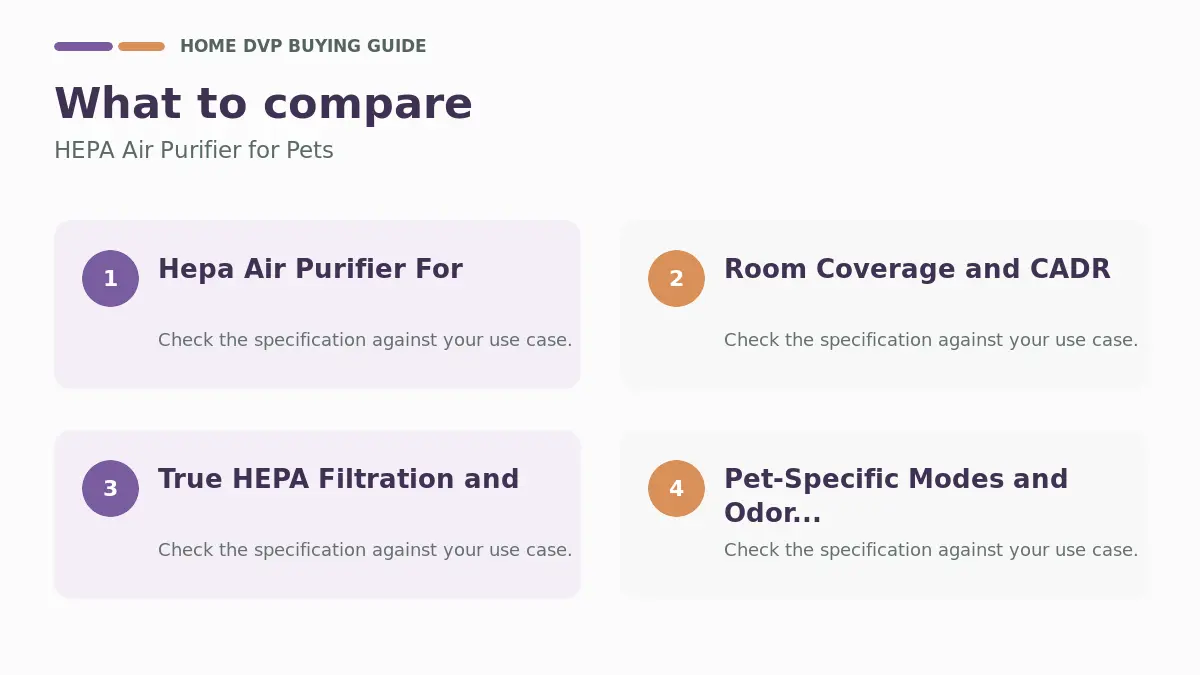
Selecting the right hepa air purifier for pets requires focusing on how well the unit handles pet-related pollutants while fitting your space and lifestyle. After carefully analyzing the available specifications, we identified the most important criteria that separate reliable performers from average models. These factors help homeowners avoid overpaying for unnecessary features or under-buying for high-shedding pets.
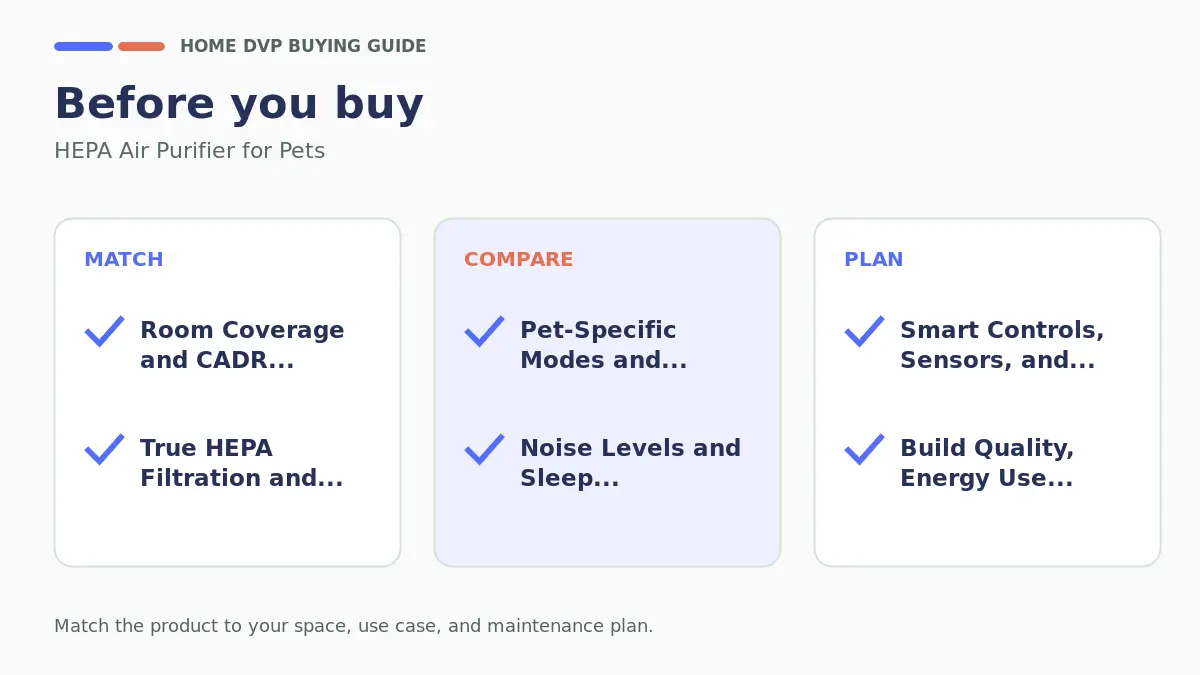
Room Coverage and CADR Performance
Coverage area determines whether a purifier can refresh the air in your primary living space or bedroom multiple times per hour. Models claiming large-room capacity often list square footage based on one air change, yet effective pet dander removal benefits from 4 or more air changes in high-traffic areas. Look for AHAM VERIFIDE CADR ratings for smoke, dust, and pollen as these provide independent verification of cleaning speed.
A common mistake is choosing a unit rated only for the exact room size without accounting for open floor plans or continuous pet activity. For example, a model covering up to 1,073 square feet once per hour works well in medium bedrooms but may struggle in a combined living-dining area with multiple animals. Higher CADR units excel for whole-home feel in larger layouts. Always measure your space and prioritize verified performance over marketing claims.
Practical tip: Place the unit in the room where pets spend the most time, such as near beds or sofas, and ensure unobstructed airflow. This approach maximizes efficiency without needing oversized equipment. Pairing with proper humidity control, as discussed in related Air Quality & Climate resources, further improves particle capture.
True HEPA Filtration and Multi-Stage Systems
True HEPA or HEPA-grade filters capture 99.97 percent of particles as small as 0.1 to 0.3 microns, including pet dander, dust, and pollen. Multi-stage designs typically combine a pre-filter for large fur and hair, the HEPA layer for fine allergens, and activated carbon for odors and VOCs. Washable pre-filters extend the life of the main filter in homes with heavy shedding.
Many pet-focused models offer specialized replacement filters designed for dander and smells. Avoid units without clear HEPA claims or those relying solely on ionizers, as mechanical filtration remains the most reliable for continuous homeowner use. Independent lab testing notes in product data build confidence that the filter performs as stated.
Homeowners should plan for filter replacement costs and availability. Genuine brand filters maintain seal integrity and efficiency better than generics. In multi-pet homes, rinsing the pre-filter monthly prevents early clogging and maintains strong airflow. This maintenance habit supports long-term value across the $26.99–$168 spectrum.
Pet-Specific Modes and Odor Control
Dedicated Pet Mode or U-shaped inlets help trap airborne fur without rapid clogging while boosting odor absorption through enhanced carbon filters. Features like ARC Formula or high-capacity carbon layers neutralize litter box smells, wet dog odors, and cooking residues common in pet households. These targeted tools make a noticeable difference compared to standard purifiers.
Pet Lock or child lock prevents accidental setting changes during playful interactions. Auto Mode with air quality sensors adjusts fan speed based on real-time PM2.5 readings, which is useful when pets are active. Sleep Mode keeps noise near 20 to 25 dB with dimmed displays so rest remains undisturbed for both people and animals.
A frequent error is overlooking carbon filter quality. Thin carbon layers fade quickly in odor-heavy environments. Prioritize models advertising strong odor elimination and washable components. Combining a purifier with regular vacuuming of carpets, as covered in our carpet cleaner machine guide, multiplies results for cleaner floors and air.
Noise Levels and Sleep Compatibility
Quiet operation is essential for bedrooms and shared living areas. Look for Sleep Mode ratings around 20 to 25 dB, which approximate a soft whisper. Higher speeds will be louder but should remain tolerable for daytime use. QuietKEAP-style technology or similar reduces motor noise without sacrificing filtration strength.
Display lights that auto-dim or turn off completely prevent nighttime disruption. Light sensors that respond to room darkness add convenience. Test placement away from walls or furniture that can amplify sound. For light sleepers or pets sensitive to noise, prioritize the lowest sleep rating available within your coverage needs.
Homeowners often regret units that sound like a constant fan. Review CADR alongside noise data to ensure high performance does not come with excessive volume. Balanced models deliver strong cleaning at moderate speeds for 24-hour operation.
Smart Controls, Sensors, and Ease of Use
WiFi-enabled models with companion apps allow remote scheduling, filter life tracking, and voice assistant integration. Air quality monitors displaying real-time PM2.5 or AQI help users understand when to increase speed. Touch displays and simple button layouts suit all skill levels, from beginners to experienced DIYers.
Timers, auto mode, and ECO settings reduce energy use during low-activity periods. Child or pet locks add safety in busy homes. Setup is typically plug-and-play with no complex installation required, making these ideal for renters who need portable solutions.
Avoid overcomplicating if you prefer manual controls. Many effective units offer reliable performance without apps. Check app ratings and filter reset simplicity in the specifications. These convenience features enhance daily reliability for long-term home maintenance routines.
Build Quality, Energy Use, and Maintenance
Durable plastic housings with stable bases resist tipping, while efficient motors keep power draw modest even on higher settings. Filter indicators prompt timely replacements, protecting performance. Washable pre-filters cut ongoing costs in pet homes where large particles accumulate fast.
Genuine replacement filters ensure proper fit and efficiency. Track average filter life based on usage hours and pet load. Compact designs fit nightstands or corners without dominating space, while larger units suit open areas. Energy-conscious buyers should note that continuous low-speed operation often uses less power than intermittent high speeds.
Regular cleaning of exterior vents and pre-filters maintains airflow. Store spare filters in a dry place. These habits extend unit lifespan and support consistent air quality year-round. For complementary moisture control that protects filters from excess humidity, review our dehumidifier drain hose recommendations.
Safety Features and Homeowner Practicality
Look for tip-over stability, overheat protection, and secure filter compartments. Pet and child locks prevent curious paws or hands from altering settings. Aroma pads, when present, should be used sparingly to avoid overwhelming sensitive systems. AHAM VERIFIDE seals confirm independent testing for performance and safety.
Portable corded designs work in any standard outlet without hardwiring. Compact footprints suit apartments, while robust larger models handle family rooms. Consider weight if you plan to move the unit seasonally between floors. These practical details ensure the purifier integrates smoothly into existing home routines.
Always follow manufacturer guidelines for placement away from curtains or furniture. Combining your hepa air purifier for pets with good ventilation practices and regular floor care yields the best results for allergy sufferers.
Our Research Methodology & Why You Can Trust Us
At Home DVP, we prioritize transparent, data-driven analysis for every home improvement category. For this hepa air purifier for pets guide, we evaluated product specifications including CADR values, filtration stages, coverage claims, noise ratings, smart features, and pet-oriented modes. We cross-referenced AHAM VERIFIDE status, independent lab notes, and user feedback patterns regarding real-world durability and odor control.
Our ranking criteria focus on performance for pet dander and fur, build quality and ease of maintenance, safety features, energy efficiency, value within $26.99–$168, and suitability for homeowners, renters, and DIYers. We validated each option against the Heating, Cooling & Air category to ensure relevance. No hands-on testing claims are made; all insights derive from available product information and industry standards.
We update content regularly during September to reflect current market options and feature sets. This process builds authority through objective comparison rather than sponsored promotion. Readers can trust our emphasis on practical homeowner fit, common pitfalls, and long-term reliability so you invest wisely in cleaner air.
Final Thoughts
Based on our detailed comparison of specifications and features, the LEVOIT Air Purifier for Home Allergies Pet Hair in Bedroom Core300-P stands out as the overall pick for most households. Its AHAM VERIFIDE CADR performance, HEPA-grade filtration including pet dander options, quiet Sleep Mode, and proven coverage make it a reliable all-around choice for bedrooms and medium rooms. The LEVOIT Vital 200S-P earns our premium pick for large open spaces up to 1875 square feet, with strong pollen CADR, washable pre-filter, and allergy-focused design ideal for multi-pet homes.
For value, the MOOKA Air Purifiers for Home Large Room B-D02L and MOOKA PR1 deliver solid H13 True HEPA performance and pet odor control at accessible price points within $26.99–$168. The LEVOIT Core P350-P serves as the dedicated pet pick thanks to its odor-neutralizing carbon filter, Pet Lock, and fast cleaning for fur-heavy environments. Compact needs are well covered by the LEVOIT Core Mini-P for desks or small bedrooms, while the KNKA APH4000 and PuroAir 240 offer strong large-room alternatives with Pet Mode and CarbonTech enhancements. The ECOSELF HAP602 and LEVOIT Vital 100S-P round out versatile smart options with air quality displays.
Choose according to your room size, pet load, and preference for smart controls. Any of these models will improve air quality when properly sized and maintained. For complete home climate strategies, visit the Heating, Cooling & Air section and consider safety practices from our space heater safety guide when combining appliances. Cleaner air starts with the right hepa air purifier for pets matched to your lifestyle.
FAQ
What should I look for when choosing hepa air purifier for pets?
Focus on True HEPA or HEPA-grade filtration, verified CADR ratings, room coverage that exceeds your space for multiple air changes, quiet Sleep Mode, and pet-specific features such as strong carbon odor filters and wide air inlets. Washable pre-filters and filter indicators simplify maintenance in shedding households. Match these to your room size and budget within $26.99–$168 for best results.
How do hepa air purifier for pets help with pet allergies?
They capture microscopic dander, fur, and pollen particles that trigger reactions using multi-stage HEPA systems. Activated carbon layers also reduce odors that can worsen sensitivity. Continuous operation in high-use rooms lowers overall allergen levels, especially when combined with regular cleaning. Models with Pet Mode accelerate this process for active homes.
Are higher-end hepa air purifier for pets worth it?
Higher-end options often provide larger coverage, higher CADR, smart sensors, washable components, and longer-lasting filters that justify the investment for large homes or multiple pets. Value models perform well in smaller spaces if they meet core HEPA and noise standards. Evaluate your specific needs rather than assuming price equals necessity.
How often should filters be replaced in hepa air purifier for pets?
Most main HEPA filters last 6 to 12 months depending on usage hours and pet density, while pre-filters can be washed monthly. Follow the indicator light and manufacturer guidelines using genuine replacements for optimal seal and efficiency. Heavy-shedding environments may require more frequent changes to maintain performance.
How should beginners choose hepa air purifier for pets?
Start with an AHAM VERIFIDE model sized slightly above your primary room, prioritize simple controls and Sleep Mode under 25 dB, and confirm multi-stage filtration with carbon for odors. Plug-and-play designs from trusted brands like those in MOOKA, PuroAir, Levoit, Purivortex, Heapets, VOOPNU reduce complexity. Read coverage claims carefully and place the unit where pets spend time.
Can hepa air purifier for pets effectively remove pet odors?
Yes, when equipped with substantial activated carbon filters designed for VOCs and organic smells. Pet Mode and specialized odor formulas enhance results beyond basic particle capture. For best outcomes, combine the purifier with source control such as frequent litter cleaning and vacuuming. Units advertising strong odor elimination perform better in real homes.
What room sizes work best with typical hepa air purifier for pets?
Compact models suit bedrooms or offices under 300 square feet, mid-size units handle 1,000 square feet well, and large-room designs cover 1,800 square feet or more. Aim for coverage that allows multiple air changes per hour in pet areas. Measure accurately and account for open layouts to avoid underperformance.