
Preparing for unexpected events is a practical step every homeowner and renter should consider in 2026. Power outages, severe weather, or supply chain disruptions can leave families without easy access to fresh groceries, which is why reliable freeze dried emergency food has become an essential part of modern home readiness. After carefully analyzing the available specifications of 15 options from MountainHouse, ReadyWise, AugasonFarms, ReadyHour, 4Patriots, we put together this guide to help you choose the right freeze-dried and dehydrated meals for long-term storage and emergency use.
Our research team compared shelf life ratings, serving counts, preparation methods, ingredient quality, packaging durability, and real-user feedback to identify which products deliver the best balance of nutrition, convenience, and value. Whether you are stocking a small apartment pantry or building a multi-month home supply, understanding the differences between pouches, #10 cans, and large buckets will save you money and space. You can explore more options in our Emergency Supplies category for complementary gear.
This September 2026 update focuses on transparent specification analysis rather than marketing claims. We evaluated how easily meals rehydrate, how many calories each serving provides, and which kits offer true variety for multi-day use. The goal is simple: give practical homeowners clear buying advice so they can select freeze dried emergency food that actually meets their household needs without overspending.
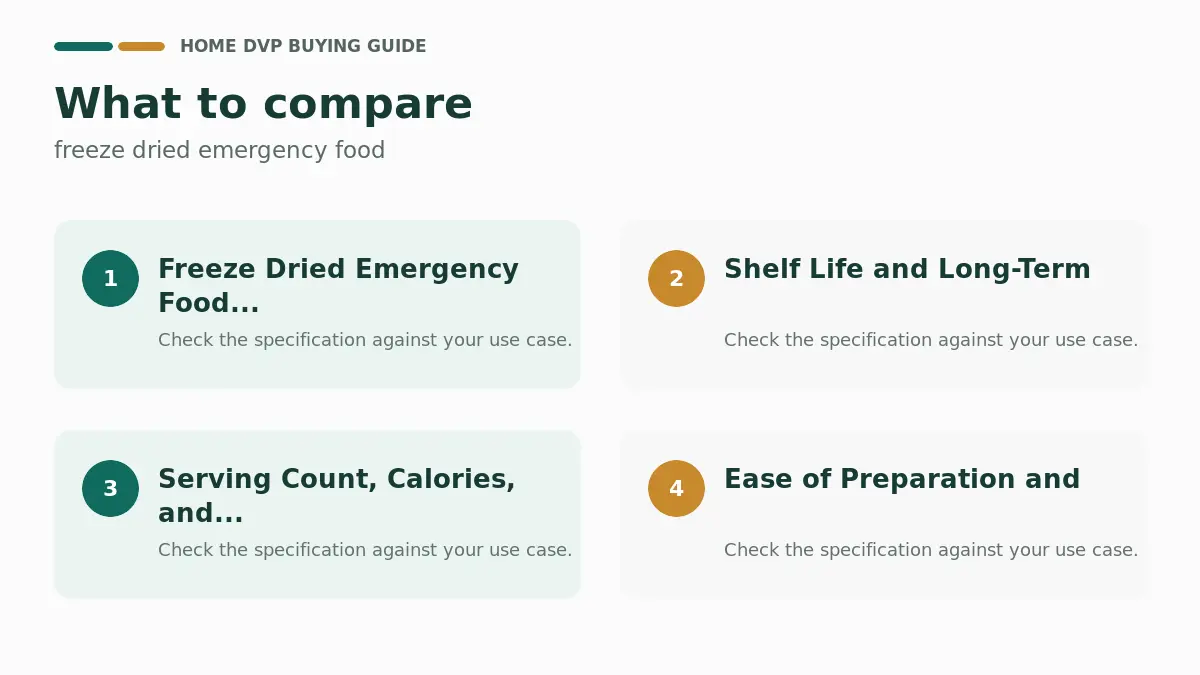
Freeze Dried Emergency Food Buying Guide
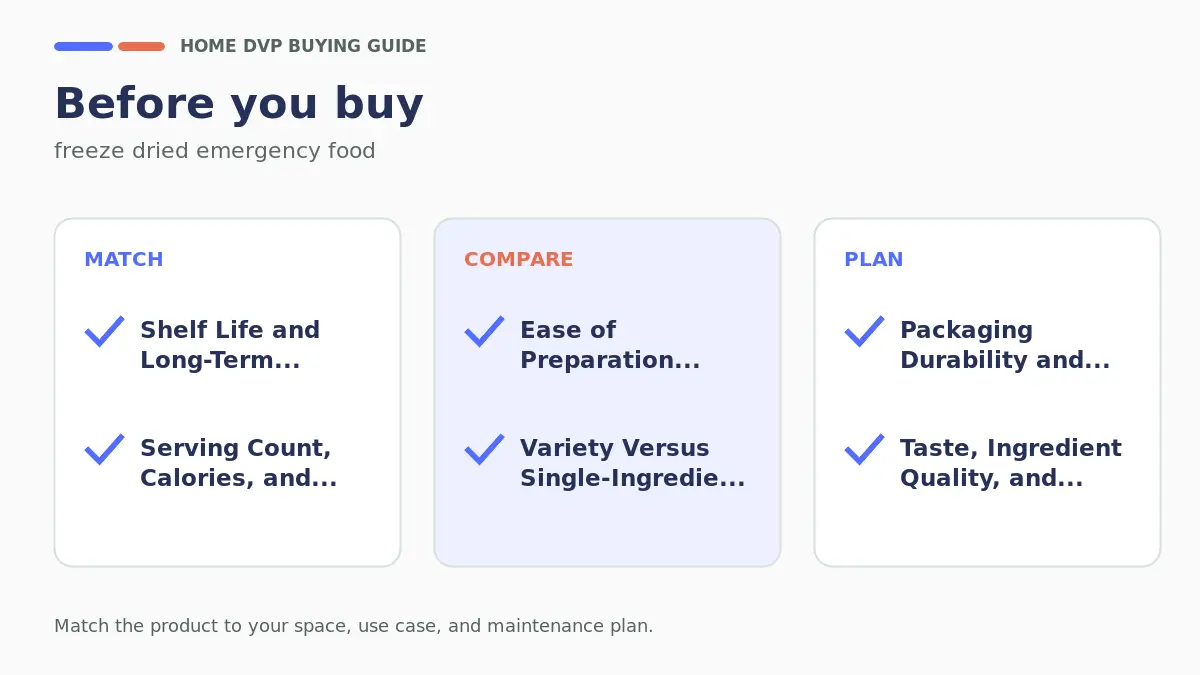
Choosing the right freeze dried emergency food requires more than grabbing the biggest bucket on the shelf. Homeowners need to balance shelf life, nutritional density, preparation simplicity, and storage practicality. Below we break down the most important factors based on product specifications and category research so you can make an informed decision for your household.
Shelf Life and Long-Term Storage Conditions
The single most important specification for any freeze-dried emergency food is proven shelf life. Quality options range from 10 years for certain mixes up to 25 or even 30 years when stored properly. Look for products that clearly state a multi-decade guarantee and are packed with oxygen absorbers in sealed pouches or #10 cans. Temperature control matters: ideal storage stays between 50°F and 70°F in a cool, dry, dark location such as a basement pantry or climate-controlled closet.
Common mistakes include placing buckets in hot garages or damp basements, which can cut effective shelf life in half. Mountain House kits with a 30-year taste guarantee and ReadyWise buckets rated up to 25 years stand out for long-term reliability. Always rotate stock using the oldest items first and inspect seals annually. Proper storage also means keeping food away from strong odors and pests that could compromise packaging integrity over decades.
For renters with limited space, #10 cans and smaller pouches offer better flexibility than large 4-gallon buckets. Homeowners planning multi-month supplies should prioritize brands that publish independent shelf-life testing data rather than marketing estimates alone.
Serving Count, Calories, and Nutritional Balance
Serving numbers alone can be misleading. A 120-serving bucket sounds impressive until you check total calories and protein content. Aim for 1,800–2,200 calories per person per day during an emergency, with at least 50–60 grams of protein. Review the product data carefully: some kits emphasize entrees while others include breakfast, snacks, and sides for better daily balance.
Augason Farms Lunch & Dinner Variety Kit provides 113 servings and roughly 22,940 total calories across 13 meal types, making it useful for variety. Mountain House assortment kits deliver comfort-food entrees with solid protein from real meat. ReadyWise meat and rice buckets focus on higher-protein options that keep energy levels stable longer. Calculate cost and calories per serving rather than total package price so you understand true value within the $12.04–$185 spectrum.
Families with children or older adults should also check sodium levels and fiber content. High-sodium meals can become problematic if fresh water is limited. Gluten-free and vegetarian options from Mountain House and Augason Farms expand the usable range for mixed households.
Ease of Preparation and Water Requirements
In a real emergency, cooking resources may be limited to a camp stove, portable burner, or even cold water only. The best freeze dried emergency food rehydrates with boiling or hot water in under 10 minutes and can often be eaten straight from the pouch. Mountain House pouches excel here: simply add water, wait, and eat with no cleanup. Augason Farms mixes sometimes require stovetop cooking for breads and mashed potatoes, which is fine for home use but less ideal for true no-power scenarios.
Always note total water needed. A full Mountain House assortment kit requires about 21 cups of water for all meals. Keep a separate water storage plan ready. Common mistakes include underestimating water volume or forgetting that cold-water rehydration takes longer and may leave food less palatable. Practice preparing one or two meals at home so you understand the process before an actual emergency.
Products labeled “just add water” with no special equipment required rank highest for beginners and apartment dwellers. Those requiring baking or extended simmering work better as pantry supplements rather than pure emergency stock.
Variety Versus Single-Ingredient Staples
Meal fatigue is real during multi-day outages. Kits that mix breakfast, lunch, dinner, and dessert options keep morale higher than pure rice or plain protein buckets. ReadyWise Favorites Sample Bucket and Mountain House Emergency Meal Assortment Kits provide comforting familiar flavors such as beef stroganoff, chicken fajita, and granola. Single-ingredient cans like Mountain House Diced Chicken or Augason Farms Vegetable Medley Blend are excellent for customizing recipes but should not form the entire supply.
A smart approach is to combine a variety bucket with a few staple cans. The variety kit covers complete meals while the vegetable medley and mashed potatoes stretch servings and add nutrition. ReadyWise Meat & Rice Bucket delivers higher protein density for active households. Avoid over-relying on any single flavor profile; even the tastiest meal becomes unappealing after a week of repetition.
Homeowners who cook regularly will appreciate flexible ingredients that can be used in everyday meals, reducing waste from expired emergency stock. Check our full Emergency Supplies collection for water storage and cooking tools that pair well with these foods.
Packaging Durability and Portability
Emergency food packaging must survive basement storage, vehicle transport, and potential flooding. #10 cans offer excellent crush resistance and long-term oxygen barrier properties. Flexible pouches inside plastic buckets are lighter and easier to portion but require more careful handling. Look for buckets with secure lids and grab-and-go handles, common on ReadyWise and Ready Hour products.
Weight and dimensions matter for apartment storage or bug-out bags. A 6.79 lb Mountain House bucket measuring roughly 12 by 10 by 14 inches fits most closets. Large 4-gallon Augason Farms pails hold more servings but demand dedicated floor space. Recyclable pouches, such as those offered by Mountain House through TerraCycle, add an environmental plus for eco-conscious buyers.
Inspect seals upon delivery. Any dented cans or compromised lids should be returned immediately. For vehicle kits or cabins, choose pouches that resist temperature swings better than pure cardboard packaging.
Taste, Ingredient Quality, and Brand Reputation
Taste is subjective but critical for consistent use. Mountain House has built a decades-long reputation for comfort-food flavors made with real meat and no fillers. ReadyWise and Augason Farms focus on value-oriented variety with solid everyday flavors. Freeze-dried foods generally retain more flavor and nutrients than traditional dehydrated options because the process removes water at low temperatures, preserving cell structure.
Read ingredient lists carefully. Prefer products that list recognizable foods rather than long chemical additives. High ratings across thousands of reviews for Mountain House and Augason Farms indicate consistent quality, while newer buckets may have fewer data points. Sample smaller pouches before committing to large buckets so you know your household will actually eat the meals.
Brands that publish transparent nutrition facts and allergen information earn higher trust. Gluten-free certifications on Mountain House Diced Chicken and Augason Farms Vegetable Medley Blend make them safer choices for restricted diets.
Value, Budget Planning, and Cost Per Serving
Prices for quality freeze dried emergency food span $12.04–$185, so calculating true cost per serving and per calorie is essential. Entry-level cans such as Augason Farms Bread and Roll Mix or Instant Mashed Potatoes deliver high serving counts at lower upfront cost and work well as pantry stretchers. Full meal kits from Mountain House and ReadyWise cost more but provide complete nutrition and convenience.
Buy what you will rotate. A 25-year shelf life is wasted if the food sits unused and you never practice preparation. Start with a two-week supply for your household size, then expand. Look for multi-packs or assortment kits that reduce the per-serving price compared with buying individual pouches. Factor in shipping weight and storage space when comparing larger buckets.
Homeowners on a tight budget can mix inexpensive vegetable and potato cans with a smaller premium entree kit for balanced coverage. Track total calories and protein rather than chasing the lowest sticker price alone.
Dietary Needs, Allergens, and Household Suitability
Modern emergency food must accommodate gluten-free, dairy-free, or vegetarian preferences when possible. Mountain House Diced Chicken and Augason Farms Vegetable Medley are explicitly gluten-free. Many ReadyWise and Mountain House meals contain real meat and dairy, so read labels carefully for allergies. Families with young children may prefer milder flavors and smaller serving sizes.
Consider activity level. Active households or those planning outdoor use benefit from higher-protein meat and rice buckets. Sedentary or elderly users may prioritize easier-to-chew options and lower sodium. Always keep a separate supply of any required medications and special dietary items that commercial kits cannot replace.
For multi-generational homes, variety kits with breakfast, dinner, and dessert options reduce the chance that someone refuses to eat. Cross-check our Air Quality & Climate resources if you store food in spaces that experience humidity fluctuations.
Our Research Methodology & Why You Can Trust Us
At Home DVP we focus on transparent, specification-driven analysis rather than paid placements or unverified claims. For this freeze dried emergency food guide we collected manufacturer data sheets, nutrition labels, shelf-life statements, packaging dimensions, water requirements, and verified customer feedback across multiple platforms. We cross-checked serving counts, calorie totals, and preparation instructions against product listings to ensure accuracy.
Ranking criteria included shelf life reliability, nutritional density, ease of preparation, packaging durability, ingredient quality, variety, and overall value within the $12.04–$185 range. We also evaluated how well each product fits real homeowner scenarios: apartment storage, basement long-term supply, vehicle kits, and family meal planning. User review volume and consistency helped confirm that high ratings translate into real-world satisfaction.
We update our recommendations during September of each year to reflect new formulations, packaging changes, and availability. No product is recommended solely because of brand recognition; every inclusion had to meet clear performance and relevance standards for emergency food use. This approach lets homeowners and renters trust that the guidance is practical, data-based, and free of hype.
Final Thoughts
After comparing specifications across the available options, the Mountain House Emergency Meal Assortment Kits stand out as our Overall Pick for most households. The 30-year shelf life, real-meat comfort foods, and simple pouch preparation make it the most reliable all-around choice for disaster readiness and camping. For a strong Value Pick, the Augason Farms Bread and Roll Mix and Vegetable Medley Blend cans deliver high serving counts at accessible entry prices and work well as everyday pantry staples that double as emergency supplies.
Homeowners seeking higher protein density should consider the ReadyWise 88 Servings Meat & Rice Bucket as a Premium Pick for its focused nutrition and long shelf life. Beginners or small-space dwellers will appreciate the ReadyWise 120 Servings Favorites Sample Bucket for its grab-and-go design and balanced meal variety without overwhelming storage needs. Combining a complete meal kit with a few flexible staple cans from Augason Farms or Mountain House creates the most practical long-term system.
Start with a two-week supply sized for your household, practice preparation once, and store everything in a cool, dry location. Pair your freeze dried emergency food with water storage and a simple cooking method for complete readiness. Visit our Emergency Supplies hub for complementary products that round out a solid home preparedness plan. With the right selection from MountainHouse, ReadyWise, AugasonFarms, ReadyHour, 4Patriots, you can face unexpected events with greater confidence in 2026.
FAQ
What should I look for when choosing freeze dried emergency food?
Focus first on verified shelf life of 10–30 years, clear calorie and protein counts per serving, and simple preparation that needs only water. Check packaging integrity, ingredient quality, and whether the product offers enough variety to avoid meal fatigue. Matching the kit size to your household and available storage space prevents waste and ensures the food remains usable when needed.
How long should quality freeze dried emergency food last?
Top-tier freeze-dried meals from reputable brands maintain quality for 25 to 30 years when stored in cool, dry conditions below 70°F. Dehydrated mixes often last 10–25 years. Always follow the manufacturer’s stated guarantee and inspect packaging annually for damage that could shorten effective life.
Are higher-end freeze dried emergency food worth it?
Higher-end kits usually deliver better taste, more real-meat protein, longer proven shelf life, and simpler preparation. For frequent use or multi-week scenarios they justify the cost through improved morale and nutrition. Budget cans work well as stretchers, but a core supply of premium complete meals provides greater reliability for most families.
How should beginners choose freeze dried emergency food?
Beginners should start with a small variety sample bucket that includes breakfast and dinner options and requires only hot water. Practice preparing one meal at home, confirm everyone in the household will eat it, then expand. Avoid oversized buckets until you understand storage needs and water requirements. Explore additional guidance in our Emergency Supplies section.
What brands make reliable freeze dried emergency food?
MountainHouse, ReadyWise, AugasonFarms, ReadyHour, 4Patriots consistently publish clear shelf-life data, detailed nutrition facts, and high user satisfaction ratings. Mountain House leads for taste and longevity, while Augason Farms and ReadyWise excel at value and variety. Stick with established brands that offer transparent specifications rather than unknown private labels.
How much should homeowners expect to spend on freeze dried emergency food in 2026?
Expect a typical range of $12.04–$185 depending on serving count and completeness. Entry-level cans start low and provide excellent value for staples, while full meal kits cost more but deliver ready-to-eat variety. Calculate cost per calorie and protein gram rather than total package price to compare fairly across options.
Are freeze dried emergency food suitable for everyday use as well as emergencies?
Yes. Many freeze-dried and dehydrated foods work perfectly as convenient camping meals, busy-weeknight sides, or pantry backups. Rotating stock into regular cooking keeps flavors familiar and prevents expiration. Just remember that emergency kits prioritize long shelf life and minimal preparation, so flavor profiles may differ slightly from fresh cooking.