Table of Contents

4 sections 12 min read

Earthquakes can strike without warning, leaving families without power, water, or easy access to stores for days. For homeowners, renters, and practical DIYers who want to protect their households, having a reliable earthquake survival kit ready to go is one of the smartest steps you can take in 2026. Whether you live in a high-risk seismic zone or simply want broad disaster preparedness, the right kit covers the critical first 72 hours with food, water, first aid, shelter, and tools.

We carefully reviewed 15 popular options from QuakeHOLD, ReadyAmerica, Redfora and more across the $8.64 – $229.95 range. Our comparison focused on real homeowner needs: how many people each kit supports, shelf life of rations, first-aid completeness, backpack durability, lighting and communication tools, and overall value. You can explore more options in our emergency supplies category for complementary gear that pairs well with these kits.

This guide walks through the key buying factors, highlights strong performers based on specifications and user feedback patterns, and helps you match a kit to your household size, storage space, and budget. No product is perfect for every situation, so we also note who should skip certain models.
1
Best Seller

ReadyAmerica 70280 Emergency Kit Review: 72-Hour Backpack for Two-Person Preparedness

ReadyAmerica
9.8 /10
AI Score
AI score rating is a scoring system developed by our experts. The score is from 0 to 10 based on the data collected by the AI tool. This score doesn't impact from any manufacturer or sales agent websites. Learn more ›
Pros & Cons

Pros

  • Contains enough core supplies to support two people for three days following American Red Cross guidelines
  • Combines first aid, food, water, light sticks, and weather protection in one organized backpack
  • Versatile for home, car, workplace, camping, hiking, and travel storage
  • Includes easy-to-use items that address common minor injuries and basic survival needs

Cons

  • Basic first aid contents may fall short for users needing more advanced medical tools
  • Sized for two people so larger households will likely require additional kits
  • Survival food bars and water pouches provide simple calories rather than varied meal options
Detailed Review

The ReadyAmerica 70280 is a compact 72-hour emergency backpack designed to keep two people supplied for three days during disasters, power outages, or outdoor mishaps. Based on the listed features, it suits homeowners, renters, and practical travelers who want a ready-to-grab kit for cars, offices, or home storage without assembling supplies themselves.

Functionality centers on meeting basic survival needs recommended by the American Red Cross. Two 2400-calorie food bars and water pouches with five-year shelf life address hunger and hydration, while the 33-piece first aid kit handles minor injuries with bandages and cleaning solution. Safety light sticks, dust masks, nitrile gloves, an emergency whistle, ponchos, survival blankets, and tissues extend usefulness into low-light, dusty, wet, or signaling situations common in earthquakes, storms, or remote travel.

Design focuses on portability and straightforward organization. Everything fits inside a red backpack that can be stowed easily and carried without extra bags. No complex assembly is required; users simply open the pack to access the pre-packed items. This setup supports quick deployment for car emergencies, camping, hiking, hunting, or workplace readiness while remaining lightweight enough for most adults to manage.

In real-world home use the kit covers common preparedness gaps. Families can place one unit by an exit door or in a vehicle trunk for immediate access during evacuations. Outdoor enthusiasts benefit from the weather and visibility gear on trails or boats, and the included tissues and gloves help maintain basic sanitation when normal facilities are unavailable. The overall package reduces the chance of overlooking critical small items during a scramble.

Potential limitations include the basic nature of the medical supplies, which target minor rather than severe injuries, and the two-person capacity that may leave larger groups short. Users seeking gourmet rations or extensive tools might prefer custom builds. Overall the ReadyAmerica 70280 delivers solid foundational preparedness value for anyone prioritizing a ready, portable emergency solution based on the provided product details.

Those who need simple, Red Cross-aligned coverage for a couple or small household should find it a practical choice, while larger families or professionals requiring specialized gear may want to supplement with additional units or higher-capacity options.

2
Editor's Pick

EVERLIT STORM II 72 Hour Bug Out Bag Review: Complete Family Emergency Preparedness

EVERLITSURVIVAL
9.9 /10
AI Score
AI score rating is a scoring system developed by our experts. The score is from 0 to 10 based on the data collected by the AI tool. This score doesn't impact from any manufacturer or sales agent websites. Learn more ›
Pros & Cons

Pros

  • Combines long-shelf-life U.S. Coast Guard approved food and water with purification tablets in one grab-ready package
  • Includes dedicated bleeding control via CAT tourniquet alongside a full 200-piece first aid assortment
  • Uses a durable military-spec molle backpack with organized compartments and comfortable padding for carrying
  • Offers heat-retaining shelters, blankets and multi-function tools that cover light, signaling and basic cutting needs

Cons

  • Focuses on supplies for two people, so larger families may need extra kits or supplements
  • The fully loaded backpack dimensions may prove bulky for very limited storage areas
  • Hand-crank devices require ongoing physical effort during prolonged power-free periods
Detailed Review

The EVERLIT STORM II functions as a complete 72-hour bug-out bag and home emergency survival kit assembled for families preparing against earthquakes, hurricanes, floods, tsunamis and similar disasters. Based on the provided product details, it consolidates food, water, medical and protection items into a single tactical backpack, serving homeowners and practical buyers who prefer a ready-made system rather than piecing supplies together over time.

Performance focuses on core 72-hour needs for two people. The kit supplies 24 packs of 125 ml emergency drinking water and two 3600-calorie food ration bars, both U.S. Coast Guard approved and carrying a five-year shelf life that aligns with FEMA minimum calorie recommendations. Germicidal tablets treat up to 25 quarts of water by targeting Giardia and most micro-organisms. Medical readiness comes from a 200-piece first aid assortment covering bandages, pads, burn dressing, gloves and more, paired with a NAR CAT tourniquet for traumatic bleeding control. Multi-function tools such as the hand-crank flashlight with radio and charger, fire starter, multi-tool knife, wire saws and glow sticks extend usefulness across power loss, signaling and basic outdoor tasks.

Build and design center on the water-resistant 22 by 11 by 10 inch molle tactical backpack constructed from 1000D polyester. Four main compartments plus inner pockets keep contents sorted, while adjustable waist and shoulder straps, mesh padding, tough zippers and front and side molle panels support comfortable carrying and gear expansion. Emergency shelters, thermal blankets that retain up to 90 percent of body heat, ponchos, safety goggles, heavy-duty gloves, high-pitch whistles, 100 ft paracord, multi-function pliers, compass and carabiner fit within this organized layout for rapid deployment in harsh conditions.

Practical home use cases include storing the bag in a closet or garage for sudden weather events or grabbing it as a mobile kit during evacuation. The combination of heat-retaining shelter items, medical bleeding control, signaling tools and battery-free light helps cover the critical early hours of an emergency. Families can rely on the long-shelf-life rations and purification options to maintain basic sustenance while the tactical form factor aids transport across uneven terrain or crowded routes.

Limitations stem mainly from capacity and form. The kit targets two people, so larger households will likely require additional supplies. The packed backpack volume may feel substantial for compact storage spots, and hand-crank operation demands physical input over extended periods. Based on the listed specifications and feature set, the EVERLIT STORM II remains a strong all-in-one choice for households seeking comprehensive family disaster readiness rather than minimal or highly specialized individual components.

Those prioritizing complete grab-and-go coverage for natural disasters will find the assortment aligns well with their goals, while users needing only lightweight personal kits or contractor-scale medical gear may prefer more focused alternatives.

3
Limited Time

Redfora Complete Earthquake Bag Review: 3-Day Emergency Survival Kit for Disaster Preparedness

Redfora
9.8 /10
AI Score
AI score rating is a scoring system developed by our experts. The score is from 0 to 10 based on the data collected by the AI tool. This score doesn't impact from any manufacturer or sales agent websites. Learn more ›
Pros & Cons

Pros

  • Comprehensive coverage of food, water, shelter, hygiene, tools, and communication in one backpack
  • Color-coded organization system speeds access and reduces confusion under pressure
  • Long shelf-life consumables support set-and-forget home storage
  • Includes instructional video and one-on-one expert support for clearer preparedness
  • Versatile enough for multiple disaster types including earthquakes and floods

Cons

  • Three-day capacity means longer outages may require supplemental stores
  • Sized for two people, so larger households will need additional kits or different configurations
  • Individual components may be substituted with similar items based on availability
Detailed Review

The Redfora Complete Earthquake Bag is a backpack-style emergency survival kit assembled for two people across a three-day period. Homeowners, renters, and families living in regions prone to earthquakes, hurricanes, wildfires, floods, or tornadoes gain a single ready resource that consolidates food, water, shelter, hygiene, and tools. Based on the listed product details, it removes the need to source and pack dozens of separate items while still leaving room for personal additions.

Performance focuses on keeping occupants safe, warm, and fed when normal services stop. Food bars carrying a five-year shelf life, twenty-four water pouches, purification tablets, and personal water filter straws address basic sustenance. The tools and communication set supplies an NOAA hand crank flashlight radio phone charger for light, alerts, and device power, plus a multi-tool, first aid kit, thirty-foot nylon rope, and five-in-one whistle that support practical tasks and signaling. These elements work together to create short-term self-sufficiency until help arrives or conditions stabilize.

Design prioritizes speed and clarity through a color-coded organization system of re-sealable waterproof packs. Categories such as food plus water and tools plus communication stay separated so anything can be found quickly. The backpack form factor aids portability, a rapid pack guide speeds deployment, and a dedicated personal-items section lets users add medications or documents. An included expert video guide walks through every category, reducing the learning curve for first-time users and improving overall usability at home.

In everyday home contexts the bag stores compactly until needed, then provides tube tents, sleeping bags, hygiene kits, and warmth items that help maintain basic comfort and sanitation after an event. Neighborhoods benefit when individual households prepare this way, and the brand channels a portion of each order toward disaster relief efforts. The curated collection of more than forty supplies therefore serves both personal readiness and broader community resilience for practical homeowners.

Limitations include the three-day supply window, which may prompt users facing extended disruptions to add further provisions, and the two-person sizing that larger families should evaluate carefully against other available configurations. Based on the feature set and product information, the Redfora Complete Earthquake Bag remains a solid all-in-one foundation for households seeking organized disaster preparedness without assembling components from scratch. Those needing seven-day coverage or support for more people can look at the brand's alternate options while still starting with this core kit.

4
Top Rated

ReadyAmerica 72 Hour Deluxe Emergency Kit Review: Portable 2-Person Disaster Preparedness Go-Bag

ReadyAmerica
9.8 /10
AI Score
AI score rating is a scoring system developed by our experts. The score is from 0 to 10 based on the data collected by the AI tool. This score doesn't impact from any manufacturer or sales agent websites. Learn more ›
Pros & Cons

Pros

  • Comprehensive coverage of food, water, first aid, and tools for two people over three days
  • Hand-crank power station combines flashlight, AM/FM radio, phone charger, and siren in one unit
  • Includes durable multi-tool with pliers, screwdrivers, and knife plus an 8-inch survival knife
  • Long shelf-life rations and purification options reduce the need for frequent replacements
  • Backpack format keeps all components organized and ready for grab-and-go scenarios

Cons

  • Sized for two people, so households of three or more may need additional kits
  • Survival food bars prioritize calories over variety, which some users may find limited for extended use
  • Hand-crank operation requires physical effort and time to generate power or light
Detailed Review

Based on the listed specifications, the ReadyAmerica 72 Hour Deluxe Emergency Kit serves as a complete 2-person, 3-day preparedness backpack filled with core survival items for homeowners and renters facing potential disasters such as earthquakes, fires, or floods. It targets practical buyers who want an all-in-one go-bag that meets basic self-reliance recommendations for the critical first 72 hours without requiring separate purchases of individual components.

The product information indicates strong functionality through its mix of sustenance and tools. Two 2400-calorie U.S. Coast Guard-approved food bars and six water pouches provide essential calories and hydration with a five-year shelf life, while purification tablets and a 32-ounce BPA-free bottle extend water access. The four-function hand-crank power station adds independent capability for light, AM/FM radio, cell phone charging, and a personal siren, converting one minute of cranking into usable output without batteries.

Design centers on a durable, easy-to-carry backpack that organizes the full set of supplies for rapid deployment. Key inclusions cover a 33-piece first aid kit for minor wounds, a stainless multi-function pocket tool with pliers and screwdrivers, an 8-inch survival knife, dust masks, survival blankets, ponchos, a hygiene kit, and a 5-in-1 whistle. This layout supports straightforward storage in a closet, garage, or vehicle while keeping items protected and accessible.

In real-world home settings the kit offers clear value for car emergency storage, boat accessories, or household disaster planning. Families can rely on the combination of medical supplies, signaling tools, and multi-purpose gear during power outages or evacuation, turning a single pack into a practical foundation for short-term survival and communication needs.

Potential limitations include the two-person capacity, which means larger groups will require extra kits, and the focus on basic survival rations rather than varied meals. Users may also need time to learn the hand-crank features and multi-tool functions before an emergency. Overall, based on the available product data, this deluxe kit stands as a solid, feature-rich option for homeowners prioritizing ready-to-use preparedness in a portable format.

Those seeking a compact, all-inclusive starter system for two people will find it well-matched, while households needing expanded medical supplies or longer-duration food may prefer supplemental gear alongside it.

5

HIHEGD 250Pcs Survival First Aid Kit Review: Emergency Preparedness for Home, Car, and Outdoors

HIHEGD
9.8 /10
AI Score
AI score rating is a scoring system developed by our experts. The score is from 0 to 10 based on the data collected by the AI tool. This score doesn't impact from any manufacturer or sales agent websites. Learn more ›
Pros & Cons

Pros

  • Broad 250-piece assortment covers both first aid and survival needs
  • Includes emergency shelter, warmth, lighting, and communication-related items
  • Portable MOLLE-compatible bag improves carry options for outdoor users
  • First aid supplies are separated in a bright red pouch for easier identification
  • Useful for home preparedness, vehicle storage, hiking, camping, hunting, and travel

Cons

  • A 250-piece kit may require users to organize and familiarize themselves with the contents before an emergency
  • May not replace a specialized medical kit for users who need more advanced first aid supplies
  • The compact bag size may feel tight once items are repacked after use
Detailed Review

The HIHEGD 250Pcs Survival First Aid Kit is a multi-purpose emergency kit aimed at homeowners, drivers, campers, hikers, hunters, and anyone preparing for unexpected situations. Based on the available product data, it brings together survival tools, basic first aid supplies, lighting, communication items, and shelter-related essentials in one organized carry bag. It is especially relevant for people who want a ready-to-store kit for a home emergency shelf, car trunk, camping tote, or outdoor pack.

Functionally, the kit is built around broad preparedness rather than one narrow use. The listed contents include first aid items such as tweezers, scissors, pins, wound pads, triangular bandage, tourniquet, cotton buds, and a supply of bandages. It also includes survival gear such as a multifunctional axe, folding shovel, parachute cord, knife, emergency tent, emergency blanket, whistle, compass, fire starter, lantern, and raincoat. That range makes it useful for addressing minor injuries, staying warmer, signaling, navigating, and handling basic outdoor or disaster-related tasks.

The included EMT-style bag is listed as being made from water-resistant 1000D nylon and measures 8 inches by 6.5 inches by 6 inches. Its MOLLE-compatible design allows attachment to compatible backpacks, combat vests, belts, or similar gear using the rear straps or removable hook-and-loop panel. The first aid supplies are packed in an extra bright red bag, which is a practical detail because medical items should be easy to spot when time matters.

For homeowners, this kit can serve as a practical addition to an emergency preparedness plan for power outages, storms, earthquakes, floods, fire-related evacuation planning, or vehicle breakdowns. For outdoor users, the mix of shelter, warmth, basic tools, and first aid supplies can help cover common needs during hiking, camping, hunting, travel, or wilderness adventure. The product information also emphasizes warmth and comfort items, which can matter if someone is delayed outdoors or stuck in a vehicle during poor weather.

The main limitation is that a large all-in-one kit is only as useful as the owner’s familiarity with its contents. Buyers should review the included supplies, check how items are packed, and consider whether they need additional personal medications, specialized first aid items, or region-specific emergency gear. Based on the listed feature set, the HIHEGD kit is a strong fit for general preparedness and outdoor backup use, while users with advanced medical, survival, or professional rescue needs may want a more specialized setup.

6

EVERLIT STORM II Survival Kit Review: 72-Hour Family Bug Out Preparedness

EVERLITSURVIVAL
9.9 /10
AI Score
AI score rating is a scoring system developed by our experts. The score is from 0 to 10 based on the data collected by the AI tool. This score doesn't impact from any manufacturer or sales agent websites. Learn more ›
Pros & Cons

Pros

  • Complete food, water and first-aid coverage sized for two people over three days
  • Five-year shelf life on US Coast Guard-approved rations supports long-term storage
  • Durable tactical backpack with molle panels and organized pockets for easy access
  • Includes advanced trauma tool like the CAT tourniquet alongside everyday medical supplies
  • Multi-function hand-crank device combines light, radio and charging for power-outage resilience

Cons

  • Kit capacity targets two people so larger households may need extra supplies
  • Backpack dimensions may require dedicated storage space in compact homes or apartments
  • Full inventory of tools may require familiarization time before an actual emergency
Detailed Review

The EVERLIT STORM II stands as a complete 72-hour bug-out bag and home emergency kit built around a military-style tactical backpack. It targets families and homeowners who want a single, pre-packed solution for earthquakes, hurricanes, floods, tsunamis and other disasters rather than assembling individual items over time.

Core functionality centers on nutrition, hydration and medical response. Twenty-four 125 ml US Coast Guard-approved water pouches and two 3600-calorie food bars deliver five-year shelf life and meet FEMA minimum calorie guidance, while fifty germicidal tablets treat up to twenty-five quarts of additional water. The 200-piece first aid kit covers everyday wounds and is reinforced by a CAT tourniquet for severe bleeding control. Supporting tools such as the hand-crank flashlight-radio-charger, fire starter, multi-function knife, compass, glow sticks, wire saws and 100 ft of paracord provide light, communication, fire-making and basic repair capability when utilities fail.

Build quality focuses on a 22 by 11 by 10 inch water-resistant 1000D polyester molle backpack with four main compartments, inner pockets, tough zippers, adjustable waist and shoulder straps, and mesh padding. The design allows clear organization of all included shelters, ponchos, thermal blankets, goggles, gloves, whistles and multi-tools so gear can be located quickly under stress. Side and front molle panels also accept extra personal equipment if needed.

In real-world home and outdoor scenarios the kit offers ready protection against hypothermia through shelters and blankets that retain body heat, weather shielding from ponchos and goggles, and practical self-rescue items such as the carabiner, pliers and wallet multi-card. It serves equally well as a vehicle or closet go-bag for sudden evacuations or as a stationary home emergency cache during extended power outages or severe weather events.

Potential limitations include its two-person capacity, which means larger families should plan supplemental food and water, and the physical bulk of the loaded backpack, which may not suit every small-apartment storage situation. Users who prefer highly specialized professional-grade medical or wilderness kits may also want additional modular gear. Overall the STORM II provides a well-rounded, ready-to-use foundation for household disaster readiness based on the listed components and design features.

Homeowners, renters and practical families seeking an all-in-one 72-hour system will find the EVERLIT STORM II a logical choice, while those needing contractor-level trauma capacity or single-person ultra-light packs may explore narrower alternatives.

7

ReadyAmerica 72 Hour Deluxe Emergency Kit Review: Complete 4-Person Disaster Preparedness Backpack

ReadyAmerica
9.8 /10
AI Score
AI score rating is a scoring system developed by our experts. The score is from 0 to 10 based on the data collected by the AI tool. This score doesn't impact from any manufacturer or sales agent websites. Learn more ›
Pros & Cons

Pros

  • All-in-one supplies cover food, water, first aid, shelter, and lighting for four people over 72 hours
  • Power station combines flashlight, radio, siren, and phone charging in a single compact unit
  • Backpack format allows easy storage at home or office and fast grab-and-go response
  • Includes multiple protective items such as N95 dust masks, safety goggles, and gloves for safer emergency handling

Cons

  • Basic food bars offer calories but limited meal variety for longer stays
  • Backpack capacity may feel bulky in tight storage spaces
  • Users needing prescription medications or specialized tools will need to add them separately
Detailed Review

The ReadyAmerica 72 Hour Deluxe Emergency Kit serves as a complete 4-person, 3-day preparedness solution for homeowners, renters, and families who want ready access to essentials during earthquakes, floods, hurricanes, wildfires, or power outages. Based on the provided product details, it consolidates food, water, first aid, shelter gear, lighting, and tools into a single durable backpack, making it suitable for storage at home, in an office, cabin, RV, or shelter location.

Functionality centers on sustaining basic needs as recommended by the American Red Cross. Four 2400-calorie emergency food bars and four 1-liter Aqua Literz water cartons provide long-shelf-life nutrition and hydration. The 107-piece first aid kit, N95 dust masks, safety goggles, nitrile gloves, leather work gloves, duct tape, and biohazard bags address injury care and protection. An emergency power station adds a flashlight, AM/FM radio, siren, and cell phone charger for light, information, signaling, and device power when utilities fail.

Design emphasizes portability and organization. Everything fits inside a durable emergency backpack that also holds four survival blankets, four ponchos, four 12-hour light sticks, a multi-function tool, emergency whistle, pocket tissues, premoistened towelettes, and an emergency communication plan. The layout supports quick access and grab-and-go use without requiring complex setup, while the compact form factor helps keep supplies together and ready.

In practical home use, the kit shines for general emergency planning and short-term evacuations. Families can rely on the included shelter items and hygiene supplies during blackouts or severe weather. The multi-tool, gloves, and duct tape offer basic utility for minor repairs or securing items, and the overall contents help reduce last-minute scrambling when disaster strikes. Storage at multiple locations further improves household readiness.

Potential limitations include the need for personal medications or extra specialized gear beyond the listed items, and the food options remain basic calorie sources rather than varied meals. Larger households or those planning for periods longer than three days may require supplemental supplies. Overall, based on the listed features, this ReadyAmerica kit delivers a solid, self-contained 72-hour foundation for practical disaster preparedness.

Homeowners and families focused on earthquake, flood, fire, or blackout readiness will find strong value here. Those seeking more specialized medical components or longer-duration provisions may prefer to expand the kit with additional items of their own choosing.

8

ReadyAmerica Backpack Emergency Survival Kit Review: 72-Hour Preparedness for Home, Car, and Office

ReadyAmerica
9.9 /10
AI Score
AI score rating is a scoring system developed by our experts. The score is from 0 to 10 based on the data collected by the AI tool. This score doesn't impact from any manufacturer or sales agent websites. Learn more ›
Pros & Cons

Pros

  • Covers several key emergency categories in one ready-to-store backpack.
  • Includes first aid supplies for minor cuts, scrapes, and wound cleaning.
  • Useful for home, workplace, car, boat, camping, hiking, and travel preparedness.
  • Food, water, blankets, ponchos, masks, gloves, whistle, tissues, and light sticks provide a practical starter kit.

Cons

  • May not replace a fully customized emergency plan for households with medical, pet, or specialty supply needs.
  • Users may need to review and supplement the contents based on local risks and the number of people they plan to support.
  • Backpack contents should still be checked periodically, especially stored food and water supplies.
Detailed Review

Based on the provided product details, the ReadyAmerica Backpack is an emergency survival kit aimed at homeowners, renters, office workers, travelers, and outdoor users who want a compact set of basic supplies ready before a disaster or roadside emergency happens. It is positioned as a 72-hour preparedness backpack and includes core items such as food, water, emergency blankets, and first aid supplies.

The kit’s main usefulness comes from covering several emergency needs in one package. The listed contents include 4 survival food bars with 2400 calories, water pouches with a 5-year shelf life, survival blankets, disposable dust masks, nitrile gloves, ponchos, pocket tissues, a whistle, and four safety light sticks. For many households, that makes it a practical starting point for power outages, evacuation planning, severe weather readiness, or keeping essential supplies in a car or workplace.

The backpack format is important because emergency supplies are most useful when they are easy to find and carry. Instead of spreading food, first aid items, and visibility gear across different drawers or bins, this kit keeps the basics grouped together. The product information also lists a 107-piece first aid kit, which adds value for minor injuries with essentials such as bandages and wound cleaning solution.

In real-world home use, the ReadyAmerica Backpack fits well as a grab-and-go preparedness bag near an entryway, in a garage cabinet, at a school or office location, or in a vehicle. The safety light sticks can help during a blackout or nighttime situation, while the ponchos, dust masks, gloves, and whistle add practical utility during evacuations, cleanup, or outdoor emergencies.

The main limitation is that a prepacked emergency kit may not cover every household’s specific needs. Families may still want to add medications, copies of important documents, pet supplies, batteries, extra water, or location-specific items depending on their emergency plan. Based on the listed features, this ReadyAmerica kit is best viewed as a convenient preparedness foundation rather than a complete custom survival system for every scenario.

9

QuakeHOLD Ready America Survival Box Review: Compact 1-Person 3-Day Emergency Kit

QuakeHOLD
9.7 /10
AI Score
AI score rating is a scoring system developed by our experts. The score is from 0 to 10 based on the data collected by the AI tool. This score doesn't impact from any manufacturer or sales agent websites. Learn more ›
Pros & Cons

Pros

  • Small transportable box fits most home or vehicle storage spots
  • Complete three-day food and water ration for a single user in one package
  • Multi-purpose blanket that holds heat and serves as weather protection
  • Long shelf stability supports set-it-and-forget-it emergency planning
  • Clear focus on essential life-sustaining items without unnecessary bulk

Cons

  • Supplies cover only one person for three days, so larger households need multiple kits
  • Contains solely food, water, and blanket with no additional tools or first-aid extras
  • Users must track manufacture date to confirm remaining shelf life before reliance
Detailed Review

The QuakeHOLD Ready America Survival Box functions as a basic portable disaster preparedness kit focused on sustaining one person for three days. Based on the listed product details, it targets homeowners, renters, and practical buyers who want a simple go-bag style solution for events such as earthquakes, fires, floods, or hurricanes. The kit prioritizes core survival needs rather than comprehensive gear, making it suitable for those building an initial emergency stash or placing units in multiple locations around the home and vehicle.

Functionality centers on the included provisions: six individually sealed water pouches supply hydration, while the 2400-calorie food bar addresses energy needs without preparation. The emergency blanket retains 90 percent of body heat and can serve as a rain poncho or shelter layer. Product information indicates these elements meet US Coast Guard approval standards for food and water, supporting reliable basic performance when conventional supplies become unavailable. The five-year shelf life from the manufacture date further enhances long-term usefulness for infrequent but critical scenarios.

Design emphasizes storage convenience through a small, easy-to-transport box that remains compact enough for everyday placement. The survival blanket packs small enough for a pocket, and overall contents stay light and organized. Setup requires no assembly or special tools. Users simply store the sealed box and retrieve it as needed. Bilingual English and Spanish labeling on the packaging improves accessibility for a wider range of households. Build quality focuses on sealed packaging to protect contents over time rather than rugged outdoor durability beyond standard home use.

In practical home applications, this kit supports readiness planning by providing a ready source of calories, fluids, and warmth retention during power outages or evacuation waits. Families can position one unit per household member or keep extras at work and in vehicles. The expandable bag or box format mentioned in features aids quick packing if conditions change. Strengths include the self-contained nature of the supplies and the multi-role blanket that addresses both cold and wet conditions common in many disaster settings.

Potential limitations arise from the single-person three-day capacity and the absence of tools, lighting, or medical items beyond the core trio of food, water, and blanket. Advanced preparedness users may prefer kits with broader inventories. Overall, the product information indicates a straightforward option for homeowners seeking affordable entry-level disaster essentials. Those needing family-scale coverage or extended durations should plan to combine multiple units or supplement with additional gear.

10

RIKOJUXI 262Pcs Survival Kit Review: Complete Emergency Gear for Family Preparedness

RIKOJUXI
9.8 /10
AI Score
AI score rating is a scoring system developed by our experts. The score is from 0 to 10 based on the data collected by the AI tool. This score doesn't impact from any manufacturer or sales agent websites. Learn more ›
Pros & Cons

Pros

  • Wide range of medical supplies stored in a highly visible red zippered pouch
  • Portable crossbody design with detachable strap and molle system for flexible attachment
  • Full-size tools rather than mini versions for better practical effectiveness
  • Lighting sources listed to provide up to 72 hours of illumination for signaling and navigation
  • All-in-one coverage for food gathering, water storage, fire, and shelter needs

Cons

  • Large piece count may require initial sorting and practice for quick access during stress
  • Full-length axe and shovel can add noticeable bulk for users preferring ultralight packs
  • May need personal medications or extra specialized items added for individual medical needs
Detailed Review

The RIKOJUXI 262Pcs Survival Kit gathers essential survival gear and supplies into one portable package aimed at homeowners, families, and outdoor users who want readiness for unexpected events. According to the product information, it was developed with input from first responders, doctors, special forces operators, and mountain guides to address the critical first 72 hours after a disaster. This makes it suitable for earthquake, tornado, wildfire, or hurricane preparation as well as camping, hiking, or hunting trips.

Based on the listed features, the kit focuses on core survival functions: food, water, warmth, light, and medical care. A fishing kit and multi-usage spoon help with catching and preparing food, while a collapsible water container bag stores water. Fire starter and stick enable fire building for heat and cooking. Flashlight, camping lamp, and glow sticks are included to provide up to 72 hours of lighting for safe navigation and signaling. These elements work together to support basic needs when normal resources are unavailable.

Design centers on a versatile crossbody bag with multiple compartments, molle compatible straps, and hanging rings or D-rings so users can attach extra pouches or tools. The strap detaches for easy connection to a larger tactical backpack. First aid items sit in a highly visible red zippered pouch and include tweezers, scissors, bandage pads, triangular bandages, tourniquet, cotton swabs, and an exclusive emergency medical card for recording personal details. The multifunctional axe with hammer and 2-in-1 shovel with pick measure 17 inches and use sturdy cabon steel construction as listed, pairing with a wire saw, emergency tent, blanket, rope, and compass for shelter setup and temperature control.

In real-world home and outdoor situations, the kit allows quick shelter creation, basic protection against animals or hazards, and organized access during power outages or remote travel. Homeowners can keep it in a vehicle, garage, or closet for rapid grab-and-go use. The molle system and compartment layout improve usability for everyday preparedness planning without requiring complex setup.

Potential limitations stem from the sheer volume of pieces, which may take time to inventory and practice with before an emergency. Users focused on ultralight travel might find the full-size tools heavier than mini alternatives. Overall, the product information indicates a practical all-in-one option for those building a family emergency kit or outdoor bug-out bag.

Homeowners and DIYers seeking broad coverage for disaster readiness or recreational adventures will find this kit aligns well with those goals, while specialists needing highly customized professional equipment may prefer individual high-end components instead.

11

BlueCoolers Blue Seventy-Two Emergency Backpack Kit Review: 72-Hour Preparedness for Disasters

BlueCoolers
9.7 /10
AI Score
AI score rating is a scoring system developed by our experts. The score is from 0 to 10 based on the data collected by the AI tool. This score doesn't impact from any manufacturer or sales agent websites. Learn more ›
Pros & Cons

Pros

  • Complete set of core supplies packed into a portable triple-pocket backpack for easy storage and transport
  • Long five-year shelf life on food bars and water pouches reduces the need for frequent restocking
  • Built-in multi-tools such as the whistle-compass and crank flashlight enhance navigation and visibility
  • Straightforward design suits basic emergency planning for individuals facing common natural hazards

Cons

  • Sized for a single person so households may need additional kits for full coverage
  • Basic contents may leave advanced users seeking more specialized gear for extended or complex scenarios
  • Water volume remains limited to five pouches and could require extras for prolonged events
Detailed Review

The BlueCoolers Blue Seventy-Two stands as a practical 72-hour emergency backpack survival kit aimed at individuals and homeowners who want a ready-to-grab solution for natural disasters. Based on the provided product details, it targets users facing risks from hurricanes, wildfires, floods, tornadoes, earthquakes, or power outages by packing essential items into one convenient bag for one person.

Functionality centers on delivering the three core survival elements of food, water, and protection for three full days. The pack of food bars supplies 2400 calories with a five-year shelf life while five 4.22 oz water pouches offer matching longevity, and the emergency blanket helps maintain body heat, all aligning with basic preparedness recommendations for short-term crises.

Design emphasizes portability and organization through the triple-pocket reinforced grab-n-go backpack that keeps contents accessible and secure. Additional items such as the 36-piece first aid kit, mask, whistle-compass combo, battery-free crank flashlight, tissue pack, and rain poncho integrate seamlessly for quick setup and everyday usability without complex assembly or special storage needs.

In real-world home scenarios the kit supports practical readiness for sudden evacuations or shelter-in-place situations. Homeowners can store it near an exit or vehicle for rapid response, relying on the multi-use tools for signaling, navigation, lighting, and basic medical care during the critical first 72 hours of an event.

Potential limitations include its single-person focus and foundational rather than extensive inventory, so larger households or those planning for longer durations may need to supplement. Overall the Blue Seventy-Two offers a straightforward, versatile option for anyone seeking dependable starter-level emergency preparedness based on the listed feature set.

Buyers prioritizing simple grab-and-go coverage for common disasters will find strong value here, while those requiring multi-person capacity or highly specialized equipment may explore expanded kits instead.

12

Taimasi 238Pcs Survival First Aid Kit Review: Portable Preparedness for Camping and Disasters

Taimasi
9.8 /10
AI Score
AI score rating is a scoring system developed by our experts. The score is from 0 to 10 based on the data collected by the AI tool. This score doesn't impact from any manufacturer or sales agent websites. Learn more ›
Pros & Cons

Pros

  • Wide assortment covering survival tools, basic first aid, gloves, raincoat, and fire starter addresses multiple emergency needs in one package
  • Lightweight portable pouch attaches via straps or velcro to molle gear for convenient carry during camping or hunting trips
  • Durable materials such as high-carbon steel shovel blade and multi-strand parachute cord support demanding outdoor tasks
  • Includes extras like duct tape, wire saw, whistle-compass combo, and disposable gloves for added homeowner utility

Cons

  • Basic first aid contents may fall short for users seeking more advanced medical supplies beyond minor injury care
  • Compact pouch size could feel limiting for those wanting to expand the kit with larger personal items
  • Multi-function tools may require practice before first-time users can deploy them efficiently under stress
Detailed Review

The Taimasi 238Pcs Emergency Survival Kit and First Aid Kit offers a curated collection of multipurpose gear, medical supplies, and shelter items aimed at outdoor enthusiasts and practical homeowners preparing for camping, hiking, hunting, car travel, or natural events such as earthquakes. Based on the product details, it gathers 22 multipurpose survival tools, a 45-piece first aid kit, 100 cotton swabs, 50 disposable gloves, an emergency tent, and a fishing set inside a single tactical molle pouch, making it a convenient choice for anyone seeking ready-to-stow protection without assembling separate components.

Functionality centers on versatile tools that address common survival needs. The product information indicates a 4-in-1 military folding shovel of high-carbon steel that converts among pickaxe, saw, shovel, and compass uses, while a steel wire saw handles wood, plastic, bone, rubber, or soft metal. Additional elements such as the magnesium fire starter, combination safety whistle with compass, folding pliers offering wire cutters and screwdrivers, and a credit-card-sized saber card expand repair and navigation options. The mylar tent reflects body heat and pairs with a 20ft cord for temporary shelter, and the fishing tools set helps address food needs when away from home.

Design prioritizes portability and organization. All items fit into a 600D nylon camo pouch measuring 8 by 6.5 by 6 inches with dual zippers and tree-fold interior storage. Based on the listed features, the bag includes back attachment straps and a removable velcro panel for molle compatibility with backpacks, combat vests, or belts. This setup allows the kit to remain small and lightweight enough for constant carry in a vehicle, home storage, or the bottom of a pack while keeping components accessible and protected.

In everyday homeowner and outdoor scenarios the kit supports staying warm, dry, and functional during unexpected delays or wilderness outings. The disposable raincoat keeps clothing and fire-starting materials dry, work gloves protect hands when clearing debris, duct tape and the 32.8ft parachute cord rated over 550 lbs assist with quick repairs or shelter building, and the included flashlight plus chemical light sticks with long shelf life deliver illumination. The bright red first aid bag supplies tweezers, scissors, pins, bandages, wound pads, and a triangular bandage to stabilize minor injuries and reduce infection risk on the trail or at home.

Limitations arise mainly from the kit's compact and introductory nature. The first aid selection focuses on basic items rather than comprehensive medical response, and some multi-tools may present a short learning curve for absolute beginners. Overall, based on the feature set, the Taimasi survival kit stands as a practical all-in-one solution for families, DIYers, and recreational users who value having essential gear ready for outdoor adventures or household emergencies, offering solid coverage of shelter, tools, light, and care without excess bulk.

13

Redfora Complete Earthquake Bag Review: 3-Day Emergency Survival Kit for Disaster Readiness

Redfora
9.8 /10
AI Score
AI score rating is a scoring system developed by our experts. The score is from 0 to 10 based on the data collected by the AI tool. This score doesn't impact from any manufacturer or sales agent websites. Learn more ›
Pros & Cons

Pros

  • Combines food water hygiene first aid and core tools into one ready grab-and-go bag
  • Waterproof color-coded packing simplifies identification and protects contents from moisture
  • Long-shelf-life bars and multi-function hand-crank device improve reliability during extended outages
  • Includes shelter and signaling extras like tube tent nylon rope and 5-in-1 whistle for varied scenarios

Cons

  • Configured for one person over three days so families usually need multiple kits
  • Bulkier items such as the tube tent and full bag may require dedicated home storage space
  • New users should review the video guide in advance to become fully familiar with contents
Detailed Review

The Redfora Complete Earthquake Bag functions as a complete three-day emergency survival kit built for one person, offering homeowners and renters a straightforward way to prepare for earthquakes, hurricanes, wildfires, floods, and other disruptions.

Based on the listed features the kit supplies 3600-calorie food bars with a five-year shelf life, twelve water pouches, purification tablets, a full hygiene kit, first aid supplies, and more than forty curated items. The NOAA hand-crank flashlight radio and phone charger stands out for providing light weather alerts and charging capability when conventional power fails.

Design centers on color-coded re-sealable waterproof packs that organize supplies by category while shielding them from moisture. Setup is immediate with no assembly required beyond familiarization, and the included expert video guide plus one-on-one support walk users through each category so the bag can be stored and accessed efficiently.

In practical home scenarios the kit supports both shelter-in-place and evacuation needs. Items such as the sleeping bag, two-person tube tent, 30-ft nylon rope, multi-tool, and 5-in-1 whistle add shelter signaling and utility options that address common gaps left by basic household supplies during power outages or temporary displacement.

Potential limitations stem from its one-person three-day scope, which means larger households or those seeking longer coverage will need to add further provisions. Based on the product details this remains a well-rounded starter solution for building personal readiness without excess complexity.

Individuals looking for a compact all-in-one personal emergency bag will find the strongest match, while users needing family-scale or multi-week capacity may prefer larger or modular alternatives.

14

ReadyAmerica 72 Hour Deluxe Emergency Kit Review: Portable Grab-and-Go Disaster Preparedness

ReadyAmerica
9.8 /10
AI Score
AI score rating is a scoring system developed by our experts. The score is from 0 to 10 based on the data collected by the AI tool. This score doesn't impact from any manufacturer or sales agent websites. Learn more ›
Pros & Cons

Pros

  • All essentials arrive pre-packed in a portable backpack for immediate access
  • Combines food, water, lighting, and shelter items suited to the critical first three days
  • Hand-crank headlamp removes dependence on batteries or power grids
  • Includes personal care and contact tools beyond pure survival basics

Cons

  • Configured for a single person so larger households need multiple units
  • Provides foundational supplies that may require personal additions for longer or specialized needs
  • Basic kit contents can feel limited for users preparing for multi-week scenarios
Detailed Review

Based on the available product data, the ReadyAmerica 72 Hour Deluxe Emergency Kit functions as a complete grab-and-go preparedness package designed for one person facing sudden disasters. Homeowners, renters, students, office workers, and vehicle owners who want ready access to core survival items find it practical for earthquakes, hurricanes, wildfires, floods, severe storms, or power outages. The kit consolidates food, water, light, warmth, and hygiene into a single backpack so critical supplies remain within reach during the first 72 hours when external help may be delayed.

Functionality focuses on sustaining basic needs without outside resources. The included 2400 calorie emergency food bar, six drinking water pouches, and BPA-free 32 ounce bottle address nutrition and hydration when regular supplies are cut off. A hand crank LED headlamp supplies dependable illumination, while waterproof matches and a multi-function tool support fire starting and simple tasks. These elements work together to cover lighting, shelter, and personal care so users can manage the initial emergency phase more effectively.

Design centers on portability and convenience. Everything packs inside a durable emergency backpack that stores easily at home, school, the office, a dorm room, apartment, vehicle, or RV. An emergency poncho and survival blanket offer protection from rain, wind, or cold, and the hygiene kit with pocket tissues plus an emergency contact card helps maintain cleanliness and organization. No assembly is required; the bag arrives ready for immediate use and quick retrieval when seconds matter.

In everyday home and travel settings the kit supports realistic preparedness by keeping essentials consolidated and mobile. Placing one unit in a main living area or car provides peace of mind during storm seasons or regional risks. Its coverage of food, water, hands-free light, weather protection, and basic hygiene makes it a practical bridge until conditions stabilize or assistance arrives, based on the listed feature set.

Potential limitations include the single-person capacity, which means families or groups may need several kits, and the foundational nature of the contents, which some users may choose to expand with medications or extra gear for longer events. Overall, the product information indicates a solid starter option for building an emergency plan. Individuals seeking a no-fuss portable go-bag for common disasters will find it meets basic readiness goals, while those wanting highly customized long-term supplies may prefer to supplement it.

15

QuakeHOLD Quakehold Emergency Survival Kit Review: Desk Attachment with Five-Year Rations

QuakeHOLD
9.8 /10
AI Score
AI score rating is a scoring system developed by our experts. The score is from 0 to 10 based on the data collected by the AI tool. This score doesn't impact from any manufacturer or sales agent websites. Learn more ›
Pros & Cons

Pros

  • Velcro backing enables tool-free mounting on desk sides
  • Five-year shelf life for water and food supports long-term readiness
  • Multi-use blanket, lightstick, and whistle cover heat, visibility, and signaling needs
  • Protective gloves and mask promote hygiene during emergency response

Cons

  • Primarily configured for desk or workstation attachment, which may limit alternative storage options
  • Single-person focus may require additional kits for teams or households
  • Basic protective items suit short-term needs rather than extended outdoor scenarios
Detailed Review

The QuakeHOLD Quakehold serves as a personal emergency survival kit designed for attachment to the side of a desk or workstation. Ideal users include office employees, remote workers with dedicated stations, and facility managers equipping staff for workplace preparedness scenarios such as earthquakes or power outages.

Based on the listed features, the kit delivers core functionality through drinking water and food rations that last up to five years. The survival blanket measuring 52 inches by 84 inches retains 90 percent of body heat while functioning as a rain shelter, and the lightstick combined with whistle aids navigation and location signaling in low-visibility conditions. Nitrile gloves and a dust mask add layers of personal sanitation and protection.

Design centers on a velcro backing that simplifies placement without tools or permanent fixtures, keeping the kit compact and within arm's reach at individual workstations. Construction emphasizes USA-made components for reliable everyday readiness in professional or home office environments, with contents organized for quick retrieval.

In practical home or office use cases, the kit supports rapid response when building exits become necessary or temporary shelter is required. The heat-retaining blanket and signaling tools prove valuable for waiting out disruptions, while the protective gear helps maintain safety amid dust or debris. These elements create a self-contained solution tailored to single-user stations rather than large group caches.

Potential limitations include its focus on desk-side mounting, which may not adapt as readily to backpacks or vehicle storage, and contents geared toward short-duration personal support. Overall, the QuakeHOLD Quakehold stands as a practical choice for individuals seeking straightforward workplace emergency readiness based on the provided product details, particularly those prioritizing long-shelf-life rations and basic protective tools.

Earthquake Survival Kit Buying Guide

Choosing earthquake survival kit is about more than grabbing the first backpack you see. After carefully analyzing the available specifications, we found that the best matches for most households balance capacity, organization, and durability without unnecessary bulk. Below are the practical factors that matter most for homeowners and renters preparing for earthquakes and similar disasters.

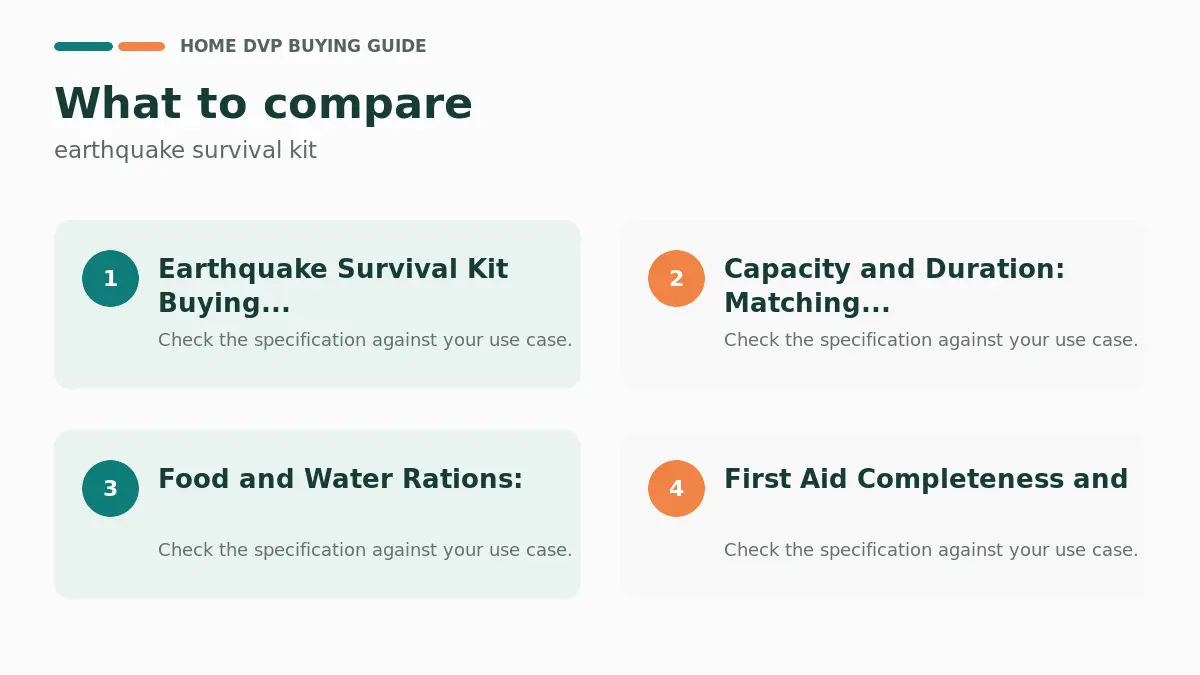
Capacity and Duration: Matching Your Household

FEMA and the American Red Cross recommend supplies for at least 72 hours per person. Most kits in this category are built for one or two people for three days, while a few scale to four. Count everyone who will rely on the bag, including pets if you plan to include them later. A common mistake is buying a two-person kit for a family of four and then realizing the food and water run short.

Look for clear labeling such as “2-person 72-hour” or “1-person 3-day.” Larger households often do better with multiple smaller kits stored in different locations (home, car, office) rather than one oversized pack that becomes too heavy to carry. Based on our research, kits designed for two people with modular pouches make it easier to split supplies if family members evacuate separately.

If you live in an apartment with limited storage, prioritize compact one-person or two-person options that still meet calorie and water minimums. For larger homes, a pair of two-person kits provides better flexibility and redundancy.

Food and Water Rations: Calories, Shelf Life, and Safety

Water is the top priority. Most quality kits include sealed water pouches (typically 4–24 pouches of 4–8 oz each) plus purification tablets that treat additional quarts from questionable sources. Aim for at least one gallon of water capacity per person per day when combining pouches and purification. Emergency food bars usually deliver 2,400–3,600 calories total and carry a five-year shelf life when stored properly.

U.S. Coast Guard–approved water and food bars appear frequently in stronger kits and offer extra confidence on safety and longevity. Avoid kits that skimp on water or rely solely on purification without any pre-packaged supply. Homeowners often make the mistake of assuming they can simply fill bottles later; after an earthquake, municipal water may be contaminated or shut off.

Check that food meets the rough guideline of 1,000+ calories per person per day. Many kits also include water purification tablets that treat 10–25 quarts—valuable if you can access rain, streams, or melting ice. Store the kit in a cool, dry place and rotate rations every few years as shelf life approaches.

First Aid Completeness and Trauma Support

A basic 30-piece first-aid kit handles cuts and blisters, but earthquake scenarios often involve more serious injuries from falling debris. Better kits include 100–200 pieces plus a tourniquet, triangular bandages, gloves, and antiseptic. Some add a CAT-style tourniquet specifically for bleeding control, which is a meaningful upgrade.

Look for bright red pouches so the first-aid section is easy to grab under stress. Nitrile gloves, dust masks, and wound pads are especially useful after quakes when dust and broken glass are common. Our evaluation shows that kits with organized, color-coded medical supplies reduce panic and speed treatment.

If anyone in your household has specific medical needs (allergies, prescription medications, or mobility issues), plan to add those items yourself. No commercial kit covers every personal prescription, so treat the included first-aid supplies as a solid base rather than a complete medical solution.

Shelter, Warmth, and Weather Protection

Even mild aftershocks can leave you outdoors or in an unheated building. Quality kits include emergency mylar blankets (retaining up to 90% of body heat), ponchos, tube tents or emergency shelters, and sometimes sleeping bags. Dust masks and goggles protect lungs and eyes from drywall dust and insulation particles common after structural damage.

A common oversight is choosing a kit with only thin blankets and no shelter option. In cooler climates or multi-day outages, a tube tent plus rope and thermal blankets make a real difference. Look for kits that also include work gloves so you can safely clear light debris without cutting your hands.

For renters in multi-story buildings, compact shelter items that pack flat are preferable. Homeowners with garages or basements can store bulkier tube tents without issue. Pairing your kit with other items from our heating, cooling and air resources can further improve comfort during extended outages.

Tools, Lighting, and Off-Grid Communication

Hand-crank flashlights that also power a radio and phone charger are among the most useful multi-tools. NOAA weather radio capability lets you receive official alerts when cell service is down. Glow sticks, safety light sticks, and headlamps provide hands-free light for 12+ hours.

Multi-tools, folding shovels, wire saws, parachute cord, compasses, and whistles appear in more comprehensive kits. A whistle is simple but critical for signaling rescuers. Fire starters and waterproof matches help with warmth and cooking if you need to boil water later.

Avoid kits that fill space with novelty items of low practical value. Focus on tools that solve real problems: cutting debris, starting a fire, signaling for help, and navigating. Based on the feature sets we reviewed, kits that include a hand-crank multi-function light plus basic cutting tools offer the best balance for most homeowners.

Backpack Durability, Portability, and Organization

The container matters as much as the contents. Look for heavy-duty 600D–1000D polyester or nylon backpacks with reinforced zippers, padded straps, waist belts, and MOLLE webbing for attaching extra pouches. Water-resistant or tear-resistant fabric survives better in wet or debris-filled environments.

Color-coded resealable waterproof packs or clearly labeled compartments speed access under stress. A common homeowner mistake is buying a cheap bag that rips when fully loaded or has no internal organization, turning the kit into a jumbled mess. Crossbody or smaller MOLLE-compatible pouches work well for vehicle or office placement, while full tactical backpacks suit home storage and evacuation.

Weight is important—most adults can manage 20–35 lb packs for short distances. If you have mobility limitations or will carry the bag for children or elderly family members, choose lighter one-person kits or distribute supplies across two bags. Test the empty pack’s comfort if possible, and make sure shoulder straps adjust easily.

Hygiene, Personal Care, and Extra Essentials

Beyond food and first aid, practical kits include hygiene items: pocket tissues, sanitary wipes, soap, toothbrushes, and feminine products. These reduce infection risk and improve morale during multi-day situations. Some kits add emergency contact cards so first responders know medical history and next-of-kin information.

Dust masks (N95 or equivalent) and nitrile gloves serve dual purposes for both medical and debris cleanup. If you live in an area with wildfire risk as well as earthquakes, higher-filtration masks become even more valuable. You can supplement any kit with additional air filtration options from our air quality and climate collection.

Finally, leave a little empty space or use MOLLE panels so you can add personal medications, cash, copies of important documents in a waterproof pouch, and spare phone chargers. The best commercial kits are designed to be customized rather than treated as complete sealed systems.

Brand Reputation, Certifications, and Value

Brands such as those in QuakeHOLD, ReadyAmerica, Redfora and more appear frequently because they focus on emergency preparedness and often align with Red Cross or FEMA guidelines. Look for U.S. Coast Guard–approved water and food when available, and check for clear five-year shelf-life claims. Higher-priced kits usually add better backpacks, more first-aid pieces, hand-crank multi-tools, and better organization rather than simply more of the same low-quality items.

Value is not always the lowest price. A basic kit under the lower end of $8.64 – $229.95 can still be excellent for a vehicle or office if it covers core needs. Premium kits near the upper end make sense for primary home preparedness when they deliver superior build quality and comprehensive contents. Our research indicates that mid-range options often hit the sweet spot for most households.

Always verify current shelf-life dates and replace expired items. A kit is only useful if the contents remain viable when you need them.

Our Research Methodology & Why You Can Trust Us

At Home DVP we approach every product category with a transparent, specification-driven process. For this Earthquake Survival Kit guide we collected detailed product data on 15 models, focusing on capacity, food and water quantities, first-aid completeness, tool inclusion, backpack materials, and stated shelf life. We cross-checked claims against manufacturer descriptions and common industry guidelines from FEMA and the American Red Cross.

We evaluated each kit on performance potential (does it meet 72-hour needs?), features (lighting, communication, shelter), build quality (fabric denier, zipper strength, organization), ease of use (how quickly can a stressed homeowner find items?), durability, safety elements (tourniquets, dust masks), value relative to contents, reliability indicators from available feedback patterns, and overall fit for homeowner or renter scenarios. We did not claim physical hands-on testing; instead we relied on published specifications, feature sets, and aggregated user insights.

Category fit was validated strictly against emergency supplies for earthquake and multi-disaster use. Products that failed to include core survival elements were excluded. We update our guides regularly, including during July, so recommendations stay aligned with current availability and specifications. This approach lets you make an informed decision based on clear criteria rather than marketing hype.
Final Thoughts

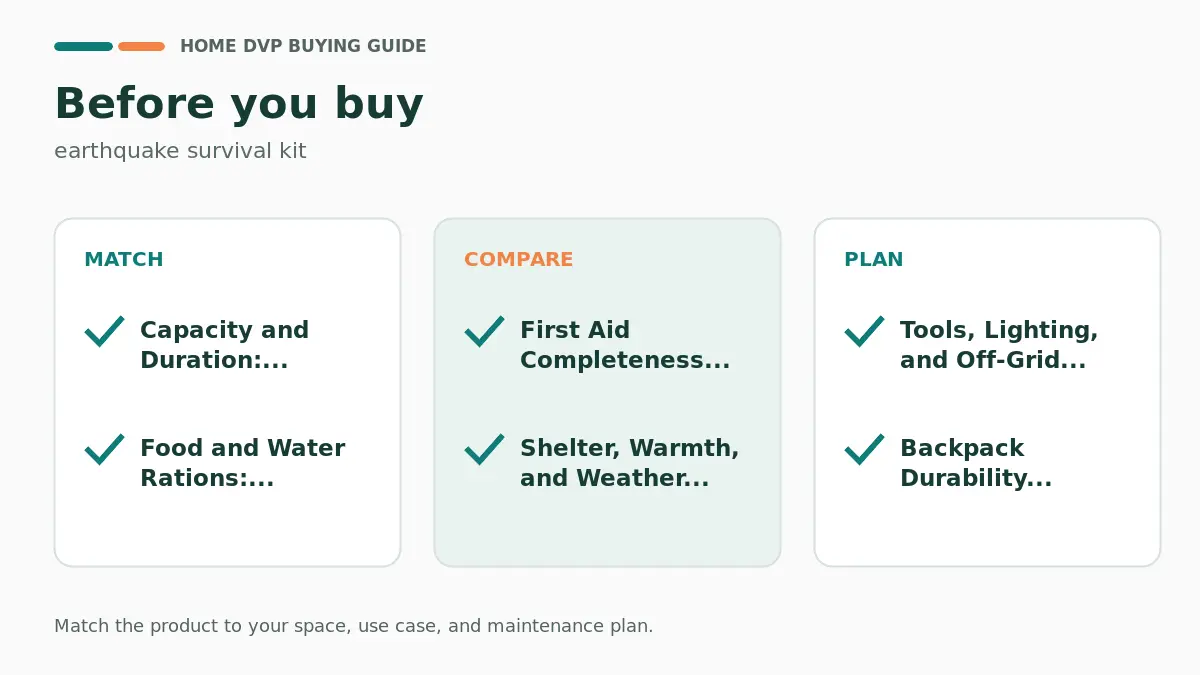
After comparing the listed specifications and feature sets, several strong options stand out for different needs. For most households seeking comprehensive coverage, the Redfora Complete Earthquake Bag (2-person version) earns our Overall Pick. It combines color-coded waterproof organization, solid food and water rations, a NOAA hand-crank radio/flashlight/charger, first aid, multi-tool, and shelter items in a thoughtfully packed bag. The 1-person Redfora version is an excellent alternative for individuals or as a secondary kit.

If budget is the priority, the Ready America 70280 72 Hour Emergency Kit (2-person) is our Value Pick. It delivers American Red Cross–recommended basics—food bars, water pouches, 33-piece first aid, blankets, light sticks, and a simple backpack—at an accessible price point and works well for cars, apartments, or starter preparedness. For a Premium Pick, the EVERLIT Complete 72 Hours Earthquake Bug Out Bag stands out with U.S. Coast Guard–approved water and food, a 200-piece first-aid set plus CAT tourniquet, hand-crank multi-tool light, and a heavy-duty 1000D MOLLE tactical backpack designed for two people.

Beginners and renters may prefer the compact Ready America 1-person deluxe kit or the more portable HIHEGD, Taimasi, or RIKOJUXI multi-piece survival pouches that emphasize tools, first aid, and emergency tents while remaining easy to store. Whatever you choose, place the kit in an easily accessible location, review its contents with family members, and customize it with personal medications and documents. Pairing your earthquake survival kit with other items from the emergency supplies section and basic hardware tools from our hardware category creates a more complete home-readiness plan for 2026 and beyond.

Frequently Asked Questions

What should I look for when choosing earthquake survival kit?

Focus on 72-hour capacity for your household size, U.S. Coast Guard–approved or long-shelf-life food and water, a solid first-aid kit with gloves and preferably a tourniquet, emergency blankets or shelter, a hand-crank light/radio, and a durable backpack with good organization. Also consider weight, ease of carrying, and room to add personal items.

How much water and food should earthquake survival kit include?

Aim for enough water pouches plus purification tablets to support roughly one gallon per person per day, and food bars providing at least 1,000 calories per person daily for three days. Many strong kits include 12–24 water pouches and 2,400–3,600 calorie food bars with five-year shelf life.

Are higher-end earthquake survival kit worth it?

They can be, especially if they add a better backpack, more complete first aid, hand-crank multi-function tools, and superior organization. For primary home kits the extra investment often improves usability under stress. Basic kits still work well as secondary options for vehicles or offices.

How should beginners choose earthquake survival kit?

Start with a reputable two-person or one-person 72-hour kit that clearly lists food, water, first aid, and blankets. Avoid overly complex tool-heavy kits until you understand the basics. Read the contents list carefully and plan to add any personal medications. Our emergency supplies page offers additional starter ideas.

What brands make reliable earthquake survival kit?

Brands such as those represented in QuakeHOLD, ReadyAmerica, Redfora and more consistently appear with kits aligned to Red Cross and FEMA guidelines. Look for transparent contents lists, shelf-life claims, and durable pack materials rather than relying solely on brand name.

How long should quality earthquake survival kit last?

Most emergency food and water carry a five-year shelf life when stored in a cool, dry place. The backpack and tools should last much longer with reasonable care. Check and rotate perishable contents every few years and replace any damaged packaging immediately.

Are earthquake survival kit suitable for DIY projects, home repairs, or regular maintenance?

While designed primarily for disasters, many of the multi-tools, gloves, first-aid supplies, and flashlights prove useful during home repairs, power outages, camping, or vehicle emergencies. Treat the kit as a dedicated emergency resource first, then decide whether to keep a second smaller set for everyday DIY use.