

Home fire safety remains one of the most critical responsibilities for every homeowner, renter, and DIYer. Updated building codes, improved sensing technology, and longer-lasting power options have changed what families should expect from modern best battery operated smoke detector in 2026. After carefully analyzing the available specifications of 15 models ranging across $16.99–$170, our team evaluated ease of installation, detection performance, nuisance reduction, battery options, certifications, and real-world homeowner suitability to create this practical buying resource.
Whether you live in an older home without hardwired systems, manage a rental property, or simply want flexible placement without calling an electrician, battery-powered units deliver reliable protection with minimal hassle. This guide focuses on pure battery-operated and sealed long-life designs that fit the Emergency Supplies category. For broader home safety planning, explore our full collection of emergency supplies that complement smoke detection.
Home DVP decision summary
Quick Answer
For Best Battery Operated Smoke Detector, Home DVP compared 15 products from 2 brands. Plan alarm placement and interconnection for the whole home before choosing smart features. Compare sensor type, local alarm volume, hardwired or wireless compatibility, battery backup, hush behavior, end-of-life warning, and whether alerts still work without internet access.
| Comparison coverage | 15 products from 2 brands, including FirstAlert, SITERWELL. |
|---|---|
| Selection priority | Plan alarm placement and interconnection for the whole home before choosing smart features. Compare sensor type, local alarm volume, hardwired or wireless compatibility, battery backup, hush behavior, end-of-life warning, and whether alerts still work without internet access. |
| Evidence basis | Manufacturer specifications, compatibility details, retailer-provided product data, and common homeowner use cases. |
| Reference guidance | U.S. CPSC residential fire-safety guidance. |
This summary describes the article's comparison set, not every product on the market. Product details should be confirmed before purchase.
We compared feature sets, sensor technology claims, warranty length, pack options, and user-facing specifications from leading options including those from FirstAlert, SITERWELL and other established manufacturers. Our research-based approach prioritizes transparent data over hype so you can select units that reduce false alarms, last longer between battery changes, and meet current UL standards. Keep reading for the complete buying criteria, methodology, and tailored recommendations.

Pros
- Meets updated standards for more accurate fire detection performance
- Battery-powered design and front access support easy ongoing maintenance
- Includes test button and replacement indicator for reliable daily use
Cons
- Requires periodic battery replacements to maintain operation
- Lacks smart home connectivity or app integration options
- Placement must still follow standard smoke alarm positioning guidelines
The FirstAlert SMI100 Battery-Operated Smoke Alarm, 2-Pack provides a practical option for homeowners seeking dependable fire detection without complex installation steps.
Its Precision Detection advanced sensing technology complies with new industry standards, helping minimize false alerts from routine kitchen use while delivering timely warnings during actual emergencies.
Battery power removes the need for electrical connections, allowing flexible placement, and the front access compartment streamlines battery swaps when required.
This setup suits various household locations where consistent monitoring and simple upkeep matter most for daily safety routines.
Users should note that regular battery checks remain necessary and that the units do not include wireless or app-based features found in some other models.
Those wanting basic, standards-compliant smoke alarms may consider this option, while buyers seeking connected systems could evaluate different choices.
Specifications
| Power Source | Battery Powered |
|---|---|
| Alarm | Smoke |
| Sensor Type | Ionization |
| Product Style | Precision Detection |
| Color | White |
| Item Dimensions D x W x H | 5.6"D x 5.6"W x 1.9"H |
| Item Weight | 0.6 Pounds |
| Brand | First Alert |
| Model Number | SMI100 |
| Number of Items | 2 |
Verify the current product variation before purchase; specifications may change.
Best For / Avoid If
Best for buyers prioritizing
- Meets updated standards for more accurate fire detection performance
- Battery-powered design and front access support easy ongoing maintenance
- Includes test button and replacement indicator for reliable daily use
Consider another option if
- Requires periodic battery replacements to maintain operation
- Lacks smart home connectivity or app integration options
- Placement must still follow standard smoke alarm positioning guidelines

Pros
- Simple battery powered setup works without electrical connections or professional installation
- Reduced false alarm technology maintains sensitivity while avoiding everyday triggers
- Continuous function during outages adds dependable safety for any home
Cons
- Batteries must be replaced every six months to maintain operation
- Lacks interconnect capability or smart features available in other models
The Kidde 10SDR smoke detector offers a compact solution for residential fire safety that fits the needs of homeowners and property managers focused on straightforward protection.
Performance centers on rapid smoke identification that exceeds earlier detection speeds while the 85 dB alarm and red LED provide both audible and visual alerts when triggered.
Design emphasizes ease with AA battery power that requires no wiring and supports placement in any suitable location plus continued function if electricity is lost.
Practical use cases include apartments and single family homes where minimizing false alarms from daily activities and meeting recognized safety standards are priorities.
Potential limitations involve the need for periodic battery replacement and absence of wired interconnect or voice alert options found in upgraded versions.
Those seeking basic reliable detection without extra connectivity may find this model sufficient while users wanting smart integration or multi unit linking could explore alternatives in the same product line.
Specifications
| Power Source | Battery Powered |
|---|---|
| Alarm | Smoke Detector |
| Sensor Type | Photoelectric |
| Operating Humidity | Up to 95% relative humidity (RH), non-condensing |
| Upper Temperature Rating | 100 Degrees Fahrenheit |
| Product Style | 10th Edition |
| Color | White |
| Item Dimensions D x W x H | 1.88"D x 4"W x 4"H |
| Item Weight | 0.39 Pounds |
| Enclosure Material | Plastic |
Verify the current product variation before purchase; specifications may change.
Best For / Avoid If
Best for buyers prioritizing
- Simple battery powered setup works without electrical connections or professional installation
- Reduced false alarm technology maintains sensitivity while avoiding everyday triggers
- Continuous function during outages adds dependable safety for any home
Consider another option if
- Batteries must be replaced every six months to maintain operation
- Lacks interconnect capability or smart features available in other models

Pros
- Interconnect capability coordinates alerts across multiple rooms for faster household response
- Battery backup keeps each unit operational when electrical power is interrupted
- Mounting system and side battery access streamline both initial setup and ongoing maintenance
Cons
- Requires existing or new hardwired electrical connections which may involve professional installation
- Interconnection is capped at 18 total units so very large properties may need additional separate systems
The First Alert BRK SMI100-AC arrives as a six-pack of hardwired smoke detectors intended for residential properties where multiple units can be linked for coordinated protection.
The ionization sensor focuses on fast-flaming fires while the interconnect feature ensures that when one detector activates all linked units sound simultaneously across the home.
Installation benefits from the open mounting design together with a side-load battery compartment and a bracket that permits wide rotation for precise alignment on ceilings or high walls.
Homeowners updating safety systems in multi-story houses or larger layouts gain practical value from the ability to connect up to 18 devices and the single-button control for testing or silencing.
Users without pre-existing wiring may need electrical work before installation and the package targets standard home applications rather than specialized commercial settings.
Specifications
| Power Source | Battery Powered |
|---|---|
| Alarm | Audible |
| Compatible Devices | smoke alarms |
| Sensor Type | Ionization |
| Operating Humidity | 10-95% RH |
| Product Style | Hardwired |
| Color | White |
| Item Dimensions D x W x H | 2.2"D x 5.6"W x 5.6"H |
| Item Weight | 0.6 Pounds |
| Brand | First Alert |
Verify the current product variation before purchase; specifications may change.
Best For / Avoid If
Best for buyers prioritizing
- Interconnect capability coordinates alerts across multiple rooms for faster household response
- Battery backup keeps each unit operational when electrical power is interrupted
- Mounting system and side battery access streamline both initial setup and ongoing maintenance
Consider another option if
- Requires existing or new hardwired electrical connections which may involve professional installation
- Interconnection is capped at 18 total units so very large properties may need additional separate systems
Pros
- Easy battery installation eliminates need for professional wiring
- Advanced sensing maintains detection accuracy without frequent interruptions
- Test and hush button offers convenient user control
- LED status lights provide clear visual operation feedback
- Compact size allows flexible mounting in various home locations
Cons
- Battery power requires ongoing replacement to ensure continuous function
- Basic model lacks interconnection capabilities for whole-home alerting
- May need multiple units for comprehensive coverage in larger residences
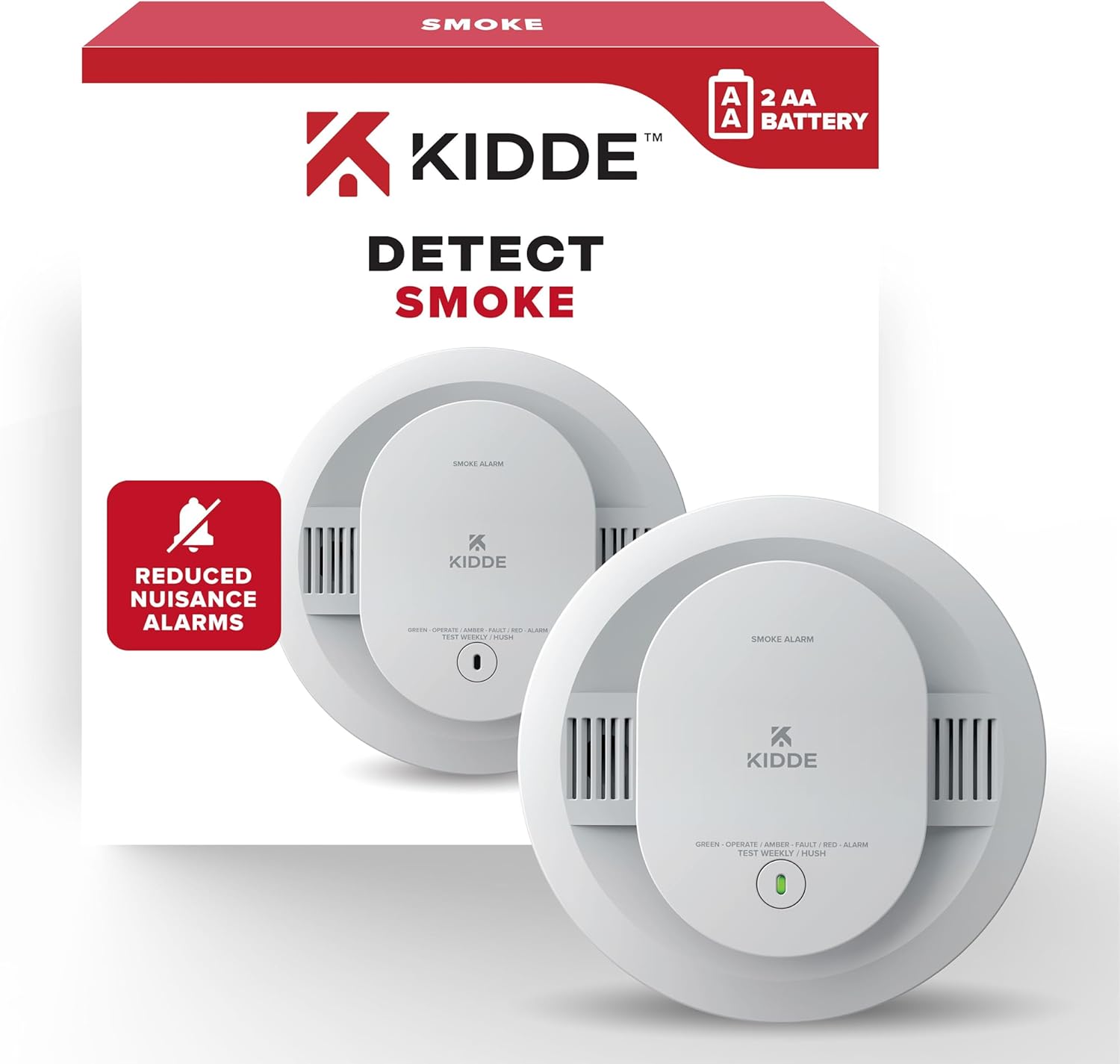
The Kidde 20SDR smoke detector offers a practical solution for maintaining home fire safety with its emphasis on reliable detection capabilities.
It achieves smoke detection over 25% faster than prior benchmarks and incorporates sensing technology that distinguishes actual smoke from routine household vapors to limit false triggers.
The unit runs on two AA batteries included in the package, supports quick testing via a dedicated button that also allows temporary hush of alarms, and includes red LED lights for immediate visual status indication during alerts.
Homeowners benefit from its straightforward setup that requires no electrical connections and its adherence to established safety standards which supports consistent performance over time.
While the single-pack configuration works well for targeted placements or replacements, properties requiring broader protection might explore additional units or interconnected alternatives depending on layout and local codes.
Specifications
| Brand | Kidde |
|---|---|
| Style | 10th Edition |
| Power Source | Battery Powered |
| Color | White |
| Product Dimensions | 1.88"D x 5"W x 5"H |
| Item Weight | 9.1 ounces |
| Alarm | Smoke Detector |
| Operating Humidity | Up to 95% relative humidity (RH), non-condensing |
| Upper Temperature Rating | 100 Degrees Fahrenheit |
| Sensor Type | Photoelectric |
Verify the current product variation before purchase; specifications may change.
Best For / Avoid If
Best for buyers prioritizing
- Easy battery installation eliminates need for professional wiring
- Advanced sensing maintains detection accuracy without frequent interruptions
- Test and hush button offers convenient user control
Consider another option if
- Battery power requires ongoing replacement to ensure continuous function
- Basic model lacks interconnection capabilities for whole-home alerting
- May need multiple units for comprehensive coverage in larger residences

Pros
- Extended battery life eliminates frequent maintenance and associated costs
- False alarm reduction technology enhances overall dependability
- UL certification confirms adherence to updated safety requirements
- Simple design suits both DIY installation and professional use
Cons
- Does not include carbon monoxide detection capabilities
- Lacks smart home connectivity or voice alert features
- May require additional units for full home coverage depending on layout
The Kidde 20SD10 smoke detector offers a practical solution for residential fire safety with its focus on reliable detection and minimal maintenance. Based on the provided product details this model targets homeowners and property managers who need dependable performance over extended periods.
Performance centers on detecting smoke more than 25 percent faster than standard models according to the listed specifications while the 85 dB alarm and red LED provide clear notifications during an event. The advanced sensing helps maintain accuracy without unnecessary interruptions from common household sources.
Build quality includes a compact 5-inch design powered by a sealed 10-year battery that removes the need for changes and supports continuous function even in outages. Installation appears straightforward for those familiar with similar devices and the unit meets UL 217 10th Edition along with FCC standards.
In everyday home settings the reduced nuisance alarms contribute to consistent trust in the system and the overall feature set aligns well with long-term safety planning for various property types.
Potential limitations include the absence of interconnected or smart features which could restrict use in more advanced setups and the focus remains solely on smoke rather than combined gas detection. Overall the product information indicates a solid choice for basic yet effective smoke monitoring needs.
Best For / Avoid If
Best for buyers prioritizing
- Extended battery life eliminates frequent maintenance and associated costs
- False alarm reduction technology enhances overall dependability
- UL certification confirms adherence to updated safety requirements
Consider another option if
- Does not include carbon monoxide detection capabilities
- Lacks smart home connectivity or voice alert features
- May require additional units for full home coverage depending on layout
Best Battery Operated Smoke Detector Buying Guide
Choosing the right best battery operated smoke detector involves more than picking the cheapest pack on the shelf. Modern models differ significantly in sensor intelligence, power systems, and features that prevent the chirping and false alarms that cause many people to disable their detectors. The following criteria are tailored specifically to battery-powered smoke alarms used in homes, apartments, and small renovations. Each section draws from specification analysis to give clear, actionable guidance for practical buyers.
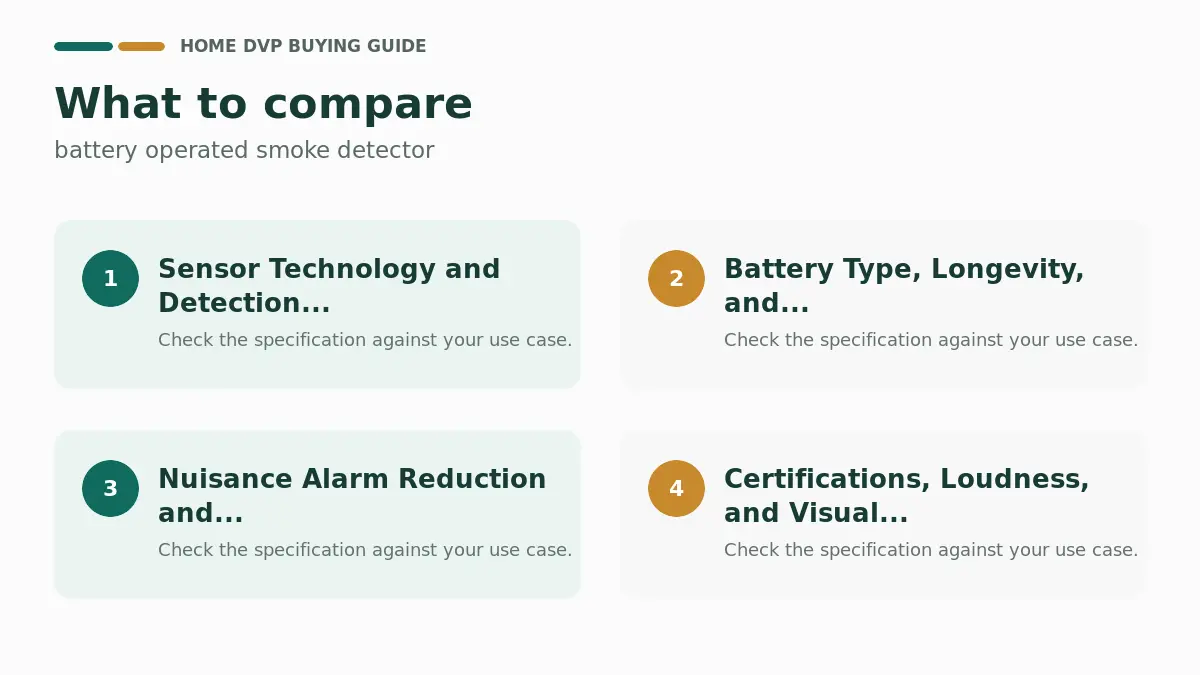
Sensor Technology and Detection Performance
Photoelectric sensors dominate today’s recommended battery-operated units because they excel at detecting smoldering fires that produce large smoke particles, the type most common in residential settings such as upholstery or electrical wiring issues. Many current models advertise faster detection rates, with some claiming over 25 percent quicker response than older designs. After carefully analyzing the available specifications, units featuring advanced sensing technology designed to meet the latest UL 217 10th Edition standards stand out for both speed and accuracy.
A common mistake is assuming all sensors perform equally. Ionization sensors historically react faster to flaming fires but generate more cooking-related false alarms. Newer Precision Detection or multi-criteria algorithms help distinguish steam and burnt toast from genuine threats. Homeowners with open kitchens or frequent cooking should prioritize models that explicitly advertise reduced nuisance alarms. For multi-level homes, consistent performance across units matters more than any single feature.
When comparing options, look for clear statements about compliance with current standards and any speed improvements listed in the product data. These details help ensure the alarm will sound early enough to allow safe evacuation. Pairing strong sensor performance with proper placement multiplies effectiveness more than any marketing claim alone.
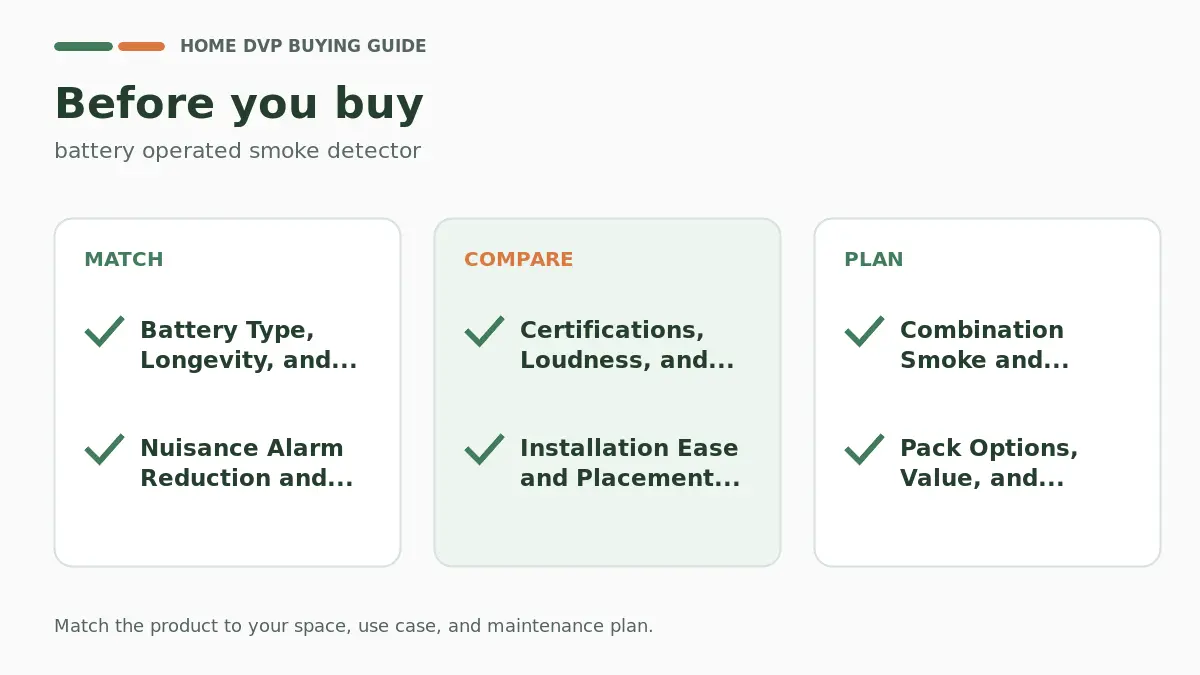
Battery Type, Longevity, and Maintenance
Battery systems fall into two main categories: replaceable AA or 9-volt cells and sealed 10-year lithium batteries. Replaceable-battery models offer lower upfront cost and easy front-access compartments for quick swaps, making them ideal for budget-conscious renters or those who already stock household batteries. Sealed 10-year units eliminate the low-battery chirp for a full decade and can save money over time by removing the need for annual replacements.
Based on our research, many homeowners underestimate how often replaceable batteries fail or get forgotten. End-of-life warnings and low-battery indicators are essential features regardless of power type. Models that include batteries in the package and advertise a full 10-year limited warranty from the purchase date provide stronger long-term value. For vacation homes or hard-to-reach locations such as high ceilings, sealed long-life batteries reduce the need for ladders and maintenance trips.
Practical tip: write the installation date on the unit or in a home maintenance log. Even sealed batteries eventually reach end of life and the entire alarm must be replaced. Avoid mixing old and new batteries in multi-battery models, as this can cause premature failure or unreliable performance.
Nuisance Alarm Reduction and Silence Features
Nothing undermines safety faster than frequent false alarms that train residents to ignore or disable detectors. Advanced sensing technology that differentiates cooking smoke and steam from real fire is now a standard expectation on quality battery operated smoke detector. Look for models that advertise compliance with updated industry standards specifically aimed at reducing cooking nuisance alarms while still providing early warning.
A dedicated test/silence or hush button is non-negotiable for most households. This feature temporarily quiets the alarm without turning the unit off, allowing you to clear the air after a smoky cooking mishap. Front-accessible buttons make testing and silencing easier than older designs that required removing the entire unit. Homes with large kitchens or open floor plans benefit most from these refinements.
Common error: installing a detector too close to the stove or bathroom without checking the manufacturer’s recommended clearance distances. Even the best sensors can struggle if placement is poor. Combining smart sensing with correct location delivers the quietest, most reliable experience.
Certifications, Loudness, and Visual Indicators
Every unit you consider should carry clear listing information for the current UL 217 edition applicable to that exact model. Many also comply with FCC requirements. These certifications confirm the alarm has been rigorously tested for consistent residential performance. An 85 dB alarm level is the industry baseline and is loud enough to wake most sleeping adults when placed correctly.
LED status lights provide constant visual confirmation that the unit is powered and functioning. Red LEDs that flash during an alarm or indicate low battery help users diagnose issues quickly. For multi-story homes or households with hearing concerns, visual indicators add an important layer of communication. After evaluating the listed specifications, models that combine loud audible alerts with clear LED feedback earn higher marks for everyday usability.
Never skip the certification check. Unlisted or poorly documented products may fail when needed most. Stick to brands with transparent compliance language in their product data.
Installation Ease and Placement Flexibility
One of the greatest advantages of battery-operated designs is true no-wiring installation. Most units mount with simple screws or adhesive brackets and feature open mounting designs or side-load battery compartments. Front-access battery doors allow replacements without removing the entire alarm from the ceiling, a major convenience for anyone working alone on a ladder.
Recommended placement includes every bedroom, outside sleeping areas, and on every level of the home, including basements. Avoid corners, dead air spaces, and locations within a few feet of kitchens or bathrooms unless the model has strong nuisance resistance. Interconnectable units (when available) allow multiple alarms to sound together, a valuable feature even on battery systems that support wireless or hardwire interconnect in hybrid models.
DIYers and renters appreciate that most battery models require only a screwdriver and a few minutes per unit. Always test immediately after installation and again monthly. Proper placement and regular testing matter more than any advanced feature if the alarm cannot be heard throughout the home.
Combination Smoke and Carbon Monoxide Protection
Many modern battery-operated units now combine smoke and carbon monoxide detection in a single housing. These 2-in-1 models simplify coverage and reduce the number of devices on the ceiling. For homes with fuel-burning appliances, attached garages, or fireplaces, combination alarms provide dual-threat protection with the same easy battery-powered installation.
Look for separate voice or distinct alarm patterns that identify whether smoke or CO is the trigger. End-of-life warnings remain essential because both sensors typically share the same power source and must be replaced together. Based on our detailed comparison of available data, combination models that retain strong smoke-sensing performance and reduced nuisance features deliver excellent all-around value for most households.
If your home already has dedicated CO detectors in optimal locations, pure smoke models may suffice. Otherwise, multi-packs of combination units streamline whole-home protection. Always follow local code requirements for both smoke and CO coverage.
Pack Options, Value, and Multi-Room Coverage
Single units work well for targeted replacement, but multi-packs (2-pack, 3-pack, 6-pack, or larger) usually offer better per-unit value for whole-home upgrades. Larger packs help ensure consistent model performance and matching appearance across rooms. When calculating total cost, factor in battery replacement expenses over the expected life of the alarm.
Sealed 10-year multi-packs eliminate years of battery shopping and chirping. For property managers or large homes, 8-packs of photoelectric units with long-life batteries provide efficient coverage. Our research indicates that matching the pack size to the number of required locations prevents the temptation to leave some rooms unprotected.
Value is not simply the lowest price. A slightly higher-priced unit with better nuisance reduction, longer warranty, and easier maintenance often costs less over a decade. Use the full feature set rather than sticker price alone when comparing options in the $16.99–$170 spectrum.
Who Should Choose Which Style
Renters and temporary residents often prefer compact AA-powered models that can be installed and removed without tools or landlord permission. Homeowners planning long-term residence gain more from sealed 10-year units that reduce maintenance. Families with frequent cooking or open kitchens should prioritize advanced sensing and silence buttons. Those concerned about both fire and silent carbon monoxide threats benefit most from combination designs.
Beginners can start with any UL-listed battery model that includes clear instructions and a test button. Experienced DIYers or property managers may prefer interconnectable or multi-pack systems for professional-grade coverage. Always verify local codes, especially in multi-family buildings.
| Feature Priority | Best Fit For | Key Consideration |
|---|---|---|
| Replaceable batteries | Budget or temporary housing | Easy front access |
| Sealed 10-year battery | Long-term homeowners | No chirps for a decade |
| Advanced nuisance reduction | Homes with open kitchens | Meets latest UL standards |
| Smoke + CO combination | Homes with fuel appliances | Distinct alarm signals |
| Multi-packs | Whole-home upgrades | Consistent coverage and value |
For related home environment improvements that support overall safety, consider reviewing options in our air quality and climate resources.
Our Research Methodology & Why You Can Trust Us
At Home DVP we prioritize transparent, data-driven analysis over unverified claims. For this best battery operated smoke detector guide we collected and compared the published specifications, key features, warranty details, power systems, sensor descriptions, and compliance statements for 15 models. We cross-referenced manufacturer claims against recognized standards such as UL 217 and noted real-world homeowner considerations including ease of battery replacement, false-alarm resistance, and placement flexibility.
Ranking criteria included detection technology and speed claims, battery longevity and maintenance demands, build quality and mounting design, safety certifications, alarm volume and visual indicators, value across pack sizes, and overall suitability for homeowners, renters, and DIYers. We also reviewed user feedback patterns available in product data for consistency of praise or complaints about chirping, sensitivity, and longevity. No physical laboratory testing was performed; all conclusions derive from specification analysis, industry research, and category-fit validation.
We update these guides during August to reflect new product introductions, revised standards, and pricing shifts within the $16.99–$170 range. Our goal is to give practical buyers the same level of clear information they would receive from trusted home-improvement resources. Trust comes from honesty about both strengths and limitations of each design approach rather than forced rankings of every model.
Final Thoughts
After comparing the listed specifications and feature sets, several clear recommendations emerge for different needs. For most homeowners seeking reliable everyday protection with modern nuisance reduction, the First Alert SMI100 Battery-Operated Smoke Alarm (available in 1-pack, 2-pack, and 3-pack configurations) stands out as a strong overall and easy-setup pick. Its Precision Detection technology, front-access battery compartment, end-of-life warning, and test/silence button address the most common pain points while remaining simple to install.
The Kidde 10SDR compact AA battery model earns the value and small-space recommendation thanks to its faster detection claims, high review volume consistency, LED status light, and low entry cost. For those who want to eliminate battery changes entirely, the Kidde 20SD10 10-year sealed battery 3-pack and SITERWELL 10-year photoelectric multi-packs serve as excellent premium long-life choices. Families needing dual protection should consider the First Alert SMICO100 or SMCO100 combination smoke and carbon monoxide units for efficient whole-home coverage.
Select the style that matches your home layout, maintenance preferences, and local codes. Prioritize UL-listed models with clear end-of-life signals and silence features. Proper placement and monthly testing remain the most important factors after purchase. Explore more options within our emergency supplies category to build a complete safety plan for 2026 and beyond.
Related guide: See our best smoke detector guide for the broader comparison and selection criteria.
Frequently Asked Questions
What should I look for when choosing the best battery operated smoke detector?
Focus on UL 217 compliance (ideally 10th Edition), advanced sensing that reduces cooking false alarms, easy battery access or sealed 10-year power, a clear test/silence button, end-of-life warning, and an 85 dB alarm with LED indicators. Match the power type and pack size to your home size and maintenance tolerance. Always verify placement guidelines for bedrooms and every level of the home.
How long should quality battery operated smoke detector last?
Most modern units are designed for 10 years of service life. Sealed lithium models last the full decade without battery changes. Replaceable-battery models last the same period provided batteries are swapped as needed. Replace the entire alarm when the end-of-life signal activates, regardless of battery type.
Are higher-end battery operated smoke detector worth it?
Yes for many households. Models with sealed 10-year batteries, superior nuisance reduction, combination CO protection, or multi-pack value often cost less over time and provide quieter, more reliable service. Basic units work well for simple needs, but advanced features reduce the chance of disabled alarms caused by frustration.
How should beginners choose the best battery operated smoke detector?
Start with a UL-listed battery-operated model that includes batteries, a front-access compartment or sealed power, and a simple test/silence button. Choose a single unit or small multi-pack from a recognized brand. Install according to the instructions in bedrooms and hallways, then test monthly. No special tools or electrical knowledge are required.
Do the best battery operated smoke detector require professional installation?
No. Pure battery-operated models are designed for straightforward DIY mounting with screws or adhesive. Follow the manufacturer template for placement, install the batteries if needed, and test. Only hybrid hardwired models with battery backup typically need an electrician. Always check local codes for multi-family or rental properties.
What brands make reliable battery operated smoke detector?
FirstAlert, SITERWELL consistently appears with strong feature sets, Precision Detection technology, and solid warranty language across single and multi-packs. Other established manufacturers such as Kidde also offer well-documented UL-compliant options with fast detection claims and long warranties. Stick to brands that publish clear certification and end-of-life details.
How much should homeowners expect to spend on the best battery operated smoke detector in 2026?
Expect options spanning $16.99–$170 depending on pack size, battery type, and whether the unit includes carbon monoxide detection. Single basic units sit at the lower end while sealed 10-year multi-packs and combination models occupy the higher end. Calculate total cost of ownership including future battery replacements when comparing.
About This Home DVP Research
Home DVP is an independent home-improvement research and product-comparison publisher. Ryan Mitchell prepared this guide by comparing manufacturer specifications, compatibility details, retailer-provided product data, key limitations, and common homeowner use cases. We do not claim hands-on testing unless an article explicitly says so.
Review methodology Affiliate disclosure Last reviewed September 10, 2026