
If you have ever opened a water quality report and felt lost in columns of contaminant names, units, and abbreviations, you are not alone. This guide explains how to read a home water quality report without guessing, whether it came from your city water supplier, a landlord, a home test kit, or a certified laboratory.
Answer-first summary: Start by confirming what kind of report you have, who collected the sample, where the sample was taken, and whether any result exceeded a listed limit or action level. Then focus on contaminants that affect health, plumbing, taste, odor, and filtration choices. If results show a warning, are unclear, or involve vulnerable household members, contact the water supplier, local health department, or a qualified water professional before relying on a filter.
What a home water quality report can and cannot tell you
A water quality report is a snapshot of tested water at a certain place and time. For public water, the report may summarize systemwide monitoring and regulatory compliance. For a private lab test, it usually reflects the exact sample bottle, faucet, date, and test panel you ordered. The EPA drinking water program explains that public drinking water is regulated, but your report still needs interpretation because plumbing, service lines, fixtures, and sampling methods can affect what reaches your tap.
The biggest limitation is that a report only covers what was tested. A basic test may include general chemistry and common metals but not every possible contaminant. A public water report may describe water leaving or moving through the distribution system, while your kitchen faucet could be affected by home plumbing. A home test strip may be useful for screening, but it should not be treated the same as a certified laboratory result.
Step 1: Identify the type of report before reading the numbers
Do not start with the highest number on the page. First, identify the report type, because each type answers a different question. A municipal report usually asks, did the water system meet applicable drinking water rules during a reporting period? A point-of-use lab report asks, what was in this specific sample? A home screening kit asks, is there a possible issue worth confirming?
| Report type | Best use | Main limitation | What to do next |
|---|---|---|---|
| Public water supplier report | Understanding source water, detected regulated contaminants, and system compliance | May not capture changes from your home plumbing or a single faucet | Compare the report with any household-specific concerns such as lead pipes, odor, or recent plumbing work |
| Certified lab report from your tap | Checking the water actually collected at your home | Only covers the sample location, date, and test package ordered | Review sample notes, detection limits, and any result flagged by the lab |
| Home test kit or strip | Screening for common issues or deciding whether lab testing is needed | Usually less detailed than a lab report and may be user-sensitive | Confirm concerning results with a lab or local health authority |
| Filter performance sheet | Understanding what a product is designed to reduce | It is not a report on your actual tap water | Match it to contaminants found in your report and follow the product manual |
Step 2: Check the sample location, date, and collector
The header or first page usually tells you where the sample came from and when it was collected. A sample from a treatment plant, distribution point, bathroom sink, outside hose bib, or kitchen cold-water tap can lead to different conclusions. For drinking and cooking decisions, the kitchen cold-water tap is often the most relevant location, but follow the sampling instructions provided by the lab or water authority.
Next, look for who collected the sample. A trained sampler, water utility, certified laboratory instructions, homeowner, landlord, or buyer can all produce usable information, but the reliability depends on proper collection, storage, and timing. If a result will influence a real estate decision, medical concern, or major treatment purchase, ask the lab or local health department whether the sample method is appropriate.
Step 3: Learn the columns and abbreviations
Most reports use the same basic structure. The contaminant name tells you what was tested. The result tells you what was found. The unit tells you how the result is measured. The reporting limit or detection limit tells you the lowest level the method can reliably report. A standard, limit, goal, or action level provides context when one is available. The comments column may say whether the result was detected, not detected, estimated, or above a reference level.
- Detected: The lab or water system found the substance at or above its reporting level.
- Not detected: The substance was not found above the reportable level. This does not always mean absolute zero.
- Units: Read the unit before comparing numbers. Two results are not comparable if they use different units.
- Standard or limit: If listed, this is the comparison point used by the report. For public water, the EPA program sets and oversees national drinking water requirements for regulated contaminants.
- Flag: A symbol, note, or bold result usually means the lab wants you to read the footnote.
Step 4: Separate health concerns from taste, odor, and plumbing issues
A helpful way to read the report is to sort findings into three buckets. The first bucket is potential health concern, such as contaminants with regulatory limits, action levels, or health-based guidance in the report. The second bucket is aesthetic concern, such as taste, odor, staining, cloudiness, or scale. The third bucket is home maintenance, such as corrosive water, sediment, or conditions that may affect plumbing and appliances.
This distinction matters because the right response is different. A taste or odor complaint may call for source investigation, flushing guidance, or a targeted filter. A health-related exceedance may require contacting the water supplier, local health department, landlord, or a qualified water treatment professional. A plumbing-related issue may require inspection of fixtures, pipes, water heater maintenance, or a plumber. The CDC drinking water guidance is a good starting point for public health context, especially when illness, immune concerns, infants, pregnancy, or boil-water advisories are involved.
Step 5: Look for exceedances, trends, and footnotes
On a public water report, do not assume every detected substance is a violation. Many reports list contaminants that were detected but remained within applicable limits. Instead, look for words such as violation, exceedance, action level, advisory, treatment technique, or required public notice. If the report includes a range, average, or highest detected level, read the footnote to see which value is used for compliance.
On a laboratory report, compare each result only to the reference value supplied by the lab or relevant authority. If no reference value is listed, do not invent one from a search result or a filter advertisement. Ask the lab what comparison standard is appropriate for your water source and use case. This is especially important for private wells, because the CDC notes that private well owners have responsibilities for checking and maintaining their drinking water system.
Step 6: Match the report to your water source
If you are on public water, begin with the water supplier report and then consider whether home-specific testing is needed. Reasons may include older plumbing, a newly purchased home, recent pipe work, recurring taste or odor, a vulnerable resident, or a contaminant that is likely to enter water after it leaves the treatment plant. If you rent, ask the landlord or property manager for building-specific information when the issue may involve pipes, fixtures, or a shared treatment system.
If you use a private well, you need a different mindset. A municipal report does not apply to your well. Use local health department guidance or a qualified laboratory to choose a test panel based on local geology, nearby land uses, flooding history, septic systems, and household symptoms. If your well result is concerning, avoid quick filter purchases until you understand the contaminant, concentration, water chemistry, and maintenance burden.
Worked example: reading a fictional lab report
Imagine a homeowner receives a certified lab report for the kitchen cold-water tap. The sample date is last week, the collector is the homeowner, and the report lists several results as detected. One metal result is flagged because it is above the lab’s listed comparison value. Hardness-related minerals are also detected, and the comments mention possible scale. No bacteria panel was ordered.
- Confirm scope: The report reflects one kitchen tap sample, not every faucet or the whole neighborhood.
- Read the flag: The flagged metal should be treated as the first priority because the lab compared it to a listed value.
- Check sample method: If the sample was collected after water sat in the pipes or after flushing, that detail changes interpretation. Ask the lab whether resampling is recommended.
- Do not overread missing data: Because no bacteria panel was ordered, the report does not answer whether bacteria were present.
- Plan response: Contact the lab, water supplier, landlord if applicable, or local health department. If selecting treatment, choose only after confirming what contaminant must be reduced and what maintenance is required.
This example shows why how to read a home water quality report is less about scanning for scary words and more about asking whether the result, sample method, and comparison point line up.
When a filter is reasonable, and when it is premature
A filter can be useful only when it is matched to a known problem. Start with the contaminant name from the report, then verify that any filter you consider is designed for that contaminant and installed in the correct location. A pitcher, faucet filter, under-sink system, countertop reverse osmosis unit, and whole-house system solve different problems. Always confirm manufacturer claims, cartridge life, installation requirements, and maintenance instructions in the product documentation.
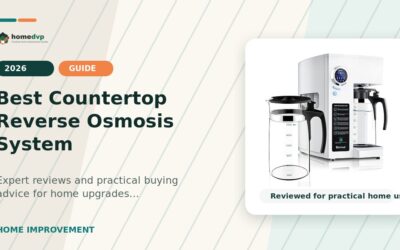
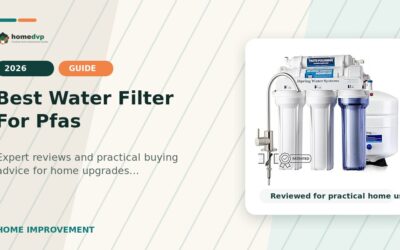
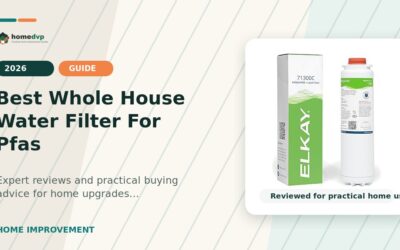
If your report points to PFAS, lead, or a broad group of concerns, compare the report to treatment options rather than buying by category name alone. Home DVP has separate guides to water filters for PFAS, whole-house PFAS filtration, lead-reduction water filters, and countertop reverse osmosis systems. Use those only after your report tells you what you need to reduce.
Common mistakes that lead to bad decisions
- Comparing different units: A larger-looking number may not be worse if the units differ.
- Ignoring not-detected limits: Not detected means below the reportable level, not necessarily absent.
- Buying a filter before identifying the contaminant: A filter that improves taste may not address a health-related contaminant.
- Assuming a city report describes your faucet exactly: Building plumbing can matter.
- Testing only once after a plumbing change: Ask the lab or local authority whether timing or repeat sampling is appropriate.
- Skipping maintenance: Treatment devices need cartridge changes, cleaning, and sometimes professional service. A neglected filter can become a water quality problem rather than a solution.
Maintenance clues that may belong with your report
Your water report should be read alongside what you see at home. Staining, scale, cloudy water, low flow, rotten-egg odor, chlorine taste, recurring sediment, or pinhole leaks can provide clues, but symptoms are not a substitute for testing. The EPA WaterSense home maintenance page encourages routine attention to household water systems and leaks, which is useful context because plumbing condition and fixture maintenance can affect water use and homeowner decisions. See EPA WaterSense home maintenance for general maintenance guidance.
Do not use a water report to diagnose every plumbing issue. Low pressure, water heater odor, cross-connections, backflow concerns, or suspected contamination after flooding may need a plumber, well contractor, water supplier, or public health department. If you see sudden discoloration, illness symptoms, sewage odor, or an official advisory, stop treating the report as a routine paperwork exercise and seek local guidance.
Renter and buyer checklist
- Ask whether the home is served by public water, a private well, or a shared system.
- Request the most recent public water report or well test, plus any building-specific test if available.
- Check whether the sample location matches your concern, such as the kitchen tap.
- Look for flagged results, exceedance notes, or required public notices.
- Ask who is responsible for plumbing, fixture replacement, filter maintenance, and retesting.
- For leases, get repair or treatment commitments in writing before relying on a verbal promise.
- For purchases, ask your inspector, lab, or local health department which water tests fit the property and area.
When to call the water supplier, lab, health department, or a professional
Call the water supplier if you are on public water and the report mentions a violation, public notice, distribution issue, flushing instruction, or unexplained change in taste, odor, or color. Call the lab if you do not understand a detection limit, unit, flag, sample method, or comparison value. Call the local health department for private well concerns, illness concerns, flooding, or questions about local contaminants.
Call a plumber or qualified water treatment professional when the issue may involve home plumbing, pressure, corrosion, water heater conditions, a whole-house system, or installation that affects potable water lines. If any official notice tells you not to drink the water, to boil water, or to use an alternate source, follow that notice rather than a general online guide.
How we prepared this guide
This guide was prepared as an informational homeowner resource and checked against the official EPA, CDC, and WaterSense pages listed below. It does not claim hands-on testing, laboratory analysis, plumbing inspection, or professional licensing. Manufacturer-specific filter performance, installation clearances, cartridge schedules, and warranty limits should be confirmed in the product manual and with local requirements where applicable.
Final action plan: how to read a home water quality report
- Identify the report type and water source.
- Confirm sample location, date, and collector.
- Read units, detection limits, flags, and footnotes before judging results.
- Separate health-related findings from taste, odor, and plumbing concerns.
- Compare results only to listed standards, lab references, or official guidance that applies to your situation.
- Ask the supplier, lab, landlord, health department, or a qualified professional about anything flagged or unclear.
- Choose testing, maintenance, or filtration only after the report identifies the problem you are trying to solve.