
Clean drinking water is one of those home essentials that is easy to take for granted until you notice an unusual taste, cloudy appearance, staining around fixtures, or concerns about an older plumbing system. A reliable Home Water Test Kit can help homeowners, renters, and DIY-minded buyers screen for common water quality concerns before deciding whether a filter, softener, plumbing repair, or certified lab analysis is needed.
After carefully analyzing the available specifications, product positioning, test coverage, ease of reading results, lab options, and homeowner use cases, we compared 15 products across the current $9.99–$269 range. This guide focuses on practical at-home water screening for kitchens, bathrooms, wells, city water supplies, and ongoing maintenance. If your results suggest hardness or mineral buildup is a major issue, our water softener buying guide is a helpful next step.
Home DVP decision summary
Quick Answer
For Best Home Water Test Kit, Home DVP compared 15 products from 13 brands. Start with the water source and suspected contaminant, then choose a test from a qualified laboratory or a kit designed for that specific screening task. Sampling instructions, detection limits, result interpretation, and follow-up confirmation matter more than test count.
| Comparison coverage | 15 products from 13 brands, including Safe Home, VARIFY, bestprod. |
|---|---|
| Selection priority | Start with the water source and suspected contaminant, then choose a test from a qualified laboratory or a kit designed for that specific screening task. Sampling instructions, detection limits, result interpretation, and follow-up confirmation matter more than test count. |
| Evidence basis | Manufacturer specifications, compatibility details, retailer-provided product data, and common homeowner use cases. |
| Reference guidance | EPA private-well testing and protection guidance. |
This summary describes the article's comparison set, not every product on the market. Product details should be confirmed before purchase.
Based on our detailed comparison, the strongest options are not all designed for the same buyer. Some kits are broad DIY screening tools, some focus on bacteria, some include optional EPA-certified lab analysis, and some are electronic meters intended for quick dissolved-solids checks. The right choice depends on whether you are checking a new home, maintaining a private well, troubleshooting taste and odor, or monitoring everyday tap water.
Best Home Water Test Kit Buying Guide
Choosing the best home water test kit is different from buying a typical kitchen or bathroom accessory because the result can influence decisions about filtration, plumbing repairs, well maintenance, and long-term household safety. A simple strip kit may be enough for routine checks, while a lab-based kit may be better when buying a home, testing a private well, or investigating possible contamination.
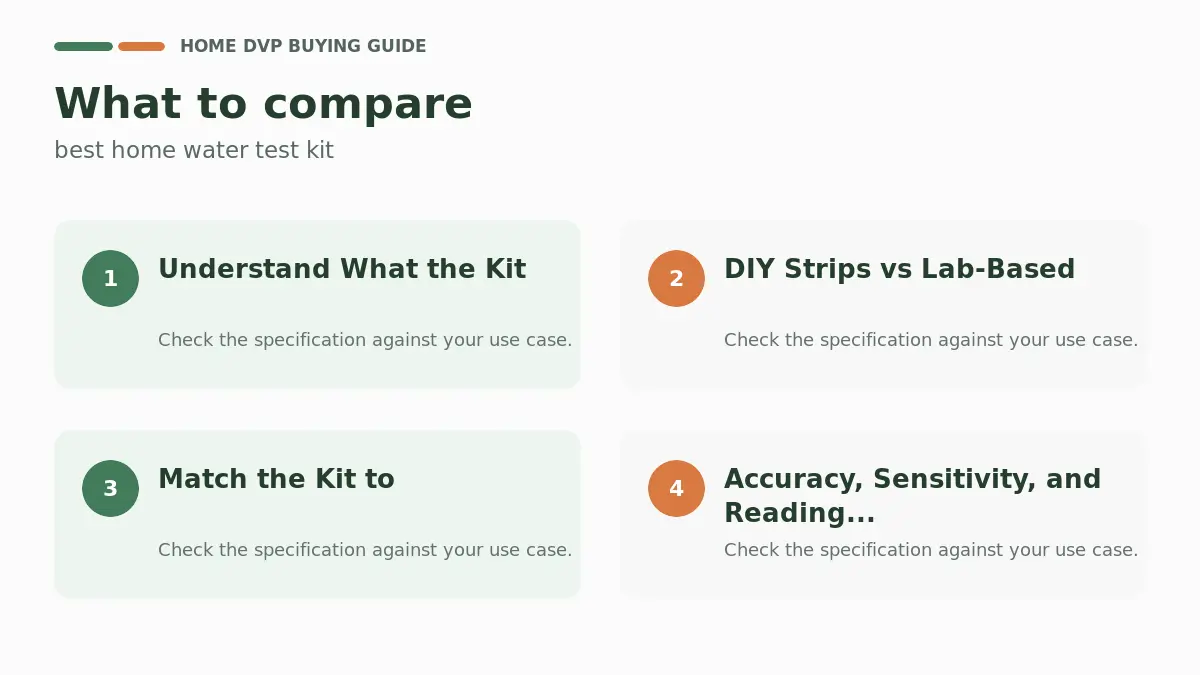
Understand What the Kit Actually Tests
The first thing to compare is test coverage. Some home water testing kits screen for a broad list of everyday concerns such as pH, hardness, chlorine, copper, iron, lead, fluoride, and alkalinity. Others are much narrower, such as bacteria-only kits or electronic TDS meters that estimate total dissolved solids but do not identify specific contaminants.
For example, the 21-in-1 Home Drinking Water Testing Kit and Bestprod All-New 21 in 1 Drinking Water Testing Kit Strips are designed for broad DIY screening. The Safe Home® DIY Bacteria in Water Test Kit is more specialized because it focuses on coliform bacteria. The Craft911 Water Tester for Drinking Water – TDS Meter and ZeroWater ZT-2 Electronic Water Tester, Blue are useful for quick dissolved-solids checks, but they should not be treated as full contaminant tests.
A common mistake is assuming that more strips automatically means a more complete safety evaluation. Quantity matters for repeated testing, but parameter coverage matters more. If you are concerned about lead, bacteria, or heavy metals, make sure those items are explicitly listed in the product information.
| Testing Need | Best Match | What to Watch |
|---|---|---|
| Routine tap water checks | Multi-parameter strip kits | Results are quick but may be less precise than lab testing |
| Private well safety screening | Bacteria kits or lab-supported kits | Follow sample timing and handling instructions carefully |
| Hardness or mineral monitoring | Strips or TDS meters | TDS does not identify specific minerals by itself |
| Home purchase or serious concern | Certified lab analysis option | Costs and turnaround may be higher than DIY strips |
DIY Strips vs Lab-Based Testing
DIY test strips are popular because they are fast, affordable, and simple enough for most homeowners to use without special tools. You dip the strip, wait the specified time, and compare the color pads to a chart. That makes them useful for maintenance checks, filter monitoring, and deciding whether further testing is worth pursuing.
Lab-based kits take more time and often cost more, but they can provide a more detailed analysis. The Advanced Home Water Test Kit is positioned for well or city water and includes EPA certified drinking water labs with a wide analyte panel. Safe Home® Complete Drinking Water Test Kit also combines DIY screening with optional testing at an EPA-certified lab, making it a flexible choice for buyers who want both convenience and deeper follow-up.
Our research indicates that many homeowners benefit from using both approaches. A strip kit can help you spot changes over time, while a lab-backed option is better when results could affect a major decision, such as installing a treatment system, evaluating a private well, or addressing possible plumbing contamination.
Match the Kit to City Water, Well Water, or Filtered Water
City water, well water, and filtered water have different testing priorities. Municipal water is usually treated and monitored, but older service lines, building plumbing, and in-home fixtures can still affect what reaches the tap. Well water is a private responsibility, so bacteria, nitrates, hardness, iron, and other local concerns deserve closer attention.
For well owners, a bacteria test such as Safe Home® DIY Bacteria in Water Test Kit can be a practical screening tool, especially after flooding, plumbing work, pump service, or seasonal changes. For city water users, multi-parameter kits like TESPERT Drinking Water Test Strips 125ct 16 in 1 or All-New 23 in 1 Drinking Water Testing Kit 158 Strips can help monitor chlorine, pH, hardness, and metals that may affect taste, appliances, and fixtures.
If you are comparing water quality upgrades across your kitchen and bathroom, it is also worth reviewing fixture-related maintenance. Touchless faucets, disposals, bidets, and softeners can all be affected by hardness or sediment, so our touchless faucet guide and garbage disposal guide may be useful when planning broader improvements.
Accuracy, Sensitivity, and Reading Results
At-home water tests are most useful when you understand their limits. Color-strip results can vary based on lighting, timing, water temperature, and how carefully the chart is read. For that reason, they are better described as screening tools rather than definitive laboratory reports.
Look for clear instructions, defined waiting times, and easy-to-read color charts. Kits that include separate bacteria tests may require incubation time and careful handling. Electronic testers provide a digital number quickly, but a TDS reading only tells you dissolved solids are present, not whether those solids are beneficial minerals, harmless salts, or contaminants that need further identification.
For a more confident reading, take samples from the same fixture under similar conditions. For example, compare kitchen tap results before and after replacing a filter, or test both first-draw and flushed water if you are checking for plumbing-related metals. If results are alarming, inconsistent, or tied to health concerns, follow up with certified lab testing or your local water authority.
Ease of Use for Homeowners and Renters
The best kit for a DIY beginner is usually the one that minimizes guesswork. Clear labeling, organized bottles or strips, simple timing, and readable instructions make a real difference. Renters may prefer low-cost strip kits or meters because they can document concerns without modifying plumbing or installing equipment.
Homeowners doing regular maintenance may want a kit with enough strips for repeated checks. A larger strip count can be helpful for monitoring water before and after filter changes, checking multiple bathrooms, comparing hose bibs or utility sinks, or tracking a well over time. For one-time confirmation, a smaller lab-supported kit may make more sense.
One common mistake is testing only one tap and assuming the result represents the entire home. Kitchen taps, bathroom taps, refrigerator lines, and filtered faucets can produce different readings because of fixture age, aerators, filters, and supply lines. When results matter, sample more than one location.
Contaminants That Deserve Extra Attention
Not every water quality issue has the same risk level. Hardness can cause scale, soap residue, and appliance wear, while pH imbalance may contribute to corrosion or poor taste. Lead, bacteria, and certain heavy metals deserve more caution because they can involve health concerns and may require professional follow-up.
The #1 Total Drinking Water Test Kit – Made in USA – Tap Water Well Water Quality by Detekt lists screening for lead, bacteria, mold, heavy metals, pH, and other contaminants, making it a broad option for homeowners who want a wider snapshot. The Advanced Home Water Test Kit is better suited for users who want a lab-supported report across a larger analyte set. Safe Home® Complete Drinking Water Test Kit offers a middle path with DIY screening and optional lab testing.
If hardness is the main issue, testing can help you decide whether to look into treatment. You can pair your water test results with our guide to choosing a water softener to better understand whether scale prevention, appliance protection, or whole-home treatment should be part of your plan.
Value, Refill Needs, and Long-Term Use
Value is not just about the lowest purchase cost. A lower-cost electronic meter can be useful for repeated TDS checks, but it does not replace a kit that screens for lead or bacteria. A multi-strip kit may provide many repeat tests, while a lab-based option may provide fewer uses but deeper insight.
Think about how often you plan to test. A homeowner with a private well may want seasonal testing, checks after storms, and follow-up after plumbing work. A renter may only need a snapshot to support a maintenance request or decide whether to use a countertop filter. A renovation planner may want baseline results before upgrading fixtures, plumbing, or filtration.
Based on the feature set, kits such as TESPERT Drinking Water Test Strips 125ct 16 in 1 and All-New 23 in 1 Drinking Water Testing Kit 158 Strips may appeal to households that want repeat screening. Lab-supported kits are better when one accurate report is more valuable than many quick checks.
When to Call a Professional or Use Certified Lab Testing
At-home kits are a helpful first step, but they are not a substitute for professional water treatment advice when serious issues appear. If a bacteria test is positive, if lead is detected, if water has a strong chemical odor, or if multiple family members notice symptoms after drinking the water, stop guessing and pursue certified testing or local health department guidance.
Professional follow-up is also smart before investing in expensive whole-home treatment. Water softeners, reverse osmosis systems, carbon filters, UV systems, and sediment filters solve different problems. Accurate results help avoid buying the wrong system for the actual issue.
For broader home upgrades, visit the Kitchen & Bathroom category for related guides on fixtures, water-related appliances, and practical household improvements.
Our Research Methodology & Why You Can Trust Us
We evaluated the products based on category fit, available product information, test coverage, ease of use, intended water source, lab certification claims where provided, repeat-use potential, homeowner practicality, and overall value. Every product discussed in this guide clearly matches best home water test kit and the Kitchen & Bathroom category because each one is designed to test, screen, or measure drinking water quality for household use.
After comparing the listed specifications, we separated the products by use case rather than treating every option as interchangeable. Strip kits, bacteria kits, electronic TDS meters, broad screening kits, and lab-supported kits all serve different needs. This approach helps prevent a common buying mistake: choosing a quick meter when you actually need contaminant-specific testing, or paying for a lab report when a routine screening kit would meet your goal.
Our ranking criteria included performance potential, feature coverage, build and format quality, ease of reading results, durability for storage and repeat use, safety relevance, value within the $9.99–$269 range, reliability signals from available product data, and fit for homeowners, renters, DIY beginners, and maintenance-focused buyers. We also considered whether each product is better for city water, well water, filtered water, or follow-up testing.
This guide is updated during July to keep recommendations aligned with current product data and homeowner needs. We do not claim hands-on testing unless product information explicitly supports it. Instead, our recommendations are based on transparent specification analysis, practical use-case matching, and careful review of the information available for each valid product.
Final Thoughts
For an overall broad screening pick, the #1 Total Drinking Water Test Kit – Made in USA – Tap Water Well Water Quality by Detekt stands out because it is positioned for tap and well water and lists lead, bacteria, mold, heavy metals, pH, and other contaminants. It is a strong fit for homeowners who want a wider at-home snapshot before deciding whether to pursue additional lab testing or treatment upgrades.
For a premium lab-focused choice, the Advanced Home Water Test Kit is the most appropriate option among the listed products because it is designed for well or city water and includes EPA certified drinking water labs with a broad analyte panel. For bacteria-specific screening, Safe Home® DIY Bacteria in Water Test Kit is a focused choice, while Safe Home® Complete Drinking Water Test Kit is a flexible option for buyers who want DIY screening plus optional EPA-certified lab follow-up.
For routine maintenance and repeat checks, 21-in-1 Home Drinking Water Testing Kit, Bestprod All-New 21 in 1 Drinking Water Testing Kit Strips, TESPERT Drinking Water Test Strips 125ct 16 in 1, and All-New 23 in 1 Drinking Water Testing Kit 158 Strips are practical strip-based choices. Craft911 Water Tester for Drinking Water – TDS Meter and ZeroWater ZT-2 Electronic Water Tester, Blue are best viewed as quick dissolved-solids tools rather than full safety tests. If water quality results point toward fixture or bathroom upgrades, you may also find our bidet toilet seat guide helpful for planning a more complete home refresh.
FAQ
What should I look for when choosing the best home water test kit?
Start with the contaminants or conditions you actually want to check, such as hardness, chlorine, pH, lead, bacteria, iron, copper, fluoride, or dissolved solids. Then compare whether the kit uses strips, a bacteria vial, a digital meter, or lab-supported analysis. The right choice depends on whether you need a quick screening tool or a more detailed report.
Are higher-end home water test kit worth it?
Higher-end options can be worth it when they include certified lab analysis, broader analyte coverage, or documentation that supports major decisions. For routine checks, a lower-cost strip kit or meter may be enough. If results could affect health, a real estate purchase, or a whole-home treatment system, lab-supported testing is usually the better value.
How often should homeowners use the best home water test kit?
Testing frequency depends on your water source and household concerns. Well owners may want periodic checks, especially after storms, flooding, plumbing work, or changes in taste and odor. City water users may test after moving in, replacing filters, upgrading fixtures, or noticing staining, scale, or unusual taste.
Can best home water test kit replace professional water testing?
At-home kits are useful screening tools, but they should not replace certified testing when results suggest bacteria, lead, heavy metals, or other serious concerns. Use them to identify potential issues and decide when follow-up is needed. Certified lab testing is the safer choice when health, legal documentation, or major treatment decisions are involved.
Do water test strips and TDS meters measure the same thing?
No. Water test strips usually check specific parameters such as pH, hardness, chlorine, iron, copper, or lead depending on the kit. TDS meters estimate total dissolved solids, which can be useful for monitoring filters but does not identify which substances are present.
Where should I learn more after using the best home water test kit?
If your results show hardness, scale, or mineral buildup, compare treatment options in our water softener guide. If results point toward kitchen or bathroom upgrades, review related fixture and appliance guides before investing in new equipment. Testing first helps you choose upgrades that solve the actual water issue.
About This Home DVP Research
Home DVP is an independent home-improvement research and product-comparison publisher. Ryan Mitchell prepared this guide by comparing manufacturer specifications, compatibility details, retailer-provided product data, key limitations, and common homeowner use cases. We do not claim hands-on testing unless an article explicitly says so.
Review methodology Affiliate disclosure Last reviewed September 10, 2026