

Carbon monoxide remains one of the most dangerous household threats because it is colorless, odorless, and can build up without warning from fuel-burning appliances, fireplaces, generators, or even neighboring sources in multi-unit buildings. For homeowners, renters, frequent travelers, and anyone who spends time in vacation rentals or RVs, a reliable portable carbon monoxide detector provides essential protection that fixed wall units alone cannot always deliver. Updated options available in 2026 offer better sensors, clearer alerts, longer backup power, and true portability that fits modern lifestyles.
After carefully analyzing the available specifications of 15 models ranging from $19.89–$130, we compared electrochemical sensors, power sources, alarm volume, display clarity, certifications, and real-world portability. Our research focused on how well each unit serves everyday home protection as well as travel use. For broader emergency readiness advice, explore our full collection of emergency supplies that complement carbon monoxide monitoring.
Home DVP decision summary
Quick Answer
For Best Portable Carbon Monoxide Detector, Home DVP compared 15 products from 4 brands. Choose an alarm listed for its intended home, RV, or travel use and follow the manufacturer placement instructions. Compare local alarm volume, sensor life, end-of-life warning, battery backup, display, interconnection, and operation when Wi-Fi or mains power is unavailable.
| Comparison coverage | 15 products from 4 brands, including FirstAlert, SITERWELL, TopTesToolsforHomeSafety. |
|---|---|
| Selection priority | Choose an alarm listed for its intended home, RV, or travel use and follow the manufacturer placement instructions. Compare local alarm volume, sensor life, end-of-life warning, battery backup, display, interconnection, and operation when Wi-Fi or mains power is unavailable. |
| Evidence basis | Manufacturer specifications, compatibility details, retailer-provided product data, and common homeowner use cases. |
| Reference guidance | U.S. CPSC carbon-monoxide safety guidance. |
This summary describes the article's comparison set, not every product on the market. Product details should be confirmed before purchase.
This guide walks through the most important buying criteria so you can choose the right best portable carbon monoxide detector for your home, rental property, camping trips, or workplace. Whether you need a compact battery unit for hotels or a plug-in model with digital readout for the basement, the recommendations below stay grounded in product data and practical homeowner needs.
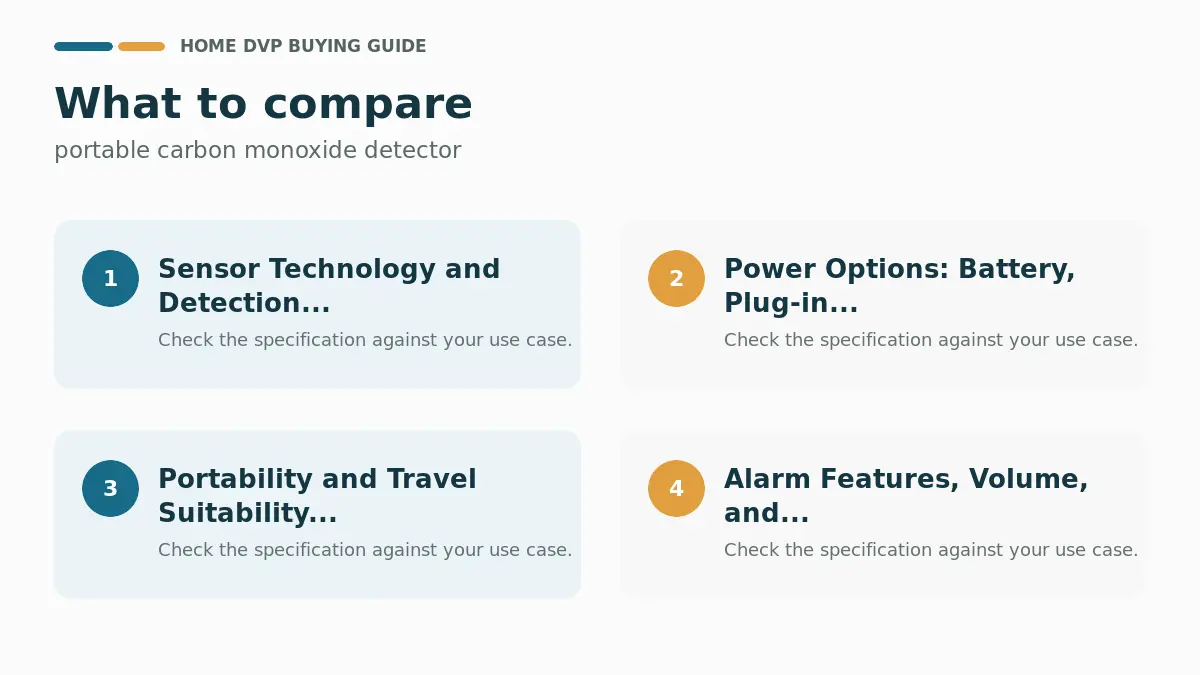
Best Portable Carbon Monoxide Detector Buying Guide
Choosing the right best portable carbon monoxide detector involves more than grabbing the cheapest unit on the shelf. Sensor quality, power reliability, alarm clarity, and ease of carrying all affect how well the device protects your family. The sections below break down the key decision points based on available product specifications and typical homeowner scenarios.
Sensor Technology and Detection Accuracy
Most modern best portable carbon monoxide detector models rely on electrochemical sensors because they deliver accurate readings across a useful range of CO concentrations. These sensors measure the chemical reaction created when carbon monoxide contacts a specialized electrode. Based on the product data, units using electrochemical technology consistently appear in higher-rated models from established makers.
A common mistake is assuming every sensor performs the same. Look for devices that state compliance with current UL 2034 standards and that list clear PPM ranges. For example, some advanced handheld units detect from 0 to 1000 PPM with rapid response times under one second. Homeowners should prioritize sensors that maintain accuracy even after power interruptions or temperature swings common in basements and garages.
If you plan to use the detector around gas appliances or wood stoves, confirm the sensor is designed for continuous monitoring rather than occasional spot checks. Proper sensor choice reduces false alarms while still catching dangerous buildup early. Pairing a quality sensor with good placement multiplies its effectiveness.
Power Options: Battery, Plug-in, and Rechargeable Designs
Power source is one of the biggest differentiators among best portable carbon monoxide detector options. Pure battery models run on AA or 9V cells and keep working during outages, making them ideal for travel or areas without convenient outlets. Plug-in units with battery backup combine wall power for everyday use and batteries for emergencies. Rechargeable handheld detectors use USB-C and suit professional or outdoor spot-checking.
Homeowners often overlook battery life and replacement ease. Models with 10-year sealed batteries eliminate frequent changes, while others require routine AA swaps. Plug-in designs with rotating plugs fit both vertical and horizontal outlets without blocking neighboring sockets. For renters or vacation homes, battery-powered portability often wins because no wiring or outlet access is needed.
Consider your primary use case. Continuous home monitoring favors plug-in units with backup. Camping, hotels, or temporary work sites favor compact battery or rechargeable designs. Always check whether batteries are included and whether the unit chirps when power is low so you can replace cells before protection is lost.
Portability and Travel Suitability
True portability separates a standard home detector from a versatile portable carbon monoxide detector. Compact size, light weight, and the ability to sit on a nightstand or clip into a bag matter when you move between houses, hotels, or RVs. Many of the models we reviewed explicitly market themselves for travel, with dimensions that fit easily in luggage.
A frequent error is buying a large plug-in unit expecting it to travel well. Instead, look for freestanding designs that work on tables or walls without permanent mounting. Units under 5 inches in any dimension and under a few ounces pack easily. Some include protective cases or built-in flashlights for added outdoor utility.
Travelers should also verify that the detector functions immediately after power-up without long warm-up periods. For frequent hotel stays or short-term rentals, a lightweight battery model provides peace of mind without relying on the property’s own equipment. Check our related resources on air quality and climate for additional ways to improve indoor safety while traveling.
Alarm Features, Volume, and Alert Modes
An 85 dB alarm is the standard minimum for carbon monoxide detectors and is loud enough to wake most sleepers. Many units also flash a red LED or, in advanced models, combine audible, visual, and vibration alerts. Vibration is especially useful in noisy environments or for users with hearing concerns.
Test and hush buttons let you silence temporary low-battery chirps or verify the alarm works without waiting for an actual event. Peak-level memory stores the highest CO reading so you can review past exposure after the alarm stops. Avoid units that chirp at night for non-critical reasons; newer designs reduce nuisance sounds while still warning of real hazards.
When comparing options, prioritize clear differentiation between power, fault, and alarm indicators. Green for normal, yellow for fault, and red for danger is a common and intuitive scheme. Multiple alert modes increase the chance you notice a problem even if one sense is impaired or the environment is distracting.
Display, Indicators, and User Feedback
Basic LED status lights are sufficient for many homes, but digital displays that show real-time PPM levels add valuable information. Backlit screens remain readable in dark bedrooms or basements. Color TFT displays found on some handheld units present data graphically and support menu navigation for calibration or history review.
Homeowners sometimes ignore the value of peak-level memory until after an incident. A unit that records the last high reading helps identify intermittent problems such as a furnace that only leaks under certain conditions. Simple green/red LEDs keep operation straightforward for less tech-savvy users, while digital readouts suit those who want continuous awareness.
Choose the level of feedback that matches your comfort with technology. Families with children or elderly members may prefer loud audio plus clear lights. Professionals or detail-oriented users benefit from numeric displays and data logging. Either way, ensure the interface remains readable after years of service.
Certifications, Standards, and Warranty Length
Look for UL 2034 listing (or the latest edition) and ETL certification. These marks confirm the detector has been tested to industry safety standards for response time, accuracy, and reliability. Models meeting the 5th Edition standard incorporate updated performance requirements.
Warranty length also signals manufacturer confidence. Ten-year limited warranties on the alarm itself are common among quality brands and often match the expected sensor life. End-of-life chirps remind you when replacement is due so protection never silently expires. Avoid unlisted or uncertified units even if the price looks attractive.
Based on our detailed comparison of available data, certified units from recognized makers consistently offer better documentation and clearer replacement guidance. Always verify the listing on the product packaging or specification sheet before purchase.
Placement Guidelines and Installation Simplicity
Proper placement multiplies the value of any best portable carbon monoxide detector. Install units on every level of the home and outside sleeping areas, then follow the manufacturer instructions for exact placement and clearances. Portable models can sit on nightstands, tables, or temporary shelves when permanent mounting is not possible. Avoid placing detectors too close to fuel appliances or in dead-air corners.
Battery models usually require no tools: insert batteries, test, and place. Plug-in units simply go into a standard outlet, preferably with a rotating plug for flexibility. Rechargeable handhelds are ready after a quick charge. The simplest designs reduce the chance of improper setup.
A common mistake is installing only one detector for an entire multi-story house. Carbon monoxide can pool in basements or upper floors differently. Use multiple units and consider portable backups for travel. For whole-home air strategies that work alongside detectors, review options in heating, cooling and air equipment.
Maintenance, Longevity, and Real-World Durability
Even the best detector needs occasional attention. Test the alarm monthly using the test button. Replace batteries as soon as the low-battery signal appears. Note the manufacture or install date so you know when the entire unit reaches end of life, typically 5 to 10 years.
Dust and humidity can affect sensors over time. Wipe exterior vents gently and keep units away from direct steam or heavy cooking grease. Rechargeable models benefit from periodic full charges even if used infrequently. Durable ABS housings stand up to travel bumps better than brittle plastics.
Plan for replacement before the end-of-life chirp becomes constant. Keeping a spare portable unit on hand ensures continuous protection during changeovers. Regular maintenance turns a good detector into long-term peace of mind.
Our Research Methodology & Why You Can Trust Us
At Home DVP we evaluate home safety products through transparent, specification-driven research rather than marketing claims. For this Best Portable Carbon Monoxide Detector guide we examined sensor type, power architecture, alarm volume, display features, listed certifications, dimensions, warranty terms, and stated use cases across 15 models. We cross-checked manufacturer descriptions against typical homeowner requirements for continuous monitoring and travel portability.
Ranking criteria included detection performance potential, feature completeness, build quality indicators, ease of setup and daily use, expected durability, safety certifications, overall value within $19.89–$130, and suitability for renters, homeowners, and travelers. User feedback patterns from available ratings helped identify recurring strengths and limitations without substituting for controlled lab data.
We update our analysis during August and throughout 2026 as new models and standard revisions appear. Our goal is to give practical, data-backed advice that helps you protect your household without overspending or under-preparing. Category fit is always verified so every recommendation stays relevant to emergency supplies and indoor air safety.
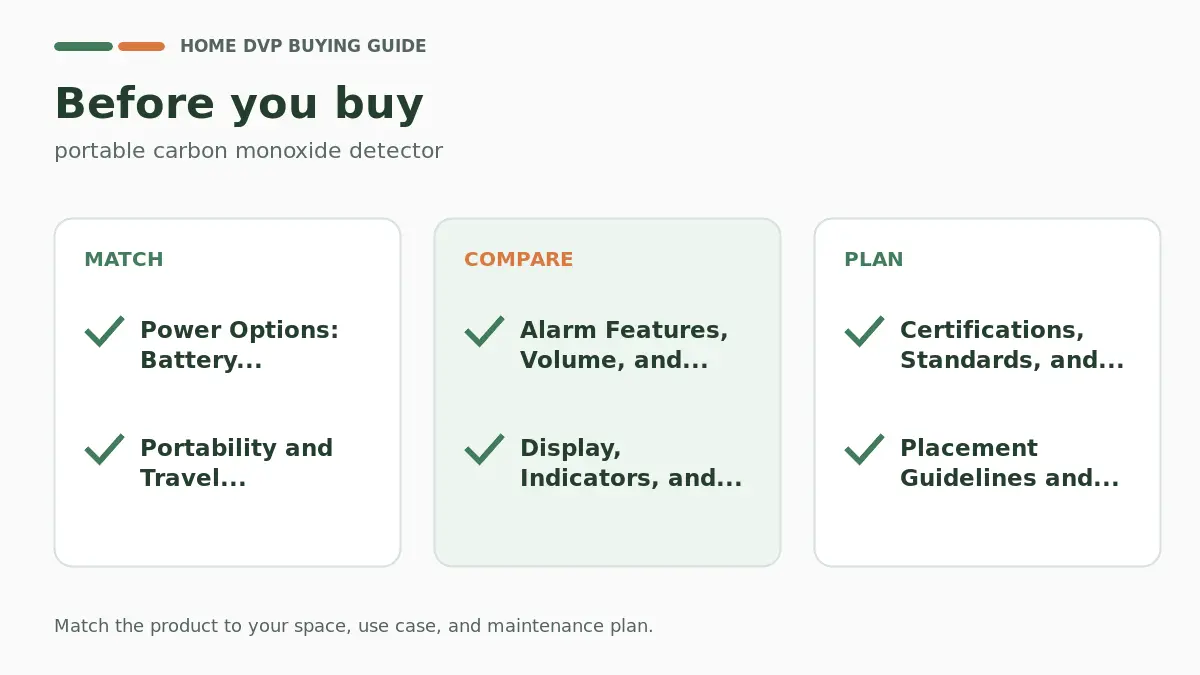
Final Thoughts
After comparing the listed specifications, several standout options emerge for different needs. For overall everyday home and travel protection, the Kidde Carbon Monoxide Detector AA Battery Powered Portable models deliver solid electrochemical sensing, 85 dB alarms, LED indicators, and true tabletop or wall flexibility at accessible prices. These units suit most households seeking dependable, no-wiring coverage.
Value-conscious buyers can look to the First Alert CO606 plug-in with battery backup or the SITERWELL plug-in model with long-life battery support. Both offer electrochemical accuracy and compact footprints that work in homes or temporary lodging. For a more advanced portable solution, the TOPTES CT-580 rechargeable handheld with vibration, color display, and wide PPM range serves well for camping, professional checks, or users who want real-time numeric feedback.
Digital display Kidde plug-in units with battery backup provide excellent homeowner visibility of current CO levels while remaining travel-ready. Choose based on whether continuous wall power or pure battery freedom matters more in your situation. Whatever model you select, place units correctly, test regularly, and treat the detector as essential emergency equipment rather than an afterthought. For more home safety planning ideas visit our emergency supplies category.
Related guide: See our carbon monoxide detectors for home for the broader comparison and selection criteria.
FAQ
What should I look for when choosing the best portable carbon monoxide detector?
Focus on electrochemical sensors, UL 2034 listing, at least 85 dB alarms, reliable power (battery or backup), and true portability if you travel. Digital displays and peak memory add useful information. Match the design to your main use case: continuous home monitoring or flexible travel protection.
How should beginners choose the best portable carbon monoxide detector?
Start with a simple battery-powered or plug-in model from a recognized brand that includes clear LED indicators and a test button. Avoid overly complex professional meters until you understand basic placement and maintenance. Prioritize ease of setup and loud, unmistakable alerts.
Are higher-end portable carbon monoxide detector worth it?
Higher-end models with digital PPM readouts, vibration alerts, or rechargeable designs can be worth the investment if you need detailed data, travel frequently, or want multi-mode warnings. For basic continuous protection, well-reviewed mid-range units with solid certifications often provide excellent value.
How long should quality portable carbon monoxide detector last?
Most quality units last 5 to 10 years depending on the sensor and warranty. End-of-life signals indicate when replacement is required. Battery-only models may need cell changes more often, while sealed 10-year designs reduce maintenance. Replace the entire unit when the sensor reaches the end of its rated life.
What brands make reliable portable carbon monoxide detector?
Based on available data, brands such as those in FirstAlert, INKBIRDPLUS, SITERWELL, TopTesToolsforHomeSafety along with established makers offering UL-listed electrochemical units consistently appear with strong feature sets and user ratings. Always verify current certifications rather than relying solely on brand name.
How much should homeowners expect from the best portable carbon monoxide detector in 2026?
Expect solid options within $19.89–$130 that include modern sensors, backup power, and portability. Spending a bit more often buys digital displays, longer warranties, or multi-alert modes. Focus on certified performance rather than the absolute lowest price.
Are the best portable carbon monoxide detector suitable for DIY projects, home repairs, or regular maintenance?
Yes. Portable units are ideal during renovations that involve temporary heaters, generators, or fuel tools. They also support ongoing home maintenance checks around furnaces and water heaters. Keep one handy whenever combustion appliances are in use or when staying in unfamiliar buildings. Complementary information appears in our air quality and climate resources.
About This Home DVP Research
Home DVP is an independent home-improvement research and product-comparison publisher. Ryan Mitchell prepared this guide by comparing manufacturer specifications, compatibility details, retailer-provided product data, key limitations, and common homeowner use cases. We do not claim hands-on testing unless an article explicitly says so.
Review methodology Affiliate disclosure Last reviewed September 10, 2026