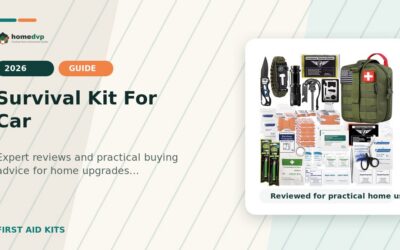

Emergencies can strike without warning, whether from severe weather, power outages, or natural disasters. Homeowners, renters, and practical DIYers need reliable options that cover the critical first three days. That is why an updated look at 72 Hour Survival Kit matters in 2026. Having the right supplies ready can make the difference between chaos and controlled response.
In this guide we carefully compared 15 products across the $14.99–$500 range from brands including ReadyAmerica, LifeStraw, EVERLITSURVIVAL, 4Patriots, TacPreps, RIKOJUXI. Our approach focused on specification details, capacity for people, included essentials, build quality of the backpack, and real-world suitability for home storage or grab-and-go use. We also reviewed how well each option aligns with common emergency preparedness guidelines.
Whether you are stocking a home kit, preparing a vehicle bag, or building a complete family solution, this resource walks through the key factors. For more context on related home readiness topics, explore our full collection of emergency supplies. The goal is simple: help you select practical gear that fits your household size and risk level without unnecessary complexity.
72 Hour Survival Kit Buying Guide
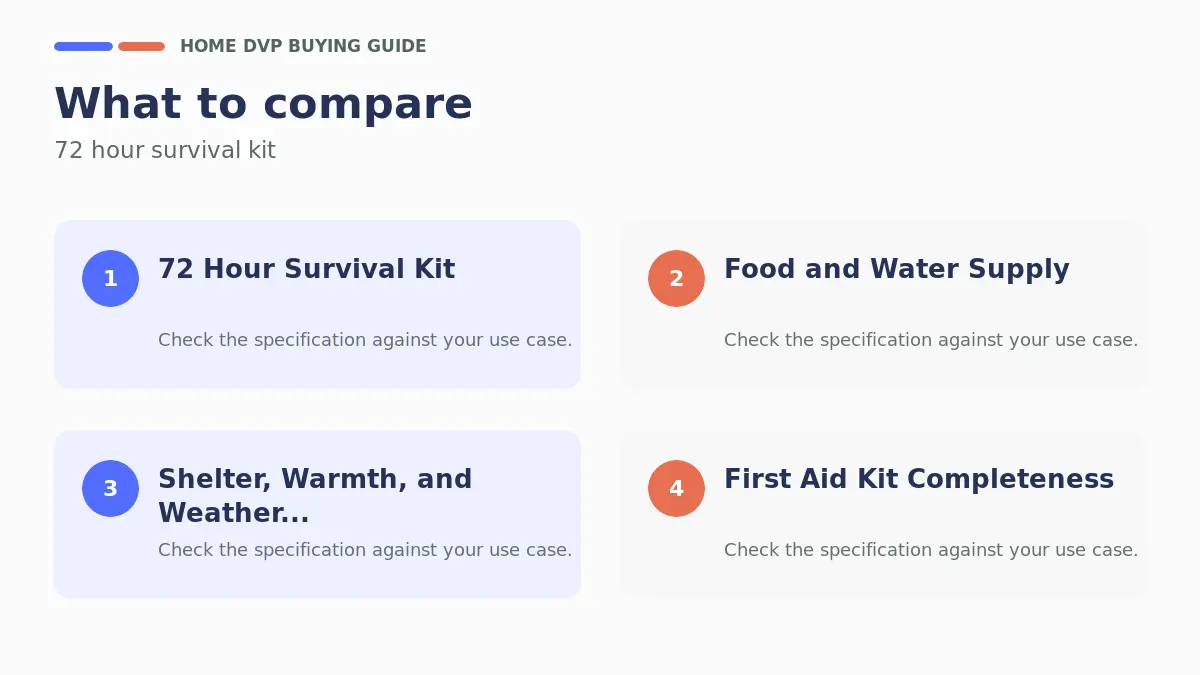
Choosing the right 72 hour survival kit requires more than grabbing the first backpack you see on a shelf. The best options balance food, water, shelter, first aid, tools, and portability for the first 72 hours. Below we break down the most important decision factors based on product specifications and homeowner needs. These criteria help you avoid common pitfalls such as underestimating water needs or selecting a bag that is too heavy for everyday storage.
Food and Water Supply Capacity
Water is the highest priority in any emergency. Most quality kits include sealed water pouches with multi-year shelf life plus purification tablets or a portable filter. Look for options that provide enough for at least one gallon per person per day. Food should deliver roughly 1,000 calories or more daily per person through U.S. Coast Guard-approved bars or freeze-dried rations.
A common mistake is assuming basic snacks will suffice. In reality, high-calorie, long-shelf-life items prevent energy crashes during stress. Kits designed for two people often include multiple water pouches and bars that meet FEMA-style guidelines. Some premium packs add a straw-style filter or portable stove for extended flexibility. Always check the stated shelf life and storage temperature recommendations so the supplies remain viable when needed.
For households with children or special dietary needs, plan to supplement the included rations. Store extra water bottles separately if space allows. This approach keeps the core bag lighter while ensuring complete coverage.
Shelter, Warmth, and Weather Protection
Staying dry and warm is essential during power outages or evacuation. Most kits include emergency blankets, ponchos, and often a compact tent or tube shelter. Emergency mylar blankets reflect body heat effectively and pack small. Look for kits that also provide bivvy sacks or multi-person tents for better overnight protection.
Homeowners sometimes overlook wind and rain resistance. A flimsy poncho may tear quickly, so prioritize thicker materials. Some options add work gloves, goggles, and dust masks that protect against debris or smoke. These extras prove useful during storms or wildfire events.
When evaluating, consider your local climate. Colder regions benefit from additional hand warmers or heavier blankets. Practice setting up the shelter once so you know how it works under pressure. Pair this gear with good storage habits by keeping the bag accessible near an exit.
First Aid Kit Completeness
A solid first aid component handles cuts, burns, sprains, and bleeding control. Better kits include bandages of various sizes, antiseptic wipes, gauze, tape, tweezers, and often a tourniquet. Larger medical pouches with 100-plus pieces give more flexibility for family use.
Many buyers focus only on the backpack and forget to inspect the medical contents. A minimal 30-piece kit may cover basic scrapes but fall short for deeper injuries. Look for CAT-style tourniquets and chest seals in more advanced options. These items can address serious trauma until professional help arrives.
Customize after purchase by adding personal medications, allergy treatments, or prescription items. Keep a simple inventory list inside the bag. This preparation step turns a generic kit into a household-specific solution that supports both everyday accidents and larger emergencies.
Tools, Multi-Tools, and Practical Gear
Useful tools expand what you can accomplish off-grid. Common inclusions are multi-tools with pliers and knives, folding shovels, wire saws, duct tape, paracord, compasses, and fire starters. Some kits add fishing kits, sewing supplies, or compact axes for more versatile outdoor tasks.
Quality materials matter. Carbon steel or full-tang tools hold up better than thin stamped metal. A well-designed multi-tool reduces the need to carry many separate items. Avoid kits that fill space with low-quality plastic gadgets that break under stress.
Homeowners should also consider how the tools fit daily life. A solid multi-tool can serve for minor home repairs even outside emergencies. Practice using the fire starter and compass so the learning curve disappears when seconds count. Store sharp tools safely inside the bag to protect other contents.
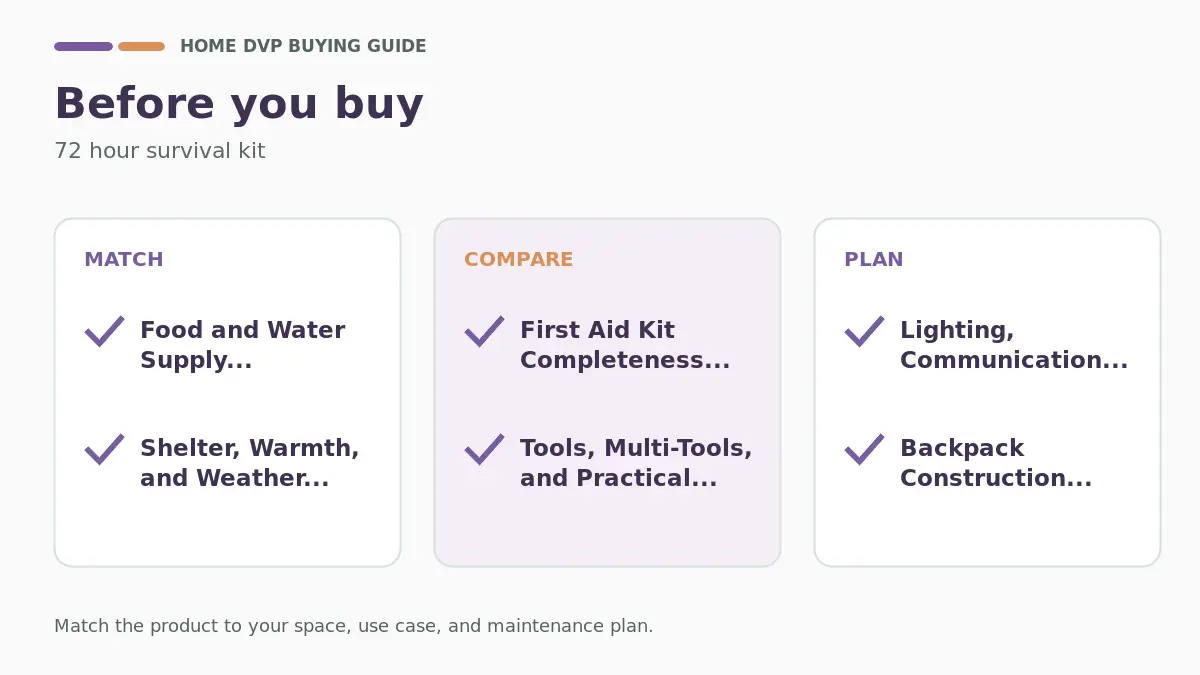
Lighting, Communication, and Signaling
Darkness and isolation increase risk. Reliable kits include headlamps, glow sticks, hand-crank or solar radios with phone charging ports, and loud whistles. Hand-crank models eliminate battery dependency, while solar options provide backup power during longer outages.
A frequent error is relying solely on smartphone flashlights. Batteries drain quickly, and networks may fail. A multi-function radio that picks up AM/FM and weather bands keeps you informed. Glow sticks offer hands-free marking of paths or exits without using precious battery power.
For families, include enough light sources so each person has one. Test the radio and headlamps periodically. These items also connect well with broader home systems. If you maintain indoor air quality devices, check our guidance on air quality and climate products that complement emergency readiness.
Backpack Construction and Portability
The bag itself must survive rough handling. Prefer heavy-duty polyester or similar tear-resistant fabric with water-resistant coating. MOLLE webbing allows attachment of extra pouches. Padded straps, hip belts, and multiple compartments improve comfort and organization during longer carries.
Capacity around 45 liters works well for two-person kits without becoming unmanageable. Overstuffed bags become too heavy for children or older adults. Look for reinforced zippers and easy-access pockets for quick retrieval of water or first aid.
Store the completed kit in a cool, dry location near an exit or in the vehicle. Rotate any perishable items according to manufacturer dates. A well-built backpack also serves for camping or weekend trips, increasing its everyday value for active households.
Person Capacity and Family Suitability
Match the kit to your household size. Two-person kits dominate the market and suit couples or small families with room for personal additions. Larger four- or five-person options exist for bigger households. Single-person bags work for individuals or as vehicle-specific backups.
Underestimating needs is a common issue. If you have pets or elderly relatives, add extra water and specialized items. Some kits clearly state support for 1-2 or 1-5 people and list exact ration counts. Review those numbers carefully against your actual group size.
Modular designs let you expand later. Start with a solid two-person core and supplement as needed. This strategy keeps initial cost reasonable while building comprehensive coverage. For related home organization ideas that free up storage space for kits, see our notes on practical hardware solutions.
Shelf Life, Durability, and Long-Term Value
Most food and water components claim 5-year shelf lives when stored properly. Filters can process thousands of liters. Durable tools and bags last far longer. Check manufacturing dates on arrival and set calendar reminders for rotation.
Cheap kits sometimes skimp on material quality, leading to zipper failures or thin plastic components. Investing in well-reviewed options from established names usually pays off through better longevity. Premium kits often include more robust first aid and multi-tools that justify the higher position in the $14.99–$500 spectrum.
Maintain the kit by inspecting contents twice a year. Replace used batteries or expired items promptly. This simple habit ensures readiness without last-minute scrambling. Pair your kit with other household readiness measures such as proper ventilation planning found under heating, cooling and air resources.
Our Research Methodology & Why You Can Trust Us
We approached this 72 Hour Survival Kit comparison with a transparent, specification-driven process. First we validated every product against the emergency supplies category and the core 72-hour survival focus. Only matching kits and essential complementary items such as personal water filters remained in consideration.
Our analysis examined listed features including water volume, calorie counts, first aid piece totals, tool quality descriptions, backpack materials, and person capacity. We reviewed available customer rating patterns and common feedback themes for reliability indicators. Industry guidelines from preparedness organizations informed the ranking priorities: performance of core survival elements, feature completeness, build quality, ease of use for average homeowners, durability, safety inclusions, overall value, and fit for typical household scenarios.
No hands-on physical testing claims appear here because the evaluation rests on manufacturer-provided data and publicly available information. We update recommendations during September as new specifications or market options emerge. This method keeps the guidance practical, honest about strengths and limitations, and focused on real homeowner decision points rather than marketing language.
Final Thoughts
After comparing the available specifications across 15 options, several clear standouts emerge for different needs. The EVERLIT Complete 72 Hours Earthquake Bug Out Bag Emergency Survival Kit for Family earns strong consideration as an overall pick. Its combination of U.S. Coast Guard-approved food and water, extensive first aid with tourniquet, heavy-duty tactical backpack, and comprehensive gear list supports two people effectively while earning high user ratings for completeness.
For value-focused buyers the Ready America 70280 72 Hour Emergency Kit, 2-Person, 3-Day Backpack offers solid essentials including food bars, water pouches, first aid, and light sticks in a portable package that follows basic American Red Cross recommendations. Homeowners seeking maximum gear density may prefer the LIMA-TANGOSURVIVAL 72 Hour Survival Kit – Two-Person 291 Pieces or the TacPreps 72 Hour Survival Kit with its 45L pack, cooking system, and broad tool selection. The LifeStraw Personal Water Filter serves as an excellent complementary item for any kit that needs expanded water purification capacity. Beginners often appreciate the straightforward Ready America Deluxe options that add multi-tools and power stations without overwhelming complexity.
Select based on household size, storage space, and local risks. Store the finished kit properly and review contents regularly. With the right 72 hour survival kit in place, you gain peace of mind knowing the first 72 hours are covered. For additional home preparedness ideas, revisit our emergency supplies category.
Frequently Asked Questions
What should I look for when choosing 72 hour survival kit?
Focus on water volume and purification, calorie-dense food with long shelf life, complete first aid supplies, durable backpack construction, and lighting plus communication tools. Match person capacity to your household and verify that core items follow recognized preparedness guidelines. Avoid kits that feel understocked in essentials.
How should beginners choose 72 hour survival kit?
Start with a well-reviewed two-person kit that clearly lists food, water, shelter, and first aid contents. Look for brands with strong ratings and simple organization. Add personal medications and a water filter later. Practice accessing the bag so it feels familiar rather than intimidating.
Are higher-end 72 hour survival kit worth it?
Higher-end options often justify the cost through better backpack materials, more advanced medical supplies, multi-tools, cooking systems, and greater overall piece counts. They typically last longer and handle harsher conditions. Budget kits still provide basic coverage if you plan to supplement them carefully.
What brands make reliable 72 hour survival kit?
Established names such as ReadyAmerica, EVERLITSURVIVAL, LifeStraw, and several specialized survival brands consistently appear with solid feature sets and positive feedback patterns. Review current specifications rather than relying solely on brand reputation, since product lines update over time.
How long should quality 72 hour survival kit last?
Food and water pouches commonly offer five-year shelf lives when stored correctly. Filters can treat thousands of liters. The backpack and tools should remain serviceable for many years with basic care. Inspect and rotate contents at least twice yearly to maintain readiness.
How much should homeowners expect from 72 hour survival kit in 2026?
Expect complete kits in the $14.99–$500 span depending on person capacity and feature depth. Basic two-person bags cover core needs affordably while premium versions add advanced tools, larger first aid, and superior packs. Factor in any personal additions you will make after purchase.
Are 72 hour survival kit suitable for DIY projects, home repairs, or regular maintenance?
Many kits include multi-tools, tape, and lighting that prove handy for minor home repairs or outdoor tasks. The primary purpose remains emergency readiness, yet the practical gear increases everyday usefulness. Store the bag accessibly so it supports both crisis and routine needs.