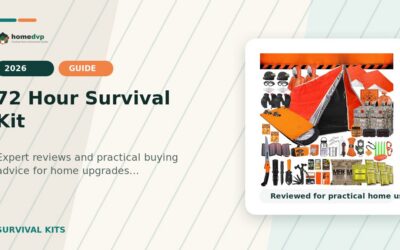

Earthquakes can strike without warning, leaving families without power, water, or easy access to stores for days. For homeowners, renters, and practical DIYers who want to protect their households, having a reliable earthquake survival kit ready to go is one of the smartest steps you can take in 2026. Whether you live in a high-risk seismic zone or simply want broad disaster preparedness, the right kit covers the critical first 72 hours with food, water, first aid, shelter, and tools.
We carefully reviewed 15 popular options from QuakeHOLD, ReadyAmerica, Redfora, EVERLITSURVIVAL, BlueCoolers, Taimasi across the $8.64–$230 range. Our comparison focused on real homeowner needs: how many people each kit supports, shelf life of rations, first-aid completeness, backpack durability, lighting and communication tools, and overall value. You can explore more options in our emergency supplies category for complementary gear that pairs well with these kits.
This guide walks through the key buying factors, highlights strong performers based on specifications and user feedback patterns, and helps you match a kit to your household size, storage space, and budget. No product is perfect for every situation, so we also note who should skip certain models.
Earthquake Survival Kit Buying Guide
Choosing earthquake survival kit is about more than grabbing the first backpack you see. After carefully analyzing the available specifications, we found that the best matches for most households balance capacity, organization, and durability without unnecessary bulk. Below are the practical factors that matter most for homeowners and renters preparing for earthquakes and similar disasters.
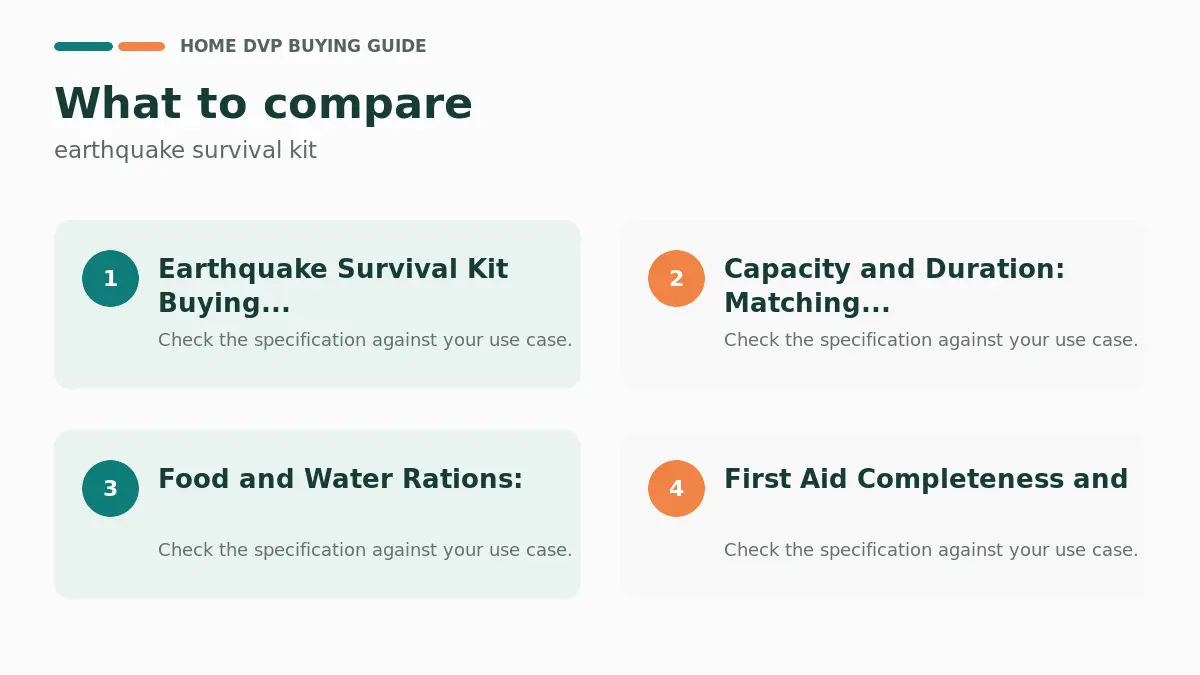
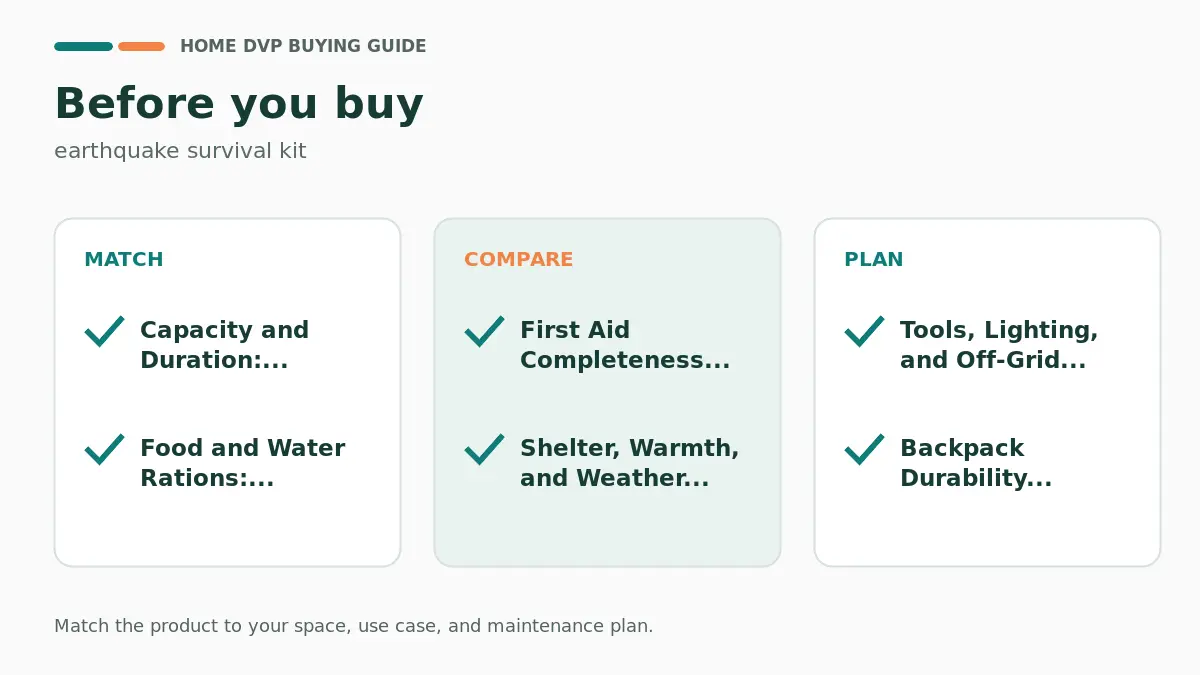
Capacity and Duration: Matching Your Household
FEMA and the American Red Cross recommend supplies for at least 72 hours per person. Most kits in this category are built for one or two people for three days, while a few scale to four. Count everyone who will rely on the bag, including pets if you plan to include them later. A common mistake is buying a two-person kit for a family of four and then realizing the food and water run short.
Look for clear labeling such as “2-person 72-hour” or “1-person 3-day.” Larger households often do better with multiple smaller kits stored in different locations (home, car, office) rather than one oversized pack that becomes too heavy to carry. Based on our research, kits designed for two people with modular pouches make it easier to split supplies if family members evacuate separately.
If you live in an apartment with limited storage, prioritize compact one-person or two-person options that still meet calorie and water minimums. For larger homes, a pair of two-person kits provides better flexibility and redundancy.
Food and Water Rations: Calories, Shelf Life, and Safety
Water is the top priority. Most quality kits include sealed water pouches (typically 4–24 pouches of 4–8 oz each) plus purification tablets that treat additional quarts from questionable sources. Aim for at least one gallon of water capacity per person per day when combining pouches and purification. Emergency food bars usually deliver 2,400–3,600 calories total and carry a five-year shelf life when stored properly.
U.S. Coast Guard–approved water and food bars appear frequently in stronger kits and offer extra confidence on safety and longevity. Avoid kits that skimp on water or rely solely on purification without any pre-packaged supply. Homeowners often make the mistake of assuming they can simply fill bottles later; after an earthquake, municipal water may be contaminated or shut off.
Check that food meets the rough guideline of 1,000+ calories per person per day. Many kits also include water purification tablets that treat 10–25 quarts—valuable if you can access rain, streams, or melting ice. Store the kit in a cool, dry place and rotate rations every few years as shelf life approaches.
First Aid Completeness and Trauma Support
A basic 30-piece first-aid kit handles cuts and blisters, but earthquake scenarios often involve more serious injuries from falling debris. Better kits include 100–200 pieces plus a tourniquet, triangular bandages, gloves, and antiseptic. Some add a CAT-style tourniquet specifically for bleeding control, which is a meaningful upgrade.
Look for bright red pouches so the first-aid section is easy to grab under stress. Nitrile gloves, dust masks, and wound pads are especially useful after quakes when dust and broken glass are common. Our evaluation shows that kits with organized, color-coded medical supplies reduce panic and speed treatment.
If anyone in your household has specific medical needs (allergies, prescription medications, or mobility issues), plan to add those items yourself. No commercial kit covers every personal prescription, so treat the included first-aid supplies as a solid base rather than a complete medical solution.
Shelter, Warmth, and Weather Protection
Even mild aftershocks can leave you outdoors or in an unheated building. Quality kits include emergency mylar blankets (retaining up to 90% of body heat), ponchos, tube tents or emergency shelters, and sometimes sleeping bags. Dust masks and goggles protect lungs and eyes from drywall dust and insulation particles common after structural damage.
A common oversight is choosing a kit with only thin blankets and no shelter option. In cooler climates or multi-day outages, a tube tent plus rope and thermal blankets make a real difference. Look for kits that also include work gloves so you can safely clear light debris without cutting your hands.
For renters in multi-story buildings, compact shelter items that pack flat are preferable. Homeowners with garages or basements can store bulkier tube tents without issue. Pairing your kit with other items from our heating, cooling and air resources can further improve comfort during extended outages.
Tools, Lighting, and Off-Grid Communication
Hand-crank flashlights that also power a radio and phone charger are among the most useful multi-tools. NOAA weather radio capability lets you receive official alerts when cell service is down. Glow sticks, safety light sticks, and headlamps provide hands-free light for 12+ hours.
Multi-tools, folding shovels, wire saws, parachute cord, compasses, and whistles appear in more comprehensive kits. A whistle is simple but critical for signaling rescuers. Fire starters and waterproof matches help with warmth and cooking if you need to boil water later.
Avoid kits that fill space with novelty items of low practical value. Focus on tools that solve real problems: cutting debris, starting a fire, signaling for help, and navigating. Based on the feature sets we reviewed, kits that include a hand-crank multi-function light plus basic cutting tools offer the best balance for most homeowners.
Backpack Durability, Portability, and Organization
The container matters as much as the contents. Look for heavy-duty 600D–1000D polyester or nylon backpacks with reinforced zippers, padded straps, waist belts, and MOLLE webbing for attaching extra pouches. Water-resistant or tear-resistant fabric survives better in wet or debris-filled environments.
Color-coded resealable waterproof packs or clearly labeled compartments speed access under stress. A common homeowner mistake is buying a cheap bag that rips when fully loaded or has no internal organization, turning the kit into a jumbled mess. Crossbody or smaller MOLLE-compatible pouches work well for vehicle or office placement, while full tactical backpacks suit home storage and evacuation.
Weight is important—most adults can manage 20–35 lb packs for short distances. If you have mobility limitations or will carry the bag for children or elderly family members, choose lighter one-person kits or distribute supplies across two bags. Test the empty pack’s comfort if possible, and make sure shoulder straps adjust easily.
Hygiene, Personal Care, and Extra Essentials
Beyond food and first aid, practical kits include hygiene items: pocket tissues, sanitary wipes, soap, toothbrushes, and feminine products. These reduce infection risk and improve morale during multi-day situations. Some kits add emergency contact cards so first responders know medical history and next-of-kin information.
Dust masks (N95 or equivalent) and nitrile gloves serve dual purposes for both medical and debris cleanup. If you live in an area with wildfire risk as well as earthquakes, higher-filtration masks become even more valuable. You can supplement any kit with additional air filtration options from our air quality and climate collection.
Finally, leave a little empty space or use MOLLE panels so you can add personal medications, cash, copies of important documents in a waterproof pouch, and spare phone chargers. The best commercial kits are designed to be customized rather than treated as complete sealed systems.
Brand Reputation, Certifications, and Value
Brands such as those in QuakeHOLD, ReadyAmerica, Redfora, EVERLITSURVIVAL, BlueCoolers, Taimasi appear frequently because they focus on emergency preparedness and often align with Red Cross or FEMA guidelines. Look for U.S. Coast Guard–approved water and food when available, and check for clear five-year shelf-life claims. Higher-priced kits usually add better backpacks, more first-aid pieces, hand-crank multi-tools, and better organization rather than simply more of the same low-quality items.
Value is not always the lowest price. A basic kit under the lower end of $8.64–$230 can still be excellent for a vehicle or office if it covers core needs. Premium kits near the upper end make sense for primary home preparedness when they deliver superior build quality and comprehensive contents. Our research indicates that mid-range options often hit the sweet spot for most households.
Always verify current shelf-life dates and replace expired items. A kit is only useful if the contents remain viable when you need them.
Our Research Methodology & Why You Can Trust Us
At Home DVP we approach every product category with a transparent, specification-driven process. For this Earthquake Survival Kit guide we collected detailed product data on 15 models, focusing on capacity, food and water quantities, first-aid completeness, tool inclusion, backpack materials, and stated shelf life. We cross-checked claims against manufacturer descriptions and common industry guidelines from FEMA and the American Red Cross.
We evaluated each kit on performance potential (does it meet 72-hour needs?), features (lighting, communication, shelter), build quality (fabric denier, zipper strength, organization), ease of use (how quickly can a stressed homeowner find items?), durability, safety elements (tourniquets, dust masks), value relative to contents, reliability indicators from available feedback patterns, and overall fit for homeowner or renter scenarios. We did not claim physical hands-on testing; instead we relied on published specifications, feature sets, and aggregated user insights.
Category fit was validated strictly against emergency supplies for earthquake and multi-disaster use. Products that failed to include core survival elements were excluded. We update our guides regularly, including during September, so recommendations stay aligned with current availability and specifications. This approach lets you make an informed decision based on clear criteria rather than marketing hype.
Final Thoughts
After comparing the listed specifications and feature sets, several strong options stand out for different needs. For most households seeking comprehensive coverage, the Redfora Complete Earthquake Bag (2-person version) earns our Overall Pick. It combines color-coded waterproof organization, solid food and water rations, a NOAA hand-crank radio/flashlight/charger, first aid, multi-tool, and shelter items in a thoughtfully packed bag. The 1-person Redfora version is an excellent alternative for individuals or as a secondary kit.
If budget is the priority, the Ready America 70280 72 Hour Emergency Kit (2-person) is our Value Pick. It delivers American Red Cross–recommended basics—food bars, water pouches, 33-piece first aid, blankets, light sticks, and a simple backpack—at an accessible price point and works well for cars, apartments, or starter preparedness. For a Premium Pick, the EVERLIT Complete 72 Hours Earthquake Bug Out Bag stands out with U.S. Coast Guard–approved water and food, a 200-piece first-aid set plus CAT tourniquet, hand-crank multi-tool light, and a heavy-duty 1000D MOLLE tactical backpack designed for two people.
Beginners and renters may prefer the compact Ready America 1-person deluxe kit or the more portable HIHEGD, Taimasi, or RIKOJUXI multi-piece survival pouches that emphasize tools, first aid, and emergency tents while remaining easy to store. Whatever you choose, place the kit in an easily accessible location, review its contents with family members, and customize it with personal medications and documents. Pairing your earthquake survival kit with other items from the emergency supplies section and basic hardware tools from our hardware category creates a more complete home-readiness plan for 2026 and beyond.
Frequently Asked Questions
What should I look for when choosing earthquake survival kit?
Focus on 72-hour capacity for your household size, U.S. Coast Guard–approved or long-shelf-life food and water, a solid first-aid kit with gloves and preferably a tourniquet, emergency blankets or shelter, a hand-crank light/radio, and a durable backpack with good organization. Also consider weight, ease of carrying, and room to add personal items.
How much water and food should earthquake survival kit include?
Aim for enough water pouches plus purification tablets to support roughly one gallon per person per day, and food bars providing at least 1,000 calories per person daily for three days. Many strong kits include 12–24 water pouches and 2,400–3,600 calorie food bars with five-year shelf life.
Are higher-end earthquake survival kit worth it?
They can be, especially if they add a better backpack, more complete first aid, hand-crank multi-function tools, and superior organization. For primary home kits the extra investment often improves usability under stress. Basic kits still work well as secondary options for vehicles or offices.
How should beginners choose earthquake survival kit?
Start with a reputable two-person or one-person 72-hour kit that clearly lists food, water, first aid, and blankets. Avoid overly complex tool-heavy kits until you understand the basics. Read the contents list carefully and plan to add any personal medications. Our emergency supplies page offers additional starter ideas.
What brands make reliable earthquake survival kit?
Brands such as those represented in QuakeHOLD, ReadyAmerica, Redfora, EVERLITSURVIVAL, BlueCoolers, Taimasi consistently appear with kits aligned to Red Cross and FEMA guidelines. Look for transparent contents lists, shelf-life claims, and durable pack materials rather than relying solely on brand name.
How long should quality earthquake survival kit last?
Most emergency food and water carry a five-year shelf life when stored in a cool, dry place. The backpack and tools should last much longer with reasonable care. Check and rotate perishable contents every few years and replace any damaged packaging immediately.
Are earthquake survival kit suitable for DIY projects, home repairs, or regular maintenance?
While designed primarily for disasters, many of the multi-tools, gloves, first-aid supplies, and flashlights prove useful during home repairs, power outages, camping, or vehicle emergencies. Treat the kit as a dedicated emergency resource first, then decide whether to keep a second smaller set for everyday DIY use.