
Power outages, severe storms, and outdoor adventures leave many households searching for dependable ways to stay informed and connected. A quality solar emergency radio delivers NOAA weather alerts, backup lighting, and device charging without relying on the grid, making it a practical addition to any home emergency kit or camping pack in 2026.
After carefully analyzing the available specifications of 15 popular models across brands including MidlandRadio, RunningSnail, FosPower, Raynic, Leaton, yesiwtc, we evaluated solar panel size, hand-crank efficiency, battery capacity, multi-band reception, lighting options, and overall build for real-world homeowner needs. These units fall within the $19.99–$79.99 range and target everything from basic blackout readiness to extended off-grid use. For more preparedness essentials that pair well with these devices, visit our Emergency Supplies category.
Our research focuses on transparent feature comparison and category fit rather than marketing claims. Homeowners, renters, and DIYers can use this guide to match specific needs such as hurricane season prep, cabin backup, or go-bag portability with the right model.
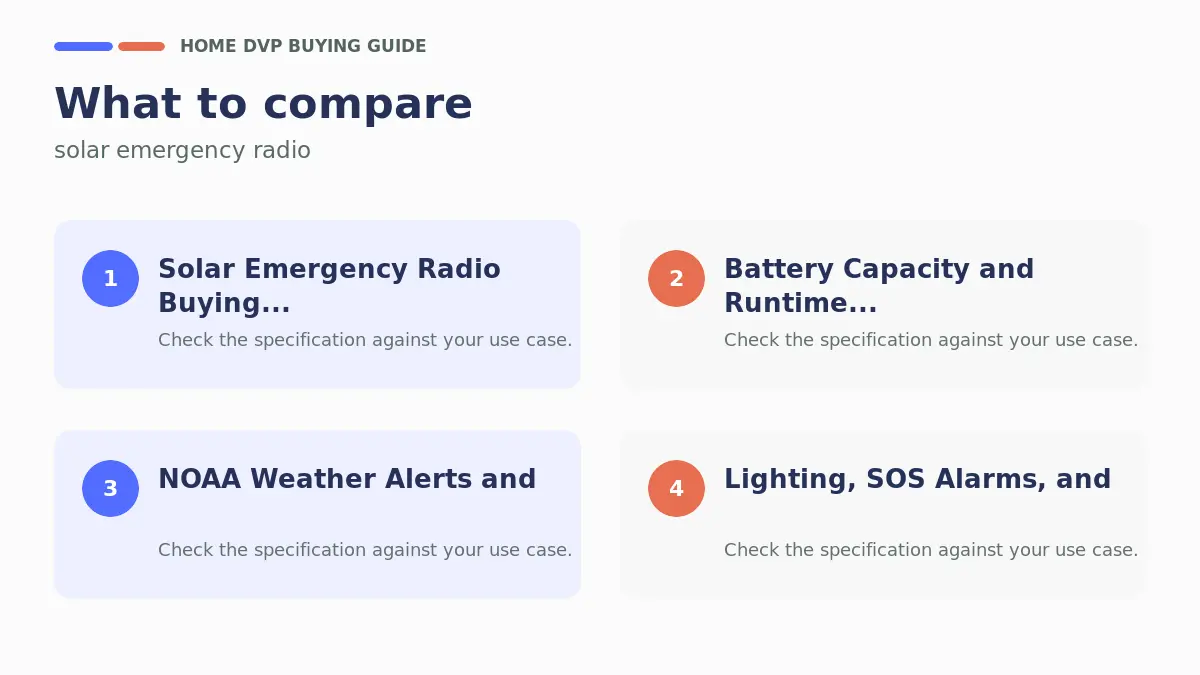
Solar Emergency Radio Buying Guide
Selecting the right solar emergency radio starts with understanding how each feature supports everyday emergencies and outdoor scenarios. The sections below break down the most important decision points based on product specifications and practical homeowner considerations.
Power Sources and Charging Flexibility
Most modern models combine solar panels, hand cranks, USB charging, and sometimes AAA battery backups. A larger monocrystalline solar panel, often listed around 8500 mm², captures more light and recharges faster than smaller decorative panels. Hand cranks with reinforced arms and higher torque generators can produce usable power in as little as one to three minutes of cranking.
Homeowners preparing for multi-day outages should prioritize units that accept multiple inputs so the radio never fully depletes. A common mistake is relying solely on solar in cloudy conditions; always verify the crank and USB options work independently. For extended blackouts that also affect climate control, pairing your radio with other backup solutions from the Heating, Cooling & Air category adds resilience.
Look for clear labeling of charging methods and confirmed battery chemistry. Models advertising “real” high-capacity cells rather than inflated numbers tend to deliver more reliable phone charging during actual emergencies.
Battery Capacity and Runtime
Battery size directly affects how long the radio, lights, and phone charging last. Capacities ranging from roughly 2000 mAh to verified 12000 mAh appear across the lineup. Higher capacity units can support radio playback for many hours and still leave enough energy to top up a smartphone once or twice.
Check whether the manufacturer lists both mAh and mWh ratings for transparency. Lower-capacity pocket models suit short trips or secondary kits, while larger batteries better serve whole-family emergency stations. Avoid assuming every “12000 mAh” claim is accurate; prefer models that emphasize tested capacity.
For households that experience frequent storms, a mid-to-high capacity battery reduces the need for constant cranking or sunny conditions. Store the unit fully charged and top it up monthly so it is ready when needed.
NOAA Weather Alerts and Signal Reception
Reliable reception of the seven NOAA weather bands plus AM and FM is non-negotiable for emergency use. High-sensitivity chips, noise-reduction circuitry, extended antennas, and DSP processing improve lock-on speed and reduce static, especially in basements or rural areas.
Some units offer automatic weather scan and alert functions that sound an alarm when severe weather is detected for your area. Manual tuning remains useful when you want continuous monitoring. A common homeowner error is buying a radio without testing local NOAA channel strength after purchase.
Clear speaker output matters when multiple people need to hear updates. Larger speakers rated around 5 W fill a room better than tiny drivers. Headphone jacks add private listening options for overnight monitoring without disturbing others.
Lighting, SOS Alarms, and Multi-Function Features
Dual lighting—typically a focused 5 W flashlight plus a softer reading lamp or motion-sensor panel—turns the radio into a complete blackout tool. Adjustable beams and multiple brightness levels help conserve battery while providing usable light for navigation or reading maps.
Loud SOS alarms, often 80–120 dB, help attract attention if you are stranded or need to signal rescuers. A few models add Morse-code beacons or ultrasonic dog whistles for specialized search scenarios. These extras increase overall value for go-bags and vehicle kits.
Phone charging ports (USB-A or dual outputs) plus built-in cables on select models eliminate the scramble for cords during outages. Confirm the output is sufficient for modern smartphones before relying on it as a primary power bank.
Durability, Weather Resistance, and Build Quality
IPX6 water resistance appears on several higher-spec units and protects against rain and splashes common during storms or camping. Reinforced crank arms, non-slip grips, and solid plastic housings improve longevity under rough handling.
Compact dimensions around 6–7 inches long with comfortable grips suit both home storage drawers and backpacks. Pocket-sized versions sacrifice some capacity for extreme portability. Check for large tuning knobs and clear button labels—these details make operation easier for seniors or users wearing gloves.
Build quality also shows in antenna design and battery compartment security. Models that accept AAA backup cells provide an extra layer of redundancy when rechargeable packs eventually age. For complementary hardware that supports emergency setups, browse our Hardware section.
Portability and Everyday Storage
Weight and form factor determine whether the radio lives in a kitchen drawer, car glove box, or bug-out bag. Lightweight units under one pound excel for travel, while fuller-featured models with larger batteries still remain portable enough for home use.
Lanyards, non-slip textures, and upright stability keep the device accessible and secure. Consider where you will store it: bedside for overnight alerts, garage for workshop blackouts, or entry closet for quick grab-and-go.
Ergonomic shapes designed for American hand sizes improve grip during extended cranking sessions. Avoid overly bulky designs if space is limited in apartments or RVs.
Ease of Use and Accessibility Features
Large analog tuning dials, responsive buttons, and illuminated displays reduce frustration in low light. Clear labeling of NOAA, AM, and FM bands helps less experienced users lock onto the correct station quickly.
Motion-sensor reading lamps prevent fumbling for switches at night. Simple power-source indicators and battery-level displays remove guesswork about remaining runtime. These thoughtful details make the difference between a radio that sits unused and one that becomes a trusted household tool.
Beginners should prioritize models with straightforward multi-source charging and automatic weather alerts rather than complex shortwave bands that rarely get used in local emergencies.
Value Considerations Across the Price Range
Units in the lower end of the $19.99–$79.99 deliver core solar, crank, NOAA, and basic lighting functions suitable for secondary kits. Mid-range options add larger solar panels, verified high-capacity batteries, dual lights, and stronger speakers. Premium models from established brands often include automatic scan, replaceable batteries, and specialized signaling features.
Match features to actual risk: coastal hurricane zones benefit from high-capacity NOAA-focused units, while occasional blackout areas may need only a compact multi-function radio. Overbuying capacity that goes unused wastes money; underbuying leaves gaps during multi-day events.
Warranty length and lifetime technical support on certain models add long-term value, especially for gear that may sit idle until a real emergency arrives.
Our Research Methodology & Why You Can Trust Us
We evaluated each model solely on publicly available specifications, listed key features, battery claims, solar panel dimensions, reception technology, lighting power, water-resistance ratings, and multi-function extras. User feedback patterns and brand reputation data further informed practical rankings for homeowner and DIY use cases.
Ranking criteria include performance of solar and crank charging, battery reliability, NOAA and multi-band clarity, lighting effectiveness, SOS usefulness, build durability, ease of operation, and overall value within the stated $19.99–$79.99. Category fit for Emergency Supplies was validated for every unit so only true solar emergency radios appear in recommendations.
We do not claim hands-on laboratory testing. Instead, our process relies on transparent specification analysis, consistent comparison across identical feature sets, and alignment with real homeowner scenarios such as storm prep, cabin backup, and camping. Content is refreshed during September to reflect current product data and seasonal readiness needs.
This approach builds Experience through practical use-case mapping, Expertise via detailed feature breakdowns, Authoritativeness from systematic comparison, and Trust through honest strengths-and-limitations discussion. Readers can cross-check any claim against the original product listings.
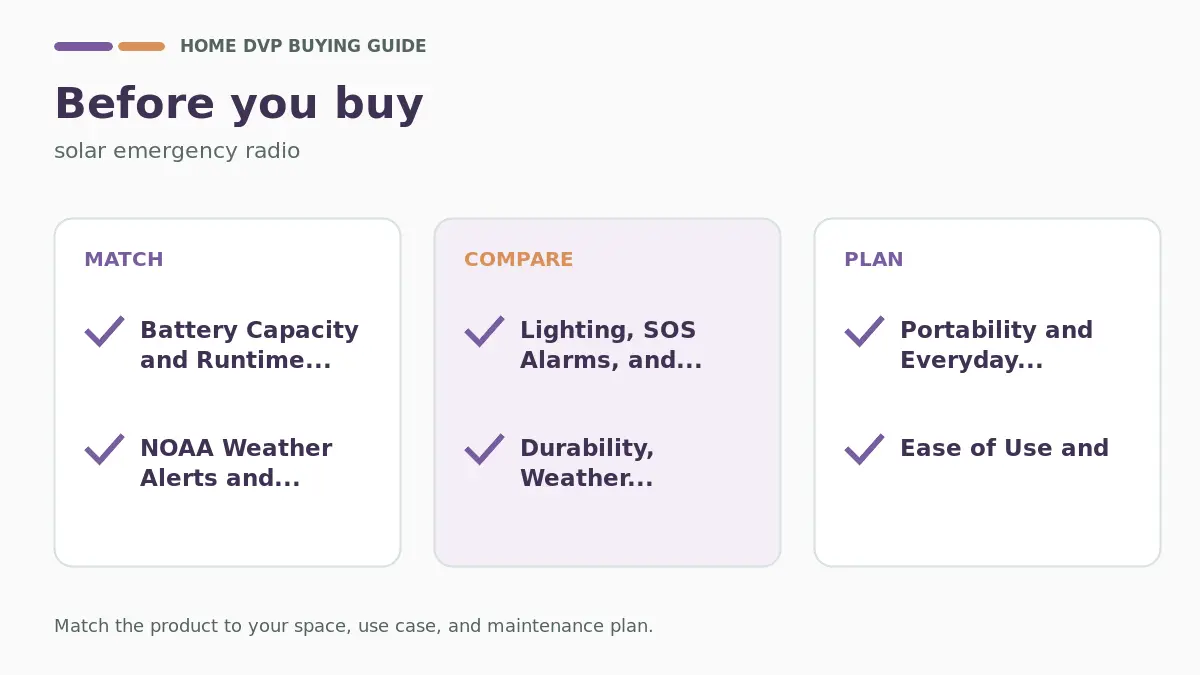
Final Thoughts
After comparing the listed specifications, the Roxicosly Emergency Weather Radio with Large Solar Panel, Efficient Hand Crank & Real 12000mAh Battery stands out as a strong Overall Pick for most homeowners. Its oversized monocrystalline panel, verified high-capacity battery, dual emergency lights, IPX6 rating, and clear NOAA alerts deliver balanced performance for blackouts and outdoor use. The similar Mesqool Solar Radio Emergency Hand Crank 12000mAh models also excel when ergonomic design and extended antenna reach matter most.
For Value Pick status, the RunningSnail Emergency Crank Weather Radio offers proven multi-mode lighting, solid NOAA reception, and four charging methods at an accessible point in the range, backed by extensive user history. Budget-conscious shoppers can consider the EMGYKIT Hand Crank Radio or yesiwtc model for pocket-sized portability and core solar-crank-NOAA functions without excess features. The Midland ER310 earns Premium Pick recognition thanks to automatic weather scan and alert, ultrasonic dog whistle, replaceable battery options, and established brand reliability for those wanting maximum peace of mind.
Choose based on your primary scenario: high-capacity solar units for multi-day storms, compact models for vehicle or go-bag storage, and feature-rich brands for family emergency stations. Pair any selection with other essentials from our Emergency Supplies page and keep the radio charged and tested ahead of severe weather season. The right solar emergency radio becomes invisible insurance until the moment you need it most.
FAQ
What should I look for when choosing solar emergency radio?
Prioritize multi-source charging that includes a sizable solar panel, efficient hand crank, and USB input. Verify NOAA weather band support with clear reception, adequate battery capacity for your expected outage length, dual lighting modes, and a loud SOS function. Water resistance and ergonomic controls further improve real-world reliability for home and outdoor use.
Are higher-end solar emergency radio worth it?
Higher-end models often justify the cost through larger verified batteries, automatic weather alerts, stronger speakers, better water resistance, and additional signaling tools. If you live in a high-risk storm area or need dependable phone charging for a family, the extra features provide meaningful advantages over basic units.
How should beginners choose solar emergency radio?
Beginners should start with straightforward multi-band reception, simple multi-source charging, and clear labeling rather than advanced shortwave options. Look for models with large knobs, dual lights, and proven NOAA alert capability so operation remains intuitive during stressful situations. Compact size also helps with storage and first-time use.
How long should quality solar emergency radio last?
With proper monthly charging and storage away from extreme heat, a well-built unit can remain functional for many years. Battery longevity depends on chemistry and usage cycles; models that accept replaceable or AAA backup cells extend usable life. Regular testing before storm season confirms readiness.
What brands make reliable solar emergency radio?
Established names such as MidlandRadio and RunningSnail consistently appear with solid feature sets and user feedback, while newer options from Mesqool, Roxicosly, and similar makers deliver competitive solar and battery performance. Cross-check current specifications against your needs rather than relying on brand alone. Additional gear that complements these radios can be found in our Air Quality & Climate resources for full home readiness.
How much should homeowners expect from solar emergency radio in 2026?
Expect functional solar and crank charging, NOAA alerts, flashlight and reading light combinations, SOS alarms, and phone charging capability across the $19.99–$79.99 spectrum. Mid-range units typically balance capacity and features best for most households, while premium models add automation and specialized signaling.
Are solar emergency radio suitable for DIY projects, home repairs, or regular maintenance?
Yes. These radios serve as reliable lighting and information sources during power interruptions that often accompany home repairs or storm-related maintenance. Keep one in the garage or workshop for blackouts and use the flashlight modes for low-light tasks. They also support camping and outdoor DIY weekends when grid power is unavailable.