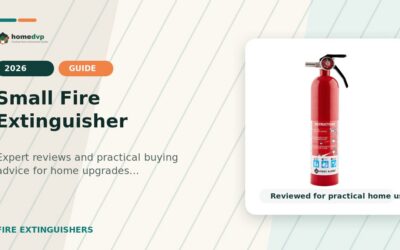

Every homeowner, renter, and DIYer needs reliable fire protection ready at a moment’s notice. Kitchen grease fires, electrical faults, and ordinary combustibles can escalate quickly, which is why having the right abc fire extinguisher on hand makes a critical difference. In 2026, multipurpose units remain the most practical choice for residential spaces because they address the most common household fire types without requiring specialized agents for everyday risks.
After carefully analyzing the available specifications of 15 models from Amerex, FirstAlert, Ougist, AmzBoom, Sagafe across the $17.45–$400 spectrum, we put together this updated guide. Our comparison focused on UL ratings, capacity, construction materials, ease of activation, recharge options, and real-world homeowner suitability rather than marketing claims. Whether you are outfitting a new home, updating older units, or adding coverage for a garage and vehicle, the right selection starts with clear criteria.
This guide sits within our broader collection of emergency supplies resources and complements related home safety topics. We evaluated each option against consistent ranking factors so you can match a unit to your space, skill level, and maintenance preferences with confidence.
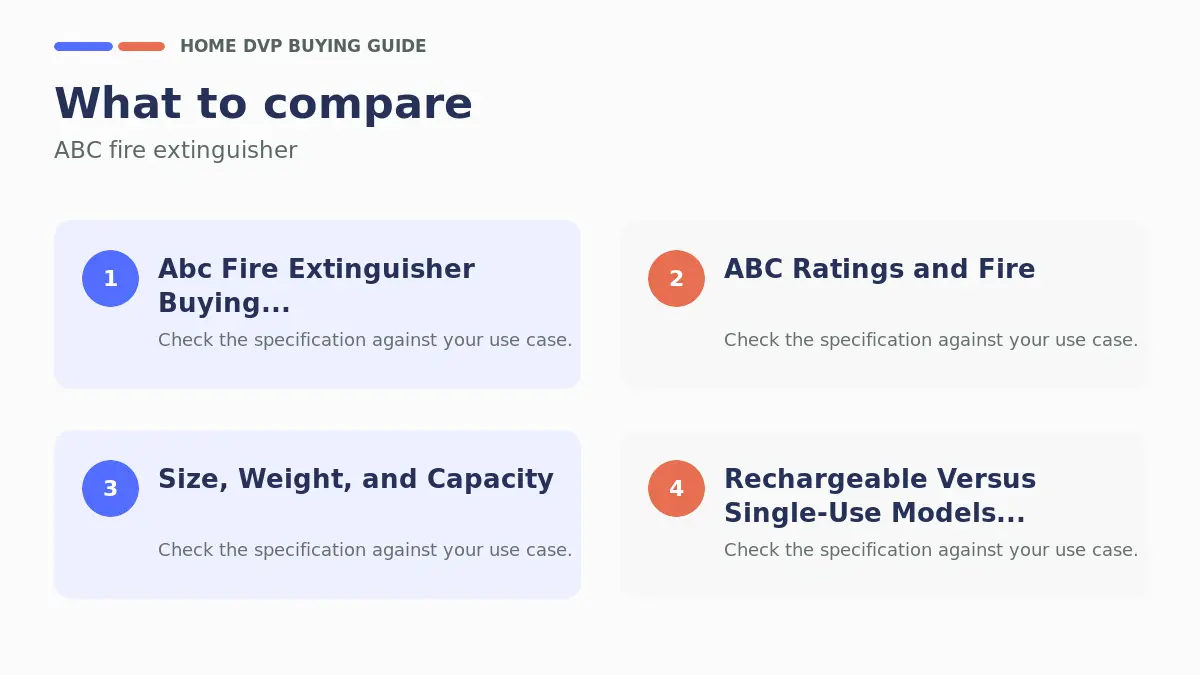
Abc Fire Extinguisher Buying Guide
Choosing abc fire extinguisher requires more than grabbing the first red cylinder on the shelf. Homeowners often make avoidable mistakes such as selecting an undersized unit for a large kitchen, ignoring pressure gauge condition, or placing the extinguisher where it cannot be reached during a fire. The following criteria help you evaluate options based on specifications and practical home use.
Understanding ABC Ratings and Fire Classes
ABC dry chemical units are designed for three common fire classes. Class A covers ordinary combustibles such as wood, paper, cloth, and trash. Class B addresses flammable liquids and gases including grease, oil, gasoline, and solvents. Class C handles energized electrical equipment. A multipurpose abc fire extinguisher with a clear UL rating such as 1-A:10-B:C or higher provides the broadest residential coverage.
Higher numbers before the letters indicate greater firefighting capacity. For example, a 2-A:10-B:C unit generally offers more Class A suppression power than a 1-A model of similar size. Many homeowners overlook this distinction and later discover their unit is better suited to a small apartment than a multi-story house with a workshop. Always match the rating to the size of the potential fire risk in each area of the home.
A common mistake is assuming any red extinguisher works on every fire. Water-based units can spread grease fires, and CO2 models may not handle Class A materials effectively. Stick with verified ABC ratings for whole-home readiness, and consider specialized agents only for dedicated kitchen or industrial zones if needed.
Size, Weight, and Capacity Considerations
Residential abc fire extinguisher options typically range from compact 2.5 lb units to heavier 5 lb or larger models. Smaller sizes fit easily under a sink, in a vehicle, or on a wall bracket in a hallway. Larger capacities provide longer discharge times and greater range, which can be decisive when a fire has already grown beyond the initial stage.
Weight matters for usability. A unit that is too heavy for smaller adults or older household members may go unused in an emergency. Look for models with easy-grip handles and balanced design so that anyone who might need to operate it can do so without struggle. For most kitchens and living areas, a 2.5 lb to 5 lb agent weight strikes a practical balance between portability and power.
Consider multiple units rather than one oversized extinguisher. Placing compact options near high-risk zones such as the kitchen, garage, and laundry room improves response time. This approach also supports layered protection that complements other items in your hardware and safety toolkit.
Rechargeable Versus Single-Use Models
Some abc fire extinguisher designs can be recharged by a certified professional after use or after a pressure drop. Others are intended for single use and must be replaced entirely once discharged. Rechargeable models often feature all-metal valves and commercial-grade construction, making them attractive for homeowners who prefer long-term ownership and lower replacement frequency.
Single-use units tend to cost less upfront and require no maintenance beyond periodic visual checks. They suit renters, secondary locations, or anyone who wants a simple grab-and-go solution. The trade-off appears after any discharge: the entire unit becomes scrap and must be replaced promptly to restore protection.
Evaluate your willingness to schedule professional recharging services. If you live in an area with limited fire equipment service providers, a disposable model may prove more convenient. Always confirm the service-life rating, commonly 12 years for many residential units, and mark the purchase or manufacture date for future reference.
Ease of Use and Activation Features
In a fire emergency, simple operation saves critical seconds. Look for models with a clear pull pin, safety seal, and straightforward lever or patented quick-release handle. Some newer designs eliminate twisting motions so that teens, seniors, or anyone under stress can activate the unit without fumbling.
Practice the PASS method mentally: Pull the pin, Aim at the base of the fire, Squeeze the handle, and Sweep from side to side. Units with easy-to-read pressure gauges (arrow in the green zone means ready) allow quick pre-use checks. Color-coded metal gauges resist corrosion better than plastic alternatives in humid kitchens or garages.
A frequent homeowner error is storing the extinguisher without reviewing the label instructions. Waterproof labels with large print improve readability under smoke or low light. Mount the unit at a reachable height and ensure the path to it stays clear of clutter. These small habits turn a good product into an effective tool when seconds count.
Build Quality, Materials, and Durability
All-metal construction with commercial-grade valves generally outlasts units that rely heavily on plastic components. Metal valves and triggers better withstand accidental bumps and temperature swings. Corrosion-resistant finishes and pressure gauges help the unit remain serviceable in damp environments such as basements or near water heaters.
Dry chemical agents, typically monoammonium phosphate, coat Class A surfaces and interrupt the chemical reaction of Class B and C fires. The quality of the powder and the nozzle design influence discharge consistency and range. Models listing a 12-18 foot range and 13-15 second discharge time give a practical sense of coverage for residential rooms.
Inspect wall brackets or mounting hardware included with the unit. A secure mount prevents the extinguisher from tipping and keeps it visible. For vehicle or boat use, confirm U.S. Coast Guard approval or equivalent when relevant. Durable units also tend to pair well with other home systems such as those found in heating, cooling and air maintenance routines that reduce fire risks.
Placement, Mounting, and Accessibility
Location determines usefulness. Position at least one abc fire extinguisher near the kitchen exit path so you can grab it while escaping if needed. Additional units belong in the garage, near the furnace or water heater, and on each living level of multi-story homes. Keep units out of direct heat sources and away from potential fire origins that could block access.
Wall hooks or brackets should place the handle roughly 3.5 to 5 feet above the floor for most adults. Avoid storing extinguishers inside cabinets where they can be forgotten or delayed by doors. Compact spray-style models can fit in drawers or glove compartments, but traditional cylinders perform better when wall-mounted and immediately visible.
Review local codes if you manage a rental property or small workshop. Some jurisdictions set minimum rating requirements for commercial-residential hybrid spaces. Clear placement also supports household emergency drills and pairs naturally with other preparedness items listed under emergency supplies.
Certifications, Safety Standards, and Compliance
Prioritize UL-listed models with clearly printed ratings. UL testing verifies that the unit meets performance standards for the claimed fire classes and capacity. Additional marine approvals add versatility for boat owners. Look for units that include a metal pull pin with a tamper seal to discourage accidental discharge or unauthorized handling.
Manufacturer warranties of 6 years or longer signal confidence in materials and assembly. Service-free designs lasting up to 12 years reduce the need for frequent professional inspections, although visual gauge checks remain essential. Avoid unlabeled or uncertified units that may fail when needed most.
For households concerned with air quality after use, note that dry chemical agents create residue that requires thorough cleanup. Plan accordingly and keep windows or ventilation options in mind as part of broader air quality and climate considerations after any incident.
Maintenance, Inspection, and Longevity
Even the best abc fire extinguisher needs periodic attention. Check the pressure gauge monthly to confirm the needle sits in the green zone. Inspect the pin, seal, nozzle, and exterior for damage or corrosion. Shake dry chemical units gently a few times a year to prevent packing of the agent.
Replace or recharge any unit that has been used, even partially, or that shows low pressure. Mark the manufacture or purchase date and replace according to the manufacturer service-life guidance, typically after 12 years for many residential models. Never attempt to refill a disposable unit yourself.
Keep a simple log or set calendar reminders. Proper maintenance ensures the extinguisher remains ready and extends the value of your purchase across many seasons of home ownership. Pair this habit with routine checks of smoke alarms and other safety equipment for complete readiness.
| Feature | What to Look For | Why It Matters |
|---|---|---|
| UL Rating | 1-A:10-B:C or higher | Confirms multipurpose capability and capacity |
| Construction | All-metal valve and gauge | Improves durability and reliability |
| Recharge Option | Professional recharge available | Supports long-term reuse after discharge |
| Gauge | Color-coded metal, easy to read | Allows quick readiness checks |
| Mounting | Wall bracket or hook included | Ensures visible and accessible storage |
Our Research Methodology & Why You Can Trust Us
We evaluated the 15 models by comparing published specifications, UL ratings, construction details, discharge characteristics, and feature sets side by side. Our process included reviewing manufacturer documentation for materials, agent type, pressure indicators, mounting hardware, and warranty terms. We also examined user-facing feedback patterns for recurring comments on ease of use, gauge reliability, and long-term condition without relying on unverified personal testing claims.
Ranking criteria covered performance potential based on ratings and capacity, feature completeness, build quality indicators such as metal valves and corrosion resistance, ease of activation and handling, durability expectations, safety certifications, overall value within the $17.45–$400 range, and fit for typical homeowner or renter scenarios. Category fit validation confirmed every discussed product functions as an ABC multipurpose extinguisher suitable for residential emergency use.
This guide receives regular reviews during September and throughout 2026 to reflect updated product data and industry standards. Transparent comparison of strengths and limitations helps readers decide which models best match their space, physical ability, and maintenance preferences. Our goal remains practical decision support grounded in specifications rather than hype.
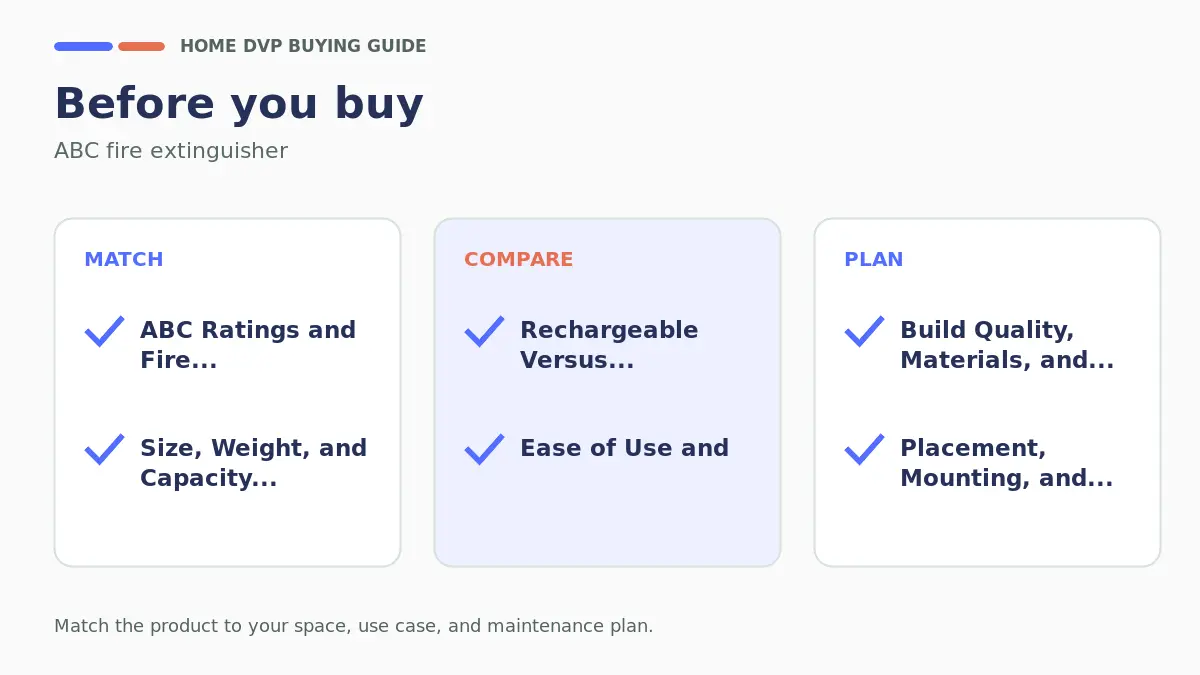
Final Thoughts
Selecting the right abc fire extinguisher strengthens every home safety plan. After comparing specifications across the available options, several models stand out for distinct needs. The First Alert Fire Extinguisher for Home, Standard Rechargeable Compliance Unit, UL RATED 1-A:10-B:C, HOME1 serves as a strong overall pick thanks to its all-metal construction, commercial-grade valve, recharge capability, and proven multipurpose rating that covers everyday household risks.
For value-conscious buyers, the AmzBoom 2-Pack Fire Extinguisher for Home, Kitchen, Car, and Grill offers compact, easy-activation spray units with mounting brackets and broad Class A, B, C, and K coverage at an accessible entry point. Homeowners seeking heavier duty performance may prefer the Amerex B500 5 lb ABC Dry Chemical Fire Extinguisher 2-Pack with its extended range and discharge time, or the First Alert Fire Extinguisher for Home & Commercial Use, Heavy Duty Rechargeable Compliance Unit, UL RATED 2-A:10-B:C, HOME2PRO for increased Class A capacity and commercial-grade durability.
Beginners and those prioritizing simple residential coverage often do well with the Kidde Basic 110 series or the Kidde Full Home Fire Extinguisher, 3-A:40-B:C for greater power in medium to large household fires. Ougist models with patented quick-release handles add ease of use for multi-generational households and vehicle applications. Match your choice to room size, user strength, and recharge preferences, then mount the unit where it remains visible and reachable. Pair it with the rest of your cleaning and floor care and safety routines for complete readiness.
Frequently Asked Questions
What should I look for when choosing abc fire extinguisher?
Focus first on a clear UL ABC rating that matches your home size and risk areas, then evaluate construction quality, pressure gauge readability, ease of activation, and whether the unit is rechargeable or disposable. Confirm that mounting hardware is included and that the weight suits everyone who may need to operate it. Checking these factors helps ensure the extinguisher performs when needed and fits your daily living space.
Are higher-end abc fire extinguisher worth it?
Higher-end models often justify their cost through all-metal valves, higher capacity ratings, recharge capability, and longer discharge ranges. These features improve durability and reduce long-term replacement needs for homeowners who want multi-year protection. Budget options work well for secondary locations or temporary use, but primary kitchen and living area units benefit from the added reliability of better construction.
How should beginners choose abc fire extinguisher?
Beginners should start with a compact, lightweight UL-listed 1-A:10-B:C unit that includes a simple pull pin, clear gauge, and wall bracket. Practice identifying the PASS steps and place the extinguisher in an obvious location near an exit path. Reading the label thoroughly after purchase builds confidence without requiring advanced training.
How long should quality abc fire extinguisher last?
Many quality residential units carry a 12-year service-free design life when maintained properly and never discharged. Monthly visual inspections of the gauge and seal, plus gentle shaking of dry chemical models, help preserve readiness. Replace or professionally recharge any unit that shows low pressure, damage, or has been used even briefly.
What brands make reliable abc fire extinguisher?
Established names such as FirstAlert, Amerex, and Ougist appear consistently among models with solid UL ratings, metal construction options, and clear user instructions. Reliability stems more from verified ratings, materials, and maintenance than from brand alone. Reviewing the specific specifications of each unit remains the best way to confirm suitability for your home.
How much should homeowners expect from abc fire extinguisher in 2026?
Homeowners can expect multipurpose ABC units across the $17.45–$400 range that deliver dependable coverage for common household fires when selected and maintained correctly. Features such as quick-release handles, recharge options, and multi-pack value continue to expand. Combining one or more well-placed extinguishers with working smoke alarms and clear escape plans provides the strongest overall protection.
Are abc fire extinguisher suitable for DIY projects, home repairs, or regular maintenance?
Yes, keeping abc fire extinguisher nearby during DIY projects, painting, electrical work, or garage repairs adds an important safety layer. Mount or stage a unit within easy reach of the work area and check the gauge before starting any project that involves heat, solvents, or power tools. This habit pairs well with other practical home care steps and supports safer renovation and maintenance activities throughout the year.