
Monthly fees have quietly become one of the most expensive parts of home security. Many popular cameras look affordable on the shelf, then require a paid plan to unlock video history, person detection, or even the ability to review a clip from last night. Over three to five years, those recurring charges can exceed the cost of the camera itself. A subscription-free outdoor camera flips that equation: you pay once, store footage locally or on a free tier, and keep control of your own recordings.
For this guide, we analyzed 6 outdoor security cameras spanning the $26.99 – $284.96 spectrum, including models from WYZE, AOSUSecurityOfficial, ANSQUESecurity and more. Each one was evaluated on how it actually records without a subscription: whether local storage is built in, what extra hardware you must buy separately, how resolution and night vision compare on paper, and how the power and weatherproofing claims hold up for real outdoor placement.
We refresh this guide as listings change; the current edition was updated in November 2026.

Pros
- Long battery life reduces the need for frequent recharging in typical home use.
- Dual-band WiFi support improves connection stability across different home networks.
Cons
- Battery runtime varies based on motion frequency, recording mode, and temperature.
- Free cloud plan limits video to SD quality, requiring a paid upgrade for HD.
Specifications
| Other Special Features of the Product | 2K UHD video & full-color night vision, Free Cloud Storage & Local SD Card Support, support for 2.4G & 5G WiFi, 1-6 months battery life |
|---|---|
| Indoor Outdoor Usage | Indoor, Outdoor |
| Compatible Devices | / |
| Controller Type | Amazon Alexa |
| Mount Type | Wall Mount |
| Color | White - 2.4G&5G Camera |
| Form Factor | Bullet |
| Installation Type | Screw In |
| Enclosure Material | Acrylonitrile Butadiene Styrene (ABS) |
| Water Resistance Level | Waterproof |
Verify the current product variation before purchase; specifications may change.
Best For / Avoid If
Best for buyers prioritizing
- Long battery life reduces the need for frequent recharging in typical home use.
- Dual-band WiFi support improves connection stability across different home networks.
- Free cloud storage removes extra fees for basic recording access.
Consider another option if
- Battery runtime varies based on motion frequency, recording mode, and temperature.
- Free cloud plan limits video to SD quality, requiring a paid upgrade for HD.
- Initial setup depends on a stable WiFi signal and smartphone app.
Pros
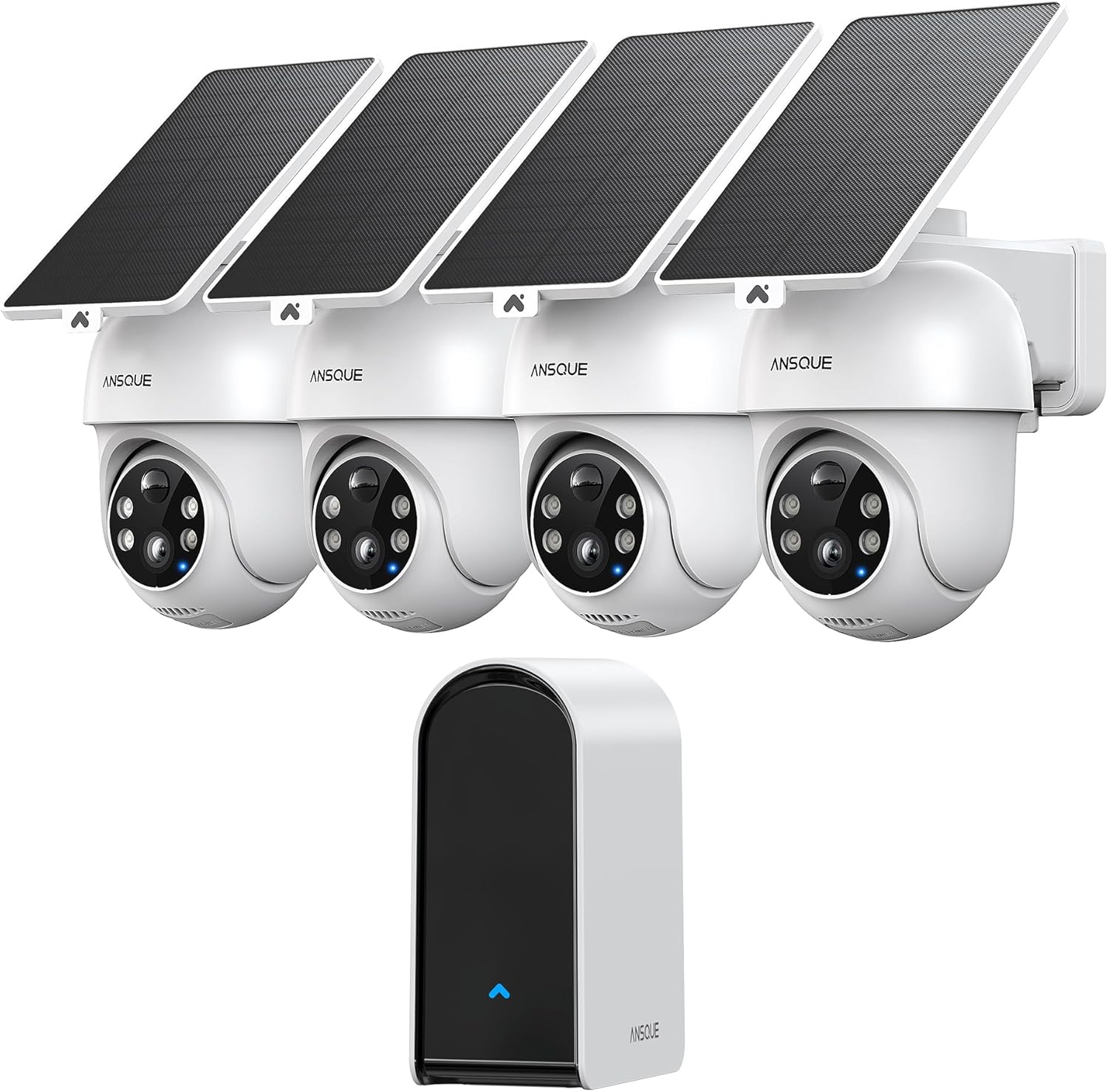
- Subscription-free use with encrypted local storage that protects data even if a camera is removed
- Solar power reduces maintenance needs and supports reliable charging in varied weather
Cons
- Records only upon motion detection rather than providing continuous 24/7 capture
- Performance relies on adequate sunlight exposure for consistent solar panel charging
Specifications
| Indoor Outdoor Usage | Outdoor |
|---|---|
| Compatible Devices | Alexa, Google Assistant, Smartphone, Tablet, Android and iOS |
| Controller Type | Amazon Alexa, Android, Google Assistant |
| Mount Type | Wall Mount |
| Color | White |
| Form Factor | Dome |
| Installation Type | Screw In |
| Enclosure Material | Acrylonitrile Butadiene Styrene (ABS), Polycarbonate (PC) |
| Water Resistance Level | Waterproof |
| Shape | Dome |
Verify the current product variation before purchase; specifications may change.
Best For / Avoid If
Best for buyers prioritizing
- Subscription-free use with encrypted local storage that protects data even if a camera is removed
- Solar power reduces maintenance needs and supports reliable charging in varied weather
- Cross-camera tracking links clips to show complete movement paths across the property
Consider another option if
- Records only upon motion detection rather than providing continuous 24/7 capture
- Performance relies on adequate sunlight exposure for consistent solar panel charging

Pros
- Extended battery life reduces the need for frequent battery changes.
- Wireless operation and included mounting kits simplify placement around the property.
Cons
- Local storage is not supported by the included Sync Module Core and requires separate purchases.
- Advanced features like person detection depend on an optional subscription plan.
Best For / Avoid If
Best for buyers prioritizing
- Extended battery life reduces the need for frequent battery changes.
- Wireless operation and included mounting kits simplify placement around the property.
- App integration enables remote viewing and two-way audio from anywhere.
Consider another option if
- Local storage is not supported by the included Sync Module Core and requires separate purchases.
- Advanced features like person detection depend on an optional subscription plan.

Pros
- High resolution video captures fine details like license plates
- Color night vision improves visibility compared to infrared only models
Cons
- MicroSD card required separately to enable local storage
- Connects only to 2.4 GHz Wi Fi networks
Specifications
| Brand | WYZE |
|---|---|
| Model Name | Wyze Cam v4 |
| Connectivity Technology | 2.4GHz (Not 5G Compatible), Wi-Fi, Wired |
| Special Feature | 2-Way Audio, 2.5K QHD, Enhanced color night vision, IP65 indoor/outdoor Weather Proof, Local Recording, Motion-activated spotlight & Siren See more |
Verify the current product variation before purchase; specifications may change.
Best For / Avoid If
Best for buyers prioritizing
- High resolution video captures fine details like license plates
- Color night vision improves visibility compared to infrared only models
- Weatherproof design supports reliable year round outdoor placement
Consider another option if
- MicroSD card required separately to enable local storage
- Connects only to 2.4 GHz Wi Fi networks
- Cloud backup and extra features need an optional paid plan

Pros
- Subscription-free operation with secure local storage protects data even if a camera is lost or damaged
- Maintenance-free solar charging supports reliable performance year-round with minimal sunlight
Cons
- Requires sufficient sunlight exposure daily which may limit placement options in shaded areas
- Local storage capacity is fixed at 32GB potentially requiring periodic review to manage recordings
Specifications
| Recommended Uses For Product | Outdoor Security |
|---|---|
| Brand | aosu |
| Model Name | AOSU SolarCam D1 Classic Kit |
| Connectivity Technology | Wireless |
| Special Feature | 2-Way Audio, 2K Color Night Vision, 32GB aosuBase,No Subscription Required., Automatic Tracking, PTZ Technology See more |
Verify the current product variation before purchase; specifications may change.
Best For / Avoid If
Best for buyers prioritizing
- Subscription-free operation with secure local storage protects data even if a camera is lost or damaged
- Maintenance-free solar charging supports reliable performance year-round with minimal sunlight
- 360-degree pan tilt and auto tracking minimize blind spots for thorough home perimeter protection
Consider another option if
- Requires sufficient sunlight exposure daily which may limit placement options in shaded areas
- Local storage capacity is fixed at 32GB potentially requiring periodic review to manage recordings
- Full features depend on the aosuBase unit which adds an extra component to the setup
Pros
- Battery life up to two years reduces the need for regular changes
- Infrared night vision maintains visibility after dark
Cons
- Local storage is unavailable with the included Sync Module Core
- Advanced features like person detection require a separate subscription
Best For / Avoid If
Best for buyers prioritizing
- Battery life up to two years reduces the need for regular changes
- Infrared night vision maintains visibility after dark
- Includes everything needed for basic multi-camera installation
Consider another option if
- Local storage is unavailable with the included Sync Module Core
- Advanced features like person detection require a separate subscription
- Cloud clip storage depends on a paid plan after the initial trial
Best Outdoor Security Camera Without Subscription Buying Guide: Key Factors Compared
Local Storage: The Feature That Genuinely Eliminates Fees
Storage design is the single most important specification when you want to avoid monthly charges. In this comparison, the approaches fall into four categories. The ANSQUE and aosu kits ship with a base station that has 32GB of encrypted storage built in, so footage loops on the hub with no card to buy. The WYZE Cam v4 records to a microSD card inserted in the camera itself, supporting cards up to 512GB, though the card is sold separately. The HITELLARCAM camera also supports a local microSD card, up to 256GB, plus a limited free cloud tier. The Blink Outdoor 4 systems include a Sync Module Core, which coordinates the cameras but does not store footage; saving clips locally requires buying a Sync Module XR with a microSD card or a Sync Module 2 with a USB drive, all sold separately.
| Storage Approach | How It Avoids Fees | Watch Out For |
|---|---|---|
| Hub with built-in storage | Footage loops on the base station with no card to purchase | Capacity is fixed, and the hub needs power and a strong Wi-Fi connection |
| microSD card in camera | Inexpensive, private, and expandable | Card is usually sold separately, and a thief can steal it with the camera |
| Separate sync module plus card or USB drive | Keeps recordings inside your home | Extra purchase required and another device to keep powered |
| Free cloud tier | No hardware needed | Resolution or clip length may be limited, as with SD-quality video on some free plans |
A common mistake is assuming free cloud storage means full-resolution video history. The HITELLARCAM listing states its free plan delivers SD quality, with HD reserved for paid tiers. If sharp footage matters to you, plan on using the local card slot as your primary recording method and treat the free cloud tier as a backup.
Video Resolution and Night Vision Performance
Resolution determines how much detail you can pull from a clip. The WYZE Cam v4 leads this group on paper at 2.5K QHD (2560×1440) with a 120-degree field of view, which the manufacturer says resolves license plates and package labels that standard 1080p cameras miss. The ANSQUE and aosu kits record at 2K, with aosu specifying 3MP resolution, while the Blink Outdoor 4 records at 1080p. That 1080p figure is adequate for identifying broad activity at a porch or driveway, but it offers less cropping headroom when you zoom in on a clip.
Night vision type matters just as much as resolution. Infrared-only cameras produce black-and-white footage, while cameras with built-in LED spotlights can capture full-color night video, which makes it easier to identify clothing, vehicles, and details after dark. The ANSQUE and aosu cameras each use four LED lights for color night vision, and the WYZE pairs a starlight sensor with a 72-lumen motion-activated spotlight. If identifying a person or car at night is your priority, favor cameras with both color night vision and digital zoom; the ANSQUE advertises 8x digital zoom for enlarging plates or labels in real time, though keep in mind digital zoom enlarges pixels rather than adding true optical detail.
Power Options: Solar, Battery, and Wired Setups
Power determines where you can mount a camera and how much maintenance it will demand. The ANSQUE and aosu cameras are solar powered with rechargeable batteries. ANSQUE claims two hours of sunlight per day keeps its camera running, while aosu cites three hours of daily sunlight, and both say the panels continue charging on cloudy or rainy days. Those are manufacturer claims, so in practice a panel mounted under a deep eave or dense tree shade will charge more slowly than the marketing suggests. Periodically wipe the panel clean, especially after pollen season or storms.
The Blink Outdoor 4 runs on included AA Energizer lithium batteries rated for up to two years, which is the most convenient option for renters because there is no wiring at all. Battery life estimates assume moderate activity; a camera facing a busy street will wake and drain far faster than one watching a quiet side yard. The HITELLARCAM camera uses an internal rechargeable battery, and its listing cites manufacturer test data of roughly 60 days per charge with 100 motion triggers per day, extending up to six months with lighter use.
The WYZE Cam v4 is listed as an indoor/outdoor camera, and its product information does not describe battery or solar power, so treat it as a model you will need to place near an outlet and verify the power arrangement before mounting. Wired placement is more restrictive, but it removes battery maintenance entirely, which some homeowners prefer for a permanently monitored driveway or back gate.
Weather Resistance and Year-Round Durability
Outdoor cameras live in rain, snow, dust, and temperature swings, so ingress protection ratings deserve attention. The WYZE Cam v4 is rated IP65, meaning it is dust-tight and protected against water jets, with an operating range of -4°F to 113°F. The HITELLARCAM camera is rated IP66, which adds protection against heavier, pressurized water exposure. Higher second digits indicate better water protection, so IP66 edges out IP65 for exposed mounting locations.
The ANSQUE, aosu, and Blink listings in our data do not specify an IP rating, which does not mean the cameras are unsuitable for outdoor use, but it does mean you should confirm weatherproofing details with the manufacturer before mounting them in an exposed spot. As a rule of thumb, any camera mounted under a covered porch or soffit faces far less water exposure than one bolted to an open fence post, and placing cameras where a roof overhangs them extends their service life regardless of rating.
Wi-Fi Connectivity and Smart Home Compatibility
Dual-band support is a quiet differentiator in this group. The ANSQUE base station, the aosu system, and the HITELLARCAM camera all list support for both 2.4GHz and 5GHz Wi-Fi. The 5GHz band typically offers faster, less congested streams when your router sits close to the camera, while 2.4GHz reaches farther through walls, which matters for a camera at a detached garage or far side yard. Before buying any wireless camera, stand at the intended mounting spot and check your phone’s Wi-Fi signal; a weak signal is the most common cause of laggy live view and missed clips.
On the smart home side, the Blink Outdoor 4, WYZE Cam v4, and HITELLARCAM camera all list Alexa support for voice commands and live view on compatible devices, and the WYZE adds Google Assistant and IFTTT compatibility, making it the most flexible choice for mixed-ecosystem households. The ANSQUE and aosu listings do not specify voice assistant support, so verify if that matters to you. If you are building out an Alexa-driven home, our guide to smart light switches with Alexa covers another core piece of that ecosystem and pairs well with voice-controlled cameras for lighting-based deterrence.
Smart Detection Features and False Alert Control
A subscription-free camera still needs intelligent alerts, or your phone becomes a nuisance. The WYZE Cam v4 processes its AI on the device, distinguishing people, packages, pets, and vehicles so you can filter out passing cars and swaying branches without paying for cloud-based recognition. The ANSQUE and aosu systems add pan-and-tilt auto tracking that follows a person across the frame, plus cross-camera linking that groups clips from the same event into one review, which is genuinely useful on multi-camera properties. Both also support custom detection zones so you can mask the street and only alert on your own walkway.
Here is the fine print worth flagging: the Blink Outdoor 4 lists person detection as a feature of its optional subscription plan, not the base hardware. Out of the box you get motion alerts with dual-zone motion detection, but identifying whether a person, animal, or vehicle triggered the alert requires the paid tier or local review. If person-specific alerts are non-negotiable for you without a fee, prioritize the WYZE, ANSQUE, or aosu instead. The HITELLARCAM lists built-in AI motion detection, though its listing provides less detail on object categories than the competitors above.
Total Cost of Ownership: Reading the Fine Print
The sticker price is only the entry point. A truly fee-free setup means adding up the required extras before you buy. For the Blink systems, budget for a Sync Module XR and microSD card or a Sync Module 2 and USB drive if you want local clip storage, since the included Sync Module Core does not record. For the WYZE and HITELLARCAM cameras, a high-endurance microSD card is effectively a required purchase. For the ANSQUE and aosu kits, the hub and its 32GB of storage are included, which is why they command a higher upfront price.
Optional upgrades are where discipline matters. WYZE offers an optional Cam Plus plan for cloud features, and Blink offers subscription plans for person detection and cloud history. Neither is required for core recording, but be honest with yourself: if you know you will want those conveniences, a kit with richer built-in local features may cost less over five years. ANSQUE estimates its hub-based approach saves a meaningful amount annually compared with typical paid plans, and while that is a manufacturer claim, the underlying math of avoiding recurring fees generally favors local storage for anyone planning to keep cameras for several years.
Installation and Placement Fundamentals
All six options are designed for DIY installation with no professional wiring. The solar kits are the fastest: ANSQUE describes a four-hole reinforced bracket with a detachable panel, and aosu describes a three-hole install it says takes about five minutes. The Blink cameras mount on included kits with no wiring at all, making them the safest choice for renters who cannot drill extensively. Before drilling, test the live view from a helper holding the camera at mounting height, typically around eight to ten feet for a doorway, high enough to resist tampering but low enough to capture faces rather than just the tops of heads.
Two placement mistakes cause most regret. First, pointing a camera at a neighbor’s windows, a shared driveway, or public sidewalk can create privacy and legal problems in some areas, so angle lenses toward your own entryways, walkways, and yard. Second, mounting directly under a roof edge where the solar panel gets no sun defeats the purpose of a solar kit; ANSQUE and aosu both use detachable panels for exactly this reason, letting you place the panel on a sunny surface while the camera sits in shade. Finally, angle the lens away from rising or setting sun, since direct backlighting washes out the very footage you bought the camera to capture.
How the 6 Cameras Compare
| Camera | Best For | Resolution | Subscription-Free Storage | Power |
|---|---|---|---|---|
| ANSQUE 4-camera kit | Whole-property coverage in one purchase | 2K | 32GB in hub, up to 120-day loop (manufacturer claim) | Solar panel plus battery |
| aosu 4-cam kit | Whole-property coverage with auto tracking | 2K (3MP) | 32GB in hub, up to 4-month loop | Solar panel plus battery |
| Blink Outdoor 4 (three-camera system) | Alexa households covering multiple entries | 1080p | Requires separately sold sync module plus card or USB drive | AA lithium batteries, up to two years |
| Blink Outdoor 4 (two-camera system) | Smaller homes and rentals | 1080p | Requires separately sold sync module plus card or USB drive | AA lithium batteries, up to two years |
| WYZE Cam v4 | Single-camera value with the highest resolution here | 2.5K | microSD up to 512GB (sold separately) | Wired; verify power needs in listing |
| HITELLARCAM 2K camera | Tightest budgets and exposed mounting | 2K | microSD up to 256GB (not included) plus limited free cloud | Rechargeable battery |
The ANSQUE Security Cameras Wireless Outdoor Home kit is the most complete package in this comparison. Four cameras, a dual-band hub with 32GB of AES-128 encrypted storage, 360-degree pan-and-tilt with auto tracking, cross-camera event linking, and a solar panel the company says needs only two hours of daily sun. The manufacturer also states the hub can hold up to 120 days of loop recording. The honest tradeoff is scale: if you only need one camera over a door, paying for a four-camera kit leaves capacity unused. This kit makes sense for full-perimeter coverage of a house with a driveway, backyard, and side paths.
The aosu Security Cameras Outdoor Wireless, 4 Cam-Kit sits closest to the ANSQUE in design: four solar cameras, an aosuBase hub with 32GB of encrypted local storage rated for up to four months of loop recording, 360-degree pan and tilt, auto tracking, cross-camera clip linking, and a quad-screen live view. aosu specifies 3MP 2K capture and a three-hole installation. Its differentiation comes down to preference and price at the time of purchase; if both kits cost similar amounts, compare the loop-recording claims, the hub range you need, and which app interface you find easier to evaluate in store listings.
The Blink Outdoor 4 – Wireless smart security camera two-camera system is the entry point into this ecosystem. You get 1080p live view, infrared night vision, two-way audio, dual-zone motion detection, and AA lithium batteries rated for up to two years, all tied into Alexa for voice control and multi-camera live view. The critical caveat, repeated in our storage section, is that the included Sync Module Core does not store footage; local saving requires a separately sold Sync Module XR with a microSD card or Sync Module 2 with a USB drive, and person detection requires the optional plan. Buy it if you value the two-year battery and Alexa integration and accept the add-on purchase for storage.
The Blink Outdoor 4 – Wireless smart security camera three-camera system carries the same technology with a third camera, which suits a typical single-family layout of front door, back door, and garage or side gate. Compared with buying a second two-camera kit later, the three-pack usually prices out better per camera, and one Sync Module Core coordinates all three. The same storage and resolution limitations apply, so it is a fit for Alexa households comfortable with a 1080p image and a storage accessory purchase.
The WYZE Cam v4 (Latest Model) is our value standout among single cameras. It records 2.5K QHD video with a 120-degree field of view, pairs a starlight sensor with a 72-lumen color spotlight, and adds a 100dB siren for active deterrence. On-device AI distinguishes people, packages, pets, and vehicles without a plan, clips save to a microSD card up to 512GB with zero monthly fees, and the camera works with Alexa, Google Assistant, and IFTTT. It carries an IP65 rating with operation from -4°F to 113°F. Two caveats: the listing does not describe battery or solar power, so plan placement around an outlet, and a card is not included in the box.
The 2026 Upgraded 2K Security Cameras from HITELLARCAM is the lowest-priced option here and covers the basics surprisingly well: 2K capture, full-color night vision, IP66 weatherproofing, dual-band 2.4GHz and 5GHz Wi-Fi, two-way audio, and Alexa support. Its rechargeable battery is rated by the manufacturer for about 60 days with 100 motion triggers per day, stretching toward six months with light use. Be clear-eyed about the free cloud tier, which the listing says delivers SD quality with HD behind a paid plan, and remember a microSD card up to 256GB is not included. As a newer, less-established brand, it is best treated as a starter or secondary camera rather than the centerpiece of a security system.
How We Compared These Picks
After carefully analyzing the available product information, we scored each camera on the criteria that determine whether a no-subscription camera actually delivers: the design of its storage and what hardware it truly requires, video resolution and night vision capability, power system and stated battery or solar performance, weather protection where published, Wi-Fi band support, smart detection quality, and the realistic total cost including required accessories.
Where a manufacturer makes a specific claim, such as solar charging hours, loop-recording duration, or battery life figures, we attribute it as a claim rather than presenting it as verified performance. Where a listing omits a specification, such as an IP rating or voice assistant support, we say so instead of filling the gap with assumptions.
Based on our research, our ranking favors cameras whose subscription-free promise survives contact with the fine print: storage that is genuinely included or cheap to add, detection that works on the device, and weather and power specs suited to year-round outdoor placement. We revisit this guide during November of each year and as listings change, because storage tiers, included accessories, and pricing in this category shift frequently. Prices and promotions vary, so always confirm current details on the product page before ordering, and note that ratings and review volumes change over time and were not a weighting factor in our analysis.
Final Thoughts: Matching a Camera to Your Home
If you want to secure an entire property in one purchase with no cards, hubs, or plans to chase afterward, choose between the two solar kits. The ANSQUE Security Cameras Wireless Outdoor Home system is our overall pick for whole-home coverage thanks to its encrypted 32GB hub, long loop-recording claim, dual-band base station, and auto-tracking pan-and-tilt cameras. The aosu Security Cameras Outdoor Wireless, 4 Cam-Kit delivers a nearly identical feature philosophy; compare the two on current pricing and the app experience, since both are capable premium systems that eliminate recurring fees entirely.
If you need one or two well-placed cameras rather than a full system, the calculus changes. The WYZE Cam v4 (Latest Model) is our value pick and the resolution leader here, ideal for a driveway, porch, or backyard gate where you can route power, and its on-device AI means smart alerts without a plan. The 2026 Upgraded 2K Security Cameras is the budget pick for a first camera or a rental, with strong IP66 weather protection, just budget for a high-endurance microSD card and temper expectations about the free cloud tier. Alexa households who prioritize wire-free, two-year battery life should look at the Blink Outdoor 4 – Wireless smart security camera three-camera system, or the two-camera version for smaller spaces, with the understanding that true local storage requires a separately sold sync module.
Whichever direction you go, the decision framework is the same: confirm where footage will actually be stored, confirm the camera can see the area you care about day and night, confirm the power source survives your climate, and only then compare prices. A camera that meets those four tests without a monthly bill will cost less and deliver more over its life than almost any subscription-dependent alternative.
Frequently Asked Questions
Do outdoor security cameras really work without a subscription?
Yes, provided the camera records to local storage such as a microSD card or a hub with built-in memory. Every model in this guide can capture and store footage without a mandatory plan, though the Blink systems require a separately sold sync module for local storage. Live viewing, motion alerts, and two-way talk also work without paying, while some advanced features like Blink’s person detection sit behind optional plans.
What should I look for when choosing best outdoor security camera without subscription?
Start with the storage design, since that determines whether you truly avoid fees, then check resolution, night vision type, power source, and weather rating for your climate. Confirm which extras are not included, such as microSD cards or a storage module, and verify Wi-Fi compatibility with your router. A camera that needs three accessory purchases to work fee-free may cost more than it first appears.
Is local storage better than free cloud storage for security footage?
Local storage usually offers higher quality, longer history, and better privacy because clips never leave your hardware, and it continues working during internet outages. Free cloud tiers are convenient and survive theft of the camera itself, but they often limit resolution, as the SD-quality free plan on the HITELLARCAM model shows. Many homeowners use local storage as the primary method and free cloud as a secondary backup where offered.
Are solar-powered outdoor cameras reliable in cloudy or shady yards?
Solar cameras such as the ANSQUE and aosu kits are designed to keep charging in rain and cloud cover, and both manufacturers state their panels continue working in those conditions. Performance still depends on placement: a panel under a deep eave or dense tree canopy will charge far less than the claims suggest. Both systems use detachable panels so you can mount the camera in shade while positioning the panel on a sunny surface, and occasional panel cleaning keeps output high.
How much should homeowners expect to spend on best outdoor security camera without subscription in 2026?
The models in this guide span from under thirty dollars for a single budget camera to roughly three hundred sixty dollars for a complete four-camera solar system with an included storage hub, matching the overall $26.99 – $284.96 spread. Single-camera setups from WYZE and HITELLARCAM cover most porches and driveways at the low end, while the ANSQUE and aosu kits justify their higher price with four cameras and built-in storage. Remember to add the cost of any required microSD cards or storage modules when budgeting.
Which of these cameras work with Alexa or Google Assistant?
The Blink Outdoor 4, the WYZE Cam v4, and the HITELLARCAM camera all list Alexa support for live view and voice commands, and the WYZE additionally works with Google Assistant and IFTTT, making it the best fit for mixed smart home setups. The ANSQUE and aosu listings do not specify voice assistant support in the data we reviewed. If you use Echo devices to control your home, our guide to smart light switches with Alexa shows how to pair camera-triggered alerts with automated lighting for a stronger deterrence setup.
How long do battery-powered outdoor security cameras last between charges?
It depends heavily on how often the camera wakes for motion. The Blink Outdoor 4 uses AA lithium batteries rated for up to two years, while the HITELLARCAM camera’s manufacturer reports about 60 days per charge with 100 motion events daily, extending toward six months with light activity. Cameras facing busy streets drain faster than those watching quiet side yards, so lower the sensitivity, narrow the detection zones, or choose a solar model if your mounting location sees constant motion.