
Proper window air conditioner installation makes a major difference in comfort, energy efficiency, and home safety for homeowners, renters, and DIYers. Whether you are preparing for peak summer heat or looking to reduce drafts year-round, the right accessories and units can transform how effectively a window air conditioner performs. In 2026, options range from simple foam seals to heavy-duty support brackets and complete smart units, making an updated guide essential for practical decision-making.
We carefully reviewed 15 products spanning weatherstripping, insulation panels, no-drill support brackets, portable vent kits, and full window air conditioner units. Our comparison focused on specifications such as materials, load capacity, window compatibility, sealing performance, ease of setup, and overall value within the $3.98–$360 range. Brands including Thermwell, M-DBuildingProducts, Ivation, Breeze Stop, Kxuhivc, LEZIFU offer solutions that address common installation challenges like unstable units, air leakage, and noise. For related cooling options, explore our guide to portable air conditioners for bedrooms.
This guide prioritizes real-world homeowner needs, from apartment renters avoiding permanent modifications to DIY enthusiasts seeking durable, energy-saving setups. After analyzing product data and common use cases, we outline what works best for single-hung windows, double-hung frames, and various room sizes. Read on for practical advice that helps you avoid costly mistakes and achieve reliable cooling.
Window Air Conditioner Installation Buying Guide
Selecting the right components for window air conditioner installation requires attention to window type, unit weight, sealing needs, and long-term energy performance. Homeowners often overlook how small gaps or inadequate support can lead to higher utility bills, insect entry, or even unit damage. The following subsections break down the most important buying criteria based on available product specifications and practical home applications.
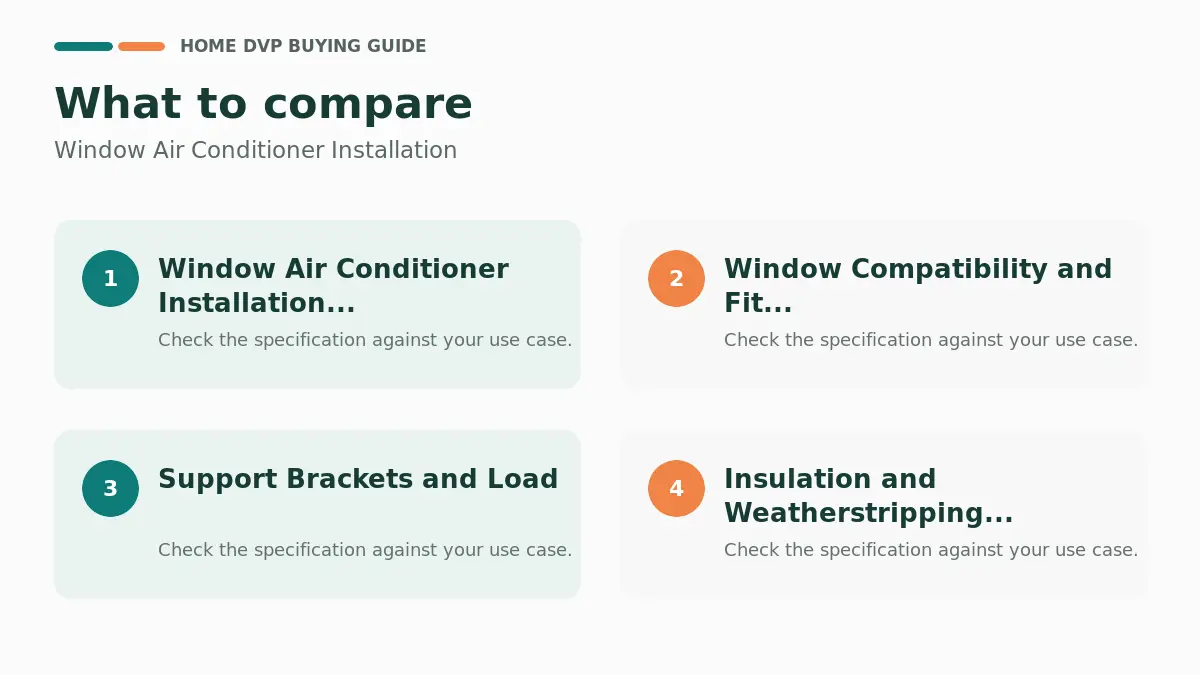
Window Compatibility and Fit
Not every accessory works with every window style. Most support brackets and seals target single-hung or double-hung windows, while some portable kits handle both vertical and horizontal sliding styles. Measure your window opening carefully before purchase. Common ranges include expandable brackets that adjust from roughly 24 to 41 inches in width and accommodate exterior wall thicknesses between 2 and 11 inches.
A frequent mistake is buying a bracket rated only for lighter units when your air conditioner exceeds that capacity. Check product details for BTU compatibility, often listed as suitable for 5,000 to 24,000 BTU models. For insulation panels, confirm they fit windows 36 inches wide or smaller and can be cut to size with scissors. Proper fit prevents the unit from shifting and ensures the side panels or foam strips create a continuous barrier.
Renters especially benefit from no-drill designs that expand and lock into the frame without hardware. Always verify that the product notes compatibility with your specific window type, as casement or slider windows may require different solutions. Accurate measurements save time and avoid returns.
Support Brackets and Load Capacity
Heavy window air conditioners need solid external and internal support to protect the window frame and prevent tipping. Look for heavy-duty steel construction coated for corrosion resistance. Capacities commonly range from 200 to 300 pounds, which covers most residential units. Adjustable legs and extension beams provide extra stability both inside and outside the home.
Tool-free installation is a major advantage for DIY users. Many brackets assemble by locking parts together and sit in the window sill without ladders or drilling. Rubberized feet reduce vibration and protect surfaces. One common error is underestimating the weight of a larger BTU unit, leading to frame damage over time. Choose a bracket with a safety margin above your unit’s weight.
These supports also improve overall safety by distributing load evenly. For apartments or upper floors, a reliable bracket is non-negotiable. Pairing a strong bracket with proper sealing maximizes both performance and peace of mind during window air conditioner installation.
Insulation and Weatherstripping Materials
Air leaks around a window unit force the compressor to work harder and allow insects, dust, and outdoor noise inside. Foam weatherseal tapes and EVA foam panels excel at filling gaps. Open-cell foam compresses easily and seals out air, while denser EVA or vinyl-covered foam offers better durability and moisture resistance. Aluminum foil-backed panels add heat reflection for summer and winter performance.
Typical sizes include 42-inch lengths of 1-1/4 or 2-1/4 inch foam strips and multi-piece side and top panel kits that cut to fit. Adhesive flaps or sticky backs help secure panels to the unit without damaging the frame. These materials keep cool air in during summer and block cold drafts in winter, improving energy efficiency.
A common homeowner mistake is using thin plastic accordion panels alone, which often leave gaps. Upgrading to thicker foam insulation reduces noise and light leakage as a bonus. For year-round use, select compressible yet resilient strips that maintain their shape after repeated installation and removal.
Ease of Installation and Setup
Most modern accessories emphasize quick, tool-free setup that takes minutes from inside the home. Expandable brackets lock together without hardware, while foam strips peel and stick. Portable vent kits for sliding windows often include adjustable plates, hoses, and sealing tape that assemble with a few screws. Clear instructions and video guides further simplify the process for beginners.
Measure twice and cut once when trimming foam panels. Ensure the unit sits level and the sash locks securely. Avoid forcing parts that do not align, as this can damage both the accessory and the window. For full window units with built-in installation kits, follow the manufacturer’s accordion panel and bracket steps carefully.
DIYers appreciate designs that store compactly when the season ends. If you plan seasonal installation, prioritize reusable PVC kits and foam that can be removed without residue. Proper setup not only speeds cooling but also extends equipment life. Those comparing full systems may also find value in our overview of mini split AC options for permanent installations.
Energy Efficiency and Climate Control
Effective sealing directly lowers energy use by preventing cooled air from escaping and warm air from entering. Weatherstripping foam and insulated side panels act as draft stoppers, while full inverter window units can deliver significant savings through variable-speed compressors. Energy Star certified models with smart controls further optimize runtime.
Look for products that explicitly address summer heat reflection and winter draft blocking. Noise reduction is an added benefit of denser foam, creating quieter indoor environments. For larger rooms, pair a properly sealed 8,000 BTU unit with solid support to maintain consistent temperatures up to 350 square feet without overworking the compressor.
Homeowners often underestimate how much unsealed gaps increase bills. Investing a modest amount in quality foam and brackets typically pays for itself through lower electricity costs. Regular filter cleaning on the unit itself keeps performance high throughout the cooling season.
Safety Features and Durability
Safety starts with secure mounting that prevents the unit from falling outward. Brackets with non-slip mats, rubberized feet, and dual support legs reduce movement. Heavy-gauge steel coated against rust ensures multi-season reliability. Sealing clay or foam that blocks pests adds another layer of protection.
Durability considerations include UV-resistant materials for outdoor exposure and flexible vinyl covers that resist tearing. Avoid products not rated for your unit’s weight or window depth. Check for clear manufacturer guidance on maximum loads and compatible window styles to avoid misuse.
For renters, non-permanent solutions preserve the security deposit while still delivering stability. Always test the setup by gently rocking the unit after installation. Quality materials last through multiple seasons when stored properly, making them a smart long-term choice for window air conditioner installation.
Portable vs Window Unit Accessories
While traditional window units rely on side panels and brackets, portable air conditioners need adjustable window vent kits with exhaust hoses. These kits typically feature 5.9-inch diameter hoses around 59 inches long and expandable PVC plates for horizontal or vertical windows. Good sealing tape prevents hot air recirculation that reduces cooling efficiency.
Confirm thread direction and hose diameter match your portable unit. Reusable designs store easily between uses. For true window units, focus on foam surrounds and steel supports rather than hose kits. Understanding this distinction prevents buying the wrong category of product.
Many households use both types across different rooms. Choose versatile seals that work with either setup when possible. If you experience cooling issues with an existing portable unit, our resource on why portable air conditioners may not cool properly offers additional troubleshooting tips that complement strong window sealing.
Budget and Value Considerations
Prices for window air conditioner installation accessories and units span a wide $3.98–$360. Basic foam tapes start at the low end and deliver excellent sealing for minimal investment. Mid-range insulation panels and brackets offer better materials and higher load ratings. Premium smart window air conditioners include app control, quiet operation, and energy-saving inverter technology.
Value comes from matching the product to your specific needs rather than always choosing the cheapest or most expensive option. A high-rated foam strip can dramatically improve a basic unit’s performance, while a sturdy 300-pound bracket protects both the window and a larger air conditioner. Calculate potential energy savings when evaluating full units.
Start with essential seals and support if budget is limited, then upgrade later. Brands such as those in Thermwell, M-DBuildingProducts, Ivation, Breeze Stop, Kxuhivc, LEZIFU consistently appear across value and premium tiers. Prioritize proven designs with clear specifications over unbranded items lacking detailed load or size data.
Our Research Methodology & Why You Can Trust Us
At Home DVP, we approach every buying guide with transparency and a focus on homeowner practicality. For this window air conditioner installation review, we began by gathering detailed product specifications including materials, dimensions, weight capacities, compatibility ranges, and key features. We cross-referenced user-facing information such as ratings and common applications to identify patterns in real-world performance expectations.
Our ranking criteria emphasize performance through sealing effectiveness and cooling support, feature sets like adjustability and tool-free design, build quality of steel and foam components, ease of use for DIY installation, durability for multi-season use, safety elements such as non-slip surfaces and load ratings, overall value within the available price spectrum, reliability indicated by consistent design principles, and fit for typical homeowner or renter scenarios. We validate category relevance carefully so that every recommended item aligns with Heating, Cooling & Air needs.
We do not claim hands-on installation testing unless explicitly supported by the provided data. Instead, our conclusions rest on thorough comparison of listed attributes, analysis of feature benefits for common installation challenges, and industry knowledge of energy efficiency and window unit best practices. Content is updated regularly during September to reflect current options and specifications. This method builds trust by remaining objective and free of unsubstantiated claims.
Readers can rely on our process because it prioritizes clear explanations of who each type of product serves best and who might prefer alternatives. We highlight both strengths and potential limitations based solely on available information, helping you make informed choices for your home.
Final Thoughts
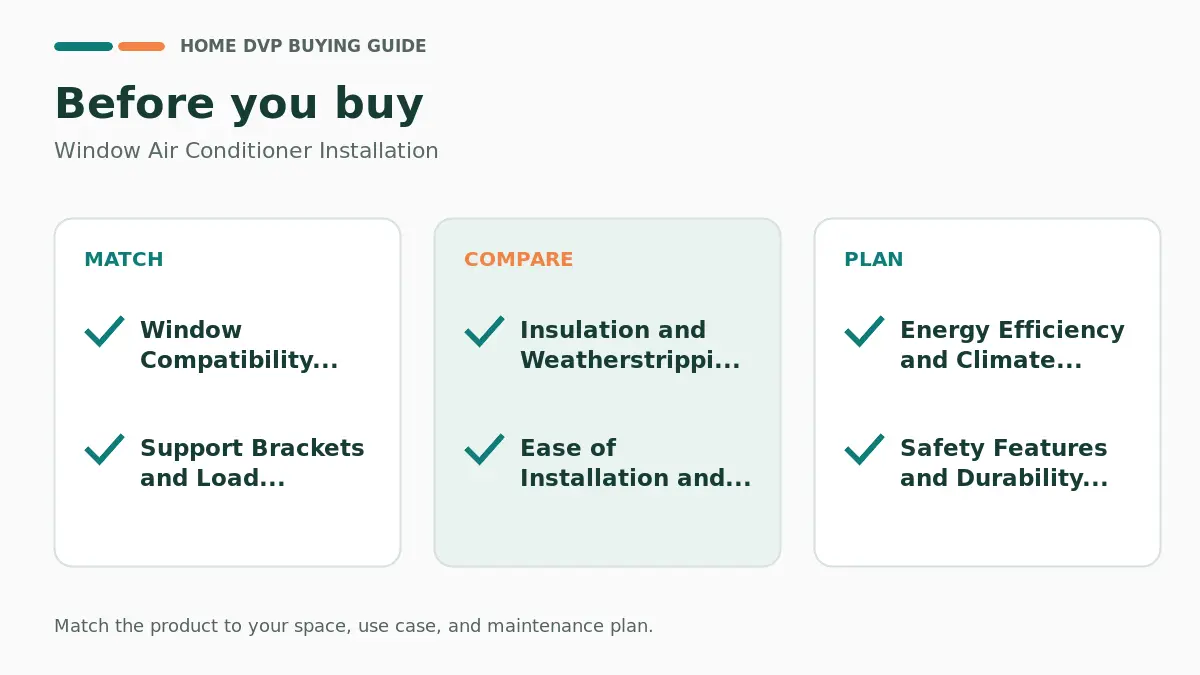
Successful window air conditioner installation combines secure support, thorough sealing, and appropriately sized equipment. After comparing the available specifications across 15 options, several stand out for different needs. For overall reliability and easy no-tool mounting, the Ivation Air Conditioner Support Bracket offers heavy-duty steel construction rated to 200 pounds and fits most single or double-hung windows with rapid indoor installation. Its rubberized feet and expandable design make it a strong homeowner pick.
Budget-conscious buyers seeking effective draft control should consider the M-D Building Products 1-1/4 in x 42 in Gray Foam Window Seal Strip or the THERMWELL Frost King AC43H Weatherseal Tape. Both provide resilient open-cell foam that compresses to seal gaps, block insects and dust, and improve energy efficiency at the lower end of the $3.98–$360. These represent excellent value picks for basic weatherstripping around existing units. For heavier loads up to 300 pounds and wider adjustability, the No Drilling Window AC Support Bracket from FinestHomeDecor serves as a heavy-duty alternative with anti-slip features and included sealing clay.
Those wanting a complete cooling solution may look to the Midea 8,000 BTU Smart Inverter Window Air Conditioner, which includes an easy installation kit, quiet operation down to 40 dBA, app and voice control, and strong energy savings for rooms up to 350 square feet. Insulation-focused users will appreciate Breeze Stop Surround Insulation Side Panels or the YYGCL Window Air Conditioner Insulated Foam Panels for their cut-to-fit foam construction that reduces noise and air leakage. Portable users can turn to LEZIFU or Kxuhivc window vent kits with adjustable seals and hoses. Choose based on your window type, unit weight, and whether you need temporary or more permanent results. For broader cooling system comparisons, visit our Heating, Cooling & Air category page. With the right combination, you can enjoy cooler, more efficient spaces throughout 2026.
FAQ
What should I look for when choosing window air conditioner installation?
Focus on window compatibility, load capacity matching your unit weight, quality sealing materials such as dense foam, and tool-free designs for easy setup. Measure openings accurately and confirm BTU ranges. Prioritize products that address both support and air leakage for best results.
Are higher-end window air conditioner installation worth it?
Higher-end options often deliver stronger steel brackets, better insulation, smart features, or higher load ratings that improve safety and energy savings over time. For basic sealing needs, affordable foam works well, but premium units and supports justify the cost for larger rooms or frequent use.
How should beginners choose window air conditioner installation?
Beginners should start with no-drill expandable brackets and pre-cut foam kits that include clear instructions. Avoid complex multi-part systems until comfortable with measurements. Look for products rated for common single or double-hung windows and verify weight limits before installing any unit.
How long should quality window air conditioner installation accessories last?
Well-made steel brackets and resilient foam seals typically last multiple seasons when stored properly indoors during off months. Durability depends on material quality and exposure; coated steel resists rust, while high-density EVA foam maintains compression better than thin plastic alternatives.
What brands make reliable window air conditioner installation products?
Brands such as Thermwell, M-DBuildingProducts, Ivation, Breeze Stop, Kxuhivc, LEZIFU consistently appear with solid specifications for seals, brackets, and complete units. Evaluate each product’s listed features and compatibility rather than relying solely on name recognition. Check for clear load ratings and material details.
How much should homeowners expect from window air conditioner installation in 2026?
Expect a broad $3.98–$360 covering simple foam tapes, robust no-drill brackets, insulation kits, and full smart window units. Basic sealing can be very affordable, while complete high-efficiency systems sit at the upper end. Match spending to your room size and permanence needs.
Are window air conditioner installation suitable for DIY projects and regular maintenance?
Yes, the majority of modern brackets, foam seals, and vent kits are designed specifically for DIY installation without special tools. Regular maintenance involves checking seals for wear, cleaning filters, and ensuring brackets remain secure. These tasks keep systems efficient and safe. For air quality considerations during cooling season, see our related advice on air quality and climate solutions.