
Portable air conditioners offer flexible cooling for apartments, bedrooms, and home offices, but their performance depends heavily on how well the exhaust is sealed at the window. Without a reliable portable air conditioner window kit, warm outdoor air leaks back inside, forcing the unit to work harder and raising energy costs. Homeowners, renters, and DIYers searching for practical upgrades often need clear, specification-based guidance rather than vague marketing claims.
In this 2026 guide we carefully analyzed 15 options across popular brands including UNAOIWN, Kxuhivc, LEZIFU, FFXWTSF, HOMCOM, LOVIGA to help you choose the right fit. Our comparison focused on adjustable length ranges, hose diameter compatibility (commonly 5.1″ or 5.9″), sealing quality, material durability, ease of installation, and whether a complete hose kit is included. We also considered real-world use for both vertical and horizontal sliding windows. If you are still deciding between portable units and other systems, our related overview of the best air conditioner for apartment options can provide helpful context.
Whether you need a quick seasonal setup or a reusable solution that stores flat for next year, the right portable air conditioner window kit improves cooling efficiency and comfort. Browse the curated selection below, then use our detailed buying guide to match features to your window type and AC unit.
Portable Air Conditioner Window Kit Buying Guide
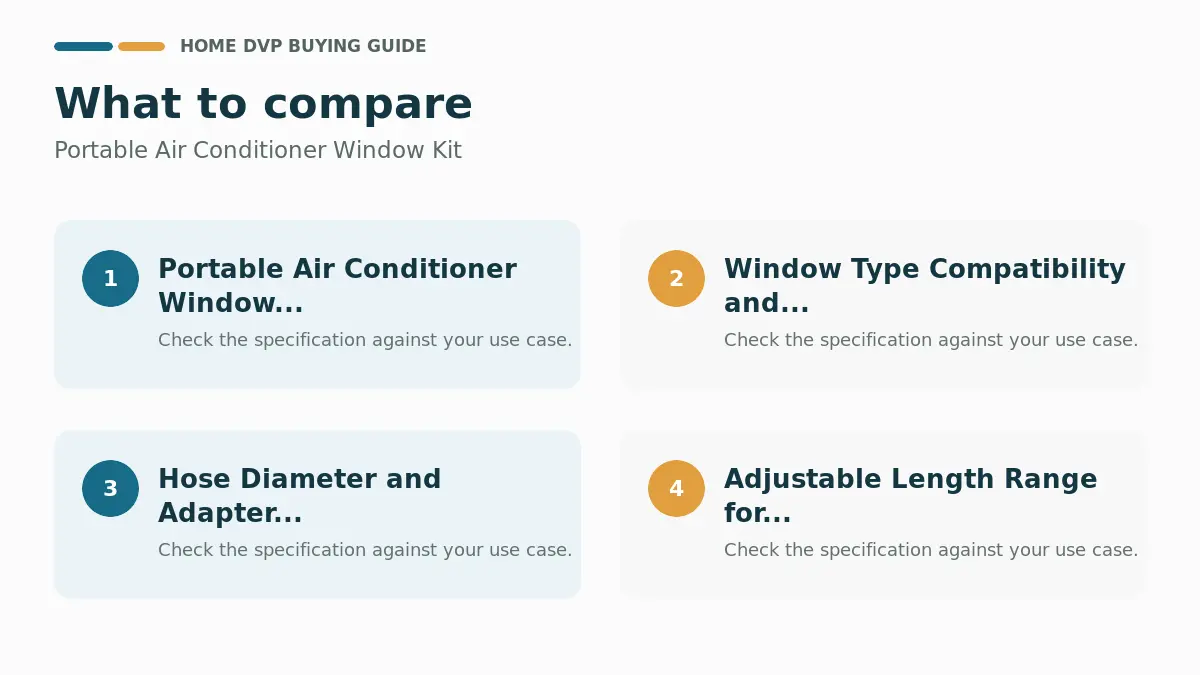
Choosing the right portable air conditioner window kit starts with understanding your portable AC exhaust diameter, window track style, and how often you plan to install and remove the kit. After comparing the listed specifications across 15 models, we identified the factors that most affect sealing performance, energy savings, and long-term reusability for homeowners and renters.
Window Type Compatibility and Track Fit
Most portable air conditioner window kit designs target vertical or horizontal sliding windows and sliding doors. PVC panel kits slide into the existing track and expand to fill the opening, while fabric seal kits use adhesive Velcro and drawstrings for a different approach. Measure the full track length and the open gap where the hose will exit before buying. A common mistake is assuming a kit works with casement or double-hung windows that do not slide; those styles usually require different venting solutions.
For sliding applications, look for kits that clearly state support for both vertical and horizontal orientations. Panels that can be used in 2-, 3-, or 4-board combinations offer more flexibility. Fabric options such as the LOVIGA design work well for single-hung and double-hung sliding windows when a soft, waterproof seal is preferred. Always clean the track thoroughly so panels or tape seat properly and maintain a tight seal throughout the cooling season.
Hose Diameter and Adapter Compatibility
The majority of portable AC units use a 5.9-inch diameter exhaust hose, though some accept 5.1-inch hoses as well. Confirm your unit’s exact outer diameter and thread direction (clockwise or anti-clockwise) before selecting a kit. Universal adapters that accept both 5.1″ and 5.9″ diameters increase versatility, as seen in several PVC panel systems.
Kits that include the exhaust hose, coupler filter, and window adapter simplify setup for first-time users. Those without a hose are ideal if your AC already has a compatible hose. Mismatched diameters cause leaks and reduced cooling capacity, so double-check the product data against your unit’s specifications. For renters who move frequently, a kit with a universal adapter is often the most practical long-term choice.
Adjustable Length Range for Different Openings
Adjustable length is one of the most important practical features. Typical PVC kits extend from roughly 16.5–17 inches up to 60–65 inches, covering most residential sliding windows and doors. Longer maximum lengths give extra margin for taller windows or partial openings. Fabric seals often adjust from about 40 to 64 inches in length with a fixed width.
Measure both the minimum closed position and the maximum opening you plan to use. Over-extending thin panels can reduce rigidity and sealing pressure. Kits with interlocking plates that lock with screws or nuts maintain better alignment once adjusted. If you have both a standard bedroom window and a larger patio door, prioritize a kit whose maximum length covers the larger opening so one purchase serves multiple rooms.
Sealing Performance and Energy Efficiency
A high-quality portable air conditioner window kit prevents hot outdoor air from re-entering and stops cool indoor air from escaping around the hose. Look for kits that include sealing tape or foam strips to cover gaps between fixed and adjustable plates. Seamless bottom joint designs and thicker PVC further improve the seal. Fabric kits that use drawstring closures around the hose claim near-zero gap performance and can also keep out rain and insects.
Better sealing translates directly into lower run times and reduced electricity use. Homeowners who previously used cardboard or towels often notice a clear improvement in cooling speed and humidity control once a purpose-built kit is installed. Always apply the included sealing strip at every connection point, including where the panels meet the window frame. For more whole-home cooling strategies, see our guide on the best mini split AC systems as a longer-term alternative.
Material Durability and Seasonal Reusability
PVC remains the dominant material for rigid panel kits because it resists warping, extrusion damage, and aging under typical temperature swings. High-quality PVC can be stored flat and reused for multiple seasons without cracking. Fabric kits made of waterproof polyester or TU-coated material offer flexibility and heat-reflective properties but require careful cleaning and dry storage to avoid mold.
Check that the kit is described as anti-aging and reusable. Thin or brittle panels may bow under window pressure or become difficult to slide after one summer. Kits that include extra screws and longer sealing tape make future reinstallations easier. For apartment dwellers who remove the unit every fall, a lightweight design that packs compactly is a clear advantage.
Ease of Installation and Tool Requirements
Most modern kits are designed for tool-free or minimal-tool setup. PVC panels simply slot together, slide to the desired length, and lock with included screws or lock-nuts. The hose then attaches to the adapter with a twist. Fabric seals use adhesive Velcro applied to the frame, after which the cloth is pressed into place and the drawstring tightened around the hose.
Common installation mistakes include failing to clean dust from the track, stretching the seal unevenly, or skipping the sealing tape. Always dry-fit the panels first. Many brands now provide short installation videos, which reduce setup time for beginners. Renters should confirm that adhesive-backed options leave no residue when removed at the end of the season. A kit that can be fully disassembled and stored in a closet makes seasonal transitions far simpler.
Included Accessories and Completeness of the Kit
Some kits are panel-and-adapter only, while others include a full 59-inch exhaust hose, coupler filter, sealing tape, and mounting hardware. Complete kits save a second purchase if your AC hose is damaged or missing. Panel-only kits keep costs lower when you already own a compatible hose. Review the package contents carefully: typical PVC kits list four plates (two fixed, two adjustable), adapter, screws, and tape.
Filters help keep debris out of the hose, and longer sealing tape provides coverage for imperfect window frames. If the description notes that the hose is not included, plan accordingly. For multi-room households, owning one complete kit plus a spare set of panels can be more economical than buying full kits for every window.
Value Considerations Across the $13.75–$470 Spectrum
Options span a wide range within $13.75–$470, reflecting differences in included hose length, dual-diameter adapters, and material thickness. Budget fabric seals deliver solid performance for temporary or rental use, while mid-range PVC kits with full hoses and stronger locking systems suit most permanent homeowners. Higher-priced complete kits often add reverse-thread couplers or extended length ranges.
Focus on the features that solve your specific window and hose challenges rather than simply choosing the lowest price. A kit that seals well and lasts several seasons usually delivers better overall value than a cheap option that must be replaced after one summer. Cross-check user-facing specifications against your AC manual and window measurements before finalizing the purchase.
Our Research Methodology & Why You Can Trust Us
At Home DVP we evaluate home improvement products through a transparent, specification-driven process. For this Portable Air Conditioner Window Kit guide we compared the full set of listed product data including materials, adjustable ranges, hose diameters, package contents, and stated compatibility with sliding windows. We cross-referenced brand claims against common portable AC exhaust standards and typical residential window dimensions.
Our ranking criteria emphasize performance (sealing effectiveness and energy impact), features (adjustability and included adapters), build quality (PVC thickness and reusability), ease of use (tool-free installation), durability, safety of materials, value relative to included components, reliability indicators from product descriptions, and fit for homeowner or renter DIY use cases. We do not claim laboratory or hands-on testing beyond the available product information.
We also review category trends within Heating, Cooling & Air and related climate control topics on our site, including the Heating, Cooling & Air section and broader Air Quality & Climate resources. Content is refreshed during September to reflect current product data and seasonal demand so readers receive practical, up-to-date recommendations.
Final Thoughts
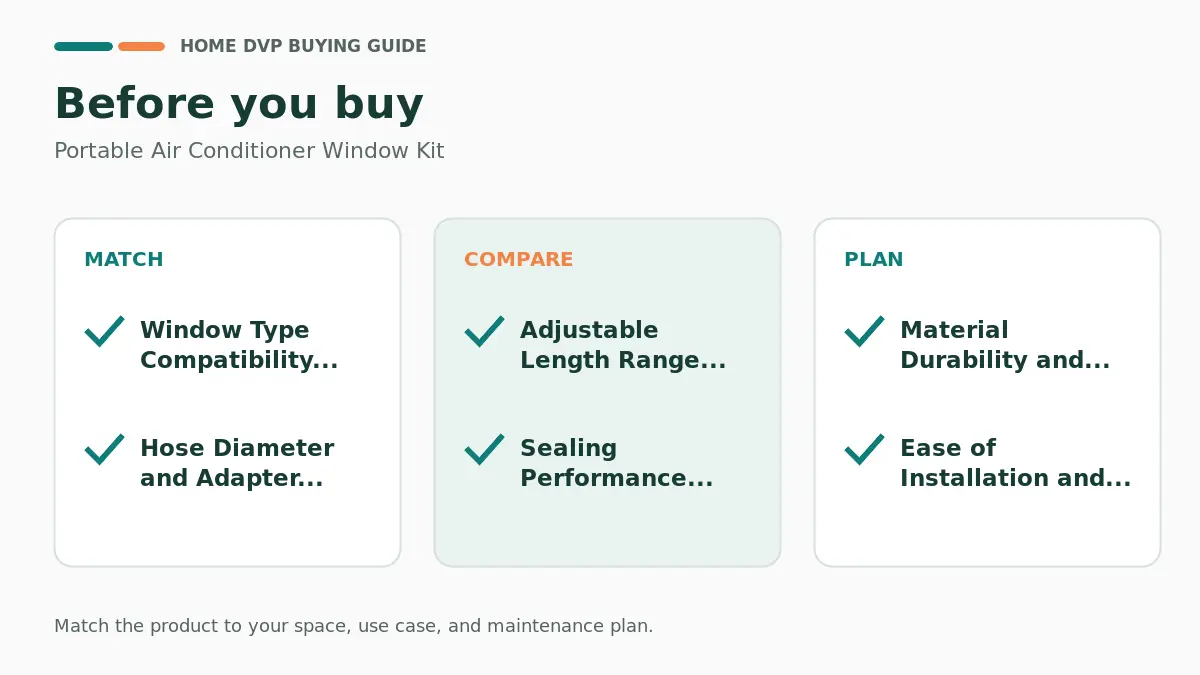
After carefully analyzing the available specifications for 15 options, several clear recommendations emerge for different homeowner needs. The Jeacent Portable AC Window Vent Kit stands out as an overall pick for its dual 5.1″/5.9″ adapter, seamless panel design, sturdy PVC construction, and strong user feedback volume. It works well for most sliding windows up to 60 inches and does not require a hose if you already own one.
For a strong value choice the LOVIGA fabric window seal kit offers adjustable 40–64 inch coverage, waterproof construction, and a simple drawstring seal that keeps out heat, rain, and insects at a lower entry cost. Homeowners who want a complete ready-to-use package can consider the Kxuhivc or FFXWTSF kits that include a 5.9-inch exhaust hose, adapter, sealing tape, and four adjustable PVC plates. The UNAOIWN kit is a solid homeowner pick when you need clockwise/counterclockwise hose compatibility without purchasing an extra hose.
Beginners and renters will appreciate the Aukney and Nihoney complete kits for their clear rail designs and tool-free setup. Always measure your window and verify hose diameter before ordering. Pairing the right portable air conditioner window kit with a properly sized portable unit dramatically improves comfort and efficiency. For additional cooling system comparisons visit our pages on the best mini split AC and best air conditioner for apartment setups.
Frequently Asked Questions
What should I look for when choosing portable air conditioner window kit?
Focus first on hose diameter match (usually 5.9 inches), maximum adjustable length for your window, and whether the kit includes sealing tape or a full exhaust hose. Confirm support for both vertical and horizontal sliding windows if needed. Material quality and easy tool-free installation are also important for seasonal reuse.
Are higher-end portable air conditioner window kit worth it?
Higher-end kits often include dual-diameter adapters, thicker PVC, longer maximum lengths, and complete hose packages that improve sealing and convenience. For frequent use or larger windows they can deliver better energy savings and durability. Budget fabric options still perform well for temporary or rental situations within the typical $13.75–$470 range.
How should beginners choose portable air conditioner window kit?
Beginners should start with a complete kit that includes the exhaust hose, adapter, plates, and sealing tape so everything arrives in one box. Look for clear installation instructions or video support and a locking system that does not require special tools. Measure the window track carefully and choose a kit rated for both horizontal and vertical use if your home has mixed window styles.
How long should quality portable air conditioner window kit last?
Well-made PVC kits can last multiple cooling seasons when stored properly between uses. Fabric seals also last several years if kept clean and dry. Avoid forcing panels beyond their stated maximum length and always use the included sealing strips to reduce stress on the joints. Regular cleaning of the track and hose connection helps extend service life.
What brands make reliable portable air conditioner window kit?
Popular and well-reviewed options come from brands such as UNAOIWN, Kxuhivc, LEZIFU, FFXWTSF, HOMCOM, LOVIGA. Reliability is best judged by clear specifications for diameter, adjustability, and materials rather than brand name alone. Check that the kit lists compatibility with common portable AC brands and includes the hardware needed for a secure seal.
How much should homeowners expect from portable air conditioner window kit in 2026?
Homeowners can expect adjustable PVC or fabric kits priced within $13.75–$470 that seal most standard sliding windows, support 5.9-inch hoses, and install without permanent modifications. Complete kits that include the hose and sealing accessories provide the most convenient experience. Performance improvements come primarily from better air sealing rather than complex electronics.
Are portable air conditioner window kit suitable for DIY projects, home repairs, or regular maintenance?
Yes, most designs are created specifically for homeowner DIY installation and seasonal maintenance. No special tools or electrical work is required. They pair well with portable cooling setups and can be removed and stored when the AC is put away. For broader cooling system planning, explore the resources in our Heating, Cooling & Air category.