Outdoor lighting does more than brighten a pathway. It improves safety, deters unwanted activity, and makes evenings more usable around the porch, garage, patio, and garden. If you are updating fixtures this season, a clear comparison of the best Outdoor Light Bulbs can save you from buying bulbs that fail early, waste energy, or fight with wet-rated outdoor housings.
For this 2026 guide, our team at Home DVP reviewed 15 outdoor-focused LED options spanning A19 general-service bulbs, PAR30 and PAR38 floods, Edison-style filament looks, and dusk-to-dawn photocell models. We compared lumen output, color temperature, wet-location suitability, base type, energy use, sensor behavior, and warranty language based on manufacturer specifications and widely reported homeowner feedback.
Whether you need automatic porch security lighting, bright garage floods, or warmer decorative accents, the right bulb depends on fixture type, weather exposure, and how much hands-off control you want. You can also browse related lighting and fixture resources in our Light Bulbs category and pair outdoor upgrades with indoor bathroom projects such as a LED bathroom mirror when renovating whole-home lighting at once.

Pros
- Built-in photocell provides true auto on at night and auto off at dawn
- Low 9W consumption with 60W-equivalent brightness saves energy versus traditional bulbs
Cons
- Designed only for outdoor use and may remain on continuously if installed indoors
- Red photo sensor must stay fully uncovered or the bulb will not cycle correctly
Specifications
| Light Type | LED |
|---|---|
| Additional Features | Automatic On/Off, Instant On, Light sensor bulb, Standard E26 Base, ULand DOE listed, FCC compliant |
| Wattage | 9 watts |
| Bulb Shape Size | A19 |
| Bulb Base | E26 |
| Incandescent Equivalent Wattage | 60 Watts |
| Specific Uses For Product | Outdoor use only |
| Light Color | Daylight |
| Voltage | 120 Volts (AC) |
| Color Temperature | 5000 Kelvin |
Verify the current product variation before purchase; specifications may change.
Best For / Avoid If
Best for buyers prioritizing
- Built-in photocell provides true auto on at night and auto off at dawn
- Low 9W consumption with 60W-equivalent brightness saves energy versus traditional bulbs
- Works with standard E26 and E27 outdoor fixtures across porches, garages, and gardens
Consider another option if
- Designed only for outdoor use and may remain on continuously if installed indoors
- Red photo sensor must stay fully uncovered or the bulb will not cycle correctly
- Damp location rating may not suit fully exposed wet locations without a protected fixture

Pros
- Hands-free ambient sensing removes the need for manual switches or programming
- Low wattage design supports efficient exterior lighting over many years
Cons
- Sensor must remain exposed to ambient light or automatic cycling can be disrupted
- Limited to soft white output with no color or app-based brightness control
Specifications
| Light Type | LED |
|---|---|
| Additional Features | Energy Efficient, Long Lasting |
| Wattage | 8.5 watts |
| Bulb Shape Size | A19 |
| Bulb Base | E26 Medium |
| Incandescent Equivalent Wattage | 60 Watts |
| Specific Uses For Product | Decoration |
| Light Color | Soft White |
| Voltage | 120 Volts |
| Color Temperature | 2700 Kelvin |
Verify the current product variation before purchase; specifications may change.
Best For / Avoid If
Best for buyers prioritizing
- Hands-free ambient sensing removes the need for manual switches or programming
- Low wattage design supports efficient exterior lighting over many years
- Straightforward install that only requires sensor exposure to outdoor light
Consider another option if
- Sensor must remain exposed to ambient light or automatic cycling can be disrupted
- Limited to soft white output with no color or app-based brightness control
- Users wanting motion sensing or multi-color smart features may prefer another LED+ option

Pros
- Automatic dusk-to-dawn photocell operation
- Energy-efficient 800-lumen warm white output
Cons
- Non-dimmable design limits use with dimmer switches
- Lacks smart app or adjustable scheduling features
Best For / Avoid If
Best for buyers prioritizing
- Automatic dusk-to-dawn photocell operation
- Energy-efficient 800-lumen warm white output
- Weather-resistant design for outdoor fixtures
Consider another option if
- Non-dimmable design limits use with dimmer switches
- Lacks smart app or adjustable scheduling features
- Four-pack quantity may exceed needs for single-fixture projects

Pros
- Hands-free dusk-to-dawn control removes daily on/off routines for outdoor fixtures.
- Low wattage relative to 60W-equivalent output supports more efficient porch and pathway lighting.
Cons
- Fixed 5000K daylight color may not match preferences for warmer outdoor ambiance.
- Sensor needs exposure to surrounding light, so fully shaded or enclosed fixtures can reduce auto-sensing reliability.
Best For / Avoid If
Best for buyers prioritizing
- Hands-free dusk-to-dawn control removes daily on/off routines for outdoor fixtures.
- Low wattage relative to 60W-equivalent output supports more efficient porch and pathway lighting.
- Daylight-white, steady illumination improves visibility in poorly lit outdoor spots.
Consider another option if
- Fixed 5000K daylight color may not match preferences for warmer outdoor ambiance.
- Sensor needs exposure to surrounding light, so fully shaded or enclosed fixtures can reduce auto-sensing reliability.
- Feature set prioritizes automatic on/off rather than dimming or tunable color for advanced lighting setups.

Pros
- Automatic dusk-to-dawn control reduces the need for manual switching or timers
- Low 9W power use while matching conventional 60W brightness levels
Cons
- 5000K daylight tone may feel cooler than warmer soft-white preferences for some porch settings
- Sensor-driven operation may not suit users who want full manual control or dimming
Best For / Avoid If
Best for buyers prioritizing
- Automatic dusk-to-dawn control reduces the need for manual switching or timers
- Low 9W power use while matching conventional 60W brightness levels
- Long rated life helps cut replacement trips for hard-to-reach outdoor fixtures
Consider another option if
- 5000K daylight tone may feel cooler than warmer soft-white preferences for some porch settings
- Sensor-driven operation may not suit users who want full manual control or dimming
- Best results depend on fixtures that allow the photocell to sense ambient light properly

Pros
- Automatic dusk-to-dawn sensing removes the need for timers or nightly manual control
- Strong efficiency from a 13W draw that still produces 100W-equivalent brightness
Cons
- Photocell may not work correctly inside frosted or opaque fixtures that cover the sensor
- Semi-outdoor locations such as porches and patios are recommended rather than fully indoor use
Best For / Avoid If
Best for buyers prioritizing
- Automatic dusk-to-dawn sensing removes the need for timers or nightly manual control
- Strong efficiency from a 13W draw that still produces 100W-equivalent brightness
- Long 25,000-hour rating reduces how often outdoor bulbs must be changed
Consider another option if
- Photocell may not work correctly inside frosted or opaque fixtures that cover the sensor
- Semi-outdoor locations such as porches and patios are recommended rather than fully indoor use
- Slight power-supply noise under 24 dB may be audible in very quiet surroundings

Pros
- High lumen output matches 400W-equivalent brightness at a much lower wattage draw
- Flicker-free and quiet operation suits extended DIY or repair work
Cons
- Non-dimmable design is incompatible with dimmer switches or dimmable fixtures
- Not suited for high-humidity areas, outdoor use, or fully sealed waterproof fixtures
Best For / Avoid If
Best for buyers prioritizing
- High lumen output matches 400W-equivalent brightness at a much lower wattage draw
- Flicker-free and quiet operation suits extended DIY or repair work
- Ceramic construction supports efficient heat management and safer handling
Consider another option if
- Non-dimmable design is incompatible with dimmer switches or dimmable fixtures
- Not suited for high-humidity areas, outdoor use, or fully sealed waterproof fixtures
- Very high brightness may feel excessive in small rooms that need softer ambient light

Pros
- Energy-efficient 13W PAR38 format with useful 1050-lumen daylight output
- Wet-rated build suited to outdoor flood and spotlight applications
Cons
- No photocell or motion sensor for fully automatic dusk-to-dawn or detection-based lighting
- Fixed 5000K daylight tone may not suit users who prefer warmer exterior ambiance
Best For / Avoid If
Best for buyers prioritizing
- Energy-efficient 13W PAR38 format with useful 1050-lumen daylight output
- Wet-rated build suited to outdoor flood and spotlight applications
- Seamless dimming with listed flicker-free, instant-on performance
Consider another option if
- No photocell or motion sensor for fully automatic dusk-to-dawn or detection-based lighting
- Fixed 5000K daylight tone may not suit users who prefer warmer exterior ambiance
- Smart app control is not part of this non-connected bulb set

Pros
- Energy-efficient 13W draw with listed 100W-equivalent brightness
- Dimmable control for flexible outdoor and indoor light levels
Cons
- Best aligned with semi-covered outdoor use rather than fully exposed extreme weather applications
- May not meet needs of buyers seeking specialized beam control for high-security lighting
Best For / Avoid If
Best for buyers prioritizing
- Energy-efficient 13W draw with listed 100W-equivalent brightness
- Dimmable control for flexible outdoor and indoor light levels
- Rated 15,000-hour life that can reduce replacement frequency
Consider another option if
- Best aligned with semi-covered outdoor use rather than fully exposed extreme weather applications
- May not meet needs of buyers seeking specialized beam control for high-security lighting
- Users wanting smart app connectivity may prefer a different product since no such features are listed
Pros
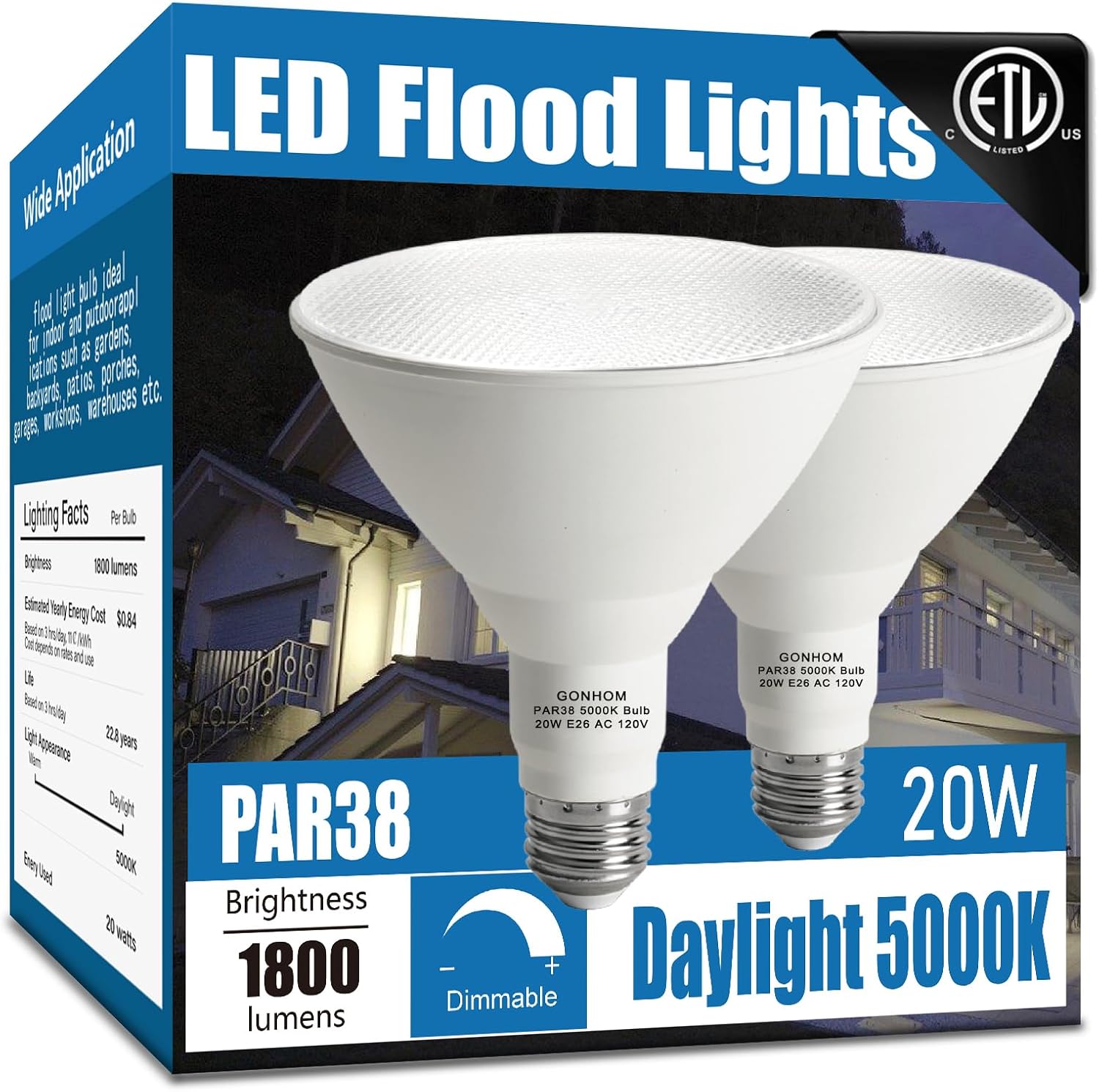
- Strong lumen output for outdoor visibility in a compact PAR38 form
- Energy-focused 20W design compared with traditional higher-wattage flood bulbs
Cons
- Damp-location rating may not suit fully exposed wet installations that need higher weather protection
- Daylight 5000K color may feel cooler than warm white options preferred for cozy patio ambiance
Best For / Avoid If
Best for buyers prioritizing
- Strong lumen output for outdoor visibility in a compact PAR38 form
- Energy-focused 20W design compared with traditional higher-wattage flood bulbs
- Dimmable control adds flexibility for different evening lighting levels
Consider another option if
- Damp-location rating may not suit fully exposed wet installations that need higher weather protection
- Daylight 5000K color may feel cooler than warm white options preferred for cozy patio ambiance
- Users needing specialized commercial-grade fixtures may want more advanced controls or form factors

Pros
- Built-in photocell delivers automatic dusk-to-dawn operation without timers
- Waterproof design works for both outdoor flood needs and indoor damp areas
Cons
- Non-dimmable design may not suit users who prefer adjustable brightness levels
- Not for sale in California, which limits availability for some buyers
Best For / Avoid If
Best for buyers prioritizing
- Built-in photocell delivers automatic dusk-to-dawn operation without timers
- Waterproof design works for both outdoor flood needs and indoor damp areas
- UL-certified LED construction supports safer, longer-lasting performance
Consider another option if
- Non-dimmable design may not suit users who prefer adjustable brightness levels
- Not for sale in California, which limits availability for some buyers
- Sensor requires the fixture power to stay on, so switch habits may need adjustment
Pros
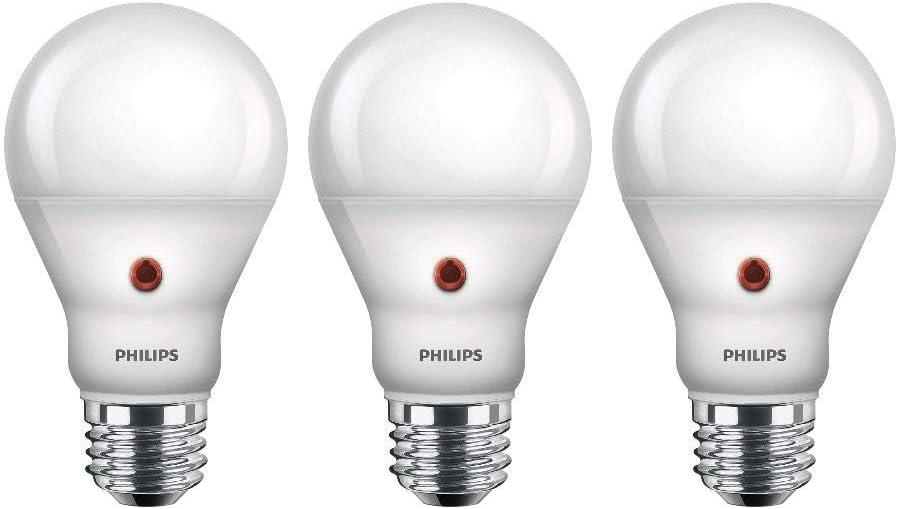
- Automatic dusk-to-dawn operation removes the need for timers or manual switching
- Warm 2700K soft white light works well for porches, walkways, and general outdoor areas
Cons
- Non-dimmable design may not suit fixtures where adjustable brightness is preferred
- Not compatible with Philips Hue or other connected smart lighting systems

Pros
- Strong 1500-lumen output brightens large areas effectively
- Low 17-watt consumption delivers major energy savings
Cons
- Limited to warm white color temperature which may not appeal to daylight preference users
- PAR38 floodlight shape requires compatible fixtures for proper fit
Best For / Avoid If
Best for buyers prioritizing
- Strong 1500-lumen output brightens large areas effectively
- Low 17-watt consumption delivers major energy savings
- Extended lifespan rating reduces long-term maintenance
Consider another option if
- Limited to warm white color temperature which may not appeal to daylight preference users
- PAR38 floodlight shape requires compatible fixtures for proper fit
- Higher brightness needs may lead some buyers to consider more powerful options in the lineup

Pros
- Strong 1250-lumen output from an efficient 15W LED design
- Indoor and outdoor wet-rated construction for versatile placement
Cons
- 5000K bright white tone may feel cooler than some homeowners prefer for cozy living spaces
- 40° beam prioritizes spotlight coverage rather than a wide flood wash
Best For / Avoid If
Best for buyers prioritizing
- Strong 1250-lumen output from an efficient 15W LED design
- Indoor and outdoor wet-rated construction for versatile placement
- Works with listed Lutron and Leviton dimmers for adjustable control
Consider another option if
- 5000K bright white tone may feel cooler than some homeowners prefer for cozy living spaces
- 40° beam prioritizes spotlight coverage rather than a wide flood wash
- Dimmer compatibility should be confirmed if your switches differ from the listed models
Best Outdoor Light Bulbs Buying Guide
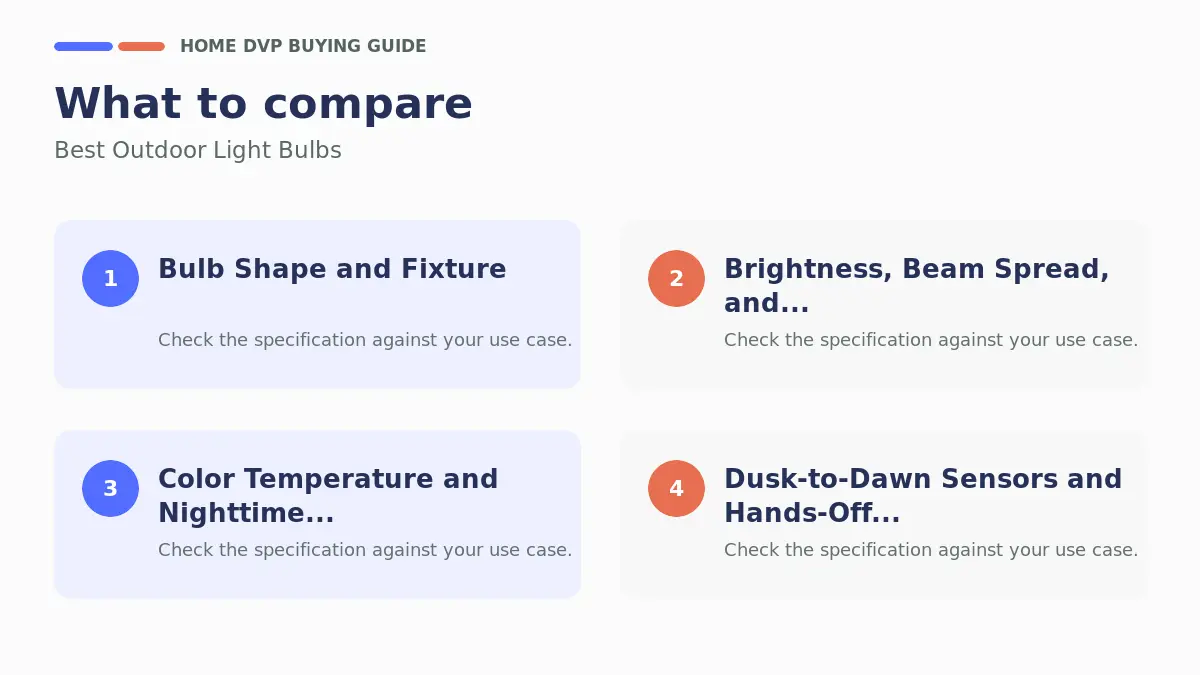
Choosing the best outdoor light bulbs is less about brand logos and more about matching the bulb to the fixture, the climate, and the job. A porch sconce, a recessed can flood, and a decorative post light all punish the wrong bulb in different ways. After carefully analyzing the available specifications across A19 sensor bulbs, wet-rated PAR floods, and filament-style outdoor options, we organized the buying criteria that matter most for homeowners and renters.
Bulb Shape and Fixture Compatibility
Start with the fixture, not the packaging claim. A19 bulbs suit many enclosed and open porch lanterns, garage side lights, and traditional sockets. PAR30 and PAR38 shapes are built for flood and spotlight cans, security floods, and directional outdoor housings. ST64 Edison-style bulbs work best where the glass shape is visible and the fixture allows enough clearance for the taller envelope.
A common mistake is forcing a large PAR38 into a shallow decorative sconce. That can block the photocell, trap heat, or leave the bulb half-hidden. Confirm E26 medium base compatibility, check can size for recessed housings, and leave the sensor window exposed on dusk-to-dawn models. If your outdoor project overlaps with bathroom or vanity upgrades indoors, plan socket types together so replacements stay simple across the home.
Brightness, Beam Spread, and Real Outdoor Visibility
Outdoor brightness is about usable light on the ground and walls, not just a high lumen number on a box. Many A19 outdoor options land near 800 lumens, which is typically enough for porches, entryways, and pathways when fixtures are well placed. Flood-style PAR bulbs often push higher output and a wider or more directional beam for driveways, backyards, and garage aprons.
Our research indicates that homeowners often over-light a small porch and under-light a long walkway. Use softer, even illumination near seating areas and stronger floods for security zones. Aim fixtures so light falls on surfaces instead of into neighbors’ windows. For deep yards, one high-output PAR38 can outperform several weak general-service bulbs because the beam reaches farther with less spill.
| Use case | Typical bulb style | What to prioritize |
|---|---|---|
| Porch and entry | A19 dusk-to-dawn | Even light, auto on/off, E26 fit |
| Driveway or garage apron | PAR30 / PAR38 flood | Higher lumens, wet rating, beam coverage |
| Decorative patio string or lantern | ST64 filament style | Warm tone, visible shape, weather durability |
| Security perimeter | Daylight flood or sensor flood | Brightness, reliability, set-and-forget operation |
Color Temperature and Nighttime Comfort
Color temperature changes how safe and inviting a space feels. Daylight options around 5000K look crisp and alert, which helps with security cameras, parking areas, and task zones. Soft white and warm white options around 2700K to 3000K feel more residential and flattering on brick, wood, and landscaping.
Based on the feature sets we compared, many high-volume outdoor sensor bulbs lean daylight for maximum visibility, while brands like Philips also offer warmer dusk-to-dawn A19 options for homeowners who want a less stark night look. Avoid mixing 2700K and 5000K on the same elevation unless you intentionally separate accent lighting from security floods. Consistent color temperature makes a home look planned rather than patched together.
Dusk-to-Dawn Sensors and Hands-Off Security
Photocell bulbs are one of the easiest outdoor upgrades because they turn on at night and off at dawn without apps, hubs, or timers. That is ideal for renters, vacation homes, and anyone who forgets to flip a switch. Look for sensors that respond to ambient daylight rather than nearby lamp spill so the bulb does not chatter on and off when other lights are nearby.
Installation still matters. Keep the sensor window uncovered, leave the fixture switch on, and avoid burying the bulb deep in a fully opaque shade. Models from TORCHSTAR, Amazon Basics, TJOY, GE LED+, Sunco, and Philips all target this set-and-forget use case, but they differ in shape, pack size, warranty length, and whether they are A19 or flood form factors. If you want automation without smart-home complexity, dusk-to-dawn LEDs are usually the simplest path.
Wet Rating, Weather Resistance, and Outdoor Durability
Outdoor bulbs face rain, dust, temperature swings, and condensation. Prefer wet-rated or weatherproof designs for open fixtures, soffit cans, and fully exposed security floods. Dust-tight construction and solid seals matter just as much as raw brightness because moisture and debris shorten electronics life.
Enclosed fixtures can still overheat poorly designed LEDs, so check whether a bulb is approved for enclosed housings when the product information specifies it. Flood options from Sunco and high-output PAR styles are often chosen for wet outdoor exposure, while decorative filament bulbs need weatherproof construction if they sit in open lanterns. For broader home maintenance planning, pair exterior lighting checks with other practical upgrades found under Hardware and keep seasonal exterior tasks on the same list.
Energy Use, Lifespan, and Replacement Cost
Modern outdoor LEDs commonly replace 60W to 100W-class incandescent or halogen bulbs while drawing far less power, often in the 7W to 15W range for everyday models and around 20W for stronger floods. Because outdoor lights may run all night, efficiency compounds quickly. Sensor bulbs also reduce waste by staying off during daylight.
Based on available product information, lifespan claims vary widely, from roughly 10,000 hours on value multipacks to 22,000 hours or more on longer-rated options. Warranties range from about one year on some value packs to multi-year coverage from brands like Sunco, GE, and Philips. Buy multipacks when you need matched color and brightness across several fixtures, but do not overbuy shapes that only fit one housing on the house.
Dimming, Controls, and When Smart Features Are Unnecessary
Not every outdoor bulb needs dimming. Many dusk-to-dawn A19 models are non-dimmable by design because the photocell circuit is the control system. That is fine for security and porch use. If you want mood control on a patio or covered deck, choose a clearly dimmable wet-rated flood or decorative LED and confirm compatibility with the outdoor dimmer type.
Smart bulbs can be useful, but they add Wi-Fi issues, app maintenance, and cold-weather concerns that many homeowners do not need for simple exterior security. For most garages, side yards, and front porches, a reliable photocell LED is more practical. Save advanced controls for interior rooms and keep exterior circuits dependable. If your remodel also includes bathroom ventilation or fixture work, review complementary guides such as our bathroom exhaust fan buying guide so electrical upgrades stay coordinated.
Certifications, Safety, and Value Across the $11.22–$39.95 Range
Look for UL listing, FCC compliance, DOE or Energy Star claims where stated, and clear mercury-free LED construction. These details matter more outdoors because moisture, vibration, and long run times stress cheap electronics. A slightly higher multipack price is often justified when the warranty and safety listings are stronger.
Value is not only the lowest sticker. A 4-pack of A19 sensor bulbs can be the best buy for a whole porch circuit, while a 2-pack of high-output PAR floods may deliver better security coverage per dollar. After comparing the listed specifications, we found strong options for tight budgets, midrange multi-packs, and longer-warranty name-brand choices without needing exotic smart ecosystems.
Our Research Methodology & Why You Can Trust Us
Home DVP evaluates outdoor lighting products as a specification-driven buying resource for homeowners, renters, and DIYers. We do not invent lab results or claim workshop installation when the source data does not support it. Instead, we compare manufacturer-stated lumen output, wattage equivalence, color temperature, base type, sensor features, weather ratings, pack counts, warranties, and intended outdoor use cases.
We also weigh category fit carefully. Only products that clearly function as outdoor light bulbs or outdoor-capable LED replacements are included for the best Outdoor Light Bulbs. Flood lamps, A19 photocell bulbs, and weatherproof filament LEDs stay in. Unrelated home tools or fixtures stay out. User-facing feedback patterns help us understand common pain points such as sensor false triggers, fixture fit issues, and color mismatch, but ranking still prioritizes transparent product data.
Our ranking criteria emphasize performance, features, build quality, ease of use, durability, safety, value, reliability, and real homeowner fit. During July, we refresh comparisons as product availability and positioning shift so readers can make current decisions for 2026. That process keeps recommendations practical for porches, patios, garages, and security lighting rather than generic indoor bulb advice.
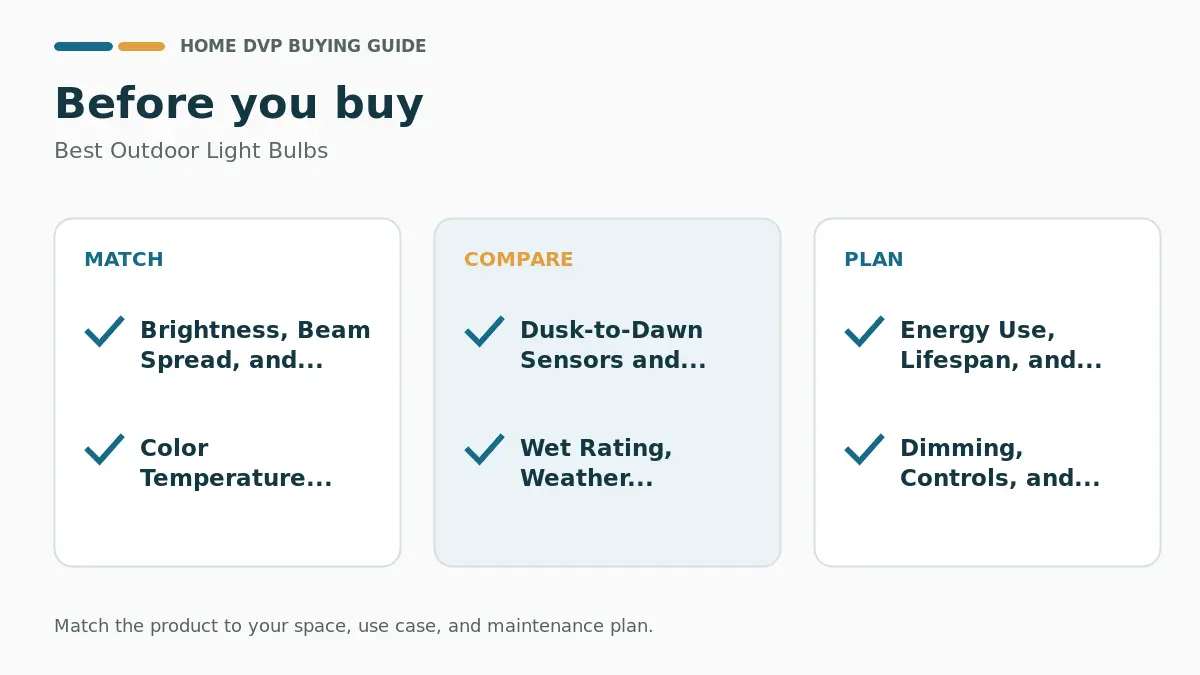
Final Thoughts
If you want a dependable all-around choice, the TORCHSTAR 4-Pack Dusk to Dawn A19 LED stands out as a strong overall pick for porches, garages, and gardens. It pairs an 800-lumen daylight output with a sunlight-focused photocell, common E26 base, and multi-listing safety claims that suit everyday exterior fixtures. For budget-conscious multipack shoppers, Amazon Basics A19 Dusk to Dawn Sensor LEDs and TJOY 4-pack sensor bulbs are practical value picks when you need automatic lighting without a complicated setup.
Homeowners who need broader coverage should look at flood shapes. Sunco PAR30 dusk-to-dawn bulbs and Sunco wet-rated PAR38 multipacks are solid homeowner picks for recessed cans, patios, and security floods, while Gonhom PAR38 dimmable floods offer high lumen output for backyards and long approaches. If you prefer a warmer residential glow with long warranty language, the Philips Soft White dusk-to-dawn A19 multipack is a premium-leaning option. GE LED+ A19 and PAR38 dusk-to-dawn packs are easy setup choices for people who want brand familiarity and set-and-forget security lighting.
Match the bulb to the fixture first, then decide between warm ambiance and daylight security, and finally choose sensor automation if you want lights that manage themselves. With 15 options analyzed across SuncoLighting, PhilipsLightingLED, TORCHSTAR, AmazonBasics, LUXRITE, Gonhom and related brands, you can upgrade exterior lighting confidently without overspending or overcomplicating the project. For more home improvement research across fixtures and tools, explore our Light Bulbs hub and complementary bathroom fixture guides when planning multi-room updates.
FAQ
What should I look for when choosing the best outdoor light bulbs?
Focus on fixture fit, lumen output, color temperature, weather rating, and whether you need a dusk-to-dawn sensor. Confirm an E26 base or the correct flood shape for your housing, then choose daylight for security zones or warmer white for living areas. Wet-rated construction matters for open outdoor fixtures that see rain and dust.
Are higher-end outdoor light bulbs worth it?
They can be when you get longer warranties, better weather sealing, more stable sensors, or higher-quality light. A premium multipack is often worth the difference if the bulbs run every night and are hard to access. For simple porch use, a well-reviewed midrange sensor LED may be enough.