
An apartment AC budget has three parts: the unit, installation supplies or labor, and electricity. Compare them separately. A cheap unit that does not fit your window or cool the intended room is not a useful saving.
The calculation below uses hypothetical inputs, not current product prices or a promise about your bill. Replace them with your own electricity rate and measured usage.
Estimate Monthly Electricity Cost
Monthly cost = average input watts / 1,000 x hours per day x days x price per kWh. Use average electrical input over the operating period, not the BTU cooling-capacity number. Rated maximum wattage can overestimate average use when the compressor cycles or varies its output.
| Average input | Monthly energy | Monthly cost |
|---|---|---|
| 400 W | 96 kWh | $19.20 |
| 600 W | 144 kWh | $28.80 |
| 900 W | 216 kWh | $43.20 |
For example, 600 / 1,000 x 8 x 30 x $0.20 = $28.80. This is an arithmetic scenario, not a measured result for any listed model. Weather, thermostat settings, insulation, operating time, and utility tariffs change the outcome.
Build a First-Season Budget
Record the checkout price, required mounting or venting kit, delivery, any approved installation work, and estimated seasonal electricity. For a hypothetical $300 unit, $50 of supplies, and four months at $28.80, the first-season total is $465.20 before any tax or other charges. Do not include an accessory twice if it already comes in the box.
Check landlord approval and window fit before spending money. Compare local quotes for any work needed rather than assuming one installation price applies to every apartment.
Choosing a Unit That Fits Your Budget
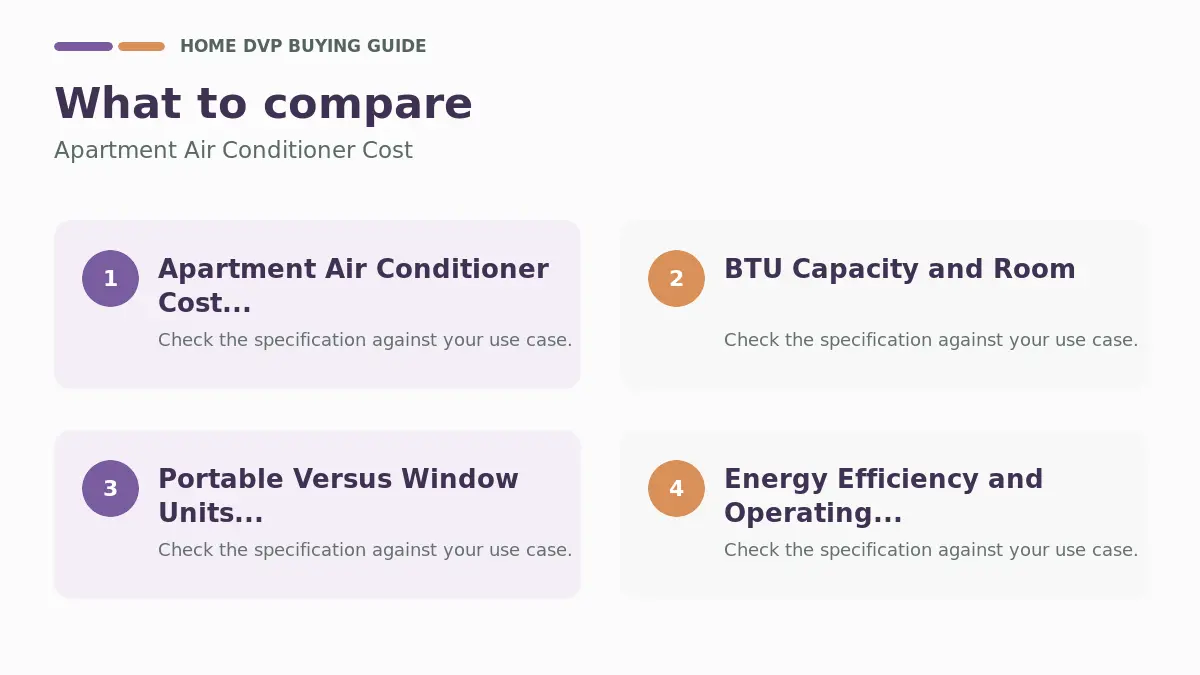
Choosing the right cooling solution for an apartment requires more than glancing at price tags. Factors such as room size, window type, noise sensitivity, and energy use all influence both initial apartment air conditioner cost and ongoing expenses. Below we break down the essential criteria based on product specifications and apartment-focused considerations so you can match a unit to your space and lifestyle.
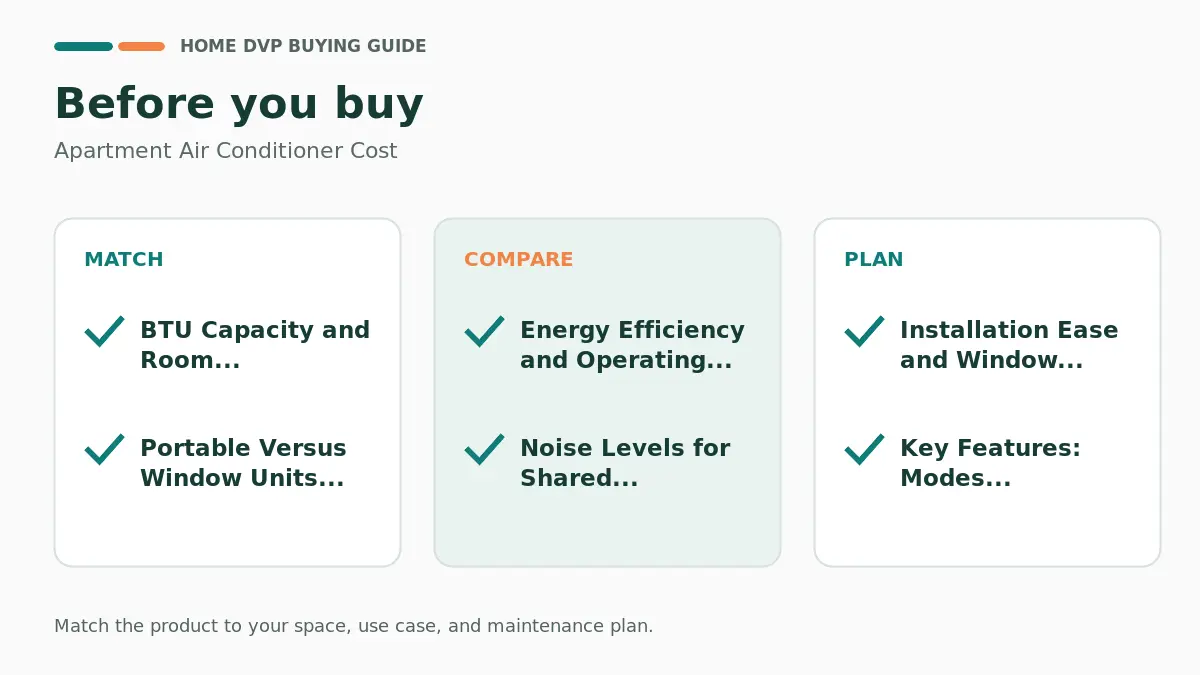
BTU Capacity and Room Size Matching
BTU rating is the foundation of effective cooling. For most apartments, units ranging from 5,000 to 12,000 BTU cover bedrooms and living areas up to several hundred square feet. Undersizing leads to constant running and higher electricity bills, while oversizing can cause short cycling and poor humidity control. Measure your space carefully and consider ceiling height, sun exposure, and insulation quality.
Portable models often list both ASHRAE and SACC ratings. The SACC figure better reflects real-world performance in single-hose designs common in apartments. Aim for roughly 20 BTU per square foot as a starting point, then adjust for heat sources like kitchens or west-facing windows. Common mistakes include relying solely on marketing claims without measuring the actual room or forgetting that open floor plans require higher capacity.
In practice, a 5,000 BTU window unit suits a small bedroom or studio under 150 sq ft, while 8,000 to 12,000 BTU portables handle larger living rooms. Matching capacity correctly keeps apartment air conditioner cost reasonable over the season by avoiding wasted energy.
Portable Versus Window Units for Renters
Portable air conditioners offer maximum flexibility for apartments because they require no permanent mounting and can move between rooms. They use an exhaust hose vented through a window kit, making them ideal when landlords prohibit window installations or when you plan to move soon. Window units, by contrast, sit in the frame and often provide slightly better efficiency but demand more setup and may leave a visible installation.
Renters frequently prefer portables for the ability to store the unit when not in use and avoid potential damage deposits. Check window kit compatibility carefully: most kits fit double-hung or sliding windows within a stated width range. Tool-free installation is a big plus for quick seasonal setup. A common error is purchasing a unit whose kit does not match your window style, forcing extra hardware purchases or poor sealing that reduces cooling effectiveness.
Both types appear frequently among options in the $150–$400 range. Evaluate your lease rules first, then decide based on mobility needs versus slightly higher efficiency of a well-sealed window model. For more on related climate control, see our guide on cool mist versus warm mist humidifiers.
Energy Efficiency and Operating Costs
Upfront apartment air conditioner cost is only part of the equation. Energy use determines monthly electricity impact, especially during peak summer months. Look for units with eco modes, automatic shutoff once the set temperature is reached, and efficient refrigerants such as R32. Lower wattage draws and higher CEER ratings translate to noticeable savings over a cooling season.
Many modern portable and window models include 24-hour timers and sleep modes that reduce runtime overnight. Self-evaporating systems minimize the need to empty water tanks, supporting continuous efficient operation. Avoid older-style units with high power draws if your apartment has limited circuit capacity. Homeowners often overlook that a slightly higher initial investment in an efficient model pays back through lower utility bills.
When comparing, review the listed power consumption and any DOE certifications. Pairing a properly sized unit with smart scheduling keeps overall costs in check. Related energy topics appear in our discussion of smart thermostats versus programmable models.
Noise Levels for Shared Living Spaces
Apartment walls transmit sound easily, so noise rating matters for bedrooms and nighttime use. Look for units advertising operation around 44 to 52 dB in low or sleep modes. Advanced compressor designs and insulated housings help keep sound closer to a quiet conversation rather than a loud fan.
Sleep modes typically dim displays and lower fan speeds automatically. Position the unit so exhaust and airflow do not create extra vibration against floors or walls. A frequent mistake is placing a portable unit too close to a bed or shared wall without checking decibel claims. Quieter models improve sleep quality and reduce neighbor complaints.
Specifications listing low-noise technology or specific dB figures give clearer guidance than vague marketing language. Prioritizing quiet operation often adds little to apartment air conditioner cost while delivering better daily comfort.
Installation Ease and Window Compatibility
Most apartment-friendly units emphasize tool-free or minimal-tool setup. Portable models typically require attaching an exhaust hose, securing an adjustable window bracket, and plugging into a standard outlet. Window units need foam seals, mounting brackets, and careful leveling. Confirm the kit covers your window width and type before purchase.
Adjustable kits that span a wide range of openings suit varied apartment windows. Casters and side handles make portable units easier to move or store. Always follow the included instructions to avoid air leaks that force the unit to work harder. Renters should photograph the original window condition to document no permanent changes.
Easy installation keeps total project time short and avoids hiring help. Units with complete kits included prevent extra shopping trips and unexpected costs that raise overall apartment air conditioner cost.
Key Features: Modes, Controls, and Convenience
Beyond basic cooling, multi-function designs add value. Look for cool, fan, dehumidifier, and sleep modes in one unit. Dehumidification is especially useful in humid climates or older apartments where moisture control improves comfort. Remote controls, LED panels, and app connectivity (on select models) allow adjustments without leaving the couch.
Timers, auto-restart after power outages, and reusable washable filters reduce maintenance hassle. Follow-me remotes that act as a thermostat near your location improve accuracy. Casters and compact footprints help in tight apartment layouts. Avoid overbuying features you will never use if they inflate the price unnecessarily.
Practical extras like included cleaning brushes or dual drain options support year-round usefulness. These conveniences make daily ownership smoother for busy renters and homeowners. For humidity-related accessories, check our dehumidifier drain hose guide.
Budget Planning and Value Considerations
Typical apartment air conditioner cost falls within $150–$400 for reliable portable and window options suitable for apartments. Lower-priced models handle small rooms well, while higher-end units add quieter operation, higher BTU, or smart features. Factor in potential energy savings when weighing options rather than focusing only on the sticker price.
Value comes from matching capacity, features, and build quality to your actual needs. Overspending on unnecessary Wi-Fi for a simple bedroom unit wastes money, just as under-buying capacity forces the unit to run longer and raise bills. Check warranty length and support availability for peace of mind.
Shopping during September often reveals competitive pricing as seasonal demand fluctuates. Compare specifications side by side rather than brand names alone to maximize what you get for the investment.
Maintenance and Longevity Tips
Regular filter cleaning keeps airflow strong and efficiency high. Most units feature washable filters that should be rinsed monthly during heavy use. Self-evaporating designs reduce water-related maintenance, but occasional draining may still be needed in high-humidity conditions.
Store portable units clean and dry over winter to prevent mold or dust buildup. Check seals and hoses for wear before each season. Proper care extends service life and protects your investment in apartment air conditioner cost. Neglecting filters is a common mistake that leads to reduced cooling and higher energy use.
Units with accessible filters and clear maintenance guidance make ownership simpler for apartment dwellers who value low-effort upkeep.
How to Use the Product References
The product listings are supplementary references, not hands-on test results. Verify the exact model, current documentation, and suitability for your needs. Available listings can change; do not treat the number displayed as a fixed research sample.
Before You Decide
Resolve the requirements described above before comparing individual products. Check the exact model documentation and current price, and do not let a promotional feature replace a compatibility or safety check.
Frequently Asked Questions
Is a window or portable AC cheaper to run?
Compare properly sized units using their documented efficiency and expected usage. Form factor alone cannot determine your bill. See ENERGY STAR’s room AC guidance for sizing and efficiency considerations.
Can I estimate cost from BTU alone?
No. BTU per hour describes cooling capacity, not electrical input. Use electrical consumption and your utility rate.
Why is my bill different from this example?
The table fixes usage and price to illustrate the calculation. Your compressor runtime, weather, room conditions, and rate can all differ.
What should renters check before buying?
Confirm window dimensions, building restrictions, installation approval, and the unit’s electrical requirements. Include required accessories in the budget.