
Finding hidden moisture behind drywall, under flooring, or around plumbing fixtures can save homeowners and renters from expensive repairs. Best Thermal Camera For Water Leaks can help identify temperature differences that may point to wet insulation, damp framing, condensation, or active plumbing leaks before visible damage spreads. Because thermal imagers vary widely in resolution, refresh rate, battery life, device compatibility, and ease of interpretation, an updated guide is useful for DIYers comparing practical options for home maintenance.
After carefully analyzing the available specifications, we reviewed 15 thermal imaging options and focused on models that clearly fit Tools & DIY use cases. Our comparison looked at thermal resolution, temperature range, display style, runtime, portability, alert features, recording support, and whether each camera is practical for checking ceilings, walls, floors, water heater areas, bathroom plumbing, basement corners, and HVAC-adjacent moisture concerns. For more home repair tools that pair well with inspection work, see our guide to the best cordless drill for home use.
Home DVP decision summary
Quick Answer
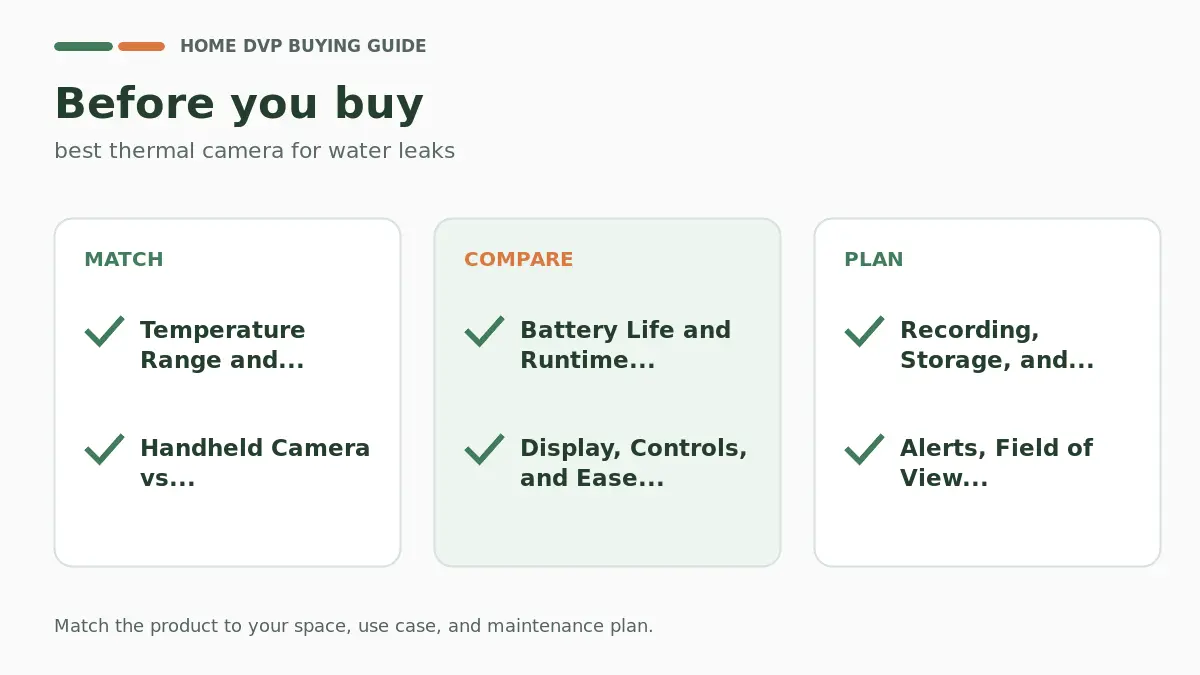
For Best Thermal Camera For Water Leaks, Home DVP compared 15 products from 10 brands. Use thermal imaging to locate temperature patterns that may justify closer inspection; it does not confirm moisture by itself. Compare resolution, thermal sensitivity, focus, field of view, reporting tools, and confirm suspicious areas with a moisture meter or qualified inspection.
| Comparison coverage | 15 products from 10 brands, including TOPDON, FLIR, HSFTOOLS. |
|---|---|
| Selection priority | Use thermal imaging to locate temperature patterns that may justify closer inspection; it does not confirm moisture by itself. Compare resolution, thermal sensitivity, focus, field of view, reporting tools, and confirm suspicious areas with a moisture meter or qualified inspection. |
| Evidence basis | Manufacturer specifications, compatibility details, retailer-provided product data, and common homeowner use cases. |
| Reference guidance | EPA moisture and mold-control guidance. |
This summary describes the article's comparison set, not every product on the market. Product details should be confirmed before purchase.
Thermal cameras do not see through walls and they do not directly detect water. Instead, they reveal surface temperature patterns that can help you decide where to investigate further with a moisture meter, inspection camera, or professional plumber. Based on the product data provided, the valid models in this guide are thermal imaging cameras suitable for home inspection, maintenance, HVAC, electrical, and building diagnostics.
Best Thermal Camera For Water Leaks Buying Guide
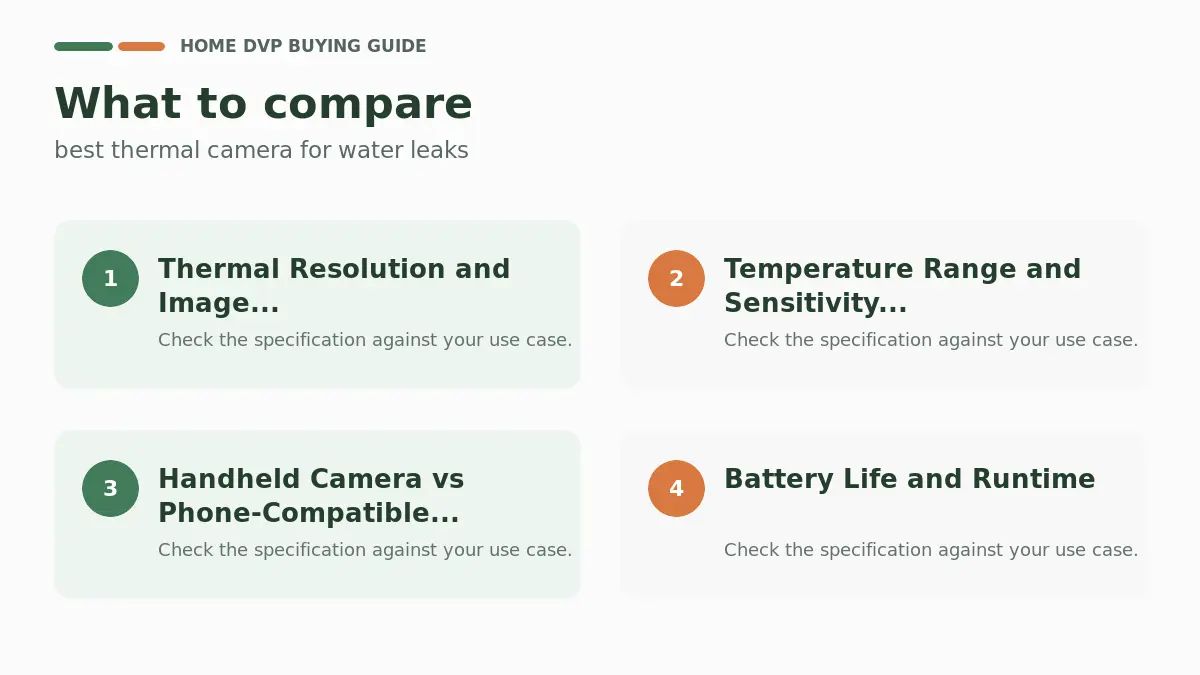
Thermal Resolution and Image Detail
Thermal resolution is one of the most important specifications when choosing the best thermal camera for water leaks. Higher thermal resolution gives you a more detailed heat map, which can make it easier to spot subtle temperature changes around plumbing runs, ceiling stains, baseboards, shower surrounds, and basement walls. For leak investigation, better detail can help distinguish a broad cold area from a smaller pattern that deserves closer inspection.
Models such as the TOPDON TC004 3.5" Thermal Imaging Camera, TOPDON TC002C Duo Thermal Camera, and Thermal Master Handheld Thermal Camera list higher-resolution imaging features than basic entry-level units. That does not automatically make lower-resolution models unsuitable, but it does mean homeowners should think about the size of the area they need to scan. A small under-sink check may not require the same image detail as inspecting multiple rooms after a roof leak.
A common mistake is assuming every thermal image is equally easy to interpret. Low-resolution images can show hot and cold zones, but edges may appear less defined. If you are checking large walls, finished basements, ceilings under bathrooms, or flooring near appliances, a clearer image can reduce guesswork and make it easier to decide whether to open a wall, call a plumber, or continue monitoring.
| Resolution Priority | Best Fit | What to Watch |
|---|---|---|
| Higher thermal detail | Repeated home inspections, renovation planning, larger leak searches | Usually costs more and may include more features than casual users need |
| Midrange detail | DIY maintenance, checking plumbing walls, HVAC checks | Confirm screen size and image enhancement features |
| Basic detail | Quick spot checks and occasional home use | May require more careful scanning and follow-up with a moisture meter |
Temperature Range and Sensitivity
For water leak detection, homeowners usually care more about subtle temperature differences than extreme heat limits. A damp area may appear cooler because evaporation lowers surface temperature, while warm water lines may create a contrasting trail behind a wall or under flooring. That is why both temperature range and thermal sensitivity matter when comparing best thermal camera for water leaks.
Several listed products provide wide temperature ranges suitable for more than plumbing checks. The GT14S Thermal Imaging Camera lists a broad upper range, while models such as the TOPDON TC002C Duo Thermal Camera, Thermal Master Handheld Thermal Camera, HF96 Thermal Camera, and other handheld options cover temperatures useful for HVAC, electrical, and building inspection tasks. For water leaks, the practical benefit is flexibility: one device can help with wet drywall concerns, drafty windows, overheating breakers, and appliance troubleshooting.
Do not choose solely by the highest listed temperature. A homeowner looking for hidden plumbing leaks should prioritize image clarity, stable readings, and useful visual tools over maximum heat capability. Extreme temperature capacity is helpful if you also inspect electrical panels, heating equipment, or mechanical systems, but it is only one part of the decision.
Handheld Camera vs Phone-Compatible Imager
The valid products include both standalone handheld cameras and mobile thermal imagers. Standalone models, such as the TOPDON TC004 3.5" Thermal Imaging Camera, Thermal Master Handheld Thermal Camera, TOPDON TC004 Mini Thermal Imaging Camera, HF96 Thermal Camera, HP96 Thermal Imaging Camera, H128 Handheld Thermal Camera, GT14S Thermal Imaging Camera, and similar handheld units, include their own screen and battery. These are convenient for homeowners who want a dedicated inspection tool that is ready to use without relying on a phone.
Phone-compatible options, including the Klein Tools TI223 Mobile Thermal Imaging Camera and TOPDON TC002C Duo Thermal Camera, can be easier to store and may be convenient for sharing images, using app-based tools, or carrying in a compact kit. However, buyers should verify compatibility with their device before purchasing. Connection type, operating system support, app availability, and phone case clearance can all affect day-to-day usability.
If you already rely on your phone for DIY documentation, a mobile imager can be a practical fit. If you want a tool you can keep in a garage, utility closet, rental maintenance kit, or plumbing tool bag, a dedicated handheld camera may be simpler. For broader tool planning, our Tools & DIY category includes other practical equipment for maintenance and repair projects.
Battery Life and Runtime for Whole-Home Scanning
Battery life matters more than many first-time buyers expect. A quick check around a bathroom vanity may only take a few minutes, but a full inspection after a roof leak, pipe freeze, appliance overflow, or basement moisture issue can take much longer. If you plan to scan multiple rooms, ceilings, exterior walls, and mechanical areas in one session, runtime becomes a real convenience feature.
The H128 Handheld Thermal Camera lists especially long battery life among the provided models, while the TOPDON TC004 Mini Thermal Imaging Camera and GT14S Thermal Imaging Camera also emphasize extended runtime. The TOPDON TC004 3.5" Thermal Imaging Camera lists a working battery life suitable for many inspection tasks, and the HF96 Thermal Camera also includes a runtime figure that fits longer DIY use. For homeowners, longer runtime means fewer interruptions when you are trying to compare dry and damp areas before conditions change.
When comparing runtime, also consider how you will store and recharge the tool. A thermal camera that sits unused for months should be easy to top off before storm season, a rental turnover inspection, or a suspected plumbing problem. If the camera supports auto shutdown or battery-saving features, that can help prevent dead batteries when the tool is stored in a busy utility drawer or truck kit.
Display, Controls, and Ease of Interpretation
A thermal camera is only helpful if you can read the image clearly. Larger screens, touch controls, visible-light overlays, edge enhancement, and high-low temperature markers can make leak investigation more understandable for homeowners. These features help you compare suspect areas against known dry surfaces, which is important because temperature patterns can be caused by insulation gaps, air leaks, sunlight, HVAC airflow, or plumbing.
The HP96 Thermal Imaging Camera lists a touch screen and visual camera, while the Thermal Master Handheld Thermal Camera includes a visual camera and IPS screen. The GT14S Thermal Imaging Camera mentions edge enhancement, and the HF96 Thermal Camera includes AI scene detection and a laser pointer. These kinds of features may help users orient the thermal image to the real-world surface, especially when scanning corners, pipe chases, ceiling joists, and cabinet interiors.
Beginners should avoid choosing a model based only on technical numbers if the interface looks confusing. A simpler camera with clear alarms and an easy-to-read display may produce better decisions than a more advanced unit that sits unused. For homeowners who also plan to drill access holes, mount repair panels, or remove damaged trim after confirming a problem, pairing inspection tools with basics from our drill bit sets for DIY projects guide can make the repair process more efficient.
Recording, Storage, and Documentation
Documentation is valuable when dealing with water damage. Photos and videos can help you track whether a damp area is spreading, explain a problem to a plumber, support a landlord or tenant conversation, or keep records for a repair timeline. A thermal image is not a substitute for professional diagnosis, but it can provide a useful visual reference when combined with moisture readings and physical inspection.
The TOPDON TC004 3.5" Thermal Imaging Camera lists PC analysis and video recording support with onboard storage, which makes it appealing for users who want more detailed reporting. The HP96 Thermal Imaging Camera also lists video recording. Phone-compatible models may offer convenient image saving through a mobile device, though buyers should confirm app features and file handling before relying on them for documentation.
If you manage rental property, remodel older homes, or handle recurring maintenance, recording features can be worth prioritizing. For occasional household checks, a simpler screenshot or image capture workflow may be enough. The key is to label images by room, date, and surface area so you can compare changes after drying, repair, or weather events.
Alerts, Field of View, and Scanning Technique
Temperature alarms and a useful field of view can speed up inspections. High and low temperature alerts can draw attention to suspicious zones, while a wider viewing angle helps when scanning large walls or ceilings. The Thermal Camera with 240 x 240 TISR Resolution lists a 50-degree field of view and temperature alarm, and the TOPDON TC004 Mini Thermal Imaging Camera includes high and low temperature alerts.
Scanning technique is just as important as the camera. Compare suspect areas against nearby dry areas, scan slowly, and avoid jumping to conclusions from a single image. A cold patch near a ceiling could be a leak, but it could also be missing insulation or air movement from an attic. A warm streak may indicate a hot water line rather than moisture. Use thermal imaging as a starting point, then confirm with a moisture meter or professional inspection.
For exterior work, avoid scanning surfaces heated by direct sun unless you understand how solar gain affects readings. Indoors, check after water has been running, after rain, or when temperature differences are likely to appear. Homeowners who maintain exterior surfaces may also find our pressure washer buying guide useful for broader maintenance planning, though pressure washing should be done carefully around areas with suspected leaks.
Durability, Portability, and Homeowner Value
Thermal cameras used around basements, utility rooms, crawlspace entries, and renovation zones should be portable and reasonably durable. Compact models are easier to carry from room to room, while rugged features can matter if the tool will live in a contractor-style bag or rental maintenance kit. The H128 Handheld Thermal Camera lists an IP65 protection level, which may appeal to users who want added protection in dusty or damp work environments.
Value depends on how often you will use the camera. If you only need one check after a minor sink leak, a simpler handheld thermal imager may be enough. If you own an older home, manage multiple units, troubleshoot HVAC issues, or regularly inspect bathrooms, kitchens, basements, and attics, a higher-resolution model with recording and better display features may justify the extra investment within $99.99–$1,387.
Also consider who should avoid buying one. If you expect a thermal camera to identify every leak with certainty, you may be disappointed. These tools help locate temperature anomalies, but they should be used alongside common sense, moisture testing, plumbing knowledge, and professional help when structural damage, mold risk, electrical hazards, or active water intrusion is involved.
Our Research Methodology & Why You Can Trust Us
Based on our detailed comparison, we evaluated the listed thermal cameras using the available product information rather than unsupported hands-on claims. We validated category fit first, then focused on whether each product was actually a thermal imaging camera suitable for Tools & DIY inspection work. Products that clearly matched the water-leak thermal imaging use case were considered relevant for discussion.
Our research considered thermal resolution, enhanced resolution claims, temperature range, refresh rate where listed, battery life, display type, mobile compatibility, recording support, storage, alert features, portability, and protection features. We also looked at how these specifications apply to real homeowner scenarios such as checking drywall after a plumbing leak, scanning a ceiling below a bathroom, inspecting a basement wall after rain, or documenting a suspected issue before calling a professional.
Ranking criteria included performance potential, feature set, build quality indicators, ease of use, durability, safety-related usability, value, reliability signals from available user-facing data, and fit for homeowner or DIY maintenance tasks. During August, this guide is structured to reflect current product data placeholders and to avoid hardcoded pricing or date information so the page can stay accurate as listings change.
Trust is especially important with leak detection tools because a thermal image can be misread. We avoid claiming that a camera directly detects water inside walls. Instead, we explain what these tools can reasonably do: reveal surface temperature differences that help guide further inspection. When the issue involves active leaks, electrical components, mold, structural damage, or insurance claims, homeowners should use thermal imaging as one part of a broader diagnostic process.
Final Thoughts
For an overall homeowner-focused pick, the TOPDON TC004 3.5" Thermal Imaging Camera stands out based on its listed high-resolution imaging, built-in screen, recording support, PC analysis capability, and onboard storage. It is a strong fit for users who want to document suspected water damage, compare areas over time, and use one tool for plumbing, HVAC, electrical, and building inspection tasks.
For a compact mobile option, the Klein Tools TI223 Mobile Thermal Imaging Camera is worth considering if you want phone-based thermal imaging for iOS and Android devices. The TOPDON TC002C Duo Thermal Camera is another strong mobile-style option for users who want broad USB-C compatibility and a detailed imaging feature set. For long runtime and durability-minded homeowners, the H128 Handheld Thermal Camera is notable because its listed battery life and protection rating fit longer inspection sessions in utility spaces.
Budget-conscious shoppers can look closely at the GT14S Thermal Imaging Camera, TOPDON TC004 Mini Thermal Imaging Camera, HF96 Thermal Camera, and Thermal Camera with 240 x 240 TISR Resolution, depending on which balance of runtime, alerts, image frequency, and display features best fits their work. If your repairs expand beyond inspection into cutting, fastening, or demolition, our guides to the best angle grinder and best nail gun can help round out a practical DIY setup.
Related guide: See our best water leak detector guide for the broader comparison and selection criteria.
FAQ
What should I look for when choosing the best thermal camera for water leaks?
Look for thermal resolution, image clarity, battery life, display quality, alert features, and whether the camera is handheld or phone-compatible. For leak investigation, the ability to spot subtle temperature differences is often more useful than the highest possible temperature range.
Can thermal cameras actually find water leaks?
Thermal cameras do not directly see water through walls. They show surface temperature differences that may indicate damp materials, evaporation, missing insulation, or plumbing activity. Always confirm suspicious areas with a moisture meter, visual inspection, or a qualified professional.
Are higher-end thermal camera for water leaks worth it?
Higher-end models can be worth it if you need better image detail, recording, reporting, or frequent use across multiple home maintenance tasks. Occasional users may be satisfied with a simpler model if it provides clear images and enough runtime for basic checks.
How should beginners choose the best thermal camera for water leaks?
Beginners should prioritize an easy-to-read display, simple controls, useful temperature markers, and clear documentation features. A straightforward handheld model may be easier than a feature-heavy camera if you are mainly checking under sinks, around bathrooms, or along ceilings after a leak.
What surfaces are easiest to inspect with a thermal camera?
Flat, accessible surfaces such as drywall, ceilings, floors, cabinet interiors, and basement walls are usually easiest to scan. Glossy tile, reflective metal, direct sunlight, and moving air can make readings harder to interpret, so compare multiple areas before making repair decisions.
Are the best thermal camera for water leaks useful for other home repairs?
Yes, many thermal cameras are useful for checking insulation gaps, HVAC performance, electrical hot spots, appliance heat patterns, and drafty windows. For a broader repair toolkit, the Tools & DIY section is a helpful place to compare related home improvement tools.
How much should homeowners expect from the best thermal camera for water leaks in 2026?
Homeowners should expect the best thermal camera for water leaks to help identify temperature patterns that guide further investigation, not provide a guaranteed leak diagnosis on its own. Within $99.99–$1,387, buyers can find options ranging from compact spot-check tools to more advanced models with higher-resolution imaging, recording, and longer runtime.
About This Home DVP Research
Home DVP is an independent home-improvement research and product-comparison publisher. Ryan Mitchell prepared this guide by comparing manufacturer specifications, compatibility details, retailer-provided product data, key limitations, and common homeowner use cases. We do not claim hands-on testing unless an article explicitly says so.
Review methodology Affiliate disclosure Last reviewed September 10, 2026