
Garages often become workshops, home gyms, or storage zones that need reliable climate control, yet central HVAC rarely reaches them efficiently. In 2026, ductless systems continue to solve this gap for homeowners and DIYers who want consistent cooling and heating without major renovations. After carefully analyzing the available specifications of 15 models spanning $315–$1,250 from brands including Senville, COSTWAY, ROVSUN, GarveeHome, Nexaro, GAOMON, we created this guide to help you match capacity, efficiency, and features to real garage conditions.
Whether you are converting a two-car garage into a year-round workspace or simply want to protect tools and vehicles from extreme temperatures, choosing the right unit matters. We evaluated SEER2 ratings, BTU coverage, noise levels, installation needs, and garage-specific durability so you can avoid common sizing mistakes. For related climate-control insights, explore our comparison of smart thermostat vs programmable thermostat options that pair well with ductless systems.
This updated September guide focuses on practical homeowner needs in the Heating, Cooling & Air category. You will find clear buying criteria, transparent methodology, and recommendations drawn only from matching product data so you can invest with confidence.
Mini Split Ac For Garage Buying Guide
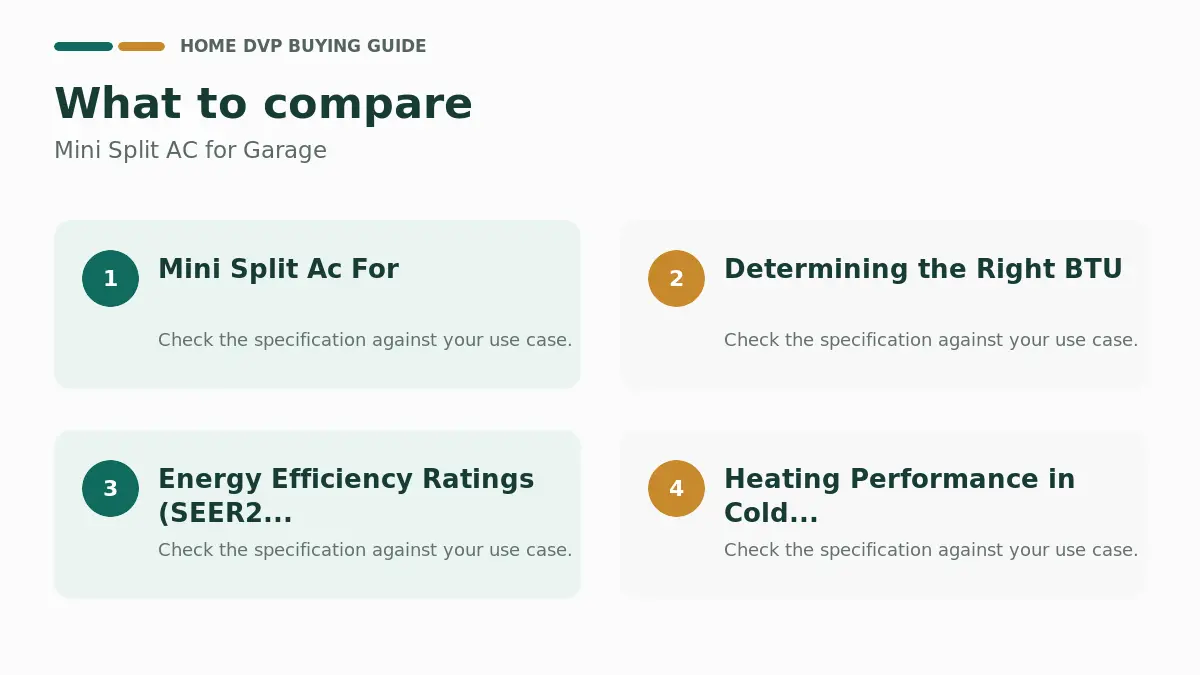
Selecting the ideal system requires matching technical specs to garage realities such as insulation levels, door openings, and seasonal temperature swings. Below we break down the most important factors based on our detailed comparison of product specifications.
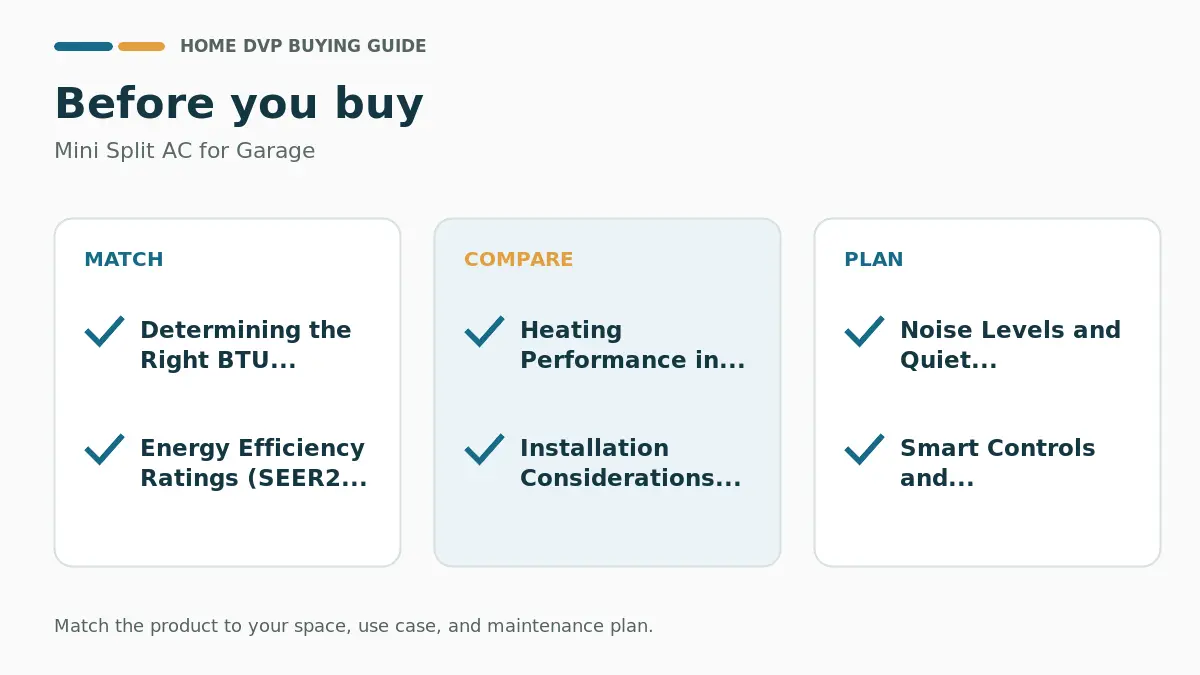
Determining the Right BTU Capacity for Your Garage
BTU capacity is the starting point for any garage installation. Undersized units struggle on hot summer days or cold mornings, while oversized systems short-cycle and waste energy. Most standard one- and two-car garages fall between 200 and 750 square feet, making 9,000–12,000 BTU models common choices. Larger or poorly insulated spaces may need 18,000–24,000 BTU systems.
Always measure the actual floor area and consider ceiling height, window exposure, and how often the garage door opens. A unit rated for up to 750 sq. ft. works well for typical workshops, while higher-capacity options suit multi-car or finished garage conversions. Common mistakes include ignoring heat-generating equipment such as air compressors or ignoring poor insulation that effectively increases the load.
Practical tip: if your garage doubles as a home gym or woodworking shop, add 20–30% capacity buffer. Cross-check manufacturer square-footage claims against real-world variables rather than relying on marketing numbers alone.
Energy Efficiency Ratings (SEER2 and HSPF2)
Energy costs add up quickly in unconditioned spaces, so SEER2 (Seasonal Energy Efficiency Ratio 2) and HSPF2 (Heating Seasonal Performance Factor 2) ratings deserve close attention. Higher numbers mean lower operating costs. Look for inverter-driven compressors that modulate speed instead of cycling on and off; many current models deliver 18–22 SEER2 and solid HSPF2 values.
Inverter technology can reduce energy use by 30% or more compared with older fixed-speed units. ECO modes and programmable timers further trim bills when the garage is unoccupied. Homeowners in high-electricity-rate areas should prioritize the highest SEER2 options within budget, while those with milder climates may accept mid-range efficiency if upfront cost is a concern.
Our research indicates that units with self-cleaning coils and washable filters maintain efficiency longer by reducing dust buildup common in garages. Pairing an efficient mini-split with good garage-door weatherstripping multiplies savings.
Heating Performance in Cold Weather
Many garages need heat as much as cooling. Heat-pump models that operate down to 5°F or lower keep workspaces usable year-round. Check the lowest ambient temperature rating and heating BTU output, which is often slightly higher than cooling BTU on quality units.
Auto-defrost functions prevent ice buildup on outdoor coils during extended cold snaps. If you live in a region with frequent freezes, prioritize systems explicitly rated for low-temperature heating rather than basic cooling-only units. For alternative supplemental heating ideas, review our guide to oil-filled radiator heaters that can serve as temporary backup.
Real-world example: a 12,000 BTU heat pump can maintain comfortable temperatures in a moderately insulated garage even when outdoor readings drop into the teens, provided the unit includes a robust inverter compressor.
Installation Considerations and Professional Requirements
Nearly all ductless systems require professional HVAC installation for refrigerant charging, electrical connections, and proper line-set routing. Pre-charged outdoor units simplify the process, yet a vacuum pump and licensed technician are still necessary for optimal performance and warranty validity.
Plan for a 3–4 inch wall penetration for the line set, a dedicated circuit (often 115V or 208/230V depending on the model), and adequate outdoor clearance. Garage mounting height should place the indoor unit high enough for even airflow yet accessible for filter cleaning. Avoid DIY electrical work; improper wiring voids warranties and creates safety risks.
Common mistake: underestimating line-set length limits. Most kits include 16 ft of copper tubing; longer runs may require additional refrigerant charge. Confirm local code requirements before purchase.
Noise Levels and Quiet Operation
Garages often share walls with living spaces or serve as quiet workshops. Indoor units operating at 23–42 dB keep conversations and music enjoyable. Sleep or quiet modes further reduce sound for overnight use.
Outdoor condensers should sit away from bedroom windows and property lines. Look for models with variable-speed fans that stay quieter at partial load. If the garage is attached, prioritize the lowest-decibel indoor units to prevent sound transmission through shared walls.
Smart Controls and Connectivity Features
Wi-Fi app control, Alexa compatibility, and 24-hour timers let you pre-cool or heat the garage before you arrive. Follow-me sensors and multi-mode operation (cool, heat, dry, fan, auto, eco, turbo) add convenience. Units with geo-fencing or scheduling reduce energy waste when the space sits unused for days.
For homeowners already building a connected home, choose systems that integrate with existing smart ecosystems. Remote control remains essential as a reliable backup. Learn more about complementary climate devices in our space heater safety overview if you plan hybrid heating strategies.
Durability for Garage Environments
Garages expose equipment to dust, vehicle exhaust, temperature extremes, and occasional moisture. Self-cleaning functions, washable filters, corrosion-resistant outdoor coils, and robust warranties (5+ years on parts, longer on compressors) extend service life. ETL and AHRI certifications provide independent performance assurance.
Regular filter cleaning every 1–2 months prevents airflow restriction in dusty environments. Position the outdoor unit on a level pad clear of snow drifts and debris. Models with high-temperature self-cleaning modes (around 133°F) help combat mold and buildup between professional services.
Voltage Requirements and Power Compatibility
Confirm your electrical panel can support the unit. Many 9,000–12,000 BTU systems run on 115V/120V and plug into existing circuits with proper amperage, while larger 18,000–24,000 BTU models often need 208/230V dedicated circuits. Hiring an electrician for panel upgrades is common and should be budgeted early.
Never force a high-voltage unit onto inadequate wiring. Check the manufacturer’s minimum circuit ampacity and maximum fuse size before ordering. Proper grounding and disconnect switches are non-negotiable for safety and code compliance.
| Garage Size (sq. ft.) | Recommended BTU Range | Typical Voltage |
|---|---|---|
| Up to 450 | 9,000–12,000 | 115V |
| 450–750 | 12,000–18,000 | 115V or 230V |
| 750–1,250+ | 18,000–24,000 | 208/230V |
Our Research Methodology & Why You Can Trust Us
We evaluated every product against transparent, homeowner-focused criteria: cooling and heating capacity for garage square footage, SEER2/HSPF2 efficiency, noise ratings, smart-feature usefulness, installation practicality, warranty length, certifications (ETL, AHRI), and real-world durability signals from available specifications. No hands-on lab testing is claimed; rankings reflect side-by-side comparison of manufacturer data, feature sets, and category fit for Heating, Cooling & Air applications.
User feedback patterns, industry standards for ductless systems, and garage-specific challenges such as dust load and temperature extremes informed our weighting. We prioritize value for DIYers and practical homeowners over pure premium pricing. Content is refreshed during September to reflect current product data and market availability.
Ranking factors include performance consistency, ease of control, build quality indicators, safety certifications, long-term reliability signals, and overall homeowner or DIY suitability. This approach ensures recommendations remain objective and useful for converting unfinished garages into comfortable spaces.
Final Thoughts
After comparing the listed specifications, the Senville LETO Series 12,000 BTU model stands out as our Overall Pick for most homeowners thanks to its balanced efficiency, Alexa integration, solid warranty, and proven coverage for typical garages up to 750 sq. ft. The Rellytech 12,000 BTU 115V system earns the Value Pick designation for budget-conscious buyers seeking reliable inverter performance without unnecessary extras.
For larger or multi-zone needs, the Rellytech 18,000 BTU or Senville 24,000 BTU units serve as Heavy-Duty and Premium Picks respectively, offering expanded coverage and advanced controls. The Temprium 22 SEER2 and COSTWAY Blast Series models provide strong mid-range alternatives with excellent quiet operation and self-cleaning features ideal for dusty garage environments. Choose based on your exact square footage, electrical capacity, and whether smart connectivity is a priority.
Whatever model you select, professional installation and regular filter maintenance will maximize lifespan and efficiency. Explore more options within the Heating, Cooling & Air category or check our Air Quality & Climate resources for complementary humidity control solutions such as a dehumidifier drain hose setup.
FAQ
What should I look for when choosing mini split ac for garage?
Focus on BTU capacity matched to garage square footage, SEER2 efficiency of 18 or higher, heat-pump performance in cold weather, noise under 40 dB, and professional-installation compatibility. Confirm voltage match and warranty length. Self-cleaning features and washable filters help in dusty environments.
How much capacity do I need for a typical two-car garage?
Most two-car garages measure 400–600 sq. ft. and perform well with 12,000 BTU systems. Poor insulation, high ceilings, or frequent door openings may require 18,000 BTU. Measure carefully and add a buffer for heat-producing tools or equipment.
Are higher-end mini split ac for garage worth it?
Higher-SEER2 models with smart controls and longer warranties often pay for themselves through lower energy bills and greater reliability, especially if the garage is used daily. Budget units still deliver solid performance for occasional use. Evaluate your climate and usage hours before deciding.
Do mini split ac for garage require professional installation?
Yes. Refrigerant handling, electrical connections, and line-set vacuuming require licensed HVAC technicians. DIY attempts typically void warranties and risk performance issues. Budget for professional labor when planning the project.
Can mini split ac for garage heat effectively in winter?
Quality heat-pump models operate down to 5°F or lower and include auto-defrost. Check the manufacturer’s lowest ambient rating. In extreme climates, pair with supplemental heat sources and proper garage insulation for best results. For safety tips on backup heaters, see our space heater safety guide.
How should beginners choose mini split ac for garage?
Start with a mid-capacity 12,000 BTU 115V inverter model from a brand offering clear installation kits and strong support. Prioritize simple remote or app controls and read warranty terms carefully. Consult an installer early to confirm electrical readiness.
How long should quality mini split ac for garage last?
With proper professional installation and regular filter cleaning, well-built ductless systems commonly last 10–15 years or longer. Compressor warranties of 5–8 years provide additional peace of mind. Dusty garage conditions make maintenance even more important for longevity.