
For a no-plumbing setup, consider one of the Bluevua countertop systems. For an under-sink unit and homes with low water pressure, consider the iSpring RCC7P-AK, which includes a booster pump. The Philips tankless model lists filtration and water-use details but does not specify remineralization, so it does not clearly meet this keyword’s defining requirement.
The listed options span a wide price range. Product descriptions and specifications below come from the published listings; claims about contaminant reduction and filtration are manufacturer claims, not independent measurements. Confirm current price, replacement-filter availability, and model compatibility before buying.
At a glance
| System | Installation | Remineralization evidence | Useful distinction |
|---|---|---|---|
| Bluevua RO100ROPOT-Lite | Countertop, plug-in | Listed | Compact design for 1–2 people; UV; glass carafe |
| Bluevua RO100ROPOT(UV) bundle | Countertop, plug-in | Listed | Includes extra carafe; 2:1 pure-to-drain ratio |
| Bluevua RO100ROPOT | Countertop, plug-in | Listed | Five-stage filtration; filter-life display |
| iSpring RCC7P-AK | Under sink | Listed, alkaline remineralization stage | Booster pump; top-mounted faucet design |
| Philips Tankless RO, 600 GPD | Under sink | Not specified in published description | Tankless; 2.3:1 pure-to-drain ratio |
How to choose
- Choose installation type first. Countertop Bluevua units need no plumbing, but occupy counter space and require a power outlet. Under-sink systems need installation; Philips specifically requires an under-sink power outlet.
- Check remineralization, not just RO filtration. Bluevua and iSpring listings identify a remineralization stage. Philips’ published details do not, so confirm its exact configuration if mineral restoration is essential.
- Compare documented upkeep. Bluevua Lite lists yearly filter replacement. The standard Bluevua unit lists filter life of 12–24 months. Philips lists up to 12 months for AUT831 and up to 24 months for AUT854R600. The iSpring listing does not state replacement intervals.
- Match storage and household use. Bluevua countertop units fill a carafe; the UV bundle includes an extra carafe. The published descriptions do not state daily production or storage capacity for every model, so verify those figures if you need a specific volume.
Options compared
Bluevua RO100ROPOT-Lite: compact countertop option
Bluevua RO100ROPOT-Lite Countertop Reverse Osmosis combines seven-stage filtration, UV light, and remineralization in a plug-in countertop unit. Listing details include a glass carafe, LED filter alerts, and a 3:1 filtered-water-to-waste ratio. Bluevua describes it as suitable for one to two people and says its filter is replaced annually.
Pros: No plumbing; glass carafe; UV and remineralization; display tracks filter alerts and water quality. Cons: Uses counter space and requires power; stated household suitability is limited to one or two people. Who should skip it: Households needing larger stated capacity or an under-sink installation.
Bluevua RO100ROPOT(UV): extra carafe included
Bluevua RO100ROPOT(UV) Reverse Osmosis System includes an additional borosilicate glass carafe. Its listing describes six-stage filtration, UV, a 0.0001-micron RO membrane, and remineralization. It also lists a 2:1 pure-to-drain ratio and a display for filter life and water quality.
Pros: Extra carafe adds storage; no plumbing; remineralization and UV are listed. Cons: Requires counter space and power; the published details do not give filter replacement intervals. Who should skip it: Buyers who do not need a second carafe or prefer an under-sink system.
Bluevua RO100ROPOT: five-stage countertop system
Bluevua RO100ROPOT Countertop Reverse Osmosis lists five-stage RO filtration with remineralization, a glass carafe, and a filter-life monitor. The listing gives a 2:1 pure-to-drain ratio and says filters last 12–24 months. Its claims of 99.9% contaminant removal are manufacturer claims, not independently established by the published information.
Pros: No installation; remineralization; glass carafe; filter-life display. Cons: Requires counter space and power; replacement timing varies by filter. Who should skip it: Buyers who need an under-sink unit or want documented annual filter costs before purchase.
iSpring RCC7P-AK: under-sink system with booster pump
iSpring RCC7P-AK, 6-Stage Reverse Osmosis System is an under-sink, six-stage system with alkaline remineralization and an electric booster pump. The manufacturer says the pump supports filtration in homes with low water pressure and reduces wastewater. Its listing claims reduction of up to 99% of more than 1,000 contaminants, including 98% of lead. Treat those figures as manufacturer claims and check whether they address contaminants in your water.
Pros: Booster pump; remineralization; top-mounted faucet design; listing states extended warranty after registration and lifetime technical support. Cons: Requires under-sink installation and electrical power; published details omit filter-change intervals and wastewater ratio. Who should skip it: Renters seeking a portable unit or buyers unable to accommodate an under-sink system and powered pump.
Philips Tankless RO, 600 GPD: verify remineralization before choosing
Philips Tankless Reverse Osmosis System, 600 GPD is an under-sink tankless system. Its listing states a 2.3:1 pure-to-drain ratio, 600 GPD flow, two included filters, and replacement intervals of up to 12 and 24 months for its respective filters. The published description does not mention a remineralization stage, so it is not a confirmed match for buyers who require remineralized water. It lists NSF/ANSI 372 certification for lead-free materials, plus other electrical and material-safety claims.
Pros: Tankless design; stated water-use ratio; specified replacement filters and intervals. Cons: Remineralization is not documented in the published listing; requires an under-sink power outlet and compatible plumbing connections. Who should skip it: Anyone who requires confirmed remineralization without first checking the exact model documentation.
Bottom line
Choose Bluevua for a no-plumbing countertop setup, with the UV bundle offering an extra carafe. Choose iSpring if you want an under-sink system with a booster pump and listed alkaline remineralization. Consider Philips only after confirming whether the exact model includes remineralization. For more countertop options, see our countertop reverse osmosis comparison. If renting, review our guide to under-sink water filters for renters.

Pros
- Plug-and-play countertop format avoids the installation work associated with under-sink filtration systems.
- The combination of UV treatment and remineralization adds functionality beyond basic reverse osmosis filtration.
Cons
- The product information identifies it as ideal for one to two people, so larger households may need greater filtration capacity.
- Its countertop dimensions require a dedicated area near a suitable water source and electrical outlet.
Specifications
| Color | Blue |
|---|---|
| Dimensions | 9.7 x 9.5 x 14.1 inches |
| Weight | 11.0231131 pounds |
| Product Group | Home Improvement |
| Binding | Tools & Home Improvement |
Verify the current product variation before purchase; specifications may change.
Best For / Avoid If
Best for buyers prioritizing
- Plug-and-play countertop format avoids the installation work associated with under-sink filtration systems.
- The combination of UV treatment and remineralization adds functionality beyond basic reverse osmosis filtration.
- Automatic volume selection and filter alerts make everyday dispensing and maintenance easier to manage.
Consider another option if
- The product information identifies it as ideal for one to two people, so larger households may need greater filtration capacity.
- Its countertop dimensions require a dedicated area near a suitable water source and electrical outlet.
- The glass carafe may need more careful handling than a plastic storage container.
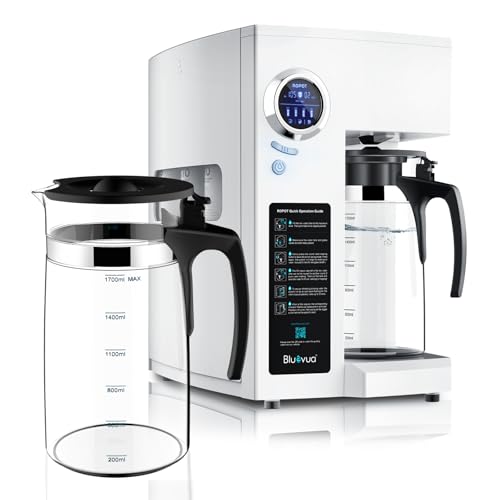
Pros
- Extra carafe provides useful reserve capacity without adding plumbing work.
- UV light, a 0.0001μm reverse osmosis membrane, and remineralization create a comprehensive listed filtration setup.
Cons
- The countertop design may not suit buyers who specifically need an under-sink system with concealed placement.
- The system requires access to countertop space and an electrical outlet, which may be limiting in crowded kitchens.
Specifications
| Product Group | Home Improvement |
|---|---|
| Binding | Product Bundle |
Verify the current product variation before purchase; specifications may change.
Best For / Avoid If
Best for buyers prioritizing
- Extra carafe provides useful reserve capacity without adding plumbing work.
- UV light, a 0.0001μm reverse osmosis membrane, and remineralization create a comprehensive listed filtration setup.
- Portable countertop operation is practical for homes where permanent installation is not preferred.
Consider another option if
- The countertop design may not suit buyers who specifically need an under-sink system with concealed placement.
- The system requires access to countertop space and an electrical outlet, which may be limiting in crowded kitchens.
- Users who need larger continuous storage may still need to manage refilling and carafe capacity.
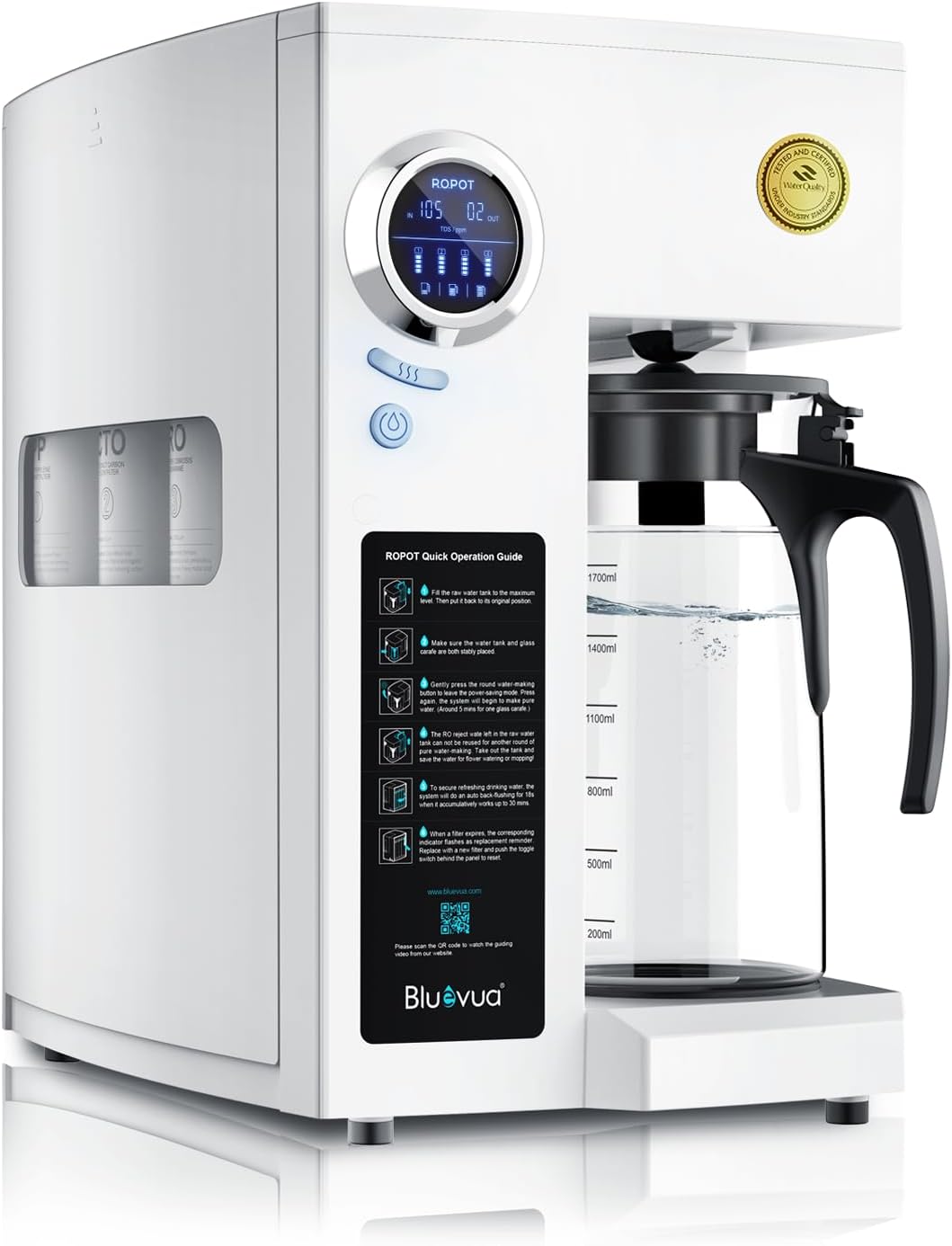
Pros
- Portable design works in any location with a standard power outlet without permanent installation
- Integrated display tracks pre and post filtration TDS levels along with filter status
Cons
- Operation depends on access to an electrical outlet
- Periodic filter replacements remain necessary for continued performance
Specifications
| Other Special Features of the Product | Reduce TDS |
|---|---|
| Container Type | Carton |
| Installation Type | Countertop |
| Purification Method | Reverse Osmosis |
| Power Source | Corded Electric |
| Maximum Flow Rate | 0.26 Liters Per Minute |
| Supported Water TDS Level Maximum (PPM) | 1000 |
| Smart Home Compatibility | Not Smart Home Compatible |
| Item Dimensions L x W x H | 10.9"L x 15.4"W x 14.3"H |
| Capacity | 1700 ml |
Verify the current product variation before purchase; specifications may change.
Best For / Avoid If
Best for buyers prioritizing
- Portable design works in any location with a standard power outlet without permanent installation
- Integrated display tracks pre and post filtration TDS levels along with filter status
- Remineralization included as standard to balance mineral content after purification
Consider another option if
- Operation depends on access to an electrical outlet
- Periodic filter replacements remain necessary for continued performance
- Dedicated countertop space is required for the unit and carafe

Pros
- Booster pump supports efficient operation and lower wastewater in low-pressure settings
- Alkaline stage addresses the acidic output common in standard RO systems
Cons
- Requires a nearby electrical outlet for pump function
- Under-sink placement may involve additional plumbing considerations for some users
Best For / Avoid If
Best for buyers prioritizing
- Booster pump supports efficient operation and lower wastewater in low-pressure settings
- Alkaline stage addresses the acidic output common in standard RO systems
- Top-mounted faucet design aids installation simplicity
Consider another option if
- Requires a nearby electrical outlet for pump function
- Under-sink placement may involve additional plumbing considerations for some users

Pros
- High-flow output is useful for households that frequently fill glasses, cooking pots, coffee makers, or bottles.
- The compact 15.8 by 4.3 by 12.3-inch body offers flexible placement beneath the sink.
Cons
- Installation requires an under-sink power outlet and standard 1/2-inch NPT or T-valve connections.
- Homes with 3/8-inch or other fitting sizes may need to contact Philips Support for an adapter.
Best For / Avoid If
Best for buyers prioritizing
- High-flow output is useful for households that frequently fill glasses, cooking pots, coffee makers, or bottles.
- The compact 15.8 by 4.3 by 12.3-inch body offers flexible placement beneath the sink.
- Self-flushing operation and long filter intervals can make routine filtration maintenance more convenient.
Consider another option if
- Installation requires an under-sink power outlet and standard 1/2-inch NPT or T-valve connections.
- Homes with 3/8-inch or other fitting sizes may need to contact Philips Support for an adapter.
- The 22-pound unit and under-sink dimensions require careful space planning before installation.
For product-selection details, see our Kitchen & Water category. Recommendations reflect published product information; confirm current specifications and installation requirements with the manufacturer.