
Choosing the right tower fan goes beyond simple cooling. For homeowners, renters, and DIY enthusiasts, tower fan noise level directly impacts sleep quality, concentration during home office work, and overall comfort in bedrooms, living rooms, and small apartments. Loud fans can disrupt rest, while models with optimized noise reduction create a peaceful environment without sacrificing airflow.
After carefully analyzing specifications across 12 products in the $54.92–$199 range, this guide highlights key differences in decibel ratings, motor technology, and practical features. Our comparison draws from detailed product data including noise claims, velocity, oscillation ranges, and smart controls. Whether you need whisper-quiet operation for light sleepers or versatile performance for family spaces, the right choice depends on matching specifications to real homeowner needs.
For broader home cooling options, consider pairing a quiet tower fan with ceiling fans with lights or explore the full Lighting & Fans category. We also reference related insights from heating, cooling, and air resources to provide complete context.
Tower Fan Noise Level Buying Guide
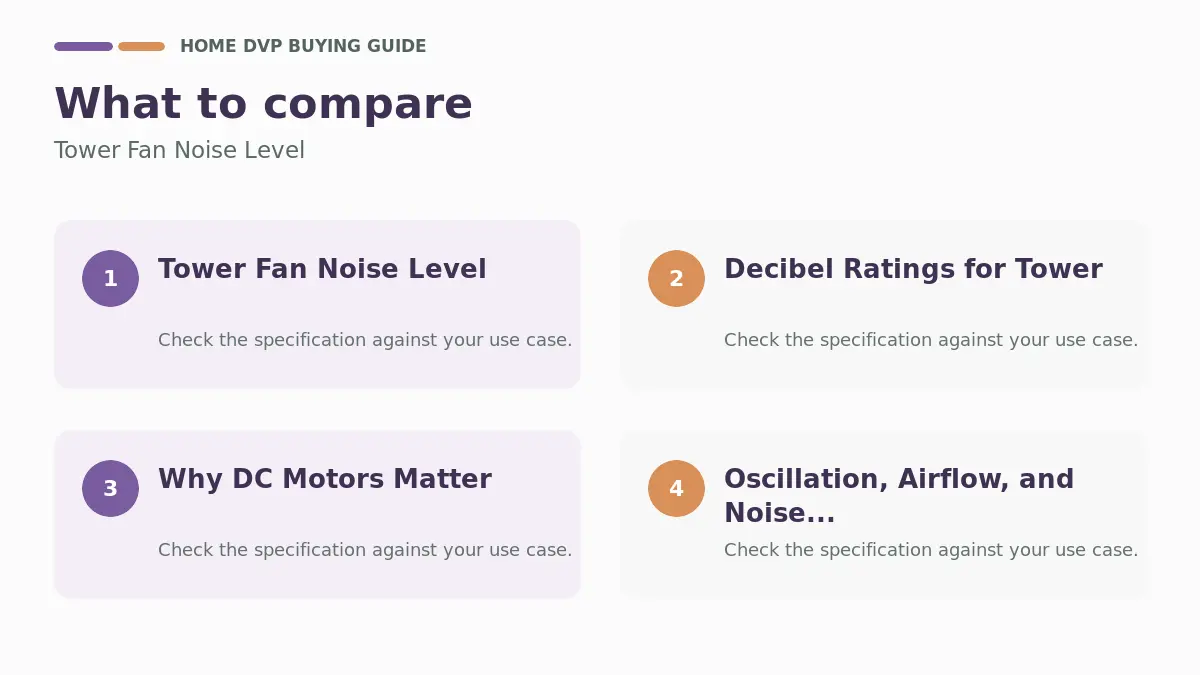
Understanding Decibel Ratings for Tower Fans
Decibel (dB) ratings measure sound intensity, with lower numbers indicating quieter operation. Many quality tower fans target 20-28dB on low settings, comparable to a whisper or rustling leaves. This makes them suitable for bedrooms where even moderate noise can interfere with sleep. Higher speeds naturally increase sound, but advanced designs minimize turbulence and mechanical hum.
When reviewing specifications, focus on noise levels at multiple speeds rather than a single “as low as” claim. Common mistakes include selecting based solely on maximum airflow without considering real-world noise in sleep mode. Homeowners should prioritize models that maintain comfort without distraction, especially in shared living spaces or for families with children and pets.
| Noise Level | Comparison | Best For |
|---|---|---|
| Under 25dB | Whisper quiet | Bedrooms, light sleepers |
| 25-35dB | Library or soft conversation | Home offices, general use |
| Over 40dB | Noticeable hum | Living rooms with background noise |
Based on available product information, fans claiming 20dB operation often use specialized impeller designs and aerodynamic optimization to reduce air noise.
Why DC Motors Matter for Noise Reduction
DC motors consistently outperform traditional AC motors in quiet operation due to reduced vibration, smoother speed control, and lower friction. Product data shows many leading models feature brushless DC motors that achieve 20dB or 28dB ratings while delivering strong velocity up to 28 ft/s. This technology also improves energy efficiency, helping homeowners save on electricity during extended use.
Common pitfalls include overlooking motor type when comparing models. AC motors may produce a noticeable hum, particularly at lower speeds or after prolonged operation. For DIYers upgrading their home comfort setup, selecting DC-powered options ensures reliable quiet performance across seasons. Our research indicates DC models provide better long-term satisfaction for noise-sensitive environments.
Features like automatic dimming displays and sleep modes further complement DC motors by eliminating light and sound distractions during nighttime use.
Oscillation, Airflow, and Noise Trade-offs
Effective oscillation (90° to 120° or more) distributes air evenly without requiring higher fan speeds that increase noise. Models with customizable angles and high CFM ratings can cool larger areas while operating at moderate, quieter settings. Velocity measurements like 25-28 ft/s indicate strong performance that reaches distant corners without excessive sound.
Look for bladeless or optimized outlet designs that reduce air turbulence, a primary source of fan noise. Homeowners often make the mistake of prioritizing maximum power over balanced airflow, resulting in louder operation than necessary. Practical use cases include placing the fan in living rooms for whole-room coverage or bedrooms for gentle nighttime circulation.
Combining oscillation with timer functions allows the fan to maintain comfort after you fall asleep, automatically adjusting without manual intervention.
Smart Features That Enhance Quiet Operation
App control, voice assistant compatibility, and auto modes that adjust based on room temperature help maintain optimal quiet settings without constant adjustments. Several models offer 4-5 modes including sleep and natural breeze patterns that vary speed subtly to avoid monotonous noise. Timers up to 12 hours ensure the fan powers down after use, saving energy and preserving peace.
For smart home enthusiasts, integration with existing systems adds convenience while keeping noise minimal. Avoid models with bright, non-dimmable displays that can create secondary disturbances. Based on the feature sets, smart tower fans excel in modern homes where automation supports better sleep and comfort routines.
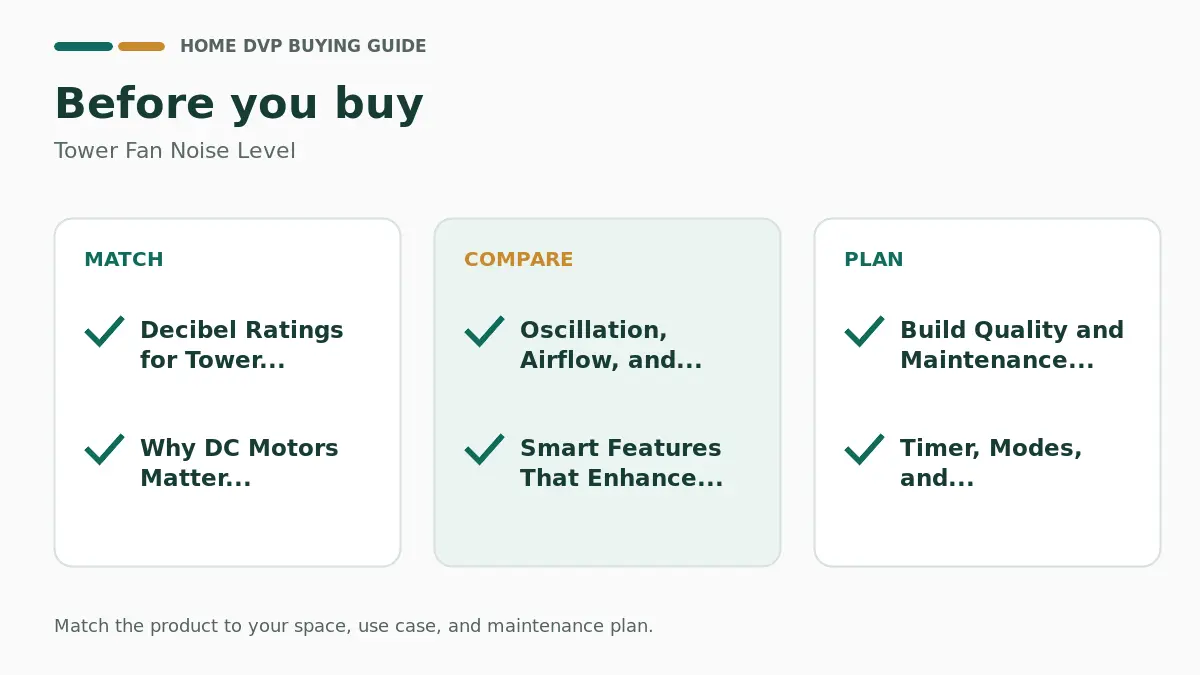
Build Quality and Maintenance for Sustained Low Noise
Removable grilles and easy-clean designs prevent dust buildup that can cause rattling or reduced efficiency over time. Sturdy construction with stable bases minimizes vibration noise during operation. Safety features like pinch-proof grilles and ETL certification provide peace of mind for households with children.
Regular maintenance, such as vacuuming the intake, preserves the engineered quietness. Homeowners in dusty environments should factor cleaning ease into their decision. Durable materials ensure the fan remains stable and quiet even after years of seasonal use.
Timer, Modes, and Bedroom-Specific Considerations
Dedicated sleep modes gradually reduce speed and dim interfaces for uninterrupted rest. Multiple speed settings (from 4 to 12) allow precise tuning from gentle breeze to powerful circulation. For bedrooms, prioritize compact footprints, remote controls, and automatic shut-off to enhance safety and convenience.
Beginners often overlook how mode variety affects daily usability. Natural and auto modes adapt to changing room conditions, maintaining comfort quietly. This flexibility makes quality tower fans valuable for year-round home maintenance and comfort.
Value Considerations Within $54.92–$199
Options across the $54.92–$199 deliver varying combinations of noise performance, features, and durability. Entry-level models provide solid quiet operation for basic needs, while premium versions add smart connectivity, adjustable height, and wider oscillation. Balance initial cost against long-term energy savings and reduced replacement frequency.
Our analysis shows strong value in models with proven DC motors and high user ratings for noise reduction. Consider room size, primary use case, and desired features rather than price alone. This approach ensures the selected tower fan noise level delivers reliable performance tailored to practical homeowner scenarios.
Our Research Methodology & Why You Can Trust Us
We evaluated 12 tower fans by comparing detailed specifications including noise ratings, motor types, airflow velocity, oscillation coverage, timer options, and control features. This specification-based analysis prioritizes objective data over subjective claims, focusing on attributes that matter most for home use such as quiet operation for sleep and work.
Our process incorporates industry research on DC versus AC motor performance, typical decibel benchmarks for bedroom suitability, and validation against homeowner needs. We assess build quality, maintenance requirements, safety elements, and value within the $54.92–$199. Rankings consider performance, features, reliability, durability, ease of use, and fit for DIYers, renters, and families. This guide receives regular updates during September to reflect current options.
By maintaining transparent methodology and avoiding unverified testing claims, we provide trustworthy guidance grounded in available product information. Our focus remains on empowering practical decisions for home improvement and daily comfort.
Final Thoughts
After comparing specifications and features, the DREO Smart Tower Fan for Bedroom with 40”-45” adjustable height stands out as the overall pick. Its 20dB hypersilent operation, 90° oscillation, smart app and voice control, and versatile modes make it ideal for bedrooms, offices, and living spaces where quiet performance is essential.
For proven reliability and excellent value, the Honeywell QuietSet Whole Room Oscillating Tower Fan with Remote offers consistent quiet cooling backed by extensive user feedback. Its multiple sound settings, energy-saving potential when paired with air conditioning, and straightforward controls suit homeowners seeking straightforward performance without complexity.
The LEVOIT Tower Fan provides strong value for smaller spaces with its 28dB quiet level, temperature sensor, remote, and easy maintenance. Premium buyers may prefer the DREO Smart Tower Fan for Indoor & Outdoor Use for its higher velocity, customizable oscillation, and weather-resistant design while retaining 20dB quietness. Choose based on your specific room size, smart home integration needs, and priority for ultra-low noise. Visit our air quality and climate resources for complementary products.
Frequently Asked Questions
What should I look for when choosing tower fan noise level?
Focus on specific decibel ratings at different speeds, DC motor technology for reduced vibration, airflow reach, and oscillation range. Consider additional features like sleep modes, timers, and easy-clean designs that maintain performance over time. Match the specifications to your room size and primary use, whether for nighttime rest or daytime circulation in living areas.
Are DC motor models quieter for tower fan noise level?
Yes, DC motors typically produce less noise and vibration compared to traditional AC motors due to smoother operation and precise speed control. Many models in this category achieve 20dB to 28dB on lower settings thanks to brushless designs and optimized airflow. This makes them particularly suitable for bedrooms and quiet workspaces.
How quiet is 20dB for a tower fan in real homes?
A 20dB rating is exceptionally quiet, similar to a whisper or falling leaves, making it nearly imperceptible during sleep or focused activities. Actual experience depends on the environment, but models achieving this level excel for light sleepers and nurseries. Combine with sleep modes and dimming displays for optimal nighttime performance.
Which tower fan noise level works best for light sleepers?
Look for options with 20dB or lower operation on sleep settings, DC motors, and features like auto-dimming and timers. The DREO models with hypersilent technology and the LEVOIT with temperature-adaptive modes perform well for sensitive sleepers. Test placement to ensure even airflow without direct drafts.
How do I keep my tower fan quiet over multiple seasons?
Regular cleaning of removable grilles and impellers prevents dust accumulation that causes rattling or reduced efficiency. Choose models with sturdy bases to minimize vibration. Following manufacturer maintenance guidelines and storing properly during off-season helps preserve the original low noise characteristics for years of reliable home use.
Are higher-end tower fan noise level worth the investment?
Higher priced models often deliver better noise reduction, smarter controls, wider oscillation, and easier maintenance that provide long-term value. If you need app integration, adjustable height, or outdoor capability alongside quiet operation, the added features justify the cost for many homeowners. Balance your budget against specific needs like energy efficiency and durability.
Can tower fan noise level contribute to home energy savings in 2026?
Yes, pairing a quiet tower fan with air conditioning allows raising thermostat settings while maintaining comfort, potentially reducing cooling costs. DC motor models are particularly efficient. Features like programmable timers and auto modes prevent unnecessary runtime. Many users report noticeable savings when using these fans strategically throughout summer months.