
Toilet flush types explained means understanding how a toilet moves water and waste, how much user control it gives, and what that means for noise, water use, and upkeep. The flush type is only one part of the choice, because fit, rough-in, and the manufacturer instructions still matter.
Answer-first summary: For most homes, the practical choice comes down to a simple tradeoff. Gravity flush toilets are usually the easiest to live with, pressure-assisted toilets can feel stronger but may be louder, and dual-flush toilets give you a lighter option for liquid waste. The best option is the one that fits your bathroom, your household, and the model specs, not just the flush label.
A flush type is the method the toilet uses to store, move, and release water through the bowl. That method affects how the toilet sounds, how much user control you have, how often maintenance parts may need attention, and whether the model is better for a quiet guest bath or a busy family bathroom. It does not, by itself, tell you whether the toilet will fit your room.
| Flush type | How it works | Practical upside | Watch-out |
|---|---|---|---|
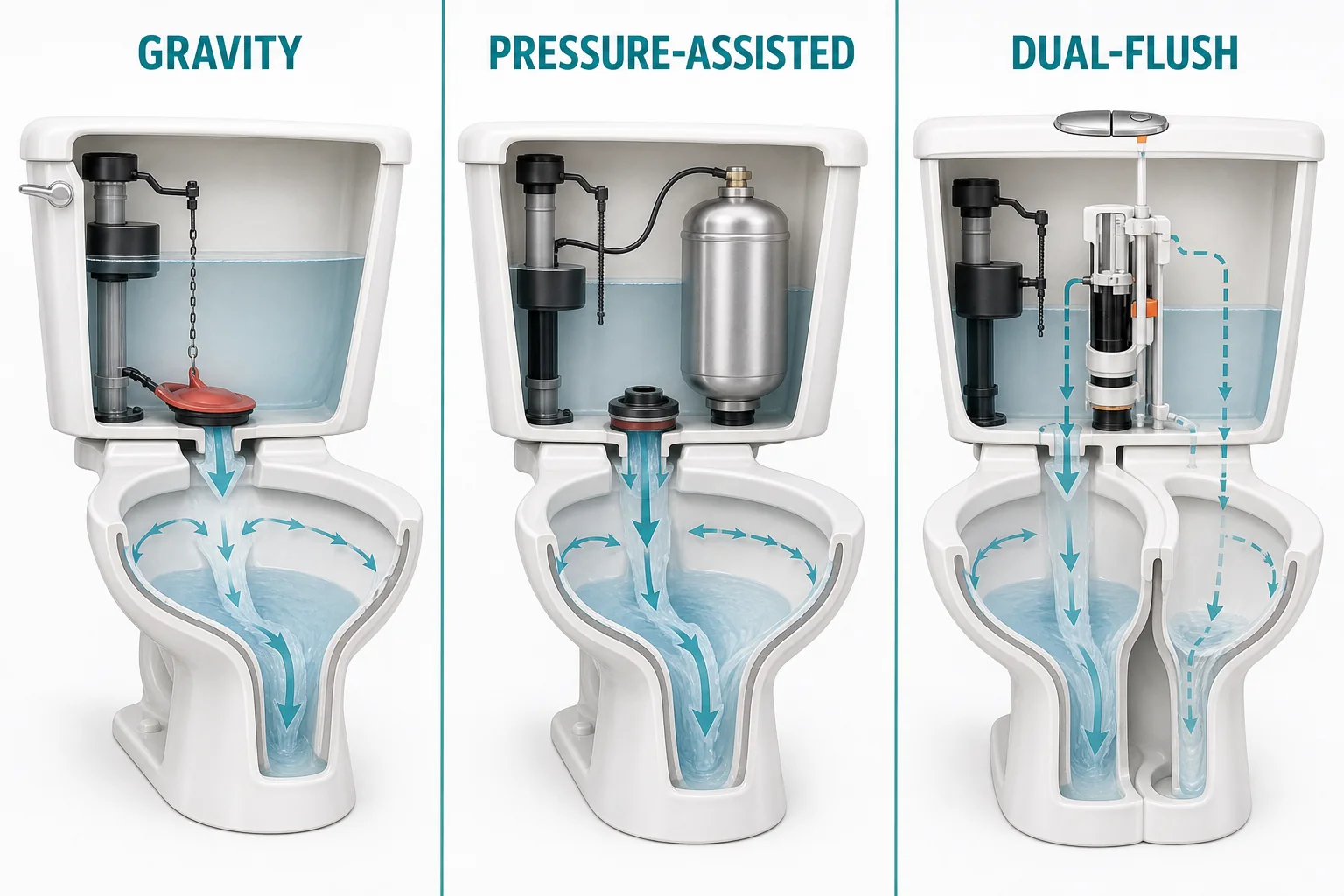
| Gravity flush | Water in the tank drops into the bowl by gravity when you trip the handle. | Usually simple, familiar, and widely available. | Performance depends on the specific bowl and tank design, so not every gravity toilet feels the same. |
| Pressure-assisted | A pressurized vessel helps push water into the bowl more forcefully. | Can feel strong in busy bathrooms and may clear waste in fewer passes. | Often louder and more complex than a basic gravity design. |
| Dual-flush | The toilet gives you two flush choices, usually a lighter flush and a full flush. | Lets you use less water for liquid waste when the model is designed well and used correctly. | Needs clear user understanding, or people may default to the larger flush every time. |
How the flushing process works
Most residential toilets use a tank, a flush valve, a bowl, and a trapway. When you activate the flush, stored water moves from the tank into the bowl, then through the trapway and into the drain. The bowl shape and internal passages matter because they influence how the water carries waste and how fully the bowl rinses.
Gravity flush
Gravity flush toilets are the familiar tank-style units most homeowners recognize. They rely on the weight of the stored water rather than added pressure. That makes them a common choice for many bathrooms, especially where simple operation and easier part replacement matter more than special features.
For renters and homeowners, the appeal is usually predictability. The handle, flapper or flush valve, and fill components are typically straightforward to understand. If you are trying to keep future maintenance simple, that can matter more than any headline description of flushing power.
Pressure-assisted flush
Pressure-assisted toilets use a sealed internal vessel to help deliver the flush. The practical effect is a different feel at the handle and a more forceful release of water. That can be helpful in bathrooms that see heavy use, but the tradeoff is usually more noise and a more specialized internal mechanism.
Because the mechanism is different from a plain gravity tank, replacement parts and service steps can be less familiar to a casual DIYer. If you rent, or if you want the least complicated repair path, confirm parts availability before choosing this style.
Dual-flush toilets
Dual-flush toilets let you choose between a smaller flush and a full flush. The idea is simple, use the smaller flush for liquid waste and the larger one when needed. The real-world benefit depends on whether the model is used consistently and whether the bowl clears well without repeat flushing.
This type can be a sensible fit when household members are willing to learn the control. It is less helpful if visitors, kids, or guests may be confused by the buttons or lever. In that case, a straightforward gravity model may be easier to live with even if it uses a little more water per flush.
What matters most in real homes
- Noise: If the toilet sits near a bedroom, hallway, or shared wall, sound may matter as much as flushing strength.
- Water use: If you want a lower-water toilet, look for EPA WaterSense labeling and verify the model details rather than assuming every dual-flush toilet is low use.
- Parts and repairs: Common gravity-style parts are often easier to source and explain to a landlord or handyman.
- User habits: A more complex flush control only helps if people actually use it the way it was designed.
- Household mix: Children, guests, or older adults may do better with the simplest handle or lever setup.
Toilet flush types explained as a decision framework
- Confirm the bathroom fit first. Measure the installation space and check the model’s rough-in and clearances before you compare flush systems.
- Decide whether quiet operation matters more than a stronger-feeling flush. That tradeoff often separates gravity and pressure-assisted models.
- Ask how many people will use the toilet. A busy shared bath can favor a simple, durable layout.
- Check whether the household will use dual-flush controls correctly. If not, the water-saving idea may not translate into daily use.
- Read the installation sheet and parts notes. Manufacturer details matter, especially for replacement components and rough-in requirements.
Worked example
Suppose you are replacing a toilet in a small hall bath used by a family of four. The room is close to sleeping areas, so noise matters. You also want fewer surprises if a part wears out. In that case, a simple gravity flush model may be the most practical starting point. If water use is a priority and everyone in the house is comfortable using two flush choices, a dual-flush model becomes more attractive. If the toilet will see unusually heavy traffic, a pressure-assisted model may be worth comparing, but only after you review sound and maintenance tradeoffs.
Common mistakes to avoid
- Choosing by flush label alone: Two toilets with the same flush type can feel very different in use.
- Ignoring rough-in: A great flush type does not help if the toilet does not fit the room.
- Assuming dual-flush always saves water: Savings depend on the specific model and how people use it.
- Overlooking repair access: More specialized parts can matter later, especially in a rental or shared property.
- Expecting a new toilet to fix a drain problem: Chronic backups, recurring gurgling, or sewer odor can point to plumbing issues beyond the toilet itself.
Rough-in, clearances, and installation checks
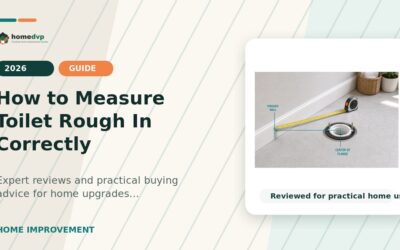
Flush type does not override installation dimensions. Before buying, check the model’s installation drawing and confirm the rough-in, which is the model-specific spacing the toilet is designed to fit. American Standard’s toilet rough-in guidance and Kohler’s toilet installation specification both show why the spec sheet matters more than a general description of the flush.
That is especially important in tight bathrooms, older homes, and remodels where the drain location or wall finish has changed. If the toilet is replacing an older unit, measure again after any flooring work is complete, because finished surfaces can affect the final fit.
Water use and WaterSense
If lower water use is part of your goal, EPA’s WaterSense residential toilets page is the clearest place to start. WaterSense-labeled residential toilets are rated at 1.28 gallons per flush or less. That number is a model-level efficiency limit, not a promise that every toilet with a similar style will perform the same way.
That is why flush type and water efficiency should be compared separately. A dual-flush toilet can offer a useful smaller flush, but the model still needs to meet your expectations for bowl clearing, comfort, and maintenance. A plain gravity toilet can also be an efficient choice if the specific model carries the right label and performs well in your bathroom.
Maintenance implications
Think about maintenance before you choose. Gravity toilets usually have familiar wear parts and a simpler service path. Pressure-assisted toilets can work well, but the internal mechanism is more specialized. Dual-flush toilets add another control path, which means more to learn and more to inspect if the toilet starts acting differently over time.
For any flush type, routine upkeep still matters. If the toilet starts running, flushing weakly, or needing a second flush, the fix may be a worn seal, a misadjusted fill component, or another small part rather than a full replacement. EPA’s home maintenance guidance is a good reminder to keep an eye on leaks and aging parts before they become larger problems.
When this advice does not apply
- Specialty systems: If your toilet is part of a nonstandard plumbing setup, the system manual overrides general advice.
- Recurring backups: If water rises in the bowl, drains slowly everywhere, or sewage odors keep returning, stop treating it as a toilet-style decision and look at the plumbing.
- Leaks at the base: Water on the floor may point to a seal or installation problem that needs repair before any new toilet is installed.
- Rental rules: If you rent, confirm what changes you are allowed to make before replacing a fixture.
Toilet flush types explained in a bathroom refresh
If you are replacing the toilet as part of a wider bath update, it helps to plan the room as a whole. Our Bathroom Fixtures category can help you compare related decisions, and our Best Bathroom Vanity 2026: Reviews & Buying Guide page is useful if the toilet change is happening alongside a sink or storage update.
How we prepared this guide
This guide was checked against the cited official guidance from EPA, American Standard, and Kohler, with practical homeowner and renter use in mind. Manufacturer-specific details, including rough-in, parts, and installation requirements, should be confirmed in the product manual for the exact model you are considering. No hands-on testing was performed for this article.