

Choosing the right smart thermostat for your home requires careful attention to smart thermostat compatibility. With so many options available, homeowners and renters need reliable information to avoid compatibility issues that could lead to installation problems or limited functionality. In this guide, we've analyzed 15 different models within the $35.99–$230 range from Sensi, HoneywellHome, Amazon, meross to provide clear, practical advice for 2026.
Our team has reviewed detailed product specifications focusing on system compatibility, wiring requirements, smart home integration, and real-world homeowner applications. Whether you have a conventional forced-air system, a heat pump, or a boiler, understanding these factors is essential for successful smart thermostat compatibility. For additional resources on maintaining your heating and cooling equipment, visit our Heating, Cooling & Air section.
This Smart Thermostat Compatibility 2026 guide combines specification analysis with practical considerations to help you select a device that works with your existing HVAC setup. We prioritize factors like compatibility percentage, power requirements, and feature sets that deliver both comfort and energy savings without unnecessary complications.

Pros
- Supports up to 2 heat and 2 cool stages for conventional systems or 2 heat and 1 cool for heat pumps.
- WiFi connectivity on 2.4 or 5 GHz networks provides app-based control and demand response capability.
- ENERGY STAR certification and energy program participation options promote lower energy use.
- Custom display settings and humidity display option enhance daily usability.
Cons
- Requires a C-wire for power, which may require an adapter in homes without one.
- Limited compatibility with single-stage systems or those outside the specified heat and cool stages.
The Honeywell Home X2S Smart Thermostat suits homeowners with conventional or heat pump HVAC systems who want WiFi-enabled temperature management. It handles up to 2 heat and 2 cool conventional stages or 2 heat and 1 cool heat pump stages while providing ENERGY STAR certification and Matter support for smart home integration.
Performance centers on WiFi connectivity for remote operation via the First Alert app, along with scheduled programming in 7-day, 5-1-1, 5-2, or weekly formats and a non-programmable option. Auto-away technology helps optimize settings based on occupancy to support energy efficiency, and the unit participates in energy programs for potential rebates.
Design includes a compact size of 5.13 inches wide by 3.43 inches high by 1.17 inches deep with a 4.84 square inch screen. Interchangeable decorative accents in white and gray allow matching to home interiors. Setup requires WiFi connection and a C-wire for power, with options for custom display settings and humidity monitoring.
Real-world use cases include receiving air filter change reminders, viewing indoor humidity levels, and integrating with voice assistants for hands-free adjustments. The extended 32 degree Fahrenheit low-heat setpoint and 2-year warranty add practical value for year-round home comfort.
Users should confirm C-wire availability prior to installation as it is necessary for operation. The product information indicates solid compatibility within listed HVAC types but may not fit every system configuration. Overall this model offers a capable smart thermostat solution for those prioritizing scheduling flexibility and multi-platform connectivity.
Specifications
| Controller Type | Push Button, Amazon Alexa, Google Assistant, Apple HomeKit |
|---|---|
| Additional Features | Date Display, Fan Control, Temperature Display |
| Specific Uses For Product | specific_uses_for_product |
| Temperature Control Type | Programmable, Smart/Remote |
| Power Source | Corded Electric |
| Display Type | LCD |
| Screen Size | 6.57 Inches |
| Control Type | App Control |
| Control Method | App, Push Button, Voice |
| Connectivity Protocol | Wi-Fi |
Verify the current product variation before purchase; specifications may change.
Best For / Avoid If
Best for buyers prioritizing
- Supports up to 2 heat and 2 cool stages for conventional systems or 2 heat and 1 cool for heat pumps.
- WiFi connectivity on 2.4 or 5 GHz networks provides app-based control and demand response capability.
- ENERGY STAR certification and energy program participation options promote lower energy use.
Consider another option if
- Requires a C-wire for power, which may require an adapter in homes without one.
- Limited compatibility with single-stage systems or those outside the specified heat and cool stages.

Pros
- Supports energy efficiency via scheduling and reports as an ENERGY STAR certified device.
- Allows installation in many homes without a C-wire using battery power as backup.
- Includes privacy protections for connected thermostat data.
- Features familiar controls that avoid wall modifications during replacement.
Cons
- May still need a C-wire in some HVAC configurations for reliable operation.
- Does not include a color touchscreen display.
- Battery operation requires occasional replacements depending on system demands.
Based on the provided product details the Sensi ST55 functions as a programmable Wi-Fi thermostat suited for homeowners who want to add remote HVAC management without complex wiring changes.
Its scheduling options and usage reports work together to promote more efficient heating and cooling cycles while the ENERGY STAR certification backs the energy savings potential in typical household use.
Installation benefits from the built-in level and app-based steps that accommodate most standard HVAC equipment with the option to run on batteries when no C-wire is present.
Daily operation includes maintenance reminders and equipment alerts that help track filter changes and system performance for ongoing reliability in living spaces.
Users should note that certain HVAC setups could still require a C-wire and the interface remains button-driven rather than a full touchscreen. This model suits those seeking straightforward smart features with privacy focus while others needing advanced displays might explore different options.
Specifications
| Controller Type | Amazon Alexa, Apple HomeKit, Google Assistant, SmartThings, Vera |
|---|---|
| Additional Features | Data Privacy, Easy DIY Install, Energy Savings, Filter Indicator, Programmable |
| Specific Uses For Product | Air Conditioner, Boiler, Furnace, Heat Pump |
| Temperature Control Type | Programmable, Smart/Remote |
| Connectivity Technology | Wi-Fi |
| Power Source | Corded Electric |
| Voltage | 24 Volts (AC) |
| Display Type | LED |
| Screen Size | 5 Inches |
| Control Type | Button Control |
Verify the current product variation before purchase; specifications may change.
Best For / Avoid If
Best for buyers prioritizing
- Supports energy efficiency via scheduling and reports as an ENERGY STAR certified device.
- Allows installation in many homes without a C-wire using battery power as backup.
- Includes privacy protections for connected thermostat data.
Consider another option if
- May still need a C-wire in some HVAC configurations for reliable operation.
- Does not include a color touchscreen display.
- Battery operation requires occasional replacements depending on system demands.
Pros
- Alexa connectivity allows hands-free control and multi-device routines
- App-guided setup simplifies installation for many DIY homeowners
- Programmable options and presence features support tailored comfort and efficiency
- Honeywell technology adds a layer of proven reliability to the design
Cons
- Requires a C-wire which may necessitate additional wiring work in older homes
- Full comfort zone functionality depends on owning compatible Alexa devices
- Advanced voice features tie users to the Alexa ecosystem
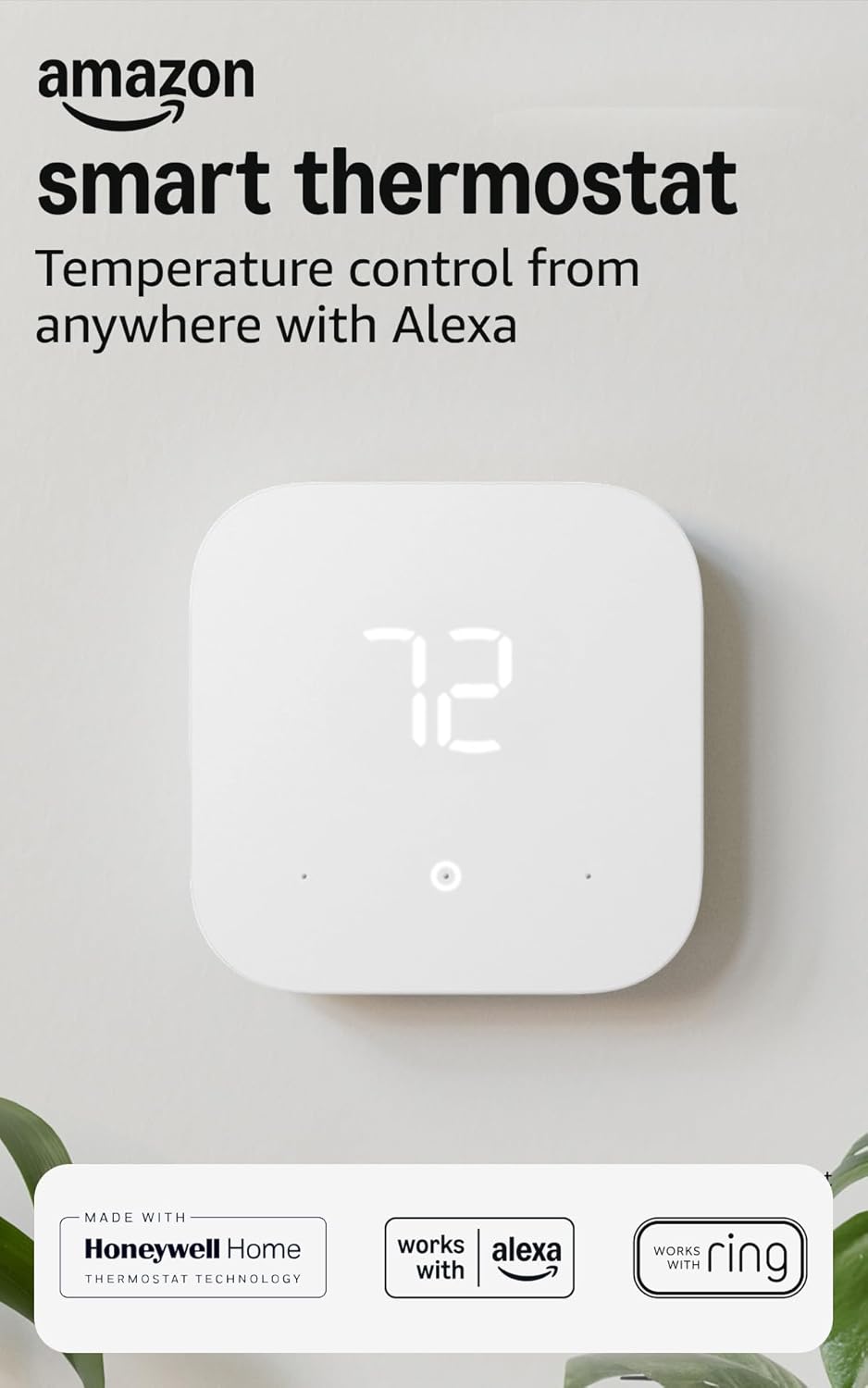
The Amazon Smart Thermostat serves as a practical replacement for older units in homes already equipped with Alexa devices, focusing on automated comfort and energy management for everyday users.
Performance centers on creating schedules or allowing automatic adjustments based on temperature readings and presence detection to maintain desired conditions throughout different areas of the house.
Setup relies on the Alexa app for step-by-step guidance during installation while the underlying Honeywell Home technology supports consistent function across heating and cooling cycles.
In daily use the device enables remote oversight through the app and integration with other Alexa products to adjust settings according to occupancy or time of day without manual intervention.
Limitations include the C-wire requirement and the need for compatible Alexa hardware to unlock all zone features, making it best suited for households invested in that platform rather than those seeking standalone operation.
Specifications
| Size | 3.56 x 3.56 x 0.84 in (90.4 x 90.4 x 21.4 mm) |
|---|---|
| Weight | 3.86 oz (109.5 g) Actual size and weight may vary by manufacturing process. |
| Model number | S6ED3R |
| Certifications | ENERGY STAR – For EPA's ENERGY STAR requirements, see energystar.gov. ECOLOGO Gold – Select replacement parts are available for 3 years after the end of production of your Amazon Smart Thermostat. Learn more here. |
| In the box | Amazon Smart Thermostat, installation tool, wall plate, cosmetic plate, and quick start guide. |
| Network connectivity | 2.4 GHz only, 802.11 b/g/n. Does not support 5GHz networks or connecting to ad-hoc (or peer-to-peer) Wi-Fi networks. |
| Audio | No far-field microphone; Alexa-enabled device required for voice control. |
| On-device control | 3 touch buttons on device (Temperature Up, Temperature Down, Select/Mode). |
| On-the-go-control | Alexa app, voice control, on-device, and Echo device compatible. |
| Installation method | Guided installation in the Alexa app. (You may need a power drill, 3/16” drill bit, and a level.) |
Verify the current product variation before purchase; specifications may change.
Best For / Avoid If
Best for buyers prioritizing
- Alexa connectivity allows hands-free control and multi-device routines
- App-guided setup simplifies installation for many DIY homeowners
- Programmable options and presence features support tailored comfort and efficiency
Consider another option if
- Requires a C-wire which may necessitate additional wiring work in older homes
- Full comfort zone functionality depends on owning compatible Alexa devices
- Advanced voice features tie users to the Alexa ecosystem

Pros
- Covers compatibility with up to 85 percent of 24VAC HVAC systems via the online checker tool.
- Delivers free software upgrades to sustain long-term performance and features.
- Offers 3-year backing along with expert support available seven days a week by phone email or chat.
- Enables complete home monitoring when paired with separately sold SmartSensors.
Cons
- Power Extender Kit must be purchased separately for installations without a C-wire.
- Trim kit for improved wall appearance is also sold separately.
- Requires pre-purchase compatibility verification since support does not extend to line voltage millivolt or 0-10VDC systems.
The ecobee Smart Thermostat Essential functions as a programmable Wi-Fi model designed for straightforward management of home heating and cooling systems.
Based on the provided product details it automatically follows user schedules to conserve energy during absences and optimize comfort upon return while incorporating eco+ tools for humidity detection and shifting usage to off-peak times.
The color touchscreen and companion app enable simple adjustments from anywhere and the unit supports installation on the majority of 24VAC HVAC equipment including conventional heat pump and boiler configurations.
Real-world applications include remote energy tracking through the mobile app plus the option to add SmartSensors for targeted room monitoring that enhances overall household efficiency and comfort.
Limitations center on the separate purchase requirement for the Power Extender Kit in homes lacking a C-wire and the need to confirm system compatibility in advance which may prompt some users to consider models with more included accessories.
Homeowners managing standard HVAC setups who prioritize voice assistant integration and scheduled energy savings will find this thermostat suitable while those requiring universal compatibility or bundled accessories may prefer other variants in the lineup.
Specifications
| Controller Type | Amazon Alexa, Android, Apple HomeKit, Google Assistant, iOS |
|---|---|
| Additional Features | Auto-Away Mode, Auto-Scheduling, Fan Control, Programmable, Temperature Display |
| Specific Uses For Product | Air Conditioner, Electric Baseboard Heater, Furnace |
| Temperature Control Type | Cooling |
| Connectivity Technology | Wi-Fi |
| Power Source | Battery Powered |
| Display Type | LCD |
| Screen Size | 3.74 Inches |
| Control Type | Touchpad Control |
| Control Method | Touch |
Verify the current product variation before purchase; specifications may change.
Best For / Avoid If
Best for buyers prioritizing
- Covers compatibility with up to 85 percent of 24VAC HVAC systems via the online checker tool.
- Delivers free software upgrades to sustain long-term performance and features.
- Offers 3-year backing along with expert support available seven days a week by phone email or chat.
Consider another option if
- Power Extender Kit must be purchased separately for installations without a C-wire.
- Trim kit for improved wall appearance is also sold separately.
- Requires pre-purchase compatibility verification since support does not extend to line voltage millivolt or 0-10VDC systems.

Pros
- Offers choice between fixed 7-day programming and automatic geofencing for flexible temperature management
- Provides ENERGY STAR certified efficiency tools including usage reports and alerts
- Integrates with multiple voice assistants and supports remote access for everyday control
- Works with most heat and cool oil furnace systems when a C-wire is present
Cons
- Requires verification of low-voltage system compatibility and C-wire presence before installation
- Will not operate with heating-only oil furnace systems unless a C-wire is available
- Initial setup may require extra steps for users confirming wire labels and voltage type
The HoneywellHome RTH8800WF2022 T5 WiFi Smart Thermostat functions as a programmable device that lets users maintain consistent home temperatures through scheduling or adaptive geofencing features.
Based on the provided product details, the combination of 7-day programming and location-aware modes helps deliver comfort on schedule while supporting energy efficiency goals for compatible systems.
Installation requires confirming low-voltage wiring and C-wire presence using the included guidance, after which the app enables quick creation of daily temperature programs and connection to voice assistants.
In practical home settings the thermostat supplies remote smartphone access, filter change reminders, and temperature alerts that assist with maintaining steady comfort across varying household routines.
Users should complete the compatibility checks outlined in the product information to ensure fit with their furnace type, though the listed features indicate solid support for most heat and cool oil systems when a C-wire is present, positioning it as a practical option for those focused on smart scheduling and energy tracking.
Specifications
| Controller Type | Amazon Alexa, Android, Apple HomeKit, Google Assistant, iOS |
|---|---|
| Additional Features | Auto Changeover, Auto-Away Mode, Daylight Savings Time Ready, ENERGY STAR certified, Fan Control, Geofence Technology, Low Voltage, Programmable, Temperature Display, Vacation Mode |
| Specific Uses For Product | Air Conditioner, Furnace, Heat Pump |
| Temperature Control Type | Heating and Cooling |
| Connectivity Technology | Wi-Fi |
| Power Source | Corded Electric |
| Voltage | 24 Volts |
| Display Type | LCD |
| Screen Size | 4.95 Inches |
| Control Type | Touchpad Control |
Verify the current product variation before purchase; specifications may change.
Best For / Avoid If
Best for buyers prioritizing
- Offers choice between fixed 7-day programming and automatic geofencing for flexible temperature management
- Provides ENERGY STAR certified efficiency tools including usage reports and alerts
- Integrates with multiple voice assistants and supports remote access for everyday control
Consider another option if
- Requires verification of low-voltage system compatibility and C-wire presence before installation
- Will not operate with heating-only oil furnace systems unless a C-wire is available
- Initial setup may require extra steps for users confirming wire labels and voltage type

Pros
- ENERGY STAR certified design promotes household energy savings
- Operates without a C wire in most homes for simpler setup
- Offers app based remote access and voice control options
- Includes HVAC monitoring that provides useful maintenance alerts
Cons
- Some heating only cooling only zone or heat pump systems require a C wire or accessory
- Compatibility verification is recommended before purchase
- Does not include a lock feature to restrict changes
The Google Nest Thermostat functions as a programmable wifi device that supports home energy management and daily comfort adjustments. Homeowners interested in smart home features will find its connectivity options and scheduling tools practical for everyday use.
Performance centers on automatic temperature setbacks when the home is unoccupied along with HVAC monitoring that detects potential system issues and issues reminders. These elements combine to support efficient operation without constant manual intervention.
Setup works without a C wire in most residences while the Google Home app handles scheduling remote access and integration with voice assistants. The design emphasizes straightforward control through phones tablets or compatible speakers.
Real world applications include managing family schedules from anywhere and receiving alerts that simplify HVAC upkeep. Integration with platforms like Google Assistant and Alexa adds flexibility for voice commands and broader automation.
Limitations appear mainly with certain HVAC configurations that may need extra power accessories and the absence of a lock option. Overall the thermostat provides solid value for users seeking energy focused smart control within standard home systems.
Specifications
| Brand | |
|---|---|
| Model Name | Google Nest Thermostat |
| Product Dimensions | 1.07"D x 3.31"W x 3.31"H |
| Controller Type | Amazon Alexa, Android, Google Assistant, iOS, nest |
| Special Feature | Programmable |
Verify the current product variation before purchase; specifications may change.
Best For / Avoid If
Best for buyers prioritizing
- ENERGY STAR certified design promotes household energy savings
- Operates without a C wire in most homes for simpler setup
- Offers app based remote access and voice control options
Consider another option if
- Some heating only cooling only zone or heat pump systems require a C wire or accessory
- Compatibility verification is recommended before purchase
- Does not include a lock feature to restrict changes
Pros
- Straightforward setup suitable for many existing residential systems
- Mobile app allows convenient adjustments from any location
- Energy-saving tools combined with privacy protections
- Broad compatibility reduces need for extra wiring in common setups
Cons
- Common wire requirement applies to heat pump and heat-only or cool-only systems
- Limited to 2.4 GHz WiFi networks for connectivity
- New users may need additional time to configure initial schedules
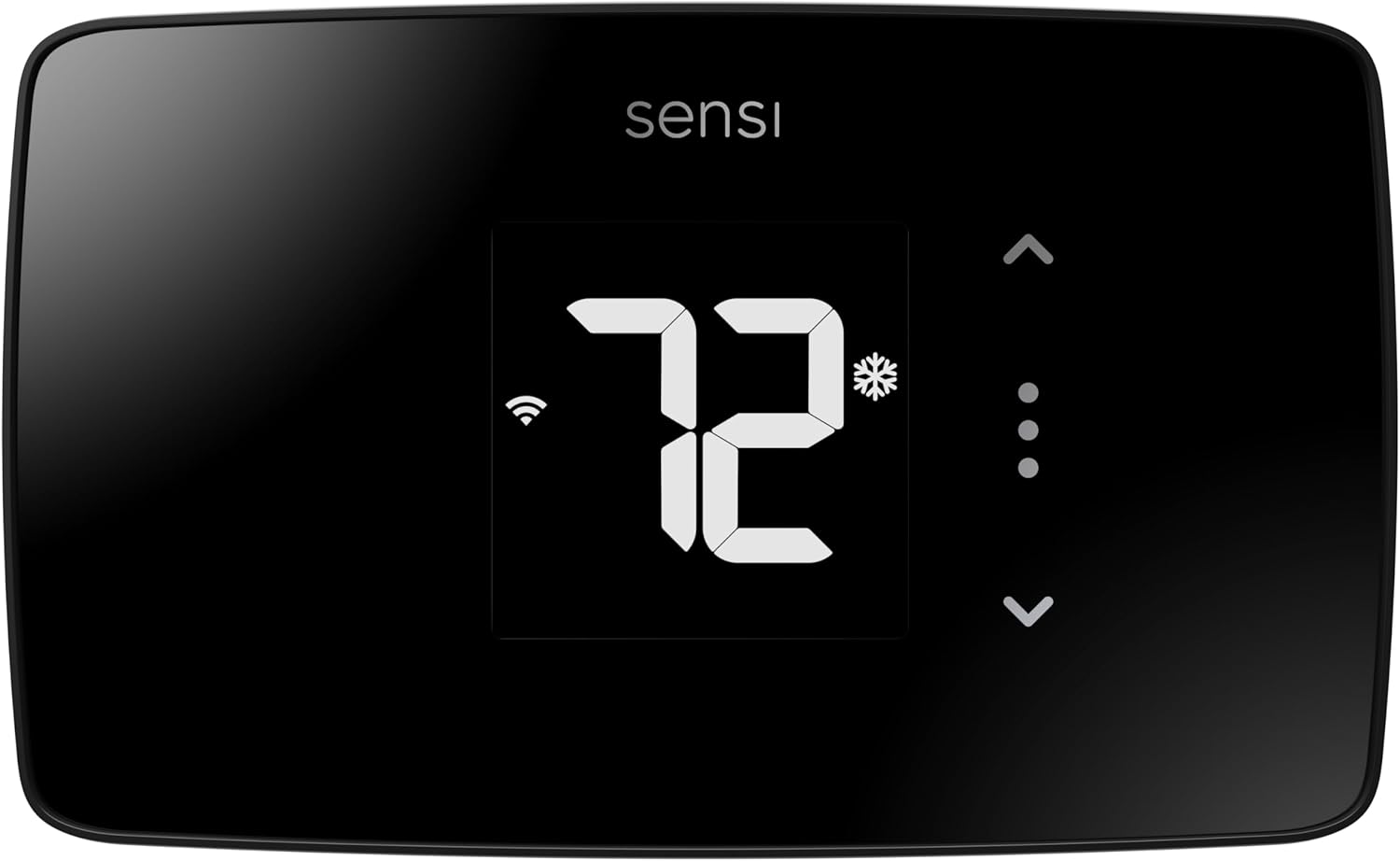
The Sensi Lite Smart Thermostat serves as a practical upgrade for those looking to add smart capabilities to their home heating and cooling systems.
Its features enable potential energy reductions around 23 percent by utilizing scheduling and location-based controls that adjust settings automatically.
Installation benefits from a built-in level along with clear instructions, making it feasible for many do-it-yourself projects on standard HVAC units.
In daily use, the mobile app provides reliable remote access while the privacy measures ensure data remains protected from third-party sales or targeted ads.
Users should note that certain equipment types will need a common wire, which could influence compatibility choices, but overall it represents a solid option for basic smart thermostat needs in average households.
Specifications
| Controller Type | Amazon Alexa, Google Assistant, Hand Control, SmartThings |
|---|---|
| Additional Features | Data Privacy, Easy DIY Install, Energy Savings, Programmable |
| Specific Uses For Product | Air Conditioner, Boiler, Furnace, Heat Pump |
| Temperature Control Type | Automatic or Programmable |
| Connectivity Technology | Wi-Fi |
| Power Source | Battery or C-wire |
| Voltage | 24 Volts |
| Display Type | LCD |
| Control Type | App Control |
| Control Method | App, Touch, Voice |
Verify the current product variation before purchase; specifications may change.
Best For / Avoid If
Best for buyers prioritizing
- Straightforward setup suitable for many existing residential systems
- Mobile app allows convenient adjustments from any location
- Energy-saving tools combined with privacy protections
Consider another option if
- Common wire requirement applies to heat pump and heat-only or cool-only systems
- Limited to 2.4 GHz WiFi networks for connectivity
- New users may need additional time to configure initial schedules
Pros
- ENERGY STAR certified design that promotes energy savings while maintaining comfort
- Operates without a C wire in the majority of homes according to listed compatibility details
- Integrates with Google Assistant and Matter certified voice assistants for hands free commands
- Provides HVAC monitoring alerts to help catch issues early
Cons
- Some systems including heat pumps and zone controlled setups may require a C wire or power accessory
- Remote control and notifications depend on stable internet and Wi Fi connections
- Lacks a lock feature for restricting manual changes
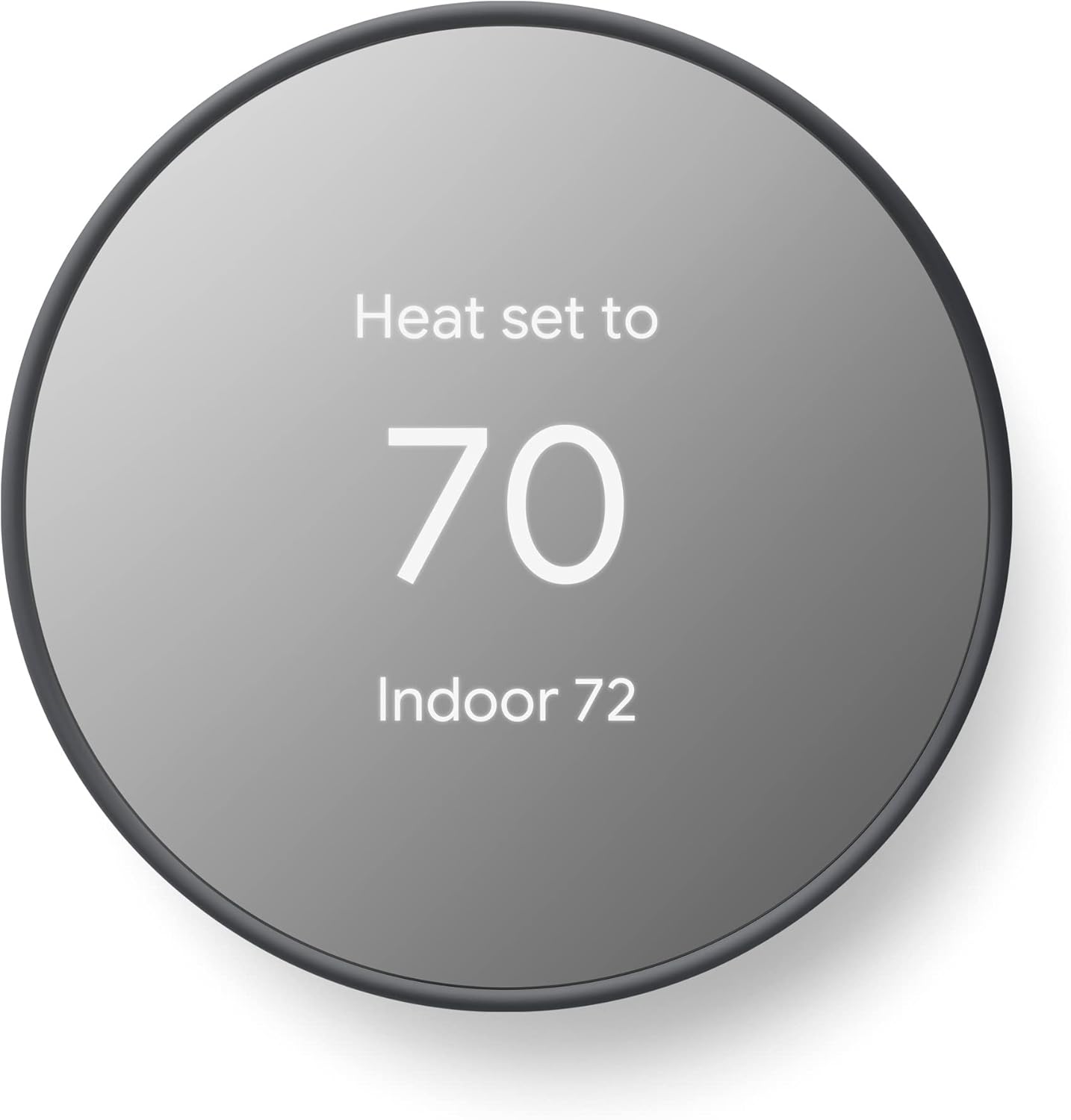
The Google Nest Thermostat serves as a programmable WiFi device that brings app based scheduling and remote access to everyday temperature management in residential settings.
Its sensor driven eco mode and Savings Finder tool work together to identify opportunities for reduced energy use by adjusting operation when the home is unoccupied or suggesting schedule refinements.
Installation follows simple steps outlined in the Google Home app with a touch bar interface on the unit itself for direct adjustments and broad compatibility with most household HVAC configurations.
Daily use benefits include family wide access via mobile devices, alerts for system maintenance needs, and optional participation in clean energy prioritization services where supported by local utilities.
Users should verify system compatibility in advance since certain setups like heat pumps require additional wiring components, and the device needs consistent Wi Fi for full remote functionality.
Homeowners seeking integrated smart controls with energy awareness features will find this model practical while those with incompatible wiring may need professional assistance or an alternative solution.
Specifications
| Controller Type | Amazon Alexa, Android, Google Assistant, iOS, nest |
|---|---|
| Additional Features | Programmable |
| Specific Uses For Product | Heat Pump |
| Temperature Control Type | Heating, Cooling |
| Connectivity Technology | Bluetooth, Wi-Fi |
| Power Source | Battery Powered |
| Voltage | 24 Volts |
| Display Type | LCD |
| Screen Size | 2 Inches |
| Control Type | Remote Control, Voice Control |
Verify the current product variation before purchase; specifications may change.
Best For / Avoid If
Best for buyers prioritizing
- ENERGY STAR certified design that promotes energy savings while maintaining comfort
- Operates without a C wire in the majority of homes according to listed compatibility details
- Integrates with Google Assistant and Matter certified voice assistants for hands free commands
Consider another option if
- Some systems including heat pumps and zone controlled setups may require a C wire or power accessory
- Remote control and notifications depend on stable internet and Wi Fi connections
- Lacks a lock feature for restricting manual changes

Pros
- Supports up to 2 heat 2 cool conventional systems or 2 heat 1 cool heat pumps with electric backup
- Multiple programming options including 7 day and 5-2 formats fit diverse lifestyle needs
- WiFi connectivity on both 2.4 and 5GHz networks pairs with voice assistant compatibility
- Custom display settings and humidity display option enhance user control
Cons
- C-wire requirement may need professional installation in homes lacking compatible wiring
- Incompatibility with electric baseboard heat systems limits options for some older properties
- App control depends on stable WiFi which could affect performance in areas with connectivity issues
Homeowners and DIY enthusiasts upgrading their climate control systems will appreciate the Honeywell Home X2S as a capable smart thermostat option. This model targets users with compatible conventional or heat pump HVAC setups who value energy efficiency and modern connectivity features. The product information indicates strong potential for those seeking to simplify daily temperature management while integrating with existing smart home ecosystems.
Based on the listed specifications the thermostat delivers practical functionality through its scheduling flexibility and auto-away capabilities that respond to occupancy patterns. WiFi connectivity paired with the First Alert app enables adjustments from remote locations. Matter certification supports seamless operation with Amazon Alexa, Google Assistant, and Apple HomeKit for convenient voice commands and automation routines that enhance everyday home comfort.
The compact design measures approximately 5.13 inches wide and includes a 4.84 square inch screen that remains unobtrusive on most walls. Setup involves a required C-wire for power along with 2.4 or 5GHz network compatibility. Interchangeable accent pieces in white and gray allow coordination with surrounding decor while customizable display settings and humidity monitoring options provide tailored usability for different preferences.
Practical applications include maintaining optimal indoor conditions with filter change reminders that help protect HVAC equipment over time. The demand response capability allows participation in energy conservation programs that benefit both the environment and household budgets. Extended setpoint features offer protection in colder conditions while the overall design focuses on supporting long term maintenance and efficiency in forced air, hot water, or compatible systems.
Limitations include the C-wire dependency which could complicate installation in certain older homes without updated wiring. The unit also excludes compatibility with electric baseboard heat setups. For most households with suitable systems however the X2S balances smart features with straightforward operation to support informed decisions about home comfort upgrades.
Best For / Avoid If
Best for buyers prioritizing
- Supports up to 2 heat 2 cool conventional systems or 2 heat 1 cool heat pumps with electric backup
- Multiple programming options including 7 day and 5-2 formats fit diverse lifestyle needs
- WiFi connectivity on both 2.4 and 5GHz networks pairs with voice assistant compatibility
Consider another option if
- C-wire requirement may need professional installation in homes lacking compatible wiring
- Incompatibility with electric baseboard heat systems limits options for some older properties
- App control depends on stable WiFi which could affect performance in areas with connectivity issues

Pros
- Serves as a direct replacement for RTH2300 and RTH221 models easing transitions
- Backlit display improves usability in low light conditions
- Custom display settings allow optimization for user preferences
- 1-year warranty covers the basic device protection
Cons
- Requires separate purchase of two AA batteries for power
- Does not function with electric baseboard heating systems
- Restricted to single-stage 1 heat 1 cool applications
The HoneywellHome RTH20B programmable thermostat is suited for homeowners managing single-stage heating and cooling in their residences. It provides options for scheduled programming that can help with consistent temperature regulation throughout the week.
Based on the product details the 5-2 day scheduling allows different settings for weekdays and weekends while a non-programmable mode offers simplicity for those who prefer it. Compatibility covers 1 heat 1 cool systems including forced air gas oil electric and hot water heat along with 750 mV applications.
The listed features highlight a large screen with clear font and backlighting that aids in reading the display. The UWP wall plate supports straightforward installation and makes future upgrades more convenient according to the specifications.
Practical benefits include customizable reminders for air filter changes and display settings that users can adjust to fit their home environment. The extended low-heat setpoint reaches 32 degrees Fahrenheit providing additional control flexibility.
Limitations from the data include the need for two AA batteries not included in the package and incompatibility with electric baseboard heat. This model serves as a basic programmable option for standard home systems based on the available information.
Homeowners replacing older compatible thermostats or seeking simple scheduling features may find this suitable while those with more advanced requirements could consider other models.
Best For / Avoid If
Best for buyers prioritizing
- Serves as a direct replacement for RTH2300 and RTH221 models easing transitions
- Backlit display improves usability in low light conditions
- Custom display settings allow optimization for user preferences
Consider another option if
- Requires separate purchase of two AA batteries for power
- Does not function with electric baseboard heating systems
- Restricted to single-stage 1 heat 1 cool applications

Pros
- Built-in air quality monitoring supports healthier indoor conditions with practical guidance
- SmartSensor improves comfort consistency without manual adjustments in key rooms
- Wide HVAC compatibility and included installation accessories simplify setup for many homes
- Radar-based occupancy sensing enhances both climate control and basic security monitoring
Cons
- High-voltage and certain specialized systems remain incompatible
- Advanced security alerts require an optional subscription plan
- Full Siri features depend on a separate Apple home hub device
The ecobee Smart Thermostat Premium functions as a programmable WiFi device that helps homeowners automate temperature control while incorporating air quality monitoring and room-specific adjustments through its included SmartSensor.
Performance centers on energy optimization features that track occupancy and adjust HVAC operation accordingly, along with built-in alerts for air quality issues and timely filter maintenance reminders.
Design elements include a large vibrant display, metal siding, and radar technology for occupancy detection, while the package supplies the Power Extender Kit and trim components to support straightforward wiring on compatible systems.
In daily home use this thermostat supports voice commands, integrates with major smart home platforms, and can connect to an ecobee doorbell camera for live door monitoring directly from the device interface.
Potential limitations include the need for a compatible 24VAC HVAC setup and the requirement of an Apple home hub for complete Siri functionality, making it best suited for users already within supported ecosystems.
Owners of standard forced-air or heat pump systems seeking combined climate, air quality, and basic automation features will find this model appropriate, whereas those with incompatible wiring or no interest in voice assistants may prefer simpler alternatives.
Specifications
| Controller Type | Amazon Alexa, Android, Apple HomeKit, Google Assistant, iOS |
|---|---|
| Additional Features | Amazon Alexa, Siri, Wired Smart Thermostat |
| Specific Uses For Product | Furnace |
| Temperature Control Type | Heating, Cooling |
| Connectivity Technology | Bluetooth |
| Power Source | Battery Powered |
| Voltage | 24 Volts |
| Display Type | LCD |
| Control Type | Button Control |
| Control Method | App |
Verify the current product variation before purchase; specifications may change.
Best For / Avoid If
Best for buyers prioritizing
- Built-in air quality monitoring supports healthier indoor conditions with practical guidance
- SmartSensor improves comfort consistency without manual adjustments in key rooms
- Wide HVAC compatibility and included installation accessories simplify setup for many homes
Consider another option if
- High-voltage and certain specialized systems remain incompatible
- Advanced security alerts require an optional subscription plan
- Full Siri features depend on a separate Apple home hub device

Pros
- Automatic energy optimization based on real-time occupancy detection
- Broad smart home platform support for flexible control options
- Hardwired reliability removes concerns over power interruptions
- Included accessories simplify setup for many standard HVAC configurations
Cons
- Requires a compatibility check before purchase to confirm fit with existing HVAC equipment
- Full multi-room sensing may need separate SmartSensors for best results
- Not compatible with line voltage, millivolt, or 0-10VDC systems
The ecobee Smart Thermostat Enhanced functions as a programmable WiFi thermostat that adapts temperatures based on occupancy and learned schedules to support efficient home climate management for everyday users.
Its eco+ capabilities automatically lower energy consumption during periods when the home is empty or occupants are sleeping, while radar detection prepares the space ahead of return for consistent comfort.
Setup benefits from the included Power Extender Kit and Trim Kit, allowing hardwired installation on most 24VAC systems without reliance on batteries for continued operation.
Integration with major voice assistants and the companion app enables convenient remote adjustments, and the device refines settings over time according to humidity and personal preferences for daily practicality.
Users benefit most when their HVAC equipment matches the listed compatibility, though those outside the supported range may encounter installation hurdles and should verify details in advance.
Homeowners seeking automated comfort and energy features in a smart ecosystem will find this model a practical choice, whereas properties with incompatible systems may require exploring other thermostat alternatives.
Specifications
| Controller Type | Amazon Alexa, Android, Apple HomeKit, Google Assistant, iOS |
|---|---|
| Additional Features | Wired Smart Thermostat |
| Specific Uses For Product | Furnace |
| Temperature Control Type | Heating |
| Connectivity Technology | Wi-Fi |
| Power Source | Corded Electric |
| Voltage | 24 Volts |
| Display Type | LCD |
| Screen Size | 4 Inches |
| Control Type | App Control |
Verify the current product variation before purchase; specifications may change.
Best For / Avoid If
Best for buyers prioritizing
- Automatic energy optimization based on real-time occupancy detection
- Broad smart home platform support for flexible control options
- Hardwired reliability removes concerns over power interruptions
Consider another option if
- Requires a compatibility check before purchase to confirm fit with existing HVAC equipment
- Full multi-room sensing may need separate SmartSensors for best results
- Not compatible with line voltage, millivolt, or 0-10VDC systems
Pros
- Works with Sensi room sensors to balance temperatures across multiple rooms
- ENERGY STAR certification supports reduced energy consumption through scheduling tools
- Top-rated app provides step-by-step instructions for straightforward DIY setup
- Integrates with Alexa, Google Assistant, and Samsung SmartThings for voice and automation control
- Built with over 100 years of HVACR experience for reliable operation
Cons
- Requires a common wire for installation which may not exist in every home
- Room sensors must be purchased separately to enable multi-room balancing
- Advanced features depend on compatible HVAC equipment found in most but not all residences
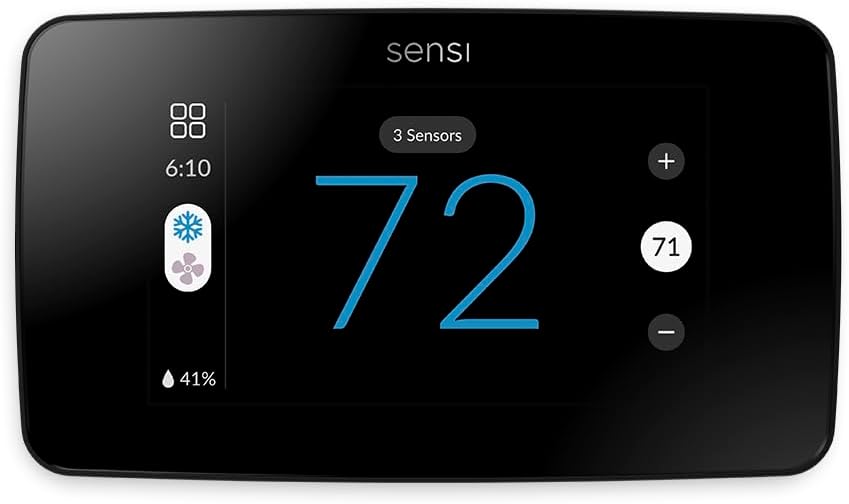
The Sensi Touch 2 provides Wi-Fi connectivity and programmable controls that allow homeowners to manage heating and cooling schedules from a smartphone or through voice commands.
Features like geofencing and seven-day scheduling help maintain comfortable indoor conditions while supporting reduced energy consumption according to the listed specifications.
A modern touchscreen display pairs with an intuitive app that guides users through each installation step using Bluetooth technology for homes equipped with a C-wire connection.
Practical applications include monitoring HVAC usage reports and receiving filter replacement reminders which add convenience for ongoing system maintenance in typical residential settings.
Limitations include the need for a C-wire and separate room sensors so buyers should verify compatibility with their existing equipment before purchase.
Homeowners seeking straightforward smart thermostat integration with privacy safeguards and voice assistant support will find this model well suited while those without a C-wire may need to explore alternative options.
Best For / Avoid If
Best for buyers prioritizing
- Works with Sensi room sensors to balance temperatures across multiple rooms
- ENERGY STAR certification supports reduced energy consumption through scheduling tools
- Top-rated app provides step-by-step instructions for straightforward DIY setup
Consider another option if
- Requires a common wire for installation which may not exist in every home
- Room sensors must be purchased separately to enable multi-room balancing
- Advanced features depend on compatible HVAC equipment found in most but not all residences
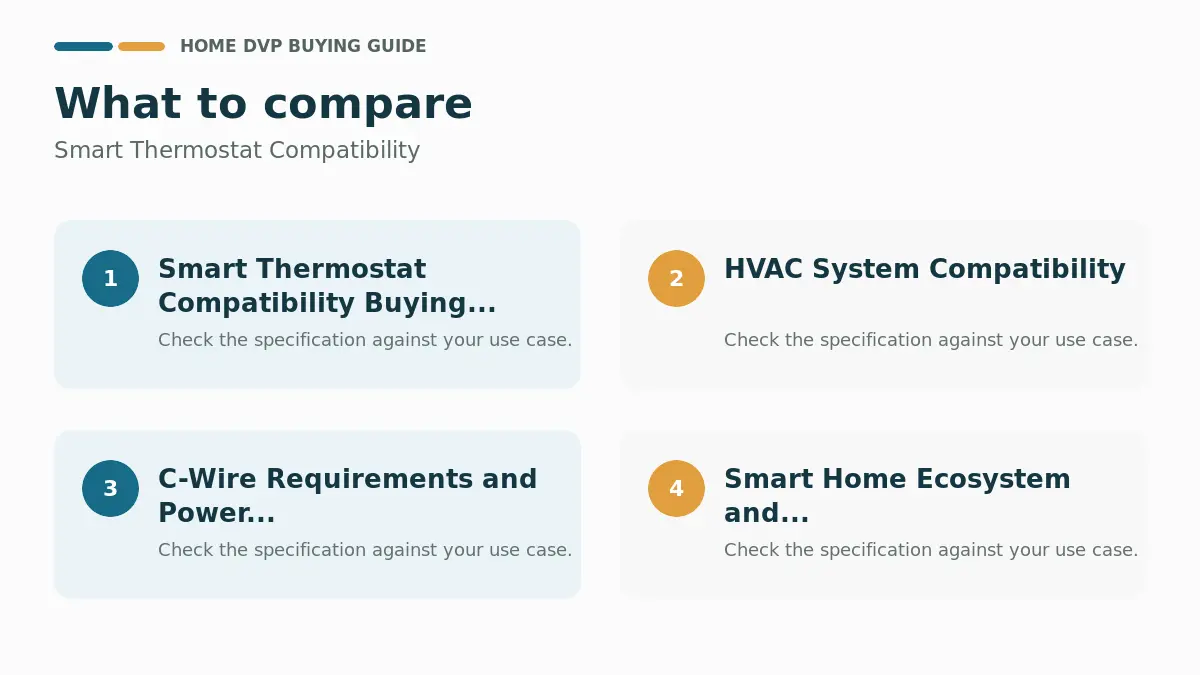
Smart Thermostat Compatibility Buying Guide
Understanding HVAC System Compatibility
When evaluating smart thermostat compatibility, the first step is determining if the thermostat will work with your specific heating and cooling equipment. Most modern smart thermostats advertise compatibility with a high percentage of systems, but this varies based on whether you have a gas furnace, electric heat pump, boiler, or dual-fuel setup. Always use the manufacturer's compatibility checker tool before purchasing to confirm a good match.
Many models offer support for conventional systems up to 2 heat and 2 cool stages as well as heat pumps with auxiliary heating. Products designed with broad compatibility help ensure the device can properly manage your HVAC equipment. Ignoring this step leads to the common mistake of selecting a unit that either requires extensive modifications or fails to operate as expected with your particular setup.
Based on our detailed comparison of specifications, we found clear differences in how each model handles various HVAC configurations. This information helps homeowners and DIYers make choices that align with their existing infrastructure rather than forcing incompatible solutions.
C-Wire Requirements and Power Solutions
A critical aspect of smart thermostat compatibility involves understanding power delivery to the thermostat. Many smart models require a C-wire to maintain consistent power for WiFi connectivity and advanced features. However, several options include workarounds such as power extender kits that eliminate the need for a C-wire in most applications.
Without adequate power, features like remote access or automatic updates may become unreliable. Models that adapt to homes without this wiring provide greater flexibility for older properties. Before purchase, examine your current thermostat wiring or consult the compatibility tools to determine if additional accessories will be necessary.
Homeowners should consider both the initial installation and long-term reliability when assessing power requirements. Hardwired solutions with proper power delivery typically offer more consistent performance across varying conditions and usage patterns.
Smart Home Ecosystem and Voice Assistant Integration
Smart Thermostat Compatibility also encompasses how effectively the thermostat connects with your broader smart home devices. Support for major voice assistants including Alexa, Google Assistant, and Siri varies across models. Some options additionally feature Matter certification, which promotes better interoperability across different platforms and reduces dependency on multiple applications.
Selecting a thermostat that aligns with your primary smart home ecosystem prevents frustration with incompatible commands or limited automation options. Geofencing capabilities that use your smartphone location to adjust temperatures represent another important integration feature that appears in many quality models.
Based on the feature sets, certain thermostats excel at local control while others rely more heavily on cloud connectivity. Understanding these differences helps match the product to your preferences for privacy, speed, and reliability in daily use.
Energy Efficiency Features and Potential Savings
ENERGY STAR certification serves as a reliable benchmark when assessing the efficiency aspects of smart thermostat compatibility. Many models offer scheduling tools, occupancy detection, and usage reporting that can reduce heating and cooling costs significantly. These features automatically adjust temperatures when spaces are unoccupied or suggest optimizations based on your patterns.
Participation in utility demand response programs provides additional opportunities for savings and potential rebates. Monthly reports help track consumption trends while maintenance alerts remind you to replace filters at optimal times. The combination of these capabilities typically delivers better efficiency than basic programmable thermostats.
While exact savings depend on factors like home insulation, local climate, and personal habits, choosing models with proven energy management tools generally provides measurable benefits over time. Checking with local energy providers about available incentives can further improve the value proposition.
Installation and DIY Considerations
Installation represents a major component of smart thermostat compatibility for most homeowners. Many models include built-in levels, clear step-by-step app instructions, and designs that fit standard wall plates without requiring patching or painting. This approach makes DIY installation accessible for those with basic electrical familiarity.
Always power down the HVAC system at the breaker before beginning work and document existing wiring with photographs. Models that minimize wall damage provide advantages for both owners and future occupants. Understanding the full scope of installation requirements prevents unexpected complications during setup.
For those less comfortable with electrical tasks, professional installation remains an option. The products we reviewed generally emphasize user-friendly processes, but system complexity can still influence the difficulty level.
Occupancy Sensing and Additional Smart Features
Effective occupancy detection helps optimize both comfort and efficiency in smart thermostats. Some models use built-in radar or pair with separate sensors to identify which areas of the home are in use. This capability allows for more precise temperature adjustments rather than heating or cooling unused spaces.
Additional features like air quality monitoring, humidity tracking, and maintenance alerts add further value for many households. These elements transform the thermostat from a simple temperature controller into a comprehensive home comfort and maintenance tool. Larger homes may benefit from multi-sensor approaches that address hot and cold spots effectively.
When comparing options, consider whether the included features match your specific needs. Models with expandable sensor options provide flexibility as your requirements evolve over time.
App Control, Maintenance Alerts, and Privacy Considerations
A well-designed mobile application enhances the usefulness of any smart thermostat. Features typically include remote temperature adjustment, scheduling tools, energy reports, and system alerts. The quality of these applications significantly impacts daily convenience and the ability to monitor performance from anywhere.
Maintenance notifications regarding filter changes or potential system issues help prevent minor problems from becoming major repairs. Privacy policies differ between manufacturers, with some placing strong emphasis on not selling personal data or using usage information for advertising purposes.
Evaluating both the technical capabilities and the approach to data handling provides a complete picture when assessing smart thermostat compatibility. This balanced view ensures the selected model delivers convenience without compromising other important homeowner priorities.
Our Research Methodology & Why You Can Trust Us
After carefully analyzing the available specifications of 15 smart thermostats, we developed this Smart Thermostat Compatibility 2026 guide based on key compatibility factors, feature sets, and homeowner needs. Our process involved cross-referencing each product's listed HVAC system compatibility, power requirements, integration options, energy management capabilities, and installation details provided in the manufacturer information.
We evaluated user feedback patterns, technical documentation, and stated performance claims to identify practical strengths and limitations. Ranking criteria included compatibility breadth, ease of installation for typical DIY scenarios, smart feature usefulness, energy efficiency indicators, reliability factors, value across the $35.99–$230, and overall fit for common home maintenance and upgrade projects. This transparent methodology ensures recommendations remain objective and data-driven.
Our content team includes specialists with extensive knowledge of home systems, HVAC equipment, and smart technology integration. We regularly update this guide during September to reflect current product information, firmware improvements, and evolving industry standards. For related topics on home climate management, consider our Air Quality & Climate resources.
You can trust this information because it prioritizes factual specifications and clear explanations of who each option best serves. We note both advantages like broad system support and considerations such as wiring requirements, helping readers make choices appropriate for their specific homes and situations.
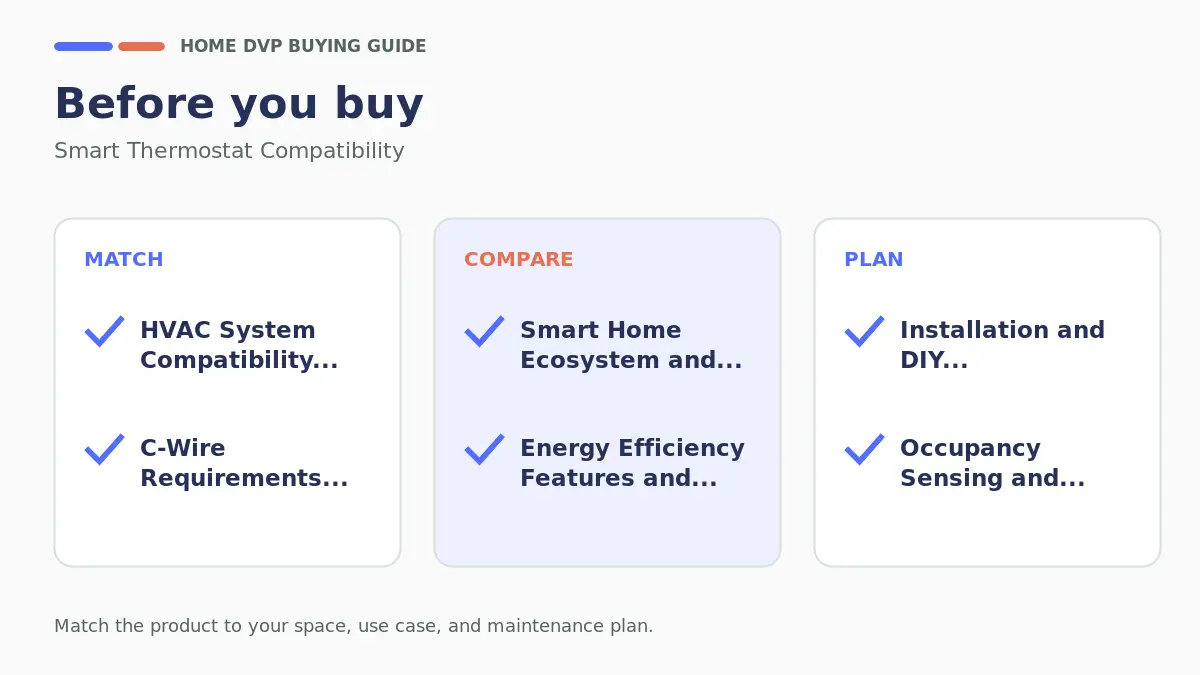
Final Thoughts
After comparing the specifications, the Sensi Smart Thermostat stands out as a versatile option for many households due to its straightforward DIY installation, strong compatibility with common HVAC systems, energy management features, and focus on user privacy. It provides practical functionality without excessive complexity for everyday use.
Homeowners wanting advanced capabilities including air quality monitoring and room-specific sensors may prefer the ecobee Smart Thermostat Premium or Enhanced models, which offer high compatibility rates and comprehensive smart features. For budget-friendly choices with modern Matter support, the meross Smart Thermostat delivers core functionality at an accessible price point.
Those invested in the Google ecosystem often find the Google Nest Thermostat aligns well with their existing devices and offers learning capabilities that adapt over time. Honeywell Home models provide dependable performance with flexible scheduling and proven reliability for conventional and heat pump systems. The Sensi Lite offers a streamlined alternative for simpler needs. Always confirm your specific HVAC compatibility using manufacturer tools before finalizing any purchase. Additional perspectives on home climate solutions can be found in our window air conditioner comparison and window air conditioner reviews.
Frequently Asked Questions
What should I look for when choosing smart thermostat compatibility?
Focus primarily on your HVAC system type, wiring configuration, and desired smart home integrations. Verify compatibility percentages and whether solutions for common issues like missing C-wires are included. Consider energy efficiency ratings, app quality, and privacy policies alongside your specific home requirements and technical comfort level.
How can I verify my system works with smart thermostats?
Most manufacturers provide online compatibility checkers that ask detailed questions about your current heating and cooling equipment. These tools deliver specific guidance about which models will function properly with your setup. Photographing your existing wiring before removal also helps when consulting support or professionals if questions arise during installation.
Are higher-end smart thermostat compatibility worth the additional cost?
Higher priced options frequently include enhanced sensors, air quality monitoring, better displays, and more sophisticated automation features that may justify their cost through increased comfort and efficiency. For basic temperature control and scheduling, more affordable models often perform adequately. Evaluate which specific capabilities matter most for your household before deciding on budget allocation.
Do all smart thermostats require professional installation?
Many models feature designs specifically created for DIY installation with comprehensive app guidance and minimal tools required. Success depends on your comfort with basic electrical tasks and the complexity of your particular HVAC wiring. When systems involve unusual configurations or you prefer not to handle the installation yourself, professional assistance ensures proper setup and optimal performance.
How much energy can compatible smart thermostats save?
ENERGY STAR certified models typically help reduce heating and cooling costs through intelligent scheduling, occupancy awareness, and adaptive learning. Savings commonly range from 10 to 25 percent depending on climate, home characteristics, and usage habits. Features like geofencing and utility integration can enhance these results further while providing valuable usage insights through regular reports.
What role does Matter compatibility play in smart thermostat compatibility?
Matter certification promotes greater flexibility by enabling devices to communicate more effectively across different smart home platforms. This standard supports local control that can improve response times and reliability while reducing dependence on manufacturer-specific cloud services. For households using multiple ecosystems, Matter-compatible options simplify management and future-proof your smart home investments.
Are smart thermostat compatibility suitable for older homes?
Many current smart thermostats work effectively in older properties, particularly those offering solutions for homes without C-wires or with legacy HVAC equipment. Broad compatibility lists often include support for various system types common in older construction. Checking specific requirements for your heating setup remains important, and professional assessment can help address any unique aspects of older home systems. For more on climate control in various home types, explore our window air conditioner reviews.