
Outdoor solar lights keep pathways, decks, and gardens illuminated without wiring or high electricity costs, but their performance depends heavily on the batteries inside. When brightness fades after sunset or lights fail to hold a charge through the night, the original cells are often the culprit. Updating with quality outdoor solar lights replacement battery restores runtime, reduces waste from disposable cells, and extends the life of existing fixtures for homeowners, renters, and DIYers.
In this 2026 guide, we evaluated 15 options across $5.99–$21.99 from brands including Tenergy, Brightown, Kruta, AQEENURA, HENREEPOWBATTERY, HELESIN. Our comparison focused on capacity ratings, chemistry suited to daily solar charging cycles, outdoor durability, pack sizes, and real-world homeowner needs rather than marketing claims. We also considered how these batteries fit common landscape lighting setups. For broader lighting advice, explore our Lighting & Fans resources.
Whether you maintain a few pathway lights or an entire yard display, choosing the right replacement cells saves money over time and keeps outdoor spaces safer after dark. The sections below break down the key decision factors, research approach, and practical recommendations so you can match batteries to your specific solar lights with confidence.
Outdoor Solar Lights Replacement Battery Buying Guide
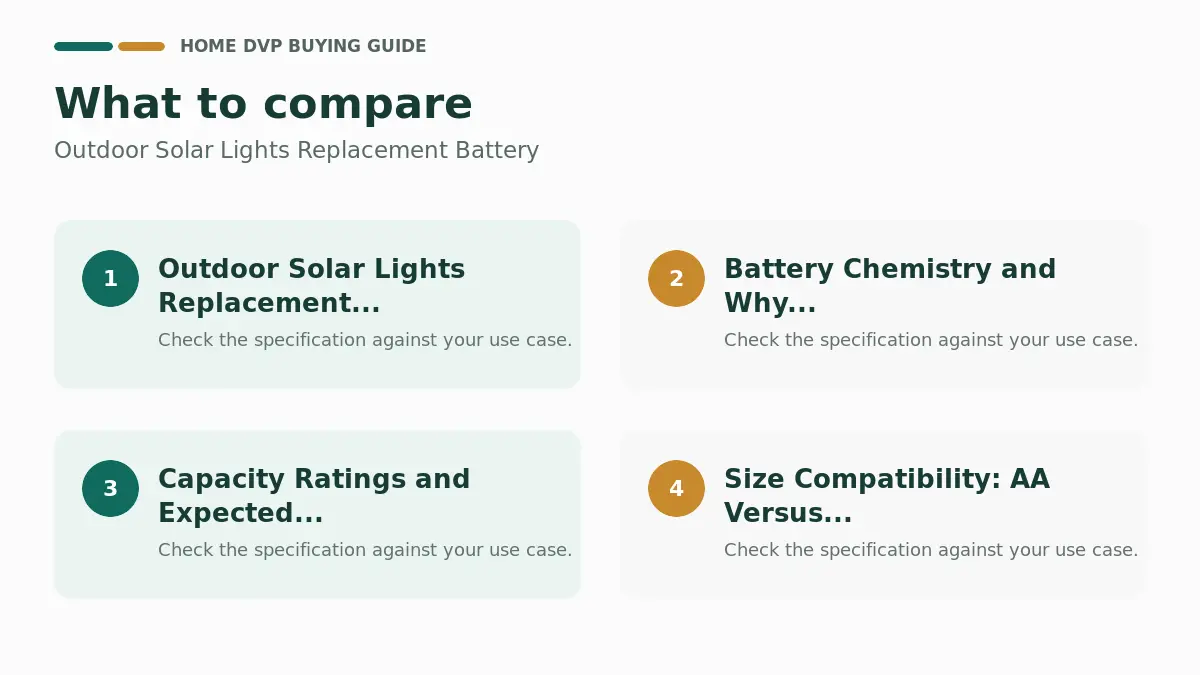
Selecting effective outdoor solar lights replacement battery requires more than matching size. Solar lights demand batteries that handle repeated charge and discharge cycles from sunlight, resist self-discharge during cloudy periods, and perform across temperature swings. After carefully analyzing the available specifications, we identified the criteria that matter most for reliable nighttime illumination. The following subsections cover the essentials with practical tips for common home setups.
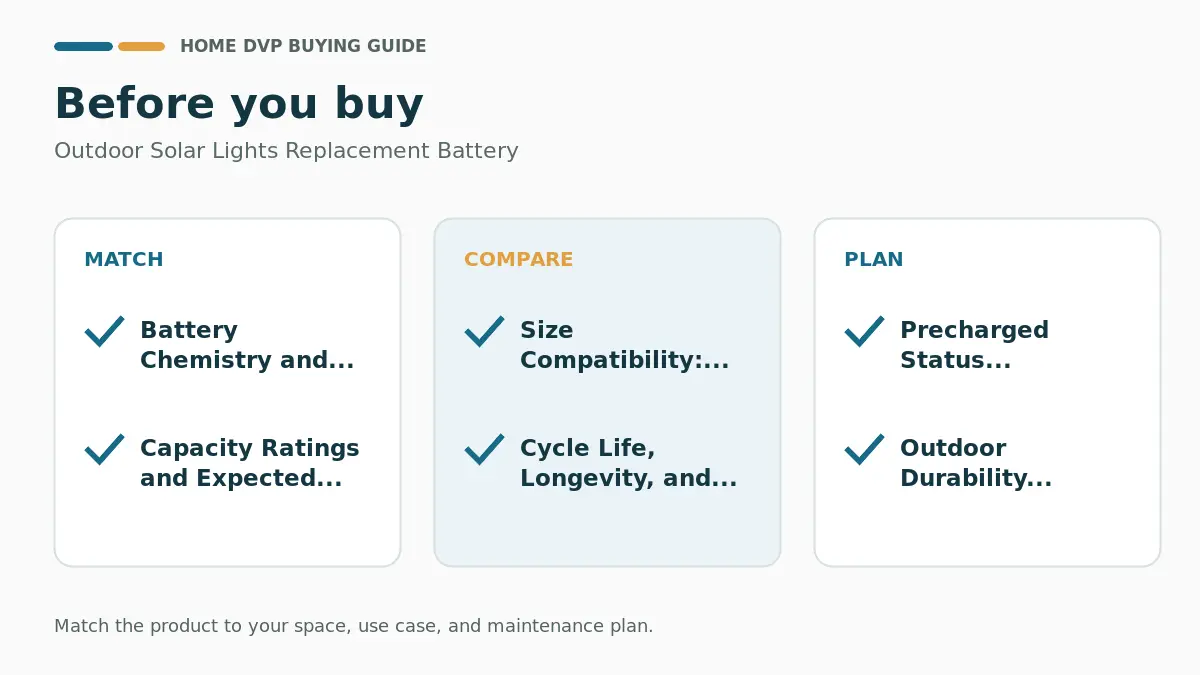
Battery Chemistry and Why NiMH Matters for Solar Lights
Most outdoor solar lights are designed around nickel-metal hydride (NiMH) chemistry at 1.2V. These cells accept daily solar charging better than alkaline disposables and avoid the memory effect and toxicity issues common with older NiCd batteries. Our research indicates that purpose-built solar NiMH batteries incorporate features that address overcharge from long summer days and deep discharge during rainy stretches.
A common mistake is installing alkaline batteries, which can leak, corrode contacts, and fail quickly under solar charging circuits. Stick to NiMH labeled for solar or outdoor lights. For household devices that share the same size, the same packs often work well, giving extra versatility. Homeowners upgrading multiple fixtures should verify the chemistry printed on the original cells or in the light manual before purchasing.
NiMH options from established lines tend to include low self-discharge formulas that retain charge during storage. This helps seasonal lights or spare batteries stay ready. When evaluating, prioritize solar-specific engineering over generic rechargeables for best long-term results in garden and pathway applications.
Capacity Ratings and Expected Nighttime Runtime
Capacity, measured in mAh, directly influences how long lights stay bright after dark. Lower ratings around 600mAh suit small accent lights with modest LED draws, while 1000mAh to 1600mAh cells support brighter pathway, deck, or string light setups. Based on the feature set of available models, higher-capacity packs help maintain illumination through longer nights or partially cloudy charging days.
Runtime also depends on the light fixture itself, solar panel size, and local sunlight hours. Replacing weak original cells with higher mAh equivalents often restores performance without changing the lights. Avoid mixing capacities in the same fixture, as uneven discharge can shorten overall life. For multi-light yards, buying matching packs ensures consistent brightness across the landscape.
Practical tip: After installing new batteries, give them a full day of good sun exposure before judging runtime. Many precharged cells arrive partially charged for shipping safety and reach peak capacity after a few charge-use cycles. Track performance over a week of typical weather for a realistic assessment.
Size Compatibility: AA Versus AAA and Fit Checks
The majority of outdoor solar lights use AA cells, though some compact designs take AAA. Confirm the size by opening the battery compartment or checking the original batteries and product label. Using the wrong diameter or length can prevent proper contact or damage the spring terminals.
Measure or note the exact dimensions if the fixture is older or no longer has clear markings. Most replacement packs list physical size alongside capacity and voltage. For lights that hold multiple cells, replace the entire set at once rather than mixing old and new. This balances the load and prevents premature failure of the remaining weak cells.
Renters or temporary setups benefit from keeping a small inventory of both sizes if the property has mixed lighting. Always double-check voltage: solar-compatible NiMH cells are 1.2V, not the 1.5V of alkaline. Devices requiring strict 1.5V alkaline-only operation should not receive these replacements.
Cycle Life, Longevity, and Money-Saving Potential
Quality outdoor solar lights replacement battery typically support 500 to 2000 charge-discharge cycles. Higher cycle ratings translate to years of outdoor service under daily solar use, far outlasting disposable alkaline batteries. Based on available product information, models engineered for solar applications often claim multi-year lifespans with proper care, reducing replacement frequency and landfill waste.
To maximize lifespan, fully discharge and recharge periodically if the lights sit unused for months, and avoid leaving them completely drained for extended periods. Extreme heat or freezing cold can reduce capacity over time, so seasonal storage in a moderate environment helps. Many packs note that recharging every few months during storage preserves performance.
Homeowners with large numbers of lights see the biggest savings. Calculating the cost of frequent alkaline replacements versus a one-time NiMH investment quickly shows the long-term value, especially for year-round landscape lighting. Look for UL certification or similar safety marks as an indicator of consistent manufacturing quality.
Precharged Status, Self-Discharge, and Storage Tips
Many solar replacement batteries ship partially precharged for transportation safety. Expect to give them a full charge via the solar light or a dedicated NiMH charger before first extended use. Low self-discharge formulations retain a higher percentage of capacity after months on the shelf, making them ideal for spare sets or seasonal decorations.
A practical approach is to label packs with the purchase date and rotate stock so older cells get used first. Store in a cool, dry place away from direct metal contact to avoid accidental shorting. For lights that see heavy summer use, having a second set ready allows quick swaps if one group begins to fade.
Common mistake: assuming the batteries are fully ready straight from the package. Partial precharge means initial nights may be shorter until they complete a few full cycles. Patience during the first week yields better long-term results. Related indoor lighting upgrades, such as those covered in our floor lamp bulb guide, follow similar careful selection principles.
Outdoor Durability, Temperature Range, and Weather Resistance
Solar lights sit outdoors year-round, so replacement batteries must tolerate heat, cold, moisture exposure through the fixture, and temperature extremes. Specifications listing wide operating ranges, such as below freezing to well over 100°F, indicate better suitability for real gardens and pathways.
Anti-leak designs and robust cell construction protect the light housing from corrosion. Features addressing overcharge from intense summer sun and recovery after cloudy periods help maintain reliable night lighting. Our evaluation prioritized models marketed specifically for solar garden, landscape, and pathway use over generic household packs when outdoor longevity is the goal.
For coastal or high-humidity areas, sealed fixtures plus quality batteries reduce failure rates. Inspect contacts periodically for corrosion and clean gently if needed. Pairing durable batteries with well-maintained solar panels and clean LED lenses maximizes overall system performance. Homeowners can also review complementary topics like LED ceiling light color temperature for indoor consistency.
Pack Size, Value, and Matching Quantity to Your Needs
Packs range from small 4-packs for testing a few lights to 12-packs and 20-packs for whole-yard refreshes. Larger packs generally lower the per-cell cost and ensure matching cells across fixtures. Calculate how many batteries your lights actually use, then add a few spares for rotation or unexpected failures.
Value also considers cycle life and capacity together. A slightly higher upfront pack that lasts multiple seasons often beats cheaper low-capacity options that need frequent replacement. For renters or temporary outdoor setups, mid-size packs balance cost and convenience without excess inventory.
When buying, confirm the exact number of cells and whether they are AA or AAA. Some listings offer mixed sizes or include chargers, but pure battery packs remain the most common for direct solar light swaps. Matching pack size to project scope prevents both shortages and unused extras.
Charging Methods, Safety Features, and Installation Best Practices
These batteries recharge through the solar panel built into the light or via a standard NiMH charger when sunlight is limited. Using a quality external charger can restore full capacity faster after cloudy stretches or initial setup. Always use chargers rated for NiMH chemistry to avoid damage.
Safety features such as anti-leak rings, UL certification, and free-of-heavy-metals construction protect both the fixture and the environment. Install by matching polarity carefully, seating cells firmly, and closing the compartment securely against moisture. Replace all cells in a multi-battery light at the same time for balanced performance.
After installation, position lights for maximum daily sun exposure. Trim nearby foliage that shades panels. For related maintenance topics, see guidance on troubleshooting other home systems such as a tower fan not working. Following these steps keeps outdoor lighting reliable season after season.
Our Research Methodology & Why You Can Trust Us
We built this Outdoor Solar Lights Replacement Battery guide through transparent, specification-driven analysis rather than promotional claims. Our process began by collecting detailed product data on capacity, voltage, chemistry, cycle life, precharge status, temperature tolerance, pack configurations, and safety markings for 15 relevant options. We cross-checked listed features against typical outdoor solar light requirements and homeowner use cases such as pathway lighting, deck accents, and seasonal displays.
Ranking criteria included performance potential (capacity and low self-discharge), build and durability indicators (outdoor formulas, anti-leak design), ease of use (precharged convenience, standard charging compatibility), value across $5.99–$21.99, reliability signals from cycle ratings and certifications, and overall fit for DIY or everyday home maintenance. User-facing feedback patterns and brand reputation for solar batteries informed context, while category fit validation ensured every discussed product matched lighting needs.
We update our evaluations during September and throughout 2026 as new data appears, keeping recommendations current for evolving product lines. No hands-on lab testing claims appear here; all insights derive from careful comparison of manufacturer specifications, stated features, and practical homeowner considerations. This approach delivers honest strengths, clear limitations, and recommendations matched to specific situations so readers can decide confidently.
Final Thoughts
Choosing the right outdoor solar lights replacement battery revives outdoor lighting without the expense of new fixtures. Based on our detailed comparison of specifications, the Tenergy Solla Rechargeable NiMH AA Battery 12 Pack stands out as an overall pick for its solar-focused engineering, high cycle life, outdoor durability across seasons, and UL certification. It suits homeowners seeking multi-year reliability for garden and landscape lights.
For value-oriented projects or larger yards, packs such as the Brightown 12-Pack Rechargeable AAA Batteries or the GreenPowerLastingEnergy 12 Pack AA 1600mAh options deliver solid capacity and low self-discharge at accessible pricing within $5.99–$21.99. The Kruta 20-Pack 1600mAh AA set works well as a higher-capacity choice when longer runtime is priority, while EBL 1300mAh packs offer balanced performance with anti-leak protection for everyday pathway and string light use. Match size carefully (AA or AAA) and replace complete sets for best results.
Start with a small pack if testing one or two lights, then scale up once you confirm fit and runtime. Keep contacts clean, ensure good solar exposure, and store spares properly. With these steps, your outdoor lights can deliver consistent illumination well into 2026 and beyond. For more lighting projects, visit our Lighting & Fans category or explore installation tips in the LED ceiling light installation guide.
FAQ
What should I look for when choosing outdoor solar lights replacement battery?
Focus on NiMH chemistry at 1.2V, capacity matched to your light draw (typically 600mAh to 1600mAh), correct size (AA or AAA), cycle life ratings, low self-discharge, and solar-specific outdoor durability. Confirm the original battery type in your fixtures and replace complete sets together. UL certification and anti-leak design add extra assurance for long-term outdoor use.
Are higher-end outdoor solar lights replacement battery worth it?
Higher-capacity or solar-engineered packs often justify the cost through longer runtime, greater cycle counts, and better temperature tolerance. For large yards or year-round lighting, the reduced need for frequent replacements usually pays off. Budget packs work fine for occasional or low-draw lights, but premium options excel when reliability matters most.
How should beginners choose outdoor solar lights replacement battery?
Beginners should first identify the exact size and number of batteries currently in their lights, then select matching NiMH solar packs with clear capacity and voltage labels. Start with a mid-size pack from recognized brands, fully charge before first use, and monitor performance for a week. Avoid mixing old and new cells or different capacities in one fixture.
How long should quality outdoor solar lights replacement battery last?
Well-chosen NiMH solar batteries commonly deliver several hundred to a couple thousand cycles, often translating to multiple years under daily outdoor use. Longevity improves with proper charging habits, avoiding prolonged deep discharge, and moderate storage conditions. Actual life varies with local climate, sunlight hours, and fixture efficiency.
What brands make reliable outdoor solar lights replacement battery?
Brands such as those in Tenergy, Brightown, Kruta, AQEENURA, HENREEPOWBATTERY, HELESIN appear frequently with solid specifications for capacity, cycle life, and outdoor suitability. Look for consistent NiMH construction, clear mAh ratings, and features aimed at solar lights rather than generic claims. Cross-checking pack size and user-facing details helps confirm a good match for your setup.
How much should homeowners expect from outdoor solar lights replacement battery in 2026?
Expect packs within $5.99–$21.99 that restore reliable nighttime runtime when matched correctly. Quality options maintain brightness longer than worn originals and support hundreds of recharge cycles. Results depend on sunlight exposure, light design, and proper installation, so pair good batteries with clean panels and unobstructed placement for best outcomes.
Are outdoor solar lights replacement battery suitable for DIY projects, home repairs, or regular maintenance?
Yes, replacing solar light batteries is a straightforward DIY task requiring only basic tools and attention to polarity and size. It fits regular home maintenance schedules and outdoor living upgrades. For additional lighting DIY ideas, review resources such as our desk lamp eye protection advice or the main Lighting & Fans section.