

Choosing best ladder for home use is less about finding the tallest model and more about matching the ladder to the jobs, surfaces, storage space, and users in your household. A compact step ladder can be ideal for cabinets and painting, while gutters, stairwells, attics, and exterior maintenance may require a multi-position or extension design. Buying the wrong type can leave you with a ladder that is awkward to move, unsuitable for the work, or too short to use correctly.
After carefully analyzing the available specifications, we compared 5 relevant ladders from LouisvilleLadder, LittleGiantLadderSystems, Soctone, MakeLifeMoreSecure, KINGRACK. We evaluated configuration, stated duty rating, material, stability features, storage demands, transport, and practical fit for homeowners and renters. Readers building a broader DIY setup can also explore the Power Tools section.
The clearest overall choice for frequent, varied maintenance is the Little Giant model because it combines several configurations with integrated levelers and transport wheels. It is also the premium option and may be more ladder than an apartment resident needs. The Louisville fiberglass stepladder is a more straightforward choice for routine household and electrical-adjacent work, while the KINGRACK emphasizes wide steps and a handrail for indoor chores. The LANBITOU and SocTone models serve buyers who prioritize adaptable reach or compact storage.

Pros
- Multiple locking positions increase flexibility across indoor and outdoor home repair scenarios.
- Integrated levelers enhance footing security on irregular yard or floor surfaces.
Cons
- Initial setup of the various positions may require practice for new users.
- Extended length can limit storage options in smaller garages or sheds.
Specifications
| Brand Name | Little Giant |
|---|---|
| Manufacturer | Little Giant Ladder Systems |
| UPC | 096764541712 |
| Global Trade Identification Number | 00096764541712 |
| Model Number | 15417-801 |
| Manufacturer Part Number | 15417-801 |
| Included Components | Ladder |
| Item Type Name | Type 1A |
| Unit Count | 1.0 Count |
| Best Sellers Rank | #11,932 in Tools & Home Improvement (See Top 100 in Tools & Home Improvement) #43 in Step Ladders |
Verify the current product variation before purchase; specifications may change.
Best For / Avoid If
Best for buyers prioritizing
- Multiple locking positions increase flexibility across indoor and outdoor home repair scenarios.
- Integrated levelers enhance footing security on irregular yard or floor surfaces.
- Wheels and lightweight build ease transport and storage between uses.
Consider another option if
- Initial setup of the various positions may require practice for new users.
- Extended length can limit storage options in smaller garages or sheds.
- Full scaffold functionality needs separate accessory purchases.

Pros
- Thicker aluminum sections increase structural reliability compared to thinner alternatives.
- Multiple configurations reduce the need for separate ladders in a household setting.
Cons
- Reinforced build results in greater weight that may require more effort during transport or setup.
- Each configuration demands proper locking to maintain stability, especially on stairs.
Specifications
| Product Dimensions | 29 x 4.99 x 47 inches |
|---|---|
| Item Weight | 27.1 pounds |
| Manufacturer | LANBITOU |
| ASIN | B0BL3M5FJQ |
| Item model number | TSZ9001-4 |
| Customer Reviews | 4.5 4.5 out of 5 stars (2,066) 4.5 out of 5 stars |
| Best Sellers Rank | #8,331 in Tools & Home Improvement (See Top 100 in Tools & Home Improvement) #33 in Step Ladders |
| Batteries required | No |
Verify the current product variation before purchase; specifications may change.
Best For / Avoid If
Best for buyers prioritizing
- Thicker aluminum sections increase structural reliability compared to thinner alternatives.
- Multiple configurations reduce the need for separate ladders in a household setting.
- Folding design and corrosion resistance aid long-term storage and outdoor durability.
Consider another option if
- Reinforced build results in greater weight that may require more effort during transport or setup.
- Each configuration demands proper locking to maintain stability, especially on stairs.
- Capacity limits make it less appropriate for users exceeding the stated load rating.

Pros
- Stabilizers reduce wobble compared with basic telescoping models
- Smooth retraction prevents sudden drops during collapse
Cons
- Fully extended length may feel less practical in very narrow spaces
- Requires attention to locking pins on every use for full safety
Specifications
| Brand Name | Soctone |
|---|---|
| Manufacturer | HaiBot |
| UPC | 735626566981 |
| Model Number | ZL0113 |
| Manufacturer Part Number | ZL0113 |
| Item Type Name | Telescoping Ladder |
| Unit Count | 1.0 Count |
| Best Sellers Rank | #2,441 in Tools & Home Improvement (See Top 100 in Tools & Home Improvement) #1 in Telescoping Ladders |
| ASIN | B09SKZ7WD7 |
| Customer Reviews | 4.5 4.5 out of 5 stars (4,401) 4.5 out of 5 stars |
Verify the current product variation before purchase; specifications may change.
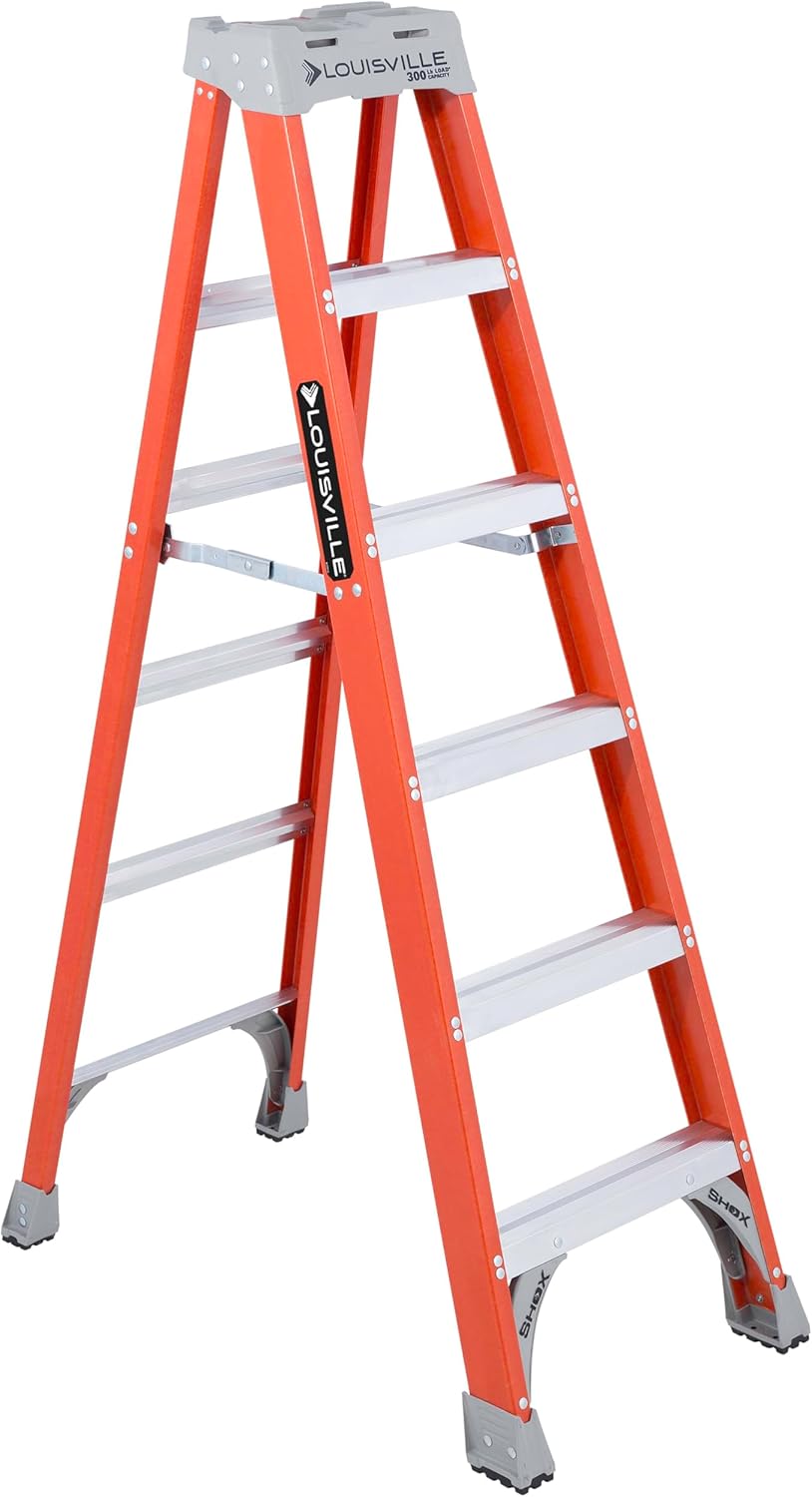
Pros
- Non-conductive fiberglass construction supports work around electrical sources
- Integrated Pro-Top organizes multiple tools and supplies in one location
Cons
- Fiberglass material results in greater weight than comparable aluminum models
- Fixed 6-foot height limits reach for taller applications
Best For / Avoid If
Best for buyers prioritizing
- Non-conductive fiberglass construction supports work around electrical sources
- Integrated Pro-Top organizes multiple tools and supplies in one location
- Double-riveted steps and bottom back brace add structural strength
Consider another option if
- Fiberglass material results in greater weight than comparable aluminum models
- Fixed 6-foot height limits reach for taller applications
- Requires sufficient storage space when folded due to overall dimensions

Pros
- High stated load capacity fits most homeowner and DIY needs
- Tool platform reduces the need to carry items while climbing
Cons
- Steel build results in noticeable weight during carrying
- Five-step height may fall short for reaching very tall areas
Specifications
| Brand Name | KINGRACK |
|---|---|
| Manufacturer | KINGRACK |
| UPC | 644097223661 |
| Manufacturer Warranty Description | Not applicable. |
| Model Number | WK2226-5D |
| Manufacturer Part Number | 2226-5D |
| Item Type Name | step ladder |
| Unit Count | 1.0 Count |
| Best Sellers Rank | #5,587 in Tools & Home Improvement (See Top 100 in Tools & Home Improvement) #20 in Step Ladders |
| ASIN | B0D45HK8SK |
Verify the current product variation before purchase; specifications may change.
Best For / Avoid If
Best for buyers prioritizing
- High stated load capacity fits most homeowner and DIY needs
- Tool platform reduces the need to carry items while climbing
- Safety lock and anti-slip elements promote secure operation
Consider another option if
- Steel build results in noticeable weight during carrying
- Five-step height may fall short for reaching very tall areas
- Some plastic components could limit longevity in harsh outdoor exposure
Quick Comparison of the Recommended Ladders
| Model | Design | Documented strengths | Important tradeoff |
|---|---|---|---|
| Little Giant Ladders Velocity 17-Ft Folding | Aluminum multi-position ladder | Multiple configurations, ratcheting levelers, wheels, Type IA rating | Premium, feature-rich choice that may be excessive for occasional indoor chores |
| LANBITOU Ladder, A Frame 4 Step Ladder Extension | Folding multi-position ladder | Stair configuration, balance bars, compact folded profile | More joints and setup steps than a conventional stepladder |
| Telescoping Ladder, SocTone 12.5 FT Aluminum | Collapsible telescoping ladder | Small storage footprint, locking pins, triangle stabilizers | Requires careful inspection of every locking section before climbing |
| Louisville Ladder 6-Foot Fiberglass Step Ladder | Fiberglass stepladder | Type IA rating, nonconductive rails, tool slots, simple setup | Fixed configuration and less compact storage |
| KINGRACK Folding 5-Step Ladder | Steel household step ladder | Wide steps, handrail, tool tray, folding design | Not presented as an extension ladder for roofline work |
best ladder for home use Buying Guide
Start With the Jobs, Not the Maximum Height
List the highest and most frequent tasks before choosing a ladder. Reaching kitchen cabinets, changing smoke-alarm batteries, and touching up walls usually favor a stable step ladder that opens quickly. Cleaning gutters, trimming reachable branches, accessing an attic, or working along a stairwell can justify an extension, telescoping, or multi-position design. A ladder intended for every possible task is often heavier, more complicated, and harder to store than a task-specific model.
Do not equate ladder length with safe working reach. Your usable reach depends on ladder configuration, setup angle, the highest permitted standing level, and your own height. Never stand on a step that the manufacturer identifies as unsafe, and do not stretch sideways to compensate for insufficient reach. Moving the ladder takes longer, but it preserves a centered climbing position and reduces the temptation to improvise.
For a homeowner who regularly switches between indoor, exterior, and stairway projects, the Little Giant or LANBITOU configuration may reduce the need to own multiple ladders. Someone whose work stays below ordinary ceilings may be better served by the Louisville or KINGRACK. The SocTone is most compelling when storage and transport are the primary constraints rather than quick, self-supporting setup.
Choose the Correct Ladder Type
A stepladder is self-supporting and generally the easiest format for painting, cleaning, fixture replacement, and garage organization. The Louisville has a conventional fiberglass frame and molded tool top, while the KINGRACK adds wide treads, a handrail, and a tray. The latter may feel more familiar to users who prefer stair-like footing, but its household design should not be treated as a substitute for an extension ladder.
Multi-position ladders use hinges and locks to become an A-frame, extension ladder, staircase ladder, or another manufacturer-approved configuration. Their versatility is valuable in homes with vaulted ceilings or split-level stairs, but every hinge adds an inspection point. Confirm that all locks are fully engaged before applying weight. Use only configurations specifically described by the manufacturer, and never create a makeshift platform.
Telescoping ladders collapse into a particularly small package, making them attractive for renters, RV owners, and homes without a garage. Their convenience comes with a setup obligation: each required section must lock completely, the feet must sit on a clean and firm surface, and hands must remain clear during retraction. A telescoping model is not self-supporting unless its documentation expressly says otherwise.
Understand Duty Ratings and Total Load
A ladder’s load calculation includes the user, clothing, tools, paint, and anything being carried. The Little Giant and Louisville are listed with Type IA ratings and a 300-pound capacity. Those documented classifications are more useful for comparison than dramatic marketing language alone. The other listings state their own capacities, but buyers should verify the label attached to the actual ladder and consult its instructions before use.
Do not buy by capacity alone. A larger advertised number does not tell you about configuration, reach, electrical suitability, footing, or certification. Manufacturer information for the SocTone is internally inconsistent: its title references one maximum capacity while its feature copy states another. Because of that conflict, use the more conservative figure unless the physical label and current manual clearly resolve it.
The KINGRACK listing makes a notably high capacity claim, but this guide cannot independently validate it or translate it into an ANSI duty classification. Treat the attached product label and manufacturer documentation as controlling. Never allow multiple people onto a ladder unless the manufacturer expressly permits that use in the selected configuration.
Compare Aluminum, Fiberglass, and Steel
Aluminum is common in multi-position and telescoping ladders because it balances structural strength with portability and corrosion resistance. It remains electrically conductive, however. An aluminum ladder should not be used near exposed energized components, overhead electrical lines, or any situation where electrical contact is possible. Turn off and verify power where appropriate, and hire a qualified professional when the work exceeds your training.
Fiberglass rails are nonconductive when clean and dry, which is why the Louisville is the most appropriate candidate here for electrical-adjacent household maintenance. That property does not make electrical work automatically safe. Dirt, moisture, damage, metal components, and improper placement can still create hazards. Fiberglass is also commonly heavier than a comparable aluminum design and should be inspected for cracks, splits, or exposed fibers.
Steel household ladders such as the KINGRACK can provide broad steps and a planted feel, but they may demand more carrying effort and careful storage. Rust-resistant construction is useful, yet it does not eliminate maintenance. Keep any ladder dry, clean corrosive residue promptly, and avoid leaving it outdoors where weather and temperature cycles can degrade feet, hinges, labels, and locking parts.
Prioritize Footing, Leveling, and Locking Systems
Stability begins below the ladder. Set all feet on a firm, level, clean surface rather than loose soil, slick tile, boxes, boards, or stacked materials. The Little Giant’s ratcheting leg levelers are a meaningful feature for uneven ground because the manufacturer says they provide more than seven inches of adjustment. Levelers address a height difference between feet, but they do not make soft ground, steep slopes, or unstable debris safe.
The LANBITOU includes two balance bars, while the SocTone listing describes two triangle stabilizers. These features may broaden or brace the base, but they cannot compensate for poor climbing technique. Face the ladder, maintain three points of contact while ascending, wear clean slip-resistant footwear, and keep your belt-buckle area between the side rails.
Before every climb, check feet, rungs, rails, spreaders, hinges, rivets, ropes, and locks as applicable. Remove a damaged ladder from service rather than attempting an improvised repair. This inspection is especially important for telescoping and multi-position products because a partially engaged lock can be difficult to notice from a normal standing angle.
Account for Storage, Weight, and Setup Effort
A ladder that technically fits the house may still be frustrating to own. Measure the storage opening, ceiling height, wall clearance, and route from storage to the work area. Include protruding feet, trays, wheels, and stabilizer bars in those measurements. Renters should also consider whether the ladder fits inside a closet or vehicle without blocking exits.
The SocTone has the strongest small-space argument because it collapses for transport and storage. The LANBITOU listing states a folded thickness of nine inches and a weight of 29 pounds, making it another plausible compromise between reach and storage. The Little Giant includes Tip & Glide wheels, which reduce carrying effort over suitable surfaces, although users still need to lift and control it on stairs or across thresholds.
Simple setup has ownership value. If most jobs last only a few minutes, a conventional stepladder may get used correctly more often than a complicated ladder that stays buried in storage. For adjacent DIY equipment decisions, our guide to choosing a power tool combo kit applies the same principle: buy around recurring tasks rather than an oversized feature list.
Match Comfort Features to the User
Wide steps, handrails, and tool trays can make routine chores more manageable. The KINGRACK is the most comfort-oriented option in this group, with wide nonskid pedals, padded handrails, a safety lock, and a tool platform. It fits painting, decorating, cleaning, and storage access better than work requiring an extension configuration.
A tray or molded tool top reduces repeated climbing, but it must not be overloaded or used as a standing surface. Keep tools arranged so they cannot fall, and use a tool belt or hoist line when the ladder instructions call for one. Heavy or bulky materials can shift your center of gravity even when total weight remains below the stated limit.
People with impaired balance, limited strength, vertigo, or medication-related dizziness should not assume a handrail makes climbing appropriate. Choose ground-based tools where practical or hire help. No ladder design can guarantee safety, and roof access or electrical work may warrant a qualified professional.
Plan for Inspection and Long-Term Ownership
Clean ladder feet and rungs after dusty, oily, or muddy work. Operate hinges and locks only as directed, and do not apply lubricant unless the manual recommends it because excess lubricant can attract grit or create slippery surfaces. Store the ladder secured against falling, away from children, vehicles, direct weather, and chemicals that could attack its components.
Labels matter throughout ownership. Preserve warnings, duty information, setup diagrams, and model identification rather than painting over or removing them. Before buying, look for access to current instructions and replacement parts. Multi-position and telescoping designs have more moving components, so their convenience carries a greater inspection burden than a basic fixed stepladder.
Also consider the work performed from the ladder. Sanding, cutting, and oscillating tools can introduce vibration and side loading, making stable positioning especially important. Review appropriate tool selection in our guides to orbital sander and oscillating tools, but avoid operating forceful tools aloft unless both the ladder and task can be controlled safely.
Who Each Ladder Is For
Overall Pick: Little Giant Ladders Velocity 17-Ft Folding
Little Giant Ladders Velocity 17-Ft Folding offers the broadest documented capability in this comparison. It can serve as an A-frame, extension, staircase, and 90-degree wall-position ladder. Ratcheting levelers, adjustment locks, and transport wheels address three common ownership problems: uneven setup locations, configuration changes, and moving a larger ladder.
It suits homeowners with tall interiors, stairs, gutters, and recurring renovation projects who would otherwise store several ladders. Its Type IA, 300-pound rating is clearly stated. Skip it if you need only cabinet access or cannot comfortably maneuver a larger multi-position frame. Scaffold use requires compatible accessories sold separately and must follow the manufacturer’s instructions.
Adaptable Value Pick: LANBITOU Ladder, A Frame 4 Step Ladder Extension
LANBITOU Ladder, A Frame 4 Step Ladder Extension is aimed at buyers who want A-frame, staircase, and extended configurations without moving to the premium end of this comparison. Its listed two-millimeter aluminum construction, balance bars, protective components, and compact folded profile make the feature set attractive for mixed indoor and outdoor maintenance.
The manufacturer lists ANSI and EN131 compliance along with several facility certifications, but this comparison did not independently verify those claims. Confirm markings and instructions on the delivered product. It is best for an owner willing to learn the hinge system and inspect every lock; buyers wanting the fastest possible setup should choose a conventional stepladder.
Small-Space Pick: Telescoping Ladder, SocTone 12.5 FT Aluminum
Telescoping Ladder, SocTone 12.5 FT Aluminum is the logical choice for constrained storage, vehicle transport, occasional attic access, or RV-related use. The listing identifies locking pins, controlled retraction, a securing strap, and triangle stabilizers. Its collapsed form can fit spaces that would not accept a conventional extension ladder.
The capacity conflict between the product title and feature copy is a material limitation, so buyers should rely on the physical duty label and use the lower stated limit until documentation resolves the discrepancy. This model also demands methodical setup and finger awareness during retraction. Skip it if you need a self-supporting ladder or tend to rush lock inspections.
Fiberglass Pick: Louisville Ladder 6-Foot Fiberglass Step Ladder
Louisville Ladder 6-Foot Fiberglass Step Ladder is the strongest straightforward option for homeowners who prefer a familiar stepladder. The published specifications include a Type IA, 300-pound rating, slip-resistant feet, riveted steps, nonconductive fiberglass rails, and a molded top with tool slots. The manufacturer also states that it meets or exceeds applicable ANSI and OSHA standards.
Choose it for painting, fixture maintenance, garage tasks, and work where clean, dry fiberglass rails are preferable to conductive aluminum. It is not an extension or stair-adjustable ladder, and its fixed frame needs more storage length than a telescoping model. Nonconductive rails reduce one electrical hazard but do not replace de-energizing circuits or qualified professional help.
Comfort-Oriented Household Pick: KINGRACK Folding 5-Step Ladder
KINGRACK Folding 5-Step Ladder emphasizes broad nonskid pedals, padded handrails, a folding lock, textured feet, and a tool platform. Those features align well with cleaning, decorating, pantry organization, and painting, particularly when the user values a stair-like climbing surface more than multiple configurations.
Its steel construction and household format make it less suitable for buyers seeking compact vehicle storage or roofline reach. The unusually high capacity stated in the listing should be confirmed against the product’s attached label and documentation rather than accepted as a substitute for a recognized duty classification. Do not stand on the tray or use the ladder as an improvised extension platform.
How We Compared These Picks
We first validated that every included product clearly matched the intended home-ladder use case. We then compared manufacturer-provided and retailer-published information covering ladder style, configuration, materials, stated capacity, duty classification where available, stabilizing features, locks, transport, storage, and homeowner suitability.
Our ranking gives priority to practical task coverage, documented safety information, build features, ease of correct setup, storage burden, and value for the intended user. We also looked for inconsistencies. The conflicting capacity statements for the SocTone and the lack of an independently verified classification for the KINGRACK are therefore disclosed rather than smoothed over.
User feedback signals were considered only as supporting context, not proof of safety, durability, or suitability. Popularity cannot replace a legible duty label, an undamaged frame, or correct technique.

Final Thoughts
Based on our detailed comparison, Little Giant Ladders Velocity 17-Ft Folding is the most capable all-around choice for homeowners who routinely work on stairs, tall walls, gutters, and uneven ground. Its flexibility, levelers, wheels, and documented Type IA rating support that recommendation. The tradeoff is paying for and storing capabilities that occasional users may not need.
For simpler household maintenance, Louisville Ladder 6-Foot Fiberglass Step Ladder provides a conventional design and clearly stated duty rating. Choose KINGRACK Folding 5-Step Ladder when wide steps and a handrail matter most, or Telescoping Ladder, SocTone 12.5 FT Aluminum when storage is the deciding constraint. The LANBITOU occupies the middle ground for buyers wanting adaptable configurations in a folding package.
The right purchase is the shortest appropriate ladder that supports the required configuration, total load, surface, and storage plan without encouraging overreach. Before the first climb, read the complete instructions, inspect every component, and establish a firm work zone. For other practical renovation planning resources, visit our Building Materials guides.
Frequently Asked Questions
What should I look for when choosing best ladder for home use?
Start with task height, required configuration, total user-and-tool load, and the surfaces where the ladder will stand. Then compare duty labeling, material, locks, feet, storage dimensions, and how comfortably you can move the ladder. Extra reach is not useful if the ladder is too cumbersome to set up correctly.
Is a step ladder or multi-position ladder better for a house?
A step ladder is usually better for cabinets, painting, cleaning, and routine work under ordinary ceilings because it is self-supporting and quick to open. A multi-position model is more versatile for stairs, tall walls, and exterior tasks, but it is heavier and has more locks to inspect. Some homes benefit from a simple indoor step ladder plus a separate exterior ladder.
Are higher-end best ladder for home use worth it?
Higher-end features can be worthwhile when they solve recurring problems, such as adjustable legs for uneven ground, wheels for transport, or multiple approved configurations. They offer less value when the ladder is used only for low indoor chores. Pay for task fit and documented construction rather than features you are unlikely to use.
Is fiberglass safer than aluminum around electricity?
Clean, dry fiberglass rails are nonconductive, while aluminum conducts electricity. That distinction can reduce risk, but no ladder makes energized electrical work inherently safe. De-energize and verify circuits where appropriate, keep away from power lines, and use a qualified electrician when the task exceeds your knowledge.
How should beginners choose best ladder for home use?
Beginners should favor the simplest design that safely reaches routine tasks and carries the complete load. A conventional stepladder is often easier to inspect and position than a multi-hinge or telescoping design. Read the manual, practice opening and locking it at ground level, and avoid roof access until properly trained.
How should a home ladder be stored and maintained?
Store it dry, secured against falling, and protected from vehicles, chemicals, and weather. Clean the feet and climbing surfaces, preserve labels, and inspect rails, rungs, hinges, rivets, spreaders, and locks before use. Remove a damaged ladder from service rather than attempting an unapproved repair.
Can I use a household ladder while operating power tools?
Only when the ladder instructions, tool, work position, and your training allow stable control without excessive reaching or side loading. Keep three points of contact while climbing and carry tools in an appropriate belt or raise them after positioning. Browse the Emergency Supplies section when planning a more complete home safety setup.