
Choosing the best Borescope For Home Inspection is not just about getting a tiny camera on a cable. For homeowners, renters, and DIYers, a good inspection camera can help you look behind drywall, inside HVAC vents, under cabinets, around plumbing lines, into drains, and inside tight mechanical spaces before you cut, drill, or call a contractor. An updated guide matters because screen quality, probe diameter, dual-lens designs, articulation, waterproofing, and phone compatibility can change how useful a borescope is in real home maintenance situations.
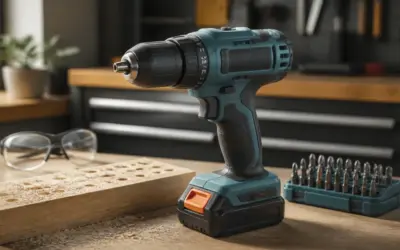
After carefully analyzing the available specifications, we reviewed 14 products with a focus on home inspection use, Tools & DIY category fit, cable reach, probe flexibility, lighting, image capture, screen type, waterproof ratings where listed, and overall suitability for homeowners. If you are building out a practical home repair kit, you may also find our guide to the best cordless drill for home use helpful for jobs that start after your inspection confirms where it is safe to drill or fasten.
Home DVP decision summary
Quick Answer
For Best Borescope For Home Inspection, Home DVP compared 14 products from 10 brands. Choose probe diameter, cable length and stiffness, focal range, lighting, screen visibility, and ingress protection for the inspection path. De-energize equipment and avoid concealed electrical or mechanical hazards before inserting a probe.
| Comparison coverage | 14 products from 10 brands, including KLEIN TOOLS, DXZtoz, BlueSwan. |
|---|---|
| Selection priority | Choose probe diameter, cable length and stiffness, focal range, lighting, screen visibility, and ingress protection for the inspection path. De-energize equipment and avoid concealed electrical or mechanical hazards before inserting a probe. |
| Evidence basis | Manufacturer specifications, compatibility details, retailer-provided product data, and common homeowner use cases. |
| Reference guidance | OSHA hand and power tool safety guidance. |
This summary describes the article's comparison set, not every product on the market. Product details should be confirmed before purchase.
Best Borescope For Home Inspection Buying Guide
Based on our detailed comparison, the strongest borescopes for home inspection tend to balance visibility, probe control, durability, and ease of use. A professional-grade articulating camera may be excellent for frequent diagnostics, while a simpler dual-lens or phone-connected model may be enough for checking a wall cavity, locating a clog, or inspecting a vent run.
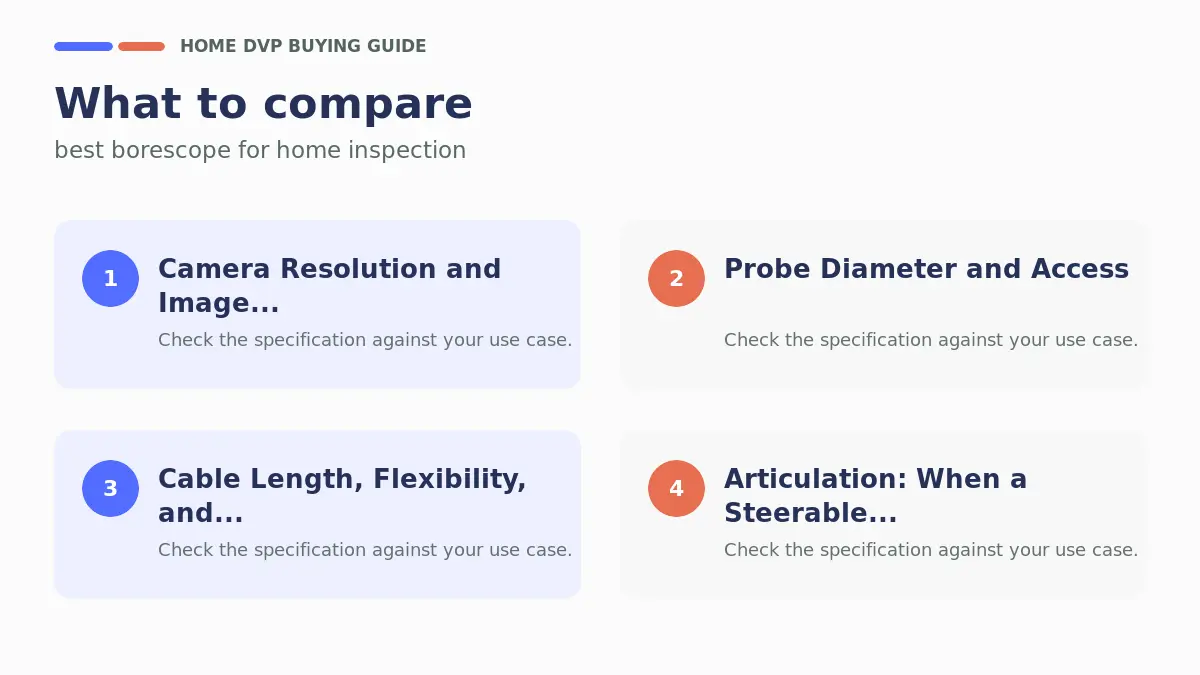
Camera Resolution and Image Clarity
Image clarity is one of the first things to compare when shopping for the best borescope for home inspection. Many of the listed models advertise HD or 1080P-class imaging, while some focus more on probe control or rugged construction. For home inspection work, clarity matters most when you are trying to identify corrosion, water staining, cracked fittings, pest evidence, insulation gaps, or a dropped object in a wall or drain area.
A common mistake is assuming the highest advertised resolution automatically gives the best real-world view. The lighting system, focal distance, lens angle, screen quality, and cable stability all affect what you can actually see. If you are inspecting behind drywall or inside a dark cabinet chase, adjustable LEDs can be just as important as resolution because glare and overexposure can wash out close-up details.
Models such as the DEPSTECH Inspection Endoscope Camera with Light and the Daxiongmao Endoscope Camera with Light emphasize 1080P viewing, which can be useful for general home repair checks. Articulating models like the Teslong Two-Way Articulating Borescope with Light and DXZtoz Two-Way Articulating Borescope with Light add probe control, which can help you aim the camera rather than simply pushing the cable forward and hoping it points in the right direction.
Probe Diameter and Access to Tight Spaces
Probe size is a major buying factor for home inspection. A slimmer probe can fit through smaller access holes, drain openings, appliance gaps, vent grilles, and existing penetrations. This is especially helpful when you want to minimize damage to painted walls, cabinet backs, or finished ceilings.
The 3.9mm 4-Way Articulating Borescope, 5 in IPS Screen Endoscope Camera with Light, 5FT Stainless Steel Flexible Cable, 0.15in Probe, Industrial Inspection Camera for Automotive, Engine & Pipe stands out on paper for its very slim probe and four-way articulation. That type of design is generally better suited to detailed inspections in constrained spaces, although homeowners should consider whether the premium feature set is necessary for occasional maintenance.
For most DIYers, the right probe diameter depends on the jobs you expect to handle. If you mostly inspect sink bases, HVAC registers, dryer vent areas, and appliance cavities, a standard slim probe may be enough. If you regularly work in wall cavities, pipe chases, or tight mechanical areas, a narrower articulating probe can be worth prioritizing.
Cable Length, Flexibility, and Control
Cable length determines how far you can inspect, while flexibility determines how easily you can steer through bends. Longer cables are useful for drain lines, ducts, crawlspace edges, and long wall cavities, but too much cable can become awkward if it is not semi-rigid enough to push forward. Shorter cables can be easier to manage when working around engines, appliances, cabinet voids, or nearby plumbing.
For home inspection, semi-rigid gooseneck designs can be practical because they hold shape better than very soft cables. The Klein Tools ET17 Utility Borescope with 5.5 mm 9.8-Foot Waterproof Gooseneck Snake, LEDs, 4.3-Inch LCD, Attachments, Endoscope Inspection Camera is a good example of a homeowner-friendly format with a built-in screen and a gooseneck-style probe. Phone-connected models can offer convenience, but a dedicated display avoids app setup when you need a quick look under a cabinet or behind an appliance.
If you frequently handle tool-based projects after inspecting hidden areas, pairing your borescope with the right drilling accessories can reduce mistakes. Our drill bit set buying guide for DIY projects covers another core part of a practical homeowner toolkit.
Articulation: When a Steerable Camera Is Worth It
Articulation means the camera tip can be bent or steered, often in two directions and sometimes in four. For many home inspection tasks, this is the feature that separates basic visibility from useful diagnostics. Instead of only seeing what is directly ahead, an articulating borescope can look around corners, inspect pipe walls, check joist bays, or aim upward inside a cavity.
The Teslong Two-Way Articulating Borescope with Light, DXZtoz Two-Way Articulating Borescope with Light, Anykit Articulating Borescope, and DXZtoz Patented Dual Lens Articulating Borescope with Light all focus on tip control. Based on the feature set, these are better fits for users who expect to inspect hidden areas regularly rather than only once or twice a year.
However, articulation adds complexity and usually increases cost. If your main goal is checking a dryer vent opening, looking behind a refrigerator, or locating a dropped screw in a cabinet toe-kick, a non-articulating dual-lens camera may be easier and more economical. Choose articulation when you need directional control, not just because it sounds more advanced.
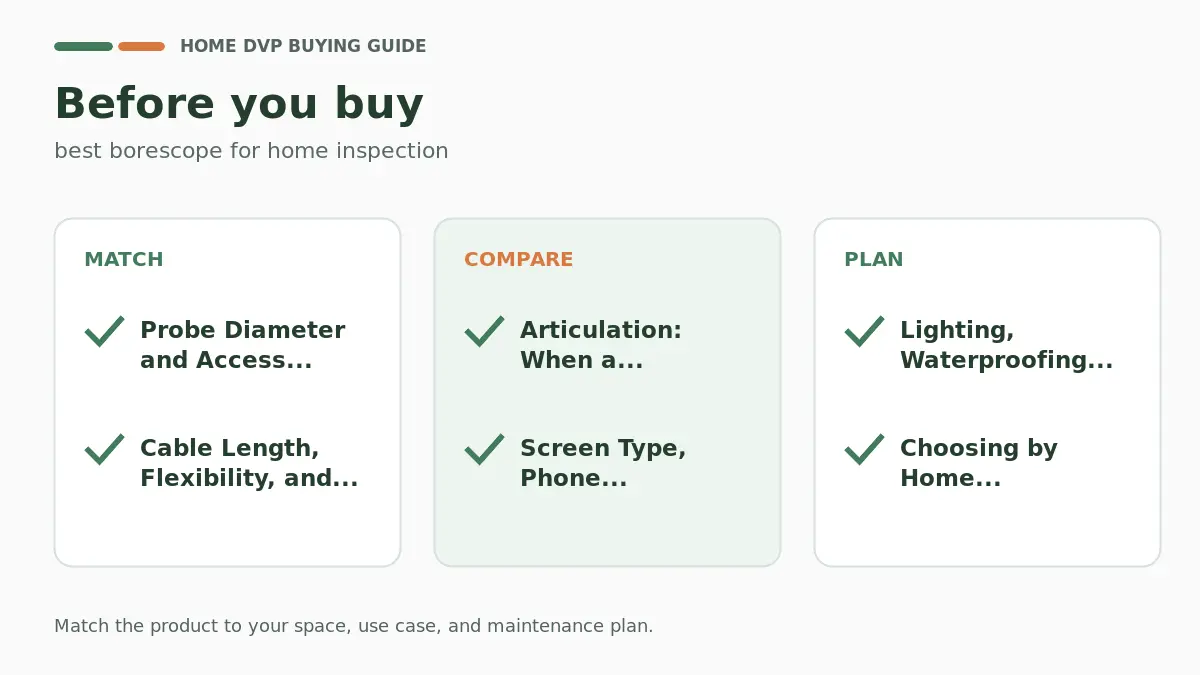
Screen Type, Phone Connection, and Ease of Use
Borescopes generally fall into two convenience categories: models with built-in screens and models that connect to a phone or tablet. Built-in screens are usually easier for quick home maintenance because you can turn the device on and begin inspecting without pairing, charging a second device, or worrying about app compatibility. Phone-connected options can be compact and affordable, but setup may be less convenient for some users.
Displays listed as IPS screens can be helpful because viewing angles matter when you are crouched under a sink or standing on a ladder while checking a ceiling cavity. A larger display can make it easier to spot water marks, debris, or pest activity, but it can also make the tool bulkier. For renters and occasional DIYers, a simple screen and intuitive controls may matter more than advanced recording features.
When comparing models, look for control placement, brightness adjustment, image rotation, included storage, and whether the unit can record photos or video for contractors, landlords, insurance notes, or before-and-after maintenance records. These practical features can make the tool more useful than resolution alone.
Lighting, Waterproofing, and Jobsite Durability
Home inspection cameras often work in wet, dusty, and dark areas. Adjustable LED lighting is important because plumbing traps, HVAC ducts, wall cavities, and appliance voids rarely have usable light. Too little light hides defects, while too much light can reflect off metal, standing water, or glossy pipe walls.
Waterproof ratings, where listed, are especially important for plumbing checks, condensate line inspection, sink base troubleshooting, and outdoor drain work. IP67-rated probes can generally handle wet environments better than non-rated probes, but homeowners should still avoid submerging parts of the tool that are not rated for water exposure. Always confirm which part is waterproof: the camera head, the cable, or the entire device.
Durability also includes cable armor, connector quality, screen protection, storage case design, and attachment reliability. A borescope may spend long periods in a garage, toolbox, or utility closet, so a case and strain relief at the cable connection can help preserve the tool between projects. For broader tool planning, the Tools & DIY category includes additional guides for home repair shoppers.
Choosing by Home Inspection Task
The right borescope depends heavily on the task. A homeowner checking occasional plumbing concerns may want a long waterproof cable and dual-lens viewing. Someone doing frequent remodeling prep may benefit from articulation and a bright built-in screen. A renter may prefer an affordable phone-compatible model for non-invasive checks before reporting issues to a property manager.
| Home inspection task | Helpful borescope features |
|---|---|
| Looking behind drywall or cabinets | Slim probe, adjustable LEDs, semi-rigid cable, built-in screen |
| Checking plumbing or drain areas | Waterproof probe rating, longer cable, dual-lens view |
| Inspecting HVAC vents or dryer ducts | Long cable, strong lighting, easy image orientation |
| Evaluating tight mechanical spaces | Articulating tip, small probe diameter, clear display |
| Documenting a repair issue | Photo or video capture, included storage, stable screen view |
Our research indicates that many buyers overbuy for simple inspection tasks and underbuy for tight directional work. If you only need to confirm whether a pipe is leaking behind a vanity, a basic HD or dual-lens unit may be enough. If you need to see around a bend inside a wall, a steerable model can save time and reduce unnecessary exploratory cuts.
Value, Accessories, and Long-Term Ownership
The available options span $16.99–$540, so value depends on how often you expect to use the tool and how much control you need. Budget-friendly models can be good for occasional home checks, while premium articulating units are better suited for frequent diagnostics, renovation planning, and more demanding inspections.
Look closely at included accessories such as hooks, magnets, mirrors, carrying cases, memory cards, charging cables, and protective caps. Small attachments can turn a borescope into a retrieval tool for dropped hardware, although they should not be the main reason to choose a model if the camera quality or cable control is weak.
Also consider maintenance. Wipe the probe after plumbing or HVAC use, dry the cable before storage, avoid sharp bends, and keep the lens clean. A borescope is a precision inspection tool, so treating the cable and camera head carefully can help it remain useful for recurring home maintenance.
Our Research Methodology and Why You Can Trust Us
We evaluated the products based on available product information, category fit, homeowner usefulness, and user-facing specifications. Every included model is a borescope or endoscope-style inspection camera that clearly matches best borescope for home inspection and the Tools & DIY category. We did not include unrelated tools, general electronics, or products outside the inspection camera category.
Our comparison process focused on camera clarity, probe diameter, cable length, articulation, lighting, waterproofing where stated, screen design, phone compatibility, included accessories, build considerations, and likely use cases around home repair and maintenance. We also considered how each feature affects common tasks such as inspecting walls, vents, drains, plumbing chases, cabinets, appliances, and tight mechanical spaces.
Based on our research, the ranking criteria included performance, features, build quality, ease of use, durability, safety, value, reliability, and homeowner or DIY use case fit. This guide is updated during July to keep the buying advice aligned with the available product data and current shopper needs. We do not claim hands-on testing; instead, our recommendations are based on listed specifications, product positioning, and practical home improvement analysis.
Final Thoughts
For an overall home inspection pick, the Teslong Two-Way Articulating Borescope with Light, Industrial Endoscope Inspection Camera with Articulated Probe, Flexible Mechanic Fiber Optic Snake Scope Cam for Wall Automotive Engine Inspect-5FT is one of the most balanced options based on its articulating probe, built-in screen, lighting, storage, and homeowner-friendly inspection format. It is a strong fit for DIYers who want more control than a basic snake camera but do not necessarily need the most premium industrial setup.
For value-focused homeowners, the DEPSTECH Inspection Endoscope Camera with Light: Dual Lens 1080P Borescope with 4.3-inch IPS Screen & 16.5FT Snake Cable, Industrial Waterproof Video Automotive Tools for Sewer, HVAC, Plumbing, Mechanic is appealing because it combines a built-in display, dual-lens viewing, long cable reach, and broad plumbing, HVAC, and maintenance usefulness. For a more compact articulating option, the Anykit Articulating Borescope, 210° Two-Way 0.22in Slim Probe Endoscope with High-Brightness LED Lights, 4.3-inch IPS HD Video Inspection Snake Camera for Automotive Engine Inspect – 4FT may suit users who prioritize controllability in nearby spaces.
If you are building a complete repair setup, a borescope pairs well with cutting, fastening, and cleaning tools used after diagnosis. You can continue comparing related equipment in our angle grinder guide, nail gun guide, and pressure washer guide depending on the type of repair or maintenance project you are planning.
FAQ
What should I look for when choosing the best borescope for home inspection?
Focus on camera clarity, probe diameter, cable length, lighting control, waterproofing where needed, and whether the tip can articulate. For most homeowners, ease of use and a clear built-in screen are just as important as advanced specs.
Are higher-end borescope for home inspection worth it?
Higher-end models can be worth it if you regularly inspect tight spaces, need an articulating probe, or want better control around bends. Occasional users may be better served by a simpler dual-lens or built-in-screen model that covers basic walls, vents, and plumbing checks.
Can best borescope for home inspection help avoid unnecessary wall cuts?
Yes, a borescope can help you inspect behind drywall, inside cabinet voids, or near plumbing before making larger openings. It cannot replace professional diagnostics in every situation, but it can give homeowners useful visual information before drilling, cutting, or calling a contractor.
Are waterproof borescopes necessary for home inspection?
Waterproofing is important if you plan to inspect drains, sink lines, condensate areas, or damp crawlspace conditions. Make sure the product information specifies which parts are waterproof, because the probe may be rated for wet areas while the screen or control unit is not.
About This Home DVP Research
Home DVP is an independent home-improvement research and product-comparison publisher. Ryan Mitchell prepared this guide by comparing manufacturer specifications, compatibility details, retailer-provided product data, key limitations, and common homeowner use cases. We do not claim hands-on testing unless an article explicitly says so.
Review methodology Affiliate disclosure Last reviewed September 10, 2026