

Choosing between a whole house fan and an attic fan can make a noticeable difference in comfort, ventilation, and cooling costs, especially in homes that trap heat upstairs or in the attic. This Whole House Fan Vs Attic Fan guide is designed for homeowners, renters with landlord approval, DIYers, and renovation planners who want a practical way to compare airflow, installation needs, controls, energy use, and long-term value without relying on hype.
After carefully analyzing the available specifications for 15 products in the Heating, Cooling & Air category, we focused on models that clearly fit this comparison: whole house fans that pull cooler outdoor air through living spaces, and attic fans that ventilate hot attic air through gable or roof ventilation paths. If you are also comparing other cooling options, our window AC guidance for compact spaces can help you decide whether ventilation or active air conditioning is the better fit.
Home DVP decision summary
Quick Answer
For Whole House Fan Vs Attic Fan, Home DVP compared 15 products from 5 brands. Use a whole-house fan to move cooler outdoor air through living spaces and an attic fan to exhaust attic heat. Climate, humidity, attic vent area, air sealing, noise, and installation access determine which approach fits the home.
| Comparison coverage | 15 products from 5 brands, including Quietcool, Centric Air, AC Infinity. |
|---|---|
| Selection priority | Use a whole-house fan to move cooler outdoor air through living spaces and an attic fan to exhaust attic heat. Climate, humidity, attic vent area, air sealing, noise, and installation access determine which approach fits the home. |
| Evidence basis | Manufacturer specifications, compatibility details, retailer-provided product data, and common homeowner use cases. |
| Reference guidance | U.S. Department of Energy home-cooling guidance. |
This summary describes the article's comparison set, not every product on the market. Product details should be confirmed before purchase.
Based on our detailed comparison, the right choice depends less on a single specification and more on how your home is built. Attic ventilation, ceiling access, climate, window habits, insulation, noise sensitivity, and whether you want smart controls all matter. Below, you will find the product list followed by a homeowner-focused buying guide that explains how to evaluate whole house fan vs attic fan in real-world use.

Pros
- Combines whole-house heat exhaust with advanced automated controls.
- Provides multiple programming options for changing temperature and humidity conditions.
Cons
- The 12-inch duct size and listed dimensions may limit placement options in smaller or crowded spaces.
- A listed noise level of 62 dBA may be noticeable in areas where quiet operation is a priority.
Specifications
| Color | Black |
|---|---|
| Size | 12 |
| Dimensions | 17.7 x 12.3 x 14.1 Inches |
| Product Group | Home |
| Binding | Kitchen |
Verify the current product variation before purchase; specifications may change.
Best For / Avoid If
Best for buyers prioritizing
- Combines whole-house heat exhaust with advanced automated controls.
- Provides multiple programming options for changing temperature and humidity conditions.
- Offers 1250 CFM airflow through a 12-inch duct connection.
Consider another option if
- The 12-inch duct size and listed dimensions may limit placement options in smaller or crowded spaces.
- A listed noise level of 62 dBA may be noticeable in areas where quiet operation is a priority.
- The advanced programming and WiFi features may require more setup attention than a basic manually controlled fan.

Pros
- High airflow capacity is suitable for ventilating homes up to about 2,510 square feet.
- Wireless control and a 12-hour timer simplify everyday operation.
Cons
- Installation depends on having 6.68 square feet of net free attic venting and space for the specified ceiling opening.
- The 69-pound assembly and large overall dimensions may require careful handling during installation.
Specifications
| Color | blue |
|---|---|
| Size | 5,024 CFM |
| Dimensions | 38 x 20 x 38 inches |
| Weight | 69.00027876076 pounds |
| Product Group | Home |
| Binding | Unknown Binding |
Verify the current product variation before purchase; specifications may change.
Best For / Avoid If
Best for buyers prioritizing
- High airflow capacity is suitable for ventilating homes up to about 2,510 square feet.
- Wireless control and a 12-hour timer simplify everyday operation.
- The attic-mounted motor head and included window locks support a practical whole-house setup.
Consider another option if
- Installation depends on having 6.68 square feet of net free attic venting and space for the specified ceiling opening.
- The 69-pound assembly and large overall dimensions may require careful handling during installation.
- Its 634-watt high setting and 525-watt low setting may be more capacity than smaller homes require.

Pros
- Combines app access with thermostat and humidistat automation for convenient operation.
- High-speed airflow reaches up to 2,801 CFM, according to the listed specifications.
Cons
- The 20 x 12 x 20-inch size may not suit every gable-vent opening or tight installation area.
- Its 14-pound weight may require careful positioning during mounting.
Best For / Avoid If
Best for buyers prioritizing
- Combines app access with thermostat and humidistat automation for convenient operation.
- High-speed airflow reaches up to 2,801 CFM, according to the listed specifications.
- Plug-and-play design and included 20-foot power cord can reduce setup complexity.
Consider another option if
- The 20 x 12 x 20-inch size may not suit every gable-vent opening or tight installation area.
- Its 14-pound weight may require careful positioning during mounting.
- The product information does not list compatibility details for specific attic structures or vent dimensions.

Pros
- High airflow capacity is suitable for homes up to 3,440 square feet.
- ECM motor offers two operating speeds with substantially lower wattage on low.
Cons
- The installation requires 9.18 square feet of net free attic venting, which may limit compatibility with some homes.
- Attic access and a 14 by 36 inch ceiling cutout are required for installation.
Specifications
| Color | Green |
|---|---|
| Size | 6,878 CFM |
| Dimensions | 41 x 28 x 40 inches |
| Product Group | Home Improvement |
| Binding | Tools & Home Improvement |
Verify the current product variation before purchase; specifications may change.
Best For / Avoid If
Best for buyers prioritizing
- High airflow capacity is suitable for homes up to 3,440 square feet.
- ECM motor offers two operating speeds with substantially lower wattage on low.
- Typical installation is listed at one to two hours without framing or joist cutting.
Consider another option if
- The installation requires 9.18 square feet of net free attic venting, which may limit compatibility with some homes.
- Attic access and a 14 by 36 inch ceiling cutout are required for installation.
- The listed 41 by 28 by 40 inch dimensions may be substantial for spaces with limited attic room.

Pros
- Strong airflow capacity for homes up to approximately 1,610 square feet
- Wireless operation includes a useful 12-hour countdown timer
Cons
- Proper operation requires 4.17 square feet of net free attic venting, which may require checking existing attic ventilation first
- The listed 38-by-20-by-38-inch dimensions may require careful attic layout planning despite the smaller ceiling cut-out
Best For / Avoid If
Best for buyers prioritizing
- Strong airflow capacity for homes up to approximately 1,610 square feet
- Wireless operation includes a useful 12-hour countdown timer
- Attic installation does not require framing or joist cutting according to the provided product information
Consider another option if
- Proper operation requires 4.17 square feet of net free attic venting, which may require checking existing attic ventilation first
- The listed 38-by-20-by-38-inch dimensions may require careful attic layout planning despite the smaller ceiling cut-out
- The system is intended for small homes, so it may not provide the same fit for larger floor plans
Pros
- High airflow capacity is suited to listed one-story homes up to 3000 square feet and two-story homes up to 4400 square feet.
- Quiet-focused motor engineering and acoustical ductwork may make regular operation more comfortable.
Cons
- The system requires about 5.5 square feet of attic ventilation, which may limit suitability where available ventilation is restricted.
- Its 28 x 14 x 28-inch dimensions require careful space planning before installation.
Specifications
| Color | Wall Switch |
|---|---|
| Size | 4.0 (R5) |
| Dimensions | 28 x 14 x 28 inches |
| Product Group | Home Improvement |
Verify the current product variation before purchase; specifications may change.
Best For / Avoid If
Best for buyers prioritizing
- High airflow capacity is suited to listed one-story homes up to 3000 square feet and two-story homes up to 4400 square feet.
- Quiet-focused motor engineering and acoustical ductwork may make regular operation more comfortable.
- The insulated R-5 damper helps limit open attic exposure when the system is off.
Consider another option if
- The system requires about 5.5 square feet of attic ventilation, which may limit suitability where available ventilation is restricted.
- Its 28 x 14 x 28-inch dimensions require careful space planning before installation.
- The larger airflow capacity may be more than necessary for smaller homes or limited ventilation needs.

Pros
- Strong listed airflow capacity for larger attic areas
- Adjustable built-in thermostat supports automatic operation
Cons
- Single-speed operation does not provide adjustable fan-speed control
- The 14-inch fan size may be less convenient for smaller attic ventilation projects
Best For / Avoid If
Best for buyers prioritizing
- Strong listed airflow capacity for larger attic areas
- Adjustable built-in thermostat supports automatic operation
- Galvanized steel housing and steel propeller suit a durable ventilation installation
Consider another option if
- Single-speed operation does not provide adjustable fan-speed control
- The 14-inch fan size may be less convenient for smaller attic ventilation projects
- The provided product details do not list included accessories beyond the mounting brackets
Pros
- Strong ventilation capacity for large residential spaces
- Wireless control includes a useful countdown timer of up to 12 hours
Cons
- Requires 9.24 square feet of net free attic venting, which may limit suitability for some homes
- The large fan assembly and ceiling opening require careful attic planning before installation
Specifications
| Color | Blue |
|---|---|
| Size | 6,924 CFM |
| Dimensions | 38 x 20 x 38 inches |
| Product Group | Home |
| Binding | Kitchen |
Verify the current product variation before purchase; specifications may change.
Best For / Avoid If
Best for buyers prioritizing
- Strong ventilation capacity for large residential spaces
- Wireless control includes a useful countdown timer of up to 12 hours
- Attic damper doors and a 10-year warranty support seasonal use and long-term ownership
Consider another option if
- Requires 9.24 square feet of net free attic venting, which may limit suitability for some homes
- The large fan assembly and ceiling opening require careful attic planning before installation
- Its whole-house design may provide more capacity than needed for smaller homes or limited ventilation zones

Pros
- Strong airflow capacity for homes up to 1,541 square feet
- Very low listed power draw on the low-speed setting
Cons
- The installation requires 4.11 square feet of net free attic venting, which may limit suitability in some homes.
- The fan is intended for smaller homes up to 1,541 square feet, so it may not provide the desired coverage in larger spaces.
Specifications
| Color | Green |
|---|---|
| Size | 3,081 CFM |
| Dimensions | 27 x 20 x 38 inches |
| Product Group | Home Improvement |
| Binding | Kitchen |
Verify the current product variation before purchase; specifications may change.
Best For / Avoid If
Best for buyers prioritizing
- Strong airflow capacity for homes up to 1,541 square feet
- Very low listed power draw on the low-speed setting
- Wireless operation includes a useful 12-hour countdown timer
Consider another option if
- The installation requires 4.11 square feet of net free attic venting, which may limit suitability in some homes.
- The fan is intended for smaller homes up to 1,541 square feet, so it may not provide the desired coverage in larger spaces.
- The 27-by-20-by-38-inch assembly requires adequate attic room for placement and access.
Pros
- Strong airflow range makes it suitable for larger average homes.
- Low-speed operation uses as little as 75 watts, supporting energy-conscious ventilation.
Cons
- The installation requires 5.6 square feet of net free attic venting, which may limit suitability for some homes.
- The required ceiling opening and attic mounting still call for careful planning, even though joist cutting is not required.
Specifications
| Color | Green |
|---|---|
| Size | 4,195 CFM |
| Dimensions | 36 x 22 x 40 inches |
| Product Group | Home Improvement |
| Binding | Kitchen |
Verify the current product variation before purchase; specifications may change.
Best For / Avoid If
Best for buyers prioritizing
- Strong airflow range makes it suitable for larger average homes.
- Low-speed operation uses as little as 75 watts, supporting energy-conscious ventilation.
- Wireless control, timer functionality, and included window locks improve everyday convenience.
Consider another option if
- The installation requires 5.6 square feet of net free attic venting, which may limit suitability for some homes.
- The required ceiling opening and attic mounting still call for careful planning, even though joist cutting is not required.
- The listed dimensions may be challenging to accommodate in smaller attic spaces.

Pros
- Strong airflow for spaces up to 736 square feet
- Convenient wireless control with extended timer settings
Cons
- The installation requires 1.97 square feet of net free attic venting, which may limit suitability in some homes.
- Its one-speed design offers less airflow adjustment than a multi-speed whole house fan.
Specifications
| Color | Blue |
|---|---|
| Size | 1,472 CFM |
| Dimensions | 38 x 20 x 38 inches |
| Product Group | Home |
Verify the current product variation before purchase; specifications may change.
Best For / Avoid If
Best for buyers prioritizing
- Strong airflow for spaces up to 736 square feet
- Convenient wireless control with extended timer settings
- Attic-mounted motor head and removable grille help minimize ceiling space requirements
Consider another option if
- The installation requires 1.97 square feet of net free attic venting, which may limit suitability in some homes.
- Its one-speed design offers less airflow adjustment than a multi-speed whole house fan.
- The attic-mounted setup and ceiling cut-out require careful planning before installation.
Pros
- Strong 2,465 CFM airflow is suited to large bedrooms and spaces up to 1,235 square feet.
- Two motor speeds provide a choice between maximum ventilation and lower-speed airflow.
Cons
- The installation requires 3.29 square feet of net free attic venting, so attic ventilation must be evaluated before purchase.
- Its whole house design depends on suitable window use and airflow pathways, which may not fit every room layout.
Specifications
| Color | Blue |
|---|---|
| Size | 2,465 CFM |
| Product Group | Home |
| Binding | Kitchen |
Verify the current product variation before purchase; specifications may change.
Best For / Avoid If
Best for buyers prioritizing
- Strong 2,465 CFM airflow is suited to large bedrooms and spaces up to 1,235 square feet.
- Two motor speeds provide a choice between maximum ventilation and lower-speed airflow.
- Wireless operation and a 12-hour countdown timer add everyday convenience.
Consider another option if
- The installation requires 3.29 square feet of net free attic venting, so attic ventilation must be evaluated before purchase.
- Its whole house design depends on suitable window use and airflow pathways, which may not fit every room layout.
- The listed 14 by 18 inch ceiling opening still requires careful planning and access to compatible attic framing.

Pros
- Strong listed airflow for an attic fan, with two operating speeds for flexible ventilation.
- App, thermostat, and humidistat controls provide more automated operation than a basic fan switch.
Cons
- The 16-by-16-by-10-inch housing may not fit every gable-vent installation or available attic space.
- Its plug-and-play format may be less suitable for homeowners seeking a hardwired installation.
Best For / Avoid If
Best for buyers prioritizing
- Strong listed airflow for an attic fan, with two operating speeds for flexible ventilation.
- App, thermostat, and humidistat controls provide more automated operation than a basic fan switch.
- Long power cord and no-wiring setup can reduce installation complexity for compatible locations.
Consider another option if
- The 16-by-16-by-10-inch housing may not fit every gable-vent installation or available attic space.
- Its plug-and-play format may be less suitable for homeowners seeking a hardwired installation.
- The product is intended for gable-vent use, so it may not meet the needs of homes using a different attic ventilation layout.

Pros
- High airflow capacity is well suited to whole-house cooling and ventilation tasks.
- Automatic shutter helps close off the ceiling opening when the fan is not operating.
Cons
- The 24-inch size and 36-pound weight may be less convenient where installation or handling space is limited.
- Pull-chain operation lacks the advanced control options found on electronically controlled ventilation systems.
Specifications
| Color | Steel |
|---|---|
| Size | 24" |
| Dimensions | 31 x 9.25 x 32 inches |
| Weight | 36 Pounds |
| Product Group | Home Improvement |
| Binding | Tools & Home Improvement |
Verify the current product variation before purchase; specifications may change.
Best For / Avoid If
Best for buyers prioritizing
- High airflow capacity is well suited to whole-house cooling and ventilation tasks.
- Automatic shutter helps close off the ceiling opening when the fan is not operating.
- Straightforward pull-chain control and two-speed operation are accessible for everyday use.
Consider another option if
- The 24-inch size and 36-pound weight may be less convenient where installation or handling space is limited.
- Pull-chain operation lacks the advanced control options found on electronically controlled ventilation systems.
- The available product details do not specify included installation accessories or additional controls.

Pros
- High 5500 CFM airflow is suited to larger homes and substantial air circulation needs.
- Remote timer control provides convenient operation without requiring manual access to the fan.
Cons
- The single-speed setup provides less airflow customization than a fan with multiple speed settings.
- The 28 x 14 x 14 inch dimensions and required joist spacing mean available installation space should be verified in advance.
Best For / Avoid If
Best for buyers prioritizing
- High 5500 CFM airflow is suited to larger homes and substantial air circulation needs.
- Remote timer control provides convenient operation without requiring manual access to the fan.
- The insulated damper and acoustical ducting address noise and vibration concerns associated with whole house fans.
Consider another option if
- The single-speed setup provides less airflow customization than a fan with multiple speed settings.
- The 28 x 14 x 14 inch dimensions and required joist spacing mean available installation space should be verified in advance.
- Its whole house fan design depends on suitable installation conditions, so it may not fit every home's layout.
Whole House Fan Vs Attic Fan Buying Guide
Whole House Fan vs Attic Fan: What Each One Actually Does
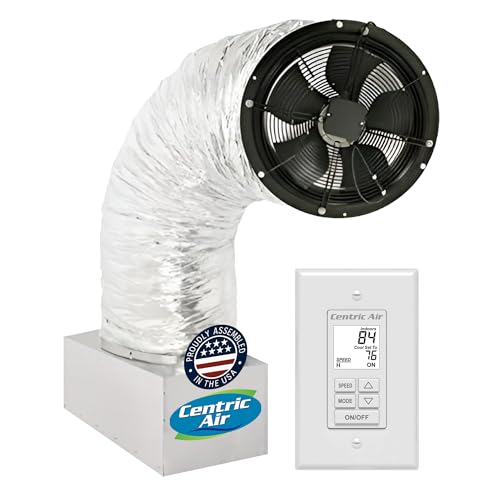
A whole house fan is designed to move air through the living area of the home. Typically installed in a ceiling between the living space and attic, it pulls cooler outdoor air in through open windows and exhausts warm indoor air into the attic, where that air must then escape through attic vents. Models such as the Centric Air QA-Deluxe 5500 Whole House Fan and Quietcool QC CL-5400 RF Classic Advanced Whole House Fan are examples of high-airflow systems intended to cool occupied rooms when outdoor air is comfortable.
An attic fan, by contrast, is not intended to create a breeze through your living room. It ventilates the attic space itself, helping reduce attic heat buildup that can radiate through ceilings and make air conditioning work harder. Products such as the iLiving ILG8G14-12T Automatic Gable Mount Attic Ventilator Fan, Quietcool AFG SMT PRO-3.0 Smart Attic Fan for Gable Vents, and Quietcool AFG SMT ES-3.0 Smart Attic Fan for Gable Vents fit this attic-specific role.
The common mistake is expecting an attic fan to cool indoor rooms as directly as a whole house fan. It may help with overall heat management, but it does not replace opening windows and flushing the living space. On the other hand, a whole house fan requires the right window-opening routine and enough attic exhaust area to operate safely and effectively.
| Factor | Whole House Fan | Attic Fan |
|---|---|---|
| Primary job | Moves air through living spaces | Exhausts hot attic air |
| Typical installation | Ceiling to attic opening | Gable vent or attic ventilation point |
| Best use case | Evening and overnight cooling when outdoor air is cooler | Reducing attic heat buildup during hot periods |
| User interaction | Open windows before running | Often thermostat, humidistat, or smart-controlled |
Airflow, CFM, and Home Size Matching
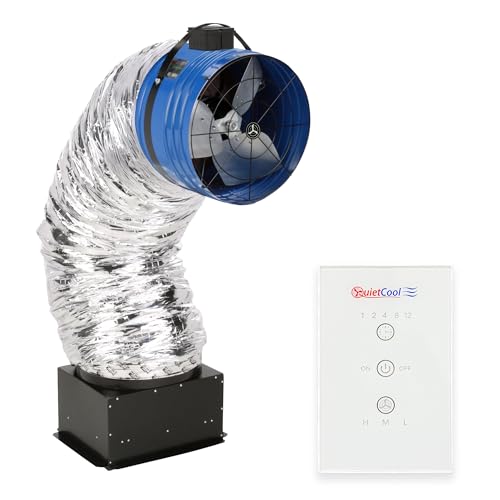
Airflow is one of the most important specifications in any whole house fan vs attic fan comparison. Whole house fans in the available product data range from compact systems like the Quietcool QC CL-2250 RF Classic Advanced Whole House Fan, rated up to 2465 CFM, to larger models like the Quietcool QC ES-7000 RF Energy Saver Advanced Whole House Fan, rated up to 6878 CFM. Higher airflow can refresh indoor air faster, but oversizing can create unnecessary noise, pressure issues, and installation demands.
Attic fan airflow should be matched to attic volume and venting. The iLiving ILG8G14-12T lists 2339 CFM, while the Quietcool AFG SMT PRO-3.0 lists 2940 CFM and the Quietcool AFG SMT ES-3.0 lists up to 2801 CFM. For attic fans, the goal is not to pull conditioned air from the living space through leaks in the ceiling. Proper attic intake and exhaust balance is essential.
A practical homeowner approach is to avoid shopping by CFM alone. Consider square footage coverage, ceiling layout, hallway placement, attic vent area, and whether the fan has multiple speeds. If your home has rooms that stay warm because of poor HVAC balance, ventilation may help, but you may also want to compare system-level climate upgrades in our smart thermostat vs programmable thermostat guide.
Installation Requirements and DIY Difficulty
Whole house fan installation is usually more involved than attic fan installation because it requires a properly sized ceiling opening, attic access, electrical planning, and enough attic exhaust ventilation. The Centric Air QA-Deluxe 5500 Whole House Fan is described as plug and play with remote control, while several Quietcool whole house fan models include wireless control. Even with user-friendly controls, homeowners should confirm joist spacing, attic clearance, and local electrical requirements before planning a DIY installation.
Gable-mounted attic fans are often more approachable for experienced DIYers because they can mount behind an existing gable vent, provided there is safe attic access and a suitable power source. The Quietcool AFG SMT PRO-3.0 and Quietcool AFG SMT ES-3.0 both list plug-and-play design with a long power cord, while the iLiving ILG8G14-12T includes an adjustable thermostat. Still, working in an attic can involve heat stress, insulation irritation, poor footing, and electrical hazards.
If you are not comfortable cutting ceiling drywall, navigating attic framing, or confirming venting requirements, professional installation is often the safer choice. DIYers should also avoid installing any fan in a way that backdrafts combustion appliances, pulls air from crawl spaces, or depressurizes the home. This is especially important in older houses with gas water heaters, furnaces, or fireplaces.
Controls, Timers, Thermostats, and Smart Features
Controls can make the difference between a fan that gets used regularly and one that becomes an occasional backup. Whole house fans often benefit from remote controls, timers, and multiple speeds because homeowners usually run them during cooler parts of the day, then shut them off once indoor temperatures drop. The Centric Air QA-Deluxe 5500 includes a remote with timer, while Quietcool whole house fan models in this data set include wireless control and two-speed operation.
Attic fans benefit from automatic controls because attic conditions change throughout the day. The iLiving ILG8G14-12T uses an adjustable thermostat, while the Quietcool AFG SMT PRO-3.0 and Quietcool AFG SMT ES-3.0 add smart app control with thermostat and humidistat features. Humidity control can be useful in climates where attic moisture is as much of a concern as heat.
For smart-home buyers, app control is convenient, but it should not replace proper installation. A smart attic fan still needs adequate intake ventilation, safe wiring, and a correct mounting location. If indoor air quality is also part of your cooling strategy, see our HEPA filter vs carbon filter comparison for a separate look at filtration rather than ventilation.
Energy Use and Operating Cost Considerations
Energy use matters because ventilation fans are often used for long periods during warm weather. Some whole house fans in the available data emphasize energy-saving performance. The Quietcool QC ES-3100 RF Energy Saver Advanced Whole House Fan lists operation as low as 81 watts, the Quietcool QC ES-4700 RF Energy Saver Advanced Whole House Fan lists operation as low as 75 watts, and the Quietcool QC ES-7000 RF Energy Saver Advanced Whole House Fan lists operation as low as 164 watts.
Attic fan energy use also varies. The Quietcool AFG SMT ES-3.0 Smart Attic Fan for Gable Vents lists operation as low as 22 watts, which may appeal to homeowners who want ongoing attic ventilation with lower electrical draw. However, energy efficiency should be considered alongside airflow, speed settings, controls, and whether the fan is solving the right problem.
The biggest mistake is assuming any fan will automatically lower cooling bills. A whole house fan can reduce air conditioning use when outdoor temperatures are favorable, but it is less helpful during humid, hot nights. An attic fan can reduce attic heat load, but if the attic is poorly air-sealed from the living space, it may pull conditioned air through ceiling gaps. Air sealing, insulation, and ventilation should work together.
Noise, Comfort, and Daily Use
Noise tolerance is personal, but it is especially important for whole house fans because they operate near occupied rooms. Larger fans moving more air can create more noticeable sound, especially at high speed or if the installation lacks vibration isolation. Two-speed models such as the Quietcool QC CL-3100 RF Classic Advanced Whole House Fan and Quietcool QC CL-5400 RF Classic Advanced Whole House Fan give homeowners more flexibility than single-speed operation.
Attic fans are usually farther from living spaces, but vibration can still transfer through framing or gable walls. Proper mounting and balanced airflow reduce nuisance noise. If the fan is close to a bedroom wall or bonus room, smart or automatic scheduling can help avoid late-night operation when sound is most noticeable.
Comfort also depends on routine. A whole house fan works best when windows are opened strategically, often with more airflow directed through rooms that need cooling. If only one window is opened, the airflow path may be too concentrated and uncomfortable. If too many windows are opened, airflow may be weak where you need it most.
Build Quality, Warranty, and Long-Term Reliability
Because these fans are installed in attic spaces or ceiling assemblies, durability matters more than it might with a portable appliance. Heat exposure, dust, vibration, and seasonal use can all affect long-term reliability. Our research indicates that shoppers should look closely at motor design, mounting style, grille access, control components, and warranty terms when comparing whole house fan vs attic fan.
Several Quietcool whole house fan models in the data include a 10-year warranty and removable grille, including the QC CL-2250 RF, QC CL-3100 RF, QC CL-5400 RF, and QC ES-4700 RF. A removable grille can make maintenance easier because dust buildup can reduce airflow and make a ceiling installation look neglected. Warranty length is not the only sign of quality, but it is a useful comparison point when the fan is difficult to access after installation.
For attic fans, maintenance access is just as important. A gable fan mounted behind a vent should be reachable for cleaning and inspection. Homeowners should periodically check for blocked vents, loose fasteners, damaged screens, and wiring issues, especially after storms or roof work.
Choosing by Home Type and Climate
Whole house fans tend to make the most sense in climates with cooler evenings and mornings. If your outdoor air drops to a comfortable temperature after sunset, a properly sized whole house fan can flush out indoor heat quickly. Models such as the Quietcool QC CL-2250 RF may suit smaller coverage needs, while the Centric Air QA-Deluxe 5500 and Quietcool QC ES-7000 RF are better aligned with larger-home airflow requirements based on their listed specifications.
Attic fans can be useful in hotter climates where attic temperatures climb and radiate into upper floors. They are also worth considering when roof color, attic insulation, or limited natural venting contributes to heat buildup. For apartments or homes where attic access is not available, ventilation fans may not be practical, and a room-cooling option covered in our apartment air conditioner reviews may be more appropriate.
Renters should be especially cautious. Whole house fans and attic fans are usually permanent or semi-permanent installations, so landlord approval is necessary. Homeowners planning a roof replacement, attic insulation upgrade, or HVAC improvement should coordinate fan installation with those projects to avoid rework.
Our Research Methodology & Why You Can Trust Us
We evaluated the products based on available product information, user-facing specifications, category fit, and homeowner use cases. Because this article compares whole house fan vs attic fan, we only considered products that clearly match whole house fan or attic fan applications within Heating, Cooling & Air. We did not include unrelated home products, and we did not create substitute recommendations beyond the provided product data.
Our comparison process looked at airflow capacity, listed coverage area, speed settings, control type, energy-use claims, installation style, warranty information, maintenance access, and suitability for DIY or professional installation. We also considered how each product would realistically be used by homeowners: cooling living spaces in the evening, reducing attic heat, automating ventilation, or improving comfort in larger homes.
Based on our research, ranking criteria included performance, features, build quality, ease of use, durability, safety, value, reliability, and fit for common home improvement scenarios. This guide is updated during July to keep the recommendations aligned with the available product data and current homeowner buying priorities.
We avoid unsupported hands-on claims. Instead of saying we installed or tested these products, we explain what the listed specifications indicate, where each type of fan tends to perform well, and where shoppers should be cautious. For more Heating, Cooling & Air comparisons, visit our Heating, Cooling & Air category page.
Final Thoughts
For a strong whole-house cooling approach, the Centric Air QA-Deluxe 5500 Whole House Fan stands out as a homeowner pick because it combines high listed airflow, remote operation with timer, and suitability for larger two-story homes based on the provided specifications. The Quietcool QC ES-7000 RF Energy Saver Advanced Whole House Fan is the premium pick for shoppers who need very high airflow and want an energy-saver design, while the Quietcool QC CL-2250 RF Classic Advanced Whole House Fan is a more compact whole house option for smaller coverage needs.
For attic-specific ventilation, the iLiving ILG8G14-12T Automatic Gable Mount Attic Ventilator Fan is a value-oriented pick because it focuses on straightforward gable ventilation with an adjustable thermostat. The Quietcool AFG SMT PRO-3.0 Smart Attic Fan for Gable Vents is a smart-control pick for homeowners who want app control, thermostat and humidistat functions, and plug-and-play convenience. The Quietcool AFG SMT ES-3.0 Smart Attic Fan for Gable Vents is the energy-conscious attic fan option based on its low-wattage specification.
The right answer in a Whole House Fan Vs Attic Fan decision is not always one or the other. Choose a whole house fan if your main goal is to cool occupied rooms with outdoor air. Choose an attic fan if your main goal is to manage attic heat and moisture. If you are also considering ductless cooling, our mini split AC cleaning guide can help you understand maintenance expectations for another common cooling upgrade.
FAQ
What should I look for when choosing whole house fan vs attic fan?
Start by deciding whether you want to cool living spaces or ventilate the attic. Then compare airflow, installation type, controls, energy use, noise expectations, and maintenance access. Whole house fans need open windows and adequate attic exhaust, while attic fans need proper attic intake and safe mounting.
Are higher-end whole house fan vs attic fan worth it?
Higher-end models can be worth it if they provide the airflow, controls, efficiency, and warranty support your home requires. For example, larger whole house fans may suit bigger homes, while smart attic fans may be better for automated heat and humidity control. Avoid paying more for capacity you cannot use because of limited venting or installation constraints.
Can a whole house fan replace air conditioning?
A whole house fan can reduce air conditioning use when outdoor air is cooler and less humid than indoor air. It is not a full replacement during hot, humid weather or during poor outdoor air quality conditions. Many homeowners use whole house ventilation as a supplement rather than a substitute.
Can an attic fan cool the rooms below?
An attic fan may help reduce heat transfer from the attic, but it does not move air through living spaces the way a whole house fan does. If your ceiling is poorly air-sealed, an attic fan can even pull conditioned air into the attic through leaks. Proper insulation and air sealing are important for getting the most benefit.
About This Home DVP Research
Home DVP is an independent home-improvement research and product-comparison publisher. Ryan Mitchell prepared this guide by comparing manufacturer specifications, compatibility details, retailer-provided product data, key limitations, and common homeowner use cases. We do not claim hands-on testing unless an article explicitly says so.
Review methodology Affiliate disclosure Last reviewed October 10, 2026