
Choosing the best Water Filter For Pfas is more important than simply improving taste. PFAS, PFOA, and PFOS concerns have pushed many homeowners, renters, and kitchen upgrade shoppers to look more closely at what their drinking water filter is actually designed to reduce. The right choice depends on your water source, sink layout, installation comfort level, filter replacement schedule, and whether you want a pitcher, dispenser, direct-connect under-sink system, or dedicated-faucet setup.
After carefully analyzing the available specifications for 15 products in the $43.99–$220 range, we focused on models that clearly match the Kitchen & Bathroom category and list PFAS, PFOA, or PFOS reduction in the provided product data. We compared filtration claims, certification language, flow rate, filter life, installation requirements, material quality, maintenance needs, and practical fit for everyday home use. If you are also improving overall water quality, our guide to water softeners for home plumbing can help you understand a different type of treatment system.
Home DVP decision summary
Quick Answer
For Best Water Filter For PFAS, Home DVP compared 15 products from 10 brands. Look for third-party certification under NSF/ANSI 53 or 58 for PFAS reduction and verify the exact model and cartridge. Treatment type, capacity, flow, maintenance cost, and replacement timing determine whether performance remains reliable.
| Comparison coverage | 15 products from 10 brands, including Waterdrop, Epic Water Filters, ClearlyFiltered. |
|---|---|
| Selection priority | Look for third-party certification under NSF/ANSI 53 or 58 for PFAS reduction and verify the exact model and cartridge. Treatment type, capacity, flow, maintenance cost, and replacement timing determine whether performance remains reliable. |
| Evidence basis | Manufacturer specifications, compatibility details, retailer-provided product data, and common homeowner use cases. |
| Reference guidance | EPA guidance for filters certified to reduce PFAS. |
This summary describes the article's comparison set, not every product on the market. Product details should be confirmed before purchase.
This guide is written for practical buyers who want clear tradeoffs, not hype. Some products are better for renters because they connect directly to an existing faucet line, while others make more sense for homeowners who want a dedicated drinking faucet or a larger countertop pitcher. Based on the product information provided, we only discuss water filters that are relevant to PFAS-focused drinking water use.
Best Water Filter For Pfas Buying Guide
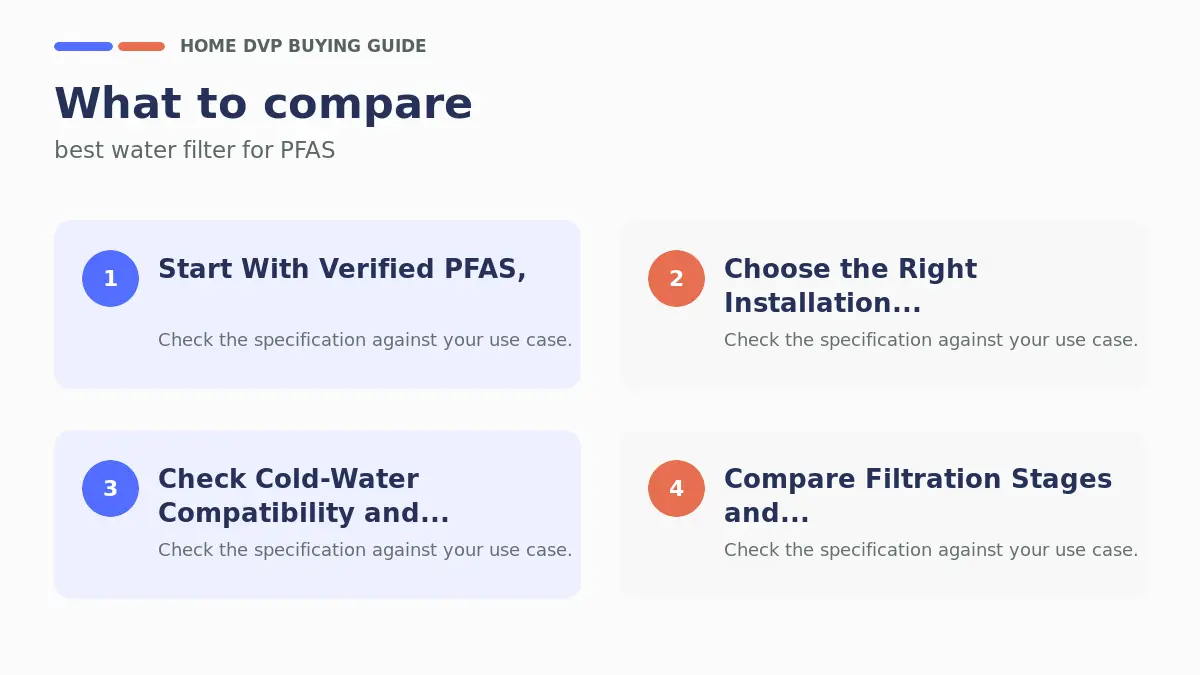
Start With Verified PFAS, PFOA, and PFOS Reduction Claims
The first mistake many shoppers make is assuming that any carbon filter is automatically the right choice for PFAS. For this guide, the most relevant products are the ones that explicitly mention PFAS, PFOA, or PFOS reduction in the available specifications. That includes models such as the Waterdrop 10UB Under Sink Water Filter System with Faucet, Waterdrop 10UA Under Sink Water Filter System, CuZn Under Sink Water Filter for Sink Faucet, Waterdrop TSA 8 Layer Under Sink Water Filter System, Clearly Filtered Filtered Water Pitcher, Waterdrop TSB-PF Under Sink Water Filter, Waterdrop PT-72W Glass Water Filter Pitcher, and Aquagear Water Filter Pitcher.
Certification language also matters. NSF/ANSI 42 typically relates to chlorine taste and odor reduction, while NSF/ANSI 372 relates to lead-free materials. Some products also reference third-party testing or additional standards. When comparing best water filter for pfas, look for both contaminant reduction claims and the specific testing or certification details available from the manufacturer.
For homeowners, the practical takeaway is simple: do not buy based on a broad phrase like filtered water alone. Match the product to the contaminant concern, then verify whether the product data specifically names PFAS, PFOA, or PFOS. If you are making several kitchen upgrades at once, browsing the Kitchen & Bathroom product guides can help you compare related home improvement priorities.
| Filter Type | Best Fit | Common Tradeoff |
|---|---|---|
| Under-sink direct connect | Renters or homeowners who want filtered water from the existing faucet | Requires cold-water line compatibility |
| Under-sink with dedicated faucet | Homeowners who want a separate drinking water tap | May require a faucet hole or countertop planning |
| Pitcher or dispenser | Renters, apartments, dorms, and no-install kitchens | Slower filtration and refill management |
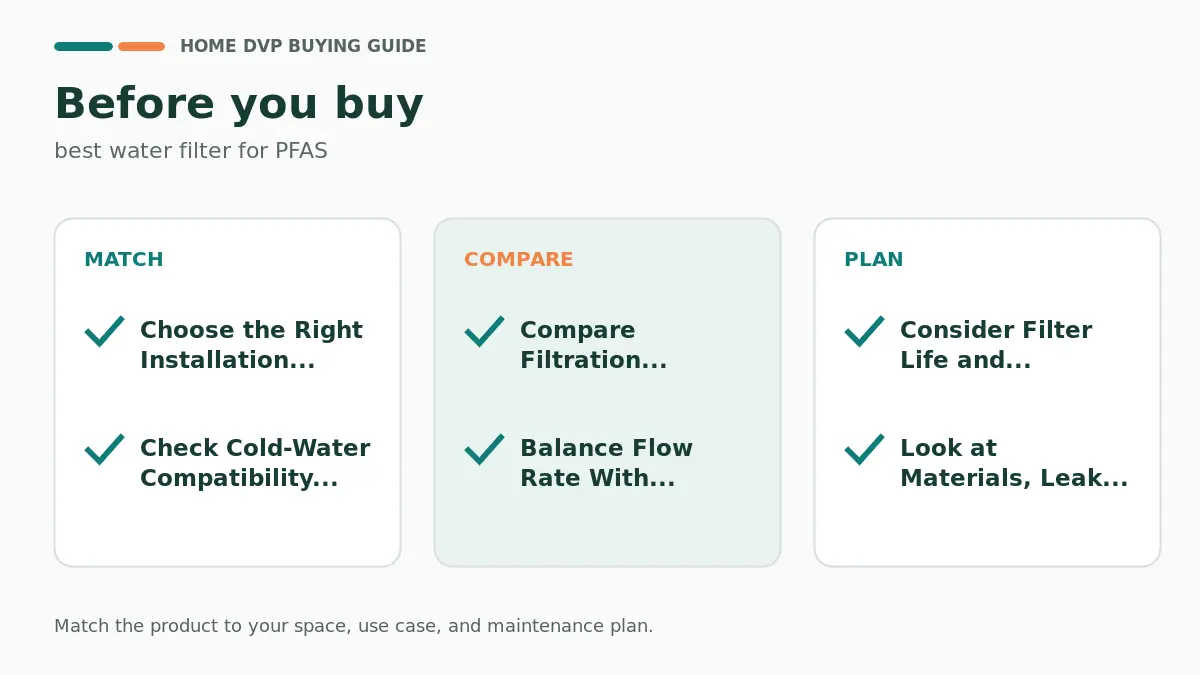
Choose the Right Installation Style for Your Kitchen
Installation is one of the biggest differences between PFAS water filters. The Waterdrop 10UA connects directly to a cold-water line and existing faucet, which can be useful when you do not want to drill a new faucet hole. The Waterdrop 10UB includes a dedicated faucet, making it a better fit for homeowners who want separate filtered drinking water at the sink.
The CuZn Under Sink Water Filter for Sink Faucet is also designed as an inline faucet connection and emphasizes a simple DIY setup without drilling. This style can be especially appealing in compact kitchens, utility sinks, or bathroom vanity applications where space is limited and a full multi-canister system would be inconvenient.
Pitcher-style options such as the Clearly Filtered Filtered Water Pitcher, Waterdrop PT-72W Glass Water Filter Pitcher, and Aquagear Water Filter Pitcher require no plumbing changes at all. They are good choices for renters, short-term housing, or homeowners who want PFAS-focused filtration without touching supply lines. The tradeoff is that you must refill them and wait for gravity filtration.
Check Cold-Water Compatibility and Plumbing Fit
Most under-sink filters in this group are designed for municipal cold-water supply lines. The Waterdrop 10UB and Waterdrop 10UA both specify cold-water use and are not intended for hot water. The Waterdrop TSA also lists compatibility with common under-sink cold-water connections and notes that well water may require pre-filtration.
Before buying, look under your sink and identify the available space, shutoff valve style, tubing size, and whether your faucet connection matches the included fittings. A common DIY mistake is ordering an under-sink system without checking whether the faucet uses a compatible thread or whether there is enough cabinet clearance around the garbage disposal, drain trap, or pull-out sprayer hose.
If your kitchen already has multiple upgrades competing for space, plan the layout before installation. For example, homes with a newer disposal setup may have less room under the sink, so it can help to review related kitchen planning topics like garbage disposal buying considerations before choosing a larger filter configuration.
Compare Filtration Stages and Media
More filtration stages do not automatically mean a better fit, but they can indicate a broader approach to contaminant reduction. The Waterdrop TSA uses a multi-stage design intended to reduce PFAS, PFOA/PFOS, fluoride, chlorine, taste, odor, silt, rust, and other listed impurities. The Waterdrop TSB-PF is positioned as a layered under-sink filtration system for PFAS and additional impurities such as chloramine, fluoride, VOCs, and chloroform.
The CuZn model uses a combination of micro sediment membranes, KDF-55, and coconut shell carbon. That blend is designed to improve tap water quality while preserving beneficial minerals, and the product data notes that it does not reduce TDS. This distinction matters because some shoppers confuse filtration with reverse osmosis or total dissolved solids reduction.
Pitchers use different approaches. Clearly Filtered emphasizes its Affinity Filtration Technology and targets a broad list of contaminants, including PFAS/PFOA, fluoride, lead, arsenic, microplastics, chlorine, and perchlorate. Aquagear and Waterdrop pitcher options are relevant for buyers who want simpler counter or refrigerator storage rather than plumbing changes.
Balance Flow Rate With Contact Time
Flow rate matters in daily use. If a filter is too slow, people in the household may avoid using it, which defeats the purpose of installing one. The Waterdrop 10UB and Waterdrop 10UA list stable under-sink flow, while the Waterdrop TSA notes that deeper filtration may flow more slowly than direct tap water because water needs adequate contact time with the filter media.
For a busy kitchen, under-sink systems are usually more convenient for filling pots, coffee makers, bottles, and pet bowls. A pitcher can work well for drinking water, but it may feel limiting if multiple family members need filtered water throughout the day. If you cook often, direct-connect filtration can be more practical than refilling a pitcher several times.
The best approach is to match the filter to your household routine. A single renter may be satisfied with a compact pitcher, while a family kitchen may benefit from an under-sink system with a dedicated faucet. If you are also upgrading sink hardware, our touchless faucet guide may help you think through faucet layout and daily convenience.
Consider Filter Life and Replacement Cost Over Time
The purchase price is only part of the value equation. Replacement filters determine long-term cost, maintenance effort, and whether the system remains effective. Waterdrop under-sink systems highlight easy twist-and-lock replacement, while CuZn emphasizes an extended service life compared with many shorter-life under-sink filters.
Pitchers also vary in replacement rhythm. Clearly Filtered lists a long-lasting filter life, and Aquagear highlights a sizable filter capacity. For homeowners who dislike maintenance tasks, a longer filter interval can be worth paying more for, provided the product fits your contaminant reduction needs and daily water volume.
A common mistake is waiting until water tastes different before replacing the filter. Taste is not a reliable indicator for every contaminant. Follow the manufacturer replacement schedule, track installation dates, and consider setting a recurring reminder during July maintenance checks.
Look at Materials, Leak Resistance, and Build Quality
Water filtration products sit in places where leaks can cause cabinet damage, flooring issues, and inconvenience. Under-sink systems should use secure fittings, durable housings, and lead-free materials where specified. The Waterdrop 10UB lists BPA-free and lead-free materials, while the Waterdrop TSA emphasizes durability testing language, stronger materials, and leak-resistant design details in the available product information.
Pitcher materials matter too, especially for families who use filtered water throughout the day. Clearly Filtered specifies medical-grade Tritan plastic that is BPA-free and BPS-free. Waterdrop PT-72W uses a glass pitcher format, which may appeal to buyers who prefer a non-plastic water container, though glass requires more careful handling in busy kitchens.
For under-sink models, inspect connections after installation and again after the first several uses. Place a dry paper towel below fittings for a short period to detect slow drips. This is a simple homeowner habit that can catch small installation issues before they become cabinet problems.
Match the Filter to Your Household Type
Renters usually benefit from low-commitment solutions. The Clearly Filtered Filtered Water Pitcher, Waterdrop PT-72W Glass Water Filter Pitcher, and Aquagear Water Filter Pitcher require no plumbing work and are easy to move. A direct-connect option such as the Waterdrop 10UA may also work for some rentals if installation is reversible and permitted by the lease.
Homeowners who plan to stay in the same kitchen longer may prefer an under-sink system. The Waterdrop 10UB is useful when a dedicated faucet is desired, while the CuZn Under Sink Water Filter for Sink Faucet is attractive for buyers who want a compact inline setup. The Waterdrop TSA and Waterdrop TSB-PF are better aligned with shoppers looking for broader multi-stage filtration in an under-sink format.
Think about who will use the filter every day. A simple pitcher can be ideal for one or two people, while a family that fills bottles, cooks frequently, and drinks filtered water all day may appreciate the convenience of an under-sink system. The right best water filter for pfas should fit your habits as much as your contaminant concerns.
Our Research Methodology & Why You Can Trust Us
Based on our detailed comparison, we evaluated the products according to PFAS relevance, filtration claims, certification references, installation style, material quality, capacity, filter replacement requirements, ease of use, and overall homeowner value. We did not claim physical testing because the provided product data does not support hands-on verification. Instead, this guide is based on available product information, user-facing specifications, and category fit validation.
Our research indicates that the most useful PFAS filter comparisons separate under-sink systems from pitchers. Under-sink systems usually provide better day-to-day convenience, while pitchers offer easier setup and portability. We also considered whether each product clearly belongs in the Kitchen & Bathroom category and whether the available information connects it to PFAS, PFOA, or PFOS reduction.
Ranking criteria included performance potential, filtration scope, features, build quality, durability, safety-related materials, maintenance burden, reliability signals, and fit for homeowner or DIY use cases. We also considered value within the $43.99–$220 range without relying on hardcoded pricing in the recommendations. This article is structured for regular updates during July so the guidance stays aligned with current product information.
Trust is especially important for water filtration because buyers are making health-related household decisions. For that reason, we call out limitations, such as cold-water-only installation, the difference between filtration and TDS reduction, and the need to verify manufacturer testing details. For broader home care topics beyond the kitchen, you can also visit the Cleaning & Floor Care hub.
Final Thoughts
For an overall under-sink pick, the Waterdrop 10UB Under Sink Water Filter System with Faucet stands out because it pairs PFAS, PFOA/PFOS, lead, chlorine, taste, and odor reduction claims with a dedicated faucet and easy replacement design. It is best suited for homeowners who want a separate drinking water faucet and are comfortable connecting a system to the cold-water supply.
For a value-focused direct-connect option, the Waterdrop 10UA Under Sink Water Filter System is a strong fit for buyers who want PFAS-focused filtration without adding a separate faucet. For long-term inline use, the CuZn Under Sink Water Filter for Sink Faucet is appealing because of its extended filter-life positioning and compact no-drill setup. For broader under-sink filtration, the Waterdrop TSA 8 Layer Under Sink Water Filter System and Waterdrop TSB-PF Under Sink Water Filter are worth considering when your priority includes PFAS plus additional taste, odor, fluoride, or impurity reduction claims.
For no-install households, the Clearly Filtered Filtered Water Pitcher is the most specification-rich pitcher option in the provided data, especially for buyers focused on PFAS/PFOA and a broad contaminant list. The Waterdrop PT-72W Glass Water Filter Pitcher and Aquagear Water Filter Pitcher are also relevant for renters, small kitchens, or anyone who wants PFAS-related filtration without under-sink work. If your renovation plans extend to bathroom comfort upgrades, see our guide to bidet toilet seats for modern bathrooms.
FAQ
What should I look for when choosing the best water filter for pfas?
Look for product information that specifically names PFAS, PFOA, or PFOS reduction, not just general taste improvement. Also compare certifications, filter media, replacement schedule, installation type, and whether the product is designed for your water source and sink setup.
Are higher-end water filter for pfas worth it?
Higher-end options can be worth it if they provide broader contaminant reduction, stronger certification documentation, longer filter life, or better daily convenience. However, a simpler pitcher or direct-connect under-sink filter may be the better value if it matches your PFAS concern and household water use.
Do under-sink PFAS filters work better than pitchers?
Under-sink filters are often more convenient because filtered water is available directly at the faucet or dedicated drinking tap. Pitchers are easier to set up and move, but they require refilling and may be slower. The better choice depends on your kitchen layout, household size, and maintenance preferences.
How often should homeowners replace filters?
Follow the replacement schedule provided by the manufacturer for the exact model. Do not rely only on taste or odor changes, because some contaminants may not be noticeable. A simple calendar reminder during July maintenance planning can help keep the system on schedule.
Are the best water filter for pfas suitable for renters?
Yes, many options are renter-friendly, especially pitchers and dispensers that require no plumbing work. Some direct-connect under-sink filters may also be suitable if the lease allows reversible installation. For more kitchen and bathroom buying help, visit the bidet buying guide for another practical fixture comparison.
About This Home DVP Research
Home DVP is an independent home-improvement research and product-comparison publisher. Ryan Mitchell prepared this guide by comparing manufacturer specifications, compatibility details, retailer-provided product data, key limitations, and common homeowner use cases. We do not claim hands-on testing unless an article explicitly says so.
Review methodology Affiliate disclosure Last reviewed September 10, 2026