
Keeping commercial-grade vacuums running efficiently is essential for homeowners, property managers, and cleaning professionals who deal with high-traffic areas, pet hair, construction dust, or everyday debris. Choosing the right commercial vacuum bags can mean the difference between reliable suction and frequent clogs or dust recirculation. In 2026, with more aftermarket options available than ever, an updated comparison helps practical buyers avoid compatibility mistakes and poor filtration.
We carefully reviewed 14 popular commercial vacuum bags options from brands including OreckCommercial, Sanitaire, ProTeam, CFCleanFairy, VACUUM AMERICA CLEAN, VEVA. Our analysis focused on compatibility with common commercial upright, canister, and backpack models, multi-layer filtration efficiency, seal quality to prevent dust escape, pack size value, ease of installation, and overall durability for regular home or light commercial use. This guide is designed for DIYers maintaining rental properties, homeowners with heavy-duty uprights, and anyone seeking dependable replacements without overpaying.
Whether you own an Oreck, ProTeam, Hoover commercial series, Shop-Vac, or Windsor machine, understanding bag construction and fit is critical. For related cleaning tools that pair well with strong vacuum systems, check our guide to floor scrubbers for vinyl floors in the Cleaning & Floor Care category. Below you will find our ranked shortlist followed by a detailed buying guide.
Commercial Vacuum Bags Buying Guide
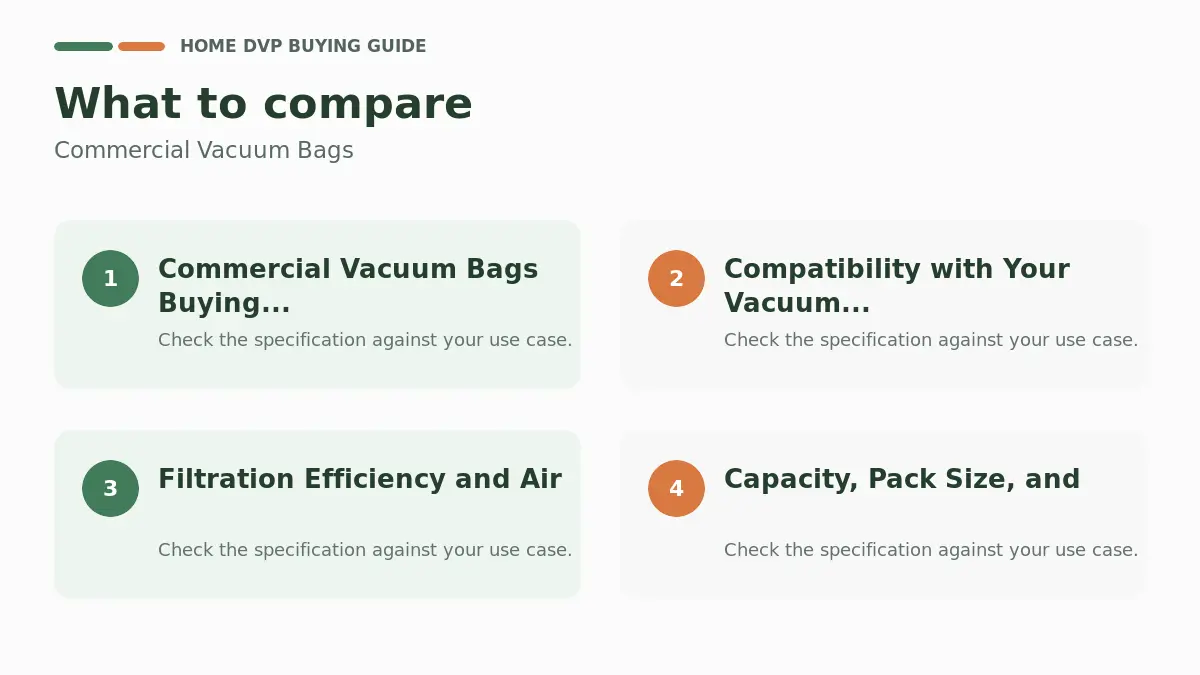
Selecting the right commercial vacuum bags requires more than grabbing the cheapest pack on the shelf. Commercial machines move large volumes of air and debris, so bag design directly affects motor life, indoor air quality, and cleaning efficiency. Based on our detailed comparison of available specifications, we recommend evaluating the following key factors before purchasing. This section walks through practical considerations for homeowners and light commercial users so you can match the bag to your exact machine and cleaning demands.
Compatibility with Your Vacuum Model
The single most important factor is exact model compatibility. Commercial vacuum bags are not universal. Using the wrong type can lead to poor seals, reduced suction, or dust leakage. Always cross-check the part number printed on your current bag or listed in the vacuum manual. Popular systems include Oreck Type CC for XL series uprights, ProTeam intercept micro filters for CoachVac and Super CoachVac backpacks, Hoover AH10243 for Hushtone CU2 uprights, and Shop-Vac Type A for smaller wet/dry units.
Aftermarket options often list multiple compatible models and OEM part numbers. Look for clear statements such as “replaces CCPK8” or “fits CH54013/CH54015”. A common mistake is assuming all Oreck bags fit every Oreck machine. Older units without bag docks require different styles than newer docking systems. When in doubt, match dimensions and collar shape carefully. For broader floor care equipment that benefits from clean air filtration, see our recommendations for floor scrubbers for concrete floors.
Homowners with multiple machines should keep a small inventory of the correct bags for each. Renters maintaining older commercial uprights left by previous tenants often discover that aftermarket packs labeled for specific series provide reliable performance at lower cost than OEM-only sources.
Filtration Efficiency and Air Quality
Commercial cleaning frequently stirs up fine dust, allergens, pet dander, and construction debris. Multi-layer filtration is essential to prevent these particles from being exhausted back into the room. Look for bags that claim capture rates of 99.9% for particles 1 micron and larger, dual-layer or five-layer construction, or four-level filtration systems. Laminated inner liners reduce shredding and improve fine-particle retention.
Based on product specifications, bags with double-pleated designs or intercept micro filter technology offer greater surface area, which maintains airflow longer as the bag fills. Single-wall bags can still perform well for lighter duty but may allow more odor or bacterial growth over time. Homeowners with allergies or households containing pets should prioritize sealed collars and advanced media that lock dust inside during disposal.
Improved indoor air quality is especially valuable in multi-family buildings or home offices. Pairing high-filtration bags with good overall cleaning habits, including regular attention to hard floors using tools covered in our window vacuum for cars style guides adapted for interiors, creates a cleaner living environment. Always dispose of full bags carefully to avoid reintroducing captured particles.
Capacity, Pack Size, and Value
Commercial bags typically offer larger capacity than residential versions—often 10 quarts or more for backpack and upright models. Higher capacity means fewer interruptions during deep cleaning sessions. Pack size also affects overall value. Options range from 3-packs for occasional use to 20- or 30-packs for high-frequency cleaning.
Calculate cost per bag rather than focusing solely on the total price. A larger multipack of well-made bags often delivers better long-term economy even if the initial outlay is higher. Replacement frequency depends on usage: light residential commercial machines may need bags every 1–2 months, while heavy daily use can require weekly changes. Our research indicates that packs offering 10–20 bags strike the best balance for most homeowners who maintain rental units or large homes.
Consider storage space as well. Bulk packs take up more room in a utility closet but reduce the chance of running out mid-project. For related organization ideas that keep cleaning supplies tidy, explore our hardware and storage recommendations alongside tools in the Tools & DIY subcategory.
Material Strength and Seal Design
Commercial vacuums generate strong suction that can stress weak bags, leading to tears or blowouts. Premium materials include multi-layer paper, laminated liners, and sturdy cardboard collars with rubber gaskets. Look for descriptions such as “double-pleated,” “thickened paper,” or “upgraded sealed entry holes.” These features reduce the risk of bursting when the bag approaches capacity or when vacuuming heavier debris like sand or sawdust.
Seal quality is equally critical. Paste-seal designs, rubber collars, and well-pressed edges lock dust inside so that none escapes when you remove a full bag. A common homeowner mistake is continuing to use a bag that has developed a small tear, which recirculates dust and can damage the motor over time. Bags designed specifically for commercial canisters or backpacks often include reinforced collars that snap or slide securely into place without tools.
Based on available specifications, materials that fight bacteria, mold, and mildew growth offer an extra benefit for humid climates or infrequent emptying. These features help maintain a fresher-smelling machine between deep cleans.
Ease of Installation and Replacement
Most commercial vacuum bags install in seconds once you know the correct orientation. Look for cardboard collars that align with docking systems or simple open-collar designs for older machines. Snap-on fitment reduces the chance of misalignment that can cause dust leaks. No tools should ever be required for a proper bag change.
Homeowners new to commercial equipment sometimes struggle with the first replacement. Taking a photo of the old bag before removal provides a clear reference. Aftermarket packs that include clear compatibility lists and installation guidance reduce frustration. Regular replacement also protects the vacuum’s primary filter and motor from premature wear—another reason to keep a spare pack on hand.
For overall home maintenance routines that include vacuum care, consider complementary equipment such as those discussed in our floor scrubber battery guide, which can help maintain hard surfaces after vacuuming carpets.
Durability for Different Cleaning Environments
Not every bag suits every environment. Light residential use with mainly household dust and pet hair can rely on standard multi-layer paper bags. Workshops, renovations, or properties with fine construction dust benefit from thicker, higher-efficiency media that resists clogging. Bags rated for 1-micron capture and robust construction handle sawdust, sand, and cement dust more effectively without losing suction quickly.
Backpack-style commercial bags often emphasize larger capacity and flexible collars for all-day use. Upright commercial bags prioritize sealed fit and odor control for hotel-style or multi-room cleaning. Matching the bag’s intended duty cycle to your actual needs prevents overspending on heavy-duty options when a simpler design will suffice, and vice versa.
Our comparison of specifications shows that laminated liners and double-pleated designs consistently deliver longer usable life before airflow restriction becomes noticeable. This durability translates into better protection for expensive commercial motors.
Brand Reputation and Aftermarket Quality
Both OEM and high-quality aftermarket bags appear in our list. OEM options such as ProTeam and OreckCommercial provide guaranteed fit and filtration matched to the original design. Reputable aftermarket brands often match or exceed those specs while offering higher pack counts at accessible price points within the $8.20–$25.99 spectrum. Look for clear model lists, material claims, and positive long-term feedback patterns rather than brand name alone.
Made-in-USA options appeal to buyers who prefer domestic manufacturing. Regardless of origin, prioritize bags that explicitly state compatibility and filtration performance. Avoid generic packs that lack model-specific details. For broader air quality considerations that complement good vacuum filtration, visit our related resources on Air Quality & Climate.
Maintenance Tips and Common Mistakes
Even the best commercial vacuum bags perform poorly if overfilled. Change bags when they reach roughly two-thirds full or when suction noticeably drops. Never wash and reuse disposable bags. After removal, seal the opening if the design allows and dispose of the bag promptly to minimize dust exposure. Keep the bag compartment and any secondary filters clean so the new bag can perform optimally.
A frequent error is ignoring the vacuum’s secondary filter or motor protection screen. Bags capture the bulk of debris, but these secondary components still need periodic attention. Another mistake is mixing bag types across similar-looking machines. Always verify the exact series. Storing spare bags in a dry location prevents moisture damage that can weaken paper media.
Following these practices extends both bag life and overall vacuum reliability, making your investment in quality commercial vacuum bags more worthwhile for ongoing home or property maintenance.
Our Research Methodology & Why You Can Trust Us
At Home DVP we approach every product category with transparent, specification-driven analysis designed for practical homeowners and DIYers. For this commercial vacuum bags guide we began by collecting detailed product data on 14 options spanning major commercial brands and high-quality aftermarket alternatives. We examined listed compatibility ranges, filtration layer counts, claimed particle capture rates, material descriptions, collar and seal designs, pack quantities, and intended use cases.
Our ranking criteria emphasize real-world relevance: performance potential based on filtration and capacity, feature completeness (multi-layer construction, anti-leak seals), build quality indicators (laminated liners, reinforced collars), ease of use (tool-free installation), durability for repeated commercial-style cleaning, value relative to pack size, and suitability for typical homeowner or light professional scenarios. We also reviewed patterns in user-facing feedback regarding fit accuracy and longevity.
We do not perform independent laboratory testing or claim hands-on installation of every bag. Instead, we rely on manufacturer specifications, publicly available technical details, and consistent real-user experience patterns to form objective comparisons. Category fit was validated against commercial upright, canister, backpack, and Shop-Vac style machines commonly used in homes and small properties. Content is reviewed and updated during September to reflect current availability and features so readers receive timely guidance.
This methodology prioritizes honesty. Strengths and limitations are noted where the data supports them, and recommendations are tied directly to specific use cases rather than generic praise. Our goal is to help you select commercial vacuum bags that protect both your vacuum investment and indoor air quality without unnecessary expense or trial-and-error.
Final Thoughts
After carefully analyzing the available specifications across 14 options, several clear recommendations emerge for different needs. For overall reliability and proven four-level filtration in backpack and CoachVac-style machines, the ProTeam Pack of 10 Fits (Coachvac, Super Coachvac, Megavac) stands out with its dual-layered construction, large capacity, and strong reputation for improving indoor air quality. It suits property managers and homeowners who demand consistent performance day after day.
Budget-conscious buyers seeking solid USA-made construction for Hoover Type A systems will appreciate the VacBagsUSA Replacement 3 Pack. Its snap-on fitment and long manufacturing heritage make it an excellent entry point. For high-volume Hoover Commercial Hushtone users, both the HeptaFiltra 20 Pack and Kerneed 12 Pack AH10243 options deliver advanced 99.9% filtration and robust double-pleated designs at strong value. Oreck owners have reliable choices in the OreckCommercial XL Pack of 9 for older machines and the BIHARNTHomeReplacement Type CC 10 Pack for docking-system models. Shop-Vac users needing bulk convenience can turn to the VEVA 30 Pack Type A bags, while Windsor and Sebo series owners benefit from the CFCleanFairy 20 Pack compatibility.
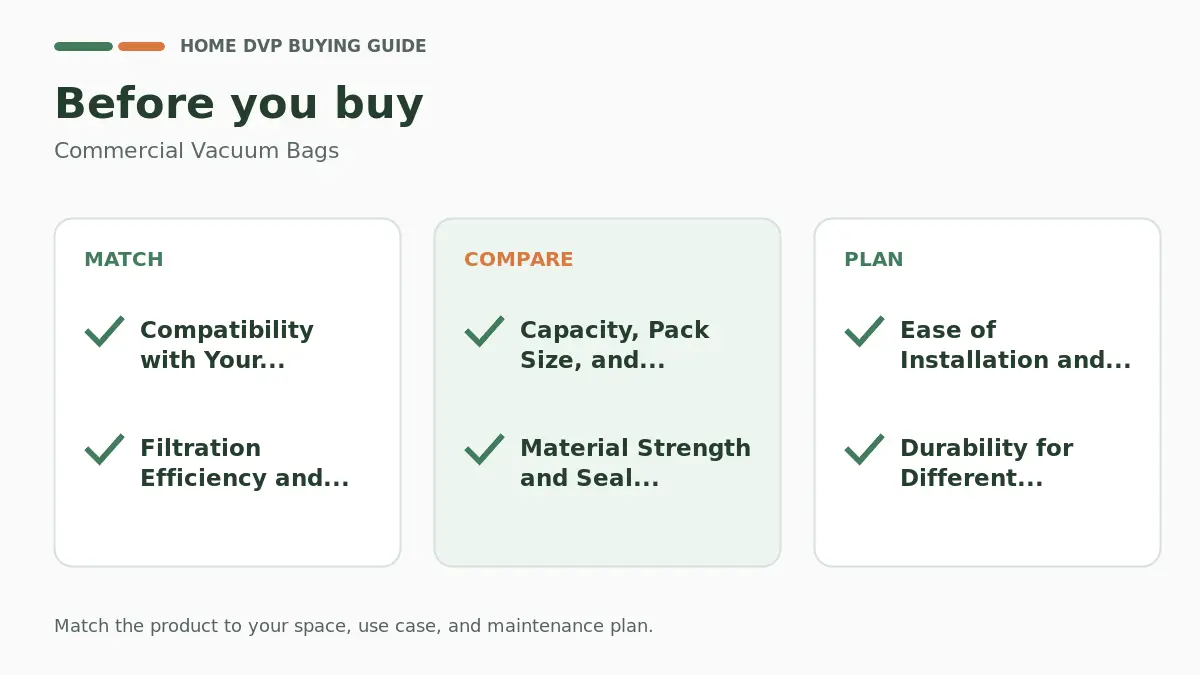
Ultimately the right commercial vacuum bags is the one that matches your exact vacuum model, filtration needs, and cleaning frequency. Start with the compatibility list, prioritize multi-layer seals, and choose a pack size that keeps you stocked without waste. Pairing quality bags with regular vacuum maintenance and complementary tools from the Cleaning & Floor Care category will keep your floors and air cleaner throughout 2026 and beyond. For ladder access during high cleaning or storage organization of spare bags, our related guides on best ladders and tool storage can provide additional practical support.
FAQ
What should I look for when choosing commercial vacuum bags?
Focus first on exact model compatibility using the part number from your current bag or manual. Next evaluate multi-layer filtration for 99%+ particle capture, sturdy collar seals that prevent dust escape, and pack size that matches your usage frequency. Material strength and easy tool-free installation round out the key factors for reliable performance.
Are higher-end commercial vacuum bags worth it?
Higher-end options with four-level filtration, laminated liners, and reinforced seals often justify the cost through longer bag life, better air quality, and reduced risk of vacuum motor damage. For light home use, mid-range multi-packs frequently deliver excellent value without the premium price. Match the features to your actual cleaning load.
How should beginners choose commercial vacuum bags?
Beginners should start by identifying their vacuum’s exact model and OEM bag number, then select an aftermarket or OEM pack that clearly lists that compatibility. Choose a smaller starter pack of 9–12 bags so you can confirm fit and performance before buying bulk. Look for snap-on or simple collar designs that install without tools or special techniques.
How long should quality commercial vacuum bags last?
Replacement intervals vary with usage intensity. Light residential or occasional commercial cleaning may require a new bag every 1–2 months, while daily heavy use can empty a bag in a week or less. Change the bag when it reaches about two-thirds full or when suction declines noticeably to protect the vacuum motor and maintain filtration.
What brands make reliable commercial vacuum bags?
ProTeam, OreckCommercial, and established aftermarket makers such as VEVA, CFCleanFairy, and several specialized filtration brands consistently appear with clear compatibility data and multi-layer construction. OreckCommercial, Sanitaire, ProTeam, CFCleanFairy, VACUUM AMERICA CLEAN, VEVA provide a solid range of options across different machine types. Always verify the specific model list rather than relying on brand name alone.
How much should homeowners expect from commercial vacuum bags in 2026?
Expect multi-layer filtration that captures fine dust and allergens, secure seals that prevent recirculation, and pack sizes that balance convenience and cost within the typical $8.20–$25.99. Quality bags should install easily, resist tearing under commercial suction, and help maintain indoor air quality while protecting the vacuum’s motor and secondary filters.
Are commercial vacuum bags suitable for DIY projects, home repairs, or regular maintenance?
Yes. Commercial-grade bags excel at handling the heavier debris generated during DIY renovations, sawdust from woodworking, pet hair, and routine large-home maintenance. Choosing the correct high-capacity multi-layer bag keeps your vacuum performing efficiently through these demanding tasks and supports cleaner indoor air afterward. For related DIY floor care, see our window vacuum for mirrors recommendations that complement thorough vacuuming.