
Motion Sensor Light Bulb: A motion sensor light bulb can add hands-free lighting to a compatible fixture without replacing the entire luminaire. We compare 15 options by sensing method, detection range, daylight behavior, brightness, color temperature, base and fixture fit, indoor or outdoor rating, auto-off timing, and practical installation limits.
A well-chosen Motion Sensor Light Bulb can make dark entries, garages, closets, stairways, porches, and utility rooms safer without requiring a full fixture replacement. For homeowners and renters, these bulbs are especially useful because many screw into existing E26 fixtures and add hands-free lighting without wiring, hubs, or wall-mounted sensors.
After carefully analyzing the available specifications for 15 products, we focused on the models that clearly fit the motion sensor light bulb category and the Lighting & Fans use case. We compared sensor type, brightness, color temperature, installation requirements, indoor and outdoor suitability, fixture compatibility, safety notes, durability claims, and everyday convenience. If you are also updating other lights in your home, our guide to LED ceiling light color temperature can help you choose warmer or cooler light for each room.
Based on our research, the strongest options are not always the brightest. The right choice depends on where the bulb will be installed, whether the fixture is open or enclosed, how far the sensor needs to detect motion, and whether you want soft white light for comfort or daylight output for visibility.
Where a Motion Sensor Light Bulb Works Best
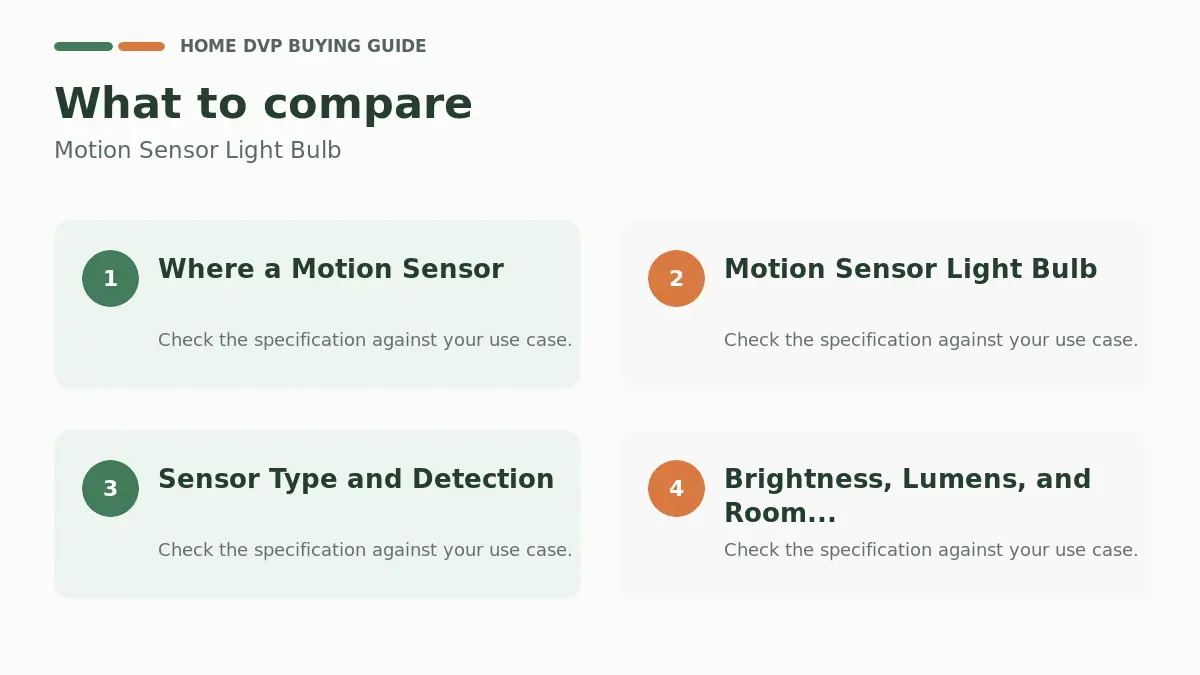
Sensor bulbs work best where the bulb has a clear view of approaching motion and where automatic operation will not surprise occupants. Enclosed shades, metal housings, nearby walls, glass, heat sources, traffic outside the intended zone, and existing dimmers or smart switches can change performance.
| Use location | What to check |
|---|---|
| Garage or utility room | Detection direction, cold-temperature rating, lumen output, fixture openness, and auto-off delay. |
| Porch or exterior entry | Damp or wet-location rating, protected fixture requirements, daylight sensor behavior, and unwanted street detection. |
| Hall or stair area | Sensor coverage from both directions, warm-up behavior, minimum on-time, glare, and safe baseline lighting. |
| Closet | Clearance from stored materials, fixture rating, local electrical rules, and whether the sensor can see through the opening. |
Keep the wall switch on for automatic operation. Do not use a sensor bulb with a dimmer, enclosed fixture, or outdoor location unless the manufacturer explicitly permits that configuration.

Pros
- Requires only a standard medium base fixture for installation
- Operates independently without Wi-Fi or smart home hubs
- Automatically conserves energy by turning off when no motion is present
- Resists weather exposure for reliable outdoor performance
- Allows users to override motion sensing temporarily when needed
Cons
- Requires an E26 base fixture sized for PAR38 bulbs
- Sensor coverage limited to 24 feet may leave larger spaces partially unmonitored
- Relies on ambient darkness to activate so daytime motion goes undetected
The GE LED+ Motion Sensor LED Light Bulbs suit homeowners seeking straightforward outdoor lighting upgrades that respond automatically to movement after sunset.
Based on the listed features the bulbs deliver reliable activation through a 90-degree sensor that covers up to 24 feet while the built-in timer keeps the light on for five minutes following the last detected motion.
Installation involves simply screwing the PAR38 bulbs into any compatible E26 medium base fixture with power on, after which the dusk-to-dawn sensor manages on and off cycles without additional equipment or connections.
These bulbs work well for creating separate motion zones around entrances, pathways, or patios where hands-free illumination improves convenience and security in residential settings.
Potential users should note the fixed detection range and requirement for suitable fixtures, yet the overall design supports long-term outdoor use with energy-efficient LED performance and an optional always-on override mode.
Specifications
| Light Type | LED |
|---|---|
| Additional Features | Energy Efficient, Long Lasting |
| Wattage | 15 watts |
| Bulb Shape Size | PAR38 |
| Bulb Base | E26 Medium |
| Incandescent Equivalent Wattage | 90 Watts |
| Specific Uses For Product | Decoration |
| Light Color | Warm White |
| Voltage | 120 Volts |
| Color Temperature | 3000 Kelvin |
Verify the current product variation before purchase; specifications may change.
Best For / Avoid If
Best for buyers prioritizing
- Requires only a standard medium base fixture for installation
- Operates independently without Wi-Fi or smart home hubs
- Automatically conserves energy by turning off when no motion is present
Consider another option if
- Requires an E26 base fixture sized for PAR38 bulbs
- Sensor coverage limited to 24 feet may leave larger spaces partially unmonitored
- Relies on ambient darkness to activate so daytime motion goes undetected
Motion Sensor Light Bulb Buying Guide
Choosing motion sensor light bulb is different from buying a standard LED bulb. In addition to brightness and color, you need to confirm how the sensor works, whether it needs a downward-facing position, and whether the bulb can be used outdoors or only in protected fixtures. The models we considered include standard A19 bulbs, outdoor PAR38 security flood bulbs, and smart bulbs with app-based motion features.
Sensor Type and Detection Range
Most traditional motion sensor light bulb options use PIR motion sensing, which detects body heat and movement. This style is common in products such as the Sengled Motion Sensor Light Bulbs, Aukora Motion Sensor LED Light Bulbs, Torkase Motion Sensor Light Bulbs, TORCHSTAR A19 Motion Sensor LED Light Bulb, and GE LED+ Motion Sensor LED Light Bulbs. PIR bulbs are usually simple to install, but the sensor must be exposed and aimed properly.
A common mistake is installing a motion bulb inside a covered, frosted, recessed, or upward-facing fixture. Many PIR bulbs rely on a sensor at the tip of the bulb, so a glass shade or enclosed housing can block detection. For garage ceilings, porch fixtures, and basement lights, look for an open fixture where the sensor faces the walking path.
Smart bulbs work differently. The PHILIPS Smart LED Full Color Light Bulb uses app-based motion activation through compatible smart features rather than a visible PIR sensor on the bulb itself. That can be appealing for smart home buyers, but it is not the same plug-and-play experience as a basic dusk-to-dawn motion bulb.
| Sensor Style | What It Means for Homeowners |
|---|---|
| PIR motion sensing | Good for porches, garages, closets, stairs, and utility areas when the sensor is exposed. |
| Dusk-to-dawn plus motion | Helps prevent daytime activation and saves energy in entryways and outdoor fixtures. |
| Smart app-based motion | Useful for connected homes, schedules, scenes, and voice control, but setup is more involved. |
Brightness, Lumens, and Room Size
Brightness should match the task. A hallway or stair landing often needs enough light to move safely, while a garage, porch, or storage room may benefit from stronger output. The Sengled A19 60W-equivalent models provide a balanced level for general pathways, while the Sengled higher-output version, Aukora bulb, and Torkase bulb are better suited to areas where stronger visibility matters.
For outdoor security, flood-style bulbs such as GE LED+ Motion Sensor LED Light Bulbs can be a better fit than standard A19 bulbs because the beam pattern is designed for broader coverage. However, flood bulbs need compatible outdoor-rated fixtures and the proper socket orientation. Always compare the bulb shape to the fixture before buying.
More light is not always better. In a small hallway or bathroom, an overly bright daylight bulb can feel harsh at night. For bedrooms, late-night routes, and shared hallways, a softer or lower-output option may be more comfortable.
Color Temperature and Comfort
Color temperature affects how a space feels. Soft white bulbs are warmer and often more comfortable near bedrooms, entry halls, and living spaces. Daylight or pure white bulbs can make garages, basements, laundry rooms, and outdoor walkways feel clearer and more task-friendly.
The Sengled Motion Sensor Light Bulbs are available in soft white and daylight-style versions, which makes them easier to match to the room. Aukora and TORCHSTAR lean toward cooler daylight or pure white output, which is useful when visibility is the priority. GE LED+ outdoor flood bulbs use a warm white tone, making them a good option when you want security lighting that is less stark than cool daylight.
If you are replacing several bulbs across a home, avoid mixing very warm and very cool bulbs in the same visible area. For more room-by-room guidance, see our floor lamp bulb guide, which explains how bulb tone and output affect comfort and usability.
Fixture Compatibility and Installation
Most motion sensor light bulb options in this category are designed for standard E26 fixtures, but that does not mean every fixture is suitable. Many models specifically warn against enclosed, recessed, frosted, or covered fixtures because the sensor needs a clear line of sight. Before buying, check whether your fixture points downward, sideways, or upward.
For porches and garages, open fixtures usually give the most reliable activation. For decorative lanterns, the bulb may physically fit but fail to sense motion through glass or plastic panels. In rental homes, screw-in motion bulbs can be a practical upgrade because they usually do not require rewiring or permanent changes.
- Choose downward-facing open fixtures for the most predictable PIR performance.
- Avoid enclosed shades unless the manufacturer clearly supports that setup.
- Keep the wall switch on so the bulb can monitor motion.
- Confirm whether outdoor use requires a protected or wet-rated fixture.
Indoor vs Outdoor Use
Indoor motion bulbs are great for closets, basements, stairs, laundry rooms, pantries, and hallways. Outdoor models should be chosen more carefully because moisture, temperature swings, and fixture exposure can affect performance. GE LED+ Motion Sensor LED Light Bulbs are positioned as outdoor security floodlights, while several A19 options are listed for indoor and outdoor open-fixture use.
When using motion sensor light bulb outside, consider the bulb shape and fixture rating together. A standard A19 bulb may work well on a covered porch, but it may not be appropriate for a fully exposed floodlight fixture. For broader home lighting projects, the Lighting & Fans category includes additional guides that can help with fixture planning.
Also think about unwanted activation. A bulb aimed toward a busy sidewalk, tree branches, or driveway traffic may turn on more often than expected. Adjusting fixture angle and sensor direction can make a major difference.
Energy Efficiency and Auto-Off Timing
One of the biggest advantages of motion sensor light bulb is that it can reduce wasted light in rooms where people forget the switch. Dusk-to-dawn activation helps the bulb stay off during bright conditions, while motion-based auto-off keeps it from running all night after someone passes through.
Auto-off timing varies by model. Some bulbs shut off quickly after motion stops, while others stay on longer. A shorter delay works well in hallways and closets, but a longer delay may be more convenient in garages or storage areas where you are working intermittently.
Energy efficiency should be viewed alongside convenience. A very efficient bulb that constantly triggers because it is poorly aimed may not perform as expected. The best setup combines an efficient LED bulb, a suitable fixture, and a location where the sensor sees people instead of random movement.
Smart Features vs Simple Motion Activation
Simple motion bulbs are ideal for homeowners who want quick results. Screw in the bulb, keep the switch on, and the light activates when movement is detected in low light. This is the simplest route for garages, porches, basements, and stairways.
Smart bulbs such as the PHILIPS Smart LED Full Color Light Bulb add app control, color adjustment, scheduling, voice control, and Matter-compatible smart home support. That makes them more flexible for living rooms, bedrooms, and connected lighting scenes. The tradeoff is that they require app setup and may depend on Wi-Fi or smart platform compatibility.
If your priority is basic home safety, a traditional PIR motion bulb is usually easier. If your priority is automation, mood lighting, and connected control, a smart bulb may be worth the extra setup. For desk and task lighting comfort, our desk lamp eye protection guide offers more advice on reducing glare and eye strain.
Safety, Certifications, and Reliability
Safety matters with any lighting product. Look for clear wattage information, fixture compatibility notes, and certifications when available. TORCHSTAR A19 Motion Sensor LED Light Bulb lists UL, FCC, and DOE compliance, while GE emphasizes wet-rated outdoor use for its floodlight bulbs.
Reliability also depends on installation. A motion bulb installed behind a decorative shade may seem defective when the real problem is a blocked sensor. Before returning a bulb, test it in darkness with the sensor exposed and pointed toward the expected walking path.
For older adults, kids, and anyone carrying laundry, groceries, or tools, automatic lighting can reduce trips and fumbling for switches. That makes these bulbs a practical home maintenance upgrade, not just a convenience feature.
Our Research Methodology & Why You Can Trust Us
We evaluated these products based on published specifications, motion-sensing capabilities, and practical homeowner use cases. Because lighting products vary widely in format and function, we focused our recommendations on bulbs that clearly deliver hands-free motion detection in a standard screw-in form factor. Products that function primarily as standard bulbs, floodlights without integrated sensors, or fixture-replacement systems were noted but are not the focus of this guide.
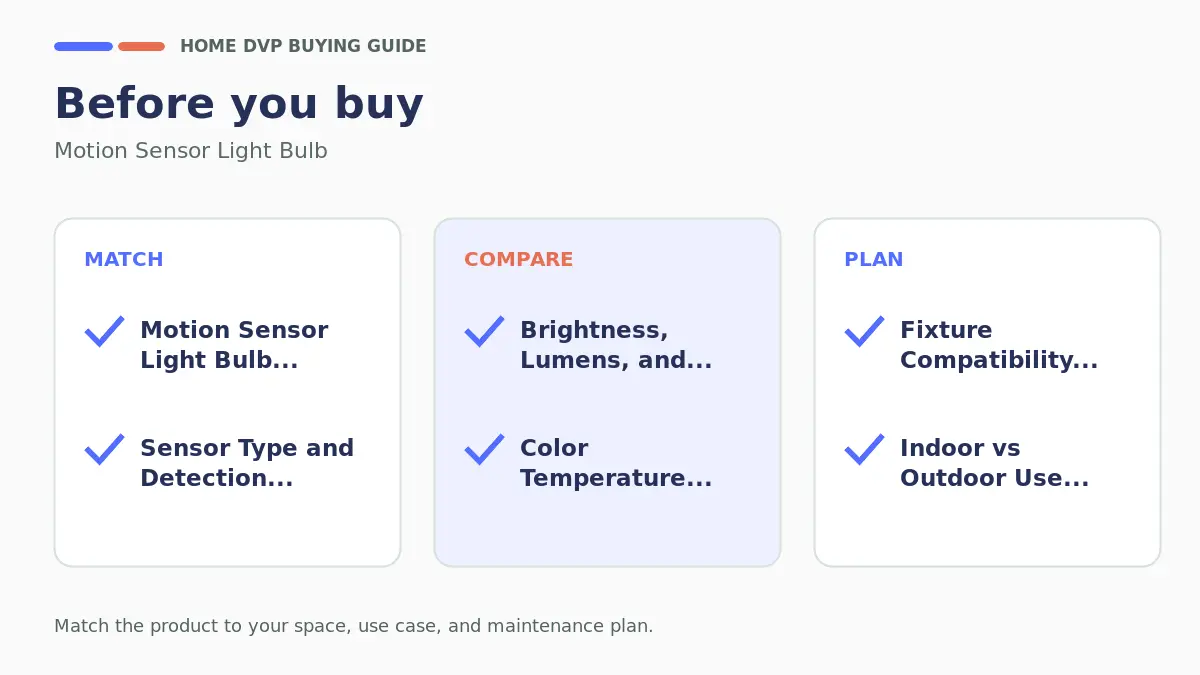
Our ranking criteria included performance, features, build quality, ease of use, durability, safety, value, reliability, and fit for common home installations. We gave extra consideration to bulbs with clear installation guidance, dusk-to-dawn operation, open-fixture compatibility notes, outdoor suitability where applicable, and useful brightness levels for real rooms.
Based on our detailed comparison, we also considered likely homeowner pain points: blocked sensors, bulbs that do not activate during daylight, compatibility with enclosed fixtures, and confusion between smart motion features and built-in PIR sensors. This guide is updated during July 2026 to keep the advice aligned with current product data, several price tiers positioning, and available options from TORCHSTAR, AUKORA, LUXRITE, and other brands.
Final Thoughts
For a straightforward overall pick, the Sengled Motion Sensor Light Bulbs are a strong choice because they combine PIR motion sensing, dusk-to-dawn operation, standard A19 format, and practical brightness for porches, garages, hallways, and stairs. Choose the warmer version for softer residential lighting or the daylight version when visibility is more important.
For a value-focused option, Aukora Motion Sensor LED Light Bulbs offer strong brightness and simple dusk-to-dawn motion activation for front doors, garages, basements, storage rooms, and closets. Torkase Motion Sensor Light Bulbs are another practical homeowner pick if you want high output, broad indoor and outdoor use, and clear fixture-orientation guidance.
For outdoor security, GE LED+ Motion Sensor LED Light Bulbs are better suited to floodlight-style fixtures and weather-aware installations. For smart home buyers, the PHILIPS Smart LED Full Color Light Bulb is the most flexible connected option, especially if you want color, app control, voice compatibility, and automation rather than a basic stand-alone motion bulb.
FAQ
What should I look for when choosing a motion sensor light bulb?
Start with fixture compatibility, sensor placement, brightness, color temperature, and whether the bulb is meant for indoor or outdoor use. For most homes, an open fixture with the sensor facing downward gives the most reliable performance.
Are higher-end motion sensor light bulbs worth it?
Higher-end options may be worth it if they add outdoor ratings, smart controls, better automation, or a floodlight design for security use. If you only need a hallway, closet, or basement light, a simpler PIR dusk-to-dawn bulb may be the better value.
Why do some motion sensor light bulbs not turn on during the day?
Many models include a dusk-to-dawn sensor that keeps the light off in bright conditions to save energy. To test the bulb, cover the light sensor or wait until the room is dark, then walk within the detection area.
Can motion sensor light bulbs be used outdoors?
Some options are suitable for outdoor use, especially in open or properly rated fixtures, but not every bulb is built for wet or exposed locations. For exterior upgrades, check the product rating and fixture type, and review broader lighting guidance in our LED ceiling light installation guide when planning other home lighting work.
How long should a quality motion sensor light bulb last?
Quality LED motion bulbs should last much longer than traditional incandescent bulbs when installed correctly. Heat buildup, enclosed fixtures, moisture exposure, and poor sensor placement can shorten usable life or make the bulb seem unreliable.
Which brands make reliable motion sensor light bulbs?
Our research found relevant options from TORCHSTAR, AUKORA, LUXRITE, and other brands, with different strengths across simple PIR bulbs, outdoor security bulbs, and smart lighting. The right brand depends on whether you prioritize easy setup, brightness, outdoor durability, or connected home features.
Independent Source and Research Note
For an independent technical reference, see the U.S. Department of Energy research on residential PIR occupancy sensors. Confirm current specifications, compatibility, warranty terms, safety instructions, and availability before purchasing or installing a product.