Painting is the project that looks simple on Saturday morning and consumes the whole weekend by Sunday night. Rollers splatter, brushes leave streaks, and a whole room of cutting-in feel like slow torture. A paint sprayer doesn’t just speed that up — it changes the job from an afternoon of shoulder fatigue into a smooth, even pass over the wall. But only if you choose the right kind of sprayer for the paint you actually use.
We compared the listed options drawn from brands such as Rust-Oleum, HomeRight, VONFORN, Wagner, InoKraft, Tilswall to help you match performance to real home projects. Our comparison focuses on specifications, build features, ease of use, maintenance needs, and suitability for DIY versus larger renovation work. Whether you are refreshing a single room or tackling exterior surfaces, understanding capacity, spray patterns, and cleanup requirements makes a practical difference. For more home painting essentials, explore our Paint & Supplies category.
This buying guide walks through the criteria that matter most, then highlights how popular models align with different project sizes and skill levels.
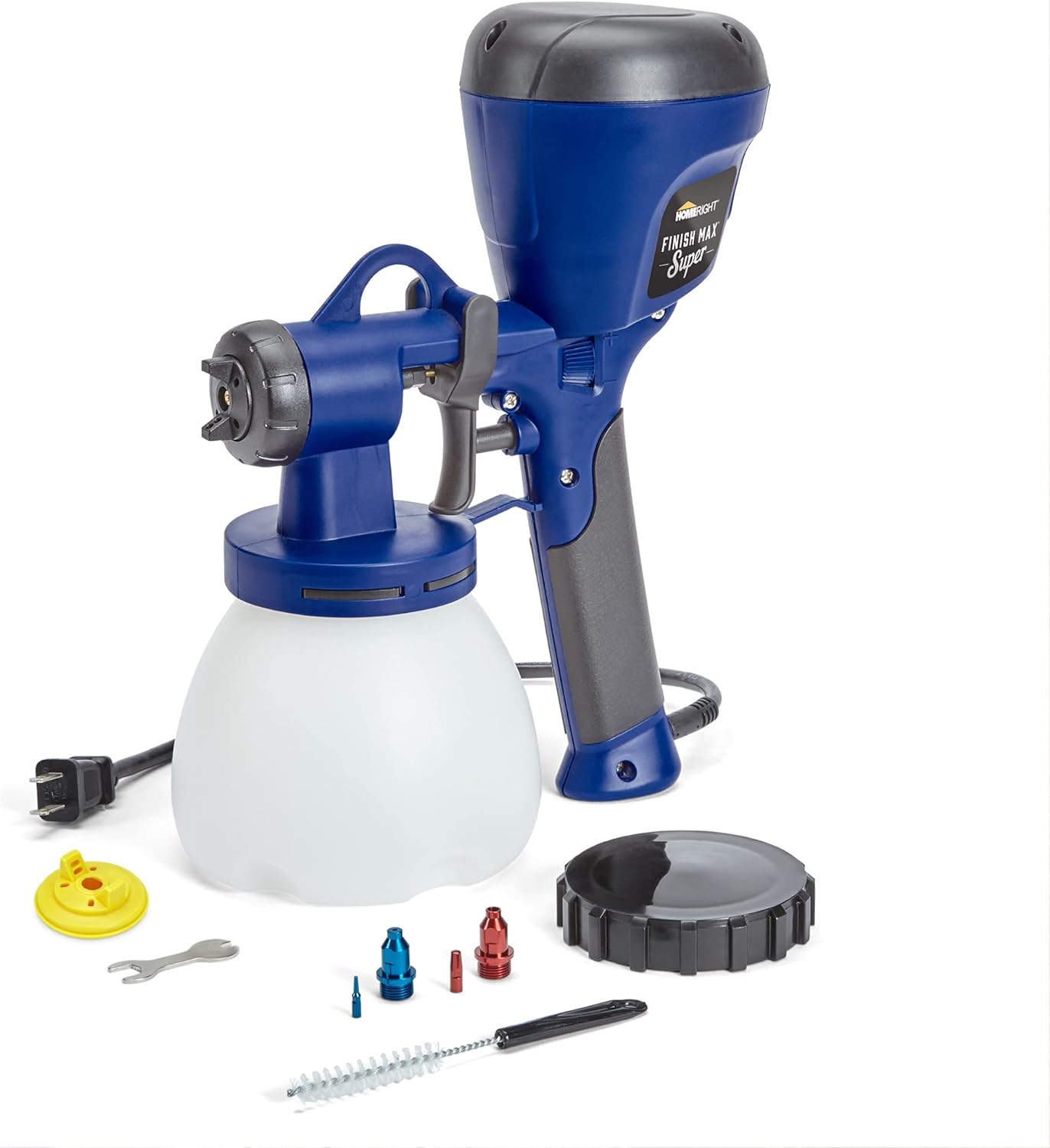
Pros
- Works with a wide range of common DIY coatings from stains and sealers to latex paints and primers
- Adjustable air cap and flow control support different project shapes and coverage needs
Cons
- May not suit users who need contractor-grade continuous capacity for full-time professional work
- First-time sprayer users may need extra practice to dial in flow and pattern for best results
Best For / Avoid If
Best for buyers prioritizing
- Works with a wide range of common DIY coatings from stains and sealers to latex paints and primers
- Adjustable air cap and flow control support different project shapes and coverage needs
- Includes three brass tips sized for primer or latex, latex or chalk paint, and thinner stains or sealers
Consider another option if
- May not suit users who need contractor-grade continuous capacity for full-time professional work
- First-time sprayer users may need extra practice to dial in flow and pattern for best results
- Tip selection and cleaning steps add setup time compared with a simple brush or roller
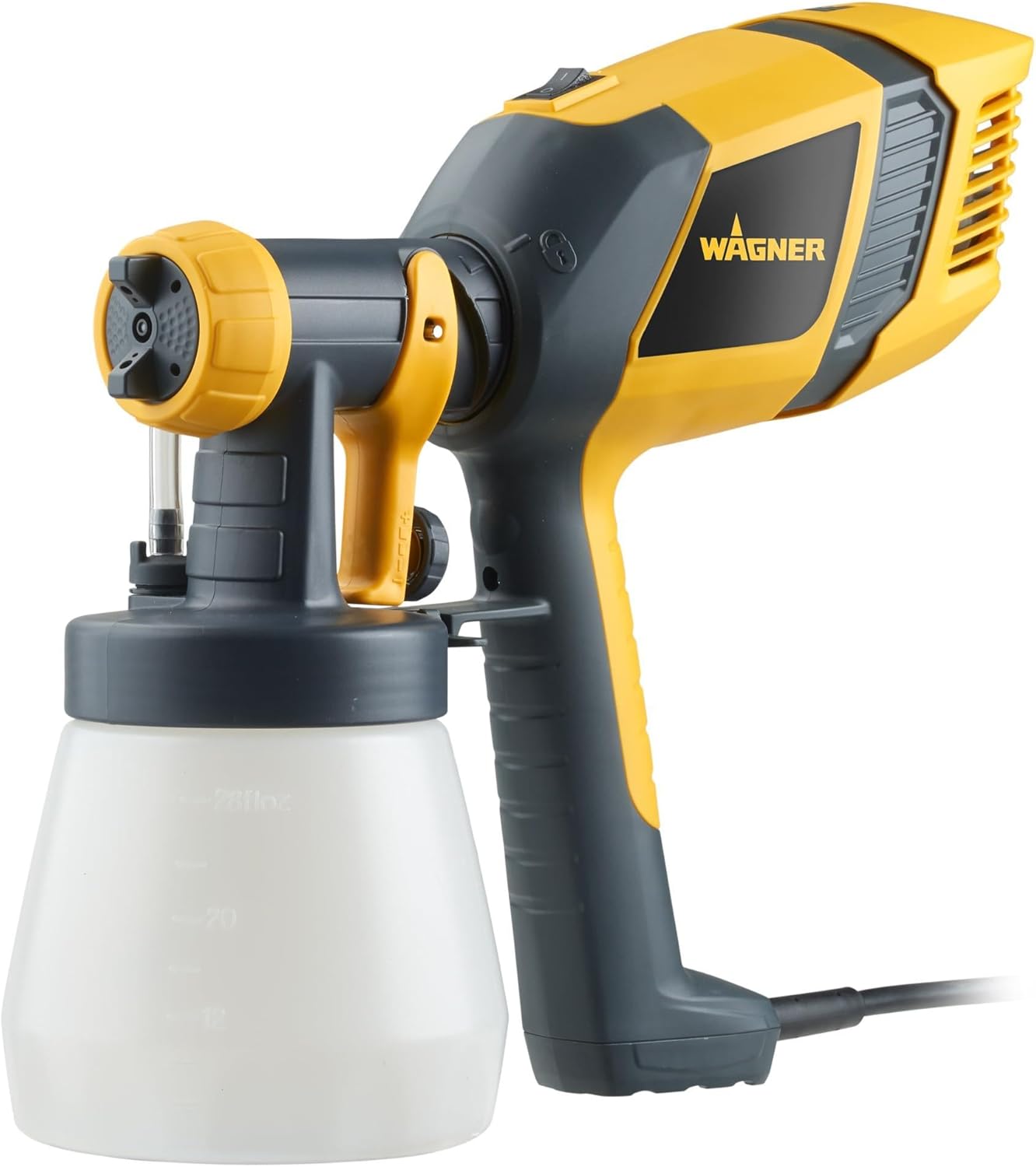
Pros
- Can cover a 6 ft. by 8 ft. area in as little as four minutes based on listed performance details
- Gives flexible control through horizontal, vertical, and round spray patterns
Cons
- Intended mainly for light-bodied materials, so heavier coatings may fall outside its design scope
- Better matched to small and medium projects than continuous large-scale contractor work
Best For / Avoid If
Best for buyers prioritizing
- Can cover a 6 ft. by 8 ft. area in as little as four minutes based on listed performance details
- Gives flexible control through horizontal, vertical, and round spray patterns
- Supports both first-time and experienced users with straightforward operation
Consider another option if
- Intended mainly for light-bodied materials, so heavier coatings may fall outside its design scope
- Better matched to small and medium projects than continuous large-scale contractor work
- First-time sprayer users may need a short practice period to dial in flow and pattern settings

Pros
- Compatible latex and acrylic coatings can be sprayed without thinning using the AtoMax 515 tip
- Beginner setup guidance and hose-based flushing support first-time DIY users
Cons
- Corded electric design may limit mobility compared with battery-powered alternatives
- Unit weight of about 22.6 lb may feel bulky for frequent transport or tight storage
Best For / Avoid If
Best for buyers prioritizing
- Compatible latex and acrylic coatings can be sprayed without thinning using the AtoMax 515 tip
- Beginner setup guidance and hose-based flushing support first-time DIY users
- Included kit covers gun, tip, hose, extension, goggles, cleaning tools, and wrenches
Consider another option if
- Corded electric design may limit mobility compared with battery-powered alternatives
- Unit weight of about 22.6 lb may feel bulky for frequent transport or tight storage
- May not suit users who need contractor-grade capacity beyond typical DIY project sizes

Pros
- Interchangeable nozzles expand use across multiple residential painting tasks
- Blowing joint and cleaning connector improve prep and cleanup workflow
Cons
- May not suit users who need contractor-grade capacity for large commercial jobs
- Advanced users may want more specialized controls beyond the listed patterns and nozzles
Specifications
| Brand Name | FLIMRER |
|---|---|
| Recommended Uses For Product | Painting |
| Included Components | Nozzle,Viscosity Cup,Cleaning Needle,Cleaning Brush,Dust-Blowing Attachment,Cleaning Connector,Paint Filter,User Manual |
| Model Name | FP002 |
| Model Number | FP002 |
| Manufacturer Part Number | FP002 |
| Manufacturer | FLIMRER |
| Best Sellers Rank | #35,043 in Tools & Home Improvement (See Top 100 in Tools & Home Improvement) #76 in Power Paint & HVLP Sprayers |
| ASIN | B0GY831P4Z |
| Customer Reviews | 4.6 4.6 out of 5 stars (15) 4.6 out of 5 stars |
Verify the current product variation before purchase; specifications may change.
Best For / Avoid If
Best for buyers prioritizing
- Interchangeable nozzles expand use across multiple residential painting tasks
- Blowing joint and cleaning connector improve prep and cleanup workflow
- Beginner-friendly tool-free assembly lowers the barrier for first-time users
Consider another option if
- May not suit users who need contractor-grade capacity for large commercial jobs
- Advanced users may want more specialized controls beyond the listed patterns and nozzles
- First-time sprayers may need practice to master even pattern control

Pros
- Nozzle set covers both precision edges and wider passes on common household surfaces.
- Side-fill system simplifies mid-job top-ups without rotating the tank.
Cons
- Paint must be thinned and checked with the viscosity cup for smooth atomization.
- Corded power and hose still restrict free movement compared with fully wireless sprayers.
Best For / Avoid If
Best for buyers prioritizing
- Nozzle set covers both precision edges and wider passes on common household surfaces.
- Side-fill system simplifies mid-job top-ups without rotating the tank.
- Compatible with water-based paints, primers, varnishes, and many solvent-based finishes when thinned correctly.
Consider another option if
- Paint must be thinned and checked with the viscosity cup for smooth atomization.
- Corded power and hose still restrict free movement compared with fully wireless sprayers.
- Best matched to small and medium projects rather than contractor-scale continuous work.
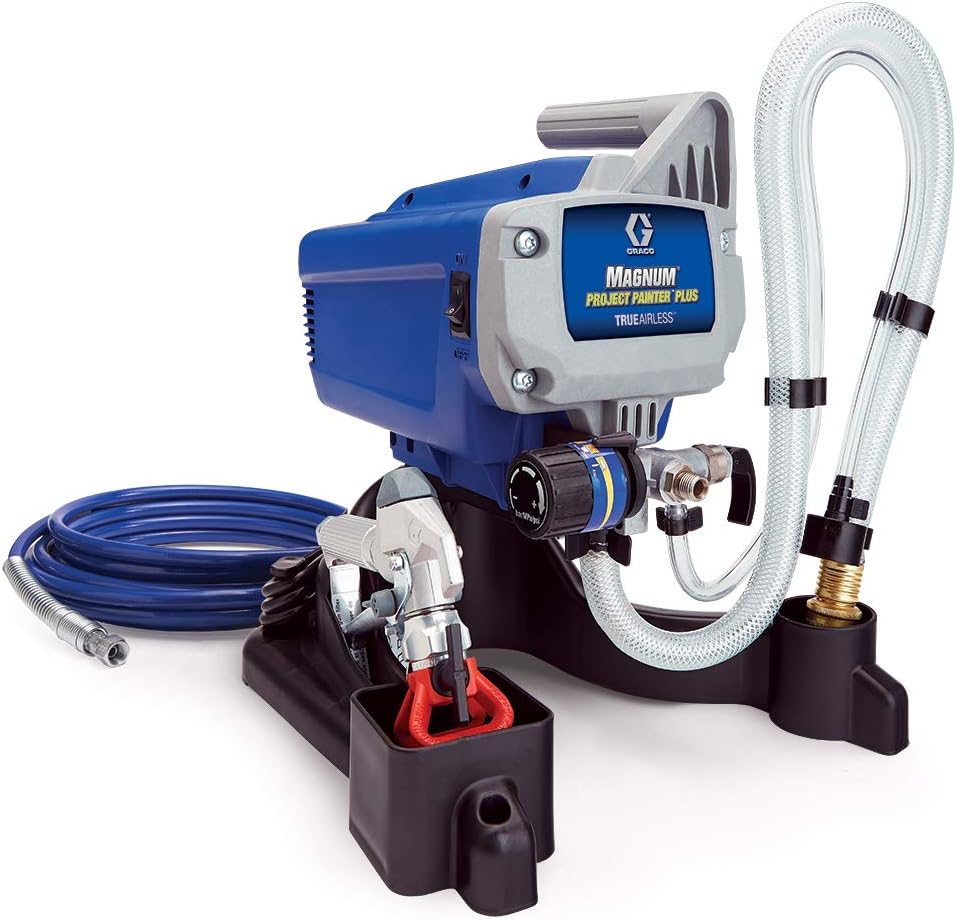
Pros
- Well matched to common DIY surfaces such as decks, fences, ceilings, and sheds
- Flexible suction tube simplifies feeding from everyday paint containers
Cons
- Guidance around 5-gallon projects may limit users with larger continuous workloads
- First-time airless users may need practice with technique, masking, and thorough cleaning
Specifications
| Brand Name | Graco |
|---|---|
| Recommended Uses For Product | Painting |
| Included Components | SG2 Metal Spray Gun, TrueAirless 515 Spray Tip, Spray Tip Guard, 1/4 in x 25 ft DuraFlex Hose, 8 oz Pump Armor Storage Fluid, Quick Start-Up Guide and Manual |
| Model Name | Graco Magnum Project Painter Plus Paint Sprayer |
| Model Number | 257025 |
| Manufacturer Warranty Description | 1 year limited warranty |
| UPC | 850011440858 633955562516 |
| Global Trade Identification Number | 00633955562516 |
| Manufacturer Part Number | 257025 |
| Item Type Name | Graco Magnum 257025 Project Painter Plus Paint Sprayer |
Verify the current product variation before purchase; specifications may change.
Best For / Avoid If
Best for buyers prioritizing
- Well matched to common DIY surfaces such as decks, fences, ceilings, and sheds
- Flexible suction tube simplifies feeding from everyday paint containers
- Package includes essential gun, tip, hose, and cleanup-related accessories
Consider another option if
- Guidance around 5-gallon projects may limit users with larger continuous workloads
- First-time airless users may need practice with technique, masking, and thorough cleaning
- Jobs beyond the included hose length may require additional hose accessories
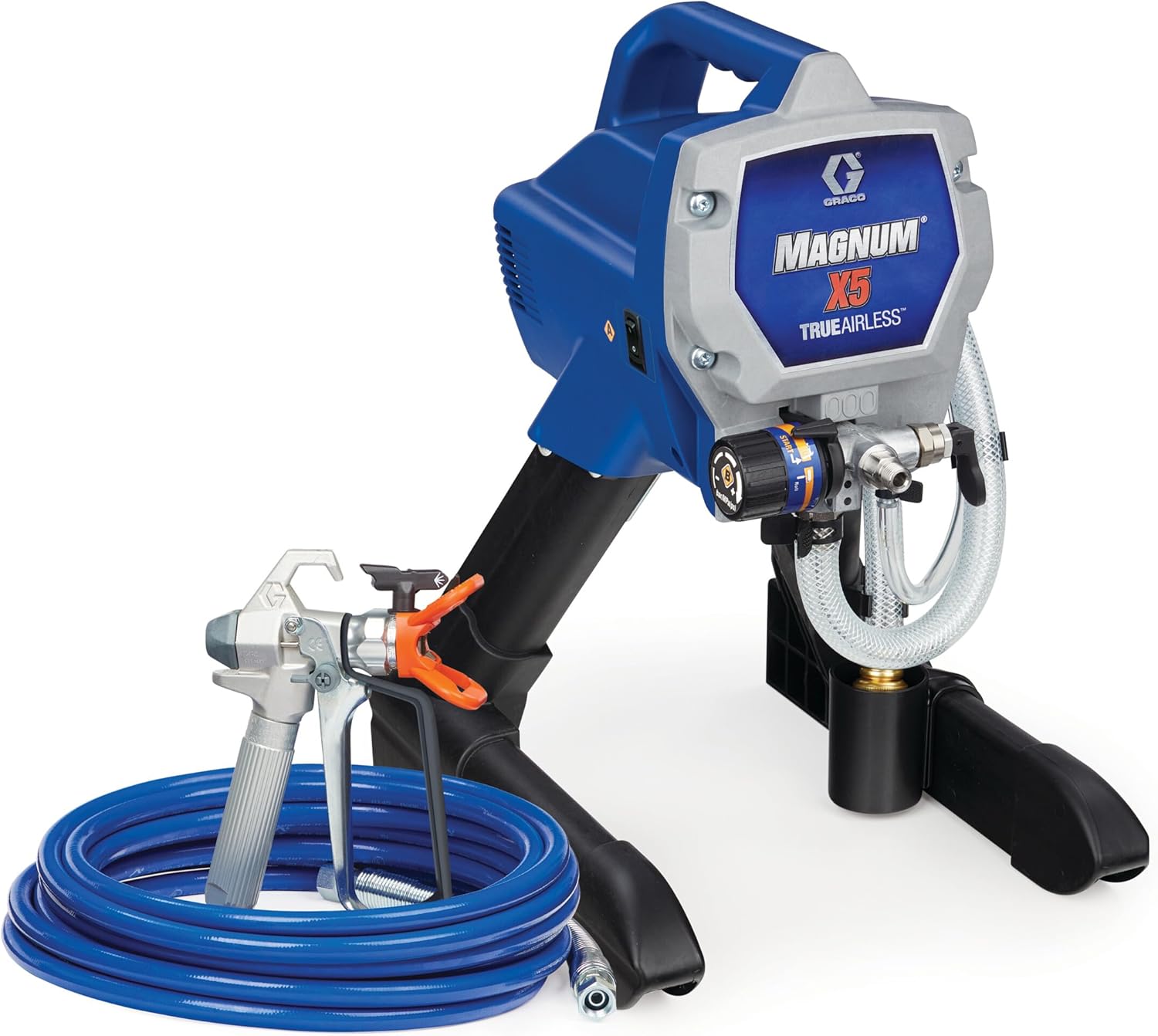
Pros
- 3000 psi maximum pressure supports solid atomization on common interior and exterior coatings
- Direct bucket spraying cuts transfer mess and keeps work flowing
Cons
- Capacity targets medium work, so whole-house or contractor-volume jobs may need a higher-output model
- First-time airless users may need practice with tip selection and spray technique for even results
Best For / Avoid If
Best for buyers prioritizing
- 3000 psi maximum pressure supports solid atomization on common interior and exterior coatings
- Direct bucket spraying cuts transfer mess and keeps work flowing
- 75 ft hose reach improves access on multi-level surfaces without constant repositioning
Consider another option if
- Capacity targets medium work, so whole-house or contractor-volume jobs may need a higher-output model
- First-time airless users may need practice with tip selection and spray technique for even results
- Hose and unit still require dedicated storage space between projects

Pros
- Ergonomic soft-touch trigger supports more comfortable spraying
- Compatible with most standard spray paint cans
Cons
- Designed for aerosol cans, so it will not replace a full paint sprayer system
- May not fit every specialty can size or nozzle style
Specifications
| Brand Name | Rust-Oleum |
|---|---|
| UPC | 020066164539 |
| Manufacturer | Rust-Oleum |
| Part Number | 1 |
| Model Number | 241526 |
| Item Type Name | Comfort Grip |
| Included Components | Comfort Grip |
| Unit Count | 1.0 Count |
| Best Sellers Rank | #1,295 in Tools & Home Improvement (See Top 100 in Tools & Home Improvement) #2 in Power Paint & HVLP Sprayers |
| ASIN | B0015RJ41I |
Verify the current product variation before purchase; specifications may change.
Best For / Avoid If
Best for buyers prioritizing
- Ergonomic soft-touch trigger supports more comfortable spraying
- Compatible with most standard spray paint cans
- Helps minimize hand fatigue on longer painting sessions
Consider another option if
- Designed for aerosol cans, so it will not replace a full paint sprayer system
- May not fit every specialty can size or nozzle style
- Users with frequent large-scale projects may still want dedicated spray equipment

Pros
- Dual nozzles support both large-area spraying and fine cabinet or furniture finishing
- Strong enough for many unthinned latex paints and stains right from the can with the iSpray nozzle
Cons
- May not suit users who need contractor-grade continuous capacity for very large commercial jobs
- First-time sprayer users may need practice to dial in settings and avoid overspray on detailed work
Specifications
| Brand Name | Wagner |
|---|---|
| Recommended Uses For Product | Painting |
| Included Components | Flexio 595, iSpray Nozzle, Detail Finish Nozzle, Cup Liner |
| Model Name | Flexio 595 |
| Model Number | 2419307 |
| Manufacturer Warranty Description | 1 year |
| UPC | 024964300778 |
| Manufacturer Part Number | 2419307 |
| Item Type Name | Flexio 595 HVLP Paint Sprayer |
| Manufacturer | Wagner Spraytech |
Verify the current product variation before purchase; specifications may change.
Best For / Avoid If
Best for buyers prioritizing
- Dual nozzles support both large-area spraying and fine cabinet or furniture finishing
- Strong enough for many unthinned latex paints and stains right from the can with the iSpray nozzle
- Multiple power, flow, and pattern adjustments help tailor the spray for different coatings
Consider another option if
- May not suit users who need contractor-grade continuous capacity for very large commercial jobs
- First-time sprayer users may need practice to dial in settings and avoid overspray on detailed work
- Cleanup still requires careful rinsing of nozzles and parts even with liners and simple disassembly
Best Paint Sprayer Buying Guide
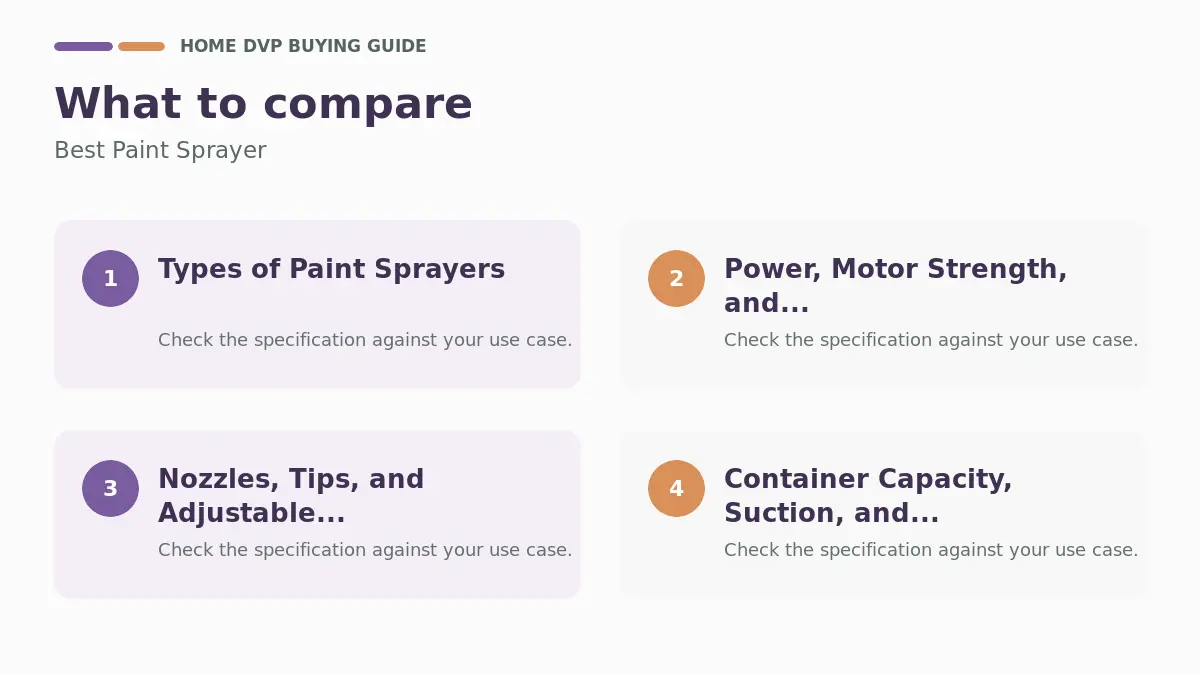
Selecting the best paint sprayer requires more than picking the highest wattage number on the box. Home projects vary widely in surface type, paint thickness, indoor versus outdoor conditions, and cleanup tolerance. After carefully analyzing the available specifications, we organized the most important decision factors for homeowners and DIYers. Use the sections below to match features to the work you actually do around the house.
Types of Paint Sprayers for Home Projects
Most consumer and prosumer models fall into HVLP (high-volume low-pressure) handheld units or airless systems that draw from a bucket. HVLP sprayers typically excel at furniture, cabinets, doors, trim, and smaller walls where control and lower overspray matter. Airless sprayers push higher pressure for faster coverage on larger interior rooms, exterior walls, fences, and decks. Based on feature sets, many HVLP options include multiple nozzles and pattern adjustments, while airless units emphasize hose reach and the ability to spray unthinned latex in many cases.
A common mistake is buying an airless unit for fine furniture work or an underpowered handheld for whole-house exteriors. If most of your projects are cabinets, dressers, and garden furniture, an HVLP design with brass tips often delivers better finish control. For whole-room or multi-gallon jobs, airless models with flexible suction tubes and longer hose support reduce refills and repositioning. Consider your typical project volume first, then evaluate power and accessories.
Some kits also include dust-blowing attachments or cleaning connectors that make surface prep and post-job cleanup simpler. These extras matter for renters and homeowners who paint occasionally and want less mess. When comparing types, also check voltage notes and whether the unit is intended for 110-120V household power only.
Power, Motor Strength, and Spray Speed
Motor wattage and pressure ratings influence how quickly you can cover area and which coatings you can atomize effectively. Many handheld electric models list motors in the 450W to 1000W range, while airless units often advertise PSI ratings around 3000 along with flow rates such as 0.29 GPM. Higher power generally supports thicker materials and larger surfaces, but only if the nozzle and pump design match the coating.
Our research indicates that DIY homeowners benefit most when power is paired with adjustable flow control. Models that let you dial material output help avoid runs on vertical walls and allow finer work on trim. Claims of covering large square footage in short time windows are useful only when viscosity is correctly managed and the correct tip is installed. Always match power claims to the coatings you plan to use most often, such as latex, stain, primer, or enamel.
For occasional users, a mid-range motor with solid accessories often outperforms a higher-watt unit that is hard to clean or poorly supported. If you regularly paint multi-room interiors or exterior fencing, prioritize systems designed for multi-gallon projects and longer hose support so performance does not drop as you move farther from the base unit.
Nozzles, Tips, and Adjustable Spray Patterns
Nozzle size and pattern flexibility determine finish quality as much as motor power. Many HVLP kits include three or four interchangeable brass or copper nozzles in common sizes such as 1.0 mm, 1.5 mm, 2.0 mm, and 3.0 mm, with some offering six sizes for finer control. Airless systems typically rely on reversible carbide tips sized for latex and stain. Horizontal, vertical, and circular patterns let you follow surface orientation and reduce waste.
A frequent homeowner error is leaving the wrong tip installed for the paint viscosity. Thicker latex usually needs a larger orifice, while stains and sealers perform better with smaller tips. Look for kits that include a viscosity cup and clear nozzle guidance so setup is less guesswork. Brass tips generally outlast basic plastic alternatives for repeated DIY use.
Adjustable air caps and flow knobs further refine the spray fan. For cabinets and furniture, a narrower circular pattern often produces cleaner edges. For fences and walls, a wider horizontal or vertical fan speeds coverage. Based on the product data provided, models that package multiple nozzles plus cleaning needles and brushes reduce the chance of clogs between projects.
Container Capacity, Suction, and Refill Frequency
Cup or container size affects how often you stop to refill. Handheld units commonly offer around 1300 ml to 1400 ml (roughly 47 oz) containers, which suits furniture, doors, and moderate wall sections. Airless sprayers that draw directly from a 1-gallon or 5-gallon bucket eliminate cup refills and support larger continuous jobs. Flexible suction tubes make bucket spraying more practical on stairs or outdoor surfaces.
Side-feed designs on some HVLP guns improve paint utilization by reducing the need to invert or waste material at the bottom of a cup. Detachable containers also simplify cleaning. If you plan multi-hour sessions, prioritize either a large cup with easy refill access or a true bucket-draw system rated for projects up to 5 or 10 gallons per the manufacturer guidance.
Consider storage as well. Large airless units take more garage space, while compact handheld sprayers store easily in a closet or on a shelf. Balance capacity against how often you paint. Occasional furniture refinishers rarely need 5-gallon draw capability, while whole-house renovators benefit from it immediately.
Ease of Cleaning, Clog Prevention, and Maintenance
Cleanup is where many first-time buyers become frustrated. Paint left in tips, tubes, and pumps hardens quickly. Models that include cleaning brushes, needles, filter papers, and faucet-compatible cleaning connectors reduce the time spent flushing residue. Some airless designs feature flush valves that connect to a garden hose so you can rinse without full pump disassembly.
Tool-free assembly and detachable parts make maintenance more realistic for homeowners who paint a few times per year. Always clean within a short window after use, especially with latex. Viscosity cups and filters help prevent clogs before they start. Our comparison of listed features shows that kits bundling filters, brushes, and needles tend to support longer service life when users follow basic care steps.
If you share tools with family members or store equipment for months between projects, prioritize clear manuals, spare seals where offered, and simple disassembly. Neglecting cleanup is the most common reason otherwise solid sprayers stop performing well.
Portability, Hose Length, Weight, and Reach
Reach and handling affect fatigue and finish consistency. Split-body HVLP designs keep the motor off the gun and use a hose so the handpiece stays lighter during overhead or extended sessions. Power cords and air hoses around 98 to 118 inches expand the working radius without constant outlet changes. Airless systems often support 25 ft base hoses and can accept longer extensions up to 50 or 75 ft for second-story peaks and eaves.
Tip extensions of about 12 inches help reach ceilings and high trim without tall ladders in every case. 360-degree swivels reduce hose kinking in corners. Weight matters for continuous spraying; lighter handpieces or strap-supported motor units reduce wrist strain. When evaluating portability, also consider whether the unit is easy to move between rooms or outdoor work areas.
For multi-level homes, hose length and extension accessories often matter more than peak motor numbers. Pairing a capable sprayer with proper ladders and surface prep tools, including reliable cordless drills for home use when hanging drop cloths or repairing trim, improves overall project flow.
Paint Compatibility, Viscosity, and Thinning
Not every sprayer handles every coating equally. Many HVLP units perform best with properly thinned materials and include a viscosity cup for measurement. Some airless models advertise thinning-free spraying of latex and acrylic when paired with the correct tip. Always verify manufacturer guidance for oil-based, water-based, chalk paint, milk paint, primers, sealers, polyurethane, and stains.
High viscosity compatibility ratings (for example, support up to higher din-S values on some models) expand the range of materials you can apply with less thinning. Over-thinning can weaken coverage and cause runs, while under-thinning causes spitting and clogs. Using the included filters and matching nozzle size to the coating is essential for consistent atomization.
If your projects mix furniture finishes and house paint, choose a kit with multiple nozzles and clear material charts. For primarily latex wall and fence work, prioritize systems designed to pull unthinned paint from the can or bucket when the specifications support it.
Project Size Fit, Skill Level, and Safety Features
Match capacity claims to your real workload. Units ideal for projects up to 5 gallons suit many DIY interiors and small exteriors. Models rated for up to 10 gallons better support whole-home or multi-structure seasons. Beginners usually do better with tool-free setup, clear quick-start guides, and moderate power that is easier to control. More experienced remodelers may prefer higher pressure and longer hose support.
Safety and usability extras such as dual insulation, adjustable pressure, soft triggers, and built-in LED lights for low-visibility corners improve confidence. Always wear appropriate protection, mask off adjacent surfaces, and maintain ventilation. For bathroom or kitchen upgrades that involve painting cabinets or walls near fixtures, coordinate your painting plan with other home projects such as selecting a bathroom vanity so finishes and timelines align.
Also plan storage and accessory organization. Keeping nozzles, filters, and cleaning tools together prevents lost parts and rushed reassembly. A simple hardware bin or shelf near your other hardware supplies keeps everything ready for the next weekend project.
| Project Type | Preferred Style | Key Features to Prioritize |
|---|---|---|
| Furniture, cabinets, trim | HVLP handheld | Multiple nozzles, pattern control, easy clean |
| Interior rooms, doors | HVLP or compact airless | Adjustable flow, decent container or suction |
| Fences, decks, exteriors | Airless or high-power HVLP | Bucket draw, hose length, higher coverage rate |
| Whole-home renovation | Airless with hose support | Multi-gallon capacity, tip extensions, durable tips |
Our Research Methodology & Why You Can Trust Us
At Home DVP we approach best paint sprayer comparisons with transparent, specification-first analysis rather than unverified claims. We evaluate listed motor power, pressure, container or suction design, nozzle and tip packages, spray pattern options, hose reach, cleaning accessories, and stated project capacity. We also review how clearly each product communicates setup, voltage requirements, and maintenance steps for typical homeowners.
We cross-check feature sets against common DIY and renovation use cases such as interior walls, exterior fences, furniture refinishing, and cabinet painting. User-facing ratings and review volume help indicate real-world reliability trends, while we still prioritize objective specs for ranking suitability. Category fit is validated against Paint & Supplies needs so recommendations stay relevant to painting equipment rather than unrelated tools.
Ranking criteria include performance potential, feature completeness, build and tip quality indicators, ease of use, durability signals, safety notes, value relative to capability, reliability indicators from available feedback, and fit for homeowner or DIY workloads. We refresh guidance during July so the advice reflects current product lineups and practical buying considerations for 2026.
We do not claim hands-on workshop testing unless product data explicitly supports it. Instead, we rely on detailed comparison of published specifications, accessory lists, and manufacturer-stated capabilities so you can make an informed decision with confidence.
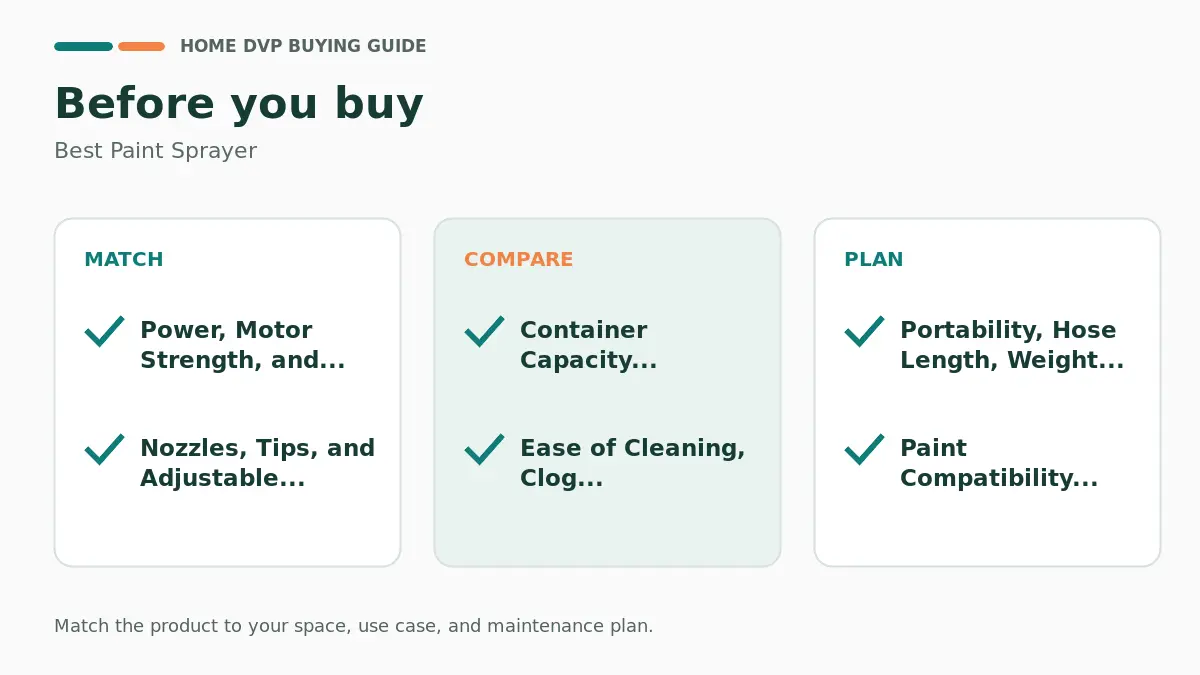
Final Thoughts
There’s no point pretending one sprayer does everything — a fence painting marathon and a cabinet refinish want completely different tools. Here’s how the options split out in practice: For larger DIY and remodeler workloads that need speed and bucket-draw convenience, the Graco Magnum X5 stands out with adjustable pressure, flexible suction, and support for longer hose runs on projects up to multi-gallon scale. Homeowners seeking a proven HVLP option for furniture, cabinets, fences, and mixed materials often look to the HomeRight Super Finish Max with its brass spray tips, pattern adjustments, and broad coating compatibility.
Value-minded buyers frequently consider accessible HVLP kits such as the VONFORN paint sprayer or FLIMRER model, both of which package multiple nozzles, pattern control, dust-blowing or cleaning connectors, and beginner-friendly assembly. For airless convenience with thinning-free latex capability, tip extension, and hose support aimed at interior and exterior DIY, the InoKraft MaXpray M1 offers a feature set geared toward faster coverage and simpler flush cleanup. Higher-output handheld options with large containers and multi-nozzle kits, including models from Tilswall, LUDERIGNITE, and similar 1000W-class designs, suit users who want strong flow for walls and fences without a full airless cart.
Choose based on project size first, then confirm nozzle variety, cleaning support, and paint compatibility. Pair your sprayer decision with good surface prep and the right supporting tools, including quality drill bit sets for DIY projects when repairing surfaces before painting. Explore additional finishing and maintenance ideas in our Cleaning & Floor Care resources so your newly sprayed surfaces stay protected after the job is done.
FAQ
What should I look for when choosing the best paint sprayer?
Focus on the type of work you do most, then match power, nozzle options, container or bucket draw, and cleaning accessories to that workload. HVLP units suit furniture and fine control, while airless systems speed larger walls and exteriors. Confirm paint compatibility and whether thinning is required before you buy.
Are higher-end paint sprayers worth it?
Higher-capacity airless models and better tip packages can save significant time on multi-gallon or multi-room projects. For occasional furniture or small room work, a solid mid-range HVLP kit often delivers enough performance without extra complexity. Evaluate annual project volume rather than price alone.